
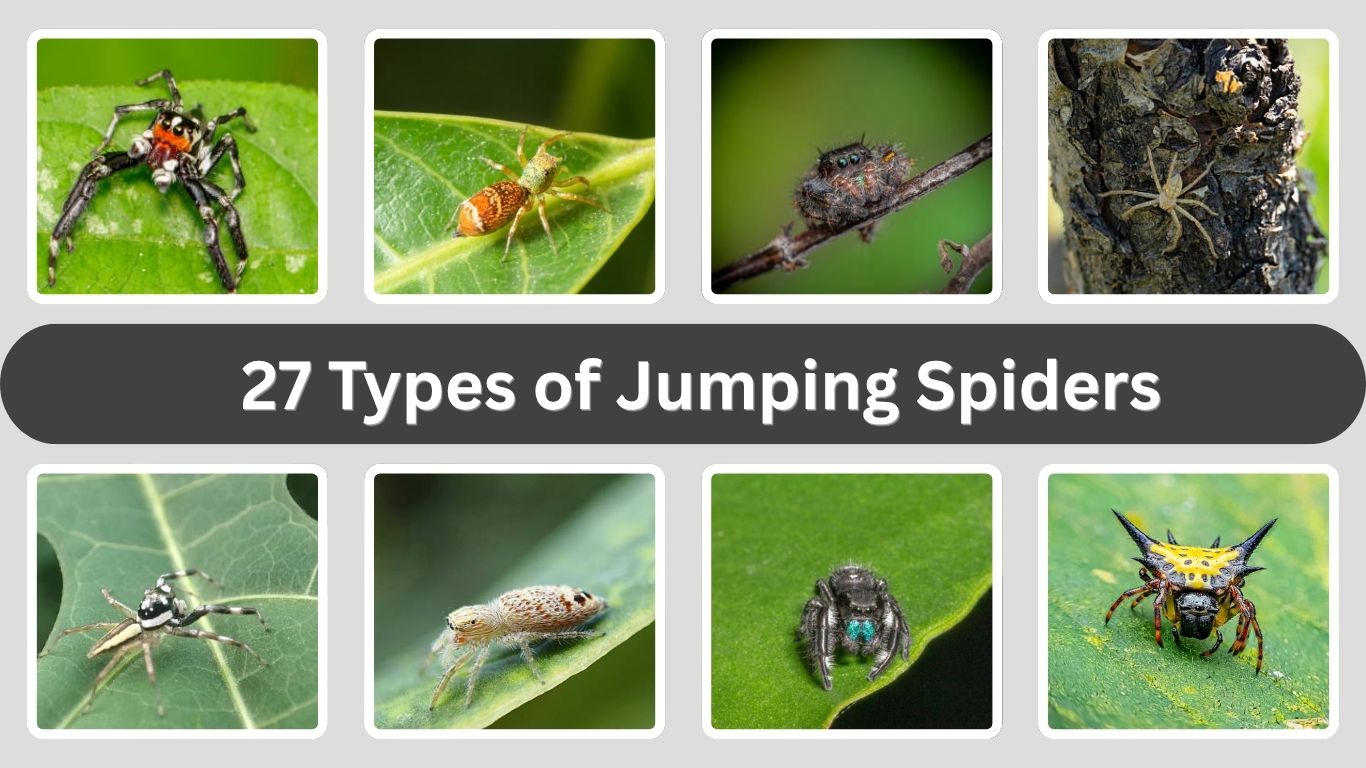
Jumping spiders are small, active hunters known for their excellent vision and quick movements. Unlike many other spiders, they do not rely on webs to catch prey but instead stalk and leap with precision. These spiders are commonly found in homes, gardens, and outdoor environments around the world. Most species are harmless and even beneficial, as they help control insect populations. In this guide, you’ll discover 27 different types of jumping spiders, along with their key features, habitats, behaviors, and roles in nature.
1. Bold Jumping Spider

The Bold Jumping Spider is one of the most common and easily recognized jumping spiders found around homes, gardens, and outdoor structures. It is known for its compact body, strong jumping ability, and curious nature. Unlike web-building spiders, it actively hunts during the day using excellent vision. Its bold markings and alert behavior often make it noticeable, but it is harmless to humans and plays a helpful role in controlling small insect populations.
Identification
- Medium-sized spider, about 8–15 mm long
- Black body with white or orange spots on the abdomen
- Short, thick legs with a slightly hairy appearance
- Large forward-facing eyes for sharp vision
- Compact, sturdy body shape
- Males often appear more colorful than females
Habitat
The Bold Jumping Spider prefers bright and warm environments where it can easily spot prey. It is commonly found on walls, fences, tree trunks, and garden plants. Indoors, it may appear near windows, ceilings, or sunlit areas where insects gather. It chooses locations with good visibility rather than hiding in dark corners, making it more noticeable than many other spiders.
Behavior
This spider is active during the daytime and relies on its vision instead of webs to hunt. It carefully stalks its prey and then leaps with precision to capture it. The Bold Jumping Spider is known for its curious behavior and may turn to face movement, appearing to observe its surroundings. It is non-aggressive and will usually jump away quickly if disturbed.
Diet and Lifespan
The Bold Jumping Spider feeds mainly on small insects such as flies, mosquitoes, and ants. It uses speed and accuracy to catch prey, followed by injecting venom to immobilize it. The lifespan is typically around one year, depending on conditions. Females lay eggs in small silk nests, often hidden in protected areas, where the young develop safely.
2. Zebra Jumping Spider

The Zebra Jumping Spider is a small, fast-moving spider easily recognized by its black-and-white striped pattern. It is commonly found on walls, windows, and outdoor surfaces where sunlight is present. This species is known for its quick movements and excellent eyesight, which it uses to hunt prey instead of building webs. Despite its active nature, it is harmless to humans and is considered beneficial for reducing small insect populations around homes.
Identification
- Small size, usually 4–9 mm long
- Distinct black and white striped pattern
- Compact body with a slightly flattened shape
- Short, sturdy legs adapted for jumping
- Large front-facing eyes for sharp vision
- Often appears shiny under sunlight
Habitat
The Zebra Jumping Spider prefers sunny, open areas where it can easily spot prey. It is commonly seen on exterior walls, fences, rocks, and window ledges. Indoors, it may appear near windows or bright surfaces where insects are present. It tends to stay in well-lit areas rather than hiding in dark corners, making it more visible during the day.
Behavior
This spider is highly active during daylight hours and relies on vision to hunt. It stalks prey carefully and then jumps quickly to capture it. The Zebra Jumping Spider is curious and may turn toward movement, appearing to watch nearby activity. It does not build webs for hunting and will usually retreat or jump away if disturbed.
Diet and Lifespan
The Zebra Jumping Spider feeds on small insects such as flies, gnats, and mosquitoes. It uses its speed and accuracy to catch prey and injects venom to immobilize it. Its lifespan is typically around one year. Females lay eggs in small silk shelters, often hidden in cracks or protected spaces, ensuring the young develop safely.
3. Regal Jumping Spider

The Regal Jumping Spider is one of the largest and most visually striking jumping spiders. It is known for its bold patterns, vibrant coloration, and confident movements. Commonly found in warm regions, it often appears on walls, plants, and around homes. This spider is highly active during the day and uses its excellent vision to hunt prey. Despite its size and appearance, it is harmless to humans and plays an important role in controlling insect populations.
Identification
- Medium to large size, about 10–18 mm long
- Black body with white spots or patterns
- Females may show orange, gray, or tan coloration
- Thick, slightly hairy body
- Large front-facing eyes
- Strong, sturdy legs built for jumping
Habitat
The Regal Jumping Spider prefers warm, sunny environments with plenty of surfaces to explore. It is commonly found on tree trunks, garden plants, fences, and exterior walls. Indoors, it may occasionally appear near windows or bright areas where insects are present. It avoids dark, enclosed spaces and instead chooses open areas with good visibility.
Behavior
This spider is active and alert during the daytime. It hunts by stalking prey slowly and then leaping with precision. The Regal Jumping Spider is also known for its curious nature and may turn to observe movement nearby. It does not rely on webs for hunting and prefers to move freely. If disturbed, it will quickly jump away rather than show aggression.
Diet and Lifespan
The Regal Jumping Spider feeds on a variety of small insects, including flies, moths, and other spiders. It uses its strong vision and jumping ability to capture prey effectively. After catching prey, it injects venom to immobilize it before feeding. Its lifespan is typically around one year, with females often living slightly longer and laying eggs in protected silk nests.
4. Tan Jumping Spider

The Tan Jumping Spider is a small, light-colored species commonly found around homes, especially on walls and ceilings. Its pale tan or beige color helps it blend into surfaces, making it less noticeable than darker jumping spiders. It is active during the day and relies on its strong vision to hunt prey. Although it may appear suddenly due to its quick movements, it is harmless and beneficial for controlling indoor insects.
Identification
- Small size, typically 5–10 mm long
- Light tan, beige, or pale brown coloration
- Slightly flattened body shape
- Short, sturdy legs adapted for jumping
- Large forward-facing eyes
- Subtle markings that may blend with surroundings
Habitat
The Tan Jumping Spider prefers indoor and outdoor surfaces where it can easily move and hunt. It is commonly found on walls, ceilings, window frames, and fences. Indoors, it often appears in well-lit rooms, especially near windows where insects gather. Outdoors, it may live on tree bark, siding, or garden structures. Its light color allows it to blend into dry, sunlit environments.
Behavior
This spider is active during the daytime and does not build webs to catch prey. Instead, it hunts by carefully approaching insects and then jumping quickly to capture them. The Tan Jumping Spider is alert and may turn to face movement, appearing to observe its surroundings. If disturbed, it will quickly jump away or hide rather than show aggression.
Diet and Lifespan
The Tan Jumping Spider feeds on small insects such as flies, ants, and gnats. It uses its speed and precision to catch prey and injects venom to immobilize it before feeding. Its lifespan is typically around one year. Females lay eggs in small silk nests, often hidden in cracks or behind objects, where the young spiders develop safely.
5. Gray Wall Jumping Spider

The Gray Wall Jumping Spider is a small, well-camouflaged species often seen on walls, fences, and tree bark. Its gray coloration helps it blend into rough surfaces, making it harder to notice unless it moves. This spider is active during the day and uses its strong eyesight to hunt rather than relying on webs. It is harmless to humans and is commonly found around homes where it helps control small insect populations.
Identification
- Small size, usually 6–11 mm long
- Gray or light brown body with subtle patterns
- Flattened body shape for blending into surfaces
- Short, strong legs adapted for jumping
- Large front-facing eyes
- Slightly hairy body texture
Habitat
The Gray Wall Jumping Spider prefers outdoor surfaces such as walls, fences, tree trunks, and rocks. Indoors, it may occasionally appear on walls or near windows where insects gather. It thrives in areas with good sunlight and textured surfaces that provide camouflage. Its ability to blend into its surroundings makes it less noticeable unless it moves suddenly.
Behavior
This spider is active during daylight and relies on vision to hunt prey. It slowly approaches insects before making a quick and accurate jump to capture them. The Gray Wall Jumping Spider is alert and may turn to face movement nearby. It does not build webs for hunting and prefers to roam freely. If disturbed, it quickly jumps away or hides.
Diet and Lifespan
The Gray Wall Jumping Spider feeds on small insects such as flies, gnats, and ants. It uses its speed and precision to catch prey, followed by injecting venom to immobilize it. Its lifespan is typically around one year. Females lay eggs in small silk shelters hidden in cracks or protected areas, ensuring safe development of the young.
6. Bronze Jumping Spider
The Bronze Jumping Spider is a small, attractive species known for its metallic brown or bronze-like coloration. It is commonly found on vegetation, walls, and garden areas where it can easily spot prey. This spider is active during the day and relies on sharp vision and quick movements to hunt. Its shiny appearance and alert behavior make it noticeable, but it is completely harmless and beneficial for controlling small insects.
Identification
- Small size, typically 5–9 mm long
- Bronze, brown, or metallic-looking body
- Slightly iridescent or shiny appearance
- Compact body with a rounded abdomen
- Short, strong legs for jumping
- Large forward-facing eyes
Habitat
The Bronze Jumping Spider prefers warm, sunny environments such as gardens, shrubs, fences, and walls. It is often found on leaves or near plants where insects are active. Indoors, it may occasionally appear near windows or bright areas. It chooses locations with good light and open space, allowing it to move freely and hunt effectively.
Behavior
This spider is active during the daytime and hunts without using webs. It carefully stalks its prey and then leaps with precision to capture it. The Bronze Jumping Spider is alert and may turn toward movement, appearing curious. If disturbed, it will quickly jump away or hide rather than show aggression, making it harmless to humans.
Diet and Lifespan
The Bronze Jumping Spider feeds on small insects such as flies, mosquitoes, and other tiny bugs. It uses its speed and vision to catch prey, then injects venom to immobilize it before feeding. Its lifespan is typically around one year. Females lay eggs in small silk nests, usually hidden in protected areas, where the young spiders develop safely.
7. Adanson’s House Jumper

Adanson’s House Jumper is a small, adaptable jumping spider often found in and around homes. It is known for its quick movements, dark body, and pale markings. This species is especially common in warm climates and frequently appears on walls, ceilings, and near lights where insects gather. Despite its fast and active behavior, it is harmless to humans and plays a useful role in reducing indoor insect populations.
Identification
- Small size, usually 5–10 mm long
- Dark brown or black body with light cream or white markings
- Flattened body shape
- Short, strong legs for jumping
- Large front-facing eyes
- Males often have more distinct patterns than females
Habitat
Adanson’s House Jumper thrives in both indoor and outdoor environments. Indoors, it is commonly found on walls, ceilings, behind furniture, and near light sources. Outdoors, it lives on tree trunks, fences, and building surfaces. It prefers warm, dry areas with plenty of insect activity, making homes an ideal environment for survival.
Behavior
This spider is active during the day and hunts using its vision instead of webs. It moves quickly and may suddenly jump when disturbed. Adanson’s House Jumper is curious and may turn toward movement, appearing to observe nearby activity. It is non-aggressive and will usually retreat or hide rather than interact with humans.
Diet and Lifespan
Adanson’s House Jumper feeds on small insects such as flies, mosquitoes, and ants. It uses its speed and jumping ability to capture prey, followed by injecting venom to immobilize it. Its lifespan is typically around one year. Females lay eggs in small silk retreats, often hidden in cracks or sheltered indoor spaces.
8. Twin-flagged Jumping Spider

The Twin-flagged Jumping Spider is a unique and visually interesting species known for the distinctive markings on its body that resemble small flags. It is commonly found on plants, walls, and outdoor surfaces where it can actively hunt during the day. Like other jumping spiders, it relies on excellent vision and quick movements rather than webs. It is harmless to humans and helps control insect populations in its environment.
Identification
- Small size, usually 5–9 mm long
- Brown or gray body with distinct contrasting markings
- Patterns on the abdomen resemble small “flags”
- Compact body with a slightly flattened shape
- Short, strong legs adapted for jumping
- Large front-facing eyes
Habitat
The Twin-flagged Jumping Spider prefers outdoor environments such as gardens, shrubs, tree bark, and fences. It may also be seen on walls or near windows where insects are present. It favors sunny areas with open space, allowing it to move freely and hunt effectively. Indoors, it appears less frequently but may enter in search of prey.
Behavior
This spider is active during daylight and uses its sharp vision to locate prey. It slowly stalks insects before making a quick jump to capture them. The Twin-flagged Jumping Spider is alert and responsive to movement, often turning to face nearby activity. It does not build webs for hunting and will quickly retreat or jump away if disturbed.
Diet and Lifespan
The Twin-flagged Jumping Spider feeds on small insects such as flies, gnats, and other tiny bugs. It captures prey using speed and precision, then injects venom to immobilize it. Its lifespan is typically around one year. Females lay eggs in small silk shelters, usually hidden in protected areas where the young can develop safely.
9. Canopy Jumping Spider

The Canopy Jumping Spider is a small, agile species typically found in trees and higher vegetation, but it may occasionally appear around homes near plants or windows. It is known for its excellent climbing ability and quick movements. Like other jumping spiders, it relies on sharp vision to hunt rather than building webs. It is harmless to humans and plays a useful role in controlling small insect populations in its environment.
Identification
- Small size, usually 4–8 mm long
- Brown, gray, or slightly greenish body
- Subtle patterns that help with camouflage
- Compact body with a slightly elongated abdomen
- Short, strong legs for jumping and climbing
- Large forward-facing eyes
Habitat
The Canopy Jumping Spider prefers elevated environments such as tree branches, shrubs, and tall plants. It is often found in gardens, forests, and areas with dense vegetation. Around homes, it may appear near windows, balconies, or indoor plants. It favors places with good light and access to insects, allowing it to hunt effectively in open spaces.
Behavior
This spider is active during the day and spends much of its time moving across leaves and surfaces in search of prey. It uses careful stalking followed by a quick jump to capture insects. The Canopy Jumping Spider is alert and responsive to movement, often pausing and turning toward nearby activity. It avoids confrontation and will quickly retreat if disturbed.
Diet and Lifespan
The Canopy Jumping Spider feeds on small insects such as flies, aphids, and other tiny bugs found on plants. It captures prey using speed and precision, then injects venom to immobilize it before feeding. Its lifespan is typically around one year. Females lay eggs in small silk retreats hidden among leaves or sheltered areas.
10. Red-backed Jumping Spider

The Red-backed Jumping Spider is a small, eye-catching species known for its dark body and distinct reddish marking on the back. It is commonly found on plants, walls, and outdoor surfaces where it can easily hunt during the day. Its bright coloration makes it more noticeable than many other jumping spiders. Despite its bold appearance, it is harmless to humans and helps control small insect populations.
Identification
- Small size, usually 5–9 mm long
- Dark brown or black body
- Distinct red or orange marking on the abdomen
- Compact body with a slightly rounded shape
- Short, strong legs for jumping
- Large forward-facing eyes
Habitat
The Red-backed Jumping Spider prefers warm, sunny areas such as gardens, shrubs, fences, and walls. It is often found on leaves or near flowering plants where insects are active. Indoors, it may occasionally appear near windows or bright areas. It thrives in open spaces with good visibility, allowing it to move freely and hunt effectively.
Behavior
This spider is active during the daytime and hunts without using webs. It carefully stalks prey and then leaps quickly to capture it. The Red-backed Jumping Spider is alert and may turn toward movement, appearing curious. If disturbed, it will quickly jump away or hide rather than show aggression.
Diet and Lifespan
The Red-backed Jumping Spider feeds on small insects such as flies, mosquitoes, and other tiny bugs. It uses speed and precision to catch prey, followed by injecting venom to immobilize it. Its lifespan is typically around one year. Females lay eggs in small silk nests, usually hidden in protected areas where the young spiders can develop safely.
11. Golden Jumping Spider

The Golden Jumping Spider is a small, attractive species known for its warm golden or yellowish tones. It is commonly found on plants, walls, and garden areas where sunlight is present. Its bright coloration helps it blend with dry leaves and flowers. Like other jumping spiders, it hunts using vision and quick movements instead of webs. It is harmless to humans and plays a helpful role in controlling small insect populations.
Identification
- Small size, usually 4–8 mm long
- Golden, yellow, or light brown body
- Slightly shiny or metallic appearance
- Compact body with a rounded abdomen
- Short, strong legs adapted for jumping
- Large forward-facing eyes
Habitat
The Golden Jumping Spider prefers sunny environments such as gardens, shrubs, flowers, and grassy areas. It is often seen on leaves, stems, and outdoor walls. Indoors, it may occasionally appear near windows or indoor plants. It favors open, well-lit spaces where it can easily move and spot prey.
Behavior
This spider is active during the day and relies on its sharp vision to hunt. It slowly stalks prey and then jumps quickly to capture it. The Golden Jumping Spider is alert and may turn toward movement, appearing curious. It does not build webs for hunting and will usually jump away or hide if disturbed.
Diet and Lifespan
The Golden Jumping Spider feeds on small insects such as flies, gnats, and other tiny bugs. It captures prey using speed and precision, then injects venom to immobilize it before feeding. Its lifespan is typically around one year. Females lay eggs in small silk shelters hidden in protected areas where the young develop safely.
12. Emerald Jumping Spider

The Emerald Jumping Spider is a small, vibrant species known for its green or iridescent body that often reflects light beautifully. It is usually found on plants and foliage where its color helps it blend in with leaves. This spider is active during the day and uses sharp vision to hunt prey. Despite its bright appearance, it is harmless to humans and beneficial for controlling small insects.
Identification
- Small size, typically 4–8 mm long
- Bright green or emerald-colored body
- Slight iridescent or metallic shine
- Compact body with a rounded abdomen
- Short, strong legs for jumping
- Large forward-facing eyes
Habitat
The Emerald Jumping Spider prefers leafy environments such as gardens, shrubs, trees, and grassy areas. It is commonly seen on leaves where it blends in with its surroundings. Indoors, it may occasionally appear near indoor plants or windows. It favors bright, natural environments with plenty of insect activity.
Behavior
This spider is active during daylight and hunts without building webs. It carefully stalks prey and then leaps quickly to capture it. The Emerald Jumping Spider is alert and responsive to movement, often turning to observe nearby activity. It is non-aggressive and will quickly jump away or hide if disturbed.
Diet and Lifespan
The Emerald Jumping Spider feeds on small insects such as flies, aphids, and gnats. It uses speed and precision to catch prey, followed by injecting venom to immobilize it. Its lifespan is typically around one year. Females lay eggs in small silk retreats hidden among leaves or protected areas where the young can develop safely.
13. Dimorphic Jumping Spider

The Dimorphic Jumping Spider is a small and interesting species known for the noticeable differences between males and females. These differences can include size, color, or body patterns, making it easier to distinguish between them. It is commonly found on plants, walls, and outdoor surfaces where it actively hunts during the day. Like other jumping spiders, it does not build webs to catch prey and is harmless to humans.
Identification
- Small size, usually 4–9 mm long
- Males and females show different colors or patterns
- Compact body with a rounded abdomen
- Brown, gray, or mixed coloration
- Short, strong legs for jumping
- Large forward-facing eyes
Habitat
The Dimorphic Jumping Spider prefers sunny outdoor environments such as gardens, shrubs, fences, and tree bark. It is often seen on leaves or surfaces where insects are present. Indoors, it may occasionally appear near windows or bright areas. It favors open spaces with good visibility, allowing it to move freely and hunt effectively.
Behavior
This spider is active during the day and uses its sharp vision to locate prey. It slowly stalks insects and then jumps quickly to capture them. The Dimorphic Jumping Spider is alert and may turn toward movement, appearing curious. It does not rely on webs for hunting and will quickly retreat or jump away if disturbed.
Diet and Lifespan
The Dimorphic Jumping Spider feeds on small insects such as flies, gnats, and ants. It captures prey using speed and precision, then injects venom to immobilize it before feeding. Its lifespan is typically around one year. Females lay eggs in small silk shelters hidden in protected areas where the young spiders develop safely.
14. Pantropical Jumping Spider

The Pantropical Jumping Spider is a widely distributed species found in warm regions around the world. It is commonly seen on walls, ceilings, and outdoor structures near homes. This spider is known for its adaptability and active hunting style. It relies on excellent vision rather than webs to catch prey. Despite its frequent presence around people, it is harmless and helps control small insect populations indoors and outdoors.
Identification
- Small size, usually 5–10 mm long
- Brown, gray, or slightly mottled body
- Flattened body shape
- Subtle patterns for camouflage
- Short, strong legs for jumping
- Large forward-facing eyes
Habitat
The Pantropical Jumping Spider thrives in both indoor and outdoor environments. It is commonly found on walls, ceilings, fences, and tree trunks. Indoors, it often appears near lights or windows where insects gather. It prefers warm, dry areas with plenty of surfaces to explore and hunt, making homes an ideal habitat in many regions.
Behavior
This spider is active during the daytime and hunts by stalking prey before making a quick jump. It is alert and responsive to movement, often turning to observe nearby activity. The Pantropical Jumping Spider does not build webs for hunting and prefers to roam freely. If disturbed, it quickly retreats or jumps away instead of showing aggression.
Diet and Lifespan
The Pantropical Jumping Spider feeds on small insects such as flies, mosquitoes, and ants. It uses speed and precision to capture prey, followed by injecting venom to immobilize it. Its lifespan is typically around one year. Females lay eggs in small silk retreats hidden in cracks or sheltered areas, ensuring safe development of the young.
15. Peacock Jumping Spider

The Peacock Jumping Spider is one of the most colorful and visually striking jumping spiders, famous for its vibrant patterns and unique courtship displays. It is mostly found in warm, open environments and is known for its energetic movements. Despite its bold appearance, it is very small and harmless to humans. This spider is active during the day and uses its excellent vision to hunt prey instead of relying on webs.
Identification
- Very small size, usually 3–5 mm long
- Bright, colorful patterns on the abdomen (blue, red, yellow)
- Males have more vivid colors than females
- Compact body with a slightly flattened shape
- Short, strong legs for jumping
- Large forward-facing eyes
Habitat
The Peacock Jumping Spider prefers dry, sunny environments such as grasslands, gardens, and low vegetation. It is often found on leaves, small plants, and open ground. Indoors, it is rarely seen but may occasionally appear near windows or plants. It thrives in areas with plenty of sunlight and space to move freely while hunting.
Behavior
This spider is active during daylight and is especially known for its unique mating display. Males raise their colorful abdomen and perform a dance to attract females. Like other jumping spiders, it hunts by stalking prey and jumping quickly to capture it. It is alert, curious, and non-aggressive, usually retreating if disturbed.
Diet and Lifespan
The Peacock Jumping Spider feeds on very small insects such as flies and tiny bugs found in its environment. It uses speed and precision to catch prey, followed by injecting venom to immobilize it. Its lifespan is typically around one year. Females lay eggs in small silk nests hidden in protected areas where the young spiders develop safely.
16. Marbled Jumping Spider

The Marbled Jumping Spider is a small, patterned species known for its mottled or “marbled” appearance that helps it blend into natural surfaces. It is commonly found on tree bark, walls, and garden areas where camouflage is useful. Like other jumping spiders, it hunts actively during the day using sharp vision instead of webs. It is harmless to humans and beneficial for controlling small insect populations.
Identification
- Small size, usually 5–9 mm long
- Brown, gray, or tan body with marbled patterns
- Slightly flattened body shape
- Short, sturdy legs adapted for jumping
- Large forward-facing eyes
- Camouflaged appearance blends with surfaces
Habitat
The Marbled Jumping Spider prefers outdoor environments such as tree bark, wooden fences, rocks, and garden plants. It is often found on textured surfaces where its pattern provides effective camouflage. Indoors, it may occasionally appear near windows or walls. It favors sunny areas with good visibility and access to insects.
Behavior
This spider is active during the day and hunts by stalking prey before making a quick jump. Its camouflage allows it to approach insects without being noticed. The Marbled Jumping Spider is alert and may turn toward movement, appearing curious. It does not build webs for hunting and will quickly retreat or jump away if disturbed.
Diet and Lifespan
The Marbled Jumping Spider feeds on small insects such as flies, ants, and gnats. It captures prey using speed and precision, then injects venom to immobilize it. Its lifespan is typically around one year. Females lay eggs in small silk shelters hidden in protected areas where the young spiders can develop safely.
17. Hentz Jumping Spider

The Hentz Jumping Spider is a medium-sized species known for its strong build and noticeable markings. It is commonly found on walls, tree trunks, and outdoor structures where it can easily hunt during the day. This spider is active and alert, relying on excellent vision instead of webs to capture prey. Although it may appear bold, it is harmless to humans and helps control insect populations.
Identification
- Medium size, usually 8–13 mm long
- Brown, gray, or black body with subtle patterns
- Slightly elongated abdomen
- Short, strong legs for jumping
- Large forward-facing eyes
- Body may appear slightly hairy
Habitat
The Hentz Jumping Spider prefers outdoor environments such as tree bark, fences, walls, and garden areas. It is often seen in sunny locations where insects are active. Indoors, it may occasionally appear near windows or bright areas. It favors open spaces with good visibility, allowing it to move freely and hunt effectively.
Behavior
This spider is active during the day and hunts by stalking prey before jumping to capture it. It is alert and responsive to movement, often turning to observe nearby activity. The Hentz Jumping Spider does not build webs for hunting and prefers to roam. If disturbed, it will quickly retreat or jump away rather than show aggression.
Diet and Lifespan
The Hentz Jumping Spider feeds on small insects such as flies, beetles, and ants. It uses speed and precision to catch prey, followed by injecting venom to immobilize it. Its lifespan is typically around one year. Females lay eggs in small silk shelters hidden in protected areas where the young spiders develop safely.
18. Johnson’s Jumping Spider

Johnson’s Jumping Spider is a small but striking species known for its black body and bright red abdomen. It is commonly found in dry, open areas and sometimes around homes where it can hunt small insects. This spider is active during the day and relies on its sharp vision and quick movements rather than webs. Despite its bold coloration, it is harmless to humans and beneficial for controlling insect populations.
Identification
- Small size, usually 6–10 mm long
- Black body with a bright red or orange abdomen
- Males are more colorful than females
- Compact body with a slightly rounded shape
- Short, strong legs for jumping
- Large forward-facing eyes
Habitat
Johnson’s Jumping Spider prefers warm, dry environments such as gardens, rocky areas, fences, and walls. It is often found on plants or ground surfaces where insects are present. Indoors, it may occasionally appear near windows or sunlit areas. It favors open spaces with plenty of light and access to prey.
Behavior
This spider is active during daylight and hunts by stalking prey before making a quick jump. It is alert and may turn toward movement, appearing curious. Johnson’s Jumping Spider does not build webs for hunting and prefers to move freely. If disturbed, it will quickly jump away or hide rather than show aggression.
Diet and Lifespan
Johnson’s Jumping Spider feeds on small insects such as flies, ants, and other tiny bugs. It captures prey using speed and precision, then injects venom to immobilize it. Its lifespan is typically around one year. Females lay eggs in small silk nests hidden in protected areas where the young spiders develop safely.
19. Brilliant Jumping Spider

The Brilliant Jumping Spider is a small, colorful species known for its shiny and sometimes iridescent body. Its bright appearance makes it stand out among other jumping spiders. It is commonly found on plants, walls, and garden areas where sunlight enhances its colors. Like other jumping spiders, it actively hunts during the day using sharp vision instead of webs. It is harmless to humans and helps control small insect populations.
Identification
- Small size, usually 4–8 mm long
- Bright or iridescent body, often with metallic shine
- Colors may include green, blue, or bronze tones
- Compact body with a rounded abdomen
- Short, strong legs for jumping
- Large forward-facing eyes
Habitat
The Brilliant Jumping Spider prefers sunny environments such as gardens, shrubs, flowers, and walls. It is often found on leaves or surfaces where insects are present. Indoors, it may occasionally appear near windows or indoor plants. It favors open, well-lit areas where it can move freely and spot prey easily.
Behavior
This spider is active during the daytime and hunts without building webs. It stalks prey carefully and then leaps quickly to capture it. The Brilliant Jumping Spider is alert and may turn toward movement, appearing curious. It is non-aggressive and will usually jump away or hide if disturbed.
Diet and Lifespan
The Brilliant Jumping Spider feeds on small insects such as flies, gnats, and other tiny bugs. It uses speed and precision to catch prey, followed by injecting venom to immobilize it. Its lifespan is typically around one year. Females lay eggs in small silk shelters hidden in protected areas where the young spiders develop safely.
20. White-jawed Jumping Spider

The White-jawed Jumping Spider is a small, distinctive species known for its noticeable pale or white-colored mouthparts, which contrast with its darker body. It is commonly found on plants, walls, and outdoor surfaces where it can actively hunt during the day. Like other jumping spiders, it relies on sharp vision and quick movements instead of webs. It is harmless to humans and helps reduce small insect populations.
Identification
- Small size, usually 5–9 mm long
- Dark body with contrasting white or pale jaws
- Compact body with a slightly rounded abdomen
- Short, strong legs adapted for jumping
- Large forward-facing eyes
- Slightly hairy body texture
Habitat
The White-jawed Jumping Spider prefers outdoor environments such as gardens, shrubs, fences, and tree bark. It is often found on leaves or surfaces where insects are present. Indoors, it may occasionally appear near windows or bright areas. It favors sunny locations with good visibility, allowing it to move freely and hunt effectively.
Behavior
This spider is active during the day and hunts by stalking prey before making a quick jump. It is alert and responsive to movement, often turning to observe nearby activity. The White-jawed Jumping Spider does not build webs for hunting and prefers to roam freely. If disturbed, it will quickly retreat or jump away rather than show aggression.
Diet and Lifespan
The White-jawed Jumping Spider feeds on small insects such as flies, ants, and gnats. It captures prey using speed and precision, then injects venom to immobilize it. Its lifespan is typically around one year. Females lay eggs in small silk shelters hidden in protected areas where the young spiders develop safely.
21. Flat Jumping Spider

The Flat Jumping Spider is a small species known for its noticeably flattened body, which helps it hide in narrow spaces and blend into surfaces. It is commonly found on tree bark, walls, and wooden structures. This spider is active during the day and uses its strong vision to hunt instead of building webs. It is harmless to humans and plays a helpful role in controlling small insects.
Identification
- Small size, usually 4–8 mm long
- Flattened body shape
- Brown, gray, or tan coloration
- Subtle patterns for camouflage
- Short, strong legs for jumping
- Large forward-facing eyes
Habitat
The Flat Jumping Spider prefers textured surfaces such as tree bark, wooden fences, rocks, and walls. It is often found in gardens and outdoor areas where it can easily blend in. Indoors, it may occasionally appear near windows or wooden surfaces. It favors sunny environments with good visibility and access to insects.
Behavior
This spider is active during daylight and hunts by stalking prey before making a quick jump. Its flattened body allows it to hide in tight spaces and avoid predators. The Flat Jumping Spider is alert and may turn toward movement, appearing curious. It does not build webs for hunting and will quickly retreat if disturbed.
Diet and Lifespan
The Flat Jumping Spider feeds on small insects such as flies, ants, and gnats. It uses speed and precision to capture prey, followed by injecting venom to immobilize it. Its lifespan is typically around one year. Females lay eggs in small silk shelters hidden in cracks or under surfaces where the young spiders develop safely.
22. Long-palped Jumping Spider

The Long-palped Jumping Spider is a small and distinctive species recognized for its elongated pedipalps (mouthpart appendages), which are more noticeable compared to other jumping spiders. It is commonly found on vegetation, walls, and outdoor surfaces where it actively hunts during the day. Like other jumping spiders, it relies on sharp vision instead of webs. It is harmless to humans and beneficial for controlling small insect populations.
Identification
- Small size, usually 4–8 mm long
- Brown, gray, or slightly patterned body
- Noticeably long pedipalps near the mouth
- Compact body with a slightly elongated abdomen
- Short, strong legs for jumping
- Large forward-facing eyes
Habitat
The Long-palped Jumping Spider prefers outdoor environments such as gardens, shrubs, fences, and tree bark. It is often found on leaves or surfaces where insects are active. Indoors, it may occasionally appear near windows or bright areas. It favors sunny locations with open space, allowing it to move freely and hunt effectively.
Behavior
This spider is active during the day and hunts by stalking prey before making a quick jump. It is alert and responsive to movement, often turning to observe nearby activity. The Long-palped Jumping Spider does not build webs for hunting and prefers to roam freely. If disturbed, it will quickly retreat or jump away rather than show aggression.
Diet and Lifespan
The Long-palped Jumping Spider feeds on small insects such as flies, gnats, and ants. It captures prey using speed and precision, then injects venom to immobilize it. Its lifespan is typically around one year. Females lay eggs in small silk shelters hidden in protected areas where the young spiders develop safely.
23. Ant-mimic Jumping Spider

The Ant-mimic Jumping Spider is a unique species that closely resembles ants in both appearance and movement. This mimicry helps it avoid predators and sometimes get close to prey unnoticed. It is commonly found on plants, walls, and ground surfaces. Despite looking like an ant, it behaves like a typical jumping spider—active, alert, and harmless to humans while helping control small insect populations.
Identification
- Small size, usually 4–8 mm long
- Slender body that resembles an ant
- Dark brown or black coloration
- Narrow waist-like body shape
- Front legs often raised to mimic antennae
- Large forward-facing eyes (visible on close look)
Habitat
The Ant-mimic Jumping Spider prefers areas where ants are commonly found, such as gardens, shrubs, tree bark, and ground surfaces. It may also appear on walls or near windows. Indoors, it is less common but can occasionally be seen near entry points. It thrives in warm environments with plenty of insect activity.
Behavior
This spider mimics ant behavior by moving in a stop-and-go pattern and raising its front legs like antennae. It hunts actively during the day, stalking prey before making a quick jump. The Ant-mimic Jumping Spider is alert and avoids confrontation, quickly retreating if disturbed. Its mimicry helps it stay protected from predators.
Diet and Lifespan
The Ant-mimic Jumping Spider feeds on small insects, including flies and other tiny bugs. It uses speed and precision to capture prey, followed by injecting venom to immobilize it. Its lifespan is typically around one year. Females lay eggs in small silk shelters hidden in protected areas where the young spiders develop safely.
24. Bark Jumping Spider

The Bark Jumping Spider is a well-camouflaged species that blends perfectly with tree bark and rough surfaces. Its patterned body helps it stay hidden from predators while hunting prey. It is commonly found on trees, wooden structures, and outdoor walls. Like other jumping spiders, it is active during the day and uses sharp vision instead of webs. It is harmless to humans and beneficial for controlling small insect populations.
Identification
- Small size, usually 5–9 mm long
- Brown, gray, or mottled body resembling tree bark
- Flattened body shape for camouflage
- Subtle patterns that blend with rough surfaces
- Short, strong legs for jumping
- Large forward-facing eyes
Habitat
The Bark Jumping Spider prefers tree trunks, wooden fences, logs, and rough outdoor walls. It is often found in gardens, forests, and areas with plenty of trees. Indoors, it may occasionally appear near wooden surfaces or windows. It favors environments where its camouflage is effective and where insects are present.
Behavior
This spider is active during the day and hunts by slowly stalking prey before making a quick jump. Its camouflage allows it to remain unnoticed until it strikes. The Bark Jumping Spider is alert and may turn toward movement, appearing curious. It does not build webs for hunting and will quickly retreat if disturbed.
Diet and Lifespan
The Bark Jumping Spider feeds on small insects such as flies, ants, and other tiny bugs. It captures prey using speed and precision, then injects venom to immobilize it. Its lifespan is typically around one year. Females lay eggs in small silk shelters hidden in cracks or under bark where the young spiders develop safely.
25. Daring Jumping Spider

The Daring Jumping Spider is a bold and active species closely related to the Bold Jumping Spider. It is commonly found around homes, gardens, and outdoor structures. Known for its confident movements and excellent vision, it hunts during the day instead of building webs. Its striking black body with bright markings makes it easy to recognize. Despite its name, it is harmless to humans and helps control insect populations.
Identification
- Medium size, usually 8–15 mm long
- Black body with white or orange spots
- Compact, sturdy body shape
- Slightly hairy texture
- Short, strong legs for jumping
- Large forward-facing eyes
Habitat
The Daring Jumping Spider prefers sunny and warm environments such as walls, fences, tree trunks, and garden plants. Indoors, it may appear near windows, ceilings, or well-lit areas where insects are present. It favors open spaces with good visibility, allowing it to hunt effectively during the day.
Behavior
This spider is active during daylight and relies on its vision to hunt prey. It stalks insects carefully and then jumps quickly to capture them. The Daring Jumping Spider is alert and curious, often turning to face movement. If disturbed, it will jump away or hide rather than act aggressively.
Diet and Lifespan
The Daring Jumping Spider feeds on small insects such as flies, mosquitoes, and ants. It uses speed and precision to catch prey, followed by injecting venom to immobilize it. Its lifespan is typically around one year. Females lay eggs in small silk nests hidden in protected areas where the young spiders develop safely.
26. Simaetha Jumping Spider

The Simaetha Jumping Spider is a small, delicate species often recognized by its fine body structure and subtle patterns. It is commonly found on plants, leaves, and garden vegetation where it can move easily and hunt small insects. This spider is active during the day and relies on its sharp vision instead of webs. It is harmless to humans and helps maintain balance by controlling tiny insect populations.
Identification
- Small size, usually 3–6 mm long
- Slender, delicate body structure
- Brown, gray, or lightly patterned coloration
- Fine, thin legs compared to other jumping spiders
- Large forward-facing eyes
- Subtle markings that blend with leaves
Habitat
The Simaetha Jumping Spider prefers leafy environments such as gardens, shrubs, and low vegetation. It is often found on leaves and small plants where insects are abundant. Indoors, it is rarely seen but may occasionally appear near indoor plants or windows. It thrives in warm, natural environments with plenty of greenery.
Behavior
This spider is active during the daytime and hunts by slowly approaching prey before making a quick jump. It is calm and alert, often pausing to observe movement. The Simaetha Jumping Spider does not build webs for hunting and prefers to move freely across leaves and surfaces. If disturbed, it will quickly retreat or hide.
Diet and Lifespan
The Simaetha Jumping Spider feeds on very small insects such as gnats, aphids, and tiny flies. It captures prey using speed and precision, then injects venom to immobilize it. Its lifespan is typically around one year. Females lay eggs in small silk shelters hidden among leaves where the young spiders develop safely.
27. Plexippus Jumping Spider

The Plexippus Jumping Spider is a common and adaptable species often found in urban areas, including homes and buildings. It is known for its quick movements, strong jumping ability, and ability to thrive in human environments. This spider is active during the day and relies on excellent vision to hunt prey instead of using webs. It is harmless to humans and plays a helpful role in reducing small insect populations.
Identification
- Small to medium size, usually 6–12 mm long
- Brown, gray, or slightly striped body
- Males often have more distinct patterns than females
- Compact body with a slightly elongated abdomen
- Short, strong legs for jumping
- Large forward-facing eyes
Habitat
The Plexippus Jumping Spider is commonly found on walls, ceilings, fences, and building surfaces. It thrives in both indoor and outdoor environments, especially in warm climates. Indoors, it is often seen near windows, lights, or ceilings where insects gather. It prefers open, well-lit areas that allow it to move freely and hunt effectively.
Behavior
This spider is active during the daytime and hunts by stalking prey before making a quick jump. It is alert and may turn toward movement, appearing curious. The Plexippus Jumping Spider does not build webs for hunting and prefers to roam freely. If disturbed, it will quickly jump away or hide rather than show aggression.
Diet and Lifespan
The Plexippus Jumping Spider feeds on small insects such as flies, mosquitoes, and ants. It uses speed and precision to capture prey, followed by injecting venom to immobilize it. Its lifespan is typically around one year. Females lay eggs in small silk shelters hidden in cracks or protected areas where the young spiders develop safely.
FAQs
Are jumping spiders dangerous to humans?
Jumping spiders are generally harmless and not dangerous to humans. They rarely bite, and even if they do, the bite is usually mild and causes little more than slight irritation. They are non-aggressive and prefer to avoid contact with people.
Do jumping spiders live inside houses?
Yes, some jumping spiders can live indoors, especially near windows, walls, or ceilings where insects are present. They are attracted to light and food sources, so homes with more insects may see them more often.
What do jumping spiders eat?
Jumping spiders feed on small insects such as flies, mosquitoes, ants, and gnats. They are active hunters and do not rely on webs. Their presence can actually help reduce unwanted insect populations in and around your home.
How long do jumping spiders live?
Most jumping spiders have a lifespan of about one year. Their life cycle depends on environmental conditions and food availability. Females may live slightly longer than males and lay eggs in small silk nests.
Why do jumping spiders jump at people?
Jumping spiders do not intentionally jump at people. They use jumping as a way to move quickly or escape danger. If they appear to jump toward you, it is usually accidental or part of their normal movement behavior.
