
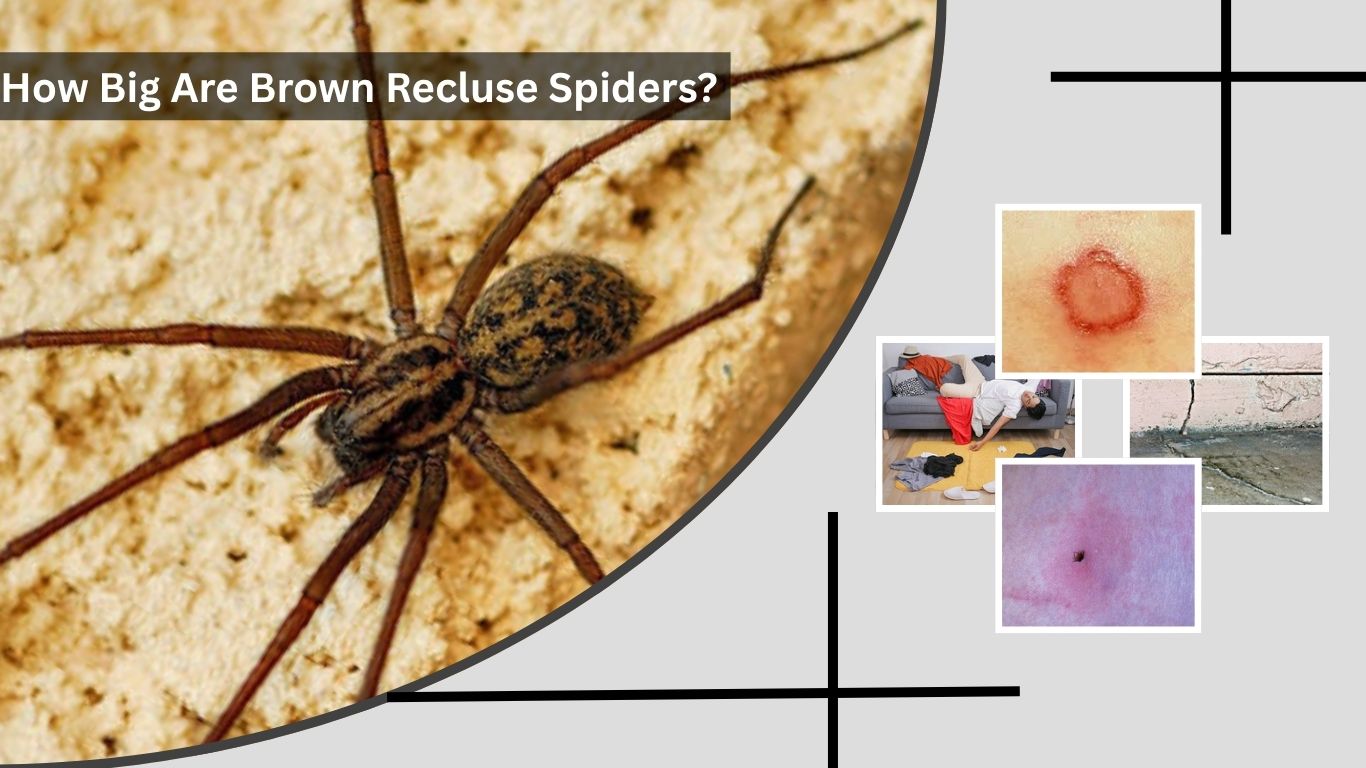
Brown recluse spiders are often feared because of their reputation, but many people don’t realize how small they actually are. These spiders may look larger due to their long legs, yet their bodies remain quite compact. Understanding their true size can help with proper identification and reduce unnecessary panic. In this guide, you’ll learn how big brown recluse spiders really are, how their size compares to common objects, and what factors influence their growth and appearance.
Average Size of Brown Recluse Spiders
Brown recluse spiders are smaller than most people expect. Their size is usually measured in two ways: body length and total leg span. While their legs make them appear larger, their body itself is quite small.
Body Size vs Leg Span
- Body length typically ranges from 6 to 12 mm (about 0.25 to 0.5 inches)
- Leg span can reach up to 1 to 2 inches when fully extended
- Their thin legs create the illusion of a larger spider
- Most of their visible size comes from leg length rather than body mass
Male vs Female Size Differences
- Females usually have slightly larger and rounder bodies
- Males tend to have longer, thinner legs
- Overall size difference is small but noticeable up close
How Big Do Brown Recluse Spiders Get?
Although they are generally small, brown recluse spiders can vary slightly in size depending on their age and environment. Fully grown adults reach their maximum size after several molting stages.
Maximum Size and Growth Stages
- Adult spiders rarely exceed a 2-inch leg span
- Spiderlings are extremely tiny and difficult to identify
- Juveniles grow gradually through molting
- Full size is reached after several developmental stages
Factors That Affect Their Size
- Availability of food plays a major role in growth
- Warmer environments may support slightly larger sizes
- Frequent molting allows gradual size increase
Brown Recluse Spider Appearance

Brown recluse spiders are not just identified by size alone. Their physical features are more important when trying to recognize them accurately. Many spiders are mistaken for brown recluse due to similar coloring, which can lead to confusion and unnecessary concern.
One of the most well-known features is the violin-shaped marking on their back, which points toward the abdomen. However, this marking is not always clearly visible, especially in younger spiders. Their color typically ranges from light tan to dark brown, and their legs are evenly colored without noticeable stripes or spines.
Another key characteristic is their eye pattern. Unlike most spiders that have eight eyes, brown recluse spiders have six eyes arranged in pairs. This detail is often used by experts for proper identification, although it can be difficult to see without magnification.
How Fast Are Brown Recluse Spiders?
Brown recluse spiders are not known for constant movement, but they can move quickly when necessary. Their speed is usually a response to danger rather than hunting behavior. They prefer to remain hidden and only become active when disturbed or searching for food.
Movement and Behavior
- Capable of quick bursts of speed when threatened
- Not built for chasing prey over long distances
- Prefer hiding in dark, undisturbed spaces
When They Move the Most
- At night when they search for food
- When their hiding place is disturbed
- During warmer conditions when activity increases
How Dangerous Are Brown Recluse Spiders?

Despite their reputation, brown recluse spiders are not aggressive and rarely bite humans. Most encounters happen accidentally, such as when the spider is trapped against the skin. Their size does not make them more dangerous; instead, concern comes from their venom.
Their venom can cause skin irritation and, in some cases, tissue damage. However, the majority of bites are mild and heal without serious complications. Severe reactions are uncommon and usually depend on individual sensitivity and the amount of venom injected.
Understanding both their size and behavior helps reduce fear. Brown recluse spiders are small, shy, and more interested in avoiding humans than interacting with them.
How Poisonous and Deadly Are Brown Recluse Spiders?

Many people confuse the terms “poisonous” and “venomous,” but brown recluse spiders are venomous, meaning they inject venom through a bite. Their venom contains enzymes that can break down skin tissue, which is why some bites develop into wounds. However, not every bite results in severe symptoms, and many remain mild.
Effects of Their Venom
- Mild cases may cause redness, itching, or slight pain
- Some bites develop into small blisters or sores
- In rare situations, tissue damage can occur
- Severe reactions are uncommon but require medical attention
Are They Deadly?
- Deaths from brown recluse bites are extremely rare
- Most healthy individuals recover without complications
- Higher risk groups include children, elderly, or those with weak immune systems
How Common Are Brown Recluse Spiders?
Brown recluse spiders are often thought to be everywhere, but their actual distribution is limited. They are mainly found in specific regions and prefer quiet environments where they are unlikely to be disturbed.
Where They Are Found
- Common in the central and southern United States
- Rare outside their natural range
- Often misidentified in areas where they do not live
Indoor vs Outdoor Habits
- Prefer dark, dry indoor spaces like basements and closets
- Can also live outdoors under rocks or woodpiles
- Tend to stay hidden and avoid open areas
How Long Do Brown Recluse Spiders Live?
Brown recluse spiders have a relatively long lifespan compared to many other spiders. Their ability to survive in harsh conditions makes them especially resilient.
They typically live between one and two years, though some may survive longer under ideal conditions. One of their most notable traits is their ability to go for long periods without food or water, sometimes lasting several months. This survival skill allows them to remain hidden in undisturbed areas for extended periods, which is why infestations can go unnoticed.
How Long Does a Brown Recluse Bite Take to Heal?
Healing time from a brown recluse bite varies depending on the severity of the reaction. Many bites are mild and improve quickly, while others may take longer to recover.
Mild Bite Recovery
- Symptoms may fade within a few days
- Minor irritation usually heals within one to two weeks
Severe Bite Cases
- Healing may take several weeks or months
- Open sores or ulcers may require medical care
- Early treatment helps reduce complications
Tips to Identify and Avoid Brown Recluse Spiders

Taking simple precautions can reduce the chances of encountering a brown recluse spider. Knowing where they hide and how to identify them is key to staying safe.
Identification Tips
- Look for the violin-shaped marking on the back
- Check for six eyes arranged in pairs
- Notice the uniform brown color without stripes
Prevention Tips
- Keep storage areas clean and clutter-free
- Shake out clothes and shoes before wearing
- Seal cracks and gaps in walls and floors
FAQs
How big are brown recluse spiders compared to a coin?
Brown recluse spiders are often compared to a quarter when their legs are fully extended, but their body alone is much smaller—closer to the size of a dime. This difference can make them seem larger than they really are at first glance.
Can brown recluse spiders grow larger than 2 inches?
In most cases, they do not grow beyond a 2-inch leg span. While slight variations exist, even the largest individuals rarely exceed this size, making them relatively small compared to many other spider species.
Are brown recluse spiders aggressive toward humans?
No, brown recluse spiders are shy and avoid human interaction. They typically bite only when they feel threatened or are accidentally pressed against the skin, such as inside clothing or bedding.
Why are brown recluse spiders often misidentified?
Many brown-colored spiders share similar features, leading to frequent misidentification. Without checking details like the eye pattern or violin marking, it is easy to mistake other harmless spiders for a brown recluse.
Should I seek medical help after a brown recluse bite?
If symptoms are mild, basic care is usually enough. However, if the bite worsens, becomes painful, or shows signs of infection or tissue damage, it is important to seek medical attention promptly.
