
A spider bite can be unsettling, especially when it causes redness, swelling, or pain that appears without warning. While most spider bites are harmless and heal on their own, some can lead to uncomfortable symptoms or complications if not treated properly. Knowing what to do for a spider bite helps reduce pain, prevent infection, and identify when medical care is needed. This guide explains how to recognize a spider bite, provides immediate first aid steps, and outlines safe home treatment options to help you respond confidently.
How to Identify a Spider Bite

Spider bites can be difficult to identify because they often resemble bites from other insects. In many cases, people assume a skin reaction is a spider bite when it is actually caused by mosquitoes, fleas, or bedbugs. True spider bites usually occur when a spider feels threatened or is accidentally pressed against the skin.
Common signs of a spider bite include:
- Redness around the bite area
- Swelling or raised skin
- Pain, tenderness, or burning sensation
- Itching or mild irritation
- A small blister or puncture marks
Spider bites typically appear as a single bite rather than a cluster. However, visual appearance alone is not always enough to confirm the cause, so monitoring symptoms is important.
Immediate Steps to Take After a Spider Bite

Taking action quickly after a spider bite can help minimize discomfort and lower the risk of infection. Most mild bites respond well to basic first aid.
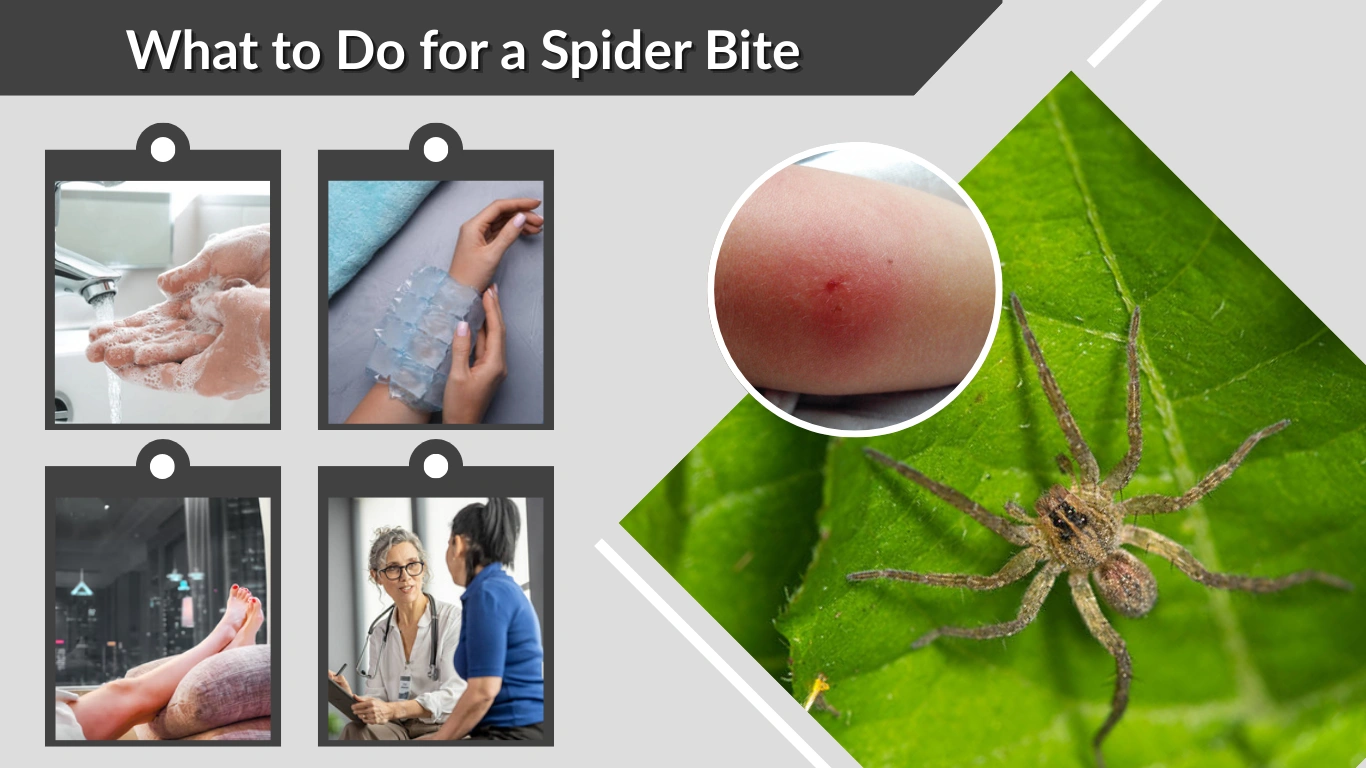
Step-by-Step First Aid
- Wash the bite area
Clean the skin gently with soap and water to remove bacteria and reduce the chance of infection. - Apply a cold compress
Place an ice pack wrapped in a cloth on the bite for 10 to 15 minutes at a time. This helps reduce swelling, redness, and pain. - Elevate the affected area
If the bite is on an arm or leg, keep it elevated to help control swelling. - Keep the area clean and dry
Rewash the area as needed and avoid covering it tightly unless advised by a doctor. - Avoid scratching or squeezing
Scratching can break the skin and allow bacteria to enter, increasing the risk of infection.
How to Treat a Spider Bite at Home

Most spider bites can be treated safely at home, especially when symptoms are mild. Home treatment focuses on relieving itching, reducing inflammation, and supporting healing.
Over-the-Counter Treatments
- Antihistamines can help relieve itching and swelling caused by an allergic reaction
- Pain relievers such as acetaminophen or ibuprofen can ease discomfort
- Hydrocortisone cream may reduce redness and inflammation when applied to unbroken skin
These treatments are usually effective for mild to moderate spider bite symptoms.
Natural and Home Remedies
Some people prefer natural remedies to manage spider bite symptoms. Common options include:
- Ice packs to reduce swelling
- Aloe vera to soothe irritated skin
- Baking soda paste (mixed with water) to help relieve itching
Natural remedies should be used with caution and only on clean, intact skin. If symptoms worsen, home remedies should be discontinued.
Types of Spider Bites and What to Do
Not all spider bites cause the same reaction. The severity of symptoms depends on whether the spider is venomous or non-venomous.
Non-Venomous Spider Bites
Most spider bites are from non-venomous species and cause mild symptoms such as redness and itching. These bites usually heal within a few days with basic home care and do not require medical treatment.
Venomous Spider Bites
Venomous spider bites are rare but more serious. Bites from spiders such as black widows or brown recluses may cause severe pain, muscle cramps, or skin damage. If a venomous spider bite is suspected, medical evaluation is recommended.
How Long Does a Spider Bite Take to Heal?
The time it takes for a spider bite to heal depends on the type of spider, the severity of the bite, and the individual’s overall health. Mild spider bites often improve within two to seven days, with redness and itching gradually fading. Swelling may last slightly longer but should continue to decrease.
Moderate bites may take one to two weeks to heal, especially if inflammation is more noticeable. Venomous spider bites, such as those from a brown recluse, can take several weeks or longer to heal because they may cause skin tissue damage. Keeping the bite clean and following medical advice helps promote proper healing.
Signs of an Infected Spider Bite

A spider bite can become infected if bacteria enter the skin, often through scratching or poor wound care. Early detection of infection is important to prevent complications.
Signs of an infected spider bite include:
- Increasing redness that spreads from the bite
- Warmth or tenderness around the area
- Pus or fluid drainage
- Worsening pain or swelling
- Fever or chills
If any of these symptoms develop, medical attention is needed. Infections may require antibiotics or professional wound care.
When to See a Doctor for a Spider Bite

Most spider bites do not require medical treatment, but certain symptoms indicate the need to see a doctor promptly. Seek medical care if:
- Pain becomes severe or continues to worsen
- You suspect a venomous spider bite
- The bite develops an open sore, darkened skin, or ulcer
- Signs of infection appear
- You experience muscle cramps, nausea, or difficulty breathing
- The bite occurs in children, older adults, or individuals with weakened immune systems
Timely medical evaluation can prevent serious complications and ensure proper treatment.
What Not to Do After a Spider Bite
Some common myths about treating spider bites can actually make the situation worse. Avoid the following:
- Do not cut the bite area to release venom
- Do not attempt to suck out venom, as this can damage the skin
- Do not apply harsh chemicals or unverified home treatments
- Do not ignore worsening symptoms or signs of infection
Following safe, evidence-based care is the best way to recover from a spider bite.
How to Prevent Spider Bites
Preventing spider bites involves reducing exposure to spiders and their hiding places. Simple preventive measures include:
- Keeping living areas clean and free of clutter
- Sealing cracks and gaps in walls, windows, and doors
- Shaking out shoes, clothing, and bedding before use
- Wearing gloves when cleaning garages, sheds, or storage spaces
- Using caution when camping or working outdoors
These habits can significantly lower the risk of spider bites in the home and outdoors.
FAQs
Are spider bites dangerous?
Most spider bites are harmless and cause mild symptoms. However, venomous spider bites or allergic reactions can be serious and require medical care.
Can a spider bite cause infection?
Yes, spider bites can become infected if bacteria enter the skin. Proper cleaning and avoiding scratching reduce this risk.
How do I know if a spider bite is serious?
Severe pain, muscle cramps, spreading redness, or skin damage may indicate a serious bite. Medical evaluation is recommended in these cases.
Do all spider bites need medical treatment?
No, most spider bites heal with home care. Medical treatment is only necessary if symptoms worsen or severe reactions occur.
Conclusion
Knowing what to do for a spider bite can help you respond quickly and safely. Most spider bites are mild and heal with basic first aid and home treatment, but it is important to watch for signs of infection or severe reactions. By treating spider bites properly and taking steps to prevent future bites, you can reduce discomfort and protect your health.
