
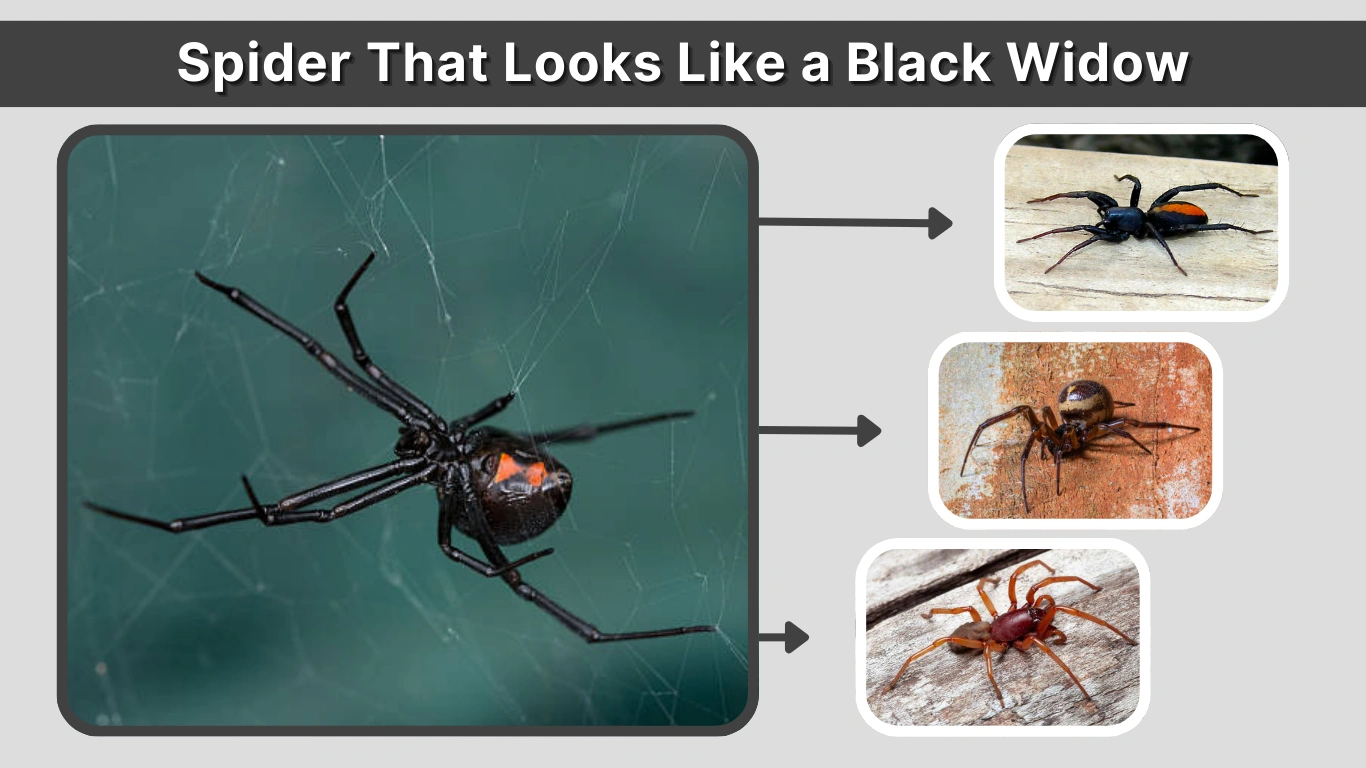
The black widow spider is one of the most recognized spiders in the world, known for its shiny black body and red hourglass marking. However, many people are surprised to learn that several harmless spiders closely resemble black widows. These look-alikes often cause fear when found in homes, garages, or gardens. Understanding which spiders merely look like black widows and how they differ can help prevent unnecessary panic. This guide explains why misidentification is common and introduces the most frequently confused species.
Understanding What a True Black Widow Looks Like
A true black widow belongs to the genus Latrodectus. Adult females are the most recognizable, with a glossy jet-black body and a large, round abdomen. The famous red or orange hourglass marking usually appears on the underside of the abdomen, though in some individuals it may look broken or faint.
Black widows have long, slender legs and build messy, irregular cobwebs rather than neat spiral webs. These webs are often found in dark, undisturbed locations such as woodpiles, sheds, storage boxes, and basement corners. The spider usually hangs upside down in the web, making the hourglass marking easier to see.
Male black widows and juveniles look very different from females. They are smaller, lighter in color, and often patterned with white, brown, or red markings. Because of this, many spiders that look “similar” to black widows are actually immature widows or completely different species, which adds to widespread confusion.
Why So Many Spiders Are Mistaken for Black Widows
One major reason black widows are frequently misidentified is natural mimicry. Some spiders have evolved dark, rounded bodies and red markings that resemble dangerous species. This visual similarity can discourage predators, giving harmless spiders a survival advantage.
Lighting also plays a big role. A brown or patterned spider seen in a dark garage can appear solid black. Shadows often hide fine details, making red or orange spots seem like a widow’s hourglass. Fear further exaggerates what people think they see, especially when they already associate black spiders with danger.
Juvenile spiders increase confusion even more. Young black widows do not yet have the classic glossy black look, and many other spider species go through color stages that resemble widow patterns. Add to this the huge number of mislabeled images online, and it becomes clear why almost any dark spider is quickly called a “black widow.”
Common Spiders That Look Like a Black Widow

Several spider species are regularly mistaken for black widows because they share similar body shapes, dark colors, or red markings. The most commonly confused ones include:
- False black widow spiders (Steatoda species)
- Brown widow spiders (Latrodectus geometricus)
- Red house spiders
- Noble false widows
- Red-spotted ant-mimic spiders
- Dark-colored orb-weavers
- Certain jumping spiders with red patches
Among these, false widows and brown widows account for most misidentifications worldwide.
False Black Widow Spider (Steatoda)

Appearance similarities
False black widows belong to the genus Steatoda and are the number one black widow look-alike. They often have a dark brown to purplish-black body, a rounded abdomen, and long slender legs. At a glance, especially from a distance, they can appear nearly identical to a true black widow.
Key visual differences
Unlike true black widows, false widows usually lack a bright red hourglass on the underside. Instead, they often have pale cream, tan, or faint reddish patterns on the top of the abdomen. Their bodies are also less glossy and slightly more oval rather than perfectly spherical.
Habitat and web type
False black widows build tangled cobwebs similar to black widows and prefer similar hiding spots, including garages, sheds, fences, and outdoor furniture. This shared environment increases the chance of confusion when homeowners discover one.
Bite risk and medical significance
Although false widows can bite if trapped or handled, their venom is far weaker than a black widow’s. Most bites cause mild pain, redness, or swelling and do not require medical treatment. Serious reactions are rare, making them medically insignificant compared to true black widows.
Brown Widow vs Black Widow

Body color and pattern
Brown widows have the same general shape as black widows but are lighter in color. Their bodies are usually tan, gray, or mottled brown rather than jet black. The hourglass marking is often orange or yellow-orange instead of deep red.
Egg sacs and spiderlings
One of the easiest ways to identify a brown widow is by its egg sacs. Brown widows produce spiky, tufted egg sacs that look almost like tiny sand burs, while black widow egg sacs are smooth and silky. This feature alone can quickly separate the two species.
Web and behavior differences
Brown widows also build messy cobwebs, but they are often found in more exposed locations such as mailboxes, patio furniture, and fence rails. They are generally less aggressive and more likely to retreat when disturbed.
Which one is more dangerous
Brown widows are venomous, but their bites are typically milder than black widow bites. Serious symptoms are uncommon, and many confirmed brown widow bites result in only minor localized pain.
Red House Spider and Other Dark Look-Alikes
Another spider frequently mistaken for a black widow is the red house spider (Nesticodes rufipes). It has a dark body with reddish legs and sometimes a reddish tint on the abdomen. When seen in poor lighting, the contrast between its dark body and red legs can make people assume they are looking at a dangerous widow.
However, red house spiders are slimmer than black widows and lack the distinctive hourglass marking. Their abdomen is more elongated rather than round and bulbous. They also move more actively outside their webs, unlike black widows, which usually remain hanging upside down.
Other dark spiders such as certain orb-weavers and cobweb spiders can also appear widow-like when their colors are muted. These species typically have thicker legs, patterned abdomens, or build large circular webs, which helps separate them from true widows upon closer inspection.
Small Spiders With Red Markings

Ant-mimic spiders
Some small ant-mimic spiders have black bodies with red or orange spots. Although their coloring can alarm people, their narrow waists, quick movements, and daytime activity patterns clearly separate them from black widows.
Juvenile widow look-alikes
Young black widows themselves often confuse identification. Juveniles are brown or gray with white, yellow, or red patterns along the back. Many harmless spiders pass through similar color stages, which is why juveniles are responsible for a large number of misidentifications.
Jumping spiders with red patches
Certain jumping spiders have bright red or orange markings on dark bodies. Unlike black widows, they have short legs, large forward-facing eyes, and move in quick hops instead of hanging motionless in webs.
How movement helps identification
Behavior is one of the fastest ways to tell spiders apart. Black widows are slow, reclusive, and web-bound. Jumping, running, or ant-mimic spiders actively roam, visually hunt prey, and rarely remain in messy cobwebs.
How to Tell If a Spider Is a Real Black Widow
While many spiders share partial features, true black widows show a specific combination of traits. Look for these identifying signs:
- A shiny, jet-black body in adult females
- A red or orange hourglass marking on the underside
- A large, round, bulb-shaped abdomen
- Irregular, tangled cobwebs
- Hiding places such as woodpiles, storage boxes, and dark corners
If several of these features are missing, the spider is likely a harmless look-alike.
Are Black Widow Look-Alikes Dangerous?
Most spiders that resemble black widows are not dangerous to humans. While they may bite if pressed against skin, their venom is mild and usually causes only local irritation, similar to a bee sting. Redness, itching, and slight swelling are the most common reactions.
False widows and brown widows have venom, but it is significantly less potent than that of true black widows. Serious complications are rare and usually limited to people with allergies or weakened immune systems.
True black widow bites can cause muscle pain, cramping, sweating, and nausea, but even these are rarely fatal with modern medical care. The key point is that appearance alone does not equal danger, and most “black widow sightings” involve harmless species.
Where People Commonly Find These Spiders
Spiders that look like black widows prefer sheltered, low-disturbance areas. Indoors, they are often found in basements, garages, storage rooms, and behind appliances. Outdoors, they favor woodpiles, garden sheds, outdoor furniture, and fence lines.
These environments provide darkness, insect prey, and protection from weather. Because humans frequently store unused items in these spaces, encounters often happen suddenly, leading to fear-based misidentification.
Regular cleaning, reducing clutter, and sealing entry points greatly lowers the chances of encountering both real black widows and their look-alikes.
What to Do If You Find One in Your Home
If you discover a spider that looks like a black widow, remain calm. Do not touch it with bare hands. Use a glass and stiff paper to trap it, then release it outdoors away from living areas.
If you are uncomfortable relocating it yourself, pest control services can safely remove spiders without chemicals. Wearing gloves when moving stored items and shaking out shoes or boxes also reduces bite risk.
Only confirmed black widows inside living spaces usually justify professional treatment. Most look-alikes can simply be relocated.
Online Myths and Misidentification Problems
Many photos labeled “black widow” online are actually false widows, orb-weavers, or even beetles. Social media often spreads dramatic images without scientific verification, reinforcing fear and misinformation.
Color filters, poor lighting, and camera shadows further distort spider appearances. This leads people to believe black widows are far more common than they really are.
Learning basic identification features helps break this cycle. Accurate knowledge replaces panic and allows people to respond calmly when encountering unfamiliar spiders.
FAQs
What spider is most often mistaken for a black widow?
The false black widow spider (Steatoda species) is most commonly confused with a true black widow. It has a rounded dark abdomen and similar web style, but it lacks the bright red hourglass. Its venom is much weaker and rarely causes serious symptoms.
Can brown widows be confused with black widows?
Yes. Brown widows share the same general body shape and web structure as black widows. They are lighter in color, often mottled brown or gray, and their hourglass is usually orange rather than red. Their bites are typically less severe.
Are spiders that look like black widows dangerous?
Most black widow look-alikes are not dangerous. While they may bite defensively, their venom is mild and usually causes only minor pain or swelling. Serious medical reactions are rare and mainly associated with true black widow bites.
How can I quickly identify a real black widow?
Look for a glossy jet-black body, a large round abdomen, and a red hourglass marking on the underside. Black widows usually hang upside down in messy cobwebs in dark, undisturbed places such as woodpiles, basements, and storage areas.
Should I kill a spider that looks like a black widow?
Killing is usually unnecessary. Many look-alikes are harmless and help control insects. If unsure, safely capture and release the spider outdoors or contact pest control. Only confirmed black widows inside living spaces may require professional removal.
