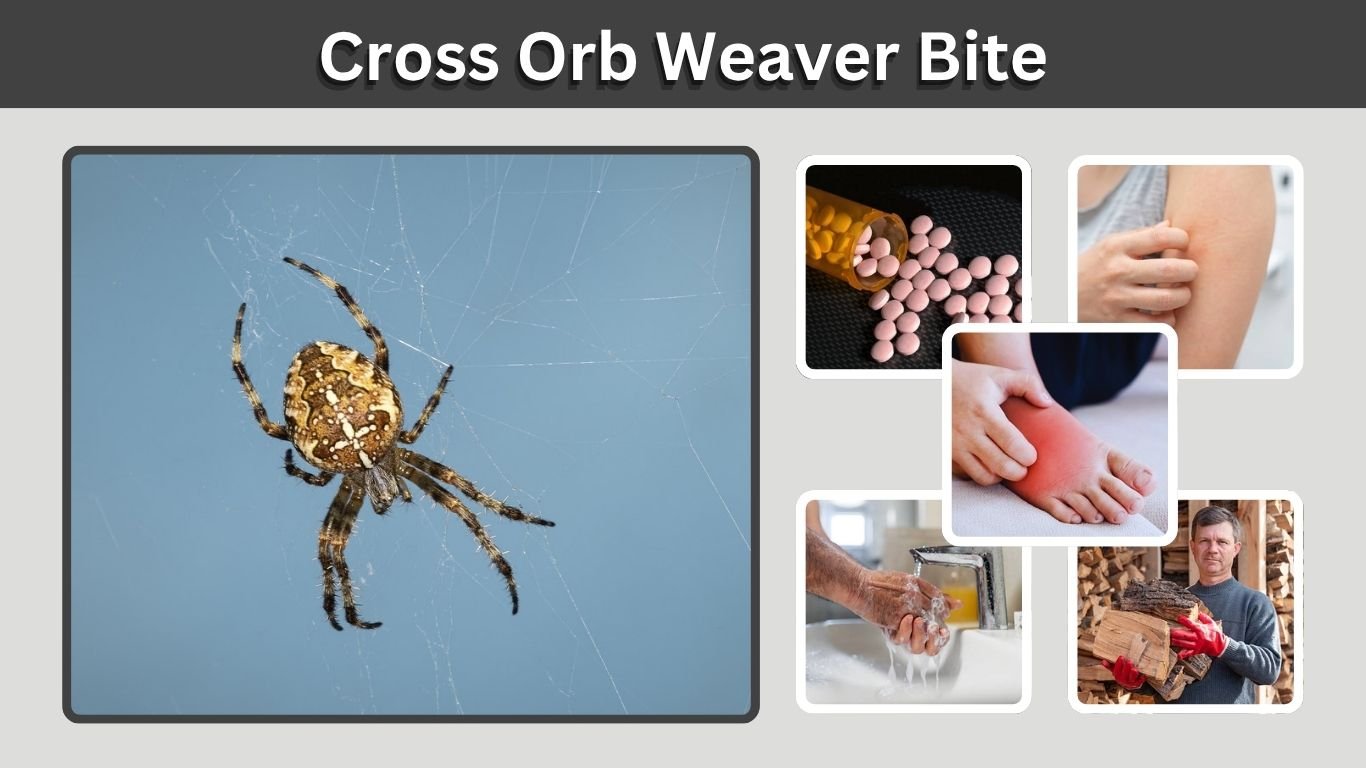
A cross orb weaver bite is uncommon and usually occurs only when the spider is grabbed, trapped against the skin, or accidentally squeezed. Although the cross orb weaver possesses venom for immobilizing insects, its bite is not considered medically dangerous to most people. Typical symptoms include localized pain, redness, itching, and mild swelling. Knowing how to identify the spider, care for the bite, and recognize unusual symptoms can help you respond safely without unnecessary alarm.
Do Cross Orb Weaver Spiders Bite?
Cross orb weavers can bite humans, but they are not aggressive spiders. They generally stay in their webs and try to escape, hide, or vibrate rapidly when disturbed. Biting is usually a last defensive response when the spider cannot get away.
Bites may occur when someone:
- Picks up the spider with bare hands
- Presses it against clothing or skin
- Reaches into a hidden web
- Handles outdoor furniture, plants, or equipment containing the spider
- Attempts to relocate it by hand
Simply walking near a cross orb weaver or touching the outer edge of its web is unlikely to provoke a bite.
What Does a Cross Orb Weaver Bite Feel Like?
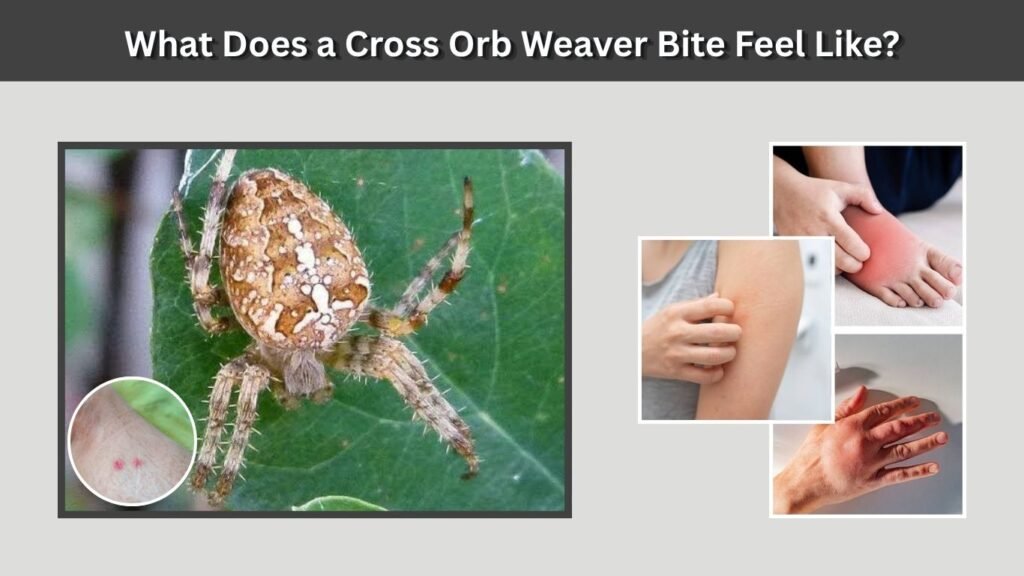
A person may feel a brief pinching or stinging sensation when bitten. Some people compare the discomfort to a mild bee sting. Verified bites from cross orb weavers have mainly produced localized pain, redness, and swelling.
Common Bite Symptoms
| Symptom | What you may notice |
| Pain | Mild to moderate discomfort around the bite |
| Redness | A small red or inflamed area |
| Swelling | Localized puffiness surrounding the marks |
| Itching | Mild irritation as the skin reacts |
| Tenderness | Sensitivity when the area is touched |
| Puncture marks | Tiny marks may sometimes be visible |
Most reactions remain limited to the skin surrounding the bite. The effects are generally mild and may improve within a few days, although the duration varies according to the person and the amount of venom injected.
Can the Bite Cause Serious Symptoms?
Serious reactions are unusual. However, reactions differ between individuals, and rare broader symptoms have been reported after verified spider bites. Allergic reactions may produce hives, wheezing, nausea, tingling, or difficulty breathing.
Symptoms spreading beyond the bite area should not be ignored, especially when the spider was not positively identified.
What Does a Cross Orb Weaver Spider Bite Look Like?
A suspected bite may appear as a small red bump surrounded by mild swelling. It might itch, feel warm, or be tender. Two tiny puncture marks are possible, but they may be too small to see.
However, cross orb weaver bite pictures cannot reliably confirm what caused a skin reaction. Spider bites can resemble mosquito bites, allergic reactions, pimples, and bacterial skin infections. Seeing the spider bite and having it correctly identified provides the strongest confirmation.
A rapidly enlarging wound, darkening skin, substantial blistering, drainage, or tissue damage is not a typical mild cross orb weaver reaction. Such symptoms require medical evaluation because another spider, infection, or unrelated skin condition may be responsible.
Is a Cross Orb Weaver Bite Poisonous?
Cross orb weavers are venomous rather than poisonous. Venom is delivered through fangs, while poison causes harm when an organism is eaten or touched.
The spider’s venom helps immobilize flies, wasps, beetles, and other insects trapped in its circular web. The venom is not considered medically significant to most humans, and cross orb weavers are not grouped with dangerous species such as widow or recluse spiders.
How to Treat a Cross Orb Weaver Bite
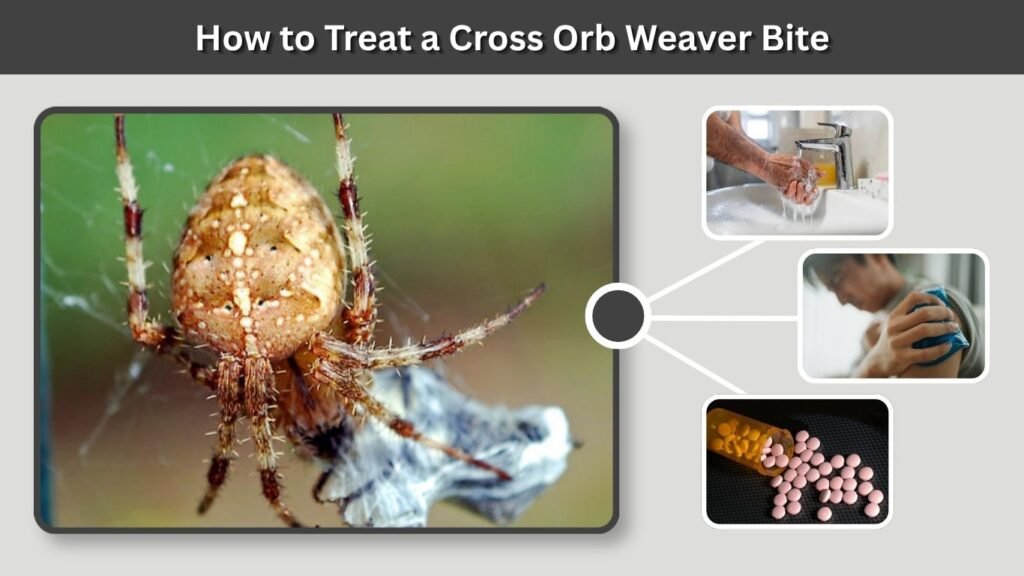
A mild bite can generally be managed with simple first aid. Begin treatment as soon as possible and monitor the area for changes.
- Move away from the spider: Do not attempt to grab or kill it because this could result in another bite.
- Wash the bite: Gently clean the skin with soap and water to reduce the possibility of infection.
- Apply a cold compress: Place a cloth-wrapped ice pack or cold damp cloth over the area for 10–20 minutes. Never apply ice directly to the skin.
- Control itching: A nonprescription antihistamine, calamine lotion, or low-strength hydrocortisone cream may help when used according to its label. Ask a healthcare professional before giving medication to a child.
- Avoid scratching: Scratching can break the skin and introduce bacteria.
- Monitor the area: Watch for increasing pain, spreading redness, substantial swelling, pus, or other signs of infection.
Do not cut the bite, attempt to remove the venom, or place an extremely tight bandage around the affected limb.
When to Seek Medical Attention
Contact a healthcare professional when:
- Pain or swelling becomes severe
- Redness continues spreading
- The skin becomes increasingly hot or tender
- Pus, drainage, or red streaks appear
- Swollen lymph nodes develop
- Symptoms do not begin improving
- The spider’s identity is uncertain
- The person develops nausea, weakness, headache, or muscle cramps
Difficulty breathing, wheezing, facial or throat swelling, seizures, collapse, or an inability to remain awake requires emergency medical assistance.
How to Identify the Spider
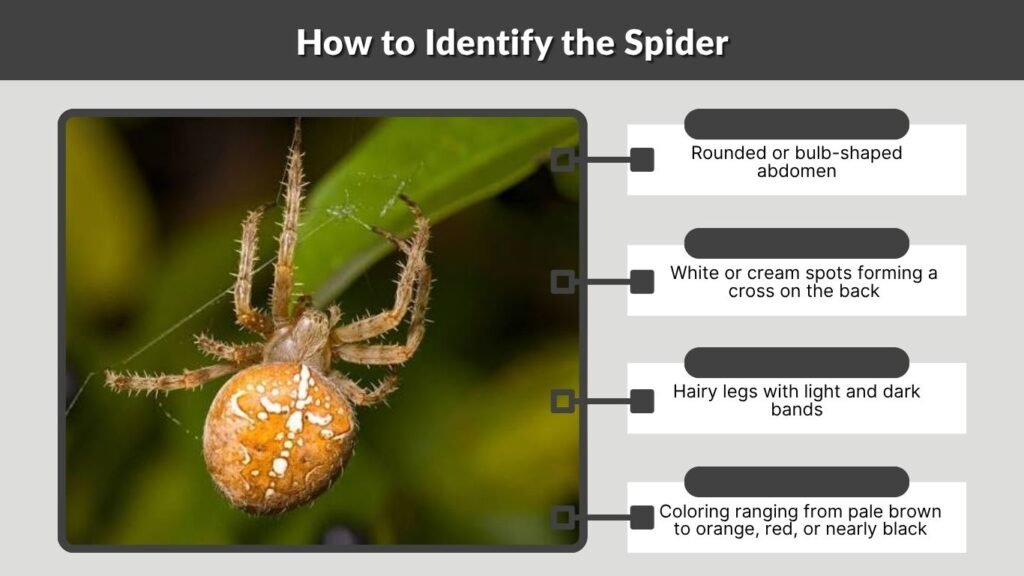
The cross orb weaver’s scientific name is Araneus diadematus. It is also called the European garden spider, garden cross spider, or diadem spider.
Identification Features
- Rounded or bulb-shaped abdomen
- White or cream spots forming a cross on the back
- Hairy legs with light and dark bands
- Coloring ranging from pale brown to orange, red, or nearly black
- Large, wheel-shaped web built between plants or structures
Adult females can reach approximately 15 mm in body length, while males are smaller at around 9 mm. Their orb webs may measure as much as 40 centimeters across and are frequently placed between shrubs, fences, trees, and other insect-rich locations.
How to Prevent Cross Orb Weaver Bites
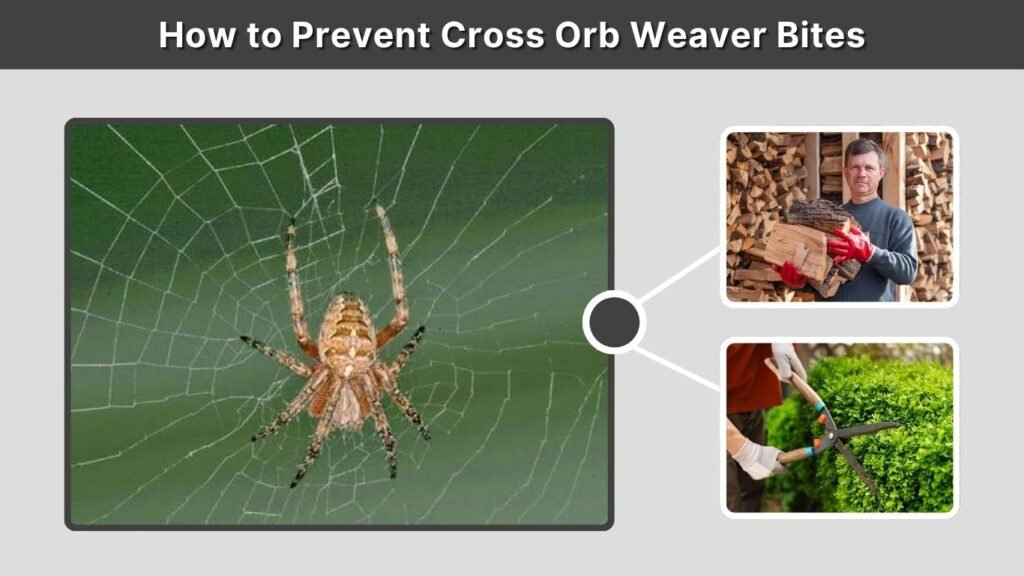
Leave spiders undisturbed when their webs are located away from frequently used areas. Cross orb weavers catch many flying insects and normally cause no problems in gardens.
Wear gloves while moving firewood, trimming dense plants, or handling outdoor equipment. Check clothing and gardening gloves that have been stored outside. When a web blocks a doorway or path, use a long broom to remove its supporting threads gently rather than handling the spider directly.
FAQs
Can a cross orb weaver bite kill you?
A cross orb weaver bite is not expected to be fatal to a healthy person. Most verified bites cause localized pain, redness, and swelling. However, any bite could potentially cause an unusual allergic reaction, so breathing difficulty or facial swelling requires emergency assistance.
How long does a cross orb weaver bite last?
Mild pain and swelling may improve within several hours or days, but individual reactions vary. Continue monitoring the skin until it returns to normal. Seek medical advice when symptoms worsen, spread beyond the bite site, or fail to begin improving.
Do cross orb weavers bite without being provoked?
Cross orb weavers do not normally bite without provocation. They are web-dwelling spiders that prefer escaping or remaining hidden. Most bites happen when the spider is grabbed, squeezed, cornered, or accidentally trapped between clothing and skin.
Are cross orb weaver bites dangerous to children?
The bite is not generally considered medically dangerous, but children may experience greater discomfort from swelling or itching. Wash the area, apply a cold compress, and monitor the child closely. Contact a healthcare professional if symptoms become significant or the spider was not identified.
Should I photograph the spider after a bite?
A clear photograph may help an expert identify the spider, provided it can be taken without approaching or handling it. Photograph the spider’s back and web from a safe distance. A photograph of the skin reaction alone cannot reliably establish that a spider caused it.
