
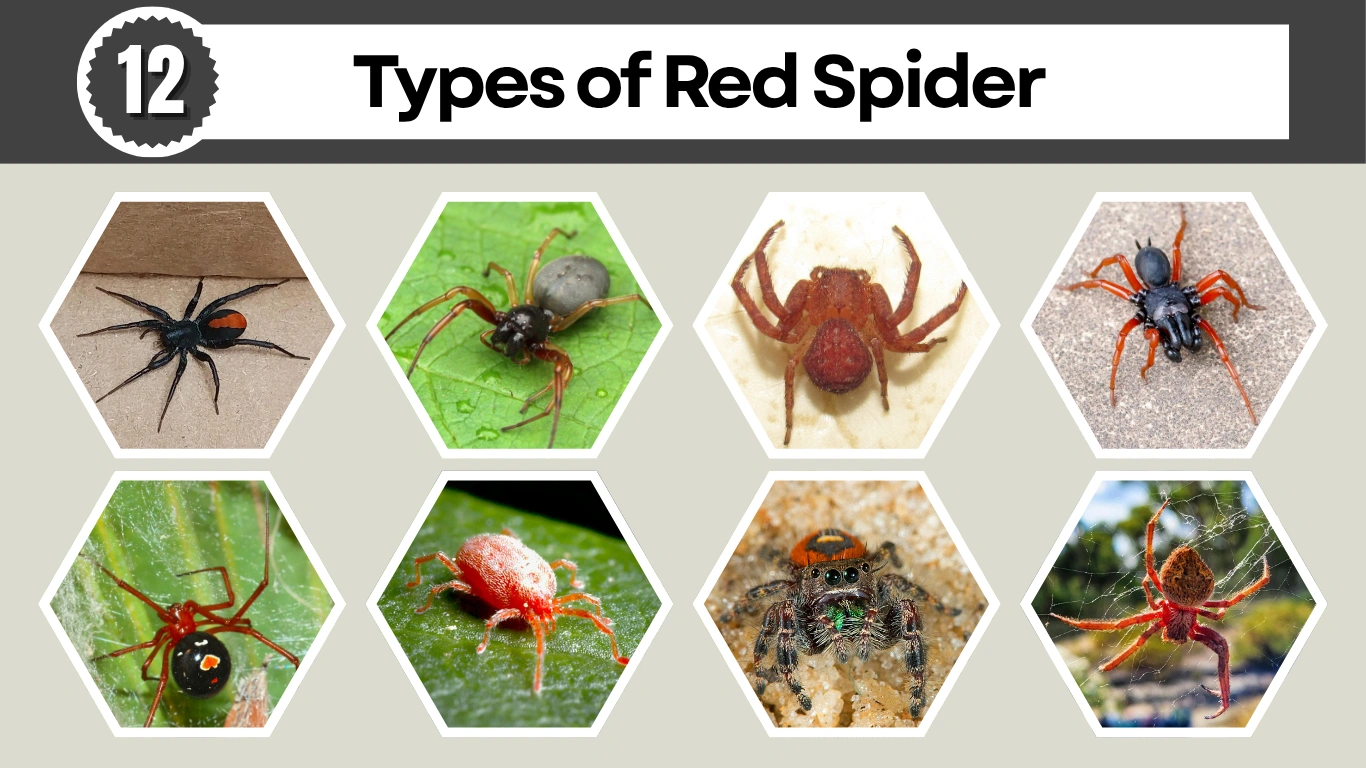
Red spiders are among the most eye-catching arachnids, displaying vivid crimson, orange, or rust hues that make them stand out in nature. Found in gardens, forests, and even homes, these spiders vary from harmless web-builders to stealthy hunters. Each species has unique adaptations for survival, blending beauty and biology while contributing to the natural balance of their ecosystems.
1. Red Velvet Spider (Eresus sandaliatus)

The Red Velvet Spider, also known as the Ladybird Spider, is a striking species famous for its bright red, velvety body and contrasting black spots. Belonging to the Eresidae family, it’s a burrow-dwelling spider often found in dry, sandy habitats. Despite its bold appearance, it is shy and rarely encountered in the wild.
Identification
- Size: 8–15 mm in males; females larger up to 20 mm
- Color: Bright red abdomen with black spots; females usually dark brown or black
- Body Shape: Stocky, hairy body with short legs
- Distinct Features: Velvety red appearance and contrasting dark markings
- Sexual Dimorphism: Males are vividly colored; females are duller and larger
Habitat
Red Velvet Spiders inhabit sandy heathlands, grasslands, and dry open areas across Europe. They live in silk-lined burrows covered by a thin web layer, which serves as both protection and a trap for unsuspecting insects that wander nearby.
Diet
Their diet consists mainly of ground-dwelling insects such as beetles, ants, and small spiders. They rely on ambush tactics, waiting near their burrow entrance to grab prey with their strong jaws. Unlike web-builders, they hunt from concealment.
Life Cycle & Lifespan
Females lay eggs inside their burrows and guard them until hatching. Spiderlings remain with the mother for a short time before dispersing. Females can live up to 5–8 years, while males have much shorter lifespans, typically dying soon after mating.
2. Red House Spider (Nesticodes rufipes)

The Red House Spider is a small, reddish-brown arachnid commonly found in homes and buildings around the world. It belongs to the Theridiidae family and is known for spinning tangled cobwebs in quiet corners. Despite its vibrant color, it’s harmless to humans and plays a helpful role by trapping household pests.
Identification
- Size: 4–7 mm in length
- Color: Reddish-brown body with darker legs
- Body Shape: Rounded abdomen and long, slender legs
- Web Type: Irregular cobwebs built in corners and crevices
- Distinct Features: Shiny, smooth body and preference for indoor habitats
Habitat
These spiders are usually found in houses, sheds, and garages, especially in dark corners and behind furniture. Outdoors, they may live under rocks or ledges. They prefer warm, dry environments and stay close to areas where insects are abundant.
Diet
Red House Spiders feed on small insects such as flies, mosquitoes, and ants. They rely on their sticky cobwebs to trap prey, quickly immobilizing victims with venom before consuming them. Their feeding habits help reduce indoor pest populations.
Life Cycle & Lifespan
Females produce several egg sacs per year, attaching them within the web. Spiderlings hatch after a few weeks and disperse nearby. Red House Spiders typically live for about one year, with females surviving slightly longer than males.
3. Redback Spider (Latrodectus hasselti)

The Redback Spider is one of Australia’s most iconic and recognizable arachnids, easily identified by the distinctive red stripe on its black abdomen. Belonging to the widow spider family (Theridiidae), it is venomous but rarely deadly to humans, thanks to effective antivenom treatments.
Identification
- Size: Females 10–14 mm; males smaller around 3–4 mm
- Color: Glossy black with a bright red dorsal stripe
- Body Shape: Rounded abdomen and long, fine legs
- Web Type: Irregular tangle web with sticky threads
- Distinct Features: Prominent red stripe and hourglass mark on underside
Habitat
Redback Spiders prefer warm, sheltered areas such as sheds, mailboxes, and under outdoor furniture. They thrive in urban and rural environments, especially in dry regions of Australia. Their webs are often found close to the ground in protected spaces.
Diet
They feed on insects, small lizards, and even other spiders. Using their strong, sticky webs, they ensnare prey and inject potent venom to subdue it. The venom liquefies the insides, allowing easy feeding.
Life Cycle & Lifespan
Females can live up to three years, while males usually die soon after mating. Females lay egg sacs containing up to 250 eggs each. Spiderlings hatch within a few weeks and disperse by ballooning.
4. Red Orb-Weaver (Araneus quadratus – Red Morph)

The Red Orb-Weaver is a beautiful color variation of the Araneus quadratus species, known for its striking reddish or orange abdomen. This spider is a master web builder, creating large, circular orb webs to catch flying insects. Despite its vivid appearance, it is harmless and often admired for its artistry in web design.
Identification
- Size: 7–17 mm in length
- Color: Deep red or orange with pale spots on the abdomen
- Body Shape: Rounded abdomen and sturdy legs
- Web Type: Large, circular orb webs in vegetation
- Distinct Features: Color-changing ability based on surroundings
Habitat
Red Orb-Weavers inhabit meadows, gardens, and hedgerows across Europe and Asia. They build webs among tall grasses or shrubs, often reconstructing them daily. Their coloration allows them to blend with autumn foliage, offering effective camouflage from predators.
Diet
Their diet consists of flies, moths, and other flying insects. They patiently wait at the center or edge of the web, sensing vibrations when prey is trapped, then quickly immobilize it with silk and venom before feeding.
Life Cycle & Lifespan
Females lay egg sacs attached to leaves or grass stems. Spiderlings hatch in spring, disperse through ballooning, and mature by late summer. Red Orb-Weavers typically live for one year, with adults dying after reproduction in autumn.
5. Woodlouse Spider (Dysdera crocata)

The Woodlouse Spider is easily recognized by its reddish cephalothorax and large fangs designed for piercing tough prey. Belonging to the family Dysderidae, it specializes in hunting woodlice and is found worldwide in moist, dark environments. Though intimidating in appearance, its bite is rarely harmful to humans.
Identification
- Size: 9–15 mm in length
- Color: Red-orange cephalothorax with pale beige abdomen
- Body Shape: Elongated body with powerful jaws (chelicerae)
- Distinct Features: Large fangs and vivid red upper body
- Eyes: Six eyes arranged in a semicircle
Habitat
Woodlouse Spiders live under logs, stones, and debris in damp areas such as gardens, basements, and cellars. They prefer habitats with abundant woodlice, their primary food source, and often hunt at night.
Diet
Their diet mainly consists of woodlice, though they occasionally eat other small insects. Using their strong fangs, they pierce through the woodlouse’s shell, injecting venom to digest the prey internally before consumption.
Life Cycle & Lifespan
Females lay eggs in silk retreats under stones or bark, guarding them until hatching. Spiderlings remain with the mother for a short period before dispersing. Woodlouse Spiders can live up to three years, with adults active year-round in mild climates.
6. Red Jumping Spider (Phidippus johnsoni)

The Red Jumping Spider, also known as the Johnson Jumping Spider, is a bold and active hunter native to North America. Belonging to the Salticidae family, it’s famous for its bright red abdomen and incredible vision. These spiders rely on their agility and jumping ability rather than webs to catch prey.
Identification
- Size: 8–13 mm in length
- Color: Bright red abdomen with black cephalothorax and legs
- Body Shape: Compact and hairy body with short, powerful legs
- Eyes: Large central eyes providing excellent vision
- Distinct Features: Energetic movements and iridescent green chelicerae
Habitat
Red Jumping Spiders inhabit dry, sunny environments such as rocky areas, fences, and walls. They’re often seen outdoors during warm months, exploring plants and man-made structures in search of prey. They prefer open spaces for hunting and jumping.
Diet
These spiders actively hunt flies, moths, and other small insects. They stalk prey visually and leap several times their body length to capture it, securing it with silk for safety. Their hunting style makes them effective, solitary predators.
Life Cycle & Lifespan
Females lay eggs in silk sacs hidden under rocks or bark. Spiderlings hatch within weeks and disperse soon after. The average lifespan of the Red Jumping Spider is about one year, with adults most active during summer and autumn.
7. Red Spider Mite (Tetranychus urticae)

The Red Spider Mite, also known as the Two-Spotted Spider Mite, is a tiny arachnid often mistaken for an insect. Despite its size, it’s a notorious agricultural pest that infests crops and houseplants. Belonging to the Tetranychidae family, it thrives in hot, dry environments.
Identification
- Size: Less than 1 mm in length
- Color: Bright red or orange-red
- Body Shape: Oval-shaped body with fine hairs
- Distinct Features: Very small, often visible as red specks on leaves
- Web Type: Fine, silk-like webbing over infested plants
Habitat
Red Spider Mites are found on the undersides of leaves in gardens, greenhouses, and farms. They prefer dry, warm climates and rapidly multiply in controlled environments like indoor plants. Infestations can spread quickly if unchecked.
Diet
They feed by piercing plant cells and sucking out the contents, leading to discolored, stippled leaves and reduced plant vigor. Their feeding can severely damage crops such as tomatoes, beans, and cucumbers.
Life Cycle & Lifespan
Females lay tiny eggs on leaf surfaces that hatch in a few days. Under warm conditions, a complete life cycle—from egg to adult—can occur in just two weeks. Their short lifespan (2–4 weeks) is balanced by rapid reproduction, causing fast population growth.
8. Red Widow Spider (Latrodectus bishopi)

The Red Widow Spider is a rare and visually stunning member of the widow family (Theridiidae). Native to Florida’s coastal sand dunes, this spider is recognized by its bright red cephalothorax and legs, contrasted with a reddish-orange abdomen marked by black spots. Though venomous, it’s shy and rarely poses a threat to humans.
Identification
- Size: Females 10–16 mm; males smaller (3–6 mm)
- Color: Bright red body with an orange-red abdomen featuring black spots
- Body Shape: Rounded abdomen, long thin legs
- Web Type: Irregular cobweb built in palmetto fronds or shrubs
- Distinct Features: Lacks the typical hourglass mark of other widow spiders
Habitat
Red Widow Spiders inhabit Florida’s coastal scrub and sand pine habitats. They prefer dry, sandy environments with palmetto plants, where they build webs high in the foliage. Habitat destruction has made sightings increasingly rare.
Diet
Their diet consists mainly of flying insects such as beetles, grasshoppers, and moths. They use sticky webs to trap prey, then inject venom to immobilize and digest it. Their hunting strategy relies heavily on web placement in areas of high insect activity.
Life Cycle & Lifespan
Females lay multiple egg sacs in sheltered areas within the web. Spiderlings hatch and stay together briefly before dispersing. Females live up to two years, while males survive only a few months after mating.
9. Red-Legged Purseweb Spider (Atypus affinis)

The Red-Legged Purseweb Spider is a secretive, burrow-dwelling species belonging to the Atypidae family. Often mistaken for tarantulas due to its robust body, it is known for constructing tubular silk retreats partly buried underground. The spider’s red legs give it a distinctive look among European spiders.
Identification
- Size: 10–15 mm in length
- Color: Black or dark brown body with red or reddish-brown legs
- Body Shape: Thick, stocky body with glossy cephalothorax
- Web Type: Tubular “purseweb” extending above ground
- Distinct Features: Ambushes prey through silk tube walls
Habitat
These spiders live in grasslands, woodland edges, and dry sandy soils across Europe. They build silk tubes along embankments or under vegetation. The exposed part of the tube serves as a hunting trap for passing insects.
Diet
Their diet includes beetles, ants, and other crawling insects. When prey walks over the silk tube, the spider senses vibrations, pierces through the web, and pulls the insect inside to feed.
Life Cycle & Lifespan
Females lay eggs inside the silk retreat, where spiderlings hatch and stay for several weeks. Purseweb spiders have long lifespans, with females living up to 8 years and males typically dying soon after mating.
10. Red Crab Spider (Thomisus onustus)

The Red Crab Spider is a colorful and adaptable species known for its crab-like stance and sideways movement. Belonging to the Thomisidae family, this spider can change color to match its surroundings, making it an expert ambush predator. Its reddish or pink tones help it blend into flowers where it waits for unsuspecting prey.
Identification
- Size: Females 7–11 mm; males 3–5 mm
- Color: Reddish, pink, white, or yellow depending on surroundings
- Body Shape: Flat, wide body with long front legs
- Movement: Sideways and backward like a crab
- Distinct Features: Ability to change color for camouflage
Habitat
Red Crab Spiders live in meadows, gardens, and open fields. They prefer flowers and shrubs, especially those that attract pollinators such as daisies and roses. Their camouflage allows them to remain nearly invisible while hunting.
Diet
They feed on bees, flies, and butterflies that visit flowers. Rather than spinning webs, they ambush prey by waiting motionlessly on petals before striking with precision. Their venom quickly immobilizes their victims.
Life Cycle & Lifespan
Females lay eggs in silk sacs attached to leaves or petals, guarding them until hatching. Spiderlings remain for a short time before dispersing. Red Crab Spiders generally live for about one year, completing their life cycle through the warm seasons.
11. Red Sac Spider (Cheiracanthium inclusum)

The Red Sac Spider is a small but active nocturnal hunter found both indoors and outdoors. Belonging to the Cheiracanthiidae family, it’s recognized by its reddish-orange body and habit of resting in silken sacs during the day. Though it can bite, its venom rarely causes more than mild irritation.
Identification
- Size: 5–10 mm in length
- Color: Reddish-orange or tan body with darker legs
- Body Shape: Slender with elongated abdomen
- Web Type: Small silk sac used as a retreat, not for trapping prey
- Distinct Features: Smooth body and fast movements
Habitat
Red Sac Spiders are found in gardens, forests, and inside homes, particularly in ceilings, corners, and window frames. Outdoors, they rest in curled leaves or under bark. They thrive in warm, sheltered environments.
Diet
Their diet consists of small insects like flies, moths, and ants. They actively hunt at night, relying on agility rather than webs. After catching prey, they inject venom to immobilize it before feeding.
Life Cycle & Lifespan
Females lay eggs in small silken sacs, often within their retreats. The spiderlings hatch and remain together briefly before dispersing. Red Sac Spiders typically live for about one year, with adults most active in late summer and fall.
12. Red-Spotted Ant-Mimic Spider (Castianeira descripta)

The Red-Spotted Ant-Mimic Spider is a sleek and agile species that imitates ants in both movement and appearance. Belonging to the Corinnidae family, it is commonly found across North America. Its glossy black body with vivid red markings gives it a striking look, and its mimicry helps it avoid predators while hunting effectively.
Identification
- Size: 6–10 mm in length
- Color: Shiny black body with bright red spots on the abdomen
- Body Shape: Slender and elongated, resembling an ant
- Movement: Quick and jerky, mimicking ant behavior
- Distinct Features: Red abdominal markings and smooth, reflective surface
Habitat
These spiders inhabit wooded areas, gardens, and grasslands, often found under rocks, leaf litter, or tree bark. They prefer sunny spots and are commonly seen during warm months, moving swiftly across the ground in search of prey.
Diet
Red-Spotted Ant-Mimic Spiders feed on small insects, including ants and beetles. Their mimicry allows them to get close to prey undetected. Once within striking distance, they pounce with precision, using venom to subdue their targets.
Life Cycle & Lifespan
Females lay eggs in silk sacs hidden beneath rocks or logs, guarding them until they hatch. Spiderlings grow quickly, molting several times before adulthood. The typical lifespan is about one year, with adults most active in late spring and summer.
