
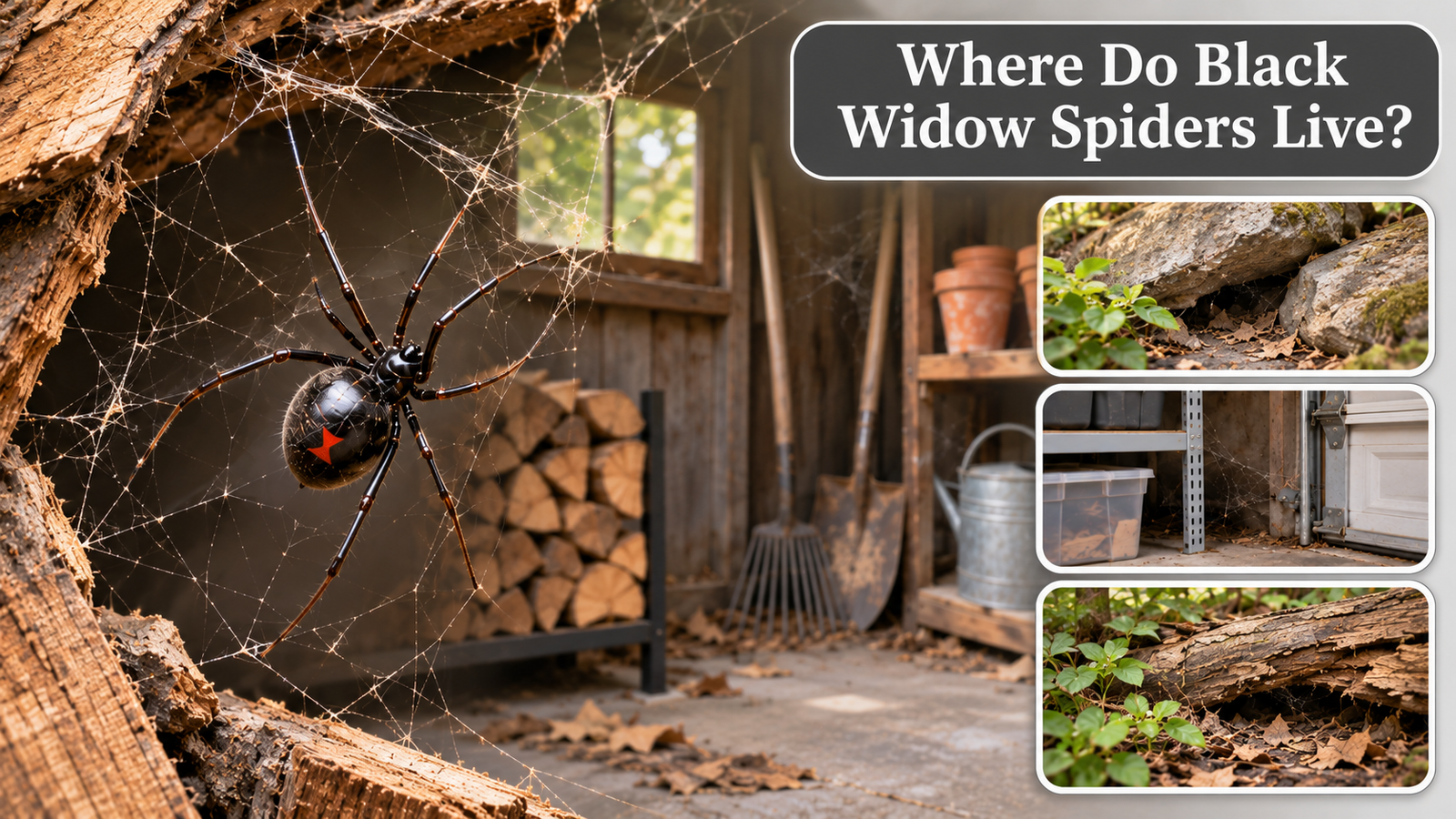
Black widow spiders live in many warm regions, but the species people call “black widows” are not all found in the same places. In North America, they occur across much of the United States and parts of Canada, Mexico, Central America, and the Caribbean. Outdoors, they favor dark, sheltered locations where their irregular webs will not be disturbed. Around homes, that can mean woodpiles, sheds, garages, crawl spaces, and objects stored on the ground. Knowing their range and preferred hiding places can help you spot them without handling them.
Where in the World Do Black Widow Spiders Live?
Widow spiders in the genus Latrodectus are found in warm and temperate areas on several continents. “Black widow” commonly refers to a group of dark widow species, especially North American species such as the southern, northern, and western black widows. Their ranges overlap in some areas, and different widow species occur in other regions. Because common names vary, a black widow reported in one country may not be the same species as one found elsewhere.
Black widows are most associated with the Americas, while related widow spiders live in parts of Europe, Africa, Asia, and Australia. Australia’s redback is a close relative, but it is usually called a redback rather than a black widow. Exact identification depends on the species and region.
Where Do Black Widow Spiders Live in the United States?
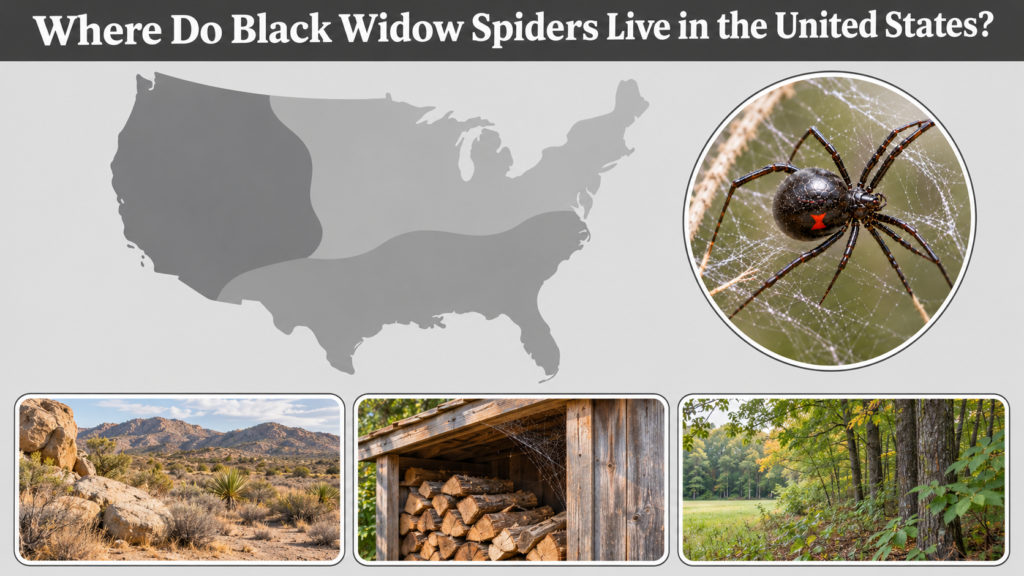
Several widow species occur in the United States, with different ranges. The southern black widow (Latrodectus mactans) is associated with the southeastern states, although records extend beyond the region. The northern black widow (L. variolus) is found through parts of the Northeast and Midwest. The western black widow (L. hesperus) occurs across much of the western United States, including dry and coastal areas. Brown and red widows are also present in some regions, but they are distinct species.
Range boundaries are not exact. Climate, shelter, transport of goods, and identification errors can affect sightings. A spider found outside a familiar range may be another widow species or a misidentification. For local guidance, consult a university extension office or pest professional.
Southern Black Widow Range
The southern black widow is most common in the southeastern United States. It may also occur in nearby states and has been documented farther north in places such as Pennsylvania. It often occupies warm, sheltered habitats near the ground, including woodpiles, sheds, crawl spaces, and outdoor structures.
Northern Black Widow Range
The northern black widow is associated with the northeastern United States and parts of the Midwest. Its range overlaps with the southern black widow in some areas, so identifying the species from location alone can be difficult. The underside markings can help, but they vary, and a safe photograph is preferable to handling a spider.
Western Black Widow Range
The western black widow is common in western parts of North America. It may be found in deserts, grasslands, scrub, forests, and developed areas where it can find protected spaces and insect prey. It can live around buildings as well as in natural habitats, especially in cluttered or rarely disturbed locations.
What Places Do Black Widows Prefer?
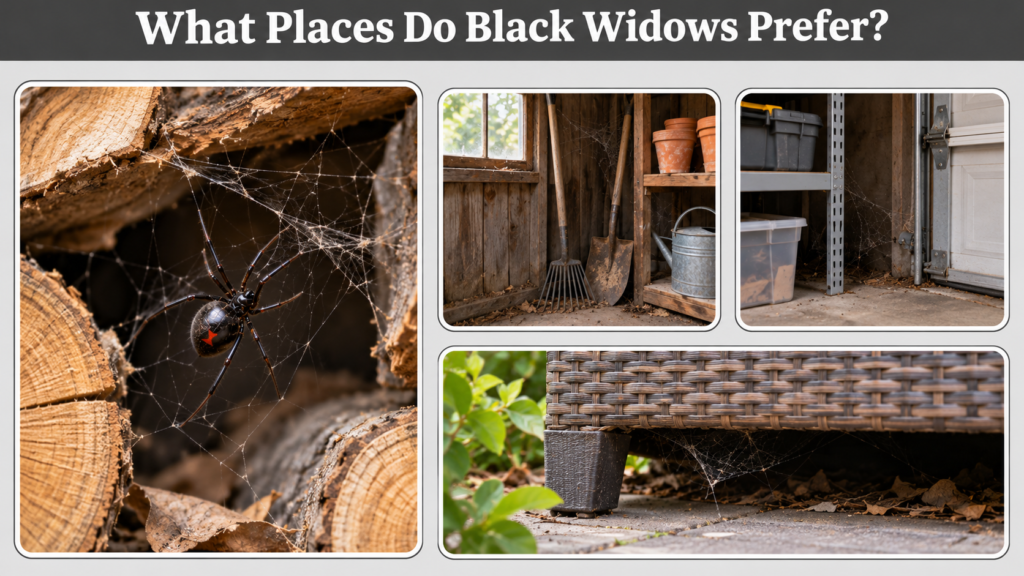
Black widows do not usually build large, exposed webs in the middle of busy spaces. They select quiet spots where their webs can remain undisturbed and where insects are likely to pass. These spiders are often nocturnal and spend daylight hours tucked into a retreat near the web. Their webs look irregular and tangled rather than neat and wheel-shaped.
Natural Outdoor Habitats
In natural settings, black widows may live beneath rocks, logs, loose bark, dense vegetation, or debris. They can use small cavities in tree stumps, stone walls, and dry ground. A sheltered web close to the soil gives the spider access to crawling insects and other small prey. Exact habitat preferences vary by species and climate; some are more common in dry environments, while others are regularly found in gardens, woodland edges, and other humid or temperate areas.
Places Around Buildings
Around homes and other buildings, black widows may hide in woodpiles, brush piles, outdoor storage boxes, crawl spaces, sheds, garages, basements, and utility areas. They may also settle under porches, decks, steps, eaves, or outdoor furniture. Stacks of bricks, unused pots, landscaping materials, and equipment left on the ground can create quiet gaps for a web.
They are more likely to stay where people do not often move or clean objects. A single web in a shed does not necessarily mean a house is infested. Black widows tend to stay close to the web and retreat into a nearby crack or sheltered opening when disturbed.
Can Black Widow Spiders Live Inside a House?
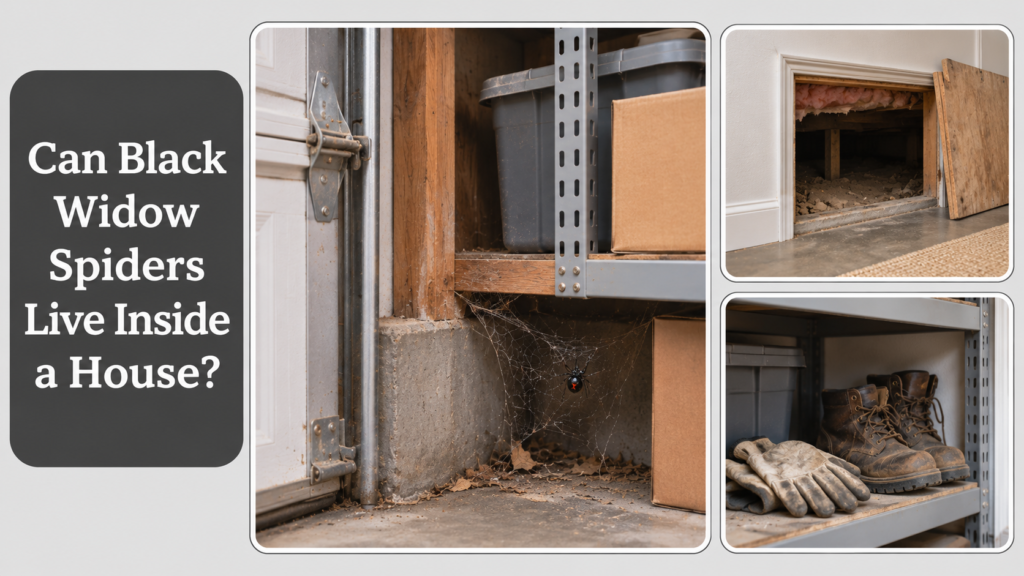
Yes. Black widows can enter homes and occupy garages, basements, storage rooms, crawl spaces, and other areas that are dark and infrequently disturbed. They may be found behind stored items, under shelves, in the corners of a utility room, or near a door that opens to a sheltered outdoor area. They are less likely to choose open, busy rooms that are cleaned and used often.
A spider may enter with firewood, boxes, or patio items stored outside. Its presence does not mean it is seeking people; it is looking for shelter and prey.
Common Indoor Hiding Spots
Check spaces that are rarely disturbed, especially near ground level. Examples include the corners of a garage, behind boxes, under basement furniture, inside storage closets, around floor drains, and near crawl-space entrances. Gloves, boots, gardening tools, and folded tarps stored in sheds or garages can also provide shelter.
Do not reach into a dark space with a bare hand. Use a flashlight to inspect it first, and move stored objects carefully. If you find several webs or spiders in an area people use, a pest-control professional can identify the species and recommend an appropriate response.
Why Do Black Widows Choose These Locations?
Black widows need a safe place to build a web, a nearby retreat, and access to prey. Dark corners and cluttered spaces offer protection from weather, predators, and frequent disturbance. These locations also attract insects, especially when outdoor lights draw flying insects toward buildings at night.
A web placed near the ground can catch beetles, flies, moths, and other small arthropods. The spider spends much of its time waiting for prey rather than roaming around a home. This is why people commonly encounter black widows while moving firewood, lifting outdoor objects, or putting on stored shoes and gloves: those actions disturb the spider’s shelter.
How to Tell If Black Widows Are Nearby
Look for an irregular, tangled web in a dark, protected place, often near the ground. Adult females are usually shiny and dark, with a red or orange marking under the abdomen, although markings vary. A messy web alone does not confirm a black widow. Take a photo from a safe distance or ask a local expert; do not reach under objects to check.
How to Make Your Home Less Attractive to Black Widows
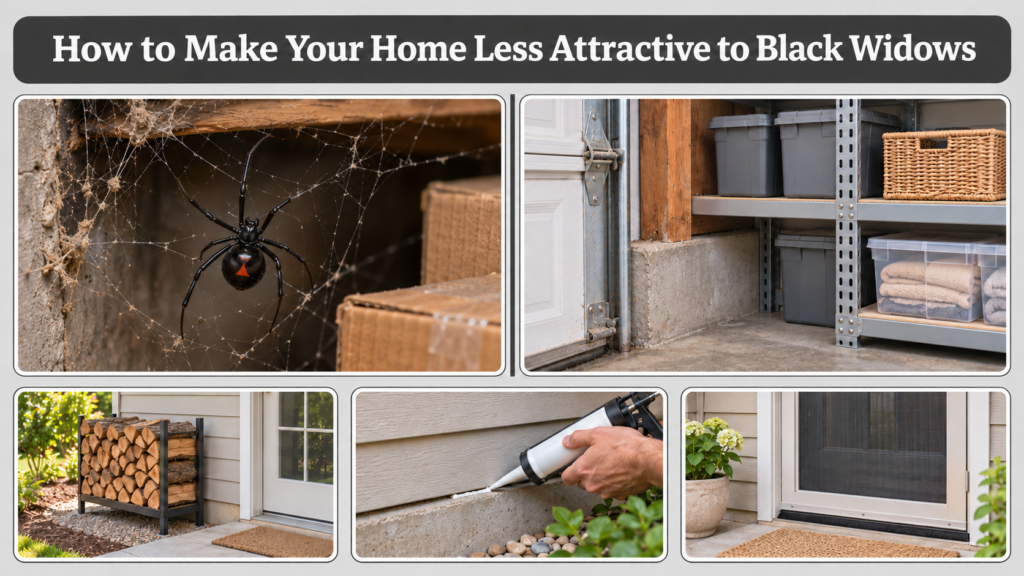
Reduce clutter in garages, sheds, basements, and storage areas so there are fewer undisturbed hiding places. Keep firewood and building materials away from doors and frequently used paths. Wear gloves when moving wood, rocks, boxes, or garden supplies. Shake out shoes, boots, gloves, and clothing stored in outbuildings before using them.
Seal gaps around doors, windows, foundations, and utility openings where practical. Use door sweeps and repair damaged screens. Reduce insect activity near entrances by managing outdoor lights and doors, and clean webs from high-traffic spots using safe tools. If black widows repeatedly appear inside or around a workplace, consult a licensed pest professional rather than handling spiders or applying pesticides without following the product label.
Frequently Asked Questions
Do black widow spiders live in every U.S. state?
Widow spiders are reported across much of the United States, but species and frequency vary. A local extension service can confirm what is present in a particular area.
Where do black widows hide during the day?
They usually stay in a retreat near their web, in dark, quiet places such as woodpiles, sheds, garages, crawl spaces, and sheltered corners. They are typically more active at night, when they can wait for prey to become caught in the web.
Can black widow spiders live in bedrooms?
It is possible, but bedrooms are not their typical preferred habitat if the space is busy and regularly cleaned. A spider may enter through stored items or hide in an undisturbed corner, closet, or area near a window. Check stored shoes or boxes before handling them.
Do black widows live in trees?
They may use crevices, loose bark, or sheltered spaces on trees and stumps, but they more often build webs in low, protected areas near the ground. Habitat varies among species and local conditions.
Are black widows found outside North America?
Related widow spiders in the genus Latrodectus occur in warm regions around the world. However, the species called a black widow in North America is not the same as every widow spider found elsewhere. Local common names can differ.
