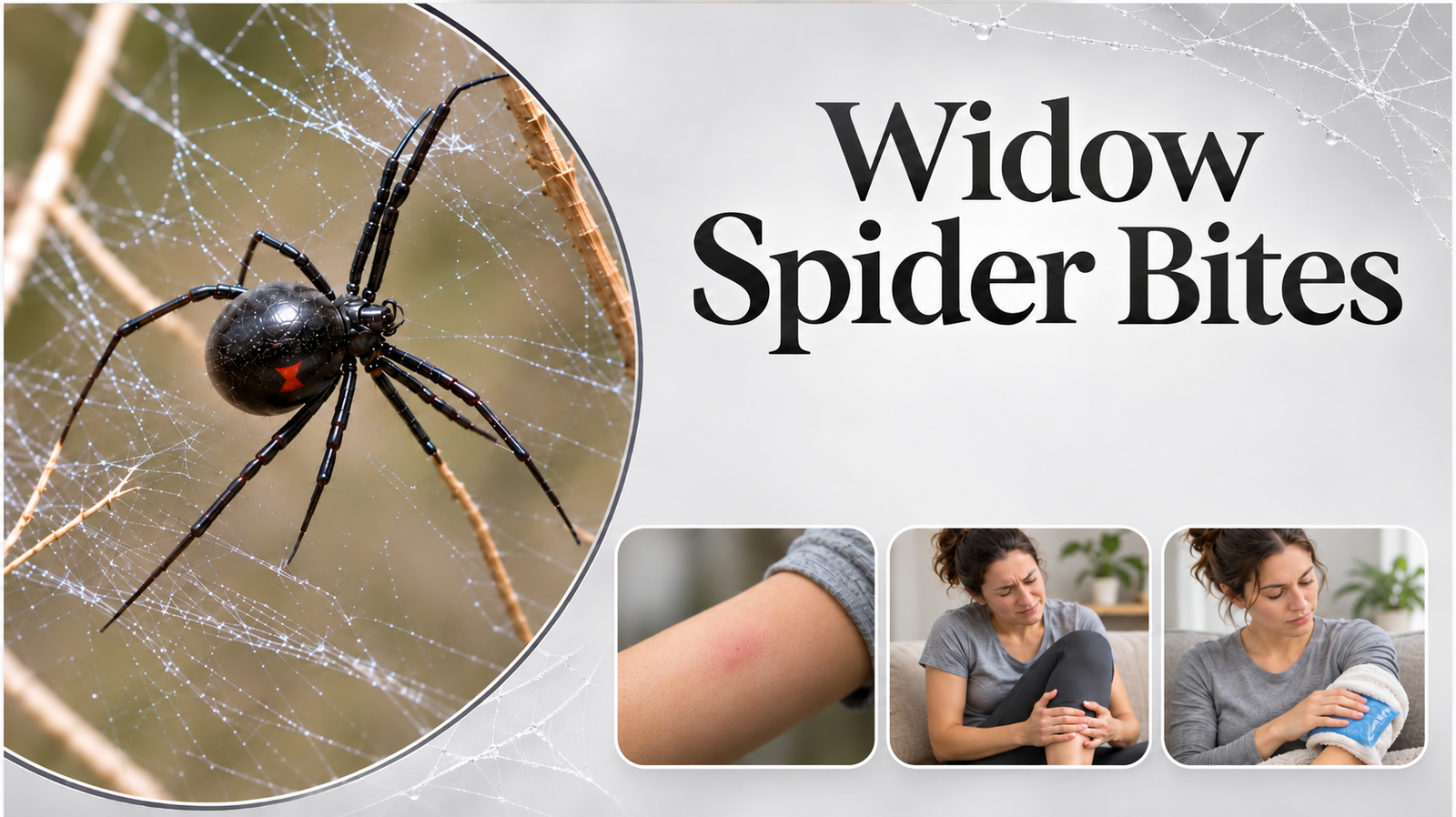
A widow spider bite can range from a small, barely noticeable puncture to a painful reaction with muscle cramps and other body-wide symptoms. Widow spiders include black widows and related species found in different parts of the world. They are generally shy and bite when trapped, pressed, or handled. Knowing what a bite may look like, which symptoms need urgent care, and what to do right away can help you respond calmly and safely.
What Is a Widow Spider Bite?
“Widow spider” refers to spiders in the genus Latrodectus, including black widows, brown widows, and redback spiders. Their venom affects the nervous system and can cause a condition called latrodectism. Not every bite injects venom, and not every suspected spider bite is actually from a spider. A clinician may need to assess the symptoms and circumstances rather than relying on the appearance of the skin alone.
Widow spiders usually avoid people. A bite is more likely when a spider is accidentally squeezed against skin—for example, while putting on a shoe, moving stored items, or reaching into a sheltered space. A bite does not happen simply because a spider is nearby or because someone touches its web.
Widow Spider Bite Symptoms
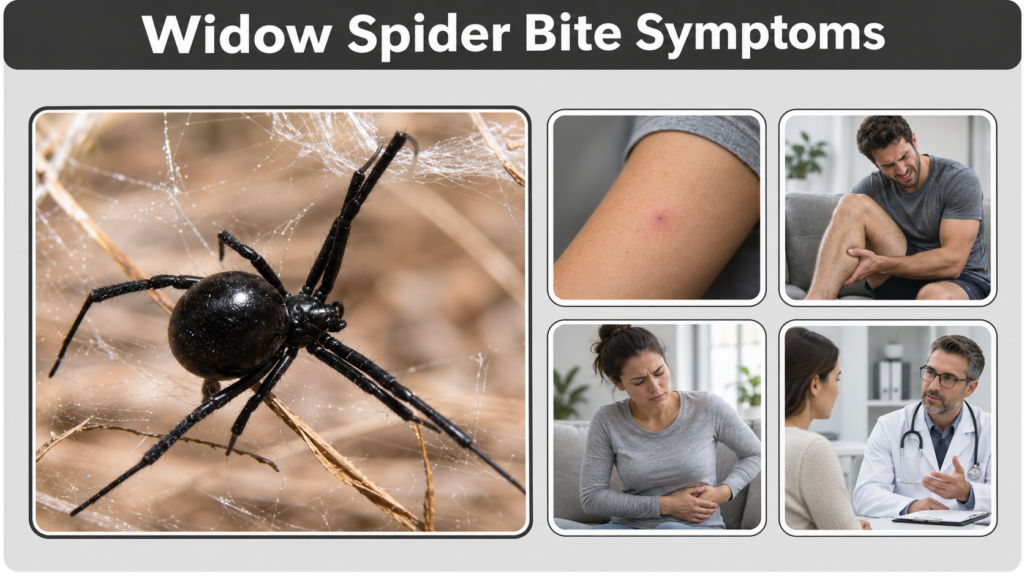
Symptoms depend on the spider species, the amount of venom injected, the person’s age and health, and individual sensitivity. The bite mark itself may be small, so the severity of the skin spot does not reliably show how the whole body will respond. Some people have only brief local discomfort, while others develop pain and muscle symptoms over the next several hours.
Early Signs at the Bite Site
A bite may cause a sharp or pinprick feeling, followed by localized pain, redness, swelling, or tenderness. One or two tiny puncture marks may be visible, but they can be difficult to see. In some cases, the person does not notice the bite at first. These signs are not unique to widow spiders and can also occur with other bites, skin irritation, or infection.
Symptoms That Can Spread Beyond the Bite
More significant envenomation can cause pain that spreads away from the bite and painful muscle tightening or cramps. Cramping may affect the abdomen, back, chest, shoulders, or legs. Other possible symptoms include sweating, restlessness, headache, nausea, vomiting, weakness, and increased blood pressure. The abdomen can feel tight or painful, which may be mistaken for another illness.
Symptoms can begin within minutes or take longer to become clear. They may intensify over several hours and can last a day or more; some people need medical treatment for longer-lasting pain or spasms. A severe reaction is uncommon, but it can be serious. Children, older adults, and people with significant health conditions should be assessed promptly after a suspected bite.
When to Seek Medical Help
Get urgent medical care if a suspected widow spider bite is followed by severe or spreading pain, repeated muscle cramps, abdominal or chest pain, vomiting, heavy sweating, faintness, trouble breathing, or symptoms that are rapidly worsening. Call your local emergency number for breathing difficulty, collapse, severe weakness, or another life-threatening reaction. Do not wait for a large wound to appear; widow bites may cause major symptoms without a dramatic skin lesion.
For a child, an older adult, someone who is pregnant, or a person with a serious medical condition, contact a healthcare professional or poison information service promptly for advice, even if symptoms seem mild. If the person is stable but you are unsure what to do, call a local medical advice line or poison center where available. Follow local emergency guidance because services and treatment options differ by country.
What to Do After a Suspected Widow Spider Bite
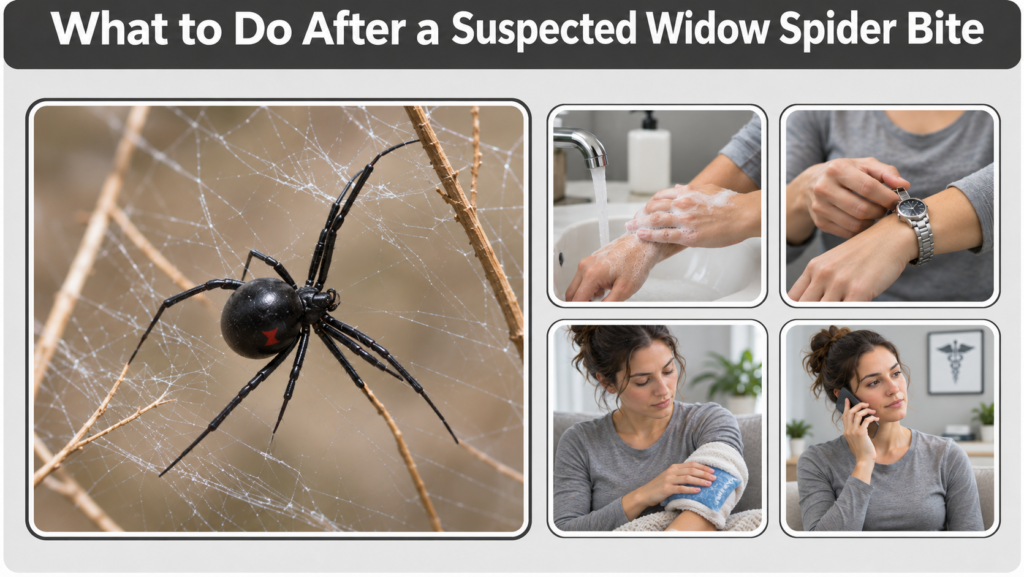
While arranging medical advice, keep the person calm and limit unnecessary movement. Wash the area gently with soap and water. A wrapped cold pack can help with local discomfort; apply it for short intervals and do not place ice directly on skin. Remove rings, watches, or tight items near the bite before swelling develops. If it is safe, note when the bite may have happened and how symptoms change.
Do not cut the skin, try to suck out venom, apply a tight tourniquet, or use unverified home remedies. Avoid trying to catch or handle the spider. A clear photo taken from a safe distance may help with identification, but treatment should not be delayed to obtain one. Do not give medication to a child or combine pain medicines without checking the label and consulting a qualified professional, especially if the person has a medical condition or takes other medicines.
How Doctors Treat Widow Spider Bites
A healthcare professional will ask about the suspected bite, symptoms, timing, age, and medical history. They may examine the person, monitor vital signs, and evaluate other possible causes of pain or cramping. There is no simple skin test that confirms a widow bite in every case, and many cases are diagnosed from the overall clinical picture.
Treatment is usually focused on relieving pain and muscle symptoms, monitoring the patient, and providing supportive care such as fluids when needed. Depending on the symptoms, clinicians may use pain-relieving medicines or other treatments to reduce spasms and discomfort. A tetanus booster may be considered based on the person’s vaccination history and the wound.
Antivenom is available for some widow spider species in some places, but it is not needed for every bite. A clinician may consider it when symptoms are severe or difficult to control, weighing the likely benefit against the possibility of an allergic reaction and local availability. Do not seek or use antivenom outside medical care. Many people recover, though pain and cramps can be distressing and may require observation or treatment.
How to Recognize Widow Spiders Safely
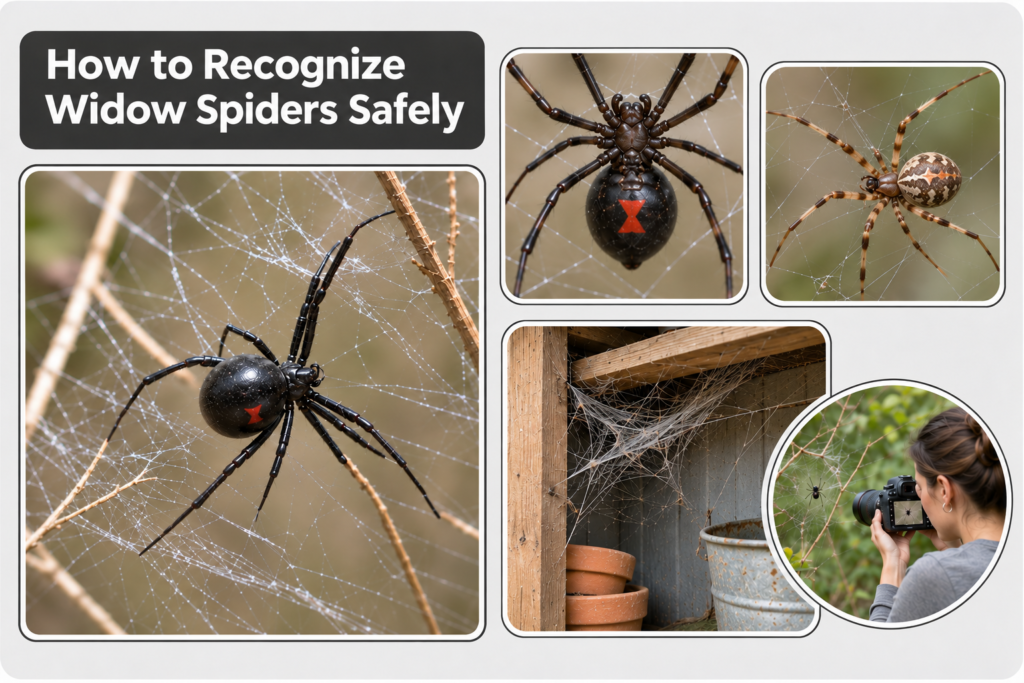
Widow spiders vary by species and region, so color alone is not a reliable way to identify one. Many adult female black widows are dark and shiny, often with a red or orange marking on the underside of the abdomen. Brown widows may be tan or mottled, while redback spiders have their own regional appearance. Males and juveniles can look different from adult females, and markings can vary.
Widows often build irregular, tangled webs in sheltered, undisturbed places such as sheds, garages, wood piles, outdoor furniture, and storage areas. Finding a spider or web does not prove that a bite occurred. Do not handle a spider to check its markings. If identification matters, take a photo from a safe distance or ask a pest professional or local expert.
How to Reduce the Chance of a Bite
Make less-used spaces easier to inspect and avoid reaching blindly into dark gaps, stacked wood, boxes, or garden debris. Wear gloves when moving firewood, handling stored items, or working around sheds and crawl spaces. Shake out shoes, gloves, and clothing that have been stored in a garage, shed, or basement before putting them on. Keep beds and clothing away from areas where spiders may hide, and use care when moving outdoor furniture or planters.
Reduce clutter where spiders can hide, and seal gaps around doors, windows, and utility openings when practical. If you repeatedly find widow spiders indoors or around a work area, contact a qualified pest-control professional for safe identification and control. Avoid handling a spider or nest yourself, especially when children or pets are nearby.
Widow Spider Bite vs. Other Spider Bites
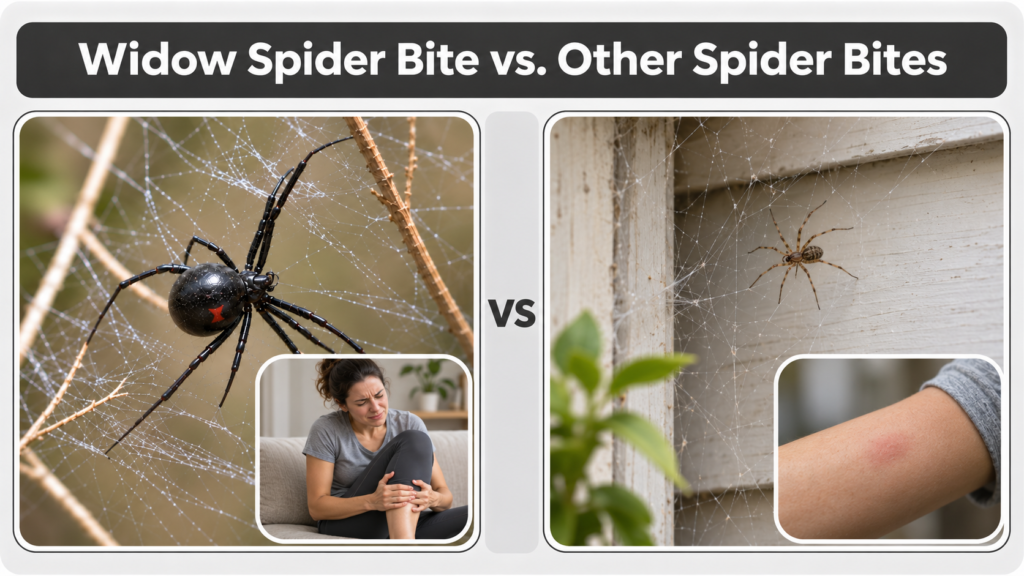
A painful spot alone cannot reliably identify a widow spider bite. Many common skin problems—including insect bites, irritation, and infections—can resemble one. Widow envenomation is more concerning when local pain is accompanied by spreading pain, muscle cramps, sweating, nausea, or other whole-body symptoms. A worsening wound, fever, pus, or expanding redness can point to infection or another problem and also deserves medical attention.
People sometimes label any unexplained skin lesion a “spider bite,” but spiders are not always the cause. Do not diagnose a black widow bite or a brown recluse bite from a photograph or a single symptom. Describe what happened and when symptoms started to a healthcare professional, and seek care based on how the person feels rather than trying to identify the spider with certainty.
Frequently Asked Questions
Are widow spider bites dangerous?
They can be. Many bites cause limited symptoms, but venom can trigger painful muscle cramps and other body-wide effects. Serious outcomes are uncommon, yet a suspected bite with spreading pain, severe cramps, vomiting, or breathing problems needs prompt medical evaluation.
How long do widow spider bite symptoms last?
The timing and duration vary. Symptoms may develop over minutes to hours and can persist for a day or longer. Some people need medical treatment or observation when pain and muscle spasms are severe or prolonged. A clinician can advise based on the person’s symptoms.
Can a widow spider bite kill you?
Death is rare, especially where timely medical care is available, but a severe reaction can be dangerous. Treat serious symptoms as an emergency. Young children, older adults, and people with significant health problems may be more vulnerable and should receive prompt medical advice.
What does a widow spider bite look like?
The skin may show a small red, swollen, or tender area, sometimes with tiny puncture marks. The bite can also be hard to see. The appearance alone cannot confirm a widow bite, so pay attention to symptoms such as muscle cramps or spreading pain.
Should I catch the spider for identification?
No. Do not handle or trap a live spider. If you can do so safely, take a photo from a distance and share it with a medical professional or local expert. Do not delay care while trying to identify it.
