
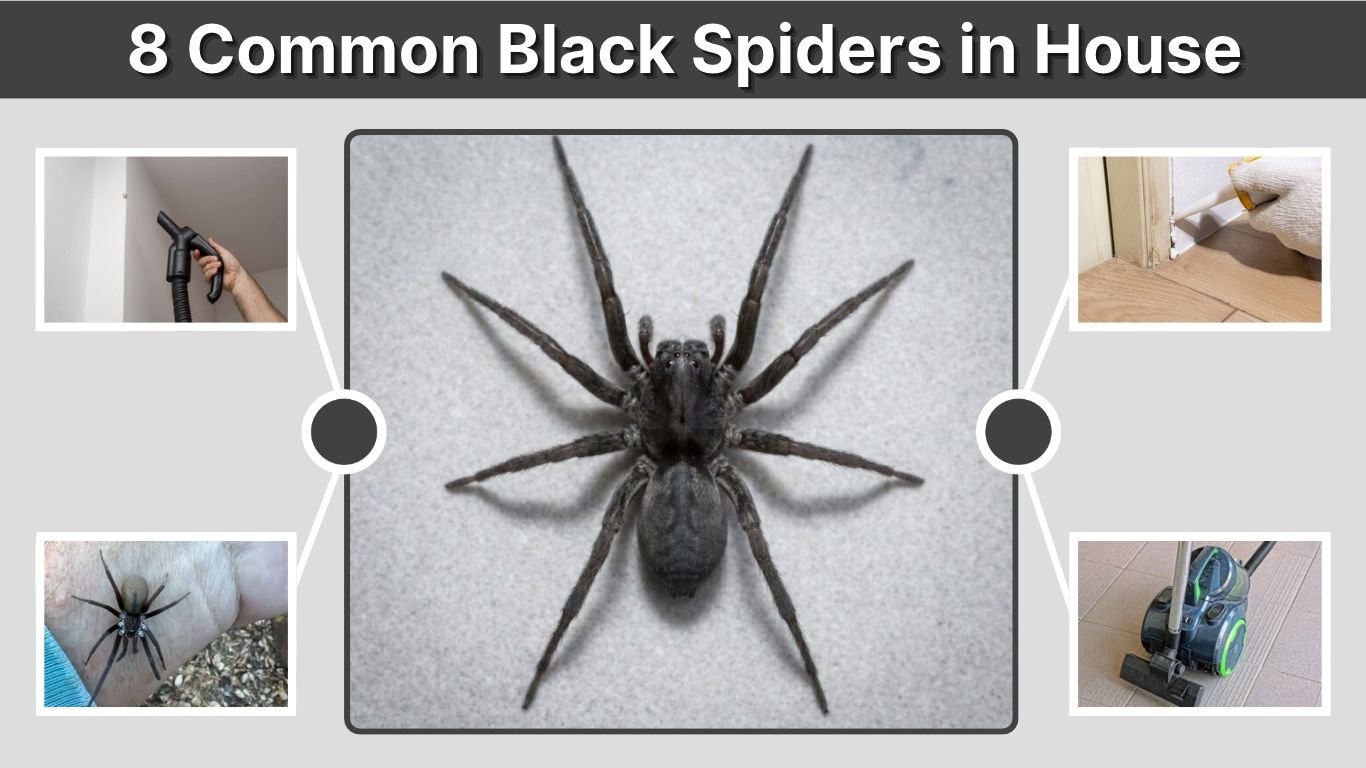
Finding a black spider crawling across your floor, hiding behind furniture, or building a web near a window can be unsettling. However, not every dark-colored spider is dangerous. Several common black spiders in houses are harmless species that help control insects. Others, such as black widows, require greater caution. These spiders differ in body shape, size, markings, behavior, and preferred hiding places. Understanding their identifying characteristics makes it easier to recognize which species you have encountered. This guide explores eight black or dark-colored spiders found in and around homes and explains their potential risks.
How to Identify Common Black Spiders in Your House
Black house spiders vary considerably in appearance. Some have rounded, shiny abdomens, while others have hairy bodies, white markings, or long slender legs. Their behavior and web structures can also provide useful identification clues.
Important characteristics include:
- Body color: Shiny black, charcoal gray, dark brown, or black with markings.
- Body shape: Rounded, elongated, compact, or robust.
- Leg appearance: Short and thick, long and slender, or visibly hairy.
- Markings: White spots, pale stripes, gray patterns, or red markings.
- Web structure: Irregular tangles, sheet-like retreats, or no prey-catching web.
- Location: Window frames, basements, garages, walls, and storage areas.
Color alone cannot reliably identify a spider. Geographic location and several physical features should be considered together.
8 Common Types of Black Spiders Found in Houses
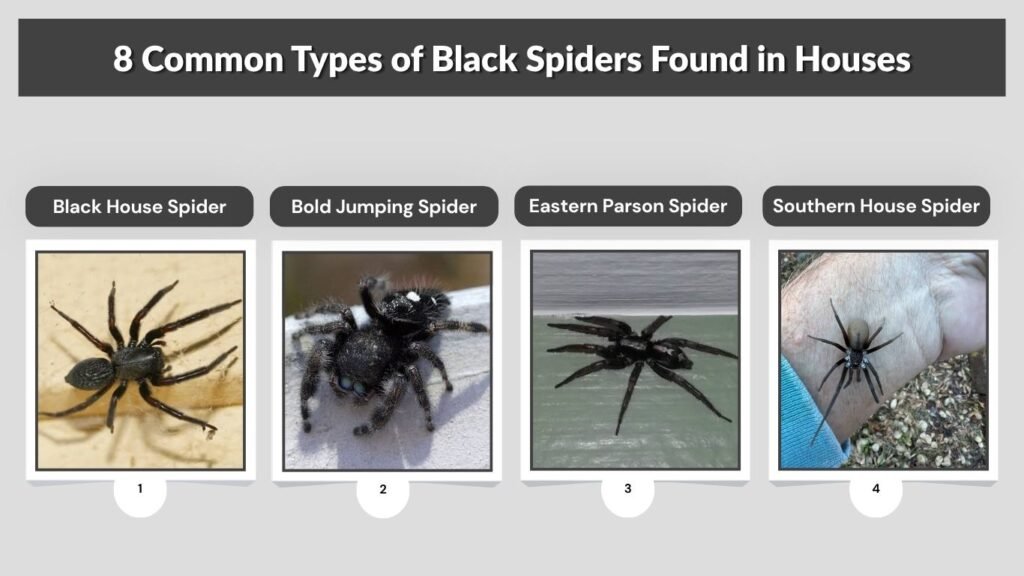
Several black or nearly black spider species regularly live around buildings or occasionally wander indoors. Some are widespread in North America, while others are more familiar in the UK or Australia.
The following species illustrate common household encounters and important identification differences.
1. Black House Spider (Badumna insignis)
The black house spider is especially common around buildings in Australia. It has a robust, dark brown to black body, grayish hairs, and a charcoal-colored abdomen with faint pale markings.
Identification: Look for dense, untidy, lace-like webs with funnel-shaped retreats around windows, door frames, and wall crevices.
Danger level: Generally low. Bites are uncommon but can cause pain, swelling, and occasionally other symptoms.
2. Bold Jumping Spider (Phidippus audax)
Bold jumping spiders are small, compact spiders frequently encountered around North American homes. They have hairy black bodies, short powerful legs, and prominent forward-facing eyes.
Identification: White spots on the abdomen and metallic green or blue mouthparts are distinctive features. Younger individuals sometimes have orange spots.
Danger level: Very low. These spiders actively hunt insects instead of using prey-catching webs. Bites are rare and usually produce mild, temporary discomfort.
3. Eastern Parson Spider (Herpyllus ecclesiasticus)
Eastern parson spiders are fast-moving ground spiders found inside homes across parts of North America. They have dark bodies, gray abdominal hairs, and brownish legs.
Identification: A distinctive white, necktie-shaped marking runs along the abdomen. These spiders are frequently noticed moving quickly across floors at night.
Danger level: Low. Bites may be painful and occasionally cause allergic reactions, but the species is not generally considered medically significant.
4. Black Lace-Weaver Spider (Amaurobius ferox)
Black lace-weaver spiders are dark, sturdy spiders found in the UK and parts of Europe and North America. Their bodies range from deep brown to nearly black.
Identification: They have oval, somewhat hairy abdomens and create woolly, lace-like webs around cracks in walls, logs, and sheltered spaces.
Danger level: Low. They may bite defensively when trapped, causing localized pain, but significant medical effects are uncommon.
5. Southern House Spider (Kukulcania hibernalis)
Southern house spiders are common around buildings in the southern United States. Females have robust, velvety charcoal-gray bodies, while males are lighter brown with long, slender legs.
Identification: Females often remain inside wall crevices surrounded by flat, irregular webs. Males sometimes resemble brown recluse spiders.
Danger level: Low. Southern house spiders are considered beneficial predators and are not generally dangerous to humans.
6. Cupboard Spider or False Black Widow (Steatoda grossa)
Cupboard spiders are dark-colored false widows commonly found in homes, sheds, and garages in several regions, including the UK.
Identification: They have smooth, rounded abdomens ranging from purplish-brown to nearly black. Faint pale patterns may be visible, especially on younger individuals.
Danger level: Generally low. They can bite defensively, sometimes causing localized pain, but serious effects are unusual.
7. Zebra Jumping Spider (Salticus scenicus)
Zebra jumping spiders are tiny black-and-white spiders commonly seen around windows, walls, and sunny surfaces, especially in Europe and parts of North America.
Identification: Their compact bodies display distinctive white stripes against a dark background. They move in short bursts and frequently jump while hunting insects.
Danger level: Very low. These spiders are not considered medically dangerous and usually avoid people.
8. Black Widow Spider (Latrodectus species)
Black widow spiders are medically significant spiders that may live in sheltered spaces around buildings, garages, and sheds in regions where they occur.
Identification: Adult females often have shiny black bodies and a distinctive red or orange hourglass marking underneath the abdomen. Markings vary by species and age.
Danger level: High relative to ordinary house spiders. Bites can cause severe pain, muscle cramps, and sweating. Seek prompt medical attention after a suspected bite.
How to Tell If a Black House Spider Is Dangerous
Most black spiders found indoors are not medically dangerous. However, identifying a spider correctly is important because some harmless species resemble black widows.
Pay attention to the spider’s abdomen shape, markings, web, and geographical location. A shiny black spider with a rounded abdomen may be a widow or a harmless false widow. A small black spider with white spots may be a jumping spider.
Avoid touching unfamiliar spiders with bare hands. If identification is uncertain, take a clear photograph from a safe distance and consult a local identification expert.
How to Get Rid of Common Black House Spiders
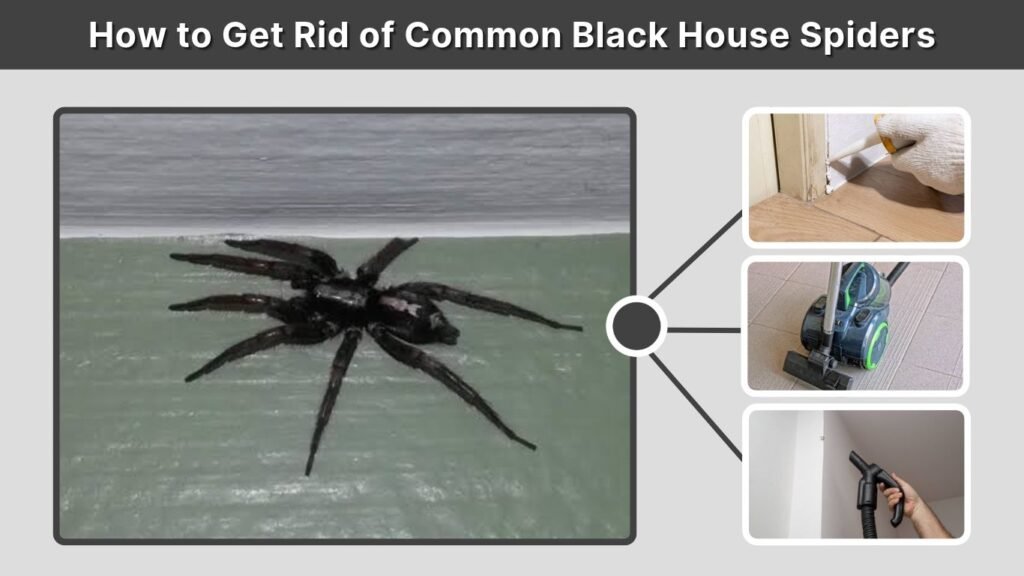
Most household spiders can be managed without routine pesticide treatment. Removing hiding places and preventing entry are the most reliable long-term strategies.
Recommended prevention methods include:
- Seal openings: Repair cracks around doors, windows, and foundations.
- Remove clutter: Organize closets, storage rooms, and garages.
- Vacuum regularly: Remove webs, egg sacs, and spiders from secluded areas.
- Control insects: Reduce flies, moths, and other potential prey.
- Maintain outdoor areas: Keep vegetation and stored materials away from entrances.
- Inspect household items: Check shoes, gloves, and boxes stored in garages.
For harmless spiders, use a container and stiff paper to relocate them outdoors. Avoid approaching or handling a suspected medically significant spider.
FAQs
1. Are common black house spiders dangerous?
Most common black house spiders are not dangerous to humans. Species such as bold jumping spiders, parson spiders, and southern house spiders rarely cause serious injuries. However, black widows are medically significant, so correct identification is essential before approaching an unfamiliar spider.
2. What are the small black spiders in my house?
Small black spiders inside homes may be jumping spiders, young ground spiders, or false widows. Black spiders with white spots are often bold jumping spiders. Their exact identity depends on body shape, markings, behavior, and geographical location.
3. Are black house spiders common in the UK?
Several dark-colored spiders occur in UK homes, including black lace-weavers and false widows. Zebra jumping spiders are also frequently encountered around windows. Most are harmless, although some species can deliver painful defensive bites when disturbed or trapped.
4. What black spiders are common in California homes?
California homes may contain bold jumping spiders, ground spiders, false widows, and western black widows. Species vary by habitat and region. Most encounters are harmless, but black widows deserve caution because their bites can produce significant symptoms.
5. Why do black spiders keep appearing in my house?
Black spiders may repeatedly appear because your home provides insect prey, sheltered hiding places, or accessible entry points. Cracks around doors, cluttered storage spaces, and outdoor vegetation can contribute. Sealing openings and reducing household insects can help prevent recurring sightings.
