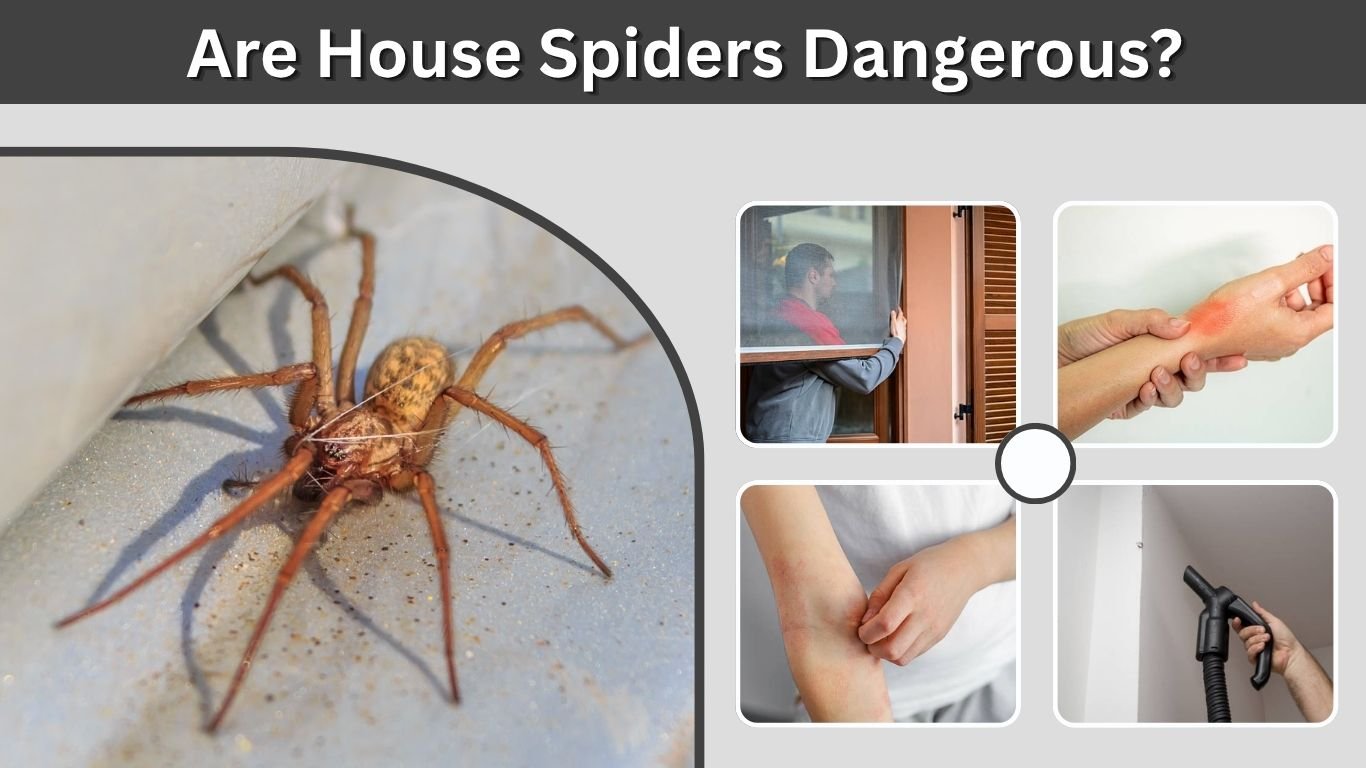
House spiders are common in homes, often hiding in corners, basements, closets, and other quiet spaces. Their appearance can be frightening, especially when they are large, dark-colored, or move quickly. But are house spiders dangerous to humans and pets? Fortunately, most household spiders are harmless and rarely bite unless threatened. However, a few medically significant spider species can occasionally enter homes and cause serious reactions. Understanding the differences between common house spiders and potentially dangerous species can help you identify risks, avoid unnecessary fear, and protect your family.
Are House Spiders Dangerous to Humans?
Most house spiders are not dangerous to humans. Although many species possess venom to capture insects, their bites rarely cause serious medical problems. House spiders generally avoid people and prefer hiding in secluded areas.
The common house spider (Parasteatoda tepidariorum), for example, is not considered medically significant. Reported bites are uncommon, despite the species frequently living around buildings.
However, not every spider found indoors is harmless. The level of risk depends on the exact species, geographic location, and circumstances of a bite.
Are Different Types of House Spiders Dangerous?
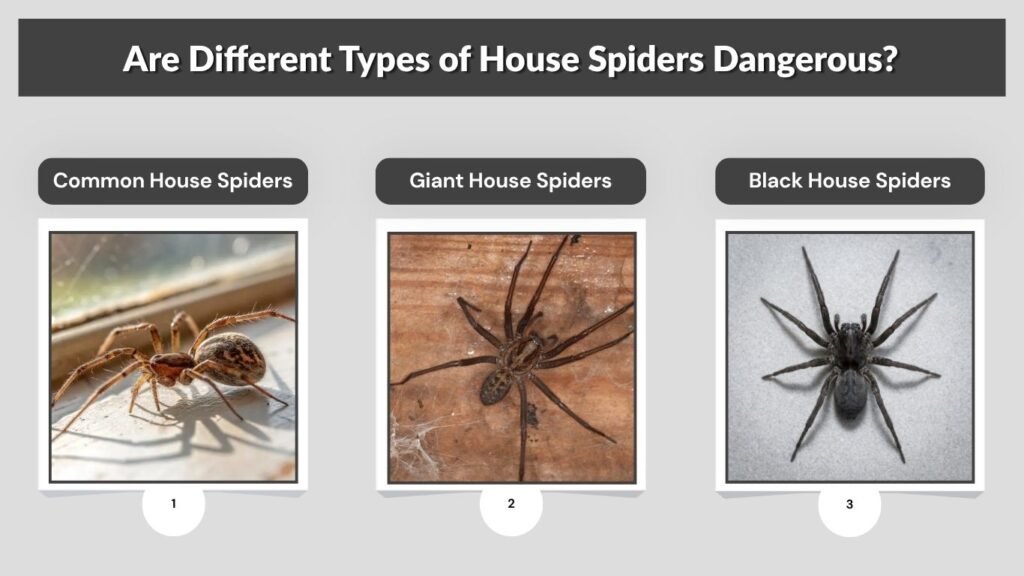
Different house spiders vary in size, appearance, behavior, and venom effects. Some species build tangled webs in corners, while others actively hunt insects along floors and walls. Identifying the species is more useful than judging danger by color or size alone.
1. Are Common House Spiders Dangerous?
Common house spiders (Parasteatoda tepidariorum) have rounded abdomens, slender legs, and brown or grayish markings. They frequently build irregular webs around windows, ceilings, and furniture.
These spiders are not considered medically dangerous. Bites are rare and generally cause little more than temporary localized discomfort. They also help control small household insects.
2. Are Giant House Spiders Dangerous?
Giant house spiders, including species in the Eratigena group, have long legs, brown bodies, and impressive leg spans. They are especially familiar in houses across parts of Europe.
Despite their intimidating appearance, giant house spiders are not considered medically dangerous. They may bite when handled or trapped, but serious complications are unlikely.
3. Are Black House Spiders Dangerous?
Black house spiders (Badumna insignis) are commonly found around windows and buildings in Australia. They have dark bodies and construct dense, funnel-like web retreats.
They are generally shy, but bites can be painful and cause swelling. Nausea, sweating, or dizziness occasionally occur. Persistent symptoms require medical evaluation.
4. Are American House Spiders Dangerous?
American house spiders are another common name for Parasteatoda tepidariorum. These small, brownish spiders are widely distributed across North America.
They are generally harmless to humans and rarely bite. Their venom is adapted for capturing small prey, not defending against people. A bite may occasionally cause mild discomfort or an allergic reaction, but serious effects are unusual.
5. Are Southern House Spiders Dangerous?
Southern house spiders (Kukulcania hibernalis) are frequently found around buildings in the southern United States. Females have dark, robust bodies, while males have longer legs and lighter coloring.
Although male southern house spiders are sometimes mistaken for brown recluse spiders, they are not considered medically dangerous. Rare bites may cause temporary pain and swelling.
6. Are Grey House Spiders Dangerous?
The name grey house spider can refer to different species. One example is Badumna longinqua, a spider associated with buildings and vegetation in Australia and introduced regions.
These spiders are not generally regarded as a major medical threat. However, a spider’s gray coloration alone cannot establish whether it is harmless. Accurate identification is important because unrelated spiders may look similar.
7. Are Red or Brown House Spiders Dangerous?
Many household spiders have reddish-brown or dark brown bodies, making color-based identification unreliable.
Some, such as common house spiders, rarely cause significant problems. Others may resemble medically important species, including certain widow and recluse spiders.
Never identify a potentially dangerous spider by color alone. Body proportions, markings, eye arrangement, web structure, and geographic location are more informative.
Which House Spiders Are Dangerous?
Although most household spiders are harmless, several medically significant species may shelter inside buildings in areas where they naturally occur.
| Spider type | Potential danger |
| Black widow spiders | Can cause severe muscle cramps, pain, and systemic symptoms |
| Brown recluse spiders | Can cause serious local wounds and, rarely, systemic illness |
| Australian funnel-web spiders | Can cause life-threatening envenomation |
| Redback spiders | Can cause severe pain and other systemic symptoms |
Black widows and brown recluses are important concerns in parts of the United States. Australian funnel-web and redback spiders present different regional risks. Other widow and recluse species occur elsewhere in the world.
The presence of one of these spiders depends strongly on location. Finding an unfamiliar brown or black spider does not automatically mean it belongs to a dangerous species.
What Happens If a House Spider Bites You?
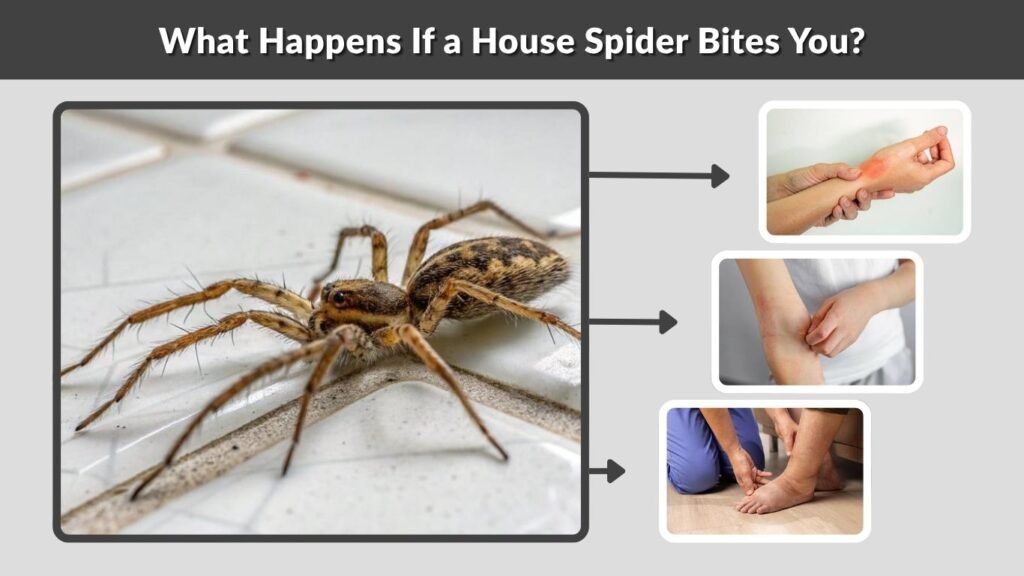
Most verified bites from ordinary house spiders produce mild symptoms or no noticeable reaction. When symptoms occur, they may include localized pain, redness, itching, or slight swelling.
Common House Spider Bite Symptoms
- Redness: Mild irritation around the affected area.
- Swelling: A small raised area near the bite.
- Pain: Temporary stinging or tenderness.
- Itching: Minor discomfort as the skin recovers.
Many unexplained skin marks are incorrectly attributed to spider bites. Infections and other skin conditions can produce similar symptoms, so a bite should not be assumed unless there is supporting evidence.
When Should You Seek Medical Attention?
Seek emergency medical care if a suspected spider bite causes breathing difficulties, severe muscle cramps, rapidly worsening swelling, or other serious symptoms.
For a minor bite, wash the area gently with soap and water and apply a cold compress wrapped in cloth. If symptoms worsen or a dangerous spider is suspected, obtain prompt medical evaluation.
Are House Spiders Dangerous to Babies, Cats, and Dogs?
Ordinary house spiders usually pose little danger to babies, children, cats, or dogs. Nevertheless, children should be taught not to touch unfamiliar spiders, and spiders should be removed carefully from nurseries and sleeping areas.
Pets may attempt to chase or catch spiders, occasionally exposing themselves to bites. Medically significant spiders, particularly widow species, can cause serious illness in pets.
If a pet develops severe pain, tremors, weakness, vomiting, or breathing difficulties after a suspected spider bite, contact a veterinarian immediately.
How to Keep House Spiders Away Safely
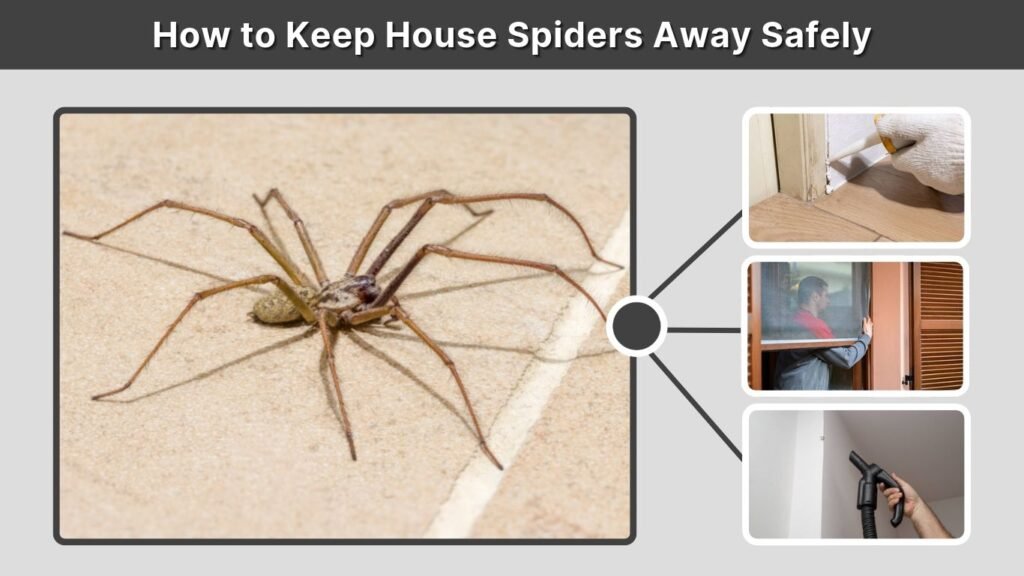
Preventing unwanted spiders indoors is generally easier than trying to eliminate every spider around your property. The most effective approach combines exclusion, cleaning, and insect control.
Helpful prevention practices include:
- Seal cracks around windows, doors, and foundations.
- Install door sweeps and repair damaged screens.
- Vacuum webs, corners, and areas behind furniture.
- Keep storage rooms organized and clutter-free.
- Reduce insects that provide food for spiders.
- Inspect shoes, gloves, and stored items before use.
Avoid handling unfamiliar spiders directly. If you are confident a spider is harmless, you can relocate it using a container and stiff paper.
FAQs
1. Are big house spiders dangerous?
Most big house spiders are not medically dangerous. Giant house spiders and huntsman spiders may look intimidating because of their long legs and large bodies, but serious bites are uncommon. The spider’s size alone does not indicate venom potency or medical risk.
2. Are small black house spiders dangerous?
Small black house spiders are not necessarily dangerous. Many harmless species have dark coloring, while some widow spiders are also black. Accurate identification depends on body shape, markings, habitat, and geographic location. Avoid handling an unfamiliar spider until its identity is established.
3. Do house spiders bite humans while sleeping?
House spiders do not deliberately seek out sleeping humans to bite. Most bites happen when a spider is accidentally trapped or pressed against the skin. Unexplained marks noticed after sleeping may have other causes, including insects or skin irritation.
4. Are house spiders dangerous in the UK?
Most spiders commonly found inside UK homes are not considered medically dangerous. Giant house spiders, cellar spiders, and other familiar species generally avoid people. Bites are uncommon, and serious medical complications are unlikely, although allergic reactions or unusual symptoms require attention.
5. Can house spiders kill humans?
Ordinary house spiders are extremely unlikely to cause fatal injuries. However, certain medically significant spiders that sometimes enter buildings can cause severe envenomation. Serious complications depend on the species and circumstances, making prompt medical care important when a dangerous bite is suspected.
