
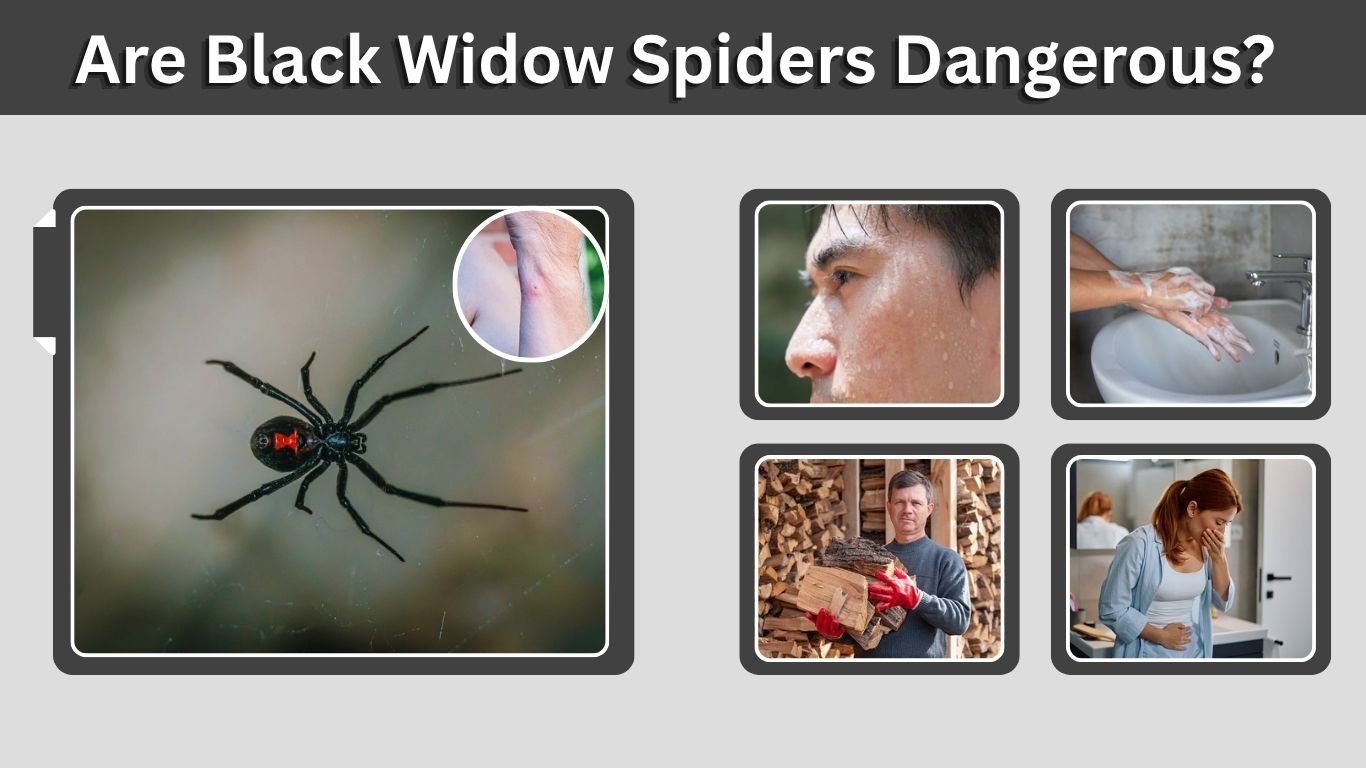
Black widow spiders are among the most feared spiders because of their powerful venom and distinctive appearance. But are black widow spiders dangerous enough to threaten human life? Although their bites can cause severe pain, muscle cramps, and other serious symptoms, deaths are extremely rare. Most black widows are shy creatures that bite only when disturbed or threatened. Understanding their venom, bite symptoms, and behavior can help you recognize potential dangers. This guide explains how dangerous black widow spiders are to humans, pets, and children, along with important safety precautions.
How Dangerous Are Black Widow Spiders to Humans?
Black widow spiders can be dangerous to humans because their venom affects the nervous system and muscles. However, a black widow encounter does not automatically mean someone will be bitten. These spiders generally avoid human contact and prefer dark, undisturbed locations. The severity of a bite depends on the amount of venom injected and the person’s health.
Why Are Black Widow Spiders Dangerous?
Black widow venom contains a powerful neurotoxin called alpha-latrotoxin. It disrupts normal nerve signaling and can produce intense muscle contractions, sweating, and widespread pain.
Unlike some other venomous spiders, black widows usually do not cause substantial tissue destruction around the bite. Their greatest danger comes from the venom’s effects on the nervous system.
Can a Black Widow Bite Kill You?
Black widow bites can occasionally cause life-threatening complications, but fatalities are extremely rare, especially when medical care is available.
Most people recover with appropriate treatment. Some experience severe pain and muscle spasms requiring hospital treatment, while others develop relatively mild symptoms. Anyone with a suspected black widow bite should promptly seek medical advice.
Who Is Most at Risk?
Certain people may experience more serious symptoms following a black widow bite.
- Young children: Their smaller body size can make venom exposure more concerning.
- Older adults: Existing health conditions may increase the risk of complications.
- People with chronic illnesses: Cardiovascular or other medical conditions can make severe symptoms harder to manage.
- Pregnant women: Significant envenomation may cause contractions and requires urgent medical evaluation.
Are Male and Baby Black Widow Spiders Dangerous?
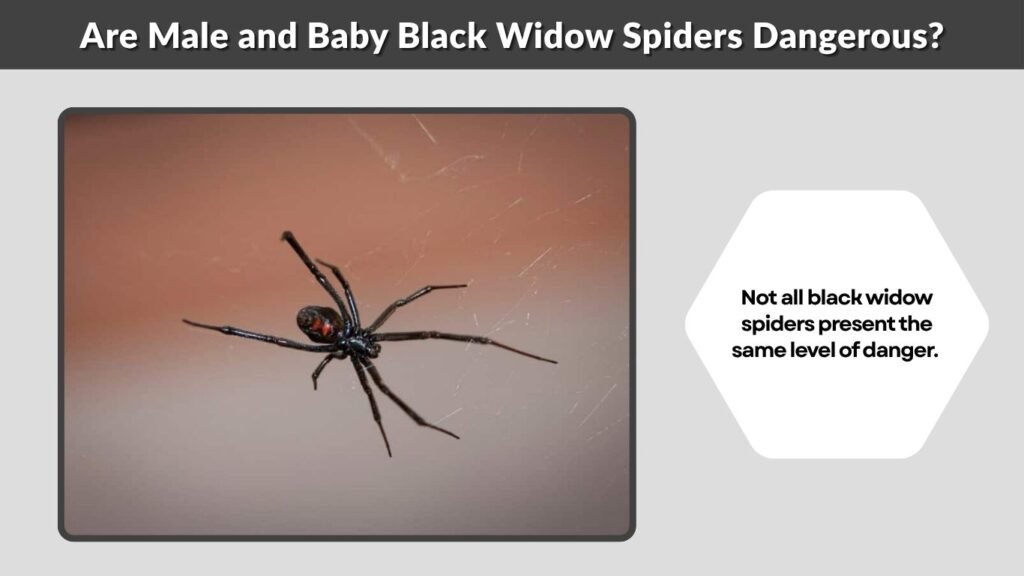
Not all black widow spiders present the same level of danger. Their size, sex, and stage of development influence their ability to deliver venom through a bite. Adult females are responsible for nearly all medically significant black widow bites because they possess larger fangs and venom reserves than males or newly hatched spiderlings.
Are Female Black Widow Spiders Dangerous?
Adult female black widows are the most dangerous members of the group. They have rounded, glossy abdomens and often display a distinctive red hourglass marking underneath.
Their fangs can penetrate human skin and inject enough venom to cause significant symptoms. However, females generally bite defensively, particularly when trapped against skin or disturbed in their webs.
Are Male Black Widow Spiders Dangerous?
Male black widow spiders possess venom but are not considered medically dangerous to humans. Their smaller fangs generally cannot penetrate human skin effectively.
Males are also considerably smaller than females and often display lighter coloring and striped patterns. They rarely cause injuries requiring medical attention.
Are Baby Black Widow Spiders Dangerous?
Newly hatched black widow spiderlings are unlikely to harm humans because their tiny fangs have difficulty penetrating skin.
However, larger immature females can deliver medically significant bites. Young black widows may also have white, orange, or brown markings rather than the familiar glossy black appearance of mature females.
Black Widow Spider Bite Symptoms and Treatment
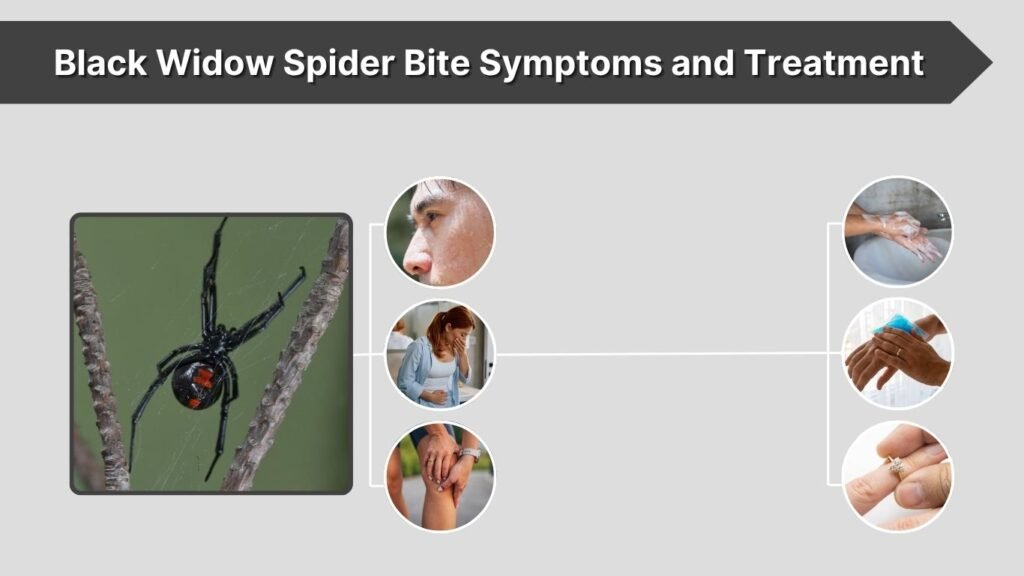
Black widow bites may initially resemble a small pinprick, making them difficult to recognize. Symptoms can develop within minutes or hours as the venom affects muscles and nerves. Although some bites cause limited discomfort, others produce severe pain that spreads beyond the original bite location. Recognizing symptoms early helps people obtain appropriate medical treatment.
Common Symptoms of Black Widow Bites
Symptoms vary according to the amount of venom injected and the individual’s physical condition.
- Pain: Burning or sharp discomfort around the bite.
- Muscle cramps: Painful tightening in the abdomen, back, chest, or legs.
- Sweating: Excessive sweating, sometimes limited to the affected area.
- Nausea: Vomiting, dizziness, or general weakness.
- Severe reactions: Difficulty breathing, significant muscle spasms, or cardiovascular complications.
What Should You Do If Bitten?
If you suspect a black widow bite, seek medical advice immediately. While waiting for assistance, follow these precautions:
- Wash the affected area gently with soap and water.
- Apply an ice pack wrapped in cloth for 10 minutes, followed by a 10-minute break.
- Keep the affected body part reasonably still.
- Remove tight jewelry or clothing near the bite.
- Avoid cutting the wound, sucking out venom, or applying a tourniquet.
Call emergency services if breathing difficulties, chest pain, or other severe symptoms develop. In the United States, Poison Control is available at 1-800-222-1222.
Are Black Widow Spiders Dangerous to Dogs and Cats?
Black widow spiders can pose a serious danger to household pets. Dogs and cats may encounter these spiders while exploring garages, gardens, sheds, or outdoor storage spaces. Venom exposure can cause painful muscle spasms and neurological symptoms. The seriousness of a bite varies between animals, making prompt veterinary assessment important whenever a bite is suspected.
Are Black Widow Spiders Dangerous to Dogs?
Yes, black widow bites can harm dogs. Possible symptoms include muscle pain, trembling, vomiting, restlessness, and abnormal breathing.
Some dogs experience relatively mild effects, while severe envenomation requires veterinary treatment. If a bite is suspected, contact a veterinarian immediately rather than waiting for symptoms to worsen.
Are Black Widow Spiders Dangerous to Cats?
Black widow spiders are particularly dangerous to cats, which are highly sensitive to their venom.
Affected cats may develop severe muscle rigidity, tremors, breathing difficulties, and weakness. Serious poisoning can be fatal. Suspected bites in cats require emergency veterinary attention.
Are Black Widow Spiders More Dangerous Than Brown Recluse Spiders?
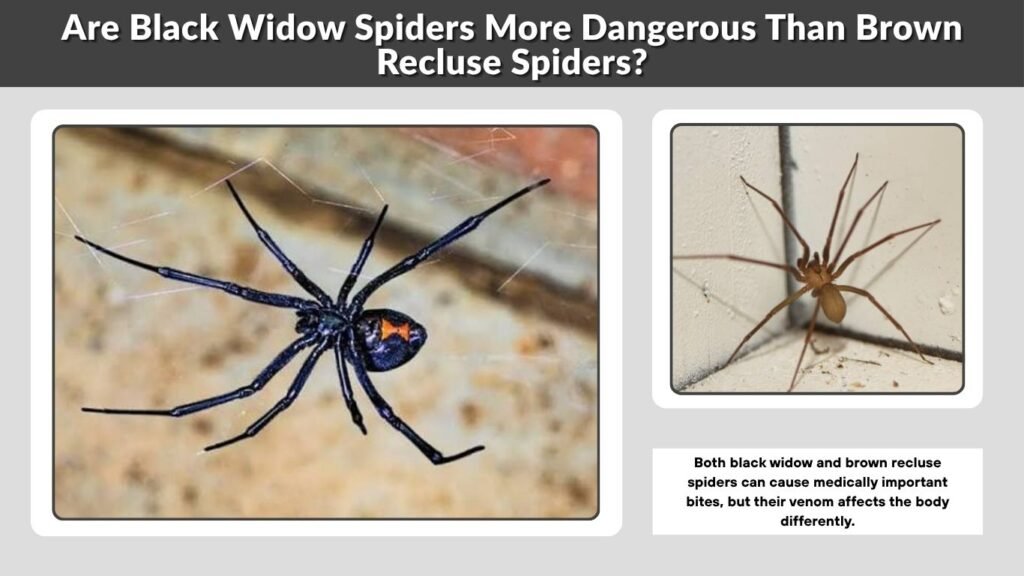
Both black widow and brown recluse spiders can cause medically important bites, but their venom affects the body differently. Black widow venom primarily affects nerve signaling and muscles, whereas brown recluse venom can damage skin and surrounding tissues. Neither spider is universally more dangerous; the consequences depend on the individual bite and the person’s health.
Key Differences Between Their Bites
| Feature | Black Widow | Brown Recluse |
| Venom effects | Neurological and muscular | Primarily tissue damage |
| Typical symptoms | Severe cramps and pain | Localized pain, sometimes skin ulceration |
| Fatality risk | Very rare | Very rare |
| Medical care | Prompt assessment | Prompt assessment |
How to Prevent Black Widow Spider Bites
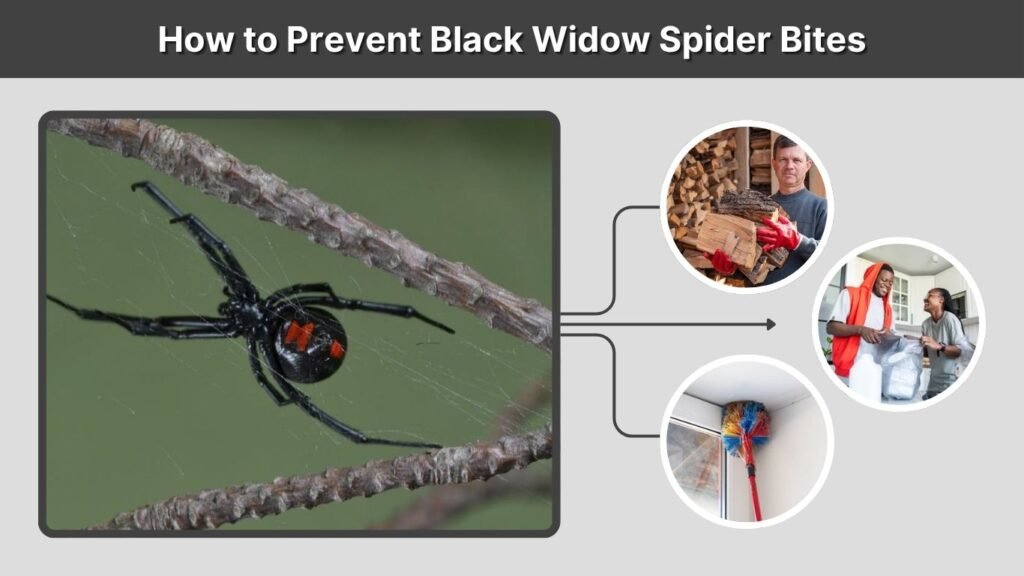
Preventing black widow bites involves minimizing accidental contact with spiders in sheltered locations. Black widows frequently occupy woodpiles, storage areas, garages, outdoor furniture, and cluttered corners. They generally avoid confrontation, so reducing hiding places and checking objects before handling them can significantly lower the likelihood of defensive bites.
Essential Prevention Tips
- Wear protective gloves: Use gloves when moving firewood, boxes, or stored materials.
- Reduce clutter: Keep garages, basements, and sheds organized.
- Inspect outdoor objects: Check furniture, shoes, and gardening equipment before use.
- Remove webs carefully: Use a long-handled tool rather than reaching into hidden spaces.
- Keep children away: Teach children not to touch unfamiliar spiders or webs.
For significant infestations, consider contacting a qualified pest management professional.
FAQs
1. Are False Black Widow Spiders Dangerous?
False black widow spiders, particularly Steatoda grossa, are generally much less dangerous than true black widows. Their bites can cause localized pain, burning, and swelling, but serious complications are uncommon. Some other false widow species can occasionally produce stronger reactions, so persistent or severe symptoms deserve medical evaluation.
2. Are Black Widow Spiders Aggressive Toward Humans?
No, black widow spiders are not naturally aggressive toward humans. They generally remain hidden in their webs and avoid unnecessary contact. Most bites happen when someone accidentally squeezes, touches, or traps a spider against their skin. Leaving them undisturbed greatly reduces the likelihood of being bitten.
3. How Long Do Black Widow Bite Symptoms Last?
Symptoms vary depending on the amount of venom injected and the severity of the reaction. Mild symptoms may improve within a day, while significant muscle pain and cramping can persist for several days. Some people experience lingering discomfort or fatigue. Medical treatment can help control severe symptoms.
4. Can You Survive a Black Widow Spider Bite Without Treatment?
Many people survive black widow bites without developing life-threatening complications. However, that does not mean medical treatment should be avoided. Symptoms can become extremely painful or serious, particularly in vulnerable individuals. Anyone with a suspected black widow bite should contact a healthcare professional or poison control center promptly.
5. Are Black Widow Spiders Dangerous Inside Your House?
Black widow spiders can pose a danger inside homes when they occupy dark, undisturbed spaces such as storage rooms, garages, and cluttered closets. However, they do not actively hunt humans. Keeping spaces organized, checking stored belongings, and avoiding direct contact with hidden webs can reduce the risk of accidental bites.
