
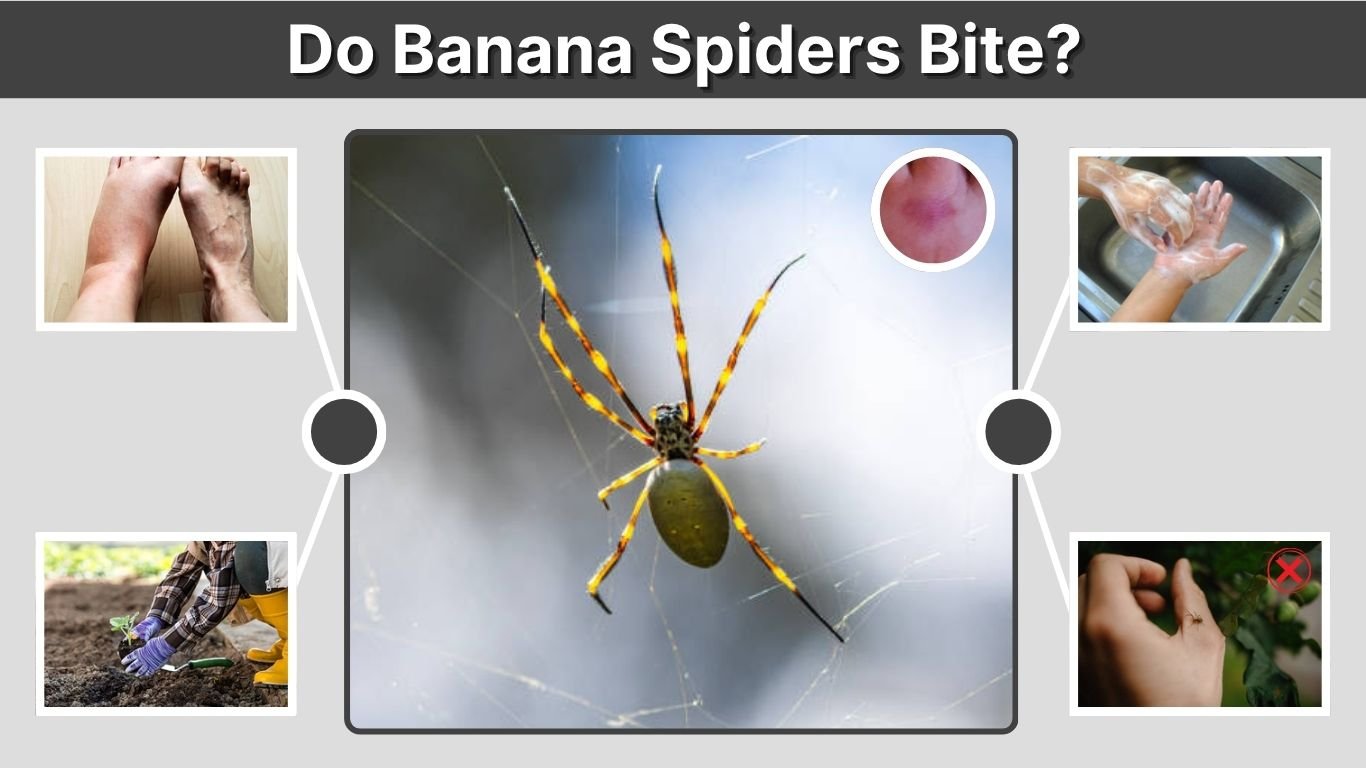
Do banana spiders bite humans? Yes, but the risk depends on the spider. In Florida, the name usually refers to the golden silk orb-weaver, which rarely bites and generally causes mild discomfort. In South America, however, banana spider can mean the Brazilian wandering spider, whose bite may require urgent medical treatment. This guide explains why banana spiders bite, what their bites feel like, possible symptoms, first aid, and simple ways to avoid unwanted encounters in gardens and around homes without harming these useful insect predators.
Do Banana Spiders Bite Humans?
Yes, banana spiders can bite humans, although most are not naturally aggressive. In the southeastern United States, banana spiders are usually golden silk orb-weavers, which prefer escaping threats rather than biting people. Their bites are uncommon and generally happen when someone accidentally squeezes, traps, or handles them. Understanding their defensive behavior can help prevent unnecessary encounters.
Why Do Banana Spiders Bite?
Banana spiders primarily bite humans when defending themselves. A golden silk orb-weaver normally remains in its web, capturing flying insects rather than approaching people.
However, touching the spider, trapping it against clothing, or accidentally squeezing it may trigger a defensive bite. Unlike mosquitoes or ticks, banana spiders do not seek human blood.
Will Banana Spiders Bite You Without Provocation?
Golden silk orb-weavers rarely bite without provocation. They generally retreat or remain motionless when disturbed.
Their large size and colorful appearance can make them look intimidating, but they are not interested in attacking humans. Most encounters end without any physical contact.
Different Types of Banana Spiders and Their Bites
The name banana spider can refer to several unrelated spider species. This creates confusion about their venom and potential danger to humans. Some species are relatively harmless web-building spiders, while others possess medically significant venom. Identifying which spider is involved is essential when evaluating a bite, particularly in tropical regions where dangerous wandering spiders occur.
Golden Silk Orb-Weaver Bite
The golden silk orb-weaver (Trichonephila clavipes) is commonly called the Florida banana spider. It inhabits gardens, forests, and wooded areas throughout the southeastern United States.
Its bite usually causes mild localized pain, slight redness, and occasionally minor swelling. Serious medical complications are unusual.
Brazilian Wandering Spider Bite
Brazilian wandering spiders belong to the genus Phoneutria and occur mainly in South America.
Unlike golden silk orb-weavers, these spiders actively hunt rather than building prey-catching webs. Their bites can cause intense pain and occasionally serious neurological or cardiovascular symptoms.
Suspected Brazilian wandering spider bites require urgent medical evaluation, even though severe poisoning is relatively uncommon.
Banana Spider Bite Symptoms: What to Expect
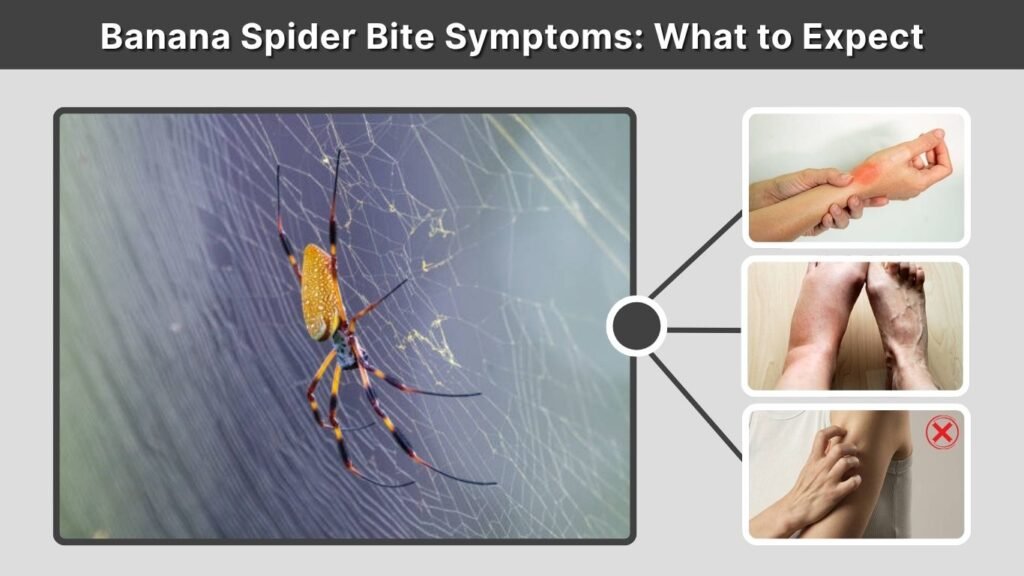
Banana spider bite symptoms vary depending on the spider species, the amount of venom introduced, and the individual’s response. Golden silk orb-weaver bites usually produce temporary discomfort near the affected area. Brazilian wandering spider bites may cause more intense reactions. Recognizing the difference between ordinary localized symptoms and concerning signs is important for deciding when medical attention is necessary.
Common Banana Spider Bite Symptoms
A golden silk orb-weaver bite may produce:
- Mild pain: A brief stinging or pinching sensation.
- Redness: Slight irritation surrounding the bite.
- Swelling: Minor localized puffiness.
- Itching: Occasional irritation during recovery.
- Tenderness: Mild sensitivity when touching the affected area.
These symptoms are usually short-lived and improve without specialized treatment.
Serious Symptoms to Watch For
Brazilian wandering spider venom can produce intense local pain, excessive sweating, nausea, vomiting, dizziness, rapid heartbeat, and blood pressure changes.
Severe cases may involve breathing difficulties or other systemic complications. Children and older adults can be particularly vulnerable.
Trouble breathing, fainting, widespread severe symptoms, or rapidly worsening pain require emergency medical attention.
Are Banana Spider Bites Poisonous or Dangerous?
Most banana spider bites in Florida are not considered medically dangerous. However, all spiders commonly called banana spiders should not be treated as equally harmless. The golden silk orb-weaver possesses venom designed to immobilize insects, while Brazilian wandering spiders have more potent venom capable of affecting humans. The correct species identification determines the level of concern.
Are Florida Banana Spiders Poisonous?
Florida banana spiders are venomous rather than poisonous. Venom is delivered through fangs during a bite, while poison generally causes harm when swallowed, inhaled, or absorbed.
Although golden silk orb-weavers possess venom, their bites typically produce less discomfort than a bee sting. They are not generally considered dangerous to healthy humans.
Can a Banana Spider Bite Kill You?
Bites from golden silk orb-weavers are not known to cause fatal envenomation.
Brazilian wandering spiders are different. Their venom can occasionally cause severe poisoning, particularly in vulnerable individuals. Documented fatalities are rare, but medical treatment is essential when a Phoneutria bite is suspected.
What to Do If a Banana Spider Bites You
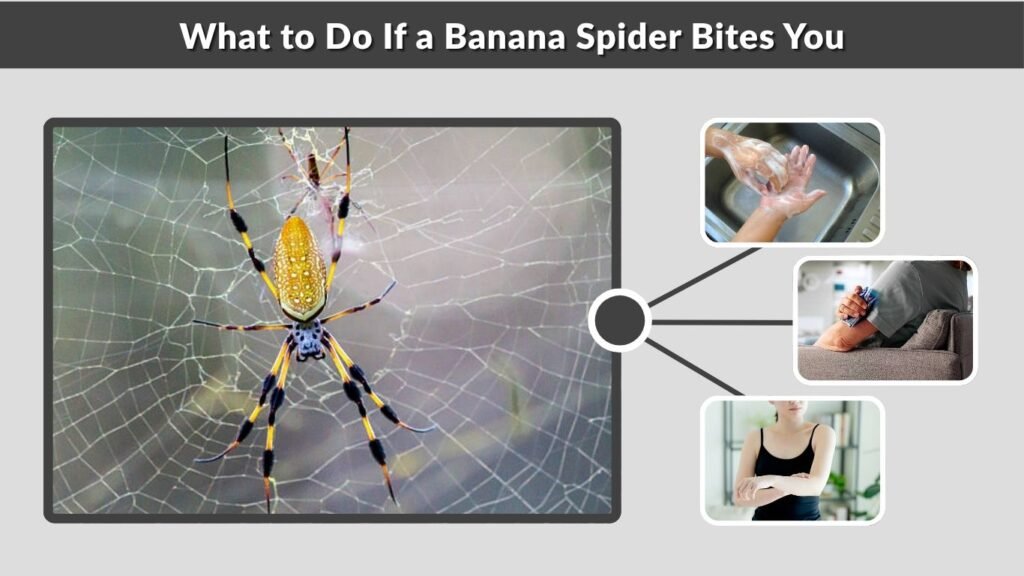
If a banana spider bites you, the first step is to determine whether the spider was likely a harmless orb-weaver or a potentially dangerous wandering spider. For a confirmed golden silk orb-weaver bite with mild symptoms, simple wound care is generally sufficient. However, severe symptoms or uncertainty about the spider’s identity warrant professional medical advice.
Banana Spider Bite First Aid
For a mild bite from a reliably identified golden silk orb-weaver:
- Wash the bite: Clean the affected skin gently with soap and water.
- Apply a cold compress: Use a cool, cloth-wrapped compress for approximately 10 minutes at a time.
- Avoid scratching: Scratching can irritate the skin and increase infection risk.
- Manage discomfort: Consider an appropriate over-the-counter pain reliever if needed.
- Monitor symptoms: Watch for increasing redness, swelling, pain, or other unexpected changes.
Avoid cutting the wound, attempting to suck out venom, or applying a tourniquet.
When Should You See a Doctor?
Seek medical attention if pain or swelling becomes severe, symptoms spread, or signs of infection appear.
If the spider may be a Brazilian wandering spider, seek urgent medical care immediately. Call emergency services for breathing difficulties, fainting, or a severe allergic reaction.
Do not attempt to capture a potentially dangerous spider. A photograph taken from a safe distance may assist identification.
How to Identify Banana Spiders and Prevent Bites
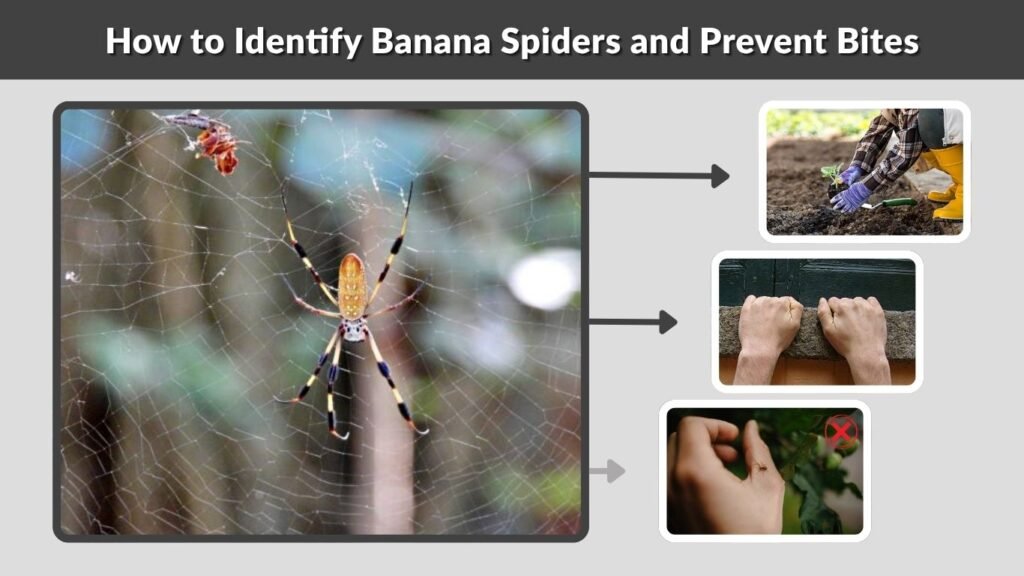
Recognizing banana spiders can help people avoid accidental contact while appreciating their ecological benefits. Golden silk orb-weavers are especially noticeable because of their impressive webs and elongated bodies. Most bites can be prevented by avoiding unnecessary handling, checking surrounding vegetation, and remaining cautious in areas where spiders may shelter.
Identifying a Florida Banana Spider
Common characteristics include:
- Scientific name: Trichonephila clavipes
- Body color: Orange, brown, yellow, and silvery markings
- Legs: Long, slender legs with dark feathery tufts
- Web: Large, circular structures with golden-colored silk
- Habitat: Gardens, forests, wooded trails, and shrubs
- Behavior: Usually remains in or near its web
Appearance alone may not reliably identify every unfamiliar spider, especially outside Florida.
How to Avoid Banana Spider Bites
Simple precautions can reduce the chance of being bitten:
- Avoid touching or squeezing spiders.
- Watch for webs across garden paths and trails.
- Wear gloves when moving outdoor vegetation.
- Inspect outdoor equipment and stored materials.
- Avoid putting bare hands into hidden spaces.
- Teach children to observe spiders without handling them.
Golden silk orb-weavers also provide natural insect control, so removing them is generally unnecessary when they are not creating a direct safety concern.
FAQs
Banana spiders often cause concern because of their size, coloration, and sometimes intimidating appearance. However, the common name refers to different spiders with very different medical significance. These frequently asked questions address additional concerns about Florida banana spiders, baby spiders, bite pain, and common misconceptions associated with bananas.
1. Do Banana Spiders in Florida Bite?
Yes, Florida banana spiders can bite, but they rarely do so unless physically threatened. Their bites generally cause temporary localized discomfort and are not considered medically dangerous.
2. Can Baby Banana Spiders Bite Humans?
Baby banana spiders possess small fangs and venom-producing structures, but their tiny size makes significant human bites unlikely. Young golden silk orb-weavers are not considered a serious threat.
3. Do Banana Spider Bites Hurt?
A golden silk orb-weaver bite may feel like a mild sting or pinch. Brazilian wandering spider bites, however, can cause immediate and intense pain requiring medical evaluation.
4. How Long Does a Banana Spider Bite Last?
Mild golden silk orb-weaver bite symptoms often improve within hours, although minor irritation may persist longer. Severe or worsening symptoms should not be considered normal.
5. Are the Black Bits in Bananas Spider Eggs?
No. Small dark spots inside bananas are usually associated with natural fruit development, ripening, or bruising. They are not normally spider eggs. Spiders lay eggs within protective egg sacs rather than producing ordinary dark specks inside banana flesh.
