
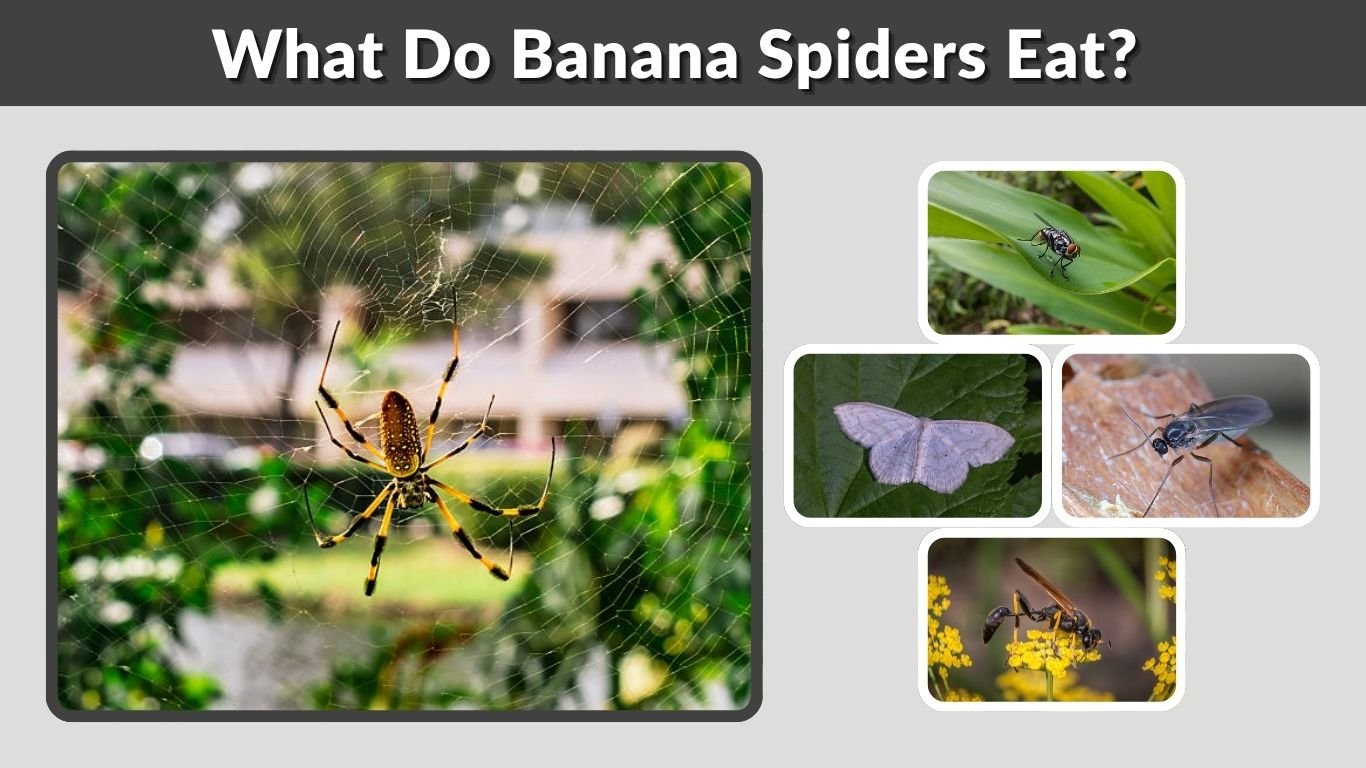
Banana spiders are fascinating predators known for their large webs, impressive size, and unusual feeding habits. But what do banana spiders eat? These spiders primarily consume flying insects, including flies, mosquitoes, moths, bees, and wasps. Some species also hunt larger insects and occasionally other spiders. Despite their name, banana spiders do not normally eat bananas or other fruits. Their diet depends on their species, size, habitat, and available prey. Understanding their feeding behavior reveals how these remarkable arachnids help control insect populations and maintain ecological balance.
What Are Banana Spiders?
The name “banana spider” refers to several different spiders rather than one particular species. In the United States, it commonly describes the golden silk orb-weaver, a large spider famous for producing yellowish silk. However, Brazilian wandering spiders and certain tropical hunting spiders also share this nickname. Their feeding behaviors differ significantly depending on the species.
Golden Silk Orb-Weaver
The golden silk orb-weaver (Trichonephila clavipes) is a large web-building spider found throughout warmer regions of the Americas. It captures flying insects using strong, sticky webs suspended between trees and shrubs.
This species is the primary focus of most discussions about banana spider diets in North America.
Brazilian Wandering Spider
The Brazilian wandering spider belongs to the genus Phoneutria. Unlike orb-weavers, these spiders actively hunt prey on the ground and among vegetation.
They consume insects and sometimes small vertebrates, including frogs. Their venom is medically significant, making correct identification important.
What Do Banana Spiders Eat in the Wild?
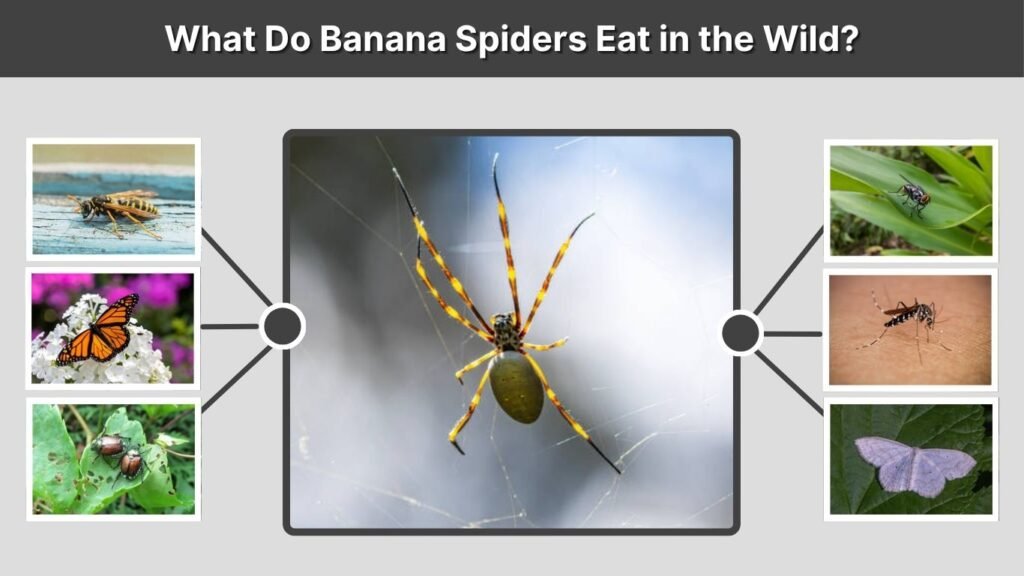
Banana spiders are primarily carnivorous, obtaining essential nutrients by capturing and consuming other animals. Golden silk orb-weavers specialize in flying insects that become trapped in their webs. Their diet changes according to seasonal insect activity, habitat conditions, and prey availability. Although they can capture relatively large insects, smaller flying insects make up much of their regular food supply.
Common Insects Banana Spiders Eat
Banana spiders consume several types of insects, including:
- Flies: Houseflies and other flying flies are common prey.
- Mosquitoes: Small mosquitoes occasionally become trapped in their webs.
- Moths: Both small and moderately sized moths provide nourishment.
- Butterflies: Some butterflies are captured, including relatively large species.
- Bees: Honeybees and other bees sometimes become trapped.
- Wasps: Flying wasps may be captured despite their defensive stingers.
- Beetles: Small flying beetles occasionally enter their webs.
- Dragonflies: Larger spiders can capture dragonflies under suitable conditions.
- Grasshoppers: These insects may be eaten when they become trapped.
- Cicadas: Large orb-weavers sometimes capture and consume cicadas.
The University of Florida identifies flies, bees, wasps, moths, butterflies, beetles, and dragonflies among the prey of golden silk spiders.
Do Banana Spiders Eat Cockroaches and Crickets?
Banana spiders can consume cockroaches and crickets when these insects are accessible and appropriately sized. However, golden silk orb-weavers primarily capture insects that encounter their webs.
Ground-hunting spiders, including Brazilian wandering spiders, are better adapted to pursuing crawling prey.
How Do Banana Spiders Catch and Eat Their Food?
Banana spiders use specialized hunting techniques to capture prey and obtain nutrients. Golden silk orb-weavers rely on elaborate webs, while wandering spiders actively search for food. Despite their different hunting methods, both groups use venom to immobilize prey and digestive enzymes to break down internal tissues before consuming the resulting liquid nutrients.
Catching Prey With Golden Webs
Golden silk orb-weavers construct large circular webs between trees, bushes, and other supporting structures.
Flying insects collide with the sticky silk and become trapped. The spider detects vibrations, approaches the struggling insect, and subdues it. The spider may wrap or reposition prey before feeding.
Using Venom and Digestive Enzymes
Banana spiders inject venom through their fangs to immobilize captured insects. They also use digestive fluids that break down the prey’s soft internal tissues.
Because spiders cannot chew solid food like mammals, they consume liquefied nutrients while leaving much of the insect’s outer skeleton behind.
Hunting Without a Web
Brazilian wandering spiders do not construct capture webs. Instead, they actively search for prey, usually at night.
They rely on movement detection, rapid attacks, and venom to overpower insects and occasionally small vertebrates.
What Do Baby Banana Spiders Eat?
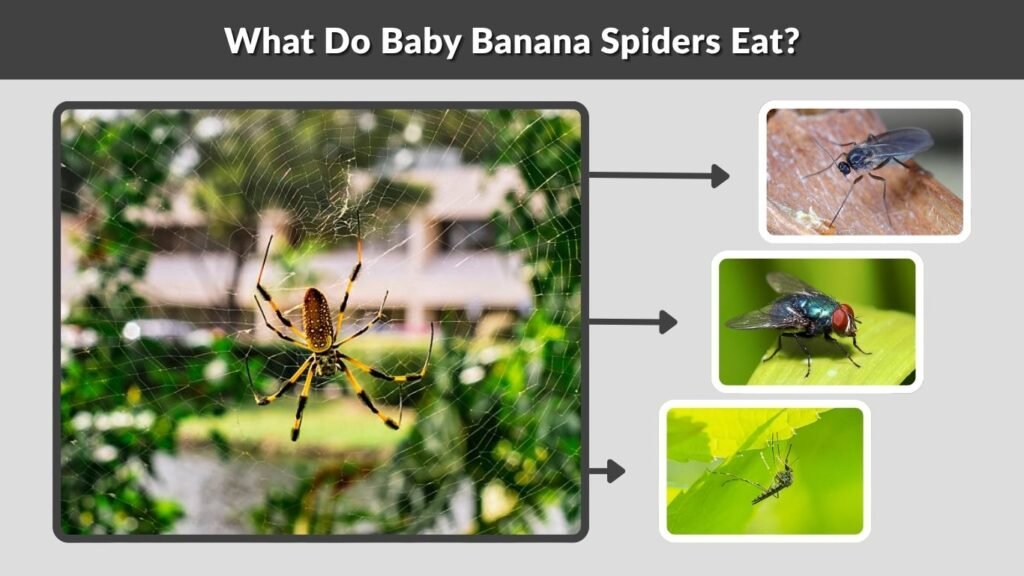
Baby banana spiders, also called spiderlings, consume much smaller prey than mature adults. Their delicate bodies and developing hunting abilities limit the size of insects they can capture. As they grow through successive molts, their feeding capabilities improve. Young orb-weavers construct smaller webs and gradually begin targeting larger insects as they approach maturity.
Small Insects and Flying Prey
Young golden silk orb-weavers typically feed on tiny insects that become trapped in their small webs.
Suitable prey may include gnats, small flies, mosquitoes, and other soft-bodied insects. The spiderlings must capture prey small enough to overpower safely.
How Their Diet Changes With Growth
As banana spiderlings develop, their webs become larger and stronger, allowing them to capture heavier insects.
Adult females can eventually subdue significantly larger prey than newly hatched spiderlings. Their increased body size also enables them to survive longer between successful feeding opportunities.
Do Banana Spiders Eat Bananas, Fruits, or Plants?
Despite their common name, banana spiders do not normally feed on bananas. Their name is associated with their appearance or their presence around banana plants and fruit shipments, depending on the species. Most banana spiders are predators that require animal prey. However, a few unrelated spider species occasionally consume plant-derived substances, creating confusion about spider diets.
Do Banana Spiders Eat Bananas?
No. Golden silk orb-weavers and Brazilian wandering spiders do not normally consume banana flesh.
Spiders may be found around bananas because the plants provide shelter or because ripening fruit attracts insects. Those insects, rather than the fruit itself, are potential food.
Can Jumping Spiders Eat Bananas?
Jumping spiders mainly consume small arthropods rather than bananas. Some spider species supplement their diets with nectar or plant-derived nutrients, but bananas are not a normal food source.
One unusual jumping spider, Bagheera kiplingi, obtains much of its nutrition from specialized structures on acacia plants, not bananas.
Do Banana Spiders Eat Birds, Other Spiders, and Their Mates?
Banana spiders occasionally capture prey beyond ordinary flying insects, leading to questions about their ability to eat birds, other spiders, and even their mating partners. Although certain unusual feeding behaviors are biologically possible, they should not be confused with a spider’s regular diet. Most banana spiders depend primarily on abundant insect prey for survival.
Do Banana Spiders Eat Birds?
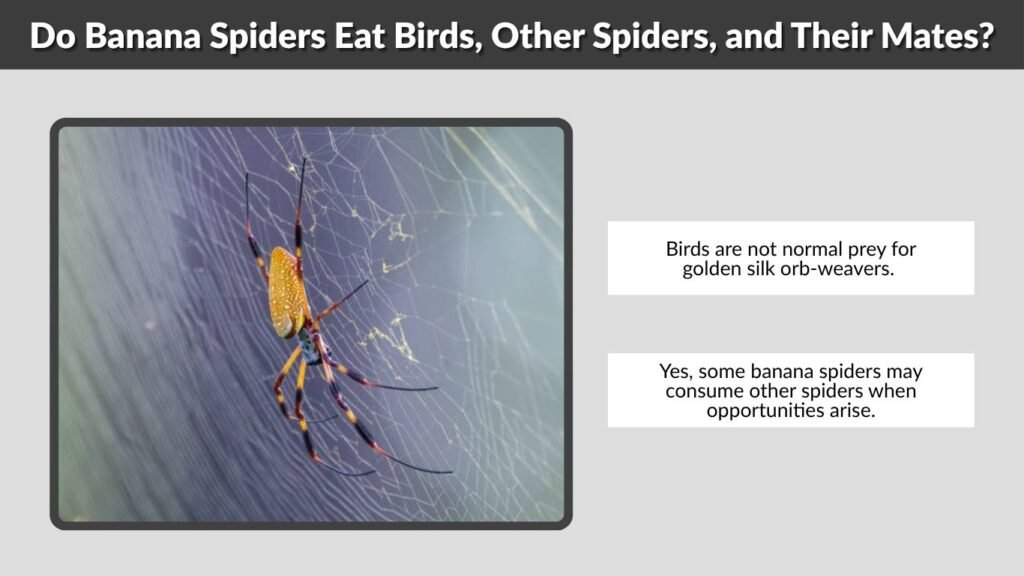
Birds are not normal prey for golden silk orb-weavers. Their strong webs can occasionally entangle very small birds, but such encounters are uncommon.
A spider’s regular feeding strategy is designed around capturing insects rather than vertebrates. Large web size alone does not mean that birds are routinely consumed.
Do Banana Spiders Eat Other Spiders?
Yes, some banana spiders may consume other spiders when opportunities arise.
Cannibalism can occur in certain circumstances, particularly when smaller spiders encounter larger individuals. However, golden silk orb-weavers primarily rely on insects rather than actively hunting other spiders.
Do Female Banana Spiders Eat Their Mates?
Sexual cannibalism occurs in various spider species, but it is not inevitable in banana spiders.
Female golden silk orb-weavers are considerably larger than males. Although cannibalism can occur, males may remain near females in their webs without being eaten.
What Eats Banana Spiders? Natural Predators
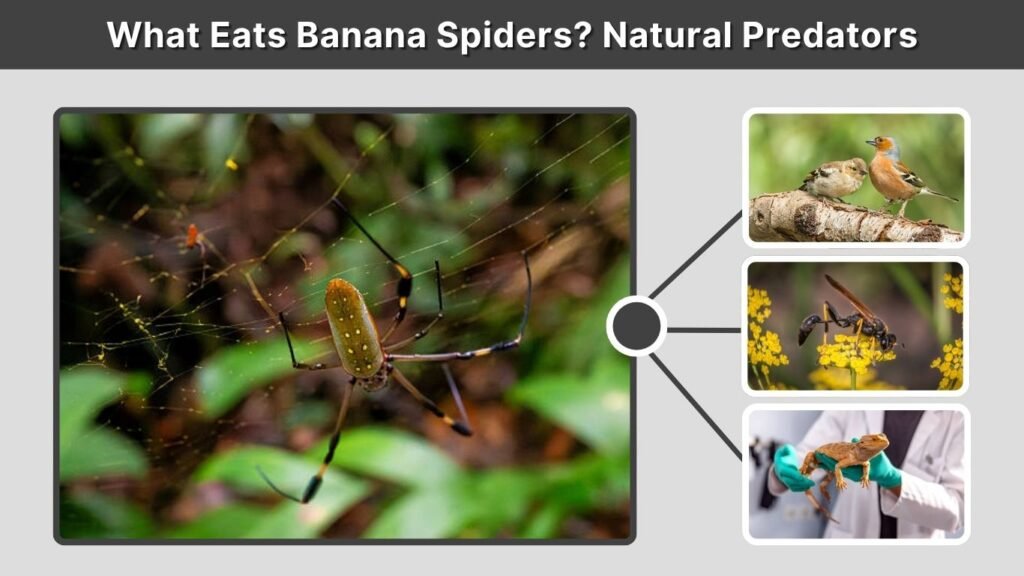
Although banana spiders are effective predators, they also serve as food for other animals. Their large size, visible webs, and predictable hunting locations may expose them to specialized spider-hunting predators. Birds and certain wasps are particularly important natural enemies. Young spiders and egg sacs may face additional threats from smaller predators and parasites.
Common Predators of Banana Spiders
- Birds: Insect-eating birds may capture spiders from vegetation or webs.
- Mud Dauber Wasps: Certain mud daubers paralyze spiders and transport them to nests for their larvae.
- Other Spiders: Larger predatory spiders may occasionally consume smaller individuals.
- Reptiles: Some insect-eating lizards opportunistically capture spiders.
- Parasitoids: Specialized wasps may attack spiders or exploit their eggs, depending on the species.
The University of Florida specifically identifies the black-and-yellow mud dauber (Sceliphron caementarium) as a predator of golden silk orb-weavers in parts of Florida.
How Banana Spiders Avoid Predators
Golden silk orb-weavers use their web structures as both hunting devices and protective environments.
Additional silk barriers may make it harder for larger animals to approach. Spiders may also respond to disturbances by moving away or dropping from their webs.
How Often Do Banana Spiders Eat?
Banana spiders do not follow fixed daily feeding schedules. Their feeding frequency depends on their size, life stage, temperature, and availability of insects. A productive web may capture several prey items in a short period, while unfavorable conditions can leave spiders without food for longer intervals. Successful hunting is therefore closely connected to the surrounding environment.
Factors Affecting Feeding Frequency
Several factors influence how regularly banana spiders feed:
- Prey availability: Insect-rich environments provide more feeding opportunities.
- Spider size: Larger spiders often require greater total food intake.
- Temperature: Warm conditions can influence metabolism and prey activity.
- Season: Seasonal insect abundance changes feeding opportunities.
- Life stage: Growing spiderlings need sufficient nutrition for development.
Why Banana Spiders Are Beneficial
Banana spiders help regulate flying insect populations, including flies, moths, and other insects.
They also contribute to natural food webs by providing prey for birds and specialized wasps. Their presence in gardens and wooded areas can be an indication of an active local insect community.
FAQs
Banana spiders attract attention because of their impressive appearance and unusual feeding behavior. Many people wonder whether these spiders eat dangerous insects, consume fruit, or hunt larger animals. The following questions explain several common misunderstandings about their diet.
1. Do Banana Spiders Eat Mosquitoes?
Yes. Golden silk orb-weavers can capture mosquitoes that become trapped in their webs. However, mosquitoes are only one part of their varied insect diet.
2. Do Banana Spiders Eat Wasps and Bees?
Yes. Both bees and wasps are documented prey of golden silk orb-weavers. They can become entangled in the web and be subdued by the spider’s venom.
3. Can Banana Spiders Eat Black Widows or Brown Recluse Spiders?
It is possible for one spider to consume another under suitable circumstances. However, black widows and brown recluse spiders are not recognized as regular prey of golden silk orb-weavers.
4. Do Brazilian Wandering Spiders Eat Bananas?
No. Brazilian wandering spiders are predators that primarily eat insects and other small animals. They may shelter among banana plants, but the fruit is not their normal food.
5. Can Humans Eat Banana Spiders?
Spiders are consumed as food in some cultures, but banana spiders are not generally considered a conventional food source. Wild spiders may also pose identification and contamination risks, so eating them is not recommended.
