
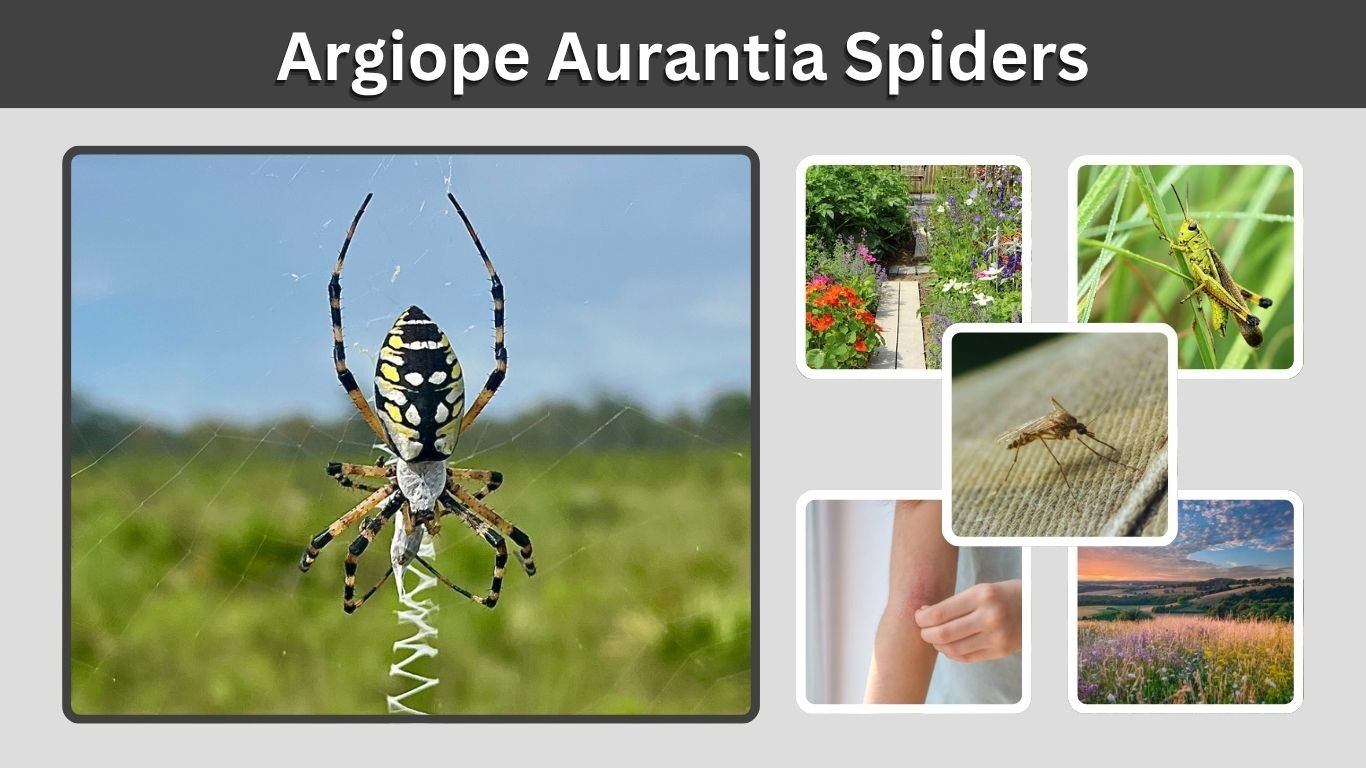
Argiope aurantia spiders are large, colorful orb-weavers commonly seen in gardens, fields, and sunny areas across much of North America. Often called yellow garden spiders, writing spiders, or black-and-yellow garden spiders, they are recognized by their bold yellow-and-black bodies and large circular webs. Although their size can appear intimidating, these spiders are generally not dangerous to people and rarely bite unless handled or threatened. This guide covers their identification, habitat, diet, webs, venom, bites, life cycle, and ecological benefits.
What Are Argiope Aurantia Spiders?
Argiope aurantia is a species of orb-weaving spider belonging to the family Araneidae. These spiders spend much of their adult lives in large webs designed to capture flying insects. Females are especially noticeable because they are significantly larger than males and remain positioned near the center of their webs during much of the day.
Common Names and Classification
Argiope aurantia is known by several common names:
- Yellow garden spider
- Black-and-yellow garden spider
- Writing spider
- Golden garden spider
- Zigzag spider
- Corn spider
Its scientific name is Argiope aurantia, and it belongs to the orb-weaver family Araneidae. The species should not be confused with unrelated spiders that may have similar yellow coloration.
Why Are They Called Writing Spiders?
The name “writing spider” comes from the thick zigzag pattern that adults sometimes produce through the center of their webs.
This silk decoration is called a stabilimentum. Its exact purpose is still discussed by researchers, but proposed functions include making the web more visible to larger animals, attracting prey, reinforcing the web, or helping with camouflage.
How to Identify Argiope Aurantia Spiders
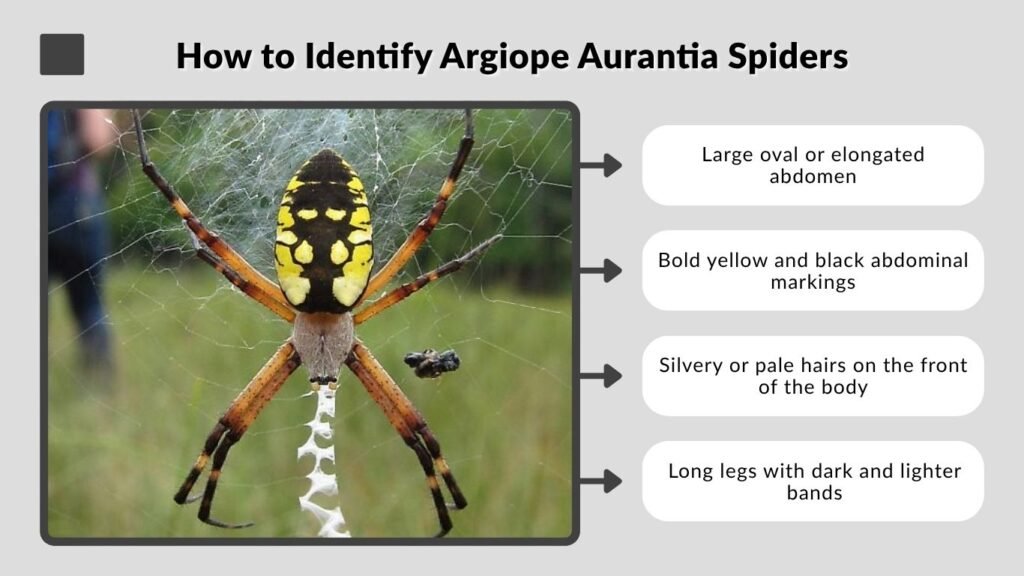
Argiope aurantia spiders are among the easiest North American garden spiders to recognize. Adult females have a striking combination of yellow, black, white, and sometimes silvery coloration. Their long legs and large web also make them highly visible. Males look quite different because they are much smaller and less dramatically patterned.
Key Identification Features
Look for these characteristics:
- Large oval or elongated abdomen
- Bold yellow and black abdominal markings
- Silvery or pale hairs on the front of the body
- Long legs with dark and lighter bands
- Large circular orb-shaped web
- Zigzag silk decoration through the web
- Female often resting head-down at the center
- Open, sunny habitat near vegetation
Female Argiope Aurantia Spider
Female Argiope aurantia spiders are responsible for the impressive appearance most people associate with the species.
Their body can reach roughly an inch or more in length, excluding the legs. The abdomen displays bright yellow patches against a dark background, while their long legs extend outward in pairs as they sit near the web’s center.
Male Argiope Aurantia Spider
Males are considerably smaller and may be easy to overlook. Their coloration tends to be less dramatic, and they often remain near the edge of a female’s web during mating season.
Because of this extreme difference in size, a male and female seen separately could easily appear to be different spider species.
Where Do Argiope Aurantia Spiders Live?
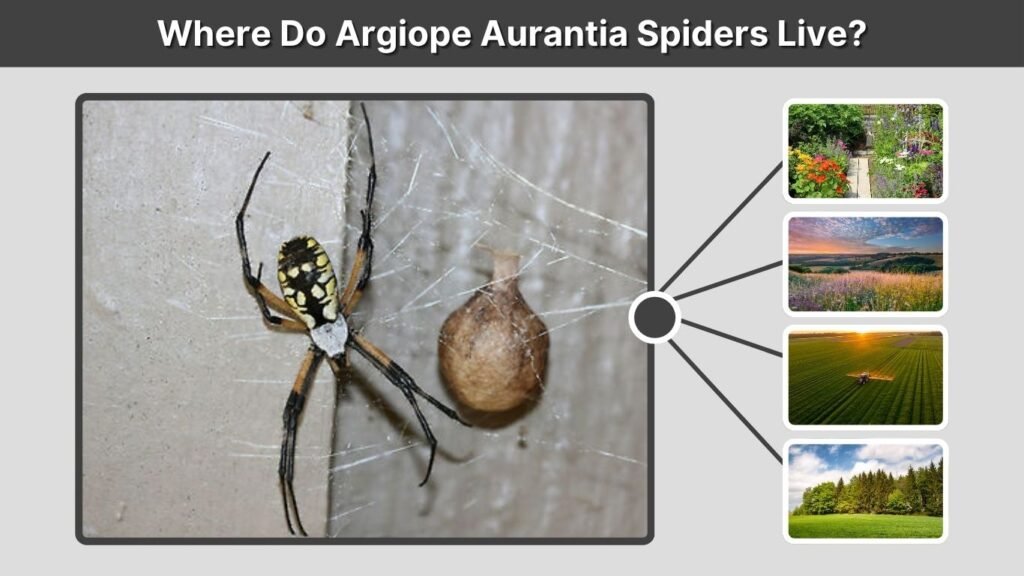
Argiope aurantia spiders occur across much of North America, especially in warm, sunny places where vegetation can support their webs. They generally choose open habitats where flying insects are abundant. Gardens are particularly suitable because flowers attract prey while shrubs, tall plants, and fencing provide convenient attachment points for large webs.
Common Argiope Aurantia Habitats
They are frequently found around:
- Flower gardens
- Meadows
- Fields
- Forest edges
- Tall grasses
- Shrubs
- Roadsides
- Farms
- Backyard vegetation
- Fences and garden structures
Argiope Aurantia in Florida and Other States
These spiders can be found in many parts of the United States, including Florida, Louisiana, Ohio, Michigan, and numerous other eastern, central, and southern states.
They are particularly noticeable during late summer and early fall, when adult females have reached their largest size and their webs become easier to spot.
Are Argiope Aurantia Spiders Poisonous?
People frequently ask whether Argiope aurantia spiders are poisonous, but “venomous” is the more accurate term. Like most spiders, Argiope aurantia uses venom to immobilize insect prey. However, its venom is not considered medically significant to most healthy humans, and the spiders are generally reluctant to bite.
Are Argiope Aurantia Spiders Venomous?
Yes, they possess venom because venom is part of their normal hunting system.
Their fangs inject venom into captured insects, helping immobilize prey before feeding. Having venom does not automatically make a spider dangerous to humans. Argiope aurantia venom is primarily adapted for relatively small prey such as grasshoppers, flies, and other insects.
Are They Dangerous to Humans?
Under normal circumstances, Argiope aurantia spiders present little danger to people. They generally remain in their webs and prefer escape or defensive behavior rather than attacking.
People can usually observe them from nearby without concern. Children and pets should still be discouraged from handling any large spider unnecessarily.
Do Argiope Aurantia Spiders Bite?
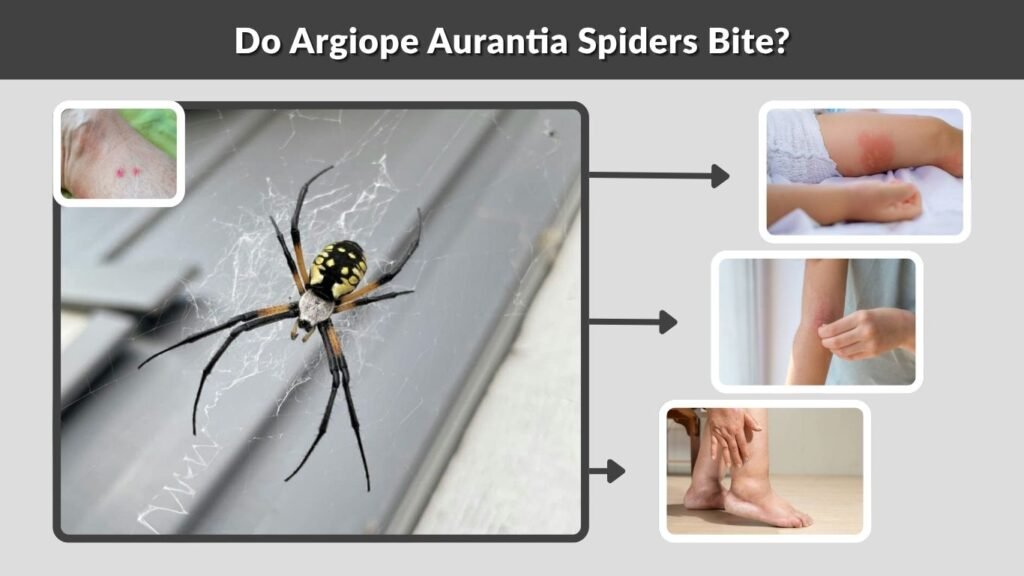
Argiope aurantia spiders can bite because they possess fangs, but bites are uncommon. A bite is most likely to happen when a spider is trapped against the skin, squeezed, or deliberately handled. Simply walking near a web or watching the spider does not normally trigger aggressive behavior.
What Happens If One Bites You?
A bite may potentially cause:
- Localized pain
- Mild redness
- Temporary swelling
- Itching or irritation
- Tenderness around the bite area
Symptoms are usually localized and relatively mild. Individual responses can vary, however, and unusual or severe symptoms should receive appropriate medical attention.
How to Avoid a Bite
Avoid picking up or squeezing these spiders. If a web is located somewhere inconvenient, give the spider space and carefully encourage relocation rather than handling it directly.
Wearing gloves while gardening can also reduce accidental contact with spiders hidden among dense vegetation.
What Do Argiope Aurantia Spiders Eat?
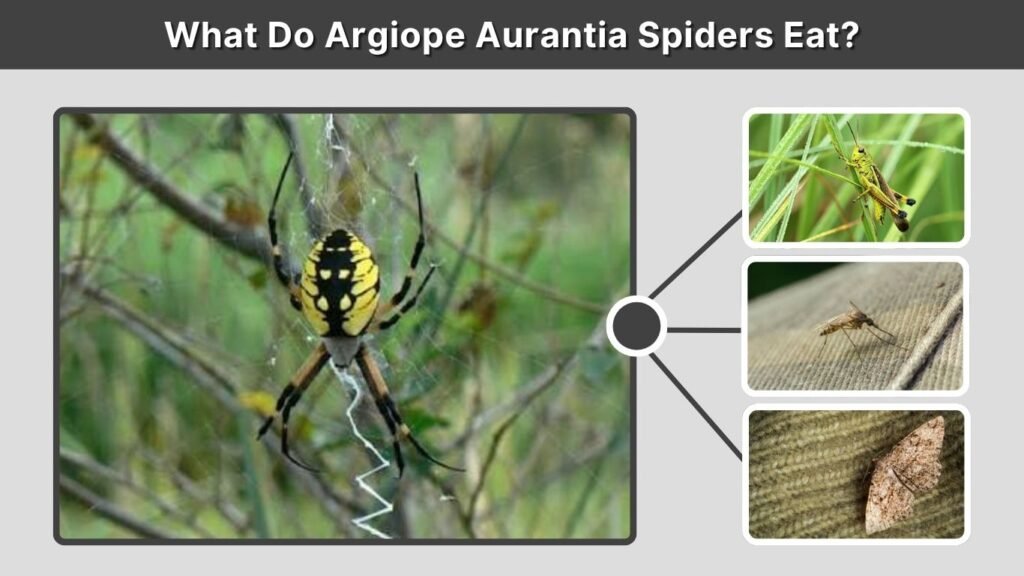
Argiope aurantia spiders are effective insect predators. Instead of actively chasing prey, they construct sticky orb webs and wait for insects to become trapped. Vibrations tell the spider that something has entered the web, allowing it to approach quickly, immobilize the prey, and wrap it in silk.
Common Prey
Argiope aurantia spiders may capture:
- Grasshoppers
- Flies
- Mosquitoes
- Moths
- Beetles
- Bees
- Wasps
- Small butterflies
- Leafhoppers
- Other flying insects
How They Catch Their Food
When an insect strikes the sticky portion of the web, its movements produce vibrations.
The spider rushes toward the trapped prey and may wrap it rapidly with silk. Venom is then used to subdue it. Like other spiders, Argiope aurantia consumes liquefied tissues rather than chewing food in the way mammals do.
Argiope Aurantia Webs
The impressive web is one of this spider’s most recognizable features. Adults construct large, roughly circular orb webs between plants or other supports. A web may span several feet when suitable attachment points are available. The female commonly sits near its center, usually facing downward while waiting for prey.
What Makes the Web Unique?
Important web characteristics include:
- Large circular structure
- Strong radial support lines
- Sticky spiral silk for catching insects
- Vertical orientation
- Zigzag stabilimentum near the center
- Built between vegetation or other supports
- Often repaired or rebuilt regularly
Why Do Their Webs Have a Zigzag?
The white zigzag structure has inspired considerable curiosity. Scientists have proposed several explanations for the stabilimentum.
It may reflect ultraviolet light and influence insect behavior, warn birds or larger animals that a web is present, help strengthen sections of the web, or provide camouflage. Its precise role may involve more than one function.
Argiope Aurantia Life Cycle
The life cycle of Argiope aurantia follows the general spider pattern of egg, spiderling, immature stages, and adult. In much of its range, adults become particularly noticeable during summer and fall. After mating, females produce protective egg sacs containing large numbers of eggs that survive until the next generation emerges.
Mating and Egg Sacs
Males approach females cautiously because females are much larger. After mating, females eventually produce one or more rounded, brownish egg sacs.
The sac contains hundreds or sometimes more than a thousand eggs and is covered with protective layers of silk.
Spiderlings and Growth
Young spiderlings hatch within the protective sac and later emerge when conditions are suitable.
They disperse and begin constructing small webs. As they grow, they molt repeatedly. By late summer, surviving females may become large adults with the distinctive coloration and enormous webs for which the species is known.
Are Argiope Aurantia Spiders Good for Gardens?
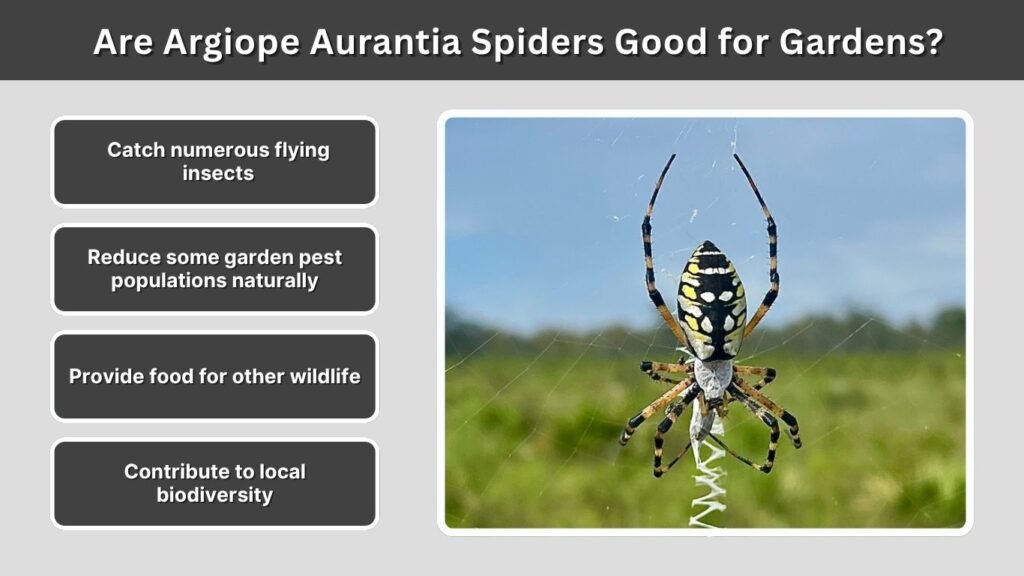
Finding such a large spider close to vegetables or flowers can initially be alarming, but Argiope aurantia spiders are generally beneficial garden predators. They consume many insects and do not feed on plants. Their presence often indicates that a garden provides enough vegetation and insect life to support natural predators.
Benefits of Keeping Them Around
These spiders can:
- Catch numerous flying insects
- Reduce some garden pest populations naturally
- Provide food for other wildlife
- Contribute to local biodiversity
- Avoid damaging plants
- Help maintain predator-prey balance
Should You Get Rid of Argiope Aurantia Spiders?
There is usually no need to remove one if its web is located away from doors, pathways, play areas, or frequently used spaces.
If relocation is necessary, avoid spraying pesticides simply because the spider looks intimidating. Removing or disturbing the web can encourage it to choose a different location, although careful relocation is preferable when practical.
Interesting Argiope Aurantia Spider Facts
Argiope aurantia is one of the most recognizable orb-weavers in North America. Its dramatic appearance, extraordinary webs, and large difference between male and female sizes make it especially interesting. Despite looking formidable, it spends most of its life performing the useful ecological role of controlling insects.
Quick Facts
- Females are much larger than males.
- They are commonly called writing spiders.
- Adults often hang head-down in their webs.
- The species produces large orb-shaped webs.
- Females have striking black and yellow markings.
- Their venom helps immobilize insect prey.
- They are not considered dangerously venomous to humans.
- Bites are uncommon.
- Grasshoppers are frequent prey.
- Females create protective egg sacs.
- They are beneficial predators in gardens.
- Adults are especially noticeable in late summer and fall.
FAQs
1. Are Argiope aurantia spiders poisonous?
Argiope aurantia spiders are venomous rather than poisonous. They use venom to immobilize insects caught in their webs, but their venom is not generally considered medically significant to humans. They are also reluctant to bite and normally remain in their webs unless disturbed or directly handled.
2. Do Argiope aurantia spiders bite humans?
Yes, they are physically capable of biting, but bites are uncommon. Most occur only when a spider is squeezed, trapped against skin, or handled. A bite may cause temporary pain, redness, swelling, or irritation. The spiders generally prefer remaining in or escaping through their webs rather than confronting people.
3. What do Argiope aurantia spiders eat?
Argiope aurantia spiders eat many types of insects, including grasshoppers, flies, moths, beetles, mosquitoes, bees, wasps, and other insects caught in their webs. Once prey becomes trapped, the spider detects vibrations, approaches quickly, wraps the insect in silk, and uses venom to immobilize it.
4. Are female Argiope aurantia spiders harmless?
Female Argiope aurantia spiders are large and capable of biting defensively, but they are generally harmless when left undisturbed. Their venom is primarily used against insect prey. They are not aggressive toward humans and can usually remain safely in gardens where they help reduce populations of various insects.
5. How do you get rid of Argiope aurantia spiders?
Removal is usually unnecessary because these spiders are beneficial predators. If a web blocks a doorway or heavily used path, carefully remove the web when the spider has moved away or relocate the spider without direct handling. Reducing outdoor lighting and dense insect-attracting vegetation near structures may also discourage web building.
