
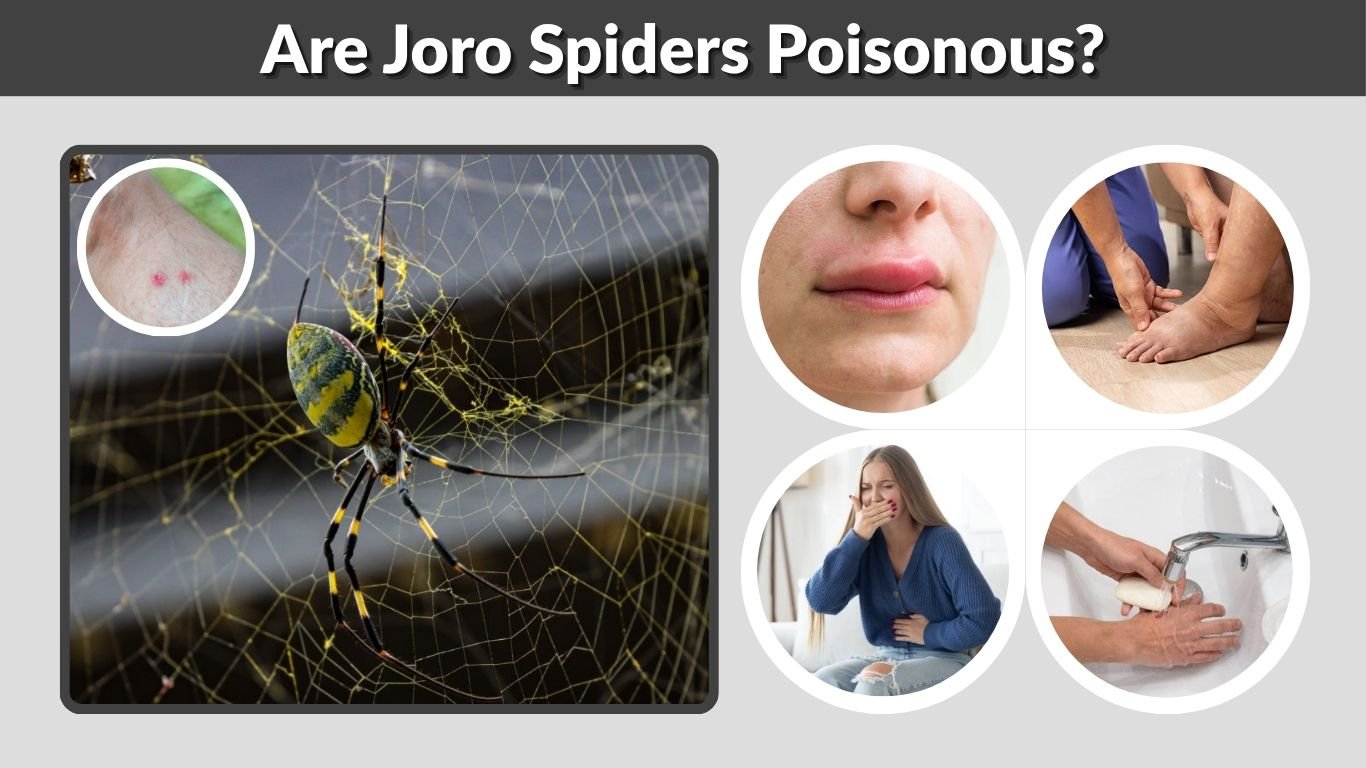
Are Joro spiders poisonous? Their large size, bright yellow markings, and enormous golden webs can make these spiders look dangerous, but they are not considered a serious threat to humans or pets. Joro spiders are venomous rather than poisonous, using venom to subdue insects caught in their webs. However, they are reluctant to bite, and their venom is not considered medically significant to people. This guide explains Joro spider venom, bite symptoms, risks to humans, dogs and cats, and when medical attention may be necessary.
Are Joro Spiders Poisonous or Venomous?
Joro spiders (Trichonephila clavata) are technically venomous, not poisonous. They use venom through their fangs to immobilize insects before feeding. The important distinction is that venom must be injected, whereas poison generally causes harm when touched, swallowed, or otherwise absorbed. Despite having venom, Joro spiders are considered unlikely to cause medically important bites in people.
Why Do Joro Spiders Have Venom?
Like most spiders, Joro spiders are predators. Their venom is an adaptation for capturing relatively small prey rather than defending themselves against people.
Joro spiders build large orb-shaped webs that intercept flying insects. When an insect becomes caught, the spider can bite it and use venom to help immobilize it before feeding.
Their venom should therefore not be confused with the medically significant venom of spiders such as certain widow or recluse species.
Can You Touch a Joro Spider?
Touching one intentionally is unnecessary. However, simply brushing against a web or accidentally touching the spider does not mean you will be bitten.
Clemson University researchers report handling large numbers of Joro spiders without being bitten. These spiders are generally reluctant to bite and often try to escape when disturbed. A bite becomes more likely if a spider is tightly squeezed, trapped, or handled roughly.
Are Joro Spiders Poisonous to Humans?
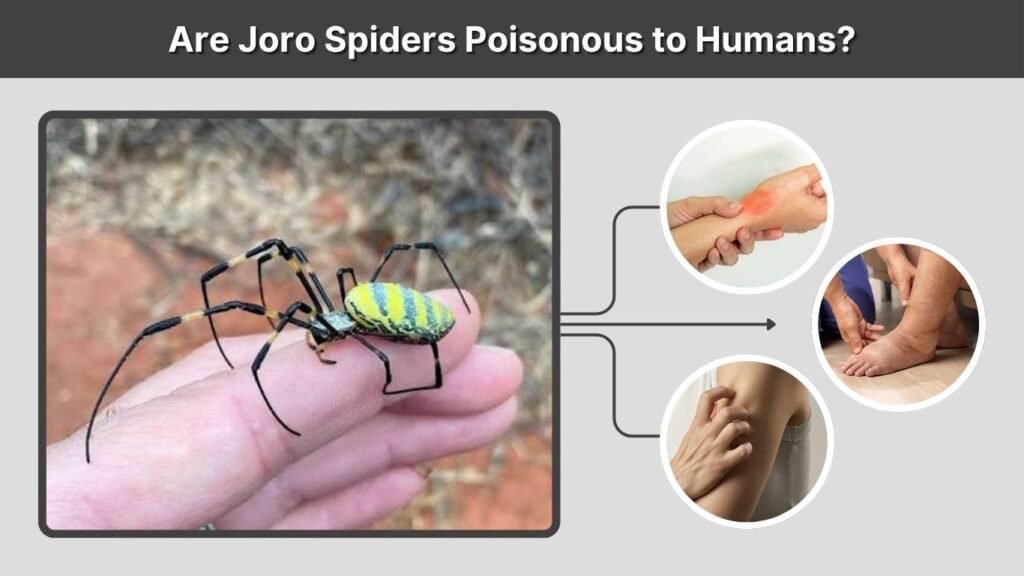
For humans, Joro spiders are generally regarded as harmless despite their intimidating appearance. Their fangs can potentially pierce skin, although doing so may be difficult, and bites appear to be uncommon. When a confirmed bite occurs, reported effects have generally been localized rather than severe.
Common Joro Spider Bite Symptoms
A person who is bitten may notice symptoms around the bite site such as:
- Mild localized pain
- A small red welt
- Temporary swelling
- Itching
- Redness around the fang marks
- Mild tenderness or irritation
Clemson Extension describes reported reactions as resembling a mosquito bite or bee sting and generally fading within a short period.
How Poisonous Are Joro Spiders to Humans?
Calling Joro spiders “poisonous” exaggerates the actual risk. Their venom is not currently regarded as medically important to humans.
Penn State Extension reports that Joro spider bites generally cause localized pain and redness that dissipate quickly without intervention. The same source notes that published allergic reactions have not been identified, although an allergic response cannot be considered impossible for every individual.
Can a Joro Spider Bite Be Dangerous?
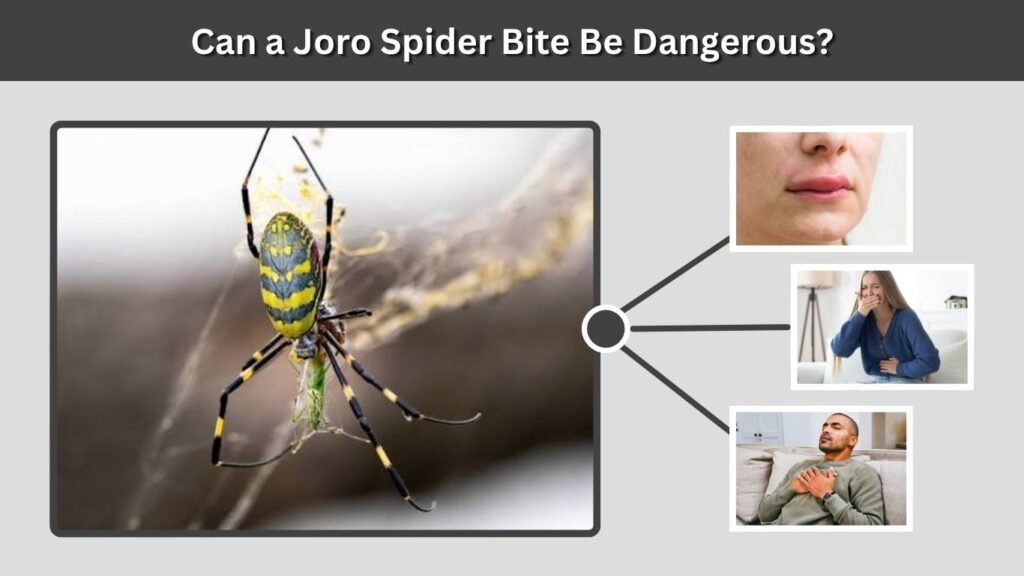
Although typical bites are expected to be mild, any bite or sting can occasionally produce an unusual reaction. In addition, it can be difficult to identify a spider correctly after a bite. A wound blamed on a Joro spider might have another cause, especially if the spider was never actually observed biting.
When to Seek Medical Attention
Consider medical advice if a suspected spider bite produces:
- Severe or rapidly increasing pain
- Significant or spreading swelling
- Difficulty breathing
- Swelling of the face, lips, mouth, or throat
- Widespread hives
- Persistent vomiting or dizziness
- Redness that continues expanding
- Pus, increasing warmth, or other signs of infection
A severe allergic reaction or breathing problem requires prompt emergency care, regardless of what type of insect or spider may have caused it.
Are Joro Spiders Aggressive?
Joro spiders are not considered aggressive toward humans. Their normal response to disturbance is more likely to involve escaping or remaining still than attacking.
Rutgers Extension notes that Joro spiders may flee or freeze when disturbed and that bites have remained rare even when their surroundings are disrupted. Their enormous webs and brightly colored females can make the spiders appear more threatening than their behavior actually is.
Are Joro Spiders Poisonous to Dogs and Cats?
Joro spiders are not known to pose an important venom risk to common household pets. Clemson and Rutgers Extension both describe them as generally harmless to pets. Nevertheless, curious dogs or cats may paw at, bite, or disturb spiders, creating an opportunity for a defensive bite.
Are Joro Spiders Poisonous to Dogs?
A dog may encounter a Joro spider while exploring vegetation, patios, porches, or large webs. Even if the spider bites defensively, severe envenomation would not normally be expected.
Watch the dog for:
- Localized redness
- Mild swelling
- Repeated licking of one area
- Pawing at the muzzle
- Tenderness
- Unusual discomfort
If swelling becomes substantial, your dog has difficulty breathing, or behavior changes significantly, contact a veterinarian.
Are Joro Spiders Poisonous to Cats?
Cats may be more likely to chase or swat moving spiders. Joro venom is not known to be medically important to pets, but a defensive bite could still irritate the skin.
Monitor a cat after a suspected bite, particularly if the bite may have occurred around the mouth or face. Significant facial swelling, breathing problems, weakness, persistent vomiting, or obvious distress should be evaluated by a veterinarian.
Are Giant and Japanese Joro Spiders Poisonous?
The terms giant Joro spider and Japanese Joro spider usually refer to the same species, Trichonephila clavata. The species is native to East Asia and has established populations in parts of the United States. Adult females are dramatically larger and more colorful than males, which contributes to their alarming appearance.
Are Giant Joro Spiders More Dangerous?
A larger spider may look more dangerous, but body size alone does not determine medical significance.
Adult female Joro spiders can reach roughly 17–30 mm in body length, while males are much smaller. Even large females are still considered reluctant to bite and are not known for medically important venom.
Are Japanese Joro Spiders Different?
“Japanese Joro spider” is another common way people refer to the Joro spider because the species occurs naturally in East Asia, including Japan.
It is not a separate highly poisonous variety. The same general safety information applies: the spider possesses venom for catching prey but normally presents little danger to humans or household pets.
What Should You Do After a Joro Spider Bite?
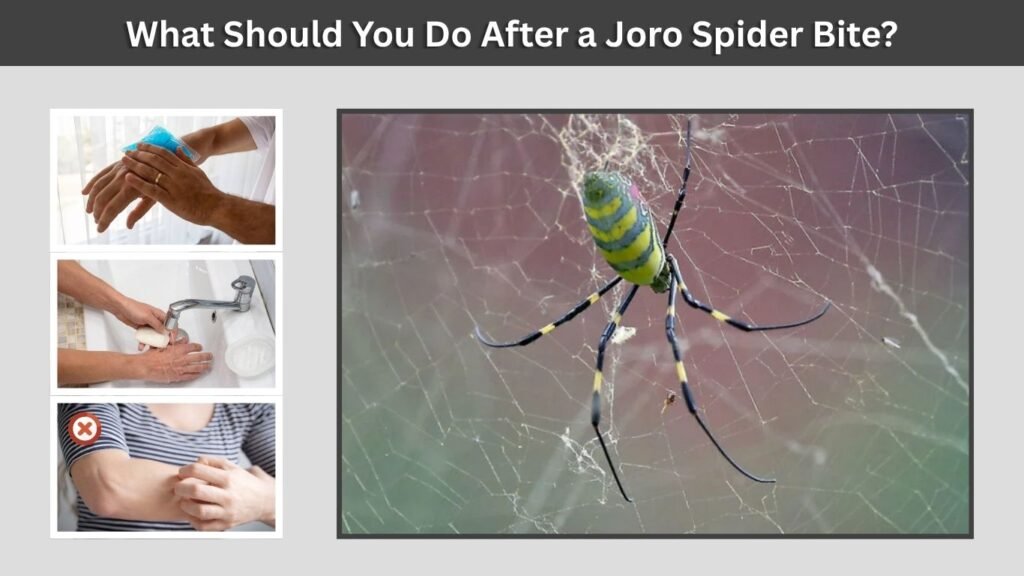
Most suspected Joro spider bites should involve only minor local irritation. Basic wound care and observation are generally reasonable for mild symptoms. Because bites are uncommon and spider identification can be uncertain, pay attention to how the affected area changes instead of assuming every red mark near a web was caused by a Joro spider.
Basic First Aid for a Bite
For a mild suspected bite:
- Wash the area with soap and clean water.
- Apply a cool compress for discomfort.
- Avoid scratching the affected skin.
- Keep the area clean.
- Observe changes in redness or swelling.
- Seek medical help if symptoms become severe.
Avoid cutting the skin, squeezing the wound, or trying to suck out venom. These methods are unnecessary and may irritate the area further.
Should You Capture the Spider?
There is generally no reason to grab a Joro spider with your hands. If identification is important, taking a clear photograph from a safe distance is preferable.
Handling the spider simply increases the possibility of a defensive bite. If a web blocks a doorway or frequently used path, it can usually be moved carefully without touching the spider directly.
How to Avoid Joro Spider Bites
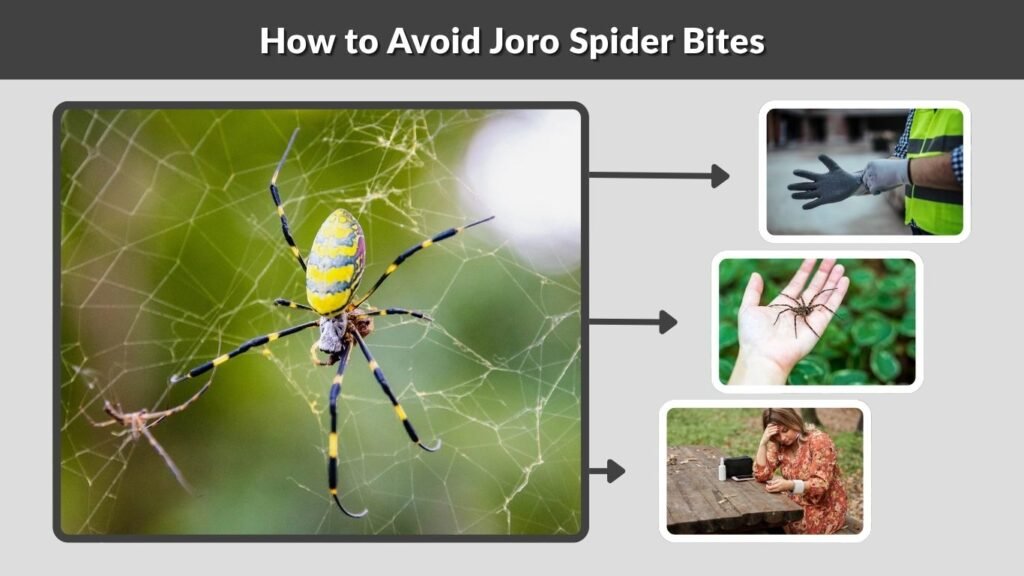
Joro spiders frequently build webs outside around vegetation, trees, structures, power lines, and other elevated surfaces. They can also appear around yards and parks. Because they normally remain associated with their webs, avoiding unnecessary handling is one of the simplest ways to prevent bites.
Simple Joro Spider Safety Tips
You can reduce accidental contact by:
- Looking ahead when walking through dense vegetation
- Wearing gloves during yard work
- Avoiding picking spiders up by hand
- Teaching children not to squeeze or handle spiders
- Moving obstructive webs with a long tool when necessary
- Checking outdoor furniture before sitting down
- Keeping pets away while relocating a spider
University of Georgia Extension recommends physical removal from pathways when necessary and advises against broad insecticide use over large areas because such products can also kill beneficial insects and other spiders.
Should Joro Spiders Be Killed?
Finding a Joro spider does not automatically mean it must be killed. They prey on various insects captured in their webs.
Their broader ecological effects in introduced areas remain an active area of research, so it is more accurate to say that some impacts remain uncertain rather than describing the species as entirely beneficial or entirely harmful.
FAQs)
1. Are Joro spiders poisonous?
Joro spiders are not poisonous. They are venomous, meaning they inject venom through their fangs to subdue prey. Their venom is not considered medically important to humans.
2. Are Joro spiders poisonous to humans?
No. Joro spiders are not considered a serious danger to humans. Bites are uncommon and usually produce localized redness, mild pain, itching, or swelling rather than severe effects.
3. Are Joro spiders poisonous to dogs?
Joro spiders are not known to pose a significant venom risk to dogs. A defensive bite could potentially cause mild local irritation, but significant symptoms should be assessed by a veterinarian.
4. Are Joro spiders poisonous to cats?
Joro spiders are generally considered harmless to cats and other pets. However, cats that develop significant swelling, breathing difficulties, weakness, or other unusual symptoms after encountering a spider should receive veterinary attention.
5. Are giant Joro spiders poisonous?
Large female Joro spiders are venomous rather than poisonous, but their impressive size does not make them highly dangerous. Their venom is intended primarily for insect prey, and bites to humans are uncommon and generally mild.
