
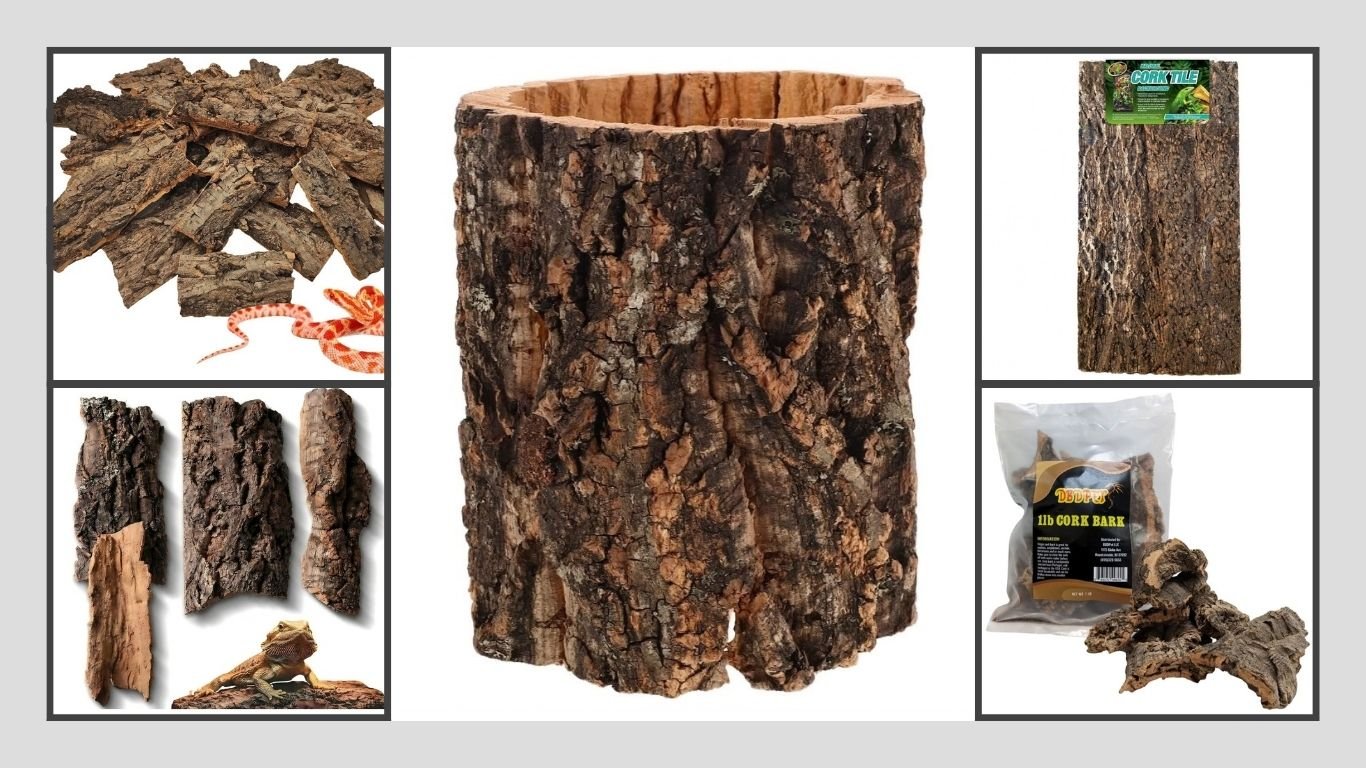
Reptile cork bark is one of the most useful additions for creating a natural, functional terrarium. It can provide climbing surfaces, hiding spots, background texture, and enrichment for reptiles and amphibians while also improving the overall look of the enclosure. Whether you keep geckos, snakes, bearded dragons, tortoises, frogs, or other terrarium animals, the right cork bark can make the habitat feel more secure and realistic. Below, we review 10 of the best reptile cork bark options for different enclosure styles and setups.
1. Apatal Reptile Cork Bark Bulk – Best for Natural Terrarium Setup
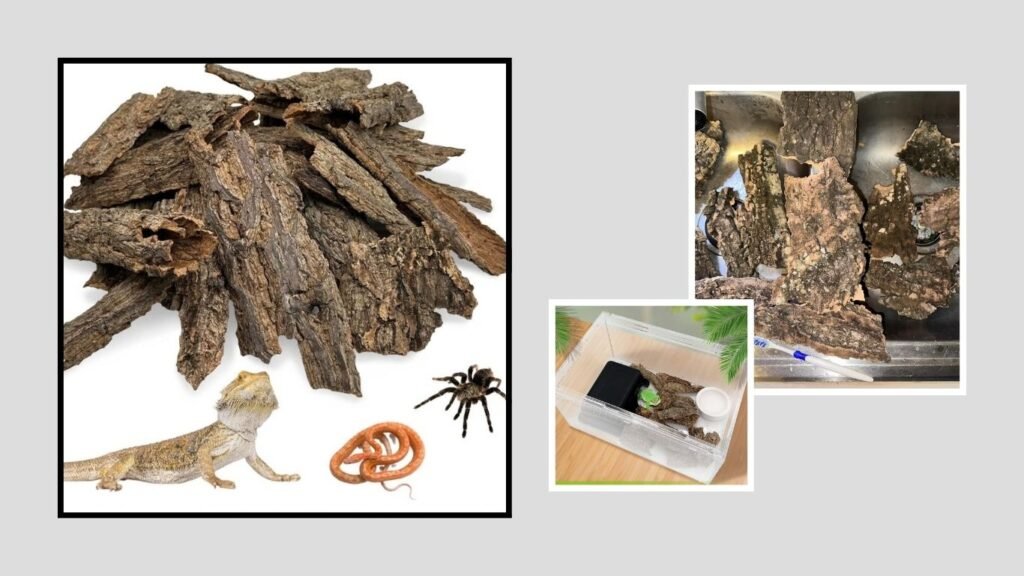
The Apatal Reptile Cork Bark Bulk is a practical choice for keepers who want to give their enclosure a more natural appearance while adding useful climbing, hiding, and enrichment areas. The pack contains natural flat cork wood pieces and is marketed for animals such as bearded dragons, snakes, geckos, tortoises, spiders, and hermit crabs. Its irregular bark texture also works well for creating woodland-inspired terrarium layouts.
Key Features
- Natural flat cork bark pieces
- Approximately 1 lb of cork bark
- Suitable for reptile and invertebrate terrariums
- Useful for climbing, hiding, and enclosure decoration
- Works with bearded dragons, geckos, snakes, tortoises, spiders, and hermit crabs
- Natural-looking texture for bioactive and decorative setups
- Individual pieces can be arranged in different positions
Why It Works Well for Naturalistic Enclosures
One of the strongest qualities of this Apatal cork bark is its versatility. Instead of serving only as decoration, the pieces can be positioned against walls, partially buried in substrate, or arranged into small shelters. This gives keepers more control over the enclosure layout while creating surfaces that reptiles can explore.
The rugged appearance also blends naturally with soil, moss, leaf litter, rocks, and live or artificial plants. That makes it particularly appealing for keepers trying to avoid an overly artificial-looking habitat.
Climbing, Hiding, and Enrichment Value
Cork bark can make otherwise empty areas of a terrarium more functional. Arboreal and climbing reptiles can use appropriately secured pieces as additional textured surfaces, while smaller animals may explore gaps underneath or around the bark.
For shy reptiles, strategically arranged cork can also help create more visually sheltered areas. Because every enclosure and animal is different, pieces should always be positioned securely so they cannot shift or fall.
Overall Performance and Best Use
Apatal Reptile Cork Bark stands out as a flexible option for anyone building or refreshing a natural-style terrarium. Its combination of authentic appearance and multiple possible arrangements means it can serve both decorative and practical purposes.
It should be especially useful for keepers who prefer customizing their habitat rather than relying on a single molded decoration. For bioactive, woodland, tropical, or simple naturalistic setups, this cork bark offers an easy way to introduce more texture, structure, and usable space without making the enclosure look overly crowded.
2. Fhiny Cork Bark Background – Best for Terrarium Walls
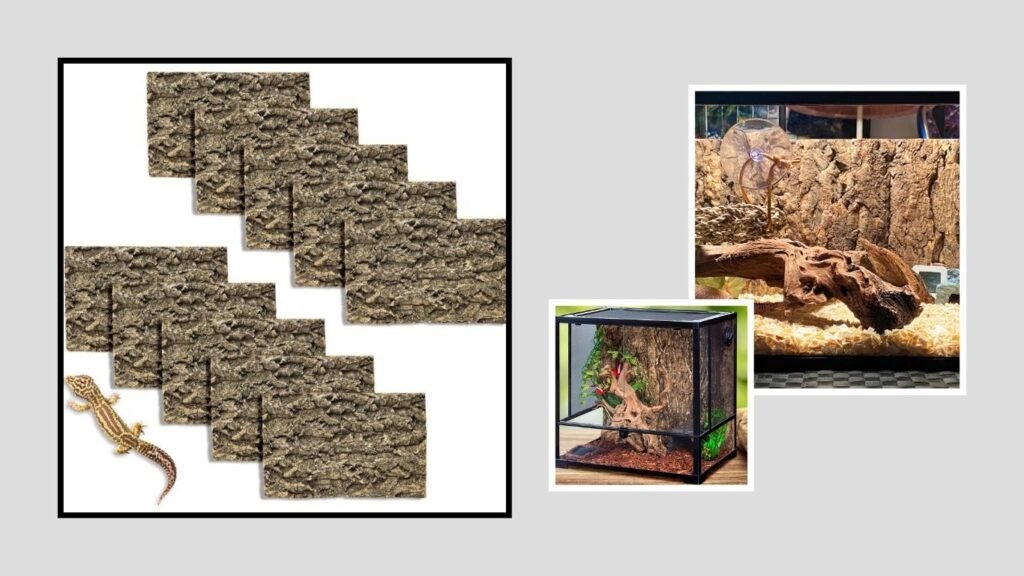
The Fhiny Cork Bark Background for Reptile Terrarium is designed for keepers who want to turn plain enclosure walls into more natural-looking surfaces. Its bark-inspired texture can add depth and visual interest while providing reptiles with an additional surface for climbing and exploring. It is especially suitable for naturalistic, tropical, woodland, and bioactive-style enclosures where a realistic background can make the habitat feel more complete.
Key Features
- Natural-looking cork bark-style background
- Adds texture to plain terrarium walls
- Suitable for reptiles and amphibians
- Useful for climbing and exploration
- Complements plants, moss, wood, and substrate
- Works well in naturalistic enclosure designs
Why It Is Best for Terrarium Backgrounds
The strongest advantage of this Fhiny option is how easily it can change the appearance of an otherwise basic enclosure. Instead of leaving glass or plastic walls exposed, a textured background creates a more immersive habitat.
It can also provide additional visual cover, which may make some reptiles feel less exposed. When combined with branches, plants, and hides, the background helps connect different enclosure elements into one consistent natural theme.
Texture and Climbing Performance
A textured cork-style surface can provide more grip than smooth enclosure walls. Climbing species may use it as part of their daily movement, particularly when branches or vines are arranged nearby.
For the best results, the background should be installed securely so that it cannot loosen or create unsafe gaps. Proper positioning also allows keepers to use vertical enclosure space more effectively without filling the floor with extra decorations.
Overall Verdict and Best Use
The Fhiny Cork Bark Background is particularly useful for keepers building vertically oriented or heavily decorated terrariums. It adds both visual character and additional usable surface area.
It makes the most sense in enclosures where appearance and climbing opportunities are equally important. For geckos, small lizards, frogs, and other animals that benefit from textured surroundings, it can provide a convincing finishing touch to a carefully planned setup.
3. Reptile Climbing Cork Bark Decoration – Best for Climbing
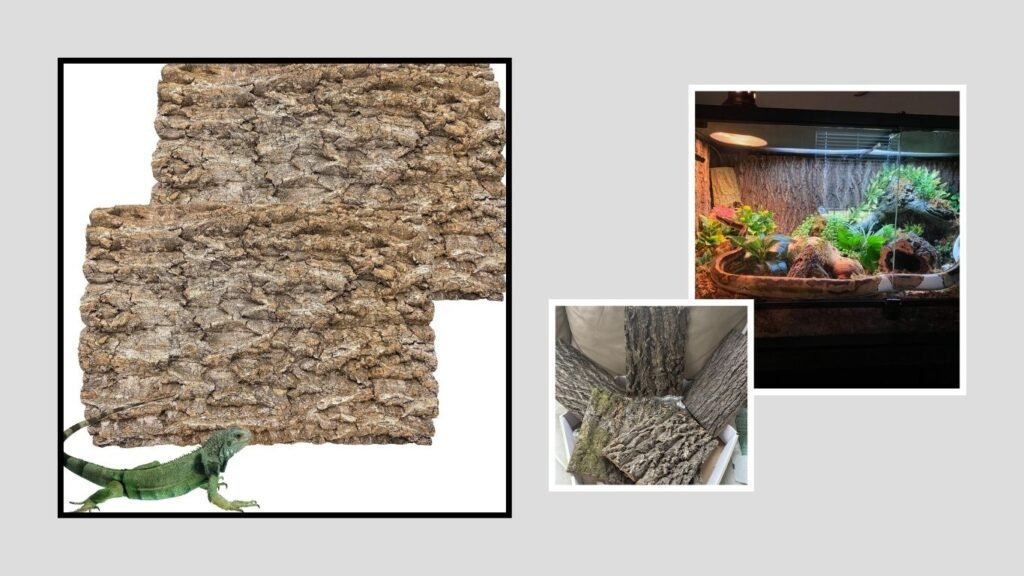
The Reptile Climbing Cork Bark Terrarium Decoration is a strong option for transforming unused enclosure space into a more interactive climbing area. Its rugged, natural appearance fits well with reptile habitats while helping create different levels within the terrarium. It is particularly appealing for chameleons, geckos, and other species that regularly explore elevated surfaces and benefit from a more three-dimensional enclosure layout.
Key Features
- Designed for climbing and terrarium decoration
- Textured natural-style surface
- Suitable for various reptiles
- Adds vertical enrichment
- Works with branches, vines, and plants
- Enhances naturalistic enclosure layouts
Why It Works Well for Active Reptiles
Reptiles that naturally climb benefit from having multiple routes through their enclosure. This cork bark decoration helps create those routes without relying only on traditional branches.
Its textured appearance also makes the setup feel less artificial. Positioning it alongside vines or elevated hiding areas can encourage reptiles to explore more of the enclosure instead of remaining primarily on the floor.
Enrichment and Habitat Design
Adding varied surfaces is one of the easiest ways to make a terrarium more interesting. A climbing bark piece can divide the enclosure into different activity zones while offering another location for resting or observing surroundings.
It can also help provide visual barriers between areas of the habitat. This can be useful when creating a setup that feels dense and sheltered without overcrowding the enclosure with bulky decorations.
Overall Performance and Best Use
This climbing cork bark decoration is best suited to keepers who want to improve vertical structure while maintaining a natural appearance. It can become a useful centerpiece rather than simply serving as background decoration.
When secured properly and positioned according to the animal’s needs, it offers a practical combination of climbing opportunity, texture, and decorative value. It is especially attractive for tropical and forest-inspired terrarium designs.
4. DBDPet Assorted Cork Bark – Best for Flexible Terrarium Layouts
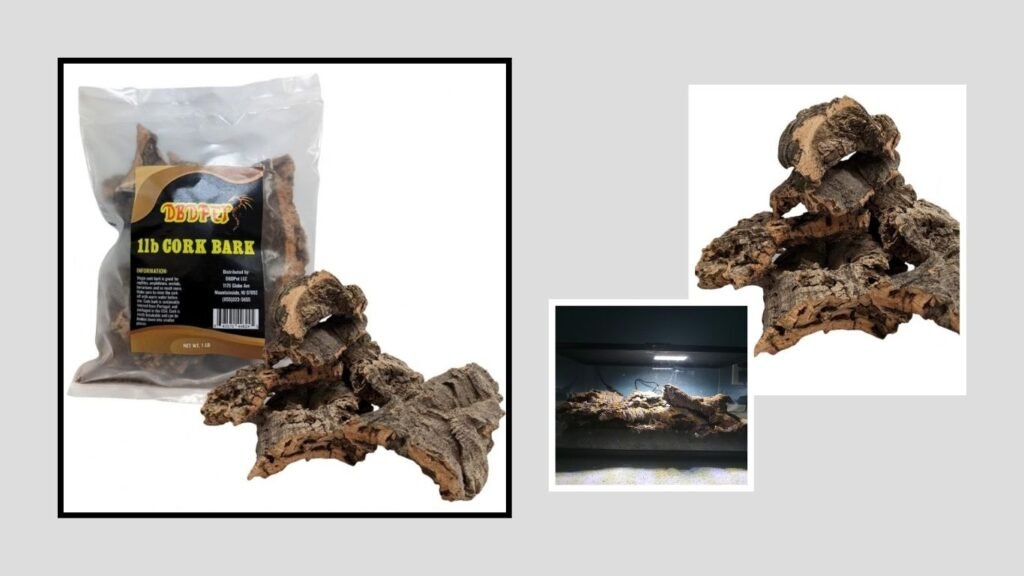
The DBDPet Assorted Cork Bark for Reptiles and Amphibians is a versatile choice for keepers who prefer designing their own terrarium layout. Assorted pieces can be arranged in different ways to create hides, climbing surfaces, pathways, and decorative areas. Because cork bark has a naturally irregular appearance, every arrangement can look slightly different, making it especially useful for custom-built and bioactive habitats.
Key Features
- Assorted natural cork bark pieces
- Suitable for reptiles and amphibians
- Useful for hiding and climbing
- Can be arranged in multiple configurations
- Natural texture blends with bioactive substrates
- Suitable for custom terrarium projects
Why It Is Best for Custom Setups
The main appeal of assorted cork bark is flexibility. Rather than receiving one fixed decoration, keepers can decide how individual pieces should fit into the habitat.
Some pieces can be positioned horizontally as shelters, while others can be leaned against backgrounds or combined with branches and rocks. This makes it easier to adapt the enclosure as the animal grows or as the overall terrarium design changes.
Natural Appearance and Enrichment
Cork bark’s irregular shapes can help reproduce the visual complexity found in natural habitats. When used with leaf litter, moss, soil, and plants, the pieces can make transitions between enclosure features look more realistic.
They also provide opportunities for reptiles or amphibians to move around, underneath, and sometimes over the bark. This adds environmental complexity without relying heavily on synthetic decorations.
Overall Verdict and Best Use
DBDPet Assorted Cork Bark is a practical option for hobbyists who enjoy arranging and customizing their own habitats. It offers more flexibility than a single molded hide or background.
The assortment should work particularly well in bioactive enclosures, naturalistic terrariums, and smaller habitats where several individual pieces can be strategically positioned. For keepers who regularly redesign their setups, the adaptable format adds considerable long-term usefulness.
5. Galápagos Natural Cork Bark – Best for Premium Natural Decor
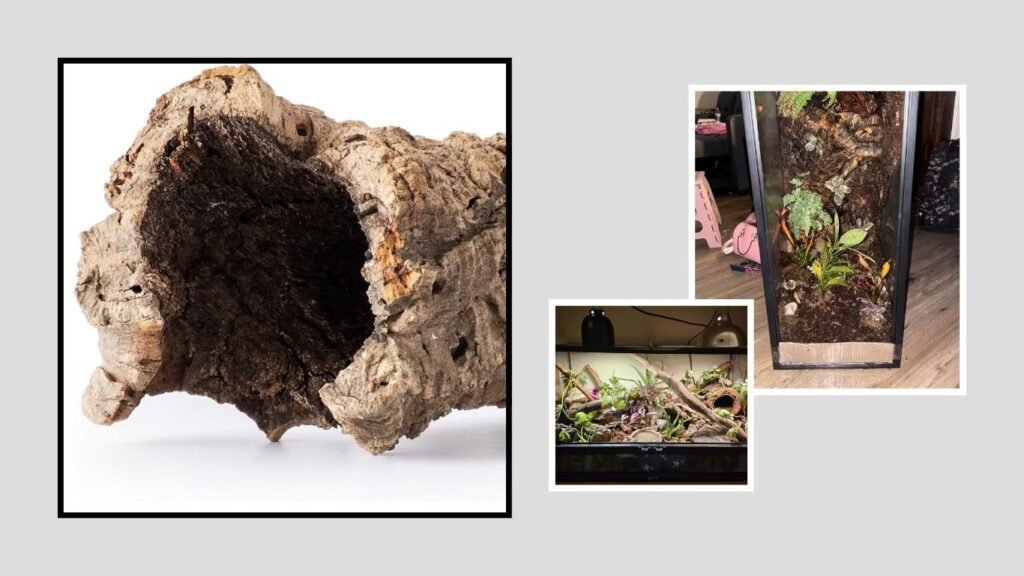
The Galápagos Natural Cork Bark for Reptiles is aimed at keepers who want authentic-looking wood texture inside their terrarium. Galápagos is well known for naturalistic habitat materials, and cork bark fits easily into desert, woodland, tropical, and bioactive setups. It can function as decorative structure while also providing surfaces for climbing, hiding, or resting depending on how each piece is positioned.
Key Features
- Natural cork bark material
- Authentic rugged appearance
- Suitable for reptile terrariums
- Can support climbing and hiding opportunities
- Blends with moss, plants, and natural substrates
- Useful for bioactive and display enclosures
Why It Stands Out for Naturalistic Displays
For display-focused terrariums, realistic materials can make a noticeable difference. Galápagos cork bark has the visual character needed to blend naturally with other botanical and woodland elements.
Instead of appearing like an added accessory, cork bark can become part of the landscape itself. It works particularly well when combined with planted backgrounds, leaf litter, stones, and natural branches to create a more cohesive scene.
Durability and Everyday Terrarium Use
Cork bark is popular partly because it provides useful structure without the heavy weight of many rock decorations. It can be repositioned during enclosure maintenance and used in several orientations.
Its textured surface can also provide grip for animals moving through the habitat. Keepers should still make sure every piece is stable, particularly when using bark above ground level or with heavier reptiles that may shift decorations.
Overall Performance and Best Use
Galápagos Natural Cork Bark is particularly appealing for keepers who place a high priority on the visual quality of their enclosure. It combines decorative value with practical habitat possibilities.
Whether used as a climbing surface, partial hide, background feature, or landscape accent, it can make a terrarium feel more established. It is a strong fit for carefully designed reptile displays where natural materials are preferred over artificial-looking décor.
6. Natural Reptile Cork Bark – Best for Bearded Dragons and Tortoises
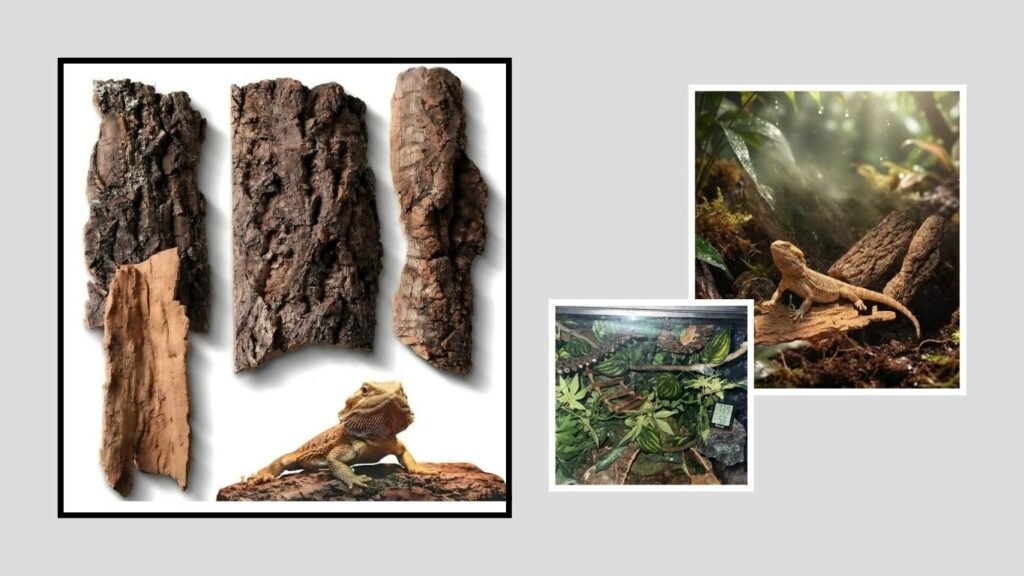
The Natural Reptile Cork Bark Terrarium Decoration provides a rugged habitat element that can work particularly well in terrestrial reptile enclosures. Its irregular shape and wood-like texture can be incorporated into setups for bearded dragons, tortoises, geckos, and similar animals. Depending on placement, the bark can function as a low climbing structure, sheltered area, visual barrier, or decorative centerpiece.
Key Features
- Natural-style cork bark decoration
- Suitable for bearded dragons and tortoises
- Useful for terrestrial reptile habitats
- Creates climbing and hiding opportunities
- Textured surface adds enclosure variety
- Suitable for naturalistic terrarium themes
Why It Is Best for Terrestrial Reptile Setups
Terrestrial reptiles benefit from more than an open floor and a basic hide. Adding bark creates changes in height, texture, and cover that can make the habitat considerably more interesting.
For bearded dragons, a securely positioned piece may provide another surface to climb or rest on. Tortoises and other ground-dwelling animals can explore around the bark or use appropriately arranged pieces as additional sheltered areas.
Practical Design and Enrichment Value
The natural shape makes this cork bark easy to combine with rocks, sand mixtures, soil substrates, artificial plants, or other wood features. This helps create a habitat that looks less uniform while adding environmental complexity.
Its most effective use will depend on the animal’s size and behavior. Heavy reptiles require especially stable placement so pieces cannot shift, tip, or create narrow spaces where an animal could become trapped.
Overall Verdict and Best Use
This Natural Reptile Cork Bark is a useful option for keepers who want one decoration to contribute to both appearance and enclosure structure. Its versatility makes it easier to incorporate into new or existing setups.
It is particularly attractive for terrestrial enclosures that need more texture and visual variety. Properly arranged, the bark can turn an otherwise flat habitat into a more engaging environment while maintaining the natural look many reptile keepers prefer.
7. VCEPJH Natural Cork Bark – Best for Bioactive Terrariums
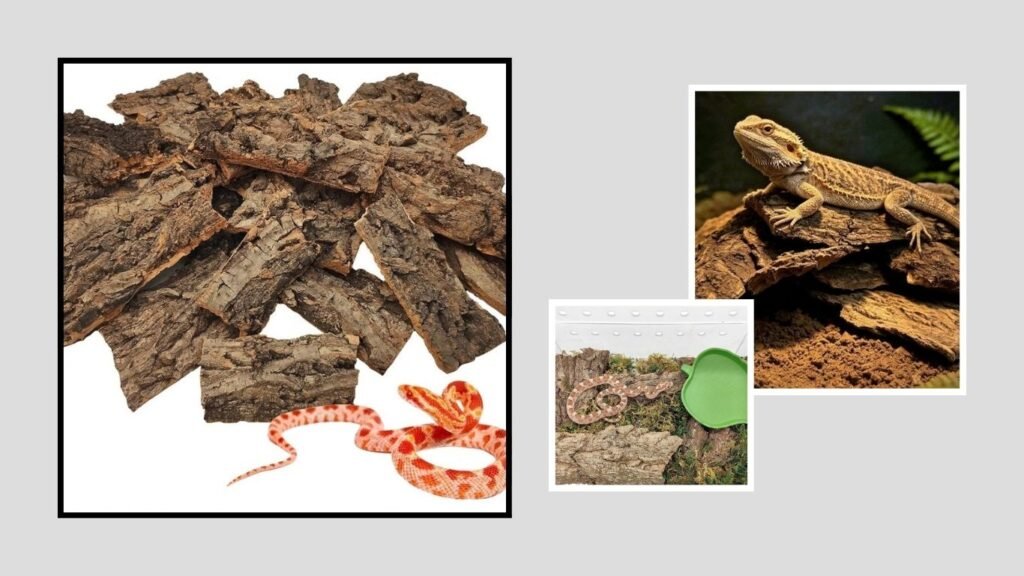
The VCEPJH Natural Cork Bark for Reptile Terrariums is a versatile habitat accessory for keepers who want to add authentic texture and structure to an enclosure. Its natural-looking surface works especially well with soil, moss, leaf litter, plants, and other bioactive materials. The cork bark can be positioned as a climbing surface, decorative feature, or sheltered area depending on the reptile and enclosure design.
Key Features
- Natural cork bark material
- Suitable for reptile terrariums
- Works well in bioactive setups
- Useful for climbing and hiding
- Textured surface encourages exploration
- Blends naturally with plants and substrate
- Can be arranged in different positions
Why It Is Best for Bioactive Setups
Bioactive terrariums look most convincing when decorations resemble materials an animal might encounter naturally. This VCEPJH cork bark fits easily into that style because its rough texture complements soil, moss, plants, and leaf litter.
It can be partially buried, positioned against another decoration, or incorporated into a planted area. This flexibility makes it easier to build an enclosure with different levels, sheltered spaces, and natural transitions rather than relying on obvious artificial decorations.
Climbing and Enrichment Performance
Cork bark can help make more of the enclosure usable. Reptiles may climb across the textured surface, investigate spaces around it, or rest beside it depending on their natural behavior.
Adding different textures and elevations can also make a relatively simple terrarium more engaging. When using the bark vertically or at an angle, securing it properly is important so that active animals cannot knock it loose.
Overall Verdict and Best Use
VCEPJH Natural Cork Bark offers a useful balance between decorative appearance and functional enrichment. It is particularly well suited to keepers who prefer natural materials and want more freedom when designing their habitat.
For tropical, woodland, or bioactive terrariums, it can become part of the landscape rather than looking like a separate accessory. Its adaptability makes it suitable for both new enclosure builds and existing setups that need additional texture or structure.
8. Botanicals Cork Bark Bits – Best for Small Terrarium Species
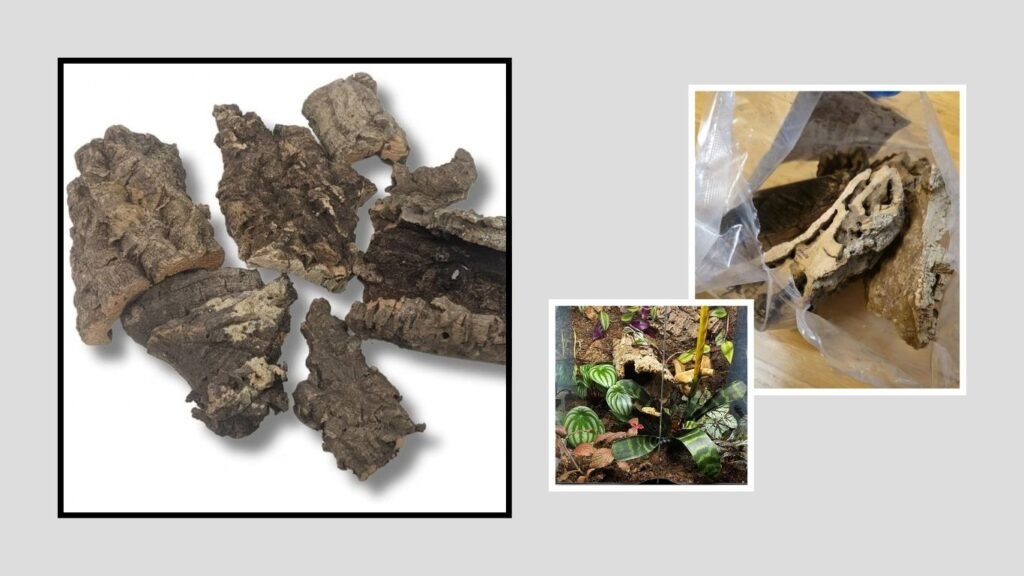
The Botanicals Cork Bark Bits provide smaller pieces of natural cork that can be incorporated into reptile, amphibian, and invertebrate habitats. Their compact size makes them particularly useful where full cork rounds or large slabs would take up too much room. These bark bits can add natural texture to the substrate layer while creating miniature shelters and microhabitats within bioactive terrariums.
Key Features
- Small natural cork bark pieces
- Suitable for compact terrariums
- Useful with springtails and bioactive setups
- Adds texture to substrate surfaces
- Can create miniature hiding areas
- Works with reptiles, amphibians, and invertebrates
- Easy to combine with leaf litter and moss
Why It Is Best for Smaller Enclosures
Large pieces of cork can overwhelm nano terrariums and small habitat setups. Cork bark bits provide greater flexibility because individual pieces can be placed exactly where extra structure is needed.
They can be scattered through leaf litter, positioned underneath plants, or grouped together to create small sheltered areas. This makes them particularly useful for tiny reptiles, amphibians, isopods, springtails, and other animals living in detailed bioactive environments.
Bioactive and Microhabitat Benefits
Small bark pieces can contribute to a more complex substrate surface. Gaps underneath and between pieces create protected micro-spaces that may be used by cleanup-crew organisms in a bioactive enclosure.
Visually, the bark also helps break up large areas of plain substrate. When combined with moss, leaves, seed pods, and plants, it can make even a compact terrarium appear more established and naturally layered.
Overall Performance and Best Use
Botanicals Cork Bark Bits are most useful when small-scale detail matters more than creating one large centerpiece. They allow keepers to distribute natural materials throughout the habitat rather than concentrating everything in one location.
For bioactive terrariums, planted nano enclosures, and invertebrate habitats, these cork pieces provide an easy way to increase visual complexity and usable microhabitats without occupying excessive enclosure space.
9. Zoo Med Cork Bark Background – Best for Vertical Terrariums
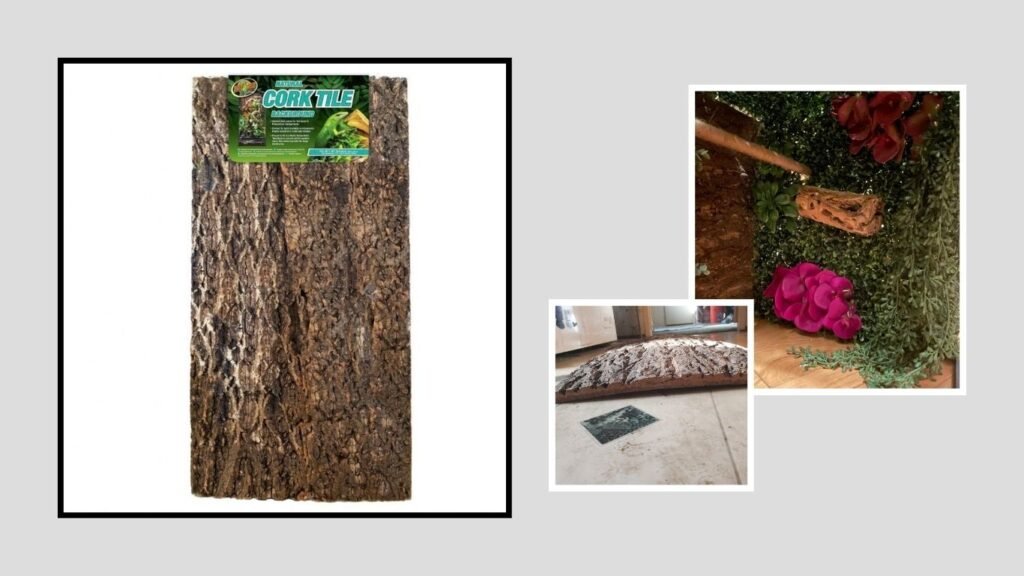
The Zoo Med Cork Bark Terrarium Background is designed for keepers who want to make better use of the vertical space inside a reptile enclosure. Rather than leaving a smooth rear wall exposed, a textured background can improve the natural appearance while creating another surface for suitable climbing species. It works particularly well in vertically oriented terrariums containing geckos, frogs, and other animals that regularly explore enclosure walls.
Key Features
- Textured terrarium background
- Natural cork-style appearance
- Ideal for vertical habitat designs
- Adds usable wall surface
- Suitable for reptiles and amphibians
- Complements plants, vines, and branches
- Helps create a more immersive enclosure
Why It Is Best for Vertical Habitats
Tall terrariums offer substantial wall space that can easily go unused. A cork background transforms that empty area into part of the habitat and creates a more complete visual environment.
Branches, vines, and plants can be arranged around the background to establish several climbing routes. This type of layout can be especially effective for arboreal species because it allows animals to move between different heights instead of remaining around a few isolated branches.
Natural Appearance and Habitat Design
A textured background can dramatically change how finished an enclosure looks. Smooth glass provides little visual depth, while cork introduces an earthy surface that blends easily with natural wood, plants, moss, and substrate.
It can also help hide some equipment or visually distracting areas behind the enclosure décor. Proper installation remains important, particularly to prevent loose sections or gaps where smaller animals might become trapped.
Overall Verdict and Best Use
Zoo Med Cork Bark Background is a strong choice for terrariums where vertical space plays an important role in the habitat design. It can provide considerably more visual character than leaving the back of an enclosure uncovered.
It is particularly appealing for naturalistic or planted setups where keepers want the background to blend with branches and vegetation. For arboreal reptiles and amphibians, the textured wall can also help create a more three-dimensional living environment.
10. Homoyoyo Cork Bark Hideout – Best for Shelter and Privacy
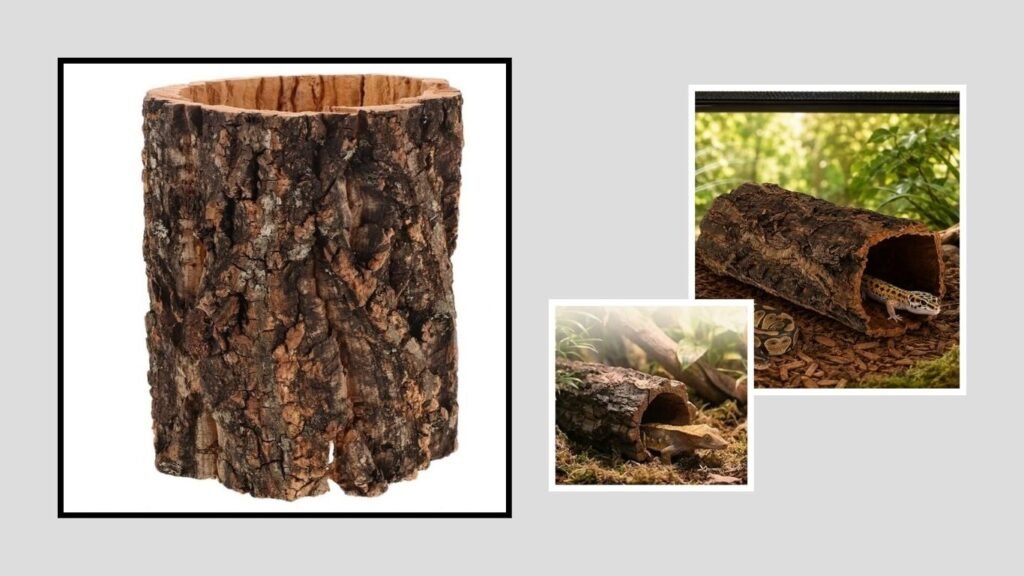
The Homoyoyo Cork Bark Hideout combines the natural appearance of bark with the practical function of a sheltered retreat. A proper hiding area is an important part of many reptile habitats because animals often need somewhere to rest away from open areas. Its hollow, wood-inspired design can fit naturally into rainforest, woodland, and other terrarium themes while contributing to the enclosure’s overall structure.
Key Features
- Hollow bark-style reptile hide
- Provides a sheltered resting area
- Suitable for naturalistic terrariums
- Works as both decoration and habitat structure
- Can provide privacy for smaller animals
- Blends with moss, plants, and substrate
- Suitable for rainforest-inspired layouts
Why It Is Best for Creating a Secure Hide
Unlike flat cork pieces that need to be arranged into a shelter, this hideout already provides an enclosed-looking space. That can make setup easier for keepers who want to introduce an additional retreat without building one from several decorations.
A bark-style hide can also appear more natural than brightly colored plastic caves. When positioned among plants or partially surrounded by substrate and leaf litter, it can blend into the enclosure rather than dominating the layout.
Comfort and Enrichment Value
Reptiles often move between open areas and protected locations throughout the day. Providing suitable hides gives them greater control over where they rest and how exposed they feel.
The textured exterior can also add another surface to explore. Depending on the animal’s size and the dimensions of the hideout, reptiles may investigate the top, sides, entrance, and sheltered interior as part of their normal movement around the enclosure.
Overall Performance and Best Use
Homoyoyo Cork Bark Hideout is a practical finishing option for keepers who need both shelter and natural-looking decoration. Its hollow design makes it particularly useful in habitats that would benefit from an additional private resting area.
It should work best when selected according to the animal’s size and positioned securely within the enclosure. For woodland and rainforest-inspired terrariums, it offers a simple way to combine visual appeal, enclosure structure, and useful cover in one feature.
FAQs
1. Is cork bark safe for reptiles?
Yes, natural cork bark is generally considered safe for reptiles when it is clean, untreated, and properly prepared for terrarium use. It is commonly used with geckos, snakes, bearded dragons, frogs, and many other terrarium animals. Always inspect new pieces for sharp edges, loose debris, mold, or unwanted contaminants before placing them in an enclosure.
2. What reptiles can use cork bark?
Cork bark can work well for many reptiles, including geckos, snakes, bearded dragons, anoles, chameleons, skinks, and some tortoises. It can also be useful for amphibians and invertebrates. The best size and shape depend on whether the animal mainly climbs, hides, or stays close to the ground.
3. Does reptile cork bark work in bioactive terrariums?
Yes. Cork bark is especially popular in bioactive terrariums because its natural appearance blends easily with soil, moss, leaf litter, live plants, and other botanical materials. Larger pieces can create hides and climbing surfaces, while smaller cork bits can help form protected microhabitats for springtails and other cleanup-crew organisms.
4. How should cork bark be used in a reptile enclosure?
Cork bark can be placed flat as a shelter, leaned securely against the enclosure wall, partially buried in substrate, or incorporated into a background. It can also be combined with branches, plants, and rocks to create more climbing routes and hiding areas. Any elevated pieces should be firmly secured so they cannot fall or shift onto the animal.
5. How do you clean reptile cork bark?
Remove loose waste and debris regularly with a brush or similar tool. When deeper cleaning is necessary, follow an appropriate reptile-safe cleaning method and allow the cork to dry completely before returning it to the enclosure. Avoid household cleaners that may leave harmful chemical residues. In bioactive setups, excessive cleaning may not be necessary unless the bark becomes heavily soiled or contaminated.
