
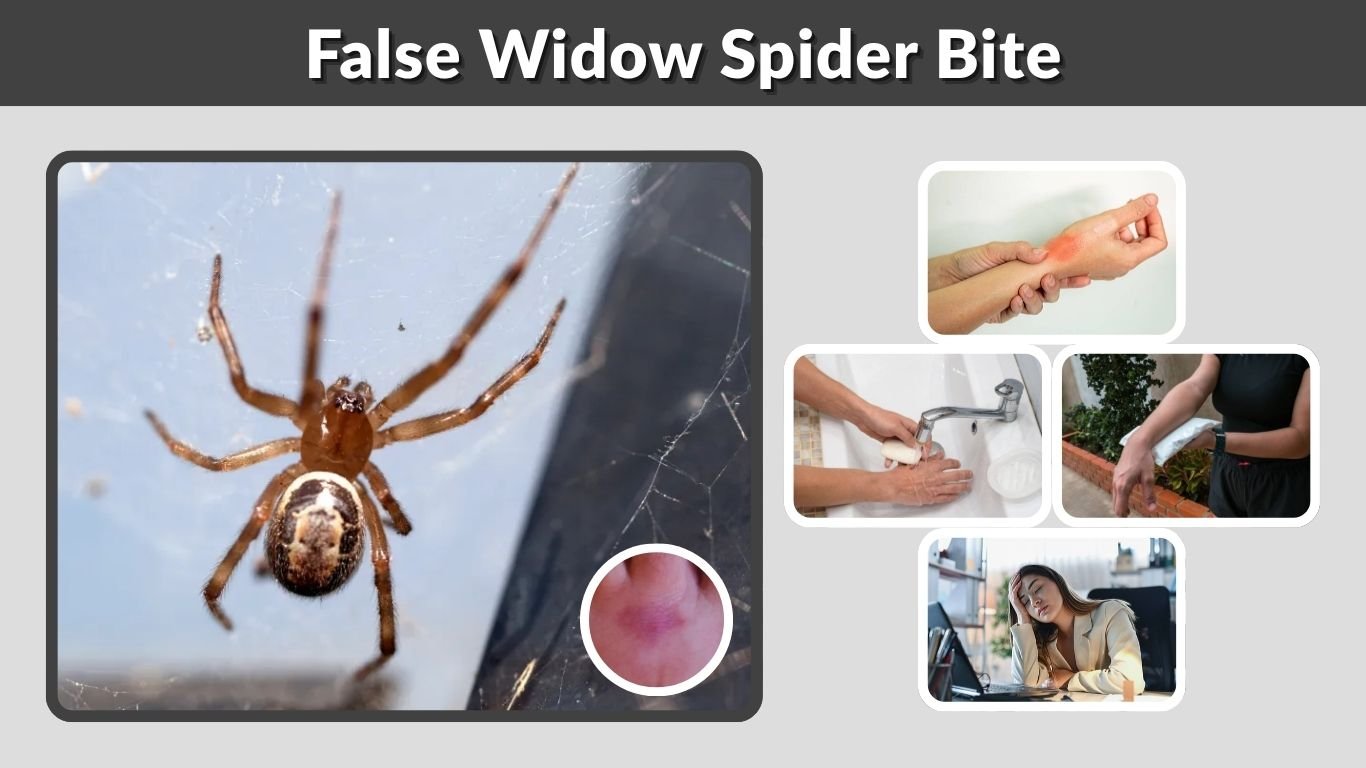
A false widow spider bite can cause pain, redness, swelling, and other localized symptoms, but serious reactions are uncommon. False widows belong mainly to the genus Steatoda and include the well-known noble false widow, Steatoda nobilis, which is established in parts of the UK and Ireland. Because many skin problems resemble spider bites, appearance alone cannot confirm the cause. Knowing the typical symptoms, possible stages, first-aid steps, and warning signs can help you respond appropriately and understand when medical attention may be necessary.
What Is a False Widow Spider Bite?
False widow spiders resemble true black widows but belong to a different genus. Several Steatoda species occur around homes, sheds, garages, walls, and other sheltered locations. They possess venom for subduing prey, but they generally avoid people and usually bite only when trapped against skin, handled, or otherwise threatened.
Noble False Widow Spider Bite
The noble false widow, Steatoda nobilis, is one of the species most frequently associated with reported bites in the UK and Ireland.
Its bite can cause a condition sometimes described as steatodism, involving local pain and, occasionally, symptoms extending beyond the bite area.
Most confirmed or suspected bites cause limited effects and improve with basic supportive care.
False Widow vs False Black Widow
“False black widow” is an informal name sometimes applied to several Steatoda spiders because their rounded abdomens and dark coloration resemble true widow spiders.
They should not be confused with Latrodectus, the genus containing true black widows.
Correct identification is important because a spider’s appearance and the medical significance of its bite can differ considerably between species.
What Does a False Widow Spider Bite Look Like?
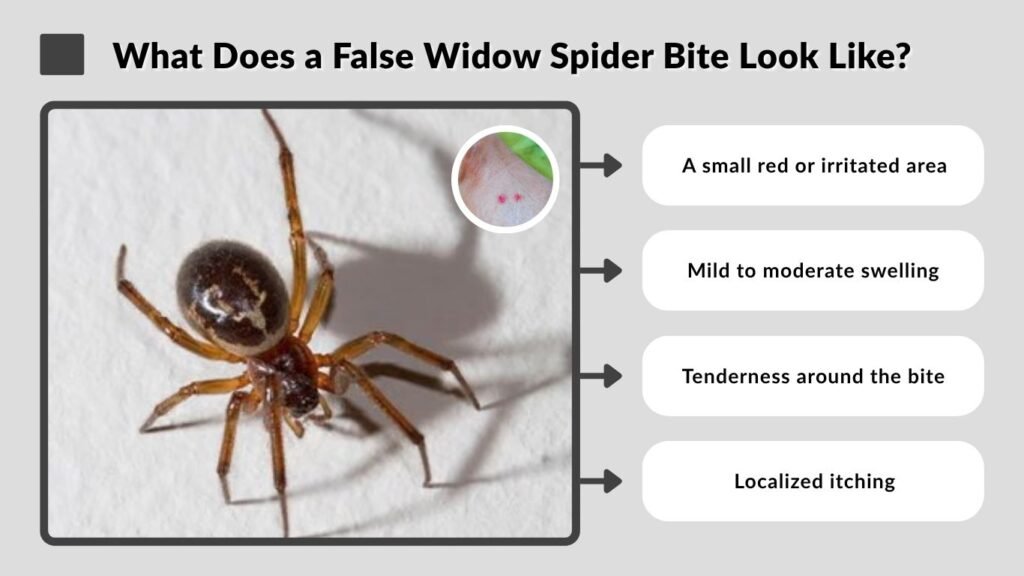
A suspected false widow bite may resemble many ordinary insect bites or minor skin irritations. There is no single visual feature that reliably proves a wound was caused by a false widow. Unless the spider was observed biting and identified accurately, symptoms alone generally cannot establish the species responsible.
Possible Bite Appearance
A bite may involve:
- A small red or irritated area
- Mild to moderate swelling
- Tenderness around the bite
- Localized itching
- A small raised bump
- Occasionally a small blister
- Warmth around the affected skin
- One or two tiny puncture-like marks
Two puncture marks are not always visible and should not be used as the sole method of identifying a spider bite.
False Widow Spider Bite Blister
Some people report blistering after suspected spider bites, but a blister is not specific to false widows.
Blisters can also result from other arthropod bites, friction, allergic reactions, bacterial infections, and numerous skin conditions.
Avoid intentionally breaking a blister because this can increase the chance of secondary infection. Keep the area clean and seek medical advice if blistering becomes extensive or is accompanied by worsening pain, spreading redness, fever, or drainage.
False Widow Spider Bite Symptoms
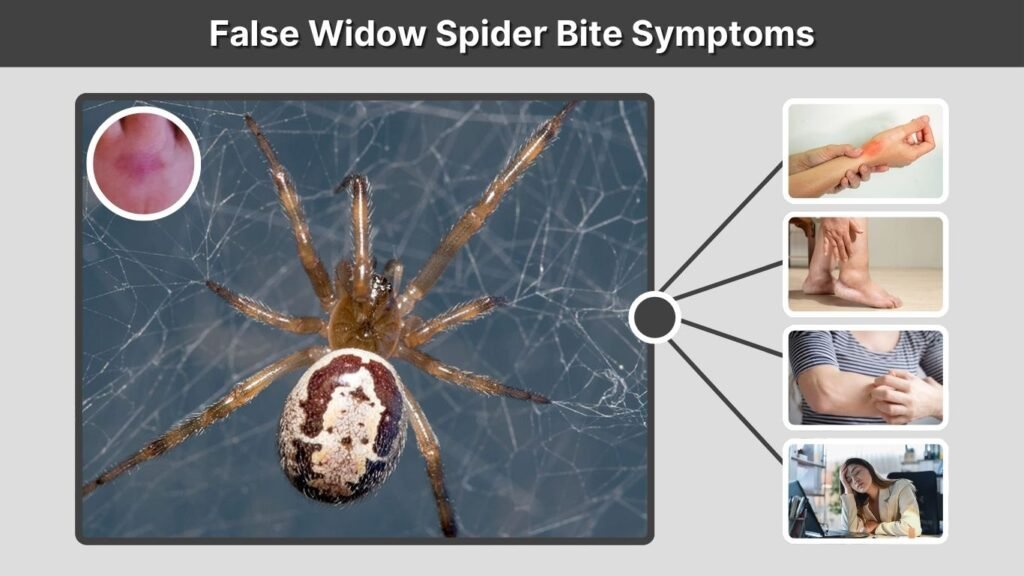
Symptoms can differ depending on the species, amount of venom, bite location, and individual response. Many cases remain localized around the skin where the bite occurred.
More substantial reactions are possible, but they appear to be much less common.
Common Symptoms
Possible symptoms include:
- Immediate or developing pain
- Redness
- Local swelling
- Itching or irritation
- Tenderness
- Burning sensation
- Warm skin around the bite
- Mild numbness or tingling
Pain may sometimes spread somewhat beyond the original bite location.
Less Common Symptoms
Some reported reactions have included malaise, nausea, headache, fatigue, sweating, or muscle discomfort.
These symptoms should be interpreted cautiously because suspected spider bites are often diagnosed without confirmation that a spider actually caused the lesion.
Anyone experiencing substantial systemic symptoms should obtain medical advice rather than relying on visual identification.
False Widow Spider Bite Stages
There is no medically fixed sequence of stages that every false widow bite follows. The progression varies from person to person, and many suspected bites may actually have other causes. Still, understanding a general timeline can help with monitoring the affected area.
Day 1
Pain or a sharp sensation may occur around the time of the bite. Redness, localized swelling, tenderness, or itching can develop during the following hours.
Some bites remain little more than a small irritated spot.
Following Days
For uncomplicated bites, symptoms should generally stabilize and gradually improve rather than continually becoming worse.
Swelling or soreness can persist temporarily.
If the affected area becomes progressively hotter, more painful, increasingly swollen, or begins producing pus, this could indicate a secondary infection or another medical condition requiring evaluation.
Healing Stage
Minor skin reactions generally improve with time and supportive care.
Do not assume that expanding skin damage or tissue breakdown is a normal “stage” of a false widow bite. Persistent ulceration, significant blistering, or worsening skin changes should be assessed by a healthcare professional.
How to Treat a False Widow Spider Bite
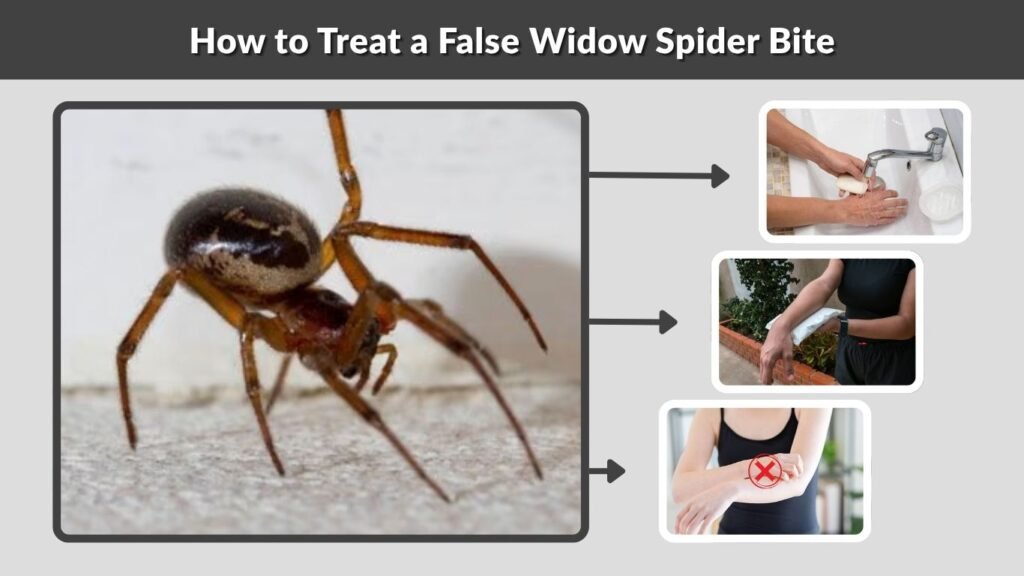
Initial care for a mild suspected bite is similar to first aid for many minor bites and stings. The aim is to keep the skin clean, reduce discomfort, and watch for signs that the reaction is becoming more serious.
First-Aid Steps
For a mild reaction:
- Wash the bite gently with soap and water.
- Apply a wrapped cold pack for short intervals.
- Keep the affected limb elevated if swelling is significant.
- Avoid scratching the skin.
- Monitor redness and swelling over the following hours.
- Use appropriate over-the-counter pain relief if normally safe for you.
- Seek medical advice if symptoms worsen instead of improving.
Do not apply harsh chemicals or attempt to cut, squeeze, or suction venom from the bite.
What Not to Do
Avoid cutting the wound, applying extreme heat, squeezing the bite, intentionally breaking blisters, or attempting to “draw out” venom.
These approaches do not reliably remove venom and can damage tissue or introduce bacteria.
If you safely captured or photographed the spider without risking another bite, the image may help with identification. Do not attempt to catch a spider if doing so puts you at risk.
When Is a False Widow Spider Bite Dangerous?
Most suspected false widow bites are not life-threatening. However, reactions vary, and severe symptoms following any bite require prompt medical assessment.
The main concern is not only venom itself but also allergic reactions, infection, or another condition incorrectly assumed to be a spider bite.
Get Urgent Medical Help for These Symptoms
Seek urgent medical attention for:
- Difficulty breathing
- Swelling of the face, mouth, tongue, or throat
- Fainting or severe dizziness
- Rapidly worsening swelling
- Severe or spreading pain
- Repeated vomiting
- Significant weakness
- Extensive blistering
- Fever with worsening skin inflammation
- Confusion or other severe systemic symptoms
Severe allergic symptoms can represent anaphylaxis and require emergency treatment.
Signs of Possible Infection
Increasing redness, warmth, tenderness, swelling, pus, fever, or red streaking away from the affected area may indicate infection.
A skin infection should not automatically be blamed on spider venom. Bacteria can enter damaged skin from many causes.
Medical evaluation can determine whether additional treatment is required.
False Widow Spider Bites in the UK and Ireland
False widow spiders have attracted substantial attention in Britain and Ireland, particularly the noble false widow. The species can live around buildings and has become well established in many areas.
Despite alarming headlines, encountering one does not mean you are likely to be bitten.
How Common Are Bites?
False widows are not naturally interested in attacking humans.
Bites generally occur when a spider becomes trapped against the skin, is handled, or is accidentally disturbed in a confined place.
Many spiders live unnoticed around buildings without biting anyone. Consequently, finding a false widow inside or near a home does not itself represent a medical emergency.
How to Identify a False Widow Spider
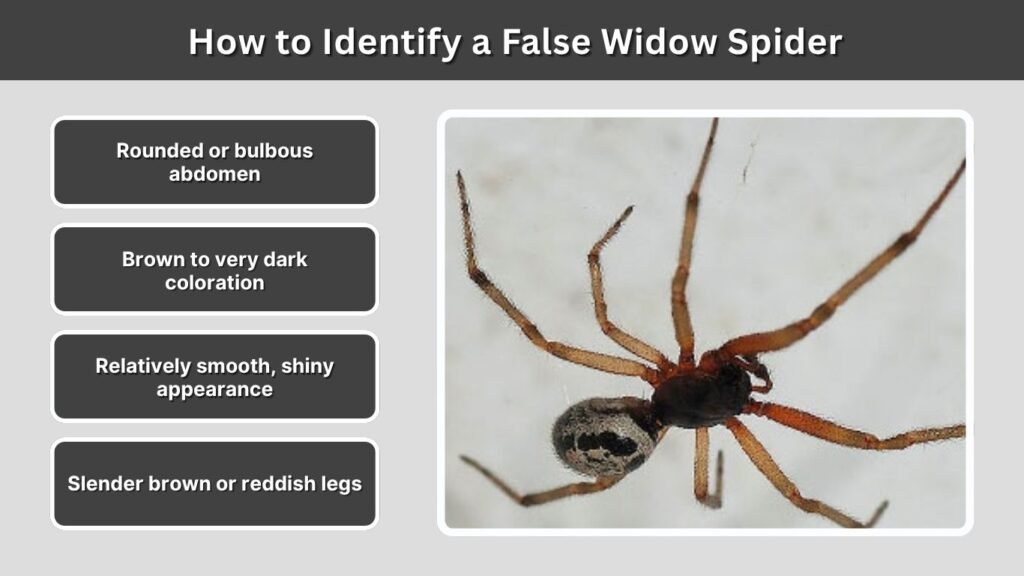
Identifying the actual spider is far more reliable than trying to identify it from a skin lesion. False widows typically have rounded abdomens and comparatively slender legs, but appearance varies between species, sex, and age.
Typical Identification Features
Depending on the species, look for:
- Rounded or bulbous abdomen
- Brown to very dark coloration
- Pale cream abdominal patterns in some species
- Relatively smooth, shiny appearance
- Slender brown or reddish legs
- Irregular tangled web
- Preference for sheltered crevices
The noble false widow often has a pale abdominal marking that can vary substantially between individuals.
False Widow Bite vs Black Widow Bite
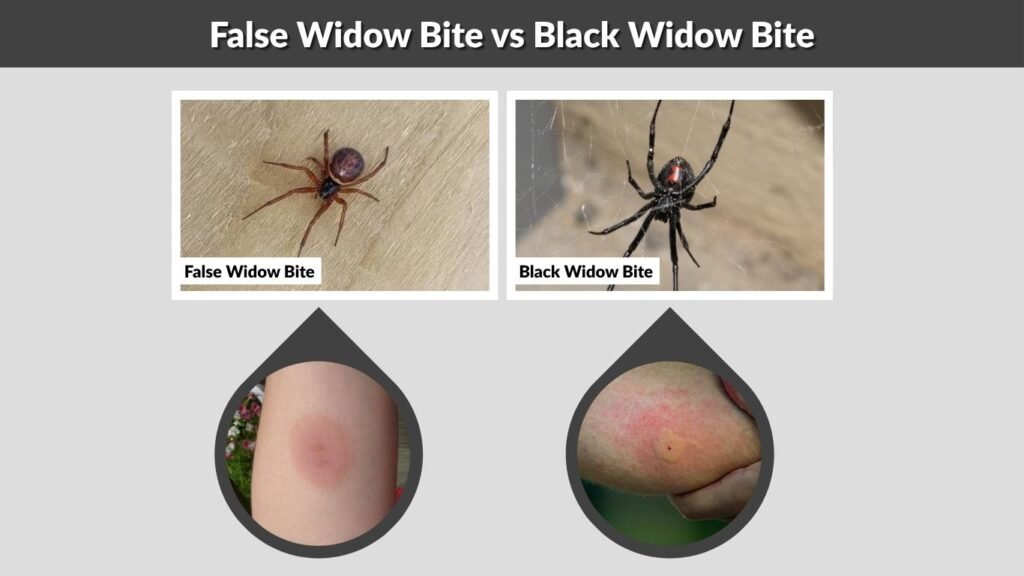
False widows and true black widows are related spiders, but they are not the same. True black widows belong to Latrodectus, while false widows belong to Steatoda.
True widow venom is generally considered more medically significant.
Important Differences
- False widow: Steatoda species
- Black widow: Latrodectus species
- False widow: Usually brownish or dark with variable pale patterns
- Black widow: Often glossy black with characteristic red markings in many species
- False widow bites: Usually localized or moderately painful
- Black widow bites: Can cause significant systemic neurotoxic symptoms
Medical treatment should be based on symptoms rather than attempting to judge severity solely from the spider’s presumed identity.
Can False Widow Spiders Bite Dogs or Cats?
Dogs and cats can theoretically be bitten if they disturb a spider, although determining that a particular skin problem was caused by a false widow can be difficult.
Pets may investigate areas where spiders hide, increasing opportunities for contact.
What to Do for a Pet
If you suspect your pet has been bitten and it develops significant swelling, pain, weakness, vomiting, breathing difficulty, unusual behavior, or other concerning symptoms, contact a veterinarian.
Do not give human pain medications to a dog or cat unless specifically directed by a veterinarian, as several common human medicines can be dangerous to pets.
FAQs
Are false widow spider bites dangerous?
Most reported bites cause localized pain, redness, or swelling and are not life-threatening. Serious allergic reactions or substantial systemic symptoms require urgent medical attention.
What does a false widow spider bite look like?
It may appear as a small red, swollen, tender, or itchy area and occasionally a blister. Appearance alone cannot reliably confirm that a false widow caused the bite.
How long does a false widow spider bite last?
Duration varies. Mild symptoms may improve over several days, while more significant reactions can take longer. Worsening rather than improving symptoms should be medically assessed.
Can a false widow spider bite cause a blister?
A blister can occur after a suspected bite, but it is not diagnostic of a false widow. Other bites, infections, allergic reactions, and skin conditions can produce similar blistering.
What should I do after a false widow spider bite?
Wash the area, apply a wrapped cold pack, avoid scratching, and monitor symptoms. Seek prompt medical care for breathing problems, severe pain, rapidly increasing swelling, fever, spreading redness, or other serious symptoms.
