
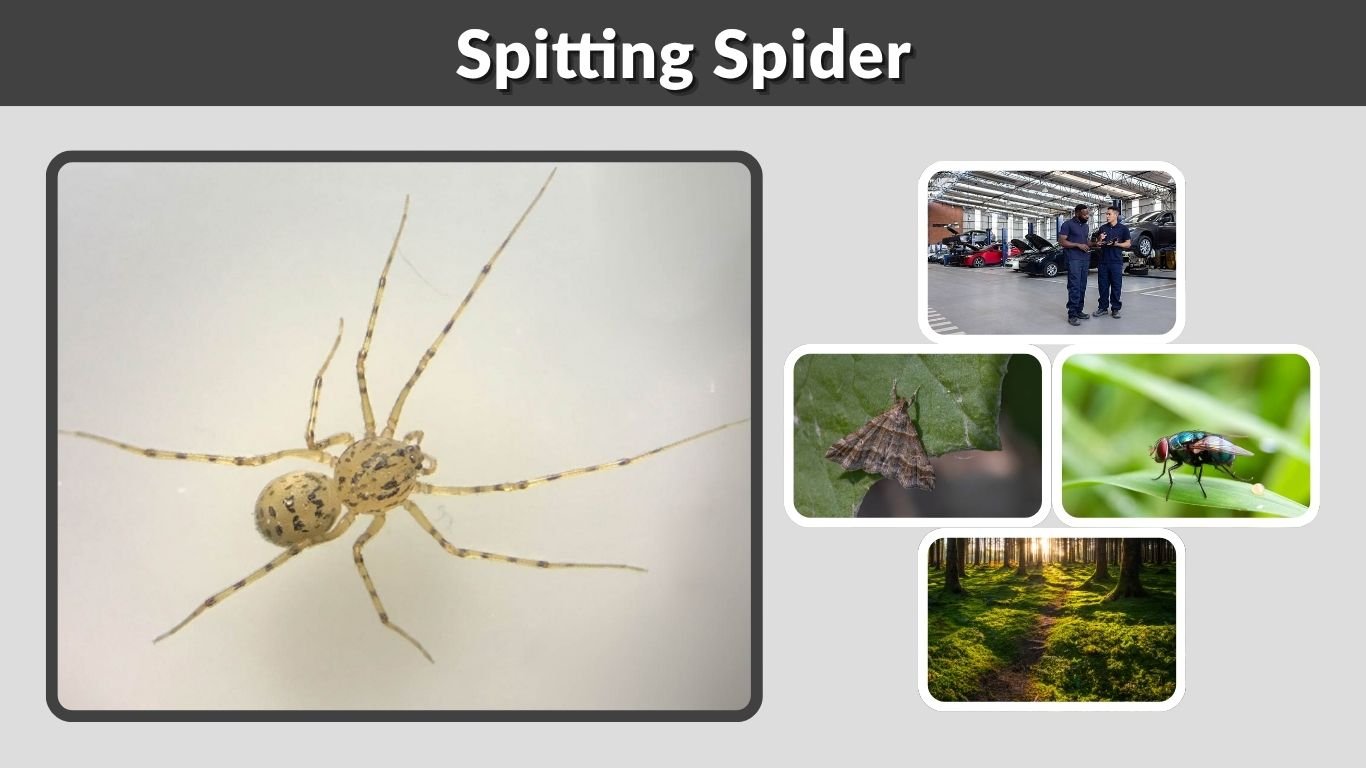
The spitting spider is a small, slow-moving spider famous for an unusual hunting technique: it sprays a sticky mixture of silk and venom over prey from a short distance. Most species belong to the genus Scytodes, including the widespread common spitting spider, Scytodes thoracica. These spiders often live in houses, gardens, caves, and sheltered outdoor habitats. Although their unusual hunting behavior can sound alarming, spitting spiders are generally harmless to people and rarely bite humans unless handled or trapped against the skin.
What Is a Spitting Spider?
Spitting spiders belong to the family Scytodidae and are found in many warm and temperate regions around the world. They are typically small spiders with unusually high, rounded cephalothoraxes. Their enlarged front body contains specialized glands that produce both venom and sticky silk used during hunting. Unlike web-building spiders, they actively approach prey and immobilize it by “spitting.”
Spitting Spider Identification
Common identification features include:
- Family: Scytodidae
- Common genus: Scytodes
- Body length: Usually about 3–7 mm
- Color: Yellowish, tan, cream, or light brown
- Markings: Dark brown or black spots and bands
- Legs: Long, thin, and often spotted or striped
- Eyes: Six eyes arranged in three pairs
- Body shape: Rounded, dome-shaped cephalothorax
- Movement: Usually slow and deliberate
The spotted pattern covering both the body and legs is especially useful for identifying many Scytodes species.
Common Spitting Spider
The common spitting spider, Scytodes thoracica, is among the best-known species. It has a pale yellowish or cream body covered with irregular dark spots.
It frequently occurs inside buildings, where it may be seen walking slowly across walls at night.
Although originally associated with warmer regions, human activity has helped this species spread widely throughout many parts of the world.
How Does a Spitting Spider Spit?
The spider’s hunting behavior is what makes the group unique. Rather than relying entirely on a conventional capture web, a spitting spider approaches an insect slowly and positions itself within striking distance. It then ejects a sticky substance from its fangs in a rapid zigzag pattern, pinning the prey to the surface before moving closer to bite it.
What Does a Spitting Spider Spit?
The material is a mixture containing silk-like adhesive and venom.
The spider rapidly swings its front body from side to side while firing the substance. This creates overlapping zigzag strands across the prey.
The sticky material immediately restricts the victim’s movement.
Once the insect is immobilized, the spider approaches, bites it, and begins feeding.
How Far Can a Spitting Spider Spit?
Spitting spiders attack from only a short distance, generally several millimeters to a couple of centimeters depending on the spider’s size and prey.
Their hunting system is designed for close-range accuracy rather than long-distance spraying.
The entire spit attack occurs extremely quickly and can be difficult for the human eye to follow without slow-motion video.
Spitting Spider Habitat and Range
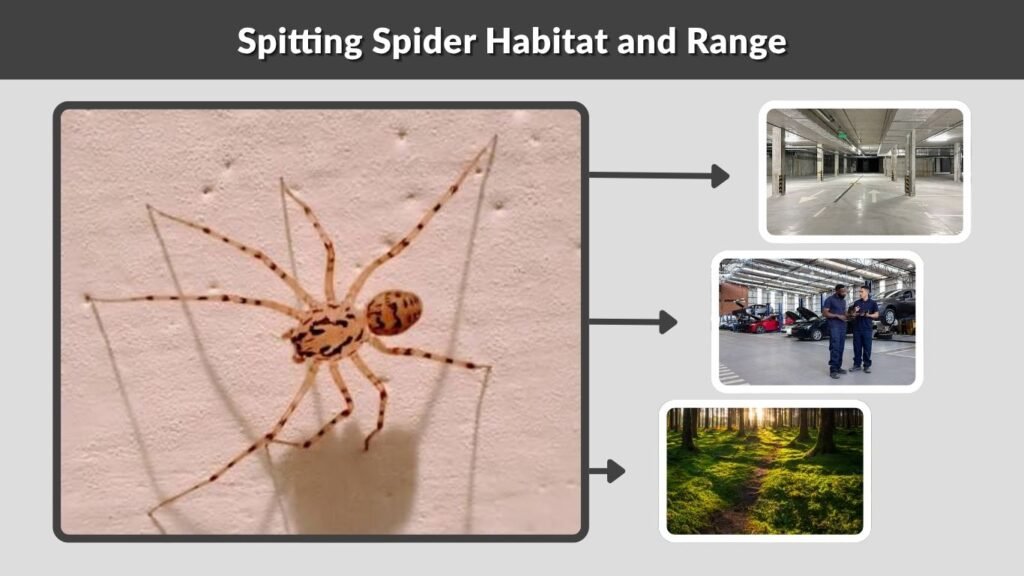
Spitting spiders occur across many regions of the world, including North America, Europe, Africa, Asia, Australia, and tropical areas. Different species occupy different climates, but most prefer sheltered environments where humidity remains relatively stable. Some species readily adapt to human buildings, making bathrooms, basements, garages, and quiet corners surprisingly suitable hunting habitats.
Where Do Spitting Spiders Live?
They may be found in:
- Houses and apartments
- Basements
- Garages
- Sheds
- Under rocks
- Beneath loose tree bark
- Leaf litter
- Caves
- Gardens
- Forest floors
- Crevices and cracks
- Warm, sheltered walls
Indoor spitting spiders are generally most active after dark.
Spitting Spiders in Texas, Arizona and Florida
Spitting spiders occur in several parts of the United States, including Texas, Arizona, and Florida.
Warm climates provide suitable conditions for many species, although some can also survive in cooler areas by living inside heated buildings.
Their presence indoors is not normally considered a serious infestation problem. Because they prey on small insects and other spiders, they may actually reduce populations of household pests.
What Do Spitting Spiders Eat?
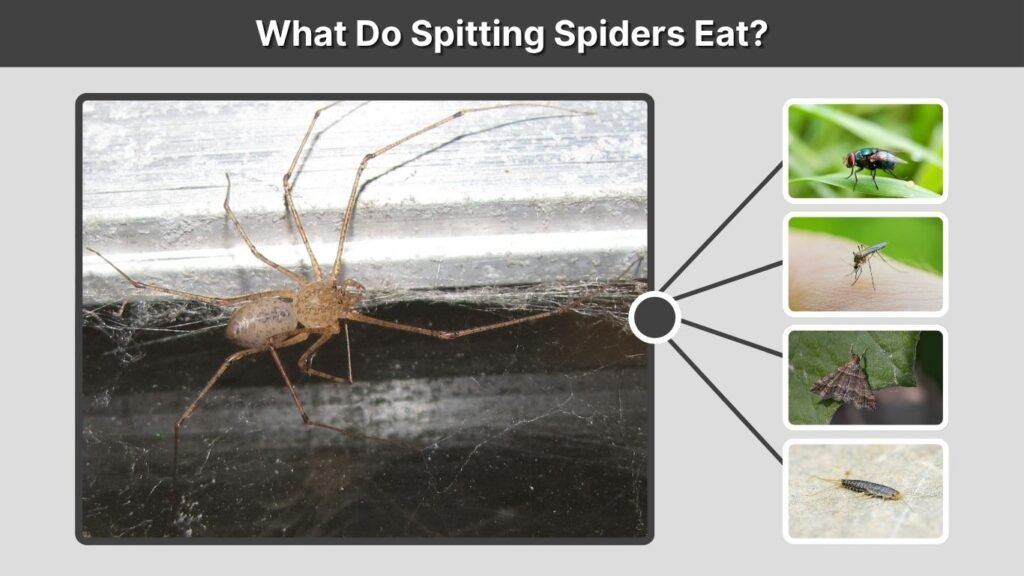
Spitting spiders are predators that hunt small arthropods rather than relying mainly on a large prey-catching web. Their slow movements allow them to approach prey without causing much disturbance. Once they reach the proper range, they use their sticky spit to prevent escape. This hunting strategy allows them to capture insects that might otherwise outrun such a slow spider.
Spitting Spider Diet
Common prey can include:
- Flies
- Mosquitoes
- Moths
- Small beetles
- Silverfish
- Cockroaches
- Small crickets
- Other spiders
- Tiny crawling insects
The exact diet depends on the spider’s size and available prey.
Do Spitting Spiders Eat Other Spiders?
Yes. Some spitting spiders readily hunt other spiders.
Their adhesive attack gives them an advantage because they can immobilize another spider before entering biting range.
This reduces the risk of being bitten during a close encounter, allowing relatively slow spitting spiders to prey on potentially faster or more defensive arthropods.
Spitting Spider Web and Hunting Behavior
Although spitting spiders produce silk, they are not normally dependent on large circular or sheet-shaped webs for capturing prey. Instead, silk is closely integrated into their specialized hunting technique. They may create silk retreats or small web structures in protected areas, but prey capture primarily involves approaching an animal and spraying it with sticky material.
Do Spitting Spiders Make Webs?
Yes, but their webs are generally not elaborate prey-catching structures like those made by orb-weavers.
They may use silk for resting sites, egg protection, safety lines, and other purposes.
The most distinctive use of silk occurs during hunting, when silk-producing material is expelled directly from specialized glands associated with the chelicerae.
Spitting Spider Bite and Venom
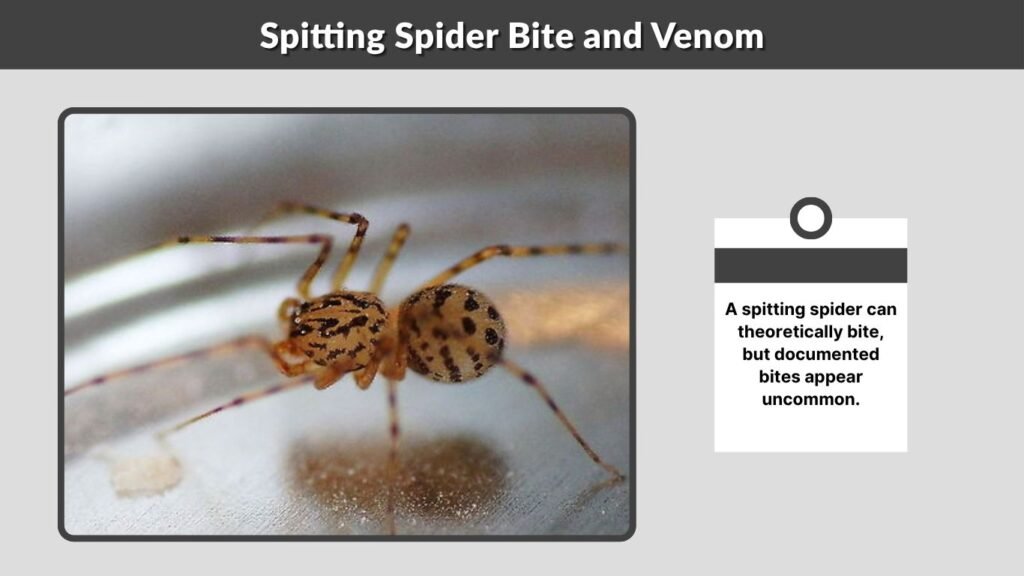
Spitting spiders are venomous because venom is part of their prey-capture system. However, being venomous does not automatically make a spider dangerous to humans. These spiders are tiny, nonaggressive, and normally attempt to escape rather than bite. Their fangs and venom are primarily adapted for dealing with small insects and other arthropods.
Can a Spitting Spider Bite Humans?
A spitting spider can theoretically bite, but documented bites appear uncommon.
If a bite occurs, possible effects could include mild localized discomfort, redness, or irritation.
Severe medically significant effects are not generally associated with common spitting spiders.
Anyone who develops severe swelling, intense pain, breathing difficulty, or other serious symptoms after any suspected spider bite should seek medical attention.
Are Spitting Spiders Dangerous?
Spitting spiders are generally considered harmless to people.
They do not deliberately spray venom at humans in self-defense. Their “spitting” behavior is directed primarily at small prey during hunting.
Their small size, secretive habits, and reluctance to bite mean that they usually pose little risk in homes.
Spitting Spider vs Brown Recluse
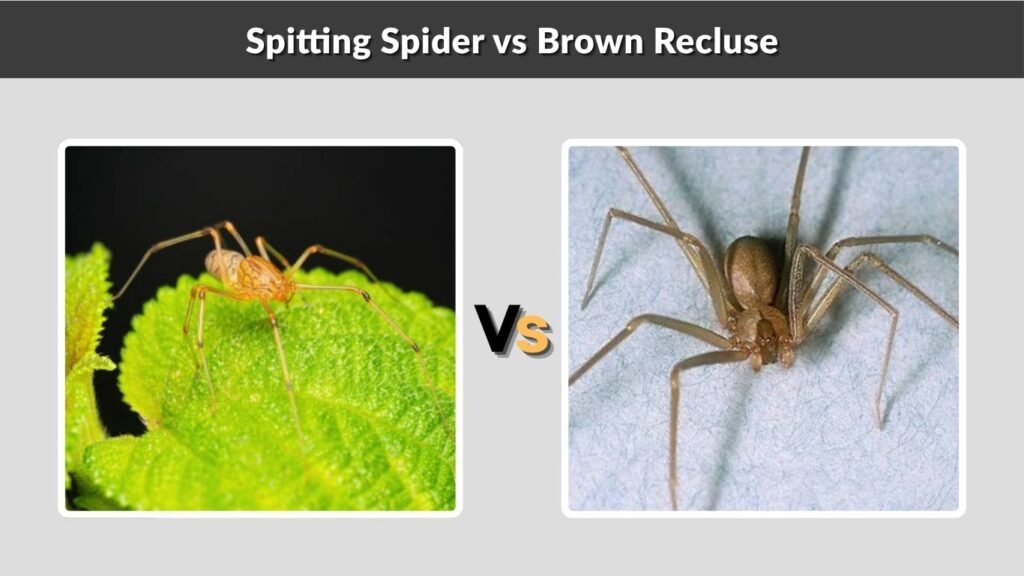
Brown spitting spiders are sometimes mistaken for brown recluse spiders because both can have long legs and relatively plain brown coloration. However, their body patterns, eye arrangements, and overall shapes differ considerably. Correct identification matters because brown recluse spiders have medically significant venom, whereas common spitting spiders are not generally considered dangerous.
Spitting Spider vs Brown Recluse Identification
Key differences include:
- Spitting spider eyes: Six eyes arranged in three pairs
- Brown recluse eyes: Six eyes also arranged in pairs, but positioned differently
- Spitting spider body: Frequently covered with spots
- Brown recluse body: Usually more uniformly brown
- Spitting spider legs: Often spotted or banded
- Brown recluse legs: Usually relatively plain
- Spitting spider cephalothorax: High and rounded
- Brown recluse: Flatter-looking body with a characteristic violin-like marking
A spotted or mottled spider is therefore unlikely to be a typical brown recluse.
Brown Spitting Spider
“Brown spitting spider” can describe several brownish Scytodes species rather than one specific spider.
Many have dark spots covering a cream, yellow, or light-brown background.
Because color alone is unreliable for spider identification, body shape, eye arrangement, markings, and location should all be considered.
Spitting Spider Life Cycle
Spitting spiders reproduce sexually, and females protect their eggs differently from many familiar web-building spiders. Rather than simply leaving an egg sac attached to a web, females of some species carry their eggs beneath the body. Newly hatched spiderlings resemble miniature adults and gradually grow through repeated molts before reaching reproductive maturity.
Male and Female Spitting Spiders
Male and female spitting spiders can look quite similar.
Mature males generally have enlarged pedipalps near the mouth, which contain reproductive structures.
Females usually have fuller abdomens, particularly while producing eggs.
Females may guard or carry their egg sacs until the spiderlings are ready to emerge, providing a degree of protection during this vulnerable stage.
FAQs
Spitting spiders attract attention because very few spiders capture prey by spraying a sticky substance. Their unusual technique often leads people to wonder whether they can spit at humans, whether their venom is dangerous, and how they compare with species such as the brown recluse. The answers below address the most common questions about these unusual spiders.
Are Spitting Spiders Poisonous?
No. They are venomous rather than poisonous because they use venom during prey capture. Their venom is not generally considered medically significant to humans.
Can Spitting Spiders Spit at Humans?
Their spraying behavior is primarily used against small prey. They are not known for deliberately spraying venom at people as a defensive behavior.
How Big Is a Spitting Spider?
Most are small, commonly measuring around 3–7 mm in body length, although exact size varies among species.
How Many Eyes Does a Spitting Spider Have?
Spitting spiders typically have six eyes arranged in three pairs rather than the eight eyes found in many other spider families.
Are Spitting Spiders Good to Have Around?
They can be beneficial because they prey on flies, mosquitoes, small cockroaches, silverfish, and other household arthropods. They generally pose little danger to people.
