
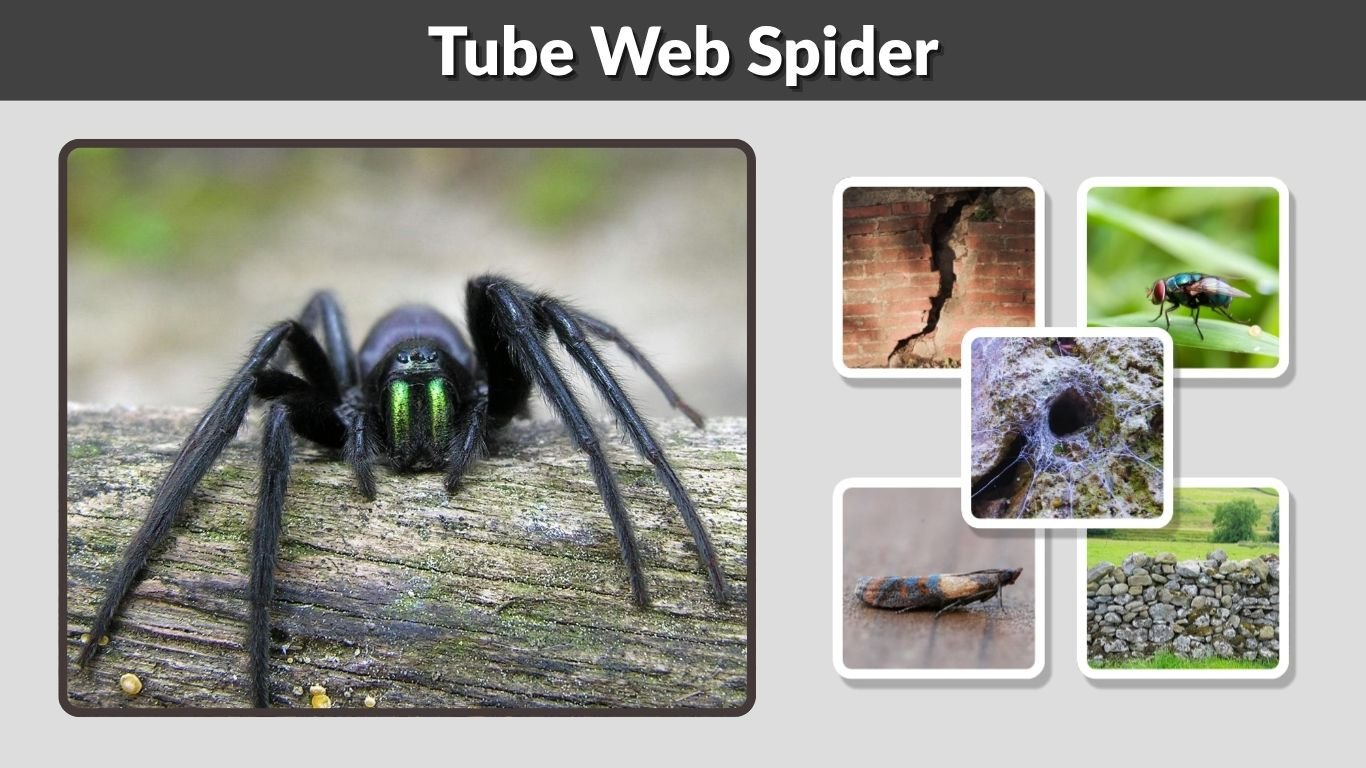
The tube web spider is a distinctive arachnid known for building a silk-lined tubular retreat inside cracks, walls, tree bark, and other sheltered spaces. One of the best-known species is the green-fanged tube web spider, Segestria florentina, recognized by its dark body and metallic green mouthparts. Although its appearance can seem intimidating, serious encounters with people are uncommon. This guide explains tube web spider identification, size, habitat, web structure, bite symptoms, behavior, lifespan, and whether these spiders are dangerous.
What Is a Tube Web Spider?
Tube web spiders get their common name from the unusual silk retreats they construct rather than from their body shape. Instead of making a circular orb web, these spiders remain inside a narrow silk tube and wait for prey to touch radiating silk lines near its entrance. They then rush out rapidly, grab the prey, and retreat into the tube.
Tube Web Spider Identification
Common identification features include:
- Dark brown, black, or bronze-colored body
- Long, powerful legs
- Six eyes arranged in groups
- Large, noticeable fangs
- Elongated abdomen
- Tube-shaped silk retreat
- Several silk trip lines spreading from the entrance
- Fast movements when attacking prey
The exact appearance varies between species, but their web structure is often one of the easiest clues.
Green-Fanged Tube Web Spider
The green-fanged tube web spider, Segestria florentina, is among the largest and most recognizable tube web spiders in Europe.
Its chelicerae can appear metallic green or blue-green under suitable lighting. Adults are usually very dark brown or almost black, which makes the colorful fangs especially noticeable.
Tube Web Spider Eyes
Tube web spiders have six eyes rather than the eight found in many spider species. Their eyesight is not their primary hunting tool.
Instead, they rely heavily on vibrations transmitted through the silk lines around their retreats to detect approaching insects.
Tube Web Spider Size and Appearance
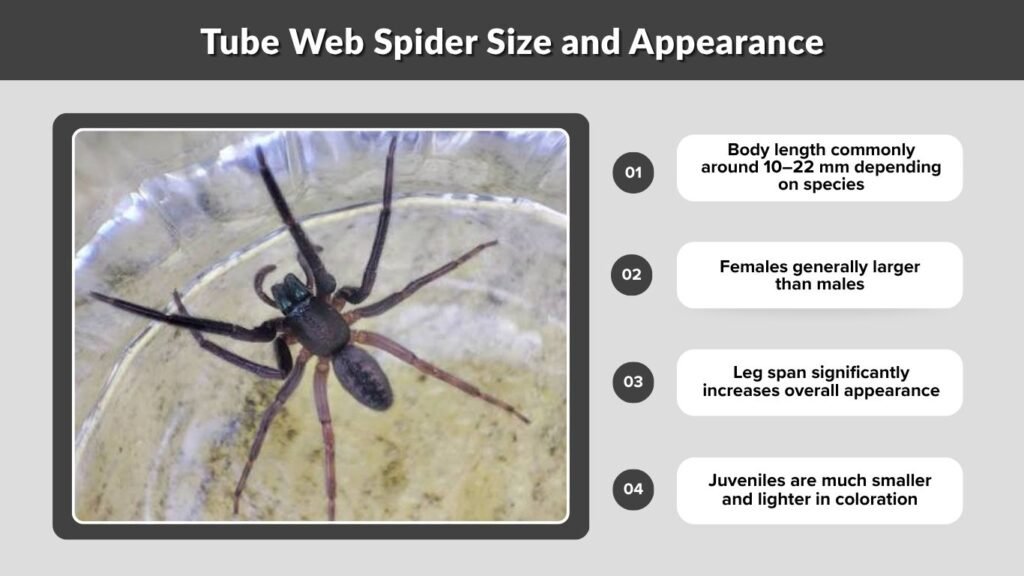
Tube web spiders range from relatively small species to larger spiders capable of looking quite impressive when their legs are fully extended. Females are generally larger and heavier-bodied than males. Mature males often have proportionally longer legs because they leave their retreats and wander in search of females.
How Big Is a Tube Web Spider?
Typical characteristics include:
- Body length commonly around 10–22 mm depending on species
- Females generally larger than males
- Leg span significantly increases overall appearance
- Large Segestria florentina females may appear particularly robust
- Juveniles are much smaller and lighter in coloration
Their size can vary with age, sex, nutrition, and species.
Tube Web Spider Fangs
Tube web spiders possess strong chelicerae used to grab and immobilize insect prey.
The green-fanged tube web spider is particularly famous because the surfaces of its mouthparts can reflect striking green coloration. These large fangs may appear alarming, but they are primarily feeding structures.
Brown and Bronze Tube Web Spiders
Not every tube web spider is black. Some species may appear brown, reddish-brown, gray, or bronze depending on species, age, lighting, and molt stage.
Young individuals may also look different from fully mature spiders.
Tube Web Spider Web and Nest
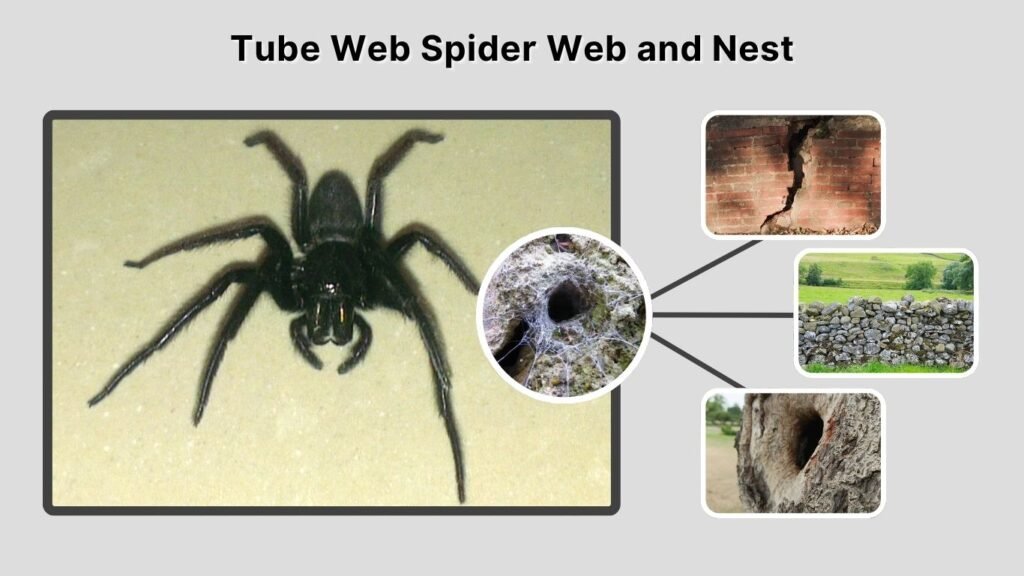
The web is the defining feature of these spiders. A tube web spider selects a protected crack or hole and covers the interior with silk. From the entrance, several silk threads extend outward like spokes. These lines act as an early-warning system whenever an insect walks nearby.
What Does a Tube Web Spider Web Look Like?
A typical web includes:
- A silk-lined tubular retreat
- An opening at the front of the tube
- Multiple trip lines extending outward
- Dense silk near the entrance
- A retreat positioned in a crack or cavity
Unlike an orb web, it is not designed to catch flying insects in a sticky net.
Where Do Tube Web Spiders Build Nests?
Common nesting locations include:
- Cracks in brick walls
- Gaps around window frames
- Stone walls
- Tree bark
- Holes in old timber
- Rock crevices
- Retaining walls
- Garden structures
- Gaps around buildings
Older structures can provide particularly suitable hiding spaces.
How Does a Tube Web Spider Hunt?
The spider normally waits just inside the entrance with several legs touching its signal threads.
When an insect makes contact with a trip line, vibrations travel toward the spider. It rapidly emerges, bites and grabs its prey, then pulls the victim back into the tube.
This ambush technique allows the spider to hunt while remaining protected from predators.
Where Do Tube Web Spiders Live?
Tube web spiders occur in several parts of the world, although distribution varies by species. Members of the genus Segestria are especially associated with Europe and surrounding regions. Some species have also been introduced beyond their original ranges through human transportation and trade.
Tube Web Spiders in the UK
Tube web spiders are established in Britain, with Segestria florentina being especially well known.
They are more commonly reported in southern England and urban locations, particularly around older stone or brick structures. Sightings have also been recorded in cities and coastal areas.
Tube Web Spiders in Australia and New Zealand
Different tube-dwelling spiders occur in Australia and New Zealand, although they should not automatically be assumed to be Segestria florentina.
Correct identification is important because unrelated spiders can also build retreats that resemble tubes.
Tube Web Spiders Around Houses
Tube web spiders may live around buildings if suitable cracks provide secure retreats.
Their presence does not necessarily indicate an infestation. Several individual spiders may occupy a structure where numerous cracks, insects, and protected spaces are available.
Are Tube Web Spiders Dangerous?
Tube web spiders are predators and possess venom for subduing insects. However, they do not normally seek contact with humans. Most remain inside their retreats unless hunting, mating, or disturbed. Bites are uncommon and are more likely to happen if a spider is trapped against the skin or deliberately handled.
Tube Web Spider Bite
Important bite information includes:
- Bites are relatively uncommon
- The bite can be painful
- Local redness may develop
- Swelling may occur
- Tenderness can persist temporarily
- Serious systemic effects are not normally expected
The large fangs of mature Segestria florentina can potentially penetrate human skin.
Green-Fanged Tube Web Spider Bite
A green-fanged tube web spider can bite defensively if threatened.
Reported effects are generally localized and may include pain, swelling, redness, or numbness around the bite area. Severity varies between individuals.
If symptoms become severe, rapidly worsen, involve difficulty breathing, or suggest an allergic reaction, seek medical attention.
Are Tube Web Spiders Venomous or Poisonous?
Tube web spiders are venomous, because they inject venom into prey through their fangs.
They are not correctly described as poisonous. Poisonous organisms cause harm when touched, eaten, or otherwise absorbed, while venomous animals deliver toxins through structures such as fangs or stingers.
Tube Web Spider Diet and Behavior
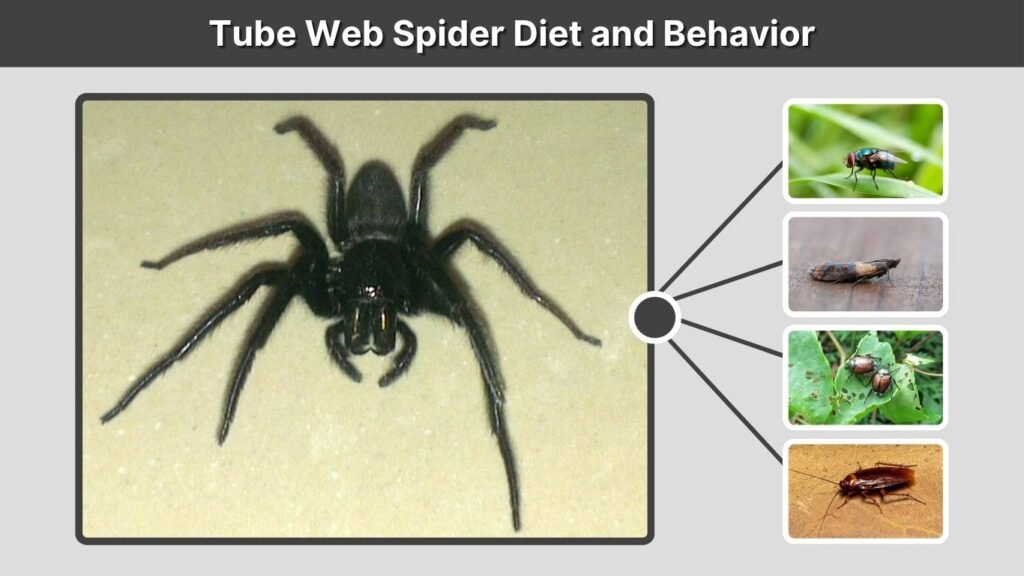
Tube web spiders are primarily nocturnal ambush hunters. They may remain hidden throughout much of the day and become more active when insects are moving nearby. Their ability to detect silk vibrations allows them to attack very quickly despite spending most of their lives inside relatively small retreats.
What Do Tube Web Spiders Eat?
Their diet can include:
- Flies
- Moths
- Beetles
- Cockroaches
- Earwigs
- Small crickets
- Woodlice
- Other small arthropods
Larger individuals may capture relatively strong prey because they attack rapidly and use powerful fangs.
Are Tube Web Spiders Aggressive?
They can appear aggressive when rushing from their retreats, but this behavior is usually directed toward prey.
Toward humans, their first response is normally to remain hidden or retreat. Defensive biting is possible when they are restrained or seriously disturbed.
Tube Web Spider Lifespan
Exact lifespan varies among species and environmental conditions.
Females generally live longer than males and may remain in a successful retreat for extended periods. Males often wander after maturity to search for mates, exposing them to greater risks from predators and environmental conditions.
Tube Web Spider Reproduction and Eggs
Reproduction usually involves males leaving their own retreats and searching for females. Approaching a female can be risky, so males use vibrations and courtship signals to distinguish themselves from prey. Following mating, females produce eggs that remain protected within or near their silk retreats.
Tube Web Spider Eggs
Females commonly produce silk egg sacs containing developing eggs. The protected tube provides a secure environment for reproduction.
Spiderlings eventually emerge and disperse to establish small retreats of their own.
Young Tube Web Spiders
Juveniles resemble miniature adults but may differ in color and proportions.
As they grow, they molt repeatedly. Their retreats are enlarged or replaced as they require additional space.
FAQs
1. Is a tube web spider dangerous?
Tube web spiders are venomous, but they are not generally considered highly dangerous to humans. Bites are uncommon and usually cause localized symptoms.
2. Where are tube web spiders found in the UK?
They are especially associated with southern England and urban or coastal areas where old brickwork, stone walls, and building cracks provide suitable retreats.
3. What does a tube web spider nest look like?
It consists of a silk-lined tube hidden inside a crack or hole, with several silk trip lines radiating outward from its entrance.
4. How big can a tube web spider get?
Size varies by species, but larger females can reach around 2 cm or more in body length, with the legs making them look considerably larger.
5. Why does the green-fanged tube web spider have green fangs?
The metallic green appearance comes from the structure and surface coloration of its chelicerae. The vivid color is especially noticeable against the spider’s otherwise dark body.
