
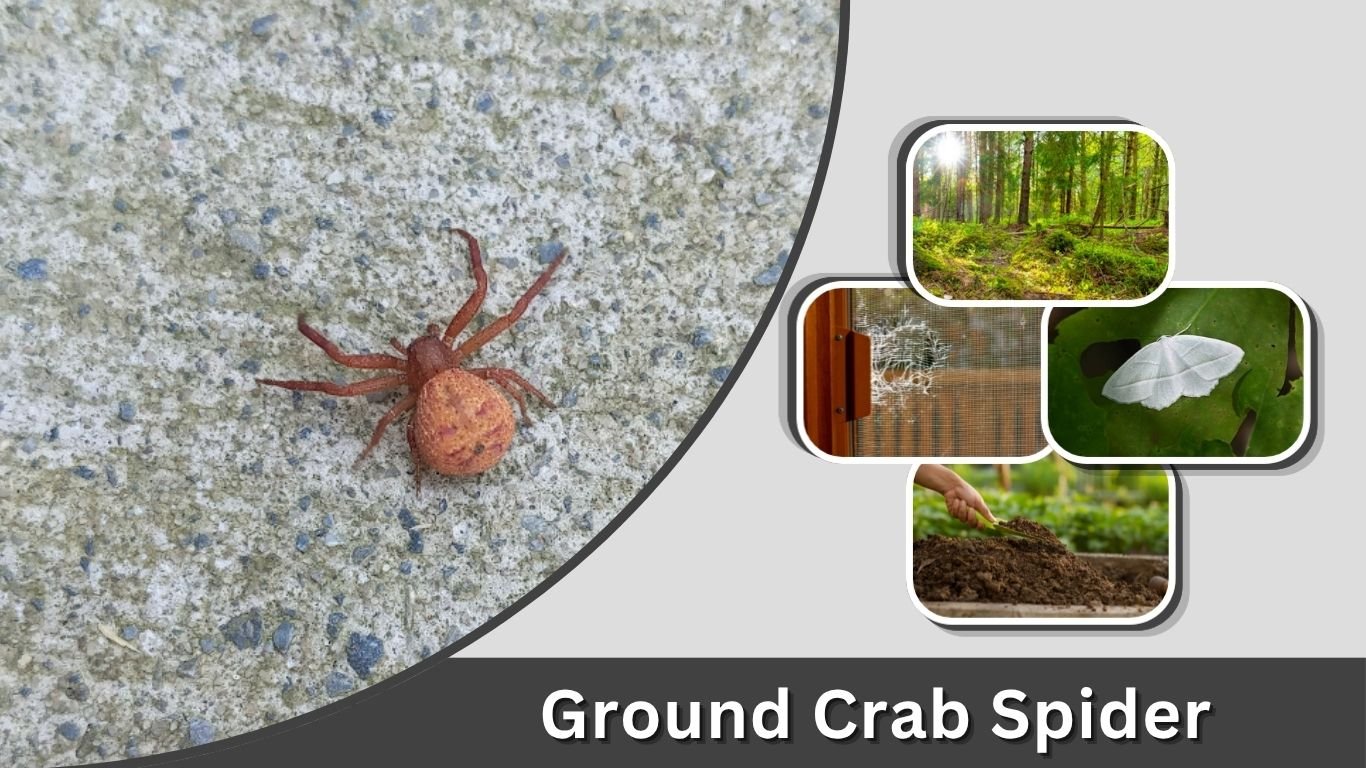
Ground crab spiders are small, well-camouflaged hunting spiders commonly found on soil, rocks, tree bark, leaf litter, and low vegetation. Many belong to the genus Xysticus and get their common name from their flattened bodies and sideways, crab-like legs. Although searches such as “deadly ground crab spider” and “ground crab spider poisonous” can make these spiders sound alarming, they are generally not considered dangerous to humans. Here is how to identify a ground crab spider, understand its bite, locate its habitat, and distinguish black, brown, yellow, and other varieties.
What Is a Ground Crab Spider?
Ground crab spiders are members of the crab spider family Thomisidae. Many of the spiders commonly called ground crab spiders belong to the genus Xysticus. Unlike web-building spiders, they usually hunt by remaining still and ambushing insects that wander within reach.
Their colors often closely match soil, bark, dried leaves, and stones, allowing them to remain nearly invisible while hunting.
Ground Crab Spider Identification
Typical features include:
- Broad, somewhat flattened body
- Eight legs with the front pairs appearing especially strong
- Legs often extending sideways in a crab-like position
- Brown, gray, black, reddish, or yellowish coloration
- Dark bands, patches, or mottled markings
- Excellent camouflage against soil and bark
- Relatively short, sturdy appearance
- Ability to move sideways as well as forward
The exact appearance varies considerably among species.
Ground Crab Spider Size
Most ground crab spiders are relatively small. Many adults have bodies only several millimeters long, although females are generally larger and heavier-bodied than males.
Their spread-out legs can make them appear larger than their actual body measurement.
Why Do They Look Like Crabs?
The name comes primarily from their leg arrangement and movement. Crab spiders hold their front legs outward and can move sideways quickly.
These enlarged front legs also help them seize prey. Once an insect comes close enough, the spider rapidly grabs it and delivers a venomous bite.
Are Ground Crab Spiders Dangerous?
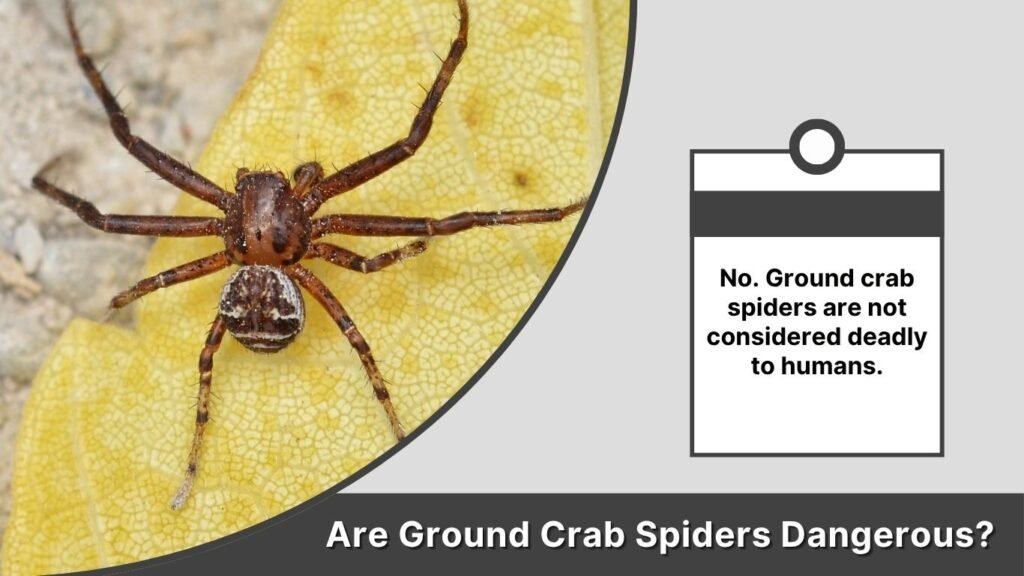
Despite their intimidating hunting technique, ground crab spiders pose little threat to people.
They are predators of insects rather than humans and generally rely on camouflage instead of aggression for protection.
Is the Ground Crab Spider Deadly?
No. Ground crab spiders are not considered deadly to humans.
The phrase “deadly ground crab spider” may create unnecessary concern, but these spiders do not belong to the better-known groups associated with medically significant bites.
Like almost all spiders, they possess venom, but their venom is designed primarily to immobilize small arthropod prey.
Are Ground Crab Spiders Poisonous?
Technically, ground crab spiders are venomous, not poisonous.
Venom is delivered through a bite, whereas a poisonous animal causes harm when touched or consumed. Ground crab spider venom helps the spider capture flies, ants, beetles, and other small prey.
They are not generally considered medically significant to people.
Ground Crab Spider Bite
Ground crab spiders normally avoid people and are unlikely to bite unless they are trapped, squeezed, or deliberately handled.
Because these spiders often stay hidden beneath objects or vegetation, accidental contact is possible during gardening or outdoor work.
What Does a Ground Crab Spider Bite Feel Like?
A bite could potentially cause:
- Mild pain or stinging
- Local redness
- Minor swelling
- Itching
- Temporary tenderness
Reactions can vary between individuals, and many suspected spider bites are never positively linked to a particular spider.
Wash a suspected bite with soap and water and keep the area clean. Seek medical care if pain becomes severe, swelling spreads rapidly, signs of infection appear, or symptoms such as difficulty breathing develop.
Where Do Ground Crab Spiders Live?
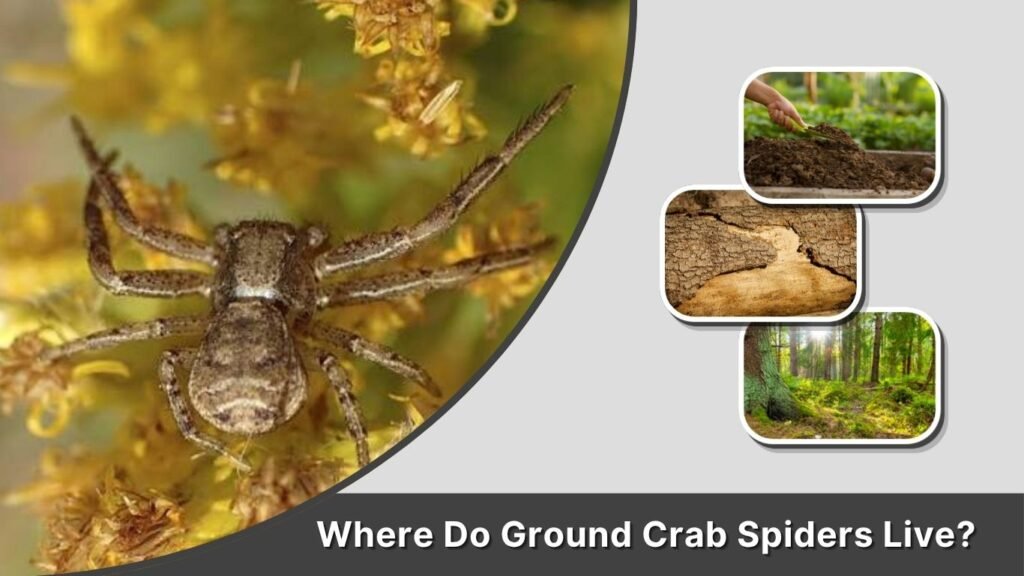
Ground crab spiders typically occupy areas where their camouflage allows them to remain hidden while insects move nearby.
Instead of living high in elaborate webs, they usually remain close to ground level.
Ground Crab Spider Habitat
Common hiding and hunting locations include:
- Leaf litter
- Garden soil
- Beneath rocks
- Tree bark
- Fallen logs
- Low-growing vegetation
- Grass
- Mulch
- Forest floors
- Meadows
- Gardens and yards
Some species prefer dry habitats, while others occur in forests, fields, or areas with thicker vegetation.
Where Are Ground Crab Spiders Found?
Ground crab spiders and related Xysticus species occur across broad parts of North America, Europe, and other temperate regions.
They can be encountered in areas such as Texas, Missouri, Oklahoma, California, Colorado, and Michigan, although the particular species present varies with location and habitat.
Ground crab spiders also occur in Canada, including Ontario, and several crab spider species are found throughout the United Kingdom and Europe.
Proper species identification usually requires more than location alone.
Ground Crab Spider in the House
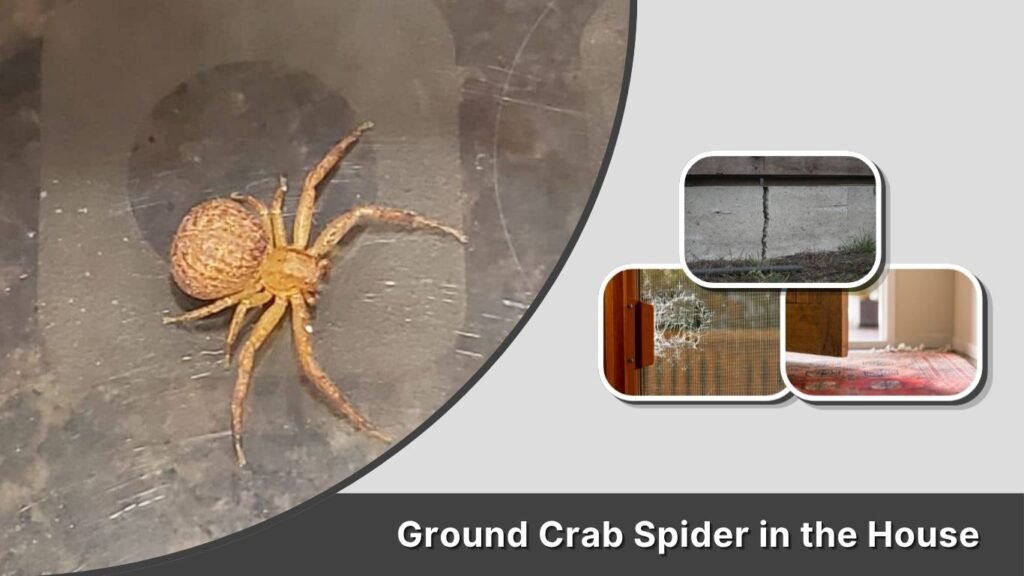
Finding a ground crab spider indoors is possible, although houses are not usually their preferred habitat.
A spider may accidentally enter through an open door, damaged screen, foundation gap, or objects brought indoors.
Why Do Ground Crab Spiders Enter Homes?
Possible reasons include:
- Following insect prey
- Seeking temporary shelter
- Entering through small cracks
- Being carried inside with plants or firewood
- Wandering through open windows or doors
One spider indoors usually does not indicate an infestation.
If possible, place a container over the spider, carefully slide a piece of stiff paper beneath it, and release it outside.
Black, Brown, and Yellow Ground Crab Spiders
Ground crab spider coloration varies widely because camouflage is extremely important to their survival.
The same general group can include spiders ranging from pale tan to almost black.
Black Ground Crab Spider
A black ground crab spider may appear dark brown, charcoal, or nearly black. Dark coloration can help spiders blend into bark, soil, stones, or shaded leaf litter.
A black spider should not automatically be assumed to be a black widow. Body shape, markings, eye arrangement, and other characteristics are necessary for identification.
Brown Ground Crab Spider
Brown is particularly common among ground-dwelling crab spiders.
Their bodies may contain combinations of:
- Tan
- Gray
- Dark brown
- Reddish brown
- Cream
- Black markings
This irregular coloration provides excellent camouflage among dried leaves and soil.
Ground Crab Spider With a Yellow Body
Some crab spiders may display yellow, cream, or pale brown coloration.
However, brightly colored crab spiders found sitting on flowers may belong to different crab spider genera adapted to hunting pollinating insects rather than ground-dwelling Xysticus species.
Color alone is therefore not enough to identify a ground crab spider.
Does a Ground Crab Spider Make a Web?
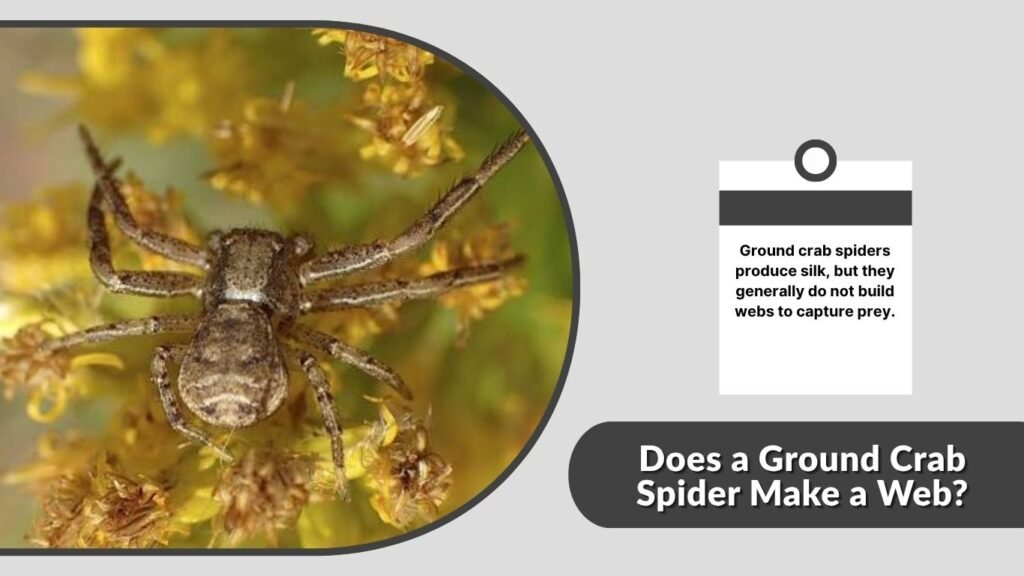
Ground crab spiders produce silk, but they generally do not build webs to capture prey.
They are ambush hunters.
Ground Crab Spider Web and Hunting
Instead of waiting inside a sticky web, the spider remains motionless in a concealed position. When an insect moves close enough, it grabs the prey using its powerful front legs.
Silk may still be used for:
- Egg protection
- Temporary retreats
- Anchoring the spider
- Reproductive purposes
Finding a large circular, funnel-shaped, or sheet-like web near the ground usually points toward another spider group.
What Do Ground Crab Spiders Eat?
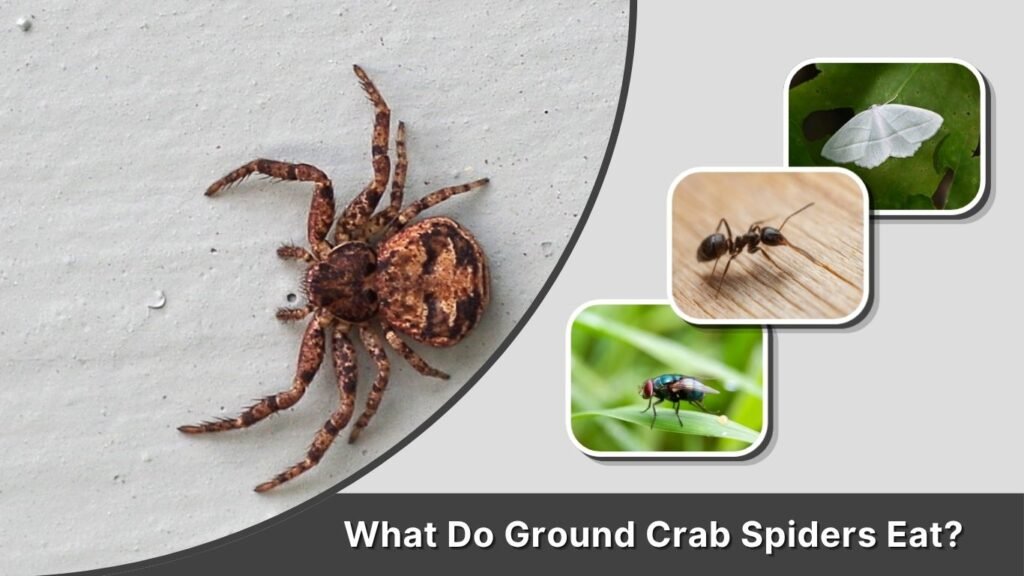
Ground crab spiders are carnivorous hunters that feed primarily on small arthropods.
Their prey may include insects such as flies, ants, beetles, small moths, and other appropriately sized animals.
Rather than chasing prey for long distances, they depend on camouflage and sudden attacks.
Ground Crab Spiders and Ant Colonies
Ground crab spiders may encounter or prey upon ants, but they are not normally considered spiders that live as permanent members of ant colonies.
Some spiders have specialized relationships with ants, while ordinary ground crab spiders generally hunt whatever suitable small prey becomes available.
Ground Crab Spider Behavior
A ground crab spider may remain almost completely motionless when approached. Its camouflage often provides better protection than immediately running away.
If disturbed, however, it can move surprisingly quickly.
General Facts About Ground Crab Spiders
- They hunt without prey-catching webs.
- Their sideways legs produce a crab-like appearance.
- Many blend almost perfectly with soil and bark.
- Females are commonly larger than males.
- They help control populations of insects.
- They generally avoid contact with humans.
- Many species are most easily identified by close examination.
For gardeners, these spiders can be beneficial predators rather than pests.
FAQs
Are ground crab spiders harmful to humans?
Ground crab spiders are generally considered harmless to humans. They possess venom for capturing small prey but are not regarded as medically significant spiders.
Can a ground crab spider bite you?
Yes, a bite is physically possible, particularly if a spider is squeezed or handled. However, bites are uncommon and usually expected to cause only localized symptoms.
What is Xysticus?
Xysticus is a genus of crab spiders containing numerous species commonly referred to as ground crab spiders. They typically have flattened, mottled bodies suited to camouflage on soil, vegetation, and bark.
Do ground crab spiders live inside houses?
They can occasionally wander indoors, but houses are not normally their preferred habitat. Most live outside in leaf litter, gardens, forests, fields, and similar environments.
Should I kill a ground crab spider?
Usually, there is no need. Ground crab spiders help control insects and pose little danger to people. An unwanted indoor spider can normally be captured and released outside.
