
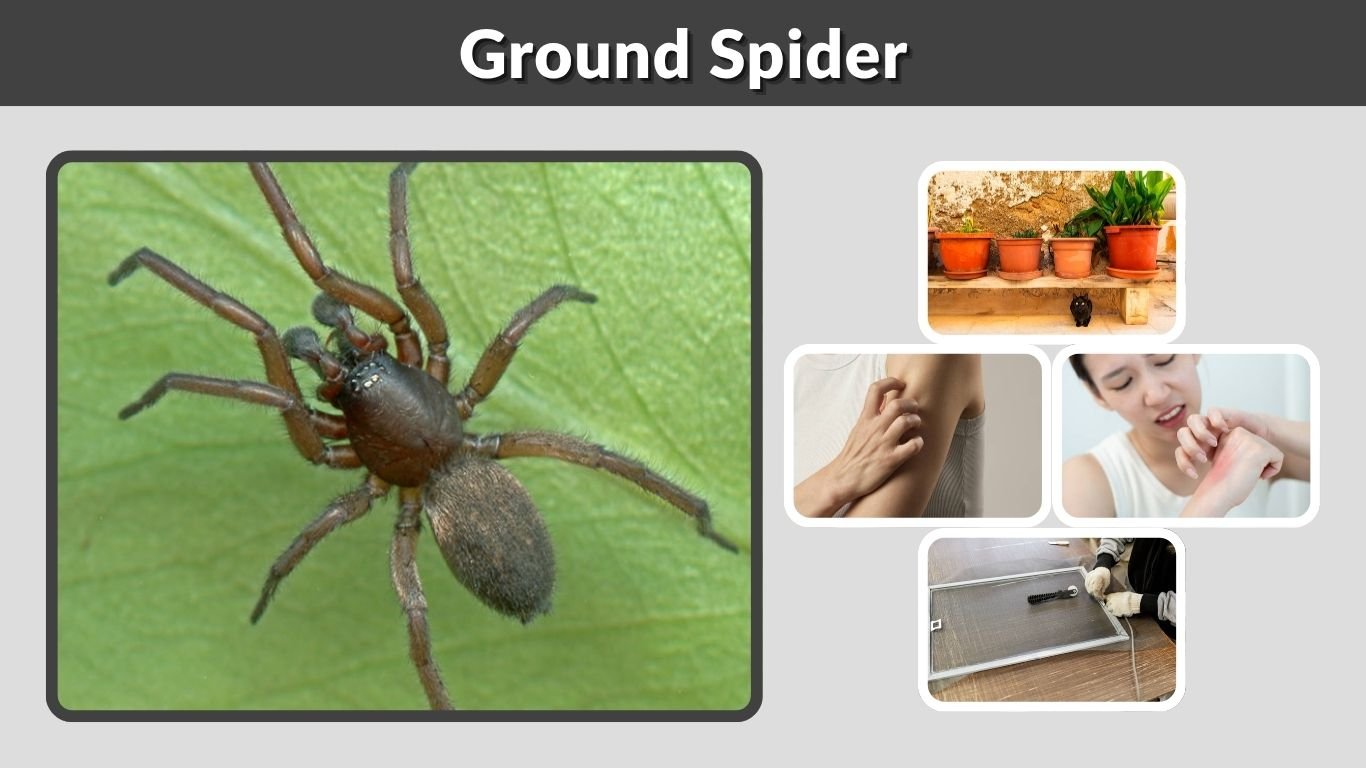
Ground spiders are fast-moving hunters commonly found beneath rocks, logs, leaves, mulch, and other objects close to the soil. Rather than building large webs to catch prey, most ground spiders actively hunt insects during the night and spend daylight hours hiding in sheltered places. Their dark coloration and quick movements sometimes cause homeowners to mistake them for wolf spiders or other potentially intimidating species. This guide explains how to identify ground spiders, where they live, whether they bite, what their webs look like, and how to recognize common types.
What Is a Ground Spider?
The name ground spider generally refers to spiders belonging to the family Gnaphosidae, a large group containing thousands of species worldwide. Most are adapted to life at or near ground level.
Ground spiders are primarily nocturnal. During the evening, they leave their hiding places and search for insects and other small arthropods. During daylight hours, they usually retreat beneath stones, bark, logs, leaves, or household objects.
Ground Spider Identification
Common characteristics include:
- Usually brown, gray, reddish-brown, or black
- Relatively flattened or elongated body
- Eight moderately long, sturdy legs
- Fast running movement
- Usually found walking on the ground rather than sitting in a web
- Often hide beneath stones, wood, mulch, and leaf litter
- Some species have stripes, spots, or pale abdominal markings
- Many have noticeable cylindrical spinnerets at the rear of the abdomen
Size differs considerably between species. Many ground spiders are relatively small, although their legs can make them appear larger.
Ground Spider Behavior
Ground spiders depend heavily on speed and stealth. Instead of waiting for an insect to become trapped in a web, they approach prey and capture it directly.
Their diet can include ants, beetles, flies, cockroaches, small crickets, and other arthropods. Because of this hunting behavior, ground spiders can help reduce populations of unwanted insects around gardens and homes.
Ground Spider vs. Wolf Spider
Ground spiders and wolf spiders are frequently confused because both spend considerable time walking across the ground.
Wolf spiders generally have more robust, hairy bodies and distinctive eye arrangements. Many ground spiders have smoother bodies and prominent spinnerets. Wolf spiders also tend to appear more heavily built, while many ground spiders have a flatter appearance.
Where Do Ground Spiders Live?
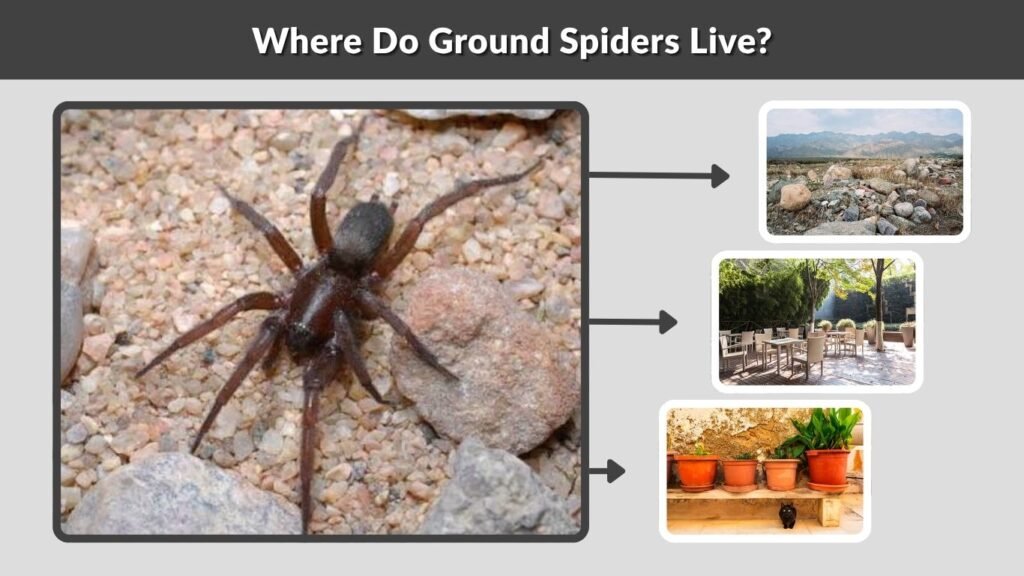
Ground spiders occur in many habitats, including forests, grasslands, gardens, agricultural areas, deserts, and residential landscapes. Their preferred location depends on the species, but most seek dark places that protect them from predators and extreme weather.
Around homes, they may occasionally wander indoors while searching for prey or shelter.
Common Ground Spider Locations
You may find them:
- Under rocks and stones
- Beneath logs and fallen bark
- Inside leaf litter
- Under outdoor furniture
- Around garden mulch
- Beneath flowerpots
- Inside garages and sheds
- Along basement walls
- Beneath boxes and stored materials
- Near cracks around foundations
Finding a ground spider indoors does not necessarily indicate an infestation. Individual spiders frequently enter accidentally.
Do Ground Spiders Burrow?
Most true ground spiders are not deep-burrowing spiders in the same way as many trapdoor spiders or tarantulas.
They generally use existing spaces under objects, inside cracks, or among loose soil and vegetation. Some may shelter in shallow depressions or silk retreats close to the ground.
Therefore, a large spider hole in the soil should not automatically be identified as belonging to a ground spider.
Ground Spider Habitat Around Houses
Mulch, stacked firewood, thick vegetation, rocks, and accumulated leaves provide ideal shelter. These areas also attract insects, creating an abundant food supply.
Reducing unnecessary clutter and keeping vegetation slightly away from the foundation can make the immediate area around a house less attractive to both spiders and their prey.
Do Ground Spiders Make Webs?
Ground spiders produce silk, but most do not construct the familiar circular webs associated with orb-weaver spiders. They hunt mainly by running after prey.
Silk is instead commonly used for resting retreats, protecting eggs, and other purposes.
What Do Ground Spider Webs Look Like?
Ground-spider silk may appear as:
- Small silken retreats beneath stones
- Thin silk around protected crevices
- Silk surrounding egg sacs
- Short sheets or irregular silk inside hiding places
A large funnel-shaped or circular web on the lawn is more likely to have been created by another type of spider.
Spider Webs on the Ground
Many spiders besides true ground spiders build webs near soil level. Funnel weavers, grass spiders, sheet-web spiders, and other groups may produce visible webs across grass, shrubs, or ground vegetation.
Consequently, identifying a spider only by the location of its web can lead to mistakes.
Do Ground Spiders Bite?
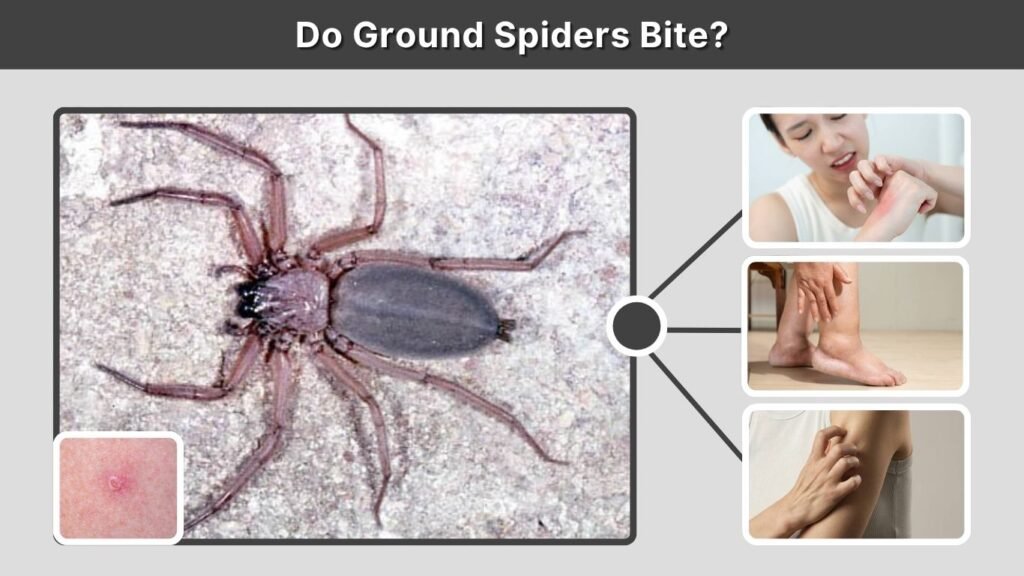
Ground spiders can bite when physically threatened, but bites are uncommon. Their first response to people is generally to run away and hide.
Accidental bites could potentially occur if a spider becomes trapped against the skin inside clothing, bedding, gardening gloves, or other objects.
Ground Spider Bite Symptoms
A bite may cause:
- Temporary pain or stinging
- Mild redness
- Local swelling
- Itching
- Tenderness around the bite
For most people, symptoms from ordinary ground-spider bites are expected to remain localized.
Clean the area with soap and water and avoid scratching it. Seek medical attention if symptoms become severe, rapidly worsen, or include trouble breathing, widespread swelling, intense pain, or other concerning reactions.
Are Ground Spiders Poisonous?
Spiders are venomous rather than poisonous because they inject venom through their fangs instead of causing harm when eaten or touched.
Ground spiders possess venom for capturing small prey, but they are not generally regarded as medically significant spiders for humans.
Common Types of Ground Spiders
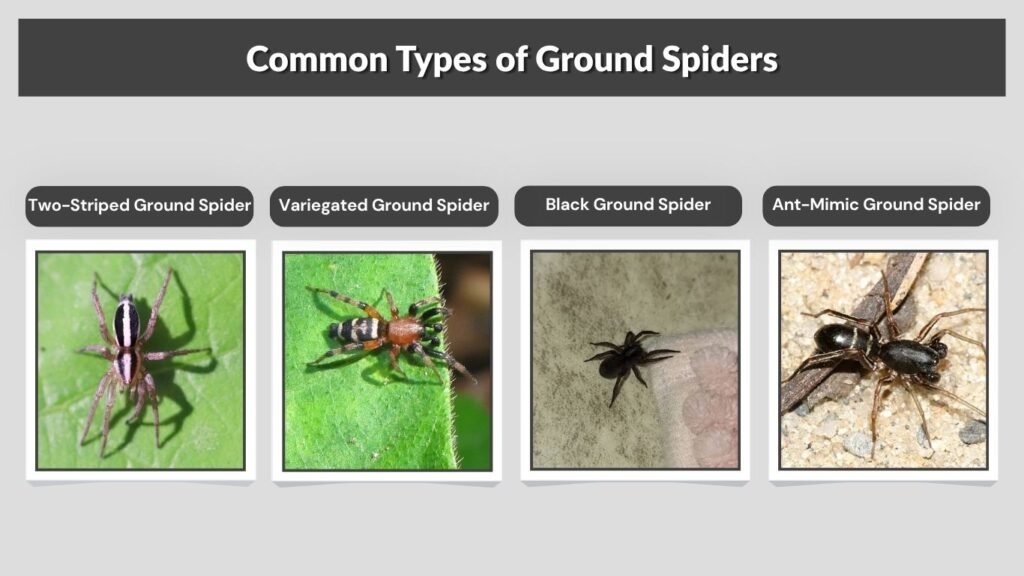
Ground spiders are extremely diverse. Color and markings vary considerably, so photographs and geographic location are often helpful when trying to identify an individual spider.
Several descriptive ground-spider names frequently appear in identification searches.
Two-Striped Ground Spider
The two-striped ground spider typically receives its name from contrasting longitudinal markings on its body.
Identification features may include:
- Dark body with lighter stripes
- Relatively slender shape
- Fast movement
- Long walking legs
- Ground-level hunting behavior
They are commonly encountered beneath natural debris where insects are plentiful.
Variegated Ground Spider
Variegated ground spiders tend to have more complex combinations of light and dark markings than uniformly colored species.
Their patterned bodies provide camouflage among dry leaves, bark, stones, and soil. Like other ground spiders, they primarily hunt rather than relying on prey-catching webs.
Black Ground Spider
Several ground-spider species can appear almost entirely dark brown or black.
Their appearance sometimes causes concern when they enter houses, but color alone cannot determine whether a spider is dangerous. Body structure, eye pattern, markings, location, and other characteristics are needed for reliable identification.
Ant-Mimic Ground Spider
Some ground spiders resemble ants in body shape, coloring, or movement. This form of mimicry may provide protection because many predators avoid ants.
An ant-mimicking spider can still be distinguished at close range because spiders have eight legs and two primary body sections, while ants have six legs and three obvious body regions.
Ground Spider vs. Ground Crab Spider
Despite their similar common names, ground spiders and ground crab spiders are not necessarily the same type of spider.
Ground crab spiders belong to a different group and often have a broad, flattened body with legs positioned in a crab-like posture. They are ambush predators that may remain motionless while waiting for prey.
True ground spiders are usually more active runners.
Ground Crab Spider Identification
Typical characteristics include:
- Broad, flattened body
- Front legs that may extend sideways
- Brown or gray camouflage
- Slow waiting behavior followed by quick attacks
- Frequent occurrence on soil, bark, rocks, or vegetation
Ground crab spiders primarily use camouflage rather than large capture webs.
How to Keep Ground Spiders Out of Your Home
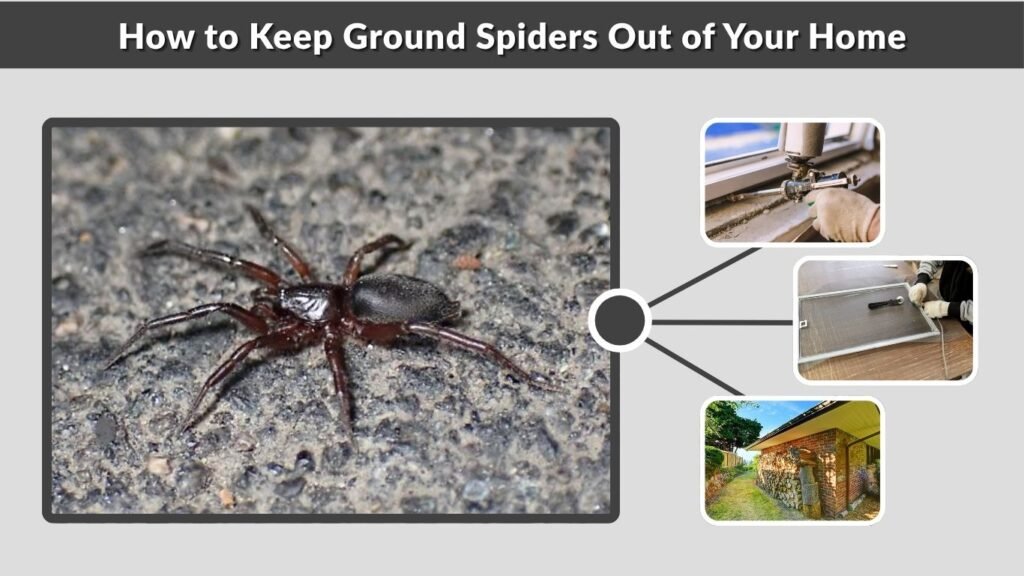
An occasional ground spider is usually harmless and may simply have wandered indoors. If spiders appear frequently, reducing their hiding places and insect food sources can help.
Simple Prevention Methods
- Seal cracks around doors and windows.
- Repair damaged window screens.
- Install door sweeps where gaps are present.
- Remove excessive leaves beside foundations.
- Store firewood away from exterior walls.
- Reduce indoor insect populations.
- Vacuum spiders and silk retreats when necessary.
- Avoid leaving shoes, clothing, or boxes undisturbed on basement floors.
- Shake out gardening gloves before wearing them.
Outdoor spiders generally do not need to be removed unless they repeatedly enter living areas.
FAQs
Are ground spiders dangerous?
Most ground spiders are not considered dangerous to people. They usually flee when disturbed and rarely bite unless trapped or handled.
Why am I finding ground spiders in my house?
They may enter through foundation cracks, gaps beneath doors, windows, garages, or other openings while searching for insects, shelter, or suitable temperatures.
Do ground spiders jump?
Most ground spiders rely primarily on fast running rather than the powerful jumping behavior associated with jumping spiders.
Are black ground spiders black widows?
No. Many harmless spiders are dark or black. Black widows have a distinctive body shape and characteristic markings, so color alone should never be used for identification.
Are ground spiders beneficial?
Yes. Ground spiders prey on many small insects and other arthropods, making them useful natural predators in gardens, yards, and other ecosystems.
