
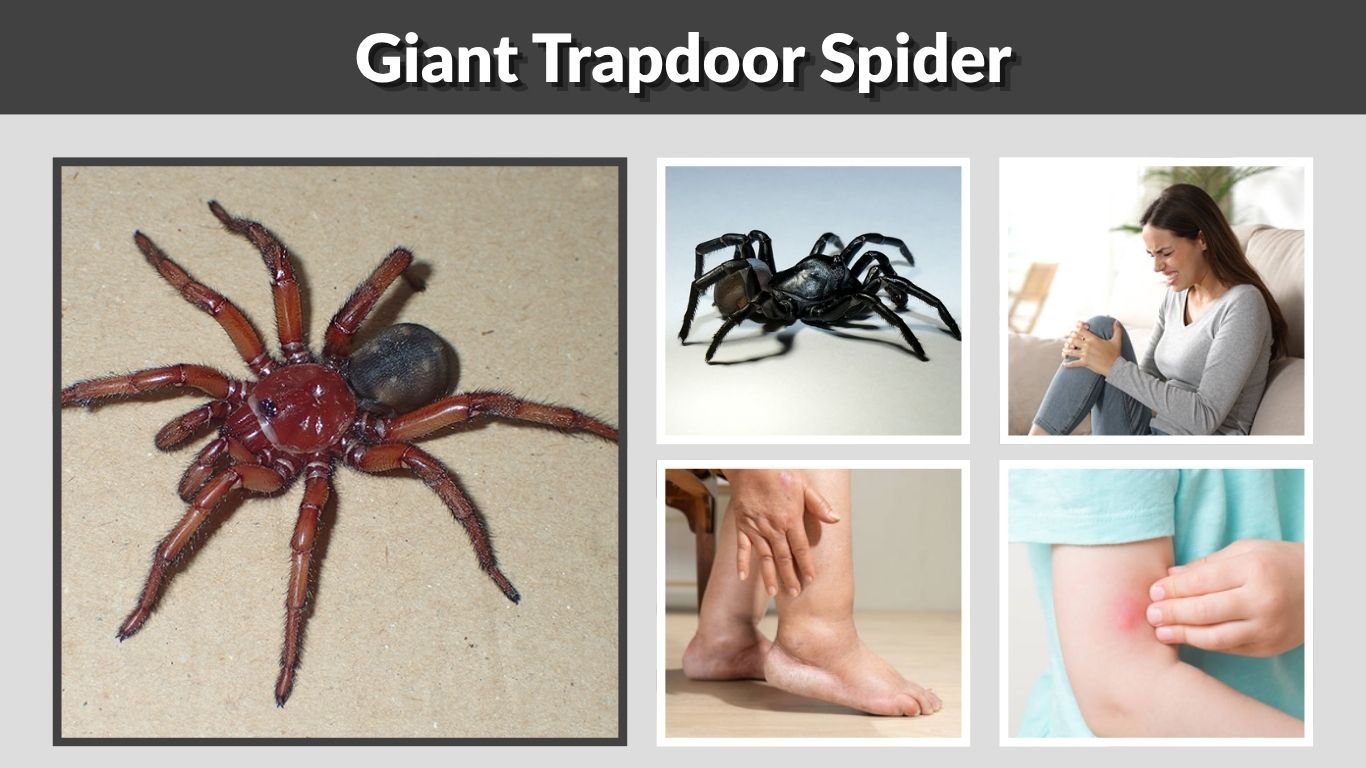
The giant trapdoor spider is a large, burrowing spider best known from Australia, where unusually big species have attracted scientific attention. One of the most notable is Euoplos dignitas, a rare golden trapdoor spider from Queensland whose females can approach 5 cm (2 inches) in body length. Despite its intimidating appearance, it spends most of its life hidden underground behind a camouflaged trapdoor. Its size, secretive lifestyle, unusual burrow, reddish males, and ancient fossil relatives make this spider especially fascinating.
What Is a Giant Trapdoor Spider?
“Giant trapdoor spider” is a general description rather than the official common name of one worldwide species. However, the term is strongly associated with Euoplos dignitas, a large Australian golden trapdoor spider formally described from Queensland’s Brigalow Belt. Researchers highlighted the species because of its exceptional size compared with many other trapdoor spiders.
Giant Trapdoor Spider Identification
Euoplos dignitas has several distinctive characteristics:
- Large, heavy body
- Thick, powerful legs
- Strong downward-pointing fangs
- Darker, stockier adult females
- Honey-red coloration in mature males
- Ground-dwelling lifestyle
- Silk-lined underground burrows
- Thick, camouflaged trapdoors
Females remain particularly robust because they spend virtually their entire lives underground, while mature males eventually leave their burrows to search for females.
Why Is It Called Euoplos dignitas?
Euoplos belongs to a group commonly known as golden trapdoor spiders. The species name dignitas comes from Latin and refers to dignity or greatness, reflecting the impressive size of the spider.
Giant Trapdoor Spider Size
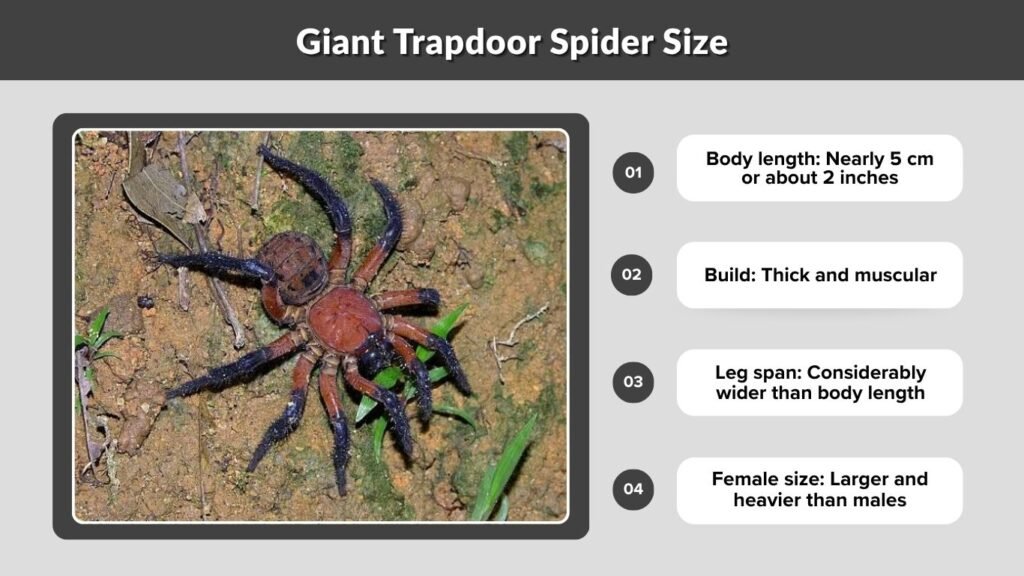
The size of the giant trapdoor spider is one of its most remarkable characteristics. Female Euoplos dignitas can reach almost 5 cm in body length, excluding their extended legs. That makes them exceptionally large members of their group.
How Big Is a Giant Trapdoor Spider?
A large female may have:
- Body length: Nearly 5 cm or about 2 inches
- Build: Thick and muscular
- Leg span: Considerably wider than body length
- Female size: Larger and heavier than males
- Burrow entrance: Approximately the diameter of an Australian 50-cent coin
Their thick legs and broad bodies can make them appear even larger than their measured body length suggests.
Female vs Male Giant Trapdoor Spider
Females and males look noticeably different.
Females are darker, larger, and stockier. They spend their lives in burrows, waiting for prey and potential mates.
Adult males are generally slimmer and can develop striking honey-red coloration. After spending several years underground, males leave their burrows and wander in search of females.
Australian Giant Trapdoor Spider
Australia contains many trapdoor spiders, but Euoplos dignitas became particularly well known after scientists formally described it in 2023. It is known from a restricted area of central Queensland’s Brigalow Belt, especially around Eidsvold and Monto.
Where Does the Giant Trapdoor Spider Live?
Its known habitat includes:
- Central Queensland
- Brigalow Belt woodland
- Areas around Eidsvold
- Areas around Monto
- Black soil habitats
- Natural woodland remnants
These spiders spend most of their time underground, which means a person can walk very close to one without realizing it is present.
Is the Giant Australian Trapdoor Spider Rare?
Yes. Researchers have described Euoplos dignitas as rare and potentially threatened. Much of the Brigalow Belt has been cleared for agriculture, livestock production, and other land uses.
Trapdoor spiders also disperse slowly compared with flying insects, making fragmented habitat particularly problematic. Researchers have expressed concern about the species’ long-term survival in its remaining natural habitat.
Giant Trapdoor Spider Burrow
Trapdoor spiders are famous for constructing underground retreats. Euoplos dignitas creates a burrow covered by a thick, plug-like door made from soil and silk. The door blends into the surrounding ground so effectively that it can be extremely difficult to notice.
How Does the Trapdoor Work?
The spider’s burrow provides several benefits:
- Protection from predators
- Shelter from temperature extremes
- Higher humidity underground
- A concealed location for ambushing prey
- Protection while molting
- A secure location for females and young
The spider waits inside and can respond quickly when suitable prey approaches the entrance.
What Does a Giant Trapdoor Spider Eat?
Like other trapdoor spiders, giant species are ambush predators. They primarily capture small animals moving close to their burrows.
Typical prey can include insects and other small arthropods. The spider uses its strong legs and fangs to seize prey before retreating underground to feed.
Giant Trapdoor Spider Behavior
Despite their intimidating appearance, giant trapdoor spiders are highly secretive. Females may remain associated with the same underground burrow for years rather than wandering across the surface.
Researchers studying Euoplos dignitas reported that individuals can spend their first five to seven years underground, while maturity may take approximately five to eight years.
When Do Giant Trapdoor Spiders Come Out?
Adult males are much more likely to be seen above ground.
Once mature, they leave their burrows and travel through the landscape searching for females. Females, in contrast, remain inside their burrows for essentially their entire lives.
Are Giant Trapdoor Spiders Aggressive?
They are not known for actively seeking humans to attack. Their underground lifestyle means encounters are relatively uncommon.
A spider may defend itself if handled or threatened, however, so it is best to observe one without touching or provoking it.
Is a Giant Trapdoor Spider Venomous?
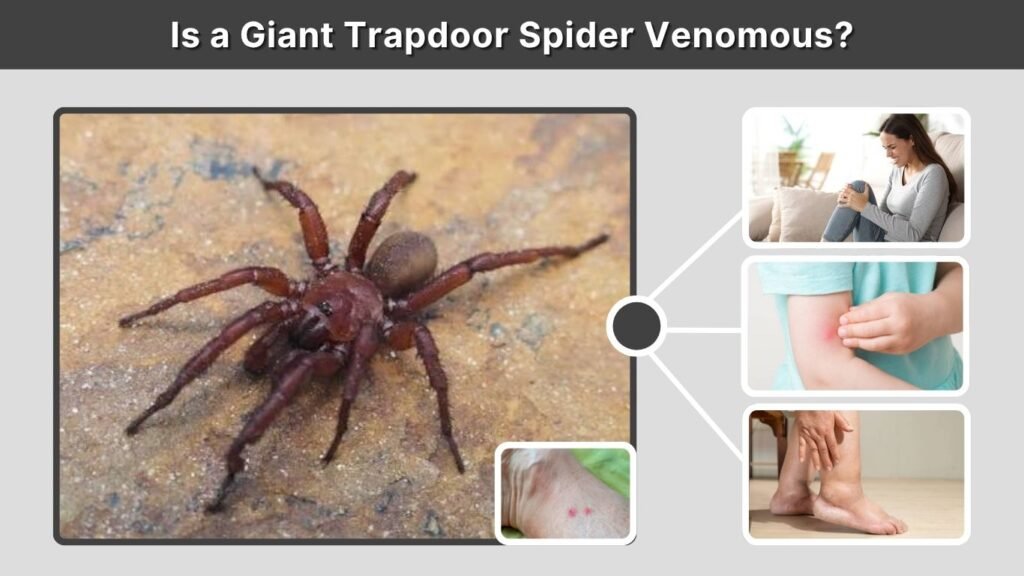
Yes, trapdoor spiders possess venom and fangs used for subduing prey. However, the Australian Museum states that trapdoor spider bites are generally not considered dangerous to humans, although local pain and swelling may occur.
Can a Giant Trapdoor Spider Bite You?
A giant trapdoor spider can bite if it is handled or strongly disturbed.
Possible effects may include:
- Immediate pain
- Local redness
- Swelling
- Tenderness around the bite
- Temporary discomfort
Researchers specifically reported that Euoplos dignitas is not regarded as medically significant to humans despite possessing venom apparatus.
Giant Trapdoor Spider vs Funnel-Web
Australian trapdoor spiders are sometimes confused with funnel-web spiders because both can have dark, robust bodies and live in burrows.
This distinction matters because funnel-web spiders include medically significant species, whereas typical trapdoor spider bites are not regarded as dangerous. Identification should therefore be left to knowledgeable experts when there is uncertainty.
Giant Armored and Red Trapdoor Spiders
Names such as giant armored trapdoor spider and giant red trapdoor spider may appear online, but they do not consistently refer to a single recognized species.
When identification matters, the scientific name is more reliable than an informal descriptive label.
Giant Red Trapdoor Spider
The term can be confusing because mature male Euoplos dignitas naturally develops a noticeable honey-red coloration. Females are considerably darker.
This means photos of reddish Australian giant trapdoor spiders may show males of E. dignitas, although color alone should never be used for definite identification.
Giant Armored Trapdoor Spider
“Armored trapdoor spider” is another descriptive term sometimes applied to heavily built burrowing spiders. Trapdoor spiders often have a hard-looking carapace, thick legs, and powerful chelicerae, which can give them an armored appearance.
However, the name should not automatically be treated as a standardized species name without a scientific identification.
Giant Florida Trapdoor Spider
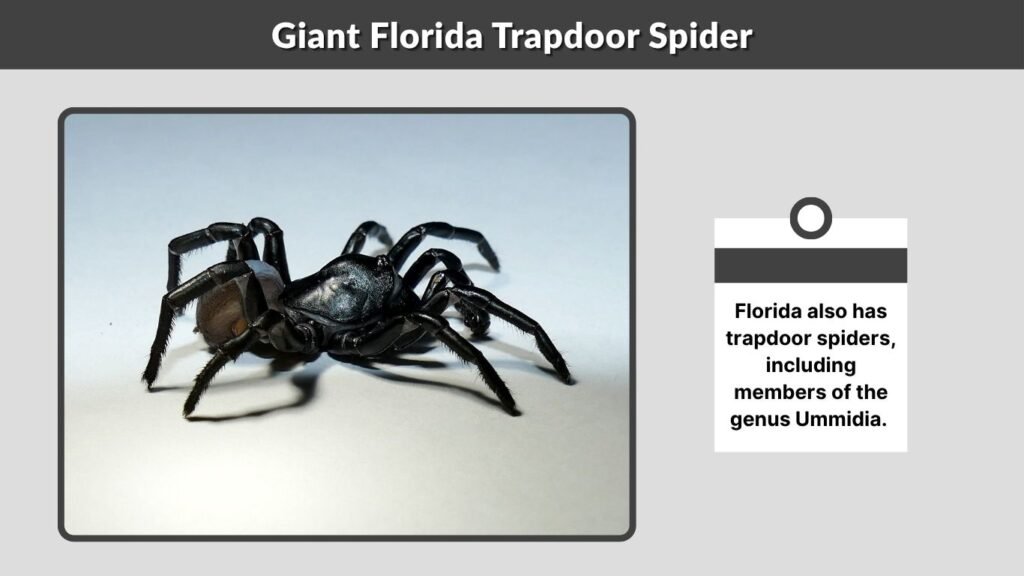
Florida also has trapdoor spiders, including members of the genus Ummidia. These North American trapdoor spiders construct burrows and use an ambush-hunting strategy similar to their Australian relatives.
However, a Florida trapdoor spider should not be confused with Euoplos dignitas, which is an Australian species restricted to Queensland. The term “giant Florida trapdoor spider” therefore describes a large local trapdoor spider rather than the Australian giant species.
Fossil Giant Trapdoor Spider
Australia has also produced an extraordinary fossil relative of modern trapdoor spiders. In 2023, scientists described Megamonodontium mccluskyi from the McGraths Flat fossil site in New South Wales. The fossil is estimated to be 11–16 million years old.
How Big Was the Fossil Giant Trapdoor Spider?
The fossil represented a brush-footed trapdoor spider and was roughly five times larger than its closest living relatives in the genus Monodontium. It is regarded as one of the largest fossil spiders known and the first fossil representative of the family Barychelidae discovered worldwide.
Its discovery suggests that relatives of today’s tropical brush-footed trapdoor spiders once inhabited Australian rainforest environments millions of years ago.
FAQs
How big is a giant trapdoor spider?
Female Euoplos dignitas can reach almost 5 cm, or about 2 inches, in body length, excluding the legs.
Where do giant trapdoor spiders live?
The best-known giant species, Euoplos dignitas, occurs in central Queensland’s Brigalow Belt around the Eidsvold and Monto region.
Is a giant trapdoor spider dangerous?
It has venom and can bite, but Euoplos dignitas is not considered medically dangerous to humans. A bite may still be painful.
Why are giant trapdoor spiders rarely seen?
Females spend almost their entire lives underground, while their burrow entrances are extremely well camouflaged. Mature males are more likely to wander above ground.
Was a giant fossil trapdoor spider found in Australia?
Yes. Megamonodontium mccluskyi, an 11–16-million-year-old brush-footed trapdoor spider fossil, was described from New South Wales in 2023.
