
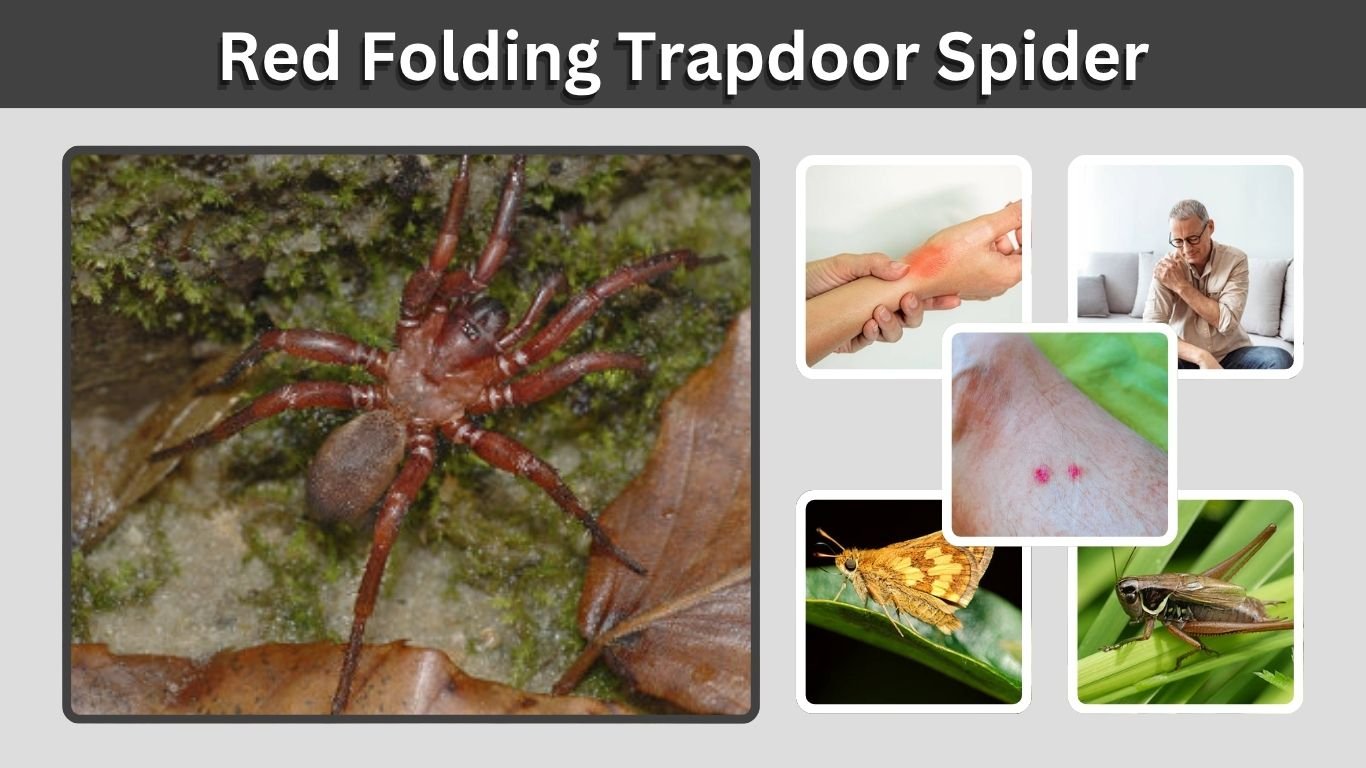
The red folding trapdoor spider is a secretive burrowing spider recognized for its reddish-brown coloration, powerful build, and underground hunting lifestyle. Instead of building a typical aerial web, it waits inside a silk-lined burrow and quickly grabs insects that approach the entrance. The name is also used loosely for several reddish trapdoor spiders, including African specimens sold in the exotic pet trade. Below, you’ll learn about its identification, size, habitat, feeding, bite, venom, lifespan, and basic care.
What Is a Red Folding Trapdoor Spider?
The name red folding trapdoor spider does not always refer to one formally recognized species. Different reddish mygalomorph spiders may be sold or identified under this common name. African red trapdoor spiders are sometimes marketed as Ctenolophus species, a genus currently classified within the family Idiopidae. Their appearance and underground behavior make them easy to distinguish from typical house spiders.
Identification
Common features associated with a red folding trapdoor spider include:
- Color: Red, reddish brown, burgundy, or dark mahogany.
- Body: Thick, compact, and heavily built.
- Legs: Strong, relatively short legs designed for digging.
- Chelicerae: Large downward-pointing fangs typical of mygalomorph spiders.
- Abdomen: Rounded or oval and often darker than the carapace.
- Hair: Fine hairs may cover the legs and body.
- Movement: Usually slow inside its burrow but capable of sudden rapid movements.
- Burrow: A silk-lined tunnel that provides shelter and an ambush point.
African red trapdoor spiders sold in the pet trade are sometimes labeled Ctenolophus sp., although trade names do not necessarily represent a scientifically confirmed species identification.
Red Folding Trapdoor Spider Size
These spiders are moderate-sized compared with large tarantulas. Exact adult size depends on the species being sold or identified under the common name. Females are generally more robust, while mature males tend to have longer, slimmer legs.
Body length should not be confused with leg span. Even a relatively small-bodied trapdoor spider can look considerably larger when its legs are fully extended.
Male vs. Female
Female trapdoor spiders normally spend most of their lives inside or close to their burrows. Their bodies are heavier and better suited for digging and remaining underground.
Adult males become more mobile after reaching maturity. They may leave their burrows and wander at night in search of females, which is why people occasionally discover trapdoor spiders walking across paths, gardens, patios, or buildings.
Habitat and Location
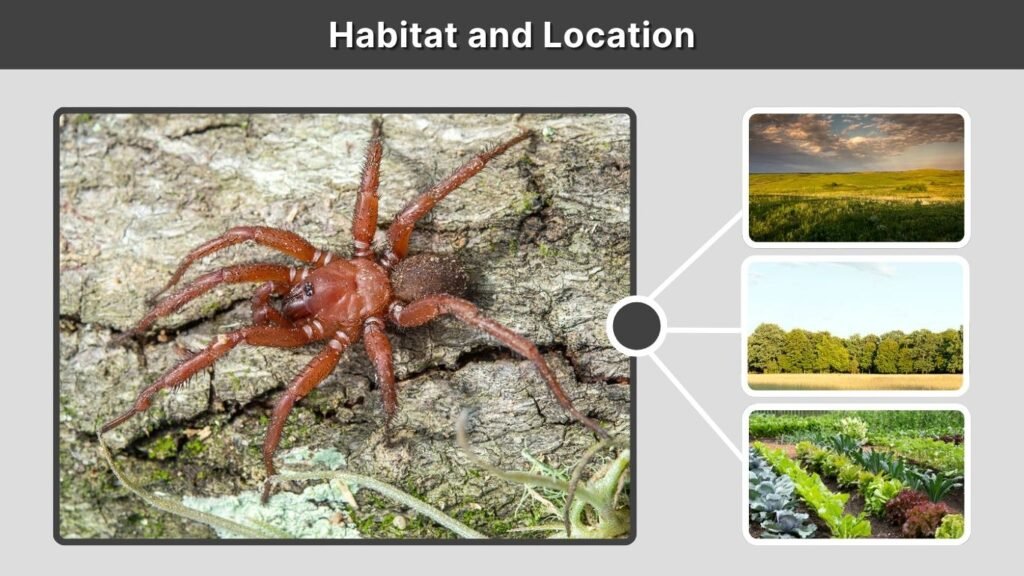
Red trapdoor spiders are strongly associated with soil because their survival strategy depends on constructing secure underground retreats. Depending on the species, trapdoor spiders occupy grasslands, woodland edges, scrublands, gardens, slopes, and other places where soil remains suitable for digging. Some Ctenolophus species are documented from South Africa.
The Underground Burrow
The burrow is the center of the spider’s life. It usually consists of a vertical or slightly angled tunnel reinforced with silk. The silk stabilizes the soil and allows the spider to detect vibrations produced by nearby prey.
Some species build a recognizable lid or door at the entrance. Vegetation, soil, and other natural materials can help camouflage the opening. The spider waits close to the entrance, senses movement outside, rushes forward, captures its prey, and retreats underground.
Where Are African Red Trapdoor Spiders Found?
The term African red trapdoor spider frequently appears in the exotic-pet trade, but locality information attached to commercial spiders should be treated cautiously unless the animal has been scientifically identified.
The genus Ctenolophus is recognized from southern Africa, with described species recorded in South Africa. Therefore, color alone should never be used to determine a spider’s exact species or geographic origin.
What Do Red Trapdoor Spiders Eat?
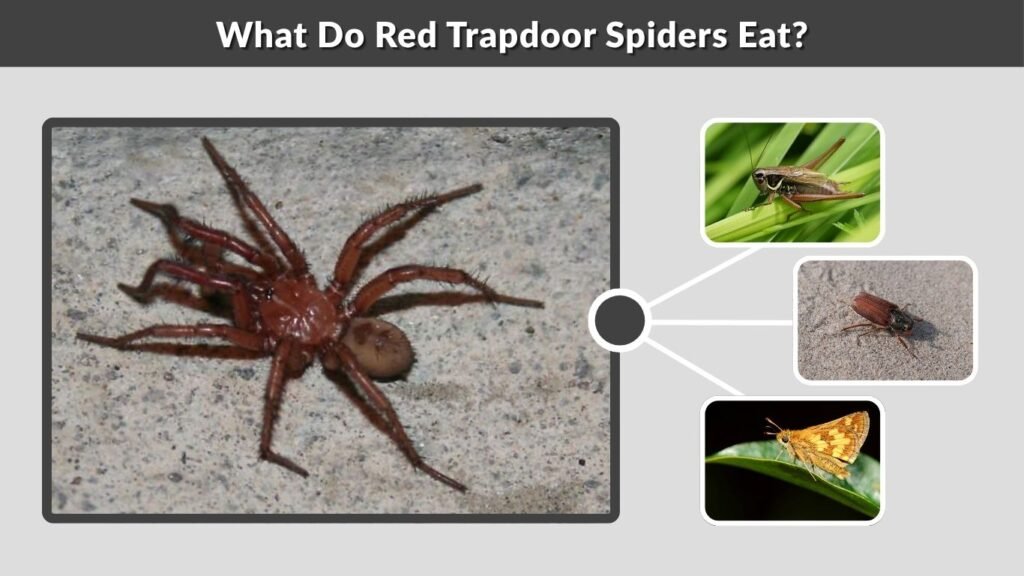
Red folding trapdoor spiders are ambush predators. Instead of chasing prey over long distances, they conserve energy underground and attack animals that approach their burrow. Their diet mainly consists of small terrestrial invertebrates that can be overpowered with their strong legs and fangs.
Common Foods
A red trapdoor spider may feed on:
- Crickets
- Small cockroaches
- Beetles
- Beetle larvae
- Grasshoppers
- Moths
- Other small insects
- Various soil-dwelling arthropods
How They Hunt
The spider normally positions itself near the burrow entrance, often keeping part of its body hidden. Vibrations caused by a passing insect alert it to potential prey.
When the prey comes close enough, the spider rapidly lunges from the entrance and grabs it. Venom and physical strength help immobilize the prey before it is pulled underground and eaten.
Feeding in Captivity
Captive spiders should receive appropriately sized live prey rather than insects that are excessively large. Crickets and roaches are commonly used feeder insects.
Uneaten prey should not remain in the enclosure for long periods, particularly when the spider is preparing to molt. A vulnerable molting spider can potentially be injured by live feeder insects.
Red Trapdoor Spider Bite and Venom
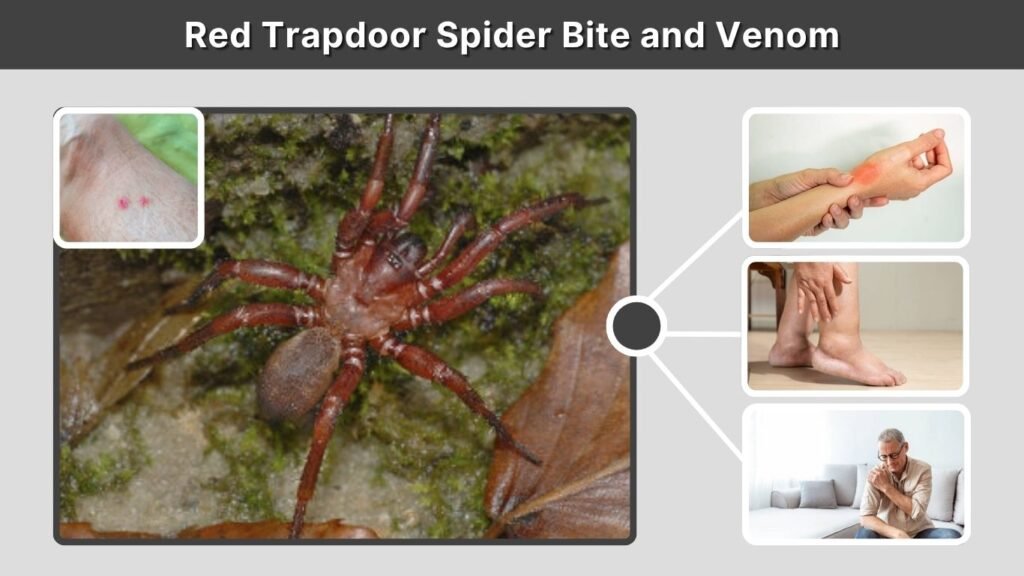
Like other spiders, trapdoor spiders possess venom for subduing prey. However, the common name “red trapdoor spider” covers animals whose exact identity may be uncertain, so broad claims about venom strength should be avoided. Handling an unidentified trapdoor spider is therefore unnecessary and potentially risky.
Possible Bite Symptoms
A defensive bite may potentially cause:
- Immediate pain
- Redness around the bite
- Local swelling
- Tenderness
- Mild burning or throbbing
- Temporary discomfort around the affected area
Severe symptoms, rapidly increasing swelling, breathing problems, fainting, or other concerning reactions require prompt medical attention.
Are Red Trapdoor Spiders Poisonous?
“Venomous” is the more accurate term because a spider injects venom through its fangs. Trapdoor spiders use venom primarily while hunting and defending themselves.
A spider remaining inside its burrow usually has little reason to interact with people. Bites are more likely if an animal is trapped, squeezed, picked up, or otherwise disturbed.
Are They Aggressive?
Trapdoor spiders are defensive predators rather than animals that actively hunt humans. Their first protection is usually remaining concealed underground.
However, a threatened spider can react quickly. Large fangs combined with a defensive strike can produce a painful bite, so handling is best avoided.
Behavior and Lifespan
Much of a red folding trapdoor spider’s behavior revolves around its burrow. It may remain hidden for long periods and become more responsive when insects move near the entrance. This secretive lifestyle also means an owner may see very little activity even when a captive spider is healthy.
Daily Behavior
Trapdoor spiders generally depend more on vibration than active visual hunting. They wait rather than roaming continuously, allowing them to survive while using relatively little energy.
Females can be especially sedentary and may occupy a suitable burrow for extended periods. Adult males are more likely to wander after maturation while searching for mates.
Molting
As the spider grows, it periodically sheds its exoskeleton. Before molting, feeding may decrease or stop completely.
The spider often remains deep inside its burrow during this vulnerable period. Food should not be forced on a spider that suddenly refuses prey, especially when other signs indicate an approaching molt.
How Long Do Red Trapdoor Spiders Live?
The exact lifespan cannot be reliably stated for every spider sold under this common name. Lifespan varies by species and sex.
As with many mygalomorph spiders, females generally have the potential to live considerably longer than males. Proper housing, appropriate feeding, suitable moisture, and minimal disturbance can help captive individuals reach their natural lifespan.
Red Trapdoor Spider Care
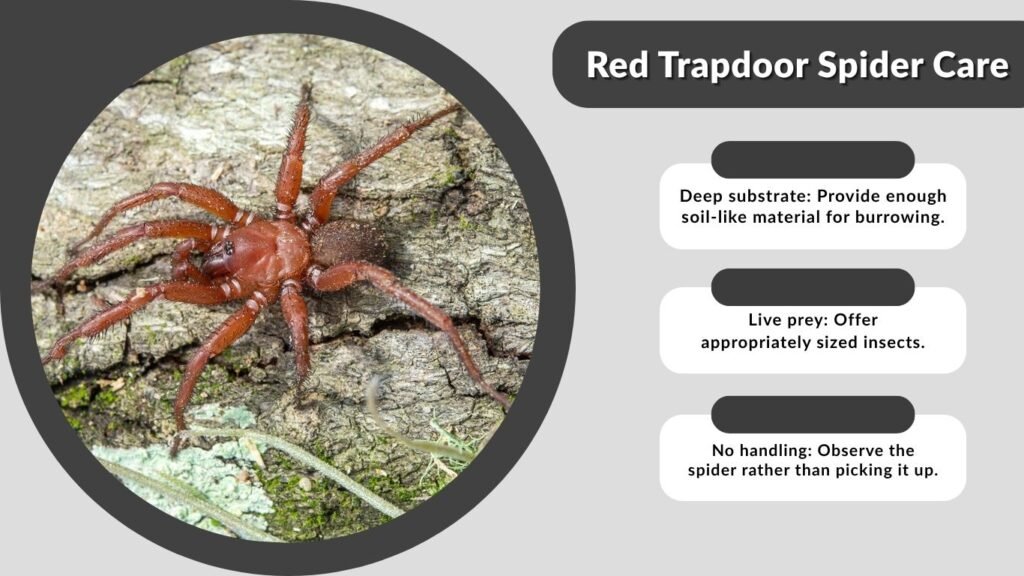
Keeping an African red or folding trapdoor spider differs from keeping an active surface-dwelling spider. The enclosure needs to support digging and burrow construction. Since identification and environmental requirements can vary among commercially sold specimens, care should be adjusted when reliable locality or species information is available.
Basic Care Requirements
Important considerations include:
- Deep substrate: Provide enough soil-like material for burrowing.
- Stable substrate: The material should hold a tunnel without constantly collapsing.
- Moderate moisture: Prevent complete drying while avoiding waterlogged conditions.
- Ventilation: Maintain airflow to reduce excessive moisture and mold.
- Water: Provide access to clean water when enclosure size permits.
- Live prey: Offer appropriately sized insects.
- Secure lid: Trapdoor spiders can be surprisingly capable escape artists.
- Low disturbance: Avoid repeatedly destroying or opening the burrow.
- No handling: Observe the spider rather than picking it up.
Red Trapdoor Spider for Sale
African red trapdoor spiders occasionally appear through exotic invertebrate sellers. Commercial names such as “red African trapdoor spider” or Ctenolophus sp. may be used, but buyers should understand that a trade label does not always provide a confirmed scientific identification.
Before purchasing one, check local wildlife regulations and make sure you can provide a deep, secure enclosure suitable for a burrowing spider.
FAQs
1. What is the scientific name of the red folding trapdoor spider?
There is no single universally accepted scientific species corresponding to the common name. African red trapdoor spiders in the pet trade may be labeled Ctenolophus sp. Ctenolophus is a recognized genus in the trapdoor spider family Idiopidae.
2. Is a red folding trapdoor spider dangerous?
It should be treated cautiously, particularly when its exact species is unknown. Trapdoor spiders possess venom and strong fangs, but they normally remain hidden and have little reason to bite people unless they are threatened, trapped, or handled.
3. Where does the red folding trapdoor spider live?
Trapdoor spiders live primarily in underground silk-lined burrows. African spiders associated with the Ctenolophus name are known from southern Africa, including several documented South African species. They may inhabit grassland, scrub, woodland, or similar environments with suitable soil.
4. What does a red trapdoor spider eat?
Its diet consists primarily of insects and other small arthropods. Crickets, beetles, cockroaches, moths, and similar prey can be captured near the burrow entrance. The spider detects vibrations and quickly pulls suitable prey underground.
5. Can you keep a red trapdoor spider as a pet?
Yes, some trapdoor spiders are maintained by experienced invertebrate keepers. They require deep substrate, appropriate moisture, ventilation, live prey, and a secure enclosure. Because they spend much of their time underground and should not be handled, they are mainly observation pets.
