
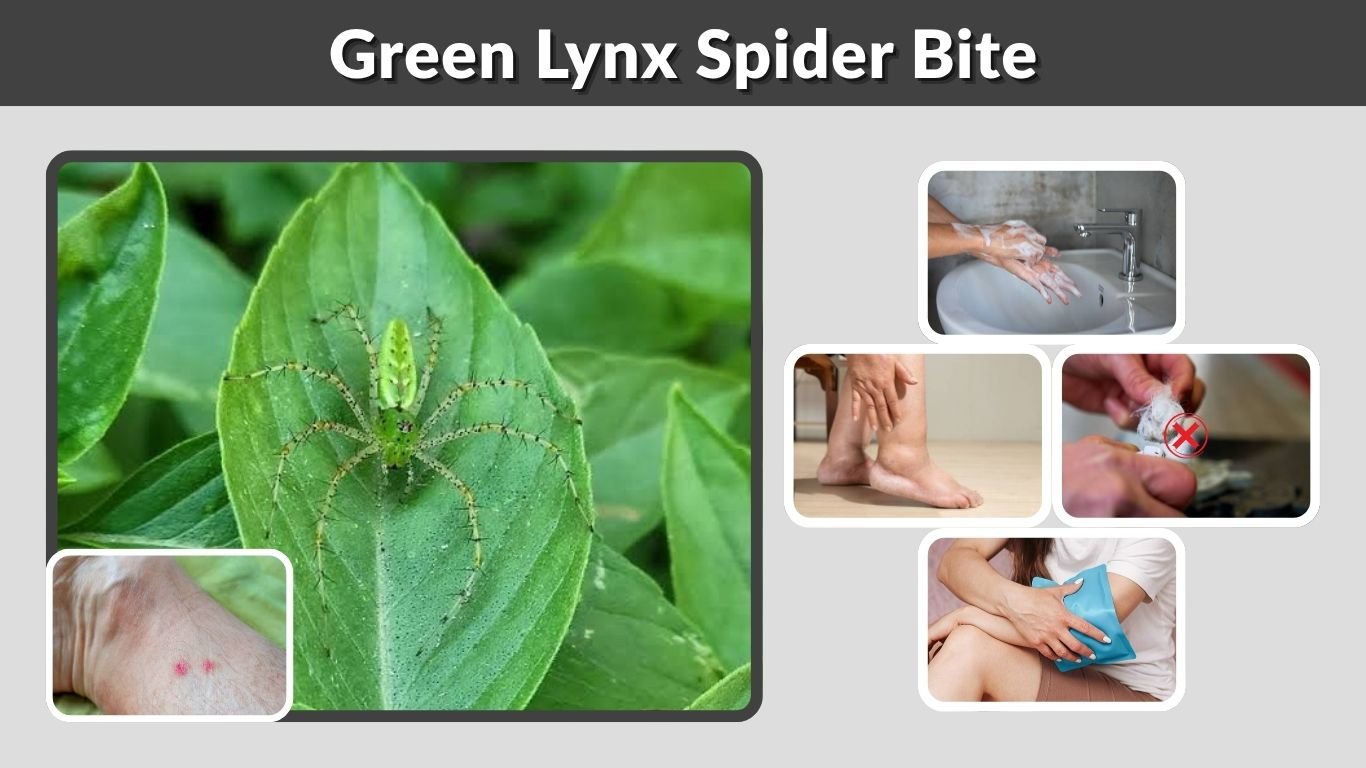
A green lynx spider bite is uncommon, but it can happen when the spider feels trapped, handled, or threatened. Green lynx spiders are venomous hunters, yet their venom is mainly designed to subdue insects rather than harm people. A bite on a human may cause localized pain, redness, swelling, or irritation, but severe reactions are considered unusual. Understanding the symptoms, proper treatment, and when medical care may be needed can make an unexpected encounter with this bright green garden spider much less concerning.
Does the Green Lynx Spider Bite Humans?
Green lynx spiders can bite humans, although they normally prefer avoiding people. These spiders spend most of their time hunting insects among flowers, shrubs, grasses, and garden plants.
A bite is generally defensive rather than aggressive. It may occur when someone accidentally grabs the spider while gardening, presses it against the skin, or disturbs a female guarding her egg sac.
Why Green Lynx Spiders Bite
Green lynx spiders do not actively search for humans to bite. Their fangs and venom are primarily adaptations for catching prey.
Situations that may increase the likelihood of a bite include handling the spider with bare hands, reaching into dense vegetation, squeezing one accidentally, or disturbing its egg sac.
Females can be especially defensive when protecting developing spiderlings.
What Does a Green Lynx Spider Bite Feel Like?
A bite may initially feel like a sharp prick, sting, or pinching sensation. Some people experience noticeable pain immediately, while others may only notice irritation afterward.
The discomfort is typically concentrated around the bite site rather than spreading throughout the body.
There is no widely recognized scientific green lynx spider bite pain index, so claims assigning it a specific numerical pain score should be treated cautiously.
Green Lynx Spider Bite Symptoms
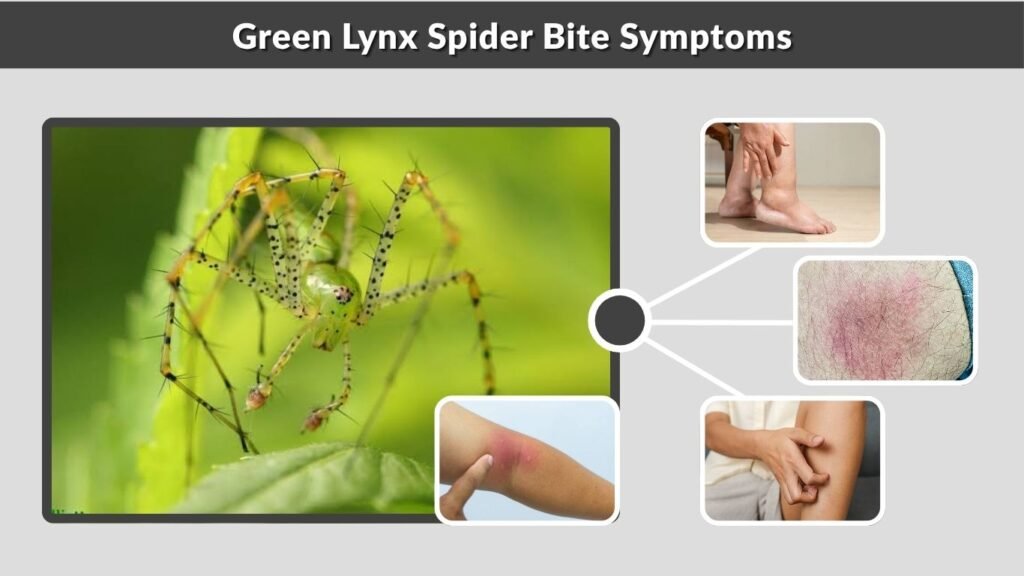
Symptoms from a green lynx spider bite are generally localized. The exact reaction can vary depending on the person, location of the bite, and amount of venom delivered.
Common Symptoms
Possible symptoms include:
- Pain or stinging
- Redness around the bite
- Mild to moderate swelling
- Tenderness
- Burning sensation
- Itching or irritation
- Small puncture marks
- Temporary skin discoloration
Symptoms usually remain around the affected area rather than causing serious whole-body illness.
How Long Can Symptoms Last?
Mild irritation may improve within hours, while redness, tenderness, or swelling can sometimes remain for several days.
Avoid scratching the area because damaged skin may increase the risk of secondary infection.
If swelling continues expanding, pain becomes severe, or symptoms worsen rather than improve, professional medical advice is appropriate.
Severe Reactions
Serious reactions are uncommon, but individual sensitivity differs.
Seek urgent medical assistance if a person develops difficulty breathing, widespread swelling, faintness, severe dizziness, rapidly increasing pain, or other concerning symptoms following a suspected spider bite.
Green Lynx Spider Bite Venom
Green lynx spiders possess venom because they are active predators. Instead of relying on a traditional prey-catching web, they stalk or ambush insects and use their fangs to immobilize them.
Is the Bite Poisonous?
The more accurate term is venomous, not poisonous.
Poison normally causes harm when it is eaten, inhaled, or absorbed, while venom is delivered through a bite or sting.
Green lynx spider venom can affect their small prey efficiently, but it is not generally considered highly dangerous to humans.
Can Their Venom Harm Humans?
A bite may produce noticeable local discomfort, but green lynx spiders are not usually considered medically dangerous spiders.
Most reactions involve pain, redness, swelling, and irritation around the bite site.
However, anyone with unusual symptoms should not rely solely on identifying the spider. Different bites, stings, infections, and allergic reactions can look similar.
Green Lynx Spider Bite Treatment
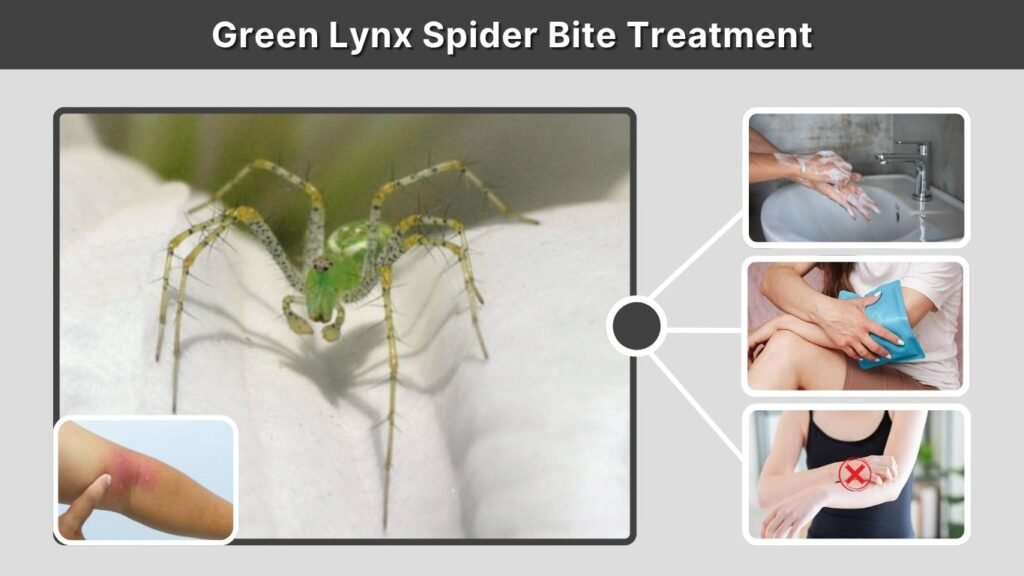
Most mild spider bites can initially be managed with basic first aid. Treatment mainly focuses on keeping the bite clean and reducing swelling or discomfort.
Basic First Aid
For a suspected green lynx spider bite:
- Wash the affected skin with soap and clean water.
- Dry the area gently.
- Apply a cold pack wrapped in cloth for short periods.
- Keep the affected limb elevated if significant swelling occurs.
- Avoid scratching or repeatedly touching the bite.
- Monitor the area for worsening redness or swelling.
Do not apply ice directly to bare skin.
When Should You See a Doctor?
Medical attention may be appropriate if:
- Pain becomes intense.
- Swelling spreads significantly.
- The wound appears infected.
- Redness continues expanding.
- Symptoms do not begin improving.
- Fever or weakness develops.
- Breathing becomes difficult.
- The bite occurs near the eye or mouth.
Children, older adults, or people with significant allergies may also warrant closer monitoring.
What Does a Green Lynx Spider Bite Look Like?
A bite does not have one unique appearance that allows it to be identified with certainty.
Appearance of a Bite on Humans
A green lynx spider bite on a human may appear as a small red or irritated area accompanied by localized swelling.
Possible visible features include:
- Small red bump
- Mild swelling
- Redness around the affected area
- One or two tiny puncture points
- Slight discoloration
These features are not exclusive to spider bites. Mosquito bites, ant bites, skin infections, and allergic reactions can create similar-looking marks.
For that reason, photographs alone are usually insufficient for confidently identifying the responsible spider.
Green Lynx Spider Bite vs Other Lynx Spider Bites
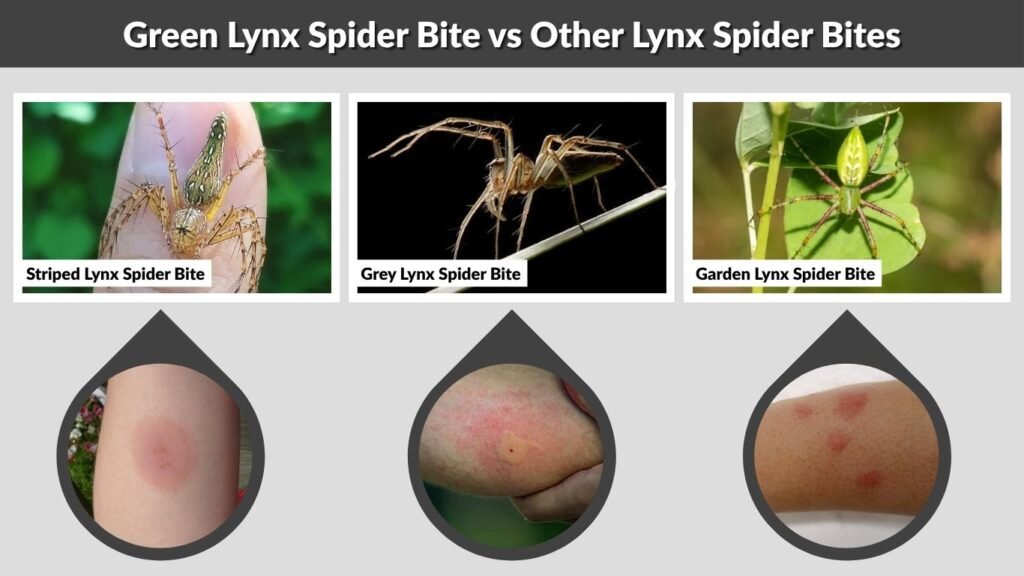
The lynx spider family includes numerous species with similar hunting behaviors. Green lynx spiders are among the best-known members, but striped and gray lynx spiders are also frequently encountered.
Striped Lynx Spider Bite
Striped lynx spiders may bite defensively when handled or trapped. Like the green lynx spider, they possess venom for immobilizing insect prey.
A striped lynx spider bite is generally expected to cause localized discomfort rather than severe poisoning in most healthy people.
Grey Lynx Spider Bite
Grey or gray lynx spiders also use venom when hunting insects. Human bites are uncommon because these spiders normally attempt to escape disturbances.
If bitten, basic wound cleaning and symptom monitoring are appropriate, particularly when the exact spider species cannot be confirmed.
Garden Lynx Spider Bite
“Garden lynx spider” may be used informally for lynx spiders encountered around flowers, crops, bushes, and other garden vegetation.
Regardless of species, avoid handling unfamiliar spiders directly. Wearing gardening gloves can greatly reduce accidental bites.
Can Green Lynx Spiders Spray Venom?
One unusual characteristic associated with green lynx spiders is their ability to eject defensive fluid or venom toward a nearby threat.
This behavior is particularly important when dealing with females guarding egg sacs.
Protecting Your Eyes
Avoid bringing your face close to a green lynx spider or intentionally provoking one.
If material from a spider enters the eye, rinse the eye thoroughly with plenty of clean water.
Seek medical attention if persistent redness, pain, excessive tearing, blurred vision, or significant irritation develops.
How to Prevent Green Lynx Spider Bites
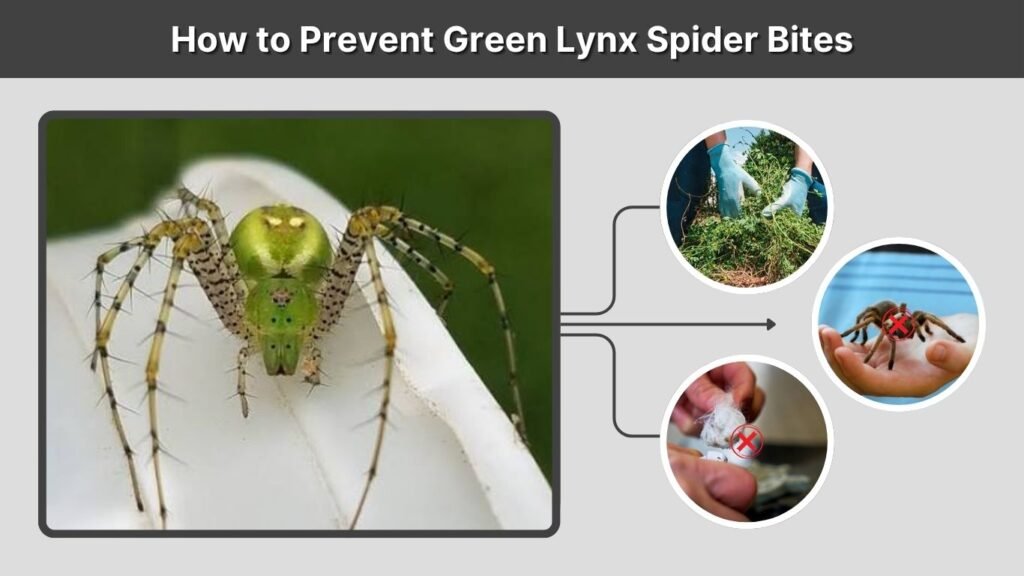
Because most bites happen accidentally, simple precautions can greatly reduce the chance of being bitten.
Garden Safety Tips
When working around shrubs, flowering plants, or tall vegetation:
- Wear gardening gloves.
- Look before grabbing stems or leaves.
- Avoid handling spiders with bare hands.
- Shake out outdoor gloves before wearing them.
- Do not disturb spider egg sacs.
- Keep children from picking up unfamiliar spiders.
Green lynx spiders are beneficial predators of numerous insects, so they usually do not need to be killed simply because they are present in a garden.
FAQs
Is a Green Lynx Spider Bite Dangerous?
A green lynx spider bite is generally not considered highly dangerous to humans. It may cause localized pain, redness, swelling, or irritation. Serious reactions are uncommon, although anyone experiencing severe or rapidly worsening symptoms should seek medical care.
Does a Green Lynx Spider Bite Hurt?
Yes, a bite can hurt. People may experience an immediate sting, pinching sensation, or localized burning. Pain intensity varies between individuals, and there is no established scientific pain-index rating specifically used for green lynx spider bites.
How Do You Treat a Green Lynx Spider Bite?
Wash the bite with soap and water, keep it clean, and use a wrapped cold pack to reduce swelling or discomfort. Avoid scratching the area. Seek medical attention if symptoms become severe, spread rapidly, or fail to improve.
Can a Green Lynx Spider Bite Kill You?
Green lynx spiders are not generally regarded as spiders capable of causing fatal human envenomation. Their venom primarily targets insect prey. Nevertheless, severe allergic reactions or unusual symptoms after any suspected spider bite require urgent medical assessment.
Are Striped Lynx Spider Bites Dangerous?
Striped lynx spiders can bite defensively, but their bites are generally associated with localized symptoms rather than serious medical complications. Clean the area and monitor it carefully, especially when the exact spider responsible for the bite cannot be identified.
