
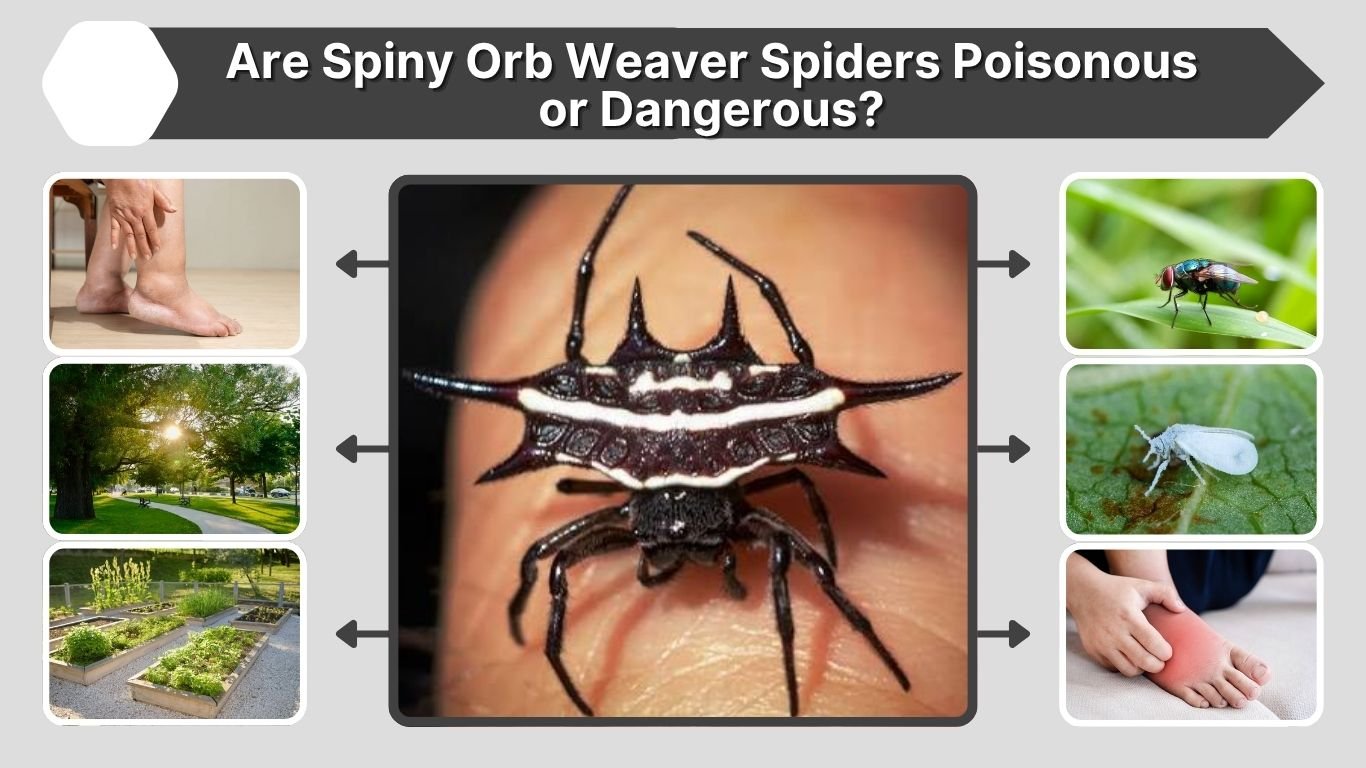
Spiny orb weaver spiders look intimidating because of their wide bodies, bold colors, and sharp abdominal spines. However, these small garden spiders are not considered dangerous to humans. They are venomous rather than poisonous, but their venom is designed to immobilize tiny insects caught in their webs. Bites are extremely uncommon and are not known to cause serious effects in people. Spiny-backed orb weavers are generally peaceful, beneficial spiders that help control flies, moths, beetles, and other pests. Understanding their appearance and behavior can help you safely coexist with them around gardens, trees, and homes.
Are Spiny Orb Weaver Spiders Poisonous?
Spiny orb weaver spiders are not poisonous. The scientifically accurate term is venomous because they deliver venom through their fangs rather than producing a toxin that causes harm when touched or eaten.
Their venom helps subdue insects caught in their webs. Although the venom is effective against small prey, the bite of the common spiny-backed orb weaver is not known to produce serious effects in humans.
Quick Answer
Spiny orb weavers:
- Possess venom for catching insects
- Are not medically significant to most people
- Rarely bite humans
- Are not aggressive
- Do not sting with their abdominal spines
- Are beneficial outdoor predators
The frightening appearance of the spider does not reflect its danger level. Its hard shell and spines are primarily defensive features that may make it harder for predators to attack or swallow.
What Is a Spiny Orb Weaver?
The spider commonly called the spiny orb weaver, spiny-backed orb weaver, or crablike spiny orb weaver is usually Gasteracantha cancriformis. It belongs to the orb-weaver family Araneidae.
It is sometimes incorrectly called a crab spider because of its broad, crablike abdomen. However, it is not a true crab spider from the family Thomisidae.
Female spiny orb weavers are particularly recognizable because they have a flattened abdomen with six pointed spines. Florida specimens commonly have a white abdomen, black spots, and red spines, although yellow, orange, dark, and black variations also occur.
Are Spiny-Backed Orb Weavers Dangerous?
Spiny-backed orb weavers are not considered dangerous to people, children, or healthy pets. They spend most of their time sitting in circular webs and waiting for insects.
These spiders do not chase people, jump at them, or deliberately attack. When disturbed, one usually remains still, moves toward the edge of its web, or drops from the web on a silk thread.
A defensive bite could occur if the spider were:
- Picked up with bare fingers
- Squeezed against the skin
- Trapped inside clothing
- Handled roughly
- Accidentally crushed
Normal activities such as walking near a web, gardening nearby, or observing the spider do not usually create a bite risk.
Can a Spiny Orb Weaver Bite You?
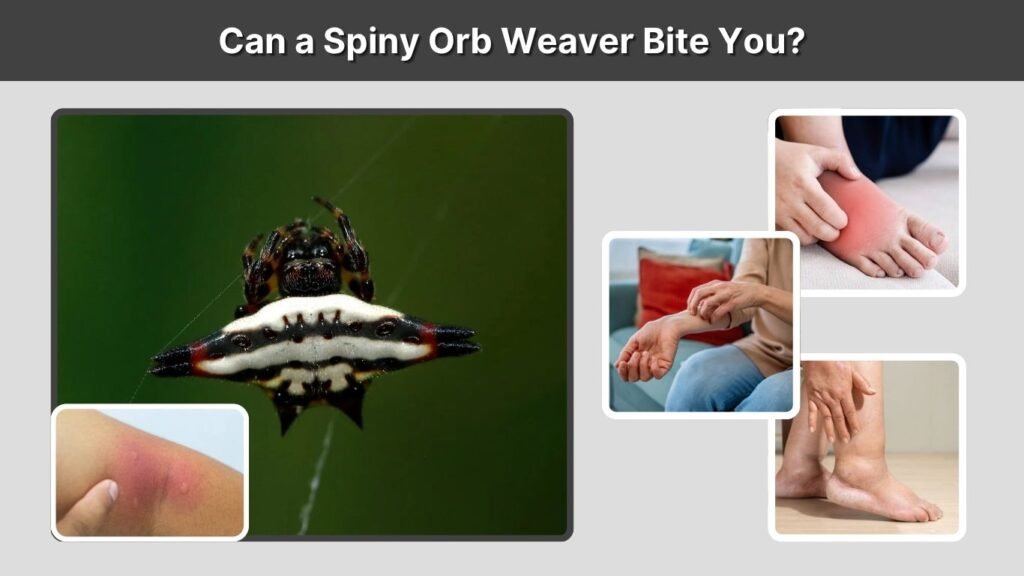
Spiny orb weavers can technically bite because they have fangs and venom. However, bites are rare. Their first defenses are remaining in the web, relying on their protective body, or attempting to escape.
University of Florida information states that the bite of Gasteracantha cancriformis is not known to cause serious effects in humans.
A person is much more likely to accidentally walk through the spider’s web than to be bitten by the spider itself.
Possible Bite Symptoms
When a mild spider bite occurs, possible localized symptoms can include:
- Brief pinching or stinging
- Minor redness
- Mild swelling
- Itching
- Tenderness
- A small raised bump
Reactions vary from person to person. Most uncomplicated insect and spider bites produce symptoms around the bite site rather than throughout the body.
What Should You Do After a Suspected Bite?
A minor suspected bite can generally be managed with basic first aid while monitoring the affected area.
Basic First Aid
Wash the bite gently with soap and clean water. Apply a cold cloth or an ice pack wrapped in fabric for 10–20 minutes to reduce discomfort and swelling. Avoid scratching the area because broken skin can increase the chance of infection.
Do not cut the bite, attempt to suck out venom, burn the skin, or apply unknown chemicals. These methods do not safely remove venom and may make the injury worse.
General Poison Control guidance recommends cleaning bites and using a cold compress for localized discomfort.
When to Seek Medical Attention
Contact a healthcare professional when:
- Pain or swelling continues to worsen
- Redness spreads significantly
- The area becomes hot or produces pus
- Symptoms do not begin improving
- The spider was not positively identified
- The affected person has a history of severe allergies
Seek emergency assistance for difficulty breathing, swelling of the face or throat, fainting, widespread hives, confusion, or other symptoms affecting areas beyond the bite site. Body-wide symptoms require professional evaluation regardless of which spider was suspected.
Can the Spines Hurt or Poison You?
The six visible spikes on a female’s abdomen are not venomous stingers. The spider cannot inject venom through them, and it does not shoot or detach them.
The spines are hard extensions of the abdomen. They likely help protect the spider by making it awkward for birds, lizards, wasps, and other predators to grab or swallow.
Although the spines look sharp, a spider resting in its web cannot use them to attack a person. Handling any wild spider is still discouraged because squeezing it could provoke a defensive bite.
How to Identify a Spiny Orb Weaver
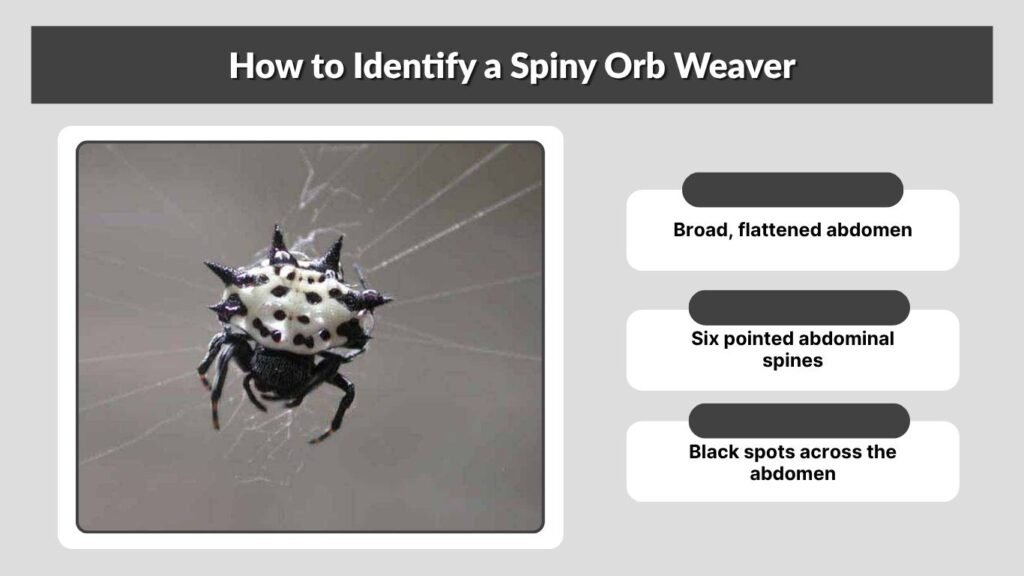
Correct identification is important because many unrelated spiders are loosely described as spiny orb weavers.
Identification Features
- Broad, flattened abdomen
- Six pointed abdominal spines
- White, yellow, orange, red, or dark upper surface
- Black spots across the abdomen
- Red, orange, or black spines
- Dark legs and front body
- Body wider than it is long
- Circular web with visible silk tufts
Adult females measure approximately 5–9 millimeters long but may be 10–13 millimeters wide. Males are much smaller, generally measuring only 2–3 millimeters long, and lack the female’s prominent spines.
Why Do Their Colors Vary?
A white spider with red spines and a yellow spider with black spines may belong to the same species. Spiny-backed orb weavers show considerable geographic and individual color variation.
Florida specimens often have white backs, black spots, and reddish spines. In other regions, their backs may be yellow rather than white, their spines may be black, or much of the spider may appear dark.
Color alone should not be used for identification. The broad body, six spines, spot pattern, location, and orb-shaped web offer stronger clues.
Where Do Spiny Orb Weavers Live?
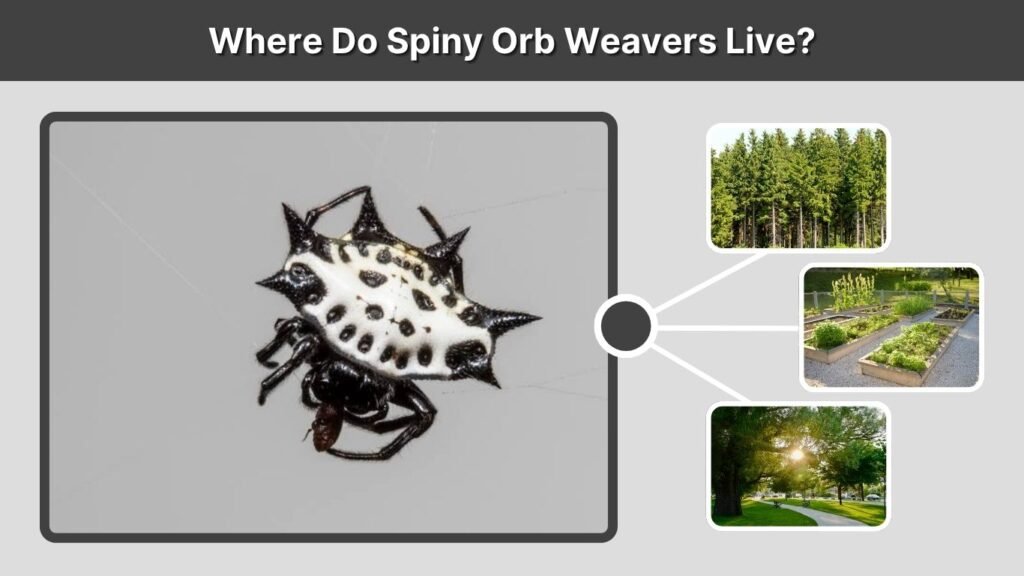
Spiny-backed orb weavers occur from the southern United States through Central America, the Caribbean, and into parts of South America. In the United States, they are especially familiar in warm states such as Florida, Georgia, and Texas.
Common habitats include:
- Woodland edges
- Citrus groves
- Gardens
- Shrubs
- Parks
- Backyard trees
- Forest clearings
- Residential landscaping
They need open spaces between branches or other supports where they can construct their circular webs.
What Do Spiny Orb Weavers Eat?
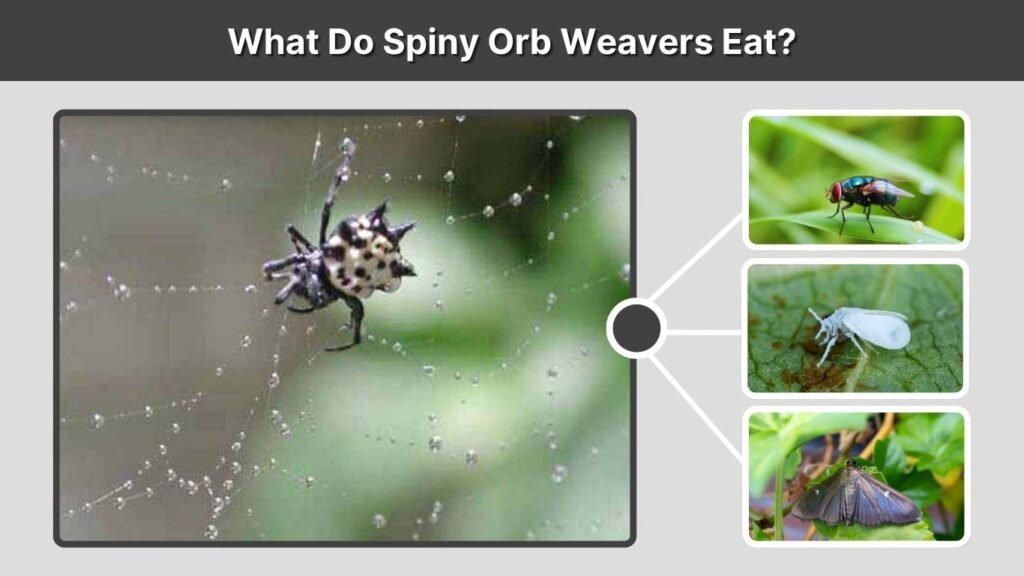
Spiny orb weavers are beneficial predators that catch small flying insects. Their prey commonly includes flies, whiteflies, moths, and beetles.
When an insect becomes trapped, vibrations alert the spider. It approaches the prey, uses venom to immobilize it, and secures it with silk before feeding.
Because they eat plant pests and nuisance insects, spiny orb weavers can be helpful in gardens, orchards, and residential landscapes. They do not eat plants or damage trees.
Are They Dangerous to Dogs and Cats?
Spiny orb weavers are unlikely to seriously harm a dog or cat. Most pets will ignore them, although a curious animal may paw at a web or attempt to bite the spider.
A defensive bite could cause localized irritation. Contact a veterinarian if a pet develops severe swelling, repeated vomiting, unusual weakness, breathing difficulty, or significant behavioral changes.
The spider’s abdominal spines are not venomous and cannot sting a pet.
Should You Remove Spiny Orb Weavers?
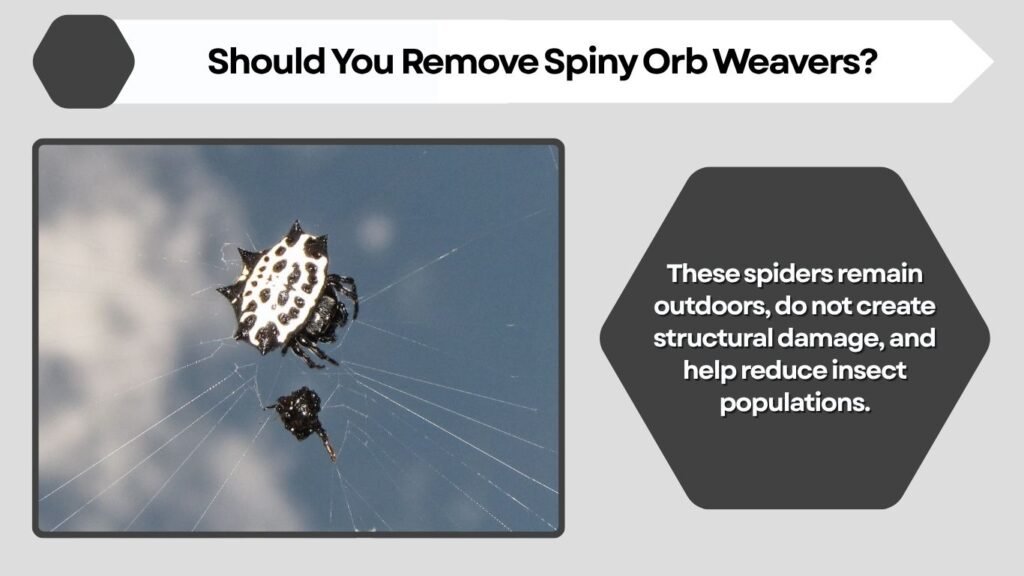
Removal is usually unnecessary. These spiders remain outdoors, do not create structural damage, and help reduce insect populations.
Leave the spider alone when its web is located among trees, shrubs, or other unused areas. If the web blocks a door, walkway, play space, or frequently used path, gently move it with a long broom or stick.
Avoid handling the spider directly. Moving or removing the web generally encourages it to rebuild in another location.
Chemical pesticides are rarely needed and may also kill beneficial insects and other harmless predators.
FAQs
Are crablike spiny orb weaver spiders poisonous?
No. Crablike spiny orb weavers are venomous rather than poisonous, but their venom is intended for small insect prey. Their bites are uncommon and are not known to cause serious effects in humans.
Can a spiny orb weaver kill you?
The common spiny-backed orb weaver is not considered deadly. Serious reactions are not expected, although any bite should be monitored for unusual symptoms or an allergic response.
Do spiny orb weavers attack humans?
No. They do not chase or deliberately attack people. A bite would most likely happen only if the spider were grabbed, squeezed, trapped, or handled roughly.
Are the spikes on a spiny orb weaver venomous?
No. The abdominal spines contain no stingers and do not inject venom. They are hardened defensive structures that may discourage predators.
Should I kill a spiny orb weaver?
No. It is a beneficial garden spider that catches flies, moths, beetles, and other insects. Relocate its web only when it blocks an entrance or frequently used area.
