
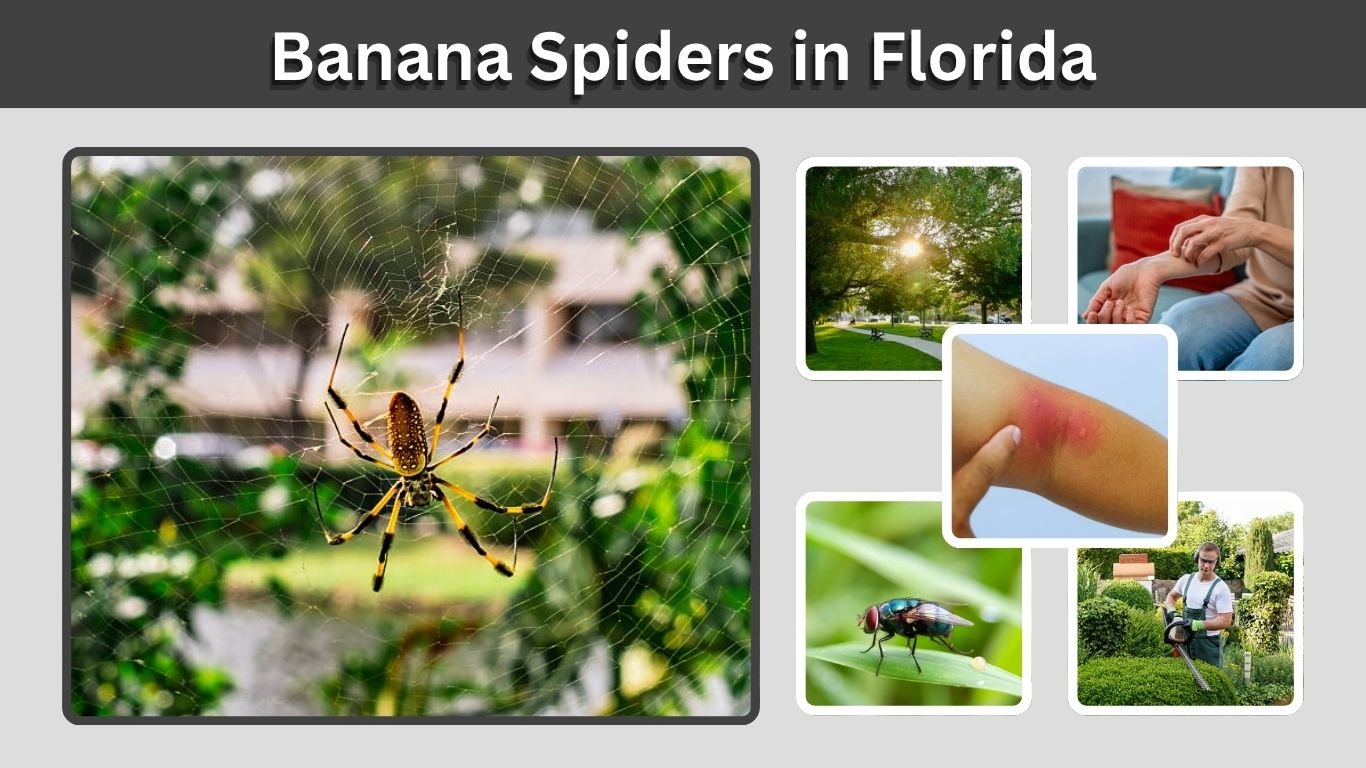
Florida is home to several large, eye-catching spiders, but few attract as much attention as the banana spider. People often spot these golden web-builders stretching massive webs across gardens, forests, hiking trails, and even backyards. Their impressive size and colorful appearance can make them look dangerous, leading to common questions such as whether they are poisonous, if they lay eggs in people, or when they are most active.
This guide explains everything you need to know about banana spiders in Florida, including how to identify them, where they live, whether they are dangerous, and how to deal with them around your home.
What Is a Banana Spider in Florida?
The name banana spider is commonly used in Florida to describe the golden silk orb-weaver (Trichonephila clavipes). While the nickname is also used for a few other spiders in different parts of the world, Florida residents almost always mean the golden silk orb-weaver.
These spiders are famous for spinning enormous golden-colored webs that can stretch several feet between trees or shrubs. Despite their intimidating appearance, they are generally harmless to people.
Quick Facts
| Feature | Details |
| Scientific name | Trichonephila clavipes |
| Common names | Banana spider, Golden silk orb-weaver |
| Family | Araneidae |
| Leg span | Up to 5 inches |
| Female size | 1–2 inches (body) |
| Male size | Less than ¼ inch |
| Venom | Mild, not medically significant |
| Habitat | Forests, gardens, parks, backyards |
How to Identify a Banana Spider
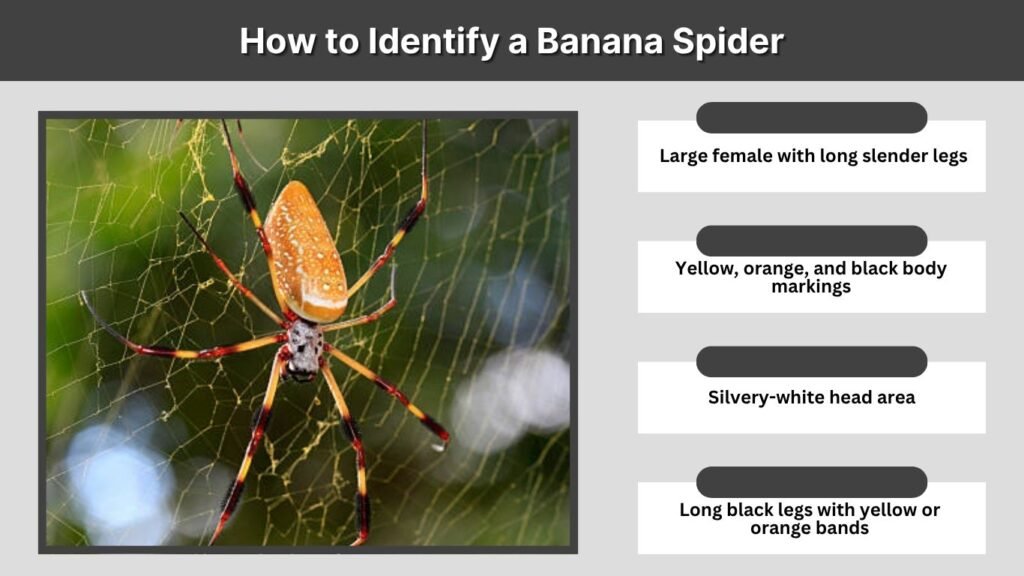
Correct identification helps distinguish a banana spider from more dangerous species.
Identification Features
- Large female with long slender legs
- Yellow, orange, and black body markings
- Silvery-white head area
- Long black legs with yellow or orange bands
- Spins large circular golden webs
- Tiny brown males often found near females
- Usually hangs upside down in the center of its web
Females are dramatically larger than males, making one of the biggest size differences among North American spiders.
Where Do Banana Spiders Live in Florida?
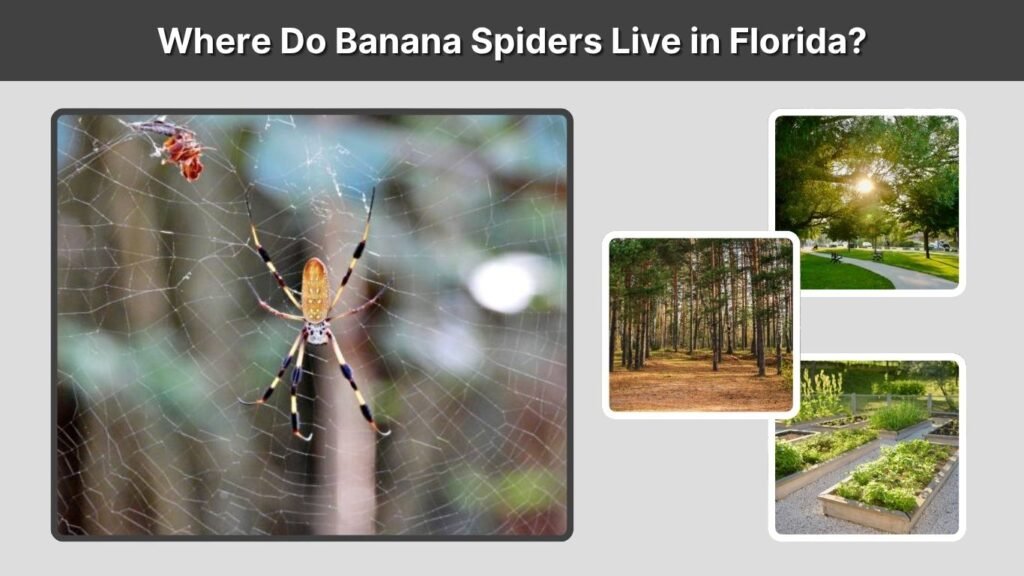
Banana spiders are found throughout Florida, especially where vegetation is abundant.
Common habitats include:
- Woodlands
- Nature trails
- Gardens
- Parks
- Wetlands
- Backyard shrubs
- Around ponds
- Fence lines
- Citrus groves
- Forest edges
They prefer warm, humid environments with plenty of flying insects.
Banana Spider Season in Florida
One of the most searched questions is “banana spider season in Florida.”
Banana spiders become most noticeable during the warmer months.
Seasonal Activity
Spring
Young spiders emerge after overwintering.
Summer
Rapid growth begins as insect populations increase.
Late Summer
Large females become common throughout Florida.
Fall (Peak Season)
August through October is considered peak banana spider season. Their enormous webs are especially noticeable across trails, gardens, and yards.
Winter
Most adult females die after laying egg sacs before cold weather arrives.
Although Florida’s mild climate allows some activity year-round, fall is when people encounter them most often.
Are Banana Spiders Poisonous?
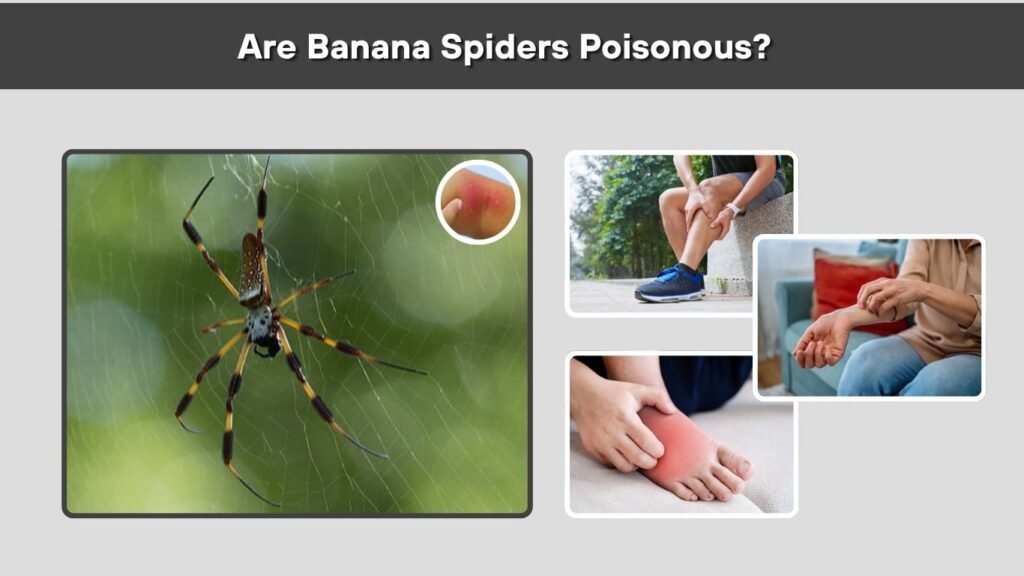
This is one of the biggest misconceptions.
Technically, banana spiders produce venom because they use it to subdue insects. However, their venom is not considered dangerous to healthy humans.
A bite is uncommon because these spiders are shy and avoid confrontation.
Bite Symptoms
If bitten, a person may experience:
- Mild pain
- Redness
- Minor swelling
- Temporary itching
- Slight tenderness
Symptoms usually disappear within a day or two.
People with allergies should seek medical attention if severe swelling or unusual reactions occur.
Are Banana Spiders Aggressive?
No.
Banana spiders prefer escaping over attacking.
They usually bite only when:
- Trapped against skin
- Accidentally grabbed
- Crushed
- Defending themselves
Simply walking near a web rarely causes a spider to attack.
The Truth About “Banana Spider Lay Eggs in You”
One persistent internet myth claims that banana spiders lay eggs inside humans.
Is It True?
Absolutely not.
No spider native to Florida—or anywhere else—lays eggs inside a person’s body.
Spider reproduction works differently:
- Females produce silk egg sacs.
- Eggs remain protected inside the sac.
- Egg sacs are attached to vegetation or hidden locations.
- Spiderlings hatch naturally from the sac.
There is no scientific evidence supporting the claim that banana spiders inject eggs into humans.
This myth has circulated online for years but has been repeatedly debunked by biologists.
Banana Spider Egg Sacs
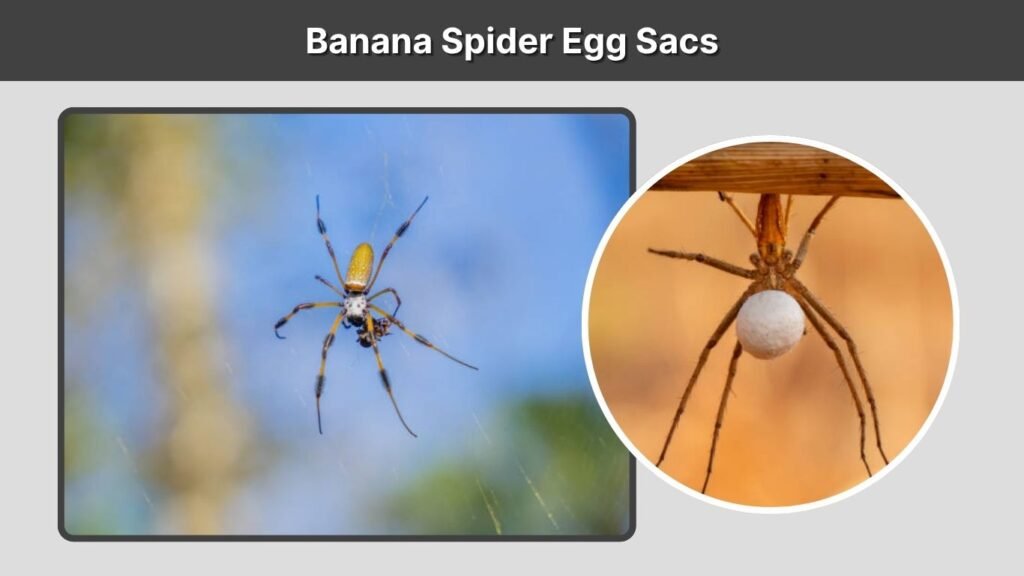
Female banana spiders usually create egg sacs during late fall.
Each sac:
- Contains hundreds of eggs
- Is covered in tough silk
- Is attached to leaves, bark, or hidden vegetation
- Protects developing spiderlings through winter
Most adult females die shortly after producing egg sacs.
Banana Spiders in Florida Houses
People occasionally find banana spiders near homes.
Why Do They Come Near Houses?
Homes provide:
- Outdoor lights that attract insects
- Trees and shrubs for web building
- Porch corners
- Fences
- Landscaping plants
Inside the house, banana spiders are uncommon because indoor conditions lack enough flying insects.
If one enters accidentally, it usually wanders briefly before dying or leaving.
What Should You Do If You Find One Indoors?
There’s usually no reason to panic.
You can:
- Place a cup over the spider.
- Slide paper underneath.
- Carry it outside.
- Release it into vegetation.
Avoid handling it directly.
Why Banana Spiders Are Beneficial
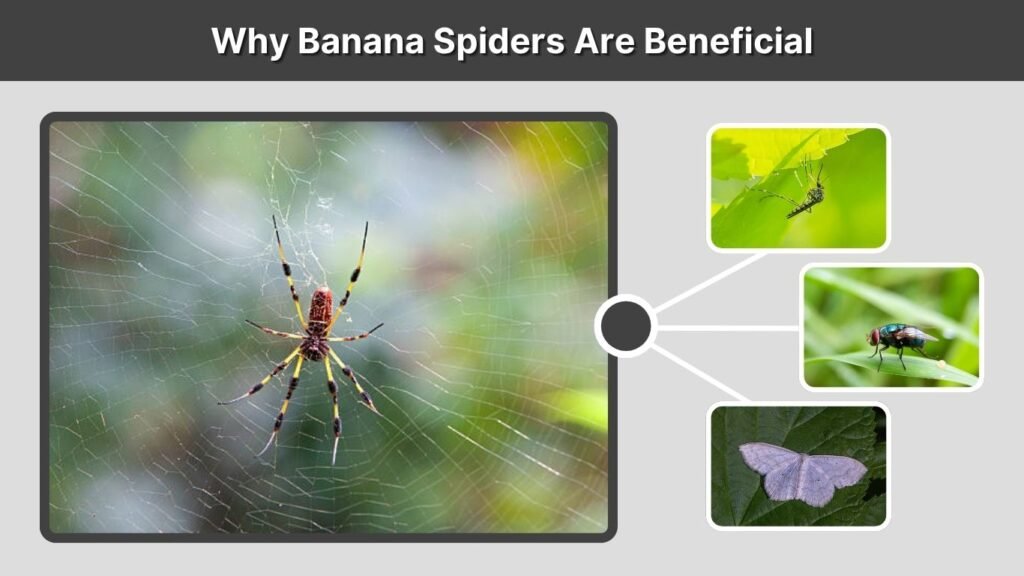
Banana spiders are excellent natural pest controllers.
Their diet includes:
- Mosquitoes
- Flies
- Wasps
- Moths
- Beetles
- Grasshoppers
- Flying ants
- Small dragonflies
A single large web can capture dozens of insects each day.
For gardeners, they’re valuable allies because they reduce pest populations without pesticides.
How to Avoid Walking Into Their Webs
Large orb webs can surprise hikers.
Helpful tips include:
- Carry a walking stick on trails.
- Watch overhead between trees.
- Wear long sleeves in wooded areas.
- Use a flashlight outdoors at night.
- Check garden paths before walking through vegetation.
Most encounters involve accidentally walking through a web rather than interacting with the spider itself.
Banana Spider vs. Joro Spider
People sometimes confuse Florida’s banana spider with the invasive Joro spider.
| Feature | Banana Spider | Joro Spider |
| Native range | Americas | East Asia |
| Scientific name | Trichonephila clavipes | Trichonephila clavata |
| Body color | Yellow, orange, black | Bright yellow, blue, red |
| Florida status | Common native species | Rare or limited reports |
| Web | Golden silk | Golden silk |
Both belong to the same genus but are different species.
Can Pets Be Harmed?
Dogs and cats rarely have problems with banana spiders.
If a curious pet gets bitten, symptoms are usually mild:
- Minor swelling
- Temporary discomfort
- Brief licking of the area
Contact a veterinarian if symptoms become severe or if your pet appears unusually ill.
How to Reduce Banana Spiders Around Your Property
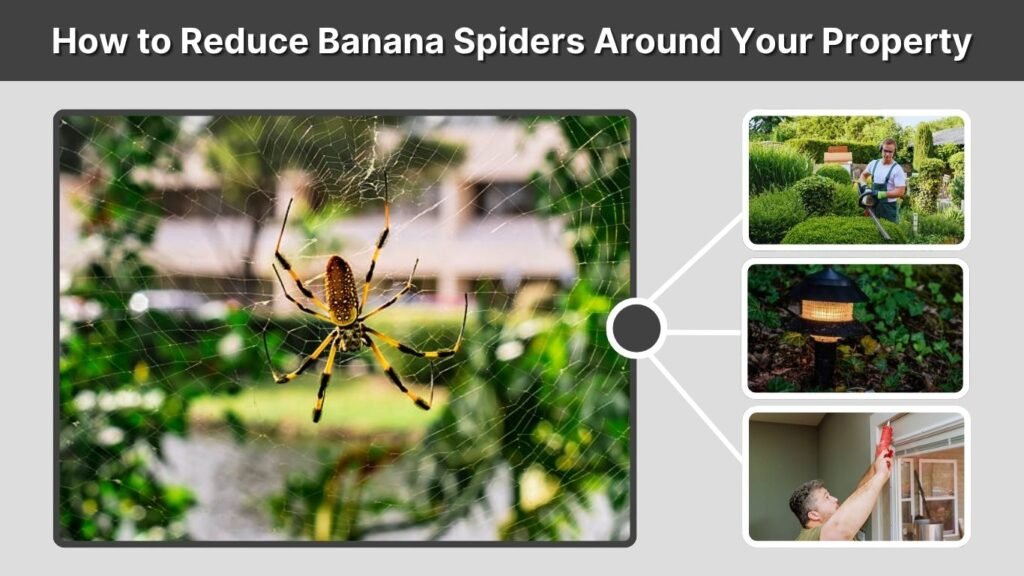
If you’d rather have fewer webs around your home:
- Trim dense shrubs.
- Remove old webs regularly.
- Reduce outdoor lighting that attracts insects.
- Keep vegetation away from entryways.
- Seal gaps around doors and windows.
Because they help control insect populations, many homeowners choose to leave them alone unless webs become inconvenient.
FAQs
Are banana spiders common in Florida?
Yes. Banana spiders are widespread throughout Florida and are especially common in wooded areas, gardens, parks, and suburban landscapes. They are most frequently seen from late summer through fall when adult females build large, highly visible webs.
Can a banana spider bite you?
Yes, but bites are uncommon. Banana spiders are shy and usually bite only if trapped or handled. Their bites typically cause mild pain, redness, and swelling that resolve within a short time.
Do banana spiders come inside houses?
Occasionally, but they prefer outdoor habitats where flying insects are plentiful. Most banana spiders found indoors entered by accident and do not establish themselves inside homes.
Do banana spiders lay eggs in humans?
No. This is a long-standing internet myth. Banana spiders lay their eggs inside silk egg sacs attached to plants or other outdoor surfaces, never inside people or animals.
Should you kill banana spiders?
In most cases, no. Banana spiders are beneficial predators that help reduce mosquitoes, flies, wasps, and other insect pests. If a web is in an inconvenient location, relocating the spider outdoors is usually the best option.
