
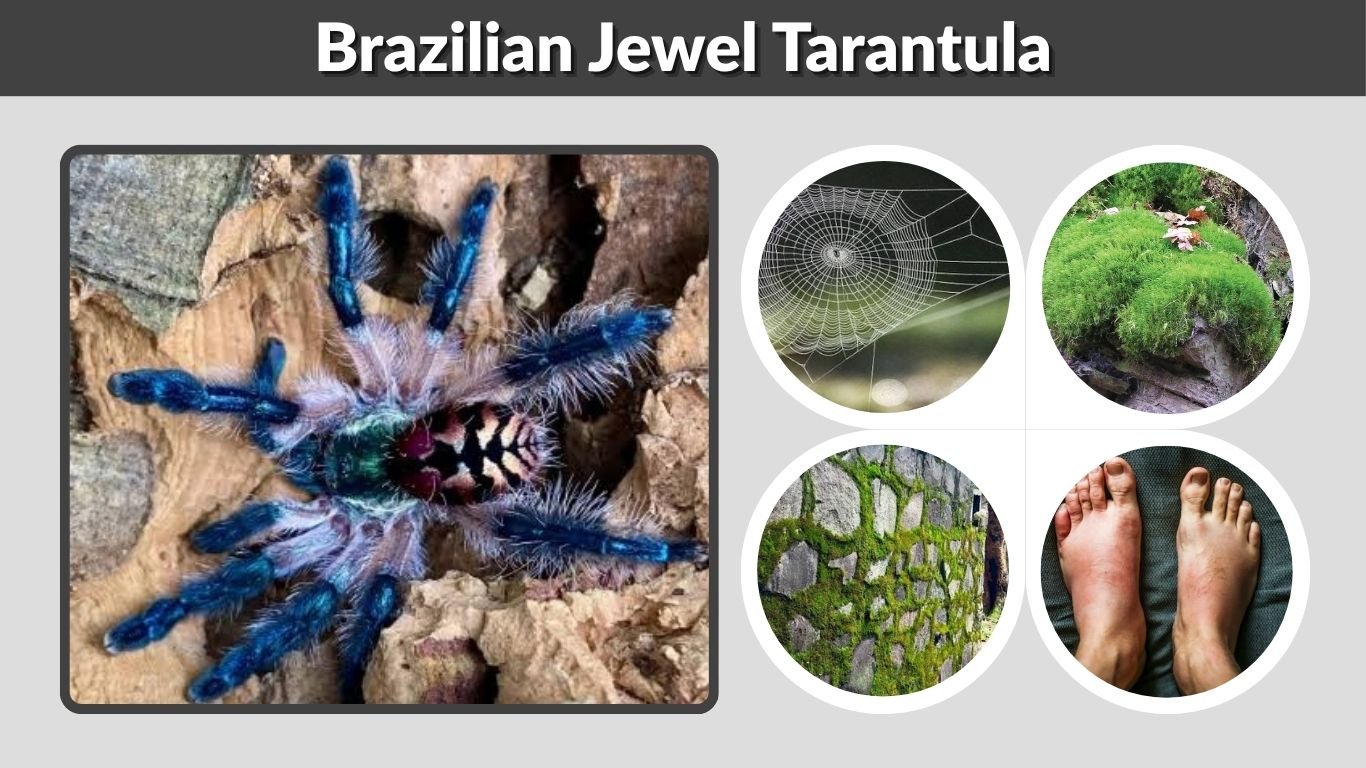
The Brazilian Jewel Tarantula (Typhochlaena seladonia) is a tiny, brilliantly colored arboreal tarantula native to Brazil. Its metallic blue-green legs, patterned abdomen, secretive behavior, and unusual trapdoor retreat make it highly desirable among experienced keepers. Despite its beauty, this species is not an ideal beginner pet. It requires careful ventilation, controlled moisture, suitable bark, tiny feeder insects, and minimal disturbance. Buyers should obtain only documented captive-bred specimens because wild collection and export raise serious legal and conservation concerns.
What Is a Brazilian Jewel Tarantula?
The Brazilian Jewel Tarantula is an accepted species in the family Theraphosidae. The World Spider Catalog lists Typhochlaena seladonia as the type species of its genus and records its distribution in Brazil. It was originally described by C. L. Koch in 1841.
Unlike most familiar terrestrial tarantulas, this species lives above the ground and constructs a concealed retreat on tree bark.
Identification
A Brazilian Jewel Tarantula can be recognized by its:
- Metallic blue or blue-green legs
- Iridescent green carapace
- Dark abdomen with pink, red, cream, or golden markings
- Compact body and relatively short legs
- Dense covering of fine hairs
- Small adult size
- Bark-covered silken trapdoor
Its exact colors can vary with age, sex, lighting, and the time since its last molt. Members of Typhochlaena are unusual because they remain colorful as adults rather than losing most of their juvenile coloration.
Brazilian Jewel Tarantula Size
This is one of the smallest tarantulas commonly discussed in the exotic-pet hobby. Adults generally reach approximately 2–2.5 inches, or 5–6.5 centimetres, in diagonal leg span. Scientific reporting describes members of the genus as exceptionally small arboreal tarantulas, with bodies measuring only a few centimetres.
| Feature | Typical information |
| Scientific name | Typhochlaena seladonia |
| Adult leg span | About 2–2.5 inches |
| Lifestyle | Arboreal trapdoor builder |
| Native range | Brazil |
| Diet | Small live invertebrates |
| Experience level | Intermediate to advanced |
Habitat and Trapdoor Behavior
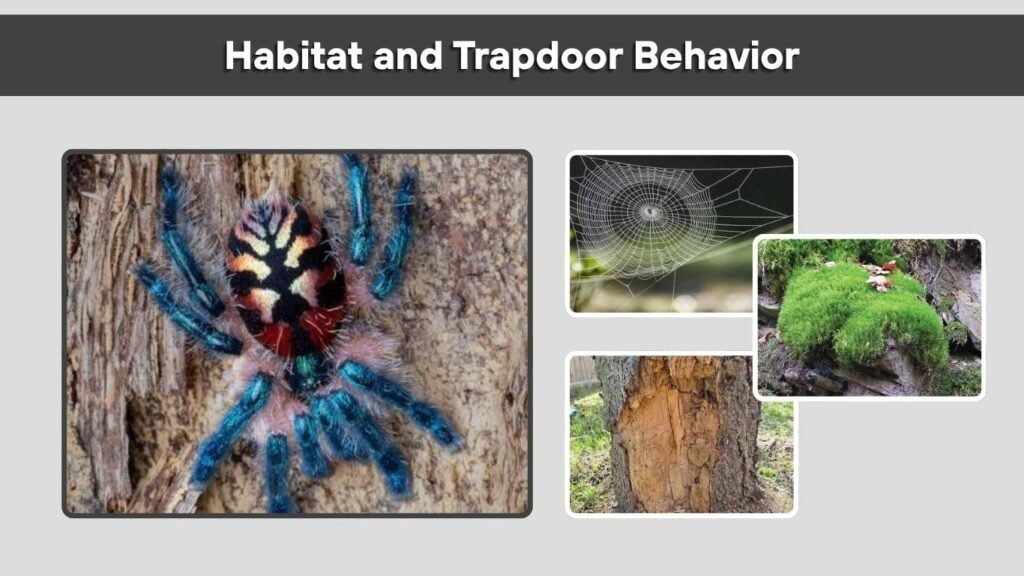
Brazilian Jewel Tarantulas inhabit humid forest environments in Brazil. Rather than digging deep into soil, they locate cracks, depressions, and loose areas of tree bark.
How the Trapdoor Works
The spider combines silk with bark fragments, moss, substrate, and other material to create a hidden chamber. It covers the entrance with a camouflaged trapdoor that may be almost impossible to detect.
The tarantula remains inside much of the time and waits for vibrations produced by nearby prey. It can rush from the retreat, capture the prey, and quickly disappear again. Scientific references describe Typhochlaena as having a highly specialized arboreal trapdoor lifestyle.
Because of this secretive behavior, owners may see their spider only occasionally. A closed retreat does not necessarily mean the tarantula is sick; it may be resting, molting, or avoiding disturbance.
Brazilian Jewel Tarantula Care
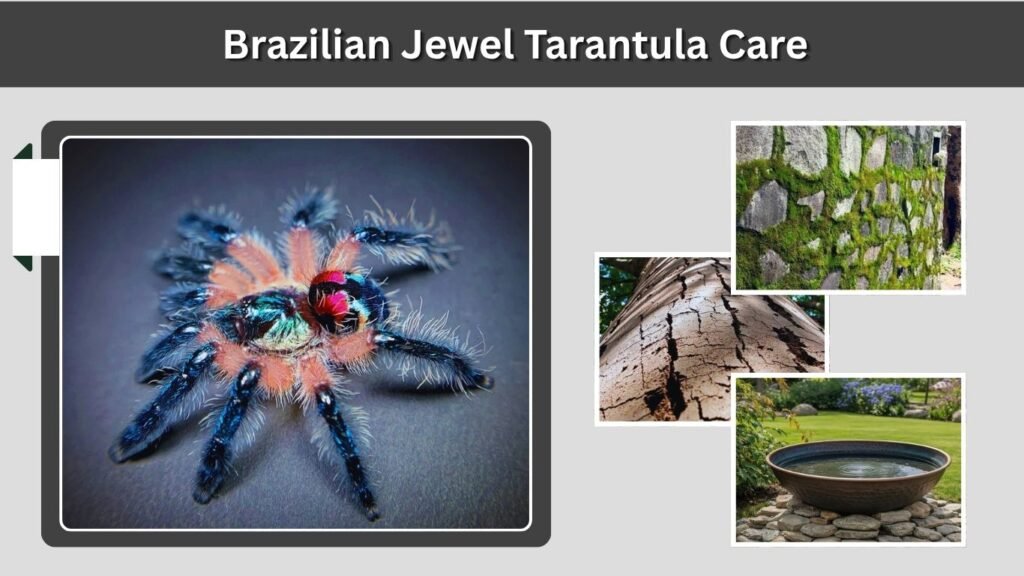
This species is delicate, expensive, and highly specialized. Its small size also makes escape, dehydration, and feeding mistakes more likely. Husbandry recommendations are based largely on experienced captive keepers rather than a single formal scientific standard.
Enclosure Setup
Use a secure, vertically oriented enclosure that is appropriate for the spider’s current size. A tiny sling should not be placed in a large adult enclosure because locating prey and controlling moisture will be difficult.
Provide:
- Strong cross-ventilation
- A vertical or curved piece of cork bark
- A prepared crack or depression in the bark
- Moss, leaf fragments, and loose substrate for construction
- A small amount of moisture-retaining substrate
- A secure lid with no large ventilation gaps
- A shallow water dish when space permits
The enclosure should provide climbing and retreat-building opportunities without excessive open height. Although the species is arboreal, a serious fall can still rupture its abdomen.
Cork bark is particularly important because it gives the spider a suitable surface on which to build its characteristic retreat. Captive-care guidance emphasizes vertical bark, slightly moist substrate, available drinking water, and strong airflow.
Temperature and Moisture
Normal warm indoor conditions are generally suitable, with experienced keepers often maintaining approximately 21–27°C. Avoid strong direct sunlight, heating rocks, and uncontrolled heat sources.
The enclosure should not be allowed to become completely dry for extended periods, but constantly wet conditions are equally dangerous. Stagnant humidity can encourage mold, mites, and poor air quality. Maintain a slightly moist section, provide water, and allow ventilation to move air through the enclosure.
Feeding
Brazilian Jewel Tarantulas eat small invertebrates, including:
- Tiny crickets
- Small roach nymphs
- Flightless fruit flies
- Small mealworm pieces
- Other appropriately sized feeder insects
Prey should usually be no larger than the tarantula’s body. Very small slings may need pre-killed prey placed near their retreat.
Remove uneaten insects, particularly when the spider is preparing to molt. A live cricket can injure a soft and defenseless tarantula during molting.
Feed according to body condition rather than forcing a rigid schedule. A healthy abdomen should appear rounded but not excessively swollen.
Lifespan and Growth
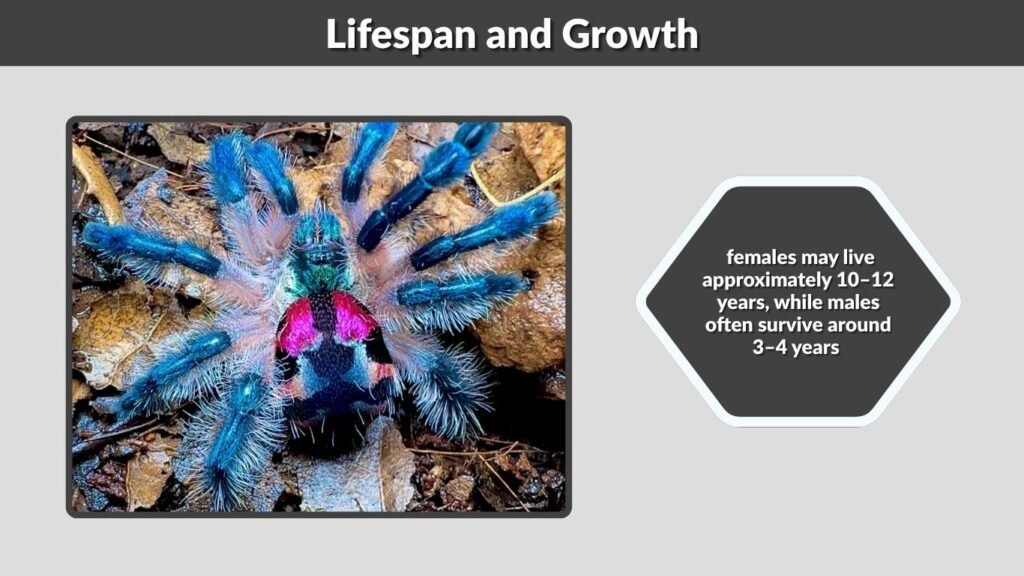
Exact longevity data are limited. Captive-husbandry estimates commonly suggest that females may live approximately 10–12 years, while males often survive around 3–4 years because mature males generally have much shorter adult lives.
Growth is affected by temperature, feeding, genetics, and care. Females usually grow larger and retain a fuller body, while mature males become slimmer and develop reproductive structures.
Male vs. Female
Sex cannot be determined reliably from color alone. Accurate identification usually requires examination of a shed exoskeleton or the features of a mature male.
Typical differences include:
| Female | Male |
| Usually heavier-bodied | Usually slimmer |
| Longer potential lifespan | Shorter lifespan after maturity |
| Remains within established retreat | May wander while searching for a female |
| Can produce an egg sac | Develops mature male reproductive structures |
Listings claiming to sell a confirmed female should explain how the specimen was sexed.
Temperament and Handling
Brazilian Jewel Tarantulas are generally secretive and more likely to retreat than remain exposed. However, any tarantula may bite when trapped, grabbed, or repeatedly disturbed.
Handling is not recommended because the spider is:
- Tiny and easy to lose
- Capable of sudden movement
- Vulnerable to fatal falls
- Venomous
- Easily stressed by handling
This is an observation pet rather than an animal that benefits from physical interaction.
Is the Brazilian Jewel Tarantula Venomous?
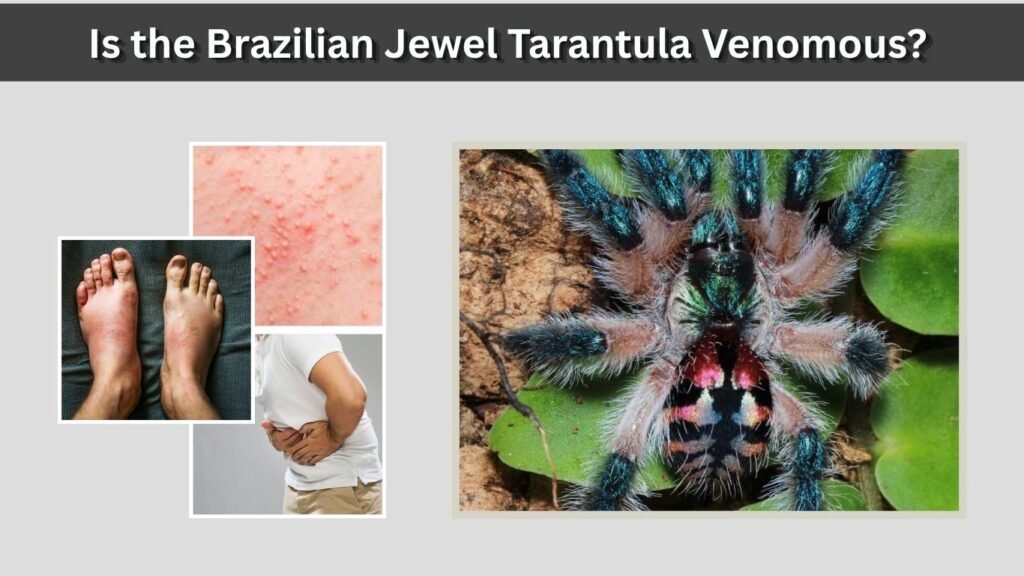
Yes. Like other tarantulas, it uses venom to subdue prey. It is venomous rather than poisonous because venom is delivered through the fangs.
Species-specific medical information is limited, so a bite should not be described as harmless. Expected effects may include puncture pain, redness, swelling, or irritation. Wash a bite with soap and water and seek medical care for severe pain, breathing difficulty, widespread swelling, vomiting, muscle symptoms, or other unusual reactions.
Brazilian Jewel Tarantula Price and Availability
Brazilian Jewel Tarantulas are often expensive because they are small, slow to establish, challenging to breed, and highly sought after. Price varies considerably according to:
- Size and age
- Confirmed sex
- Captive-breeding history
- Seller reputation
- Local availability
- Country and import rules
- Live-arrival guarantees
Spiderlings are generally less expensive than confirmed adult females, but they are also more fragile and cannot be sexed reliably.
Buying One Safely
Purchase only from an established breeder who can provide clear captive-bred history. Avoid sellers who cannot explain the specimen’s origin or who advertise recently imported wild-caught individuals.
The species’ restricted Brazilian range and concerns surrounding illegal wildlife export make documentation especially important. Captive breeding helps reduce pressure on wild populations, while regulations governing ownership, transport, and sale vary by country and region.
FAQs
Is a Brazilian Jewel Tarantula a good pet?
It can be a fascinating display animal for an experienced keeper. However, its small size, specialized trapdoor behavior, moisture sensitivity, rarity, and high price make it less suitable for beginners.
How big does a Brazilian Jewel Tarantula get?
A full-grown specimen commonly reaches around 2–2.5 inches in diagonal leg span. It is much smaller than species such as the Goliath birdeater, Brazilian black, or Mexican red knee.
Can Brazilian Jewel Tarantulas make webs?
Yes. They use silk extensively, but their most distinctive structure is a camouflaged trapdoor retreat made against tree bark. The spider combines silk with surrounding material to conceal the entrance.
How many eyes does a Brazilian Jewel Tarantula have?
Like most spiders, it has eight eyes arranged in a compact group. However, tarantulas rely heavily on vibrations and sensory hairs rather than sharp eyesight to detect prey and danger.
Is the Brazilian Jewel Tarantula poisonous to humans?
It is venomous, not poisonous. It can inject venom through its fangs, but touching the spider does not poison a person. Handling should still be avoided because of possible bites, sudden movement, and the risk of injuring the spider.
