
The metallic pink toe tarantula is a striking arboreal spider with a dark, iridescent body and contrasting pink or peach-colored toe tips. It is commonly sold under names such as Avicularia metallica, Avicularia sp. “Metallica,” or metallic pinktoe. This tarantula is usually calm but can move or jump surprisingly quickly. Successful care depends on a tall enclosure, strong cross-ventilation, climbing surfaces, suitable feeders and careful moisture management.
What Is a Metallic Pink Toe Tarantula?
The metallic pink toe is a New World arboreal tarantula associated with the genus Avicularia. It spends most of its time above ground, where it creates a silken retreat around bark, branches or artificial foliage.
However, its scientific name requires clarification. The World Spider Catalog currently lists the historical name Avicularia metallica as a nomen dubium, meaning the original name cannot be reliably connected to a clearly identifiable species. The specimen used for its original description could not be located. As a result, spiders sold under this name may be labeled Avicularia sp. “Metallica” or treated as a form within the broader Avicularia avicularia complex.
| Quick fact | Description |
| Common name | Metallic pink toe tarantula |
| Common trade labels | Avicularia metallica, Avicularia sp. “Metallica” |
| Lifestyle | Arboreal and web-building |
| Adult leg span | Commonly around 4.5–5.5 inches |
| Temperament | Usually calm but fast and jumpy |
| Female lifespan | Often approximately 10–12 years |
| Male lifespan | Usually much shorter, often 2–4 years |
| Experience level | Beginner to intermediate arboreal keeper |
Because the trade name can represent spiders of uncertain identity, size, temperament and coloration may differ slightly between specimens and breeding lines.
Appearance and Identification
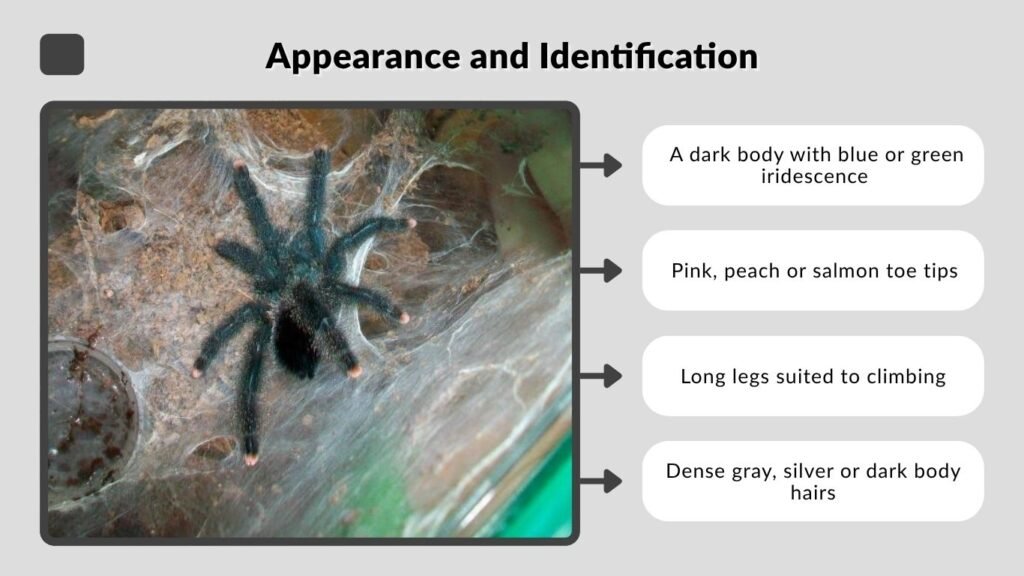
Adult metallic pink toes usually have dark blue, charcoal, black or blue-green bodies with a reflective metallic sheen. The ends of their legs are pale pink, peach or salmon-colored. Some individuals also develop silvery or whitish hairs that make their appearance lighter than that of a normal pink toe.
Identification Features
A metallic pink toe tarantula commonly has:
- A dark body with blue or green iridescence
- Pink, peach or salmon toe tips
- Long legs suited to climbing
- Dense gray, silver or dark body hairs
- Large adhesive pads on the feet
- A relatively slender arboreal build
- A silk retreat constructed above the substrate
Young spiderlings may look different from adults. Their colors can change substantially through successive molts, and the metallic appearance often becomes more noticeable as they mature.
Metallic Pink Toe vs. Normal Pink Toe
The normal pink toe, Avicularia avicularia, also has a dark body and pink feet. The metallic form is generally marketed as having stronger blue-green iridescence and more noticeable pale or silvery hairs.
These visual differences are not always reliable because lighting, age, sex and individual variation affect coloration. The uncertain taxonomic status also means a seller’s label should not be treated as a guaranteed scientific identification.
Metallic Pink Toe Tarantula Size
A full-grown metallic pink toe commonly reaches approximately 4.5–5.5 inches in diagonal leg span. Females are usually heavier-bodied, while mature males tend to have longer legs and slimmer abdomens. Hobby care information commonly places adults near five inches, which is similar to the size reported for established pink-toed tarantulas.
Growth speed depends on temperature, feeding frequency, sex and individual genetics. Spiderlings may molt several times during their first year, while mature females molt much less frequently.
Metallic Pink Toe Tarantula Care
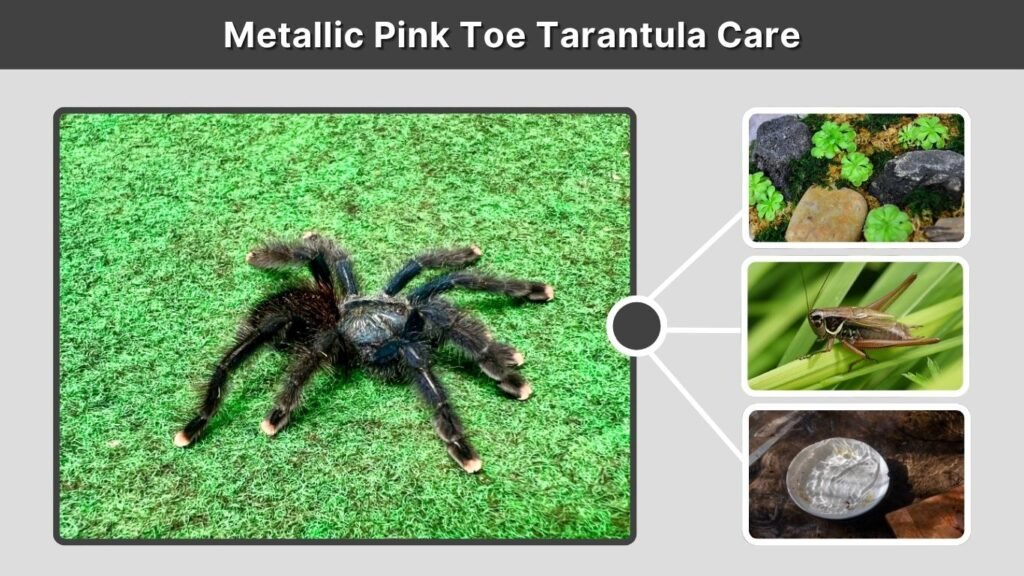
This species is sometimes recommended as an introduction to arboreal tarantulas. However, it is less forgiving of stale, excessively wet enclosures than many hardy terrestrial species.
Enclosure Setup
Use a vertically oriented, escape-proof enclosure with more height than floor space. A side- or front-opening design is helpful because metallic pink toes frequently build their web retreats near the top. Opening a top lid can damage the web or disturb the spider.
The enclosure should contain:
- A vertical slab or curved piece of cork bark
- Artificial or pesticide-free plants
- Branches that provide webbing anchor points
- A shallow water dish
- Several inches of suitable substrate
- Ventilation holes on multiple sides
Leave enough open space for the spider to molt without becoming trapped between decorations.
Ventilation and Moisture
Cross-ventilation is one of the most important requirements. Ventilation holes should allow air to move through the enclosure rather than entering only from the top. Constantly wet substrate combined with stagnant air can encourage mold and create unhealthy conditions.
Keep most of the substrate relatively dry while occasionally adding a little water to one corner. Maintain a clean water dish at all times. Occasional light droplets on the side or webbing may provide another drinking opportunity, but the enclosure should never remain swampy or saturated.
Temperature
A stable room temperature of approximately 72–80°F is suitable for most captive specimens. Avoid direct sunlight, heating lamps and temperatures above approximately 86°F.
When additional heat is necessary, warm the room rather than placing an unregulated heating pad directly beneath the enclosure. Arboreal tarantulas should always be able to move away from a warmer area.
Diet and Feeding
Metallic pink toe tarantulas eat live invertebrates, including:
- Crickets
- Dubia roaches
- Red runner roaches
- Mealworms
- Superworms
- Locusts
- Other appropriately sized captive-bred feeders
Offer prey smaller than the tarantula’s body. Spiderlings can receive small meals every four to seven days, while juveniles and adults may eat once every seven to fourteen days. Adjust feeding according to the abdomen’s condition rather than following a rigid schedule.
Remove uneaten prey within approximately 24 hours, especially when the tarantula is preparing to molt. Tarantulas are specialized predators and can survive periods without food when they have access to water.
Molting Behavior

A metallic pink toe must shed its old exoskeleton to grow. Before molting, it may refuse food, move less frequently, darken in color or seal itself inside its web retreat.
The spider may molt on its back, side or within a vertical web tunnel. Do not turn it over or break open the retreat.
During a molt:
- Remove all live feeder insects.
- Do not touch or move the tarantula.
- Keep the water dish available.
- Avoid spraying water directly on the spider.
- Wait until the fangs have hardened before feeding.
A large juvenile or adult should normally be given at least seven to ten days after molting before receiving food. Freshly molted tarantulas are soft and can be injured or killed by unattended prey.
Temperament and Handling
Metallic pink toes are generally considered less defensive than many Old World arboreal tarantulas. They usually prefer retreating, climbing or jumping away rather than confronting a disturbance.
Nevertheless, they can accelerate suddenly and may leap from a hand or enclosure. Handling is not recommended because tarantulas do not benefit from it, and even a short fall can cause fatal internal damage. The British Tarantula Society recommends a no-handling approach and advises moving a tarantula with a secure catch container instead.
Defensive Behaviors
When frightened, a metallic pink toe may:
- Run or jump away
- Raise its front legs
- Release irritating defensive hairs
- Direct feces toward a disturbance
- Bite as a final defense
The defensive hairs of Avicularia species are generally transferred through direct contact rather than being kicked into the air in the same manner as many terrestrial New World tarantulas.
Is a Metallic Pink Toe Tarantula Bite Dangerous?
All tarantulas have venom and can bite. A metallic pink toe bite is not generally considered medically significant for a healthy adult, but it may cause localized pain, swelling, redness or aching.
Individual reactions vary, and the effects of this particular trade form have not been thoroughly studied. Seek medical attention for breathing difficulty, spreading swelling, severe pain or other concerning symptoms. Avoid handling the spider to reduce both bite risk and the possibility of injuring it.
Metallic Pink Toe Female vs. Male
Females commonly have broader abdomens, heavier bodies and substantially longer lifespans. Mature males are usually slimmer and leggier. They may develop enlarged emboli at the ends of their pedipalps and mating hooks on the first pair of legs.
Females are generally preferred by collectors seeking a long-term display animal. A confirmed female usually costs more than an unsexed spiderling or mature male because she may live for approximately a decade or longer. Pink-toed tarantula females are reported to reach around 10–12 years in human care.
Buying a Metallic Pink Toe Tarantula
When searching for a metallic pink toe tarantula for sale, remember that the trade name may not represent a formally recognized species. Ask the seller how the spider is labeled in their breeding records.
Before purchasing, confirm:
- Whether it is captive-bred
- Its approximate diagonal leg span
- Whether the sex is confirmed
- Its feeding and molting history
- The breeder’s taxonomic label
- Whether the spider has missing or damaged legs
- Local rules governing exotic invertebrates
Choose a responsive specimen with a normally rounded abdomen and no visible fluid leaking from its body. Avoid sellers who cannot explain the spider’s history or who guarantee that the disputed name Avicularia metallica represents a scientifically confirmed species.
FAQs
Is the metallic pink toe suitable for beginners?
It can be suitable for a careful beginner who understands arboreal enclosures. Its speed, jumping ability and need for excellent ventilation make it more demanding than many slow-moving terrestrial beginner species.
How large does a metallic pink toe get?
Most hobby specimens reach approximately 4.5–5.5 inches in diagonal leg span. The final size varies according to sex, genetics and the identity of the spider sold under the trade name.
How long does a metallic pink toe live?
Females may live approximately 10–12 years with proper care. Males mature faster and often survive only two to four years, although individual lifespans vary.
Why is my metallic pink toe not eating?
Food refusal commonly occurs before a molt. Stress, excessive feeding, unsuitable conditions or a mature male’s natural behavior can also reduce appetite. Remove uneaten prey and ensure clean water remains available.
Is Avicularia metallica a valid scientific name?
The historical name is currently listed as a nomen dubium by the World Spider Catalog. In the pet trade, “metallic pink toe” remains a useful common name, but it does not guarantee a scientifically confirmed species identity.
