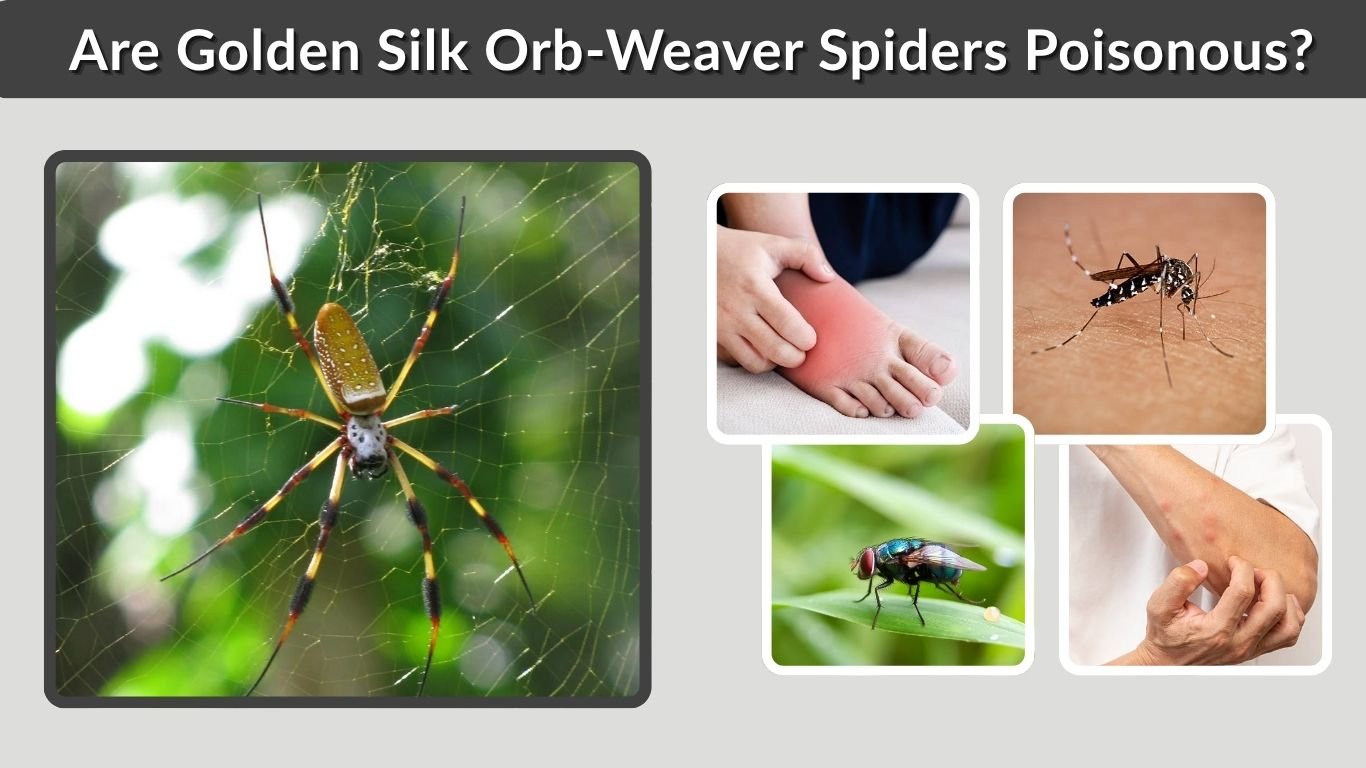
The golden silk orb-weaver is a large, brightly colored spider that can look intimidating when it rests in the center of its enormous web. However, its appearance is far more frightening than its bite. Golden silk orb-weavers possess venom for subduing insects, but they are not considered medically dangerous to healthy people. Bites are uncommon because these spiders are shy and generally try to escape rather than attack. When a bite does occur, it usually causes temporary pain, redness, or mild swelling.
Are Golden Silk Orb-Weaver Spiders Poisonous?
Golden silk orb-weaver spiders are not poisonous, but they are technically venomous. The distinction is important:
- A poisonous animal causes harm when it is eaten or touched.
- A venomous animal injects venom through a bite or sting.
Like almost all spiders, golden silk orb-weavers use venom to immobilize their prey. However, their venom is not considered seriously harmful to humans. Mississippi State University Extension describes the spiders as nonaggressive and reports that their bites are not seriously venomous, although they may be painful.
| Question | Answer |
| Are they poisonous? | No |
| Do they have venom? | Yes |
| Are they aggressive? | No |
| Can they bite humans? | Yes, but bites are uncommon |
| Is the bite usually dangerous? | No |
| Should you handle one? | No |
Can a Golden Silk Orb-Weaver Bite You?
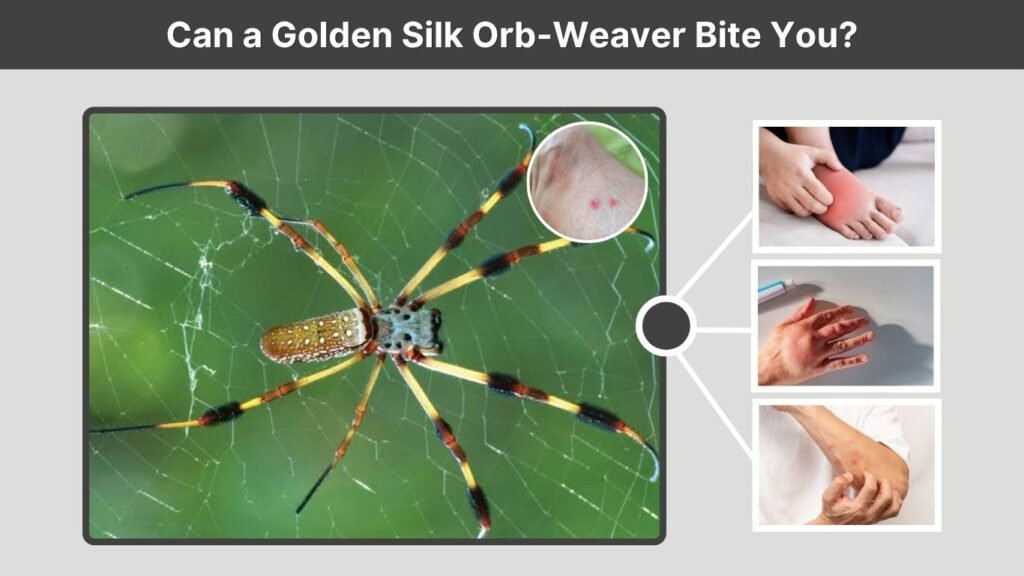
Golden silk orb-weavers can bite, but they rarely do so without a reason. Most bites are associated with someone grabbing, squeezing, or accidentally trapping the spider against their skin.
When Might It Bite?
A golden silk orb-weaver is most likely to bite when it cannot escape. Situations that could lead to a defensive bite include:
- Picking up the spider with bare hands
- Pressing it against the skin
- Disturbing an egg sac while the female is nearby
- Reaching blindly into vegetation containing its web
- Attempting to remove it manually
The spider normally remains still, runs away, drops from its web, or hides when disturbed. Orb-weavers are generally docile and bite only when they feel threatened and trapped.
What Does the Bite Feel Like?
A bite may cause immediate discomfort similar to a pinprick, bee sting, or wasp sting. Possible symptoms include:
- Localized pain
- Redness around the bite
- Mild swelling
- Itching
- Temporary tenderness
- Two small puncture marks
Symptoms normally remain around the bite site rather than affecting the entire body. The bite can be uncomfortable, but serious medical complications are not expected in most healthy adults.
How Dangerous Is the Venom?
The venom is effective against insects but relatively weak against humans. Golden silk orb-weavers are not grouped with medically important spiders such as black widows or brown recluses.
Their size does not indicate venom strength. A mature female may have a leg span of several inches, but the spider’s large appearance does not make its venom especially dangerous. Extension specialists describe golden silk spider bites as painful in some cases but usually not serious.
What Should You Do After a Bite?
Most suspected golden silk orb-weaver bites can be managed with basic first aid. However, symptoms should be monitored because people can respond differently to bites.
- Wash the area: Clean the bite gently with mild soap and water.
- Apply a cold compress: Place a cool, damp cloth or wrapped ice pack over the area for 10–20 minutes.
- Elevate the area: If the bite is on an arm or leg, raising it may help control swelling.
- Avoid scratching: Scratching can damage the skin and increase the risk of infection.
- Monitor the symptoms: Watch for spreading redness, worsening pain or unusual changes.
These steps are commonly recommended for minor spider and insect bites.
When to Seek Medical Care
Get medical assistance promptly when:
- Pain or swelling continues to worsen
- Redness spreads far beyond the bite
- Red streaks appear around the area
- The wound becomes hot or drains fluid
- You experience dizziness, vomiting or severe weakness
- You have difficulty breathing or swallowing
- The spider was not positively identified
- The person bitten is a small child or has a serious allergy
Difficulty breathing, facial swelling or trouble swallowing may indicate a severe allergic reaction and should be treated as an emergency.
How to Identify a Golden Silk Orb-Weaver
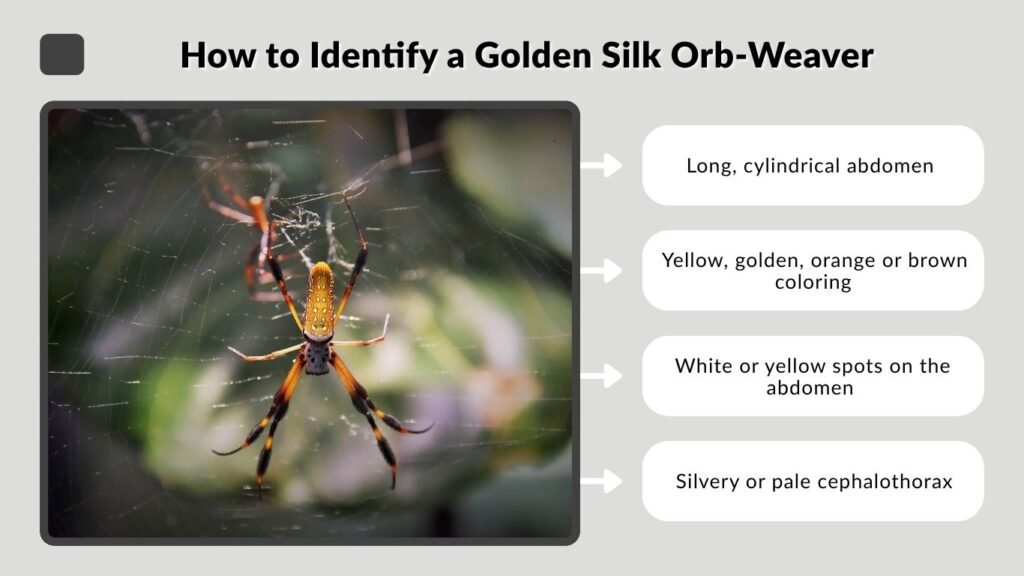
Golden silk orb-weavers are also called golden silk spiders or banana spiders. Their current scientific name is Trichonephila clavipes, although older references may use Nephila clavipes.
Female Identification
Adult females are dramatically larger and more colorful than males. Look for these features:
- Long, cylindrical abdomen
- Yellow, golden, orange or brown coloring
- White or yellow spots on the abdomen
- Silvery or pale cephalothorax
- Very long orange, yellow and dark-banded legs
- Dense black hair tufts on several leg joints
- Large golden-colored orb web
The black brush-like leg tufts are among the easiest characteristics for separating this species from yellow garden spiders and other large orb-weavers.
Male Identification
Males are much smaller than females and may be overlooked. They are typically slender and reddish-brown. One or more males may live near the edge of a female’s web, waiting for an opportunity to mate.
The dramatic size difference sometimes leads people to believe the males are young spiders or an entirely different species.
Are Their Golden Webs Dangerous?
The web is not poisonous and does not contain venom. Its golden color comes from pigments in the silk, particularly when sunlight passes through it.
Golden silk orb-weavers construct large webs between trees, shrubs, fences and other supports. The silk is exceptionally strong and capable of holding large flying insects. Webs may stretch across paths, which can surprise hikers or gardeners, but walking into one does not expose a person to venom.
The spider may shake its web, run to the edge or drop toward the ground when disturbed. These defensive movements are intended to discourage threats rather than prepare an attack.
What Do Golden Silk Orb-Weavers Eat?
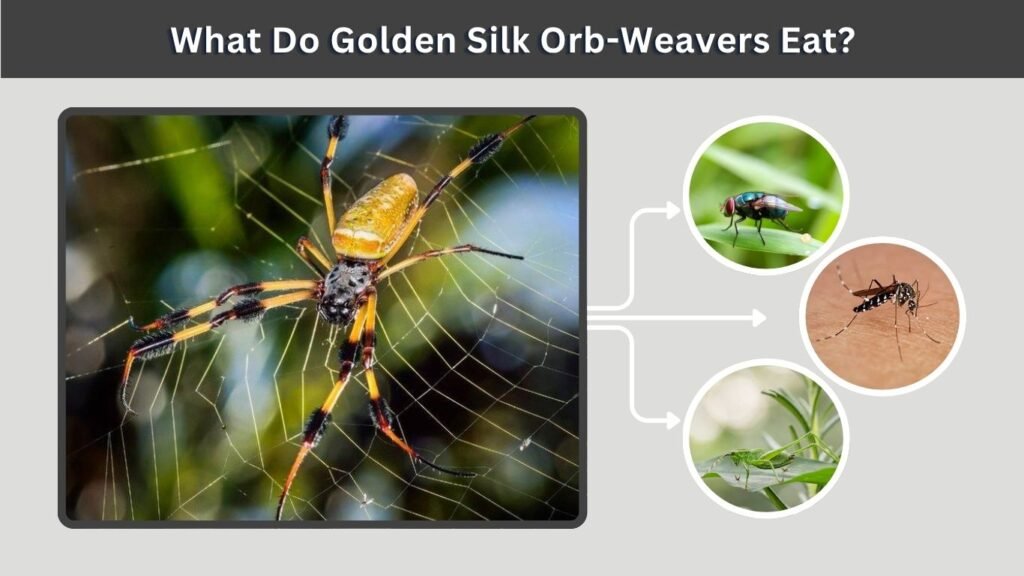
Golden silk orb-weavers are beneficial predators that help control numerous insects. Their webs may capture:
- Flies
- Mosquitoes
- Moths
- Beetles
- Grasshoppers
- Wasps
- Bees
- Cicadas
Large webs can occasionally trap small vertebrates, but insects make up the spider’s normal diet. Mississippi State University Extension classifies the golden silk orb-weaver as a beneficial predator rather than a pest.
They do not feed on people, pets, plants, wood or household materials. Their primary interest is catching suitable prey from the web.
Should You Remove Golden Silk Orb-Weavers?
There is usually no reason to kill a golden silk orb-weaver living in a quiet part of the yard. It helps reduce insect populations and poses little risk when left undisturbed.
Removal may be appropriate when the web blocks:
- A frequently used doorway
- A walkway or garden path
- Children’s play equipment
- An area used by pets
- A workspace where accidental contact is likely
Use a long broom or stick to gently break the outer web while standing away from the spider. It will often relocate and rebuild elsewhere. Wear gloves and closed shoes, and never attempt to pick up the spider with your hands.
FAQs
Is a golden silk orb-weaver bite fatal?
A golden silk orb-weaver bite is not considered fatal to humans. Its venom is designed for insects and usually causes only localized pain, redness or swelling. Severe reactions are unusual, but anyone experiencing breathing difficulties, facial swelling or rapidly worsening symptoms should obtain emergency medical help.
Are golden silk orb-weavers aggressive?
Golden silk orb-weavers are not aggressive toward people. They normally remain in their webs or attempt to escape when disturbed. A defensive bite is possible when someone grabs, squeezes or traps the spider, which is why handling it with bare hands is not recommended.
Are golden silk orb-weavers dangerous to children?
They are not normally dangerous to children, but children should be taught not to touch the spider or disturb its web. A child’s smaller body and sensitive skin may produce a stronger local reaction, so parents should monitor any suspected bite and contact a medical professional when concerned.
Are golden silk orb-weavers dangerous to dogs or cats?
Golden silk orb-weavers are not considered a major threat to dogs or cats. Pets are unlikely to be bitten unless they trap or bite the spider. Contact a veterinarian if a pet develops significant facial swelling, excessive drooling, weakness, breathing problems or persistent pain after interacting with one.
Can you safely leave a golden silk orb-weaver in your yard?
Yes. A golden silk orb-weaver can usually be left alone when its web is away from doors and walkways. The spider catches mosquitoes, flies, moths and other insects. It generally remains in or near its web and has little interest in approaching people.
