
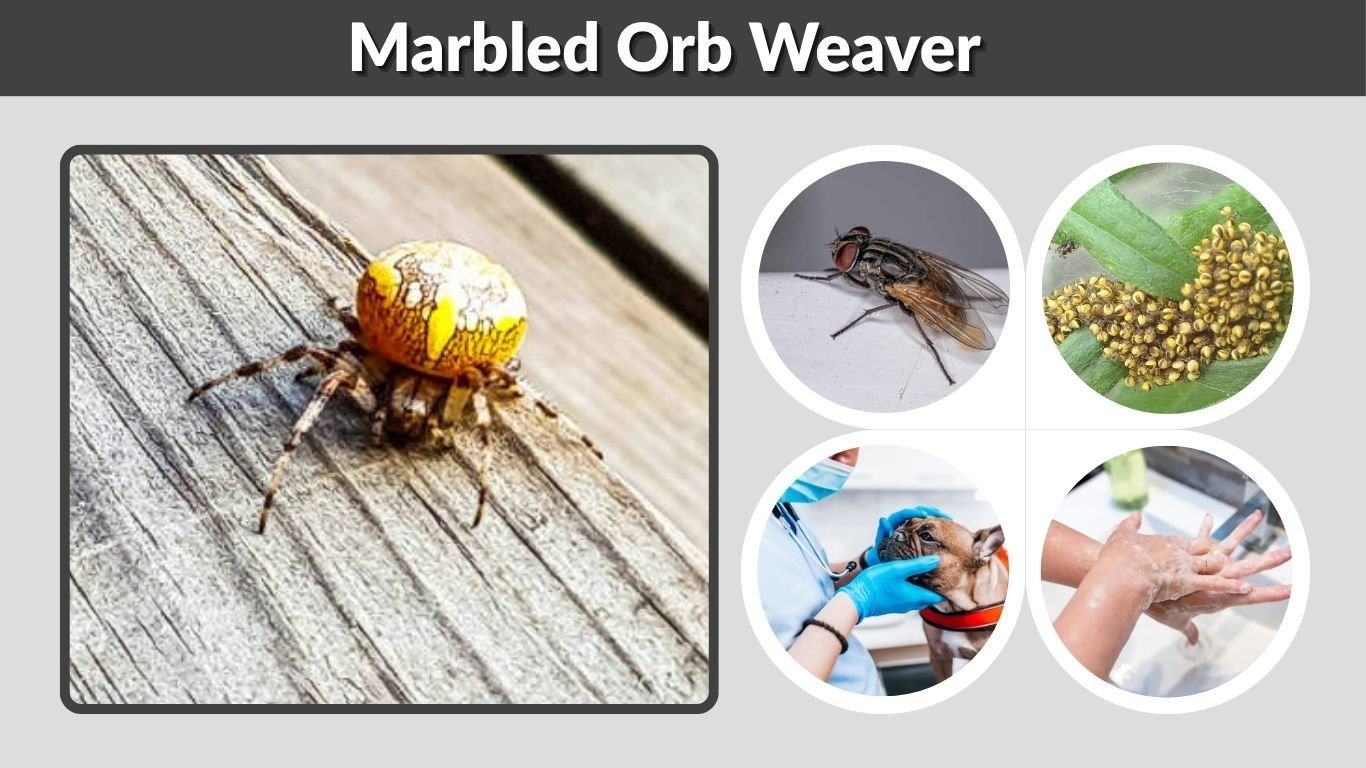
The marbled orb weaver is a colorful woodland spider best known for its round abdomen and orange, yellow, white, or brown marbled patterns. Scientifically named Araneus marmoreus, it is sometimes called the pumpkin spider because some females resemble tiny orange pumpkins. Despite its large abdomen and striking colors, this orb weaver is not considered dangerous to people. It spends much of its time near a circular web, capturing insects in forests, gardens, fields, and other vegetated habitats.
Marbled Orb Weaver Quick Facts
The marbled orb weaver belongs to the family Araneidae, whose members construct circular webs. Females are noticeably larger and more colorful than males, especially when mature and carrying eggs.
| Feature | Description |
| Scientific name | Araneus marmoreus |
| Other names | Pumpkin spider, Halloween spider |
| Family | Araneidae |
| Female size | Approximately 9–18 mm |
| Male size | Approximately 6–9 mm |
| Common colors | Orange, yellow, white, brown, red, and black |
| Habitat | Forests, woodland edges, fields, shrubs, and gardens |
| Diet | Small flying and jumping insects |
| Web type | Vertical, circular orb web |
| Human danger | Not medically significant |
The spider is especially noticeable from late summer through fall, when mature females reach their largest size and brightest coloration.
How to Identify a Marbled Orb Weaver
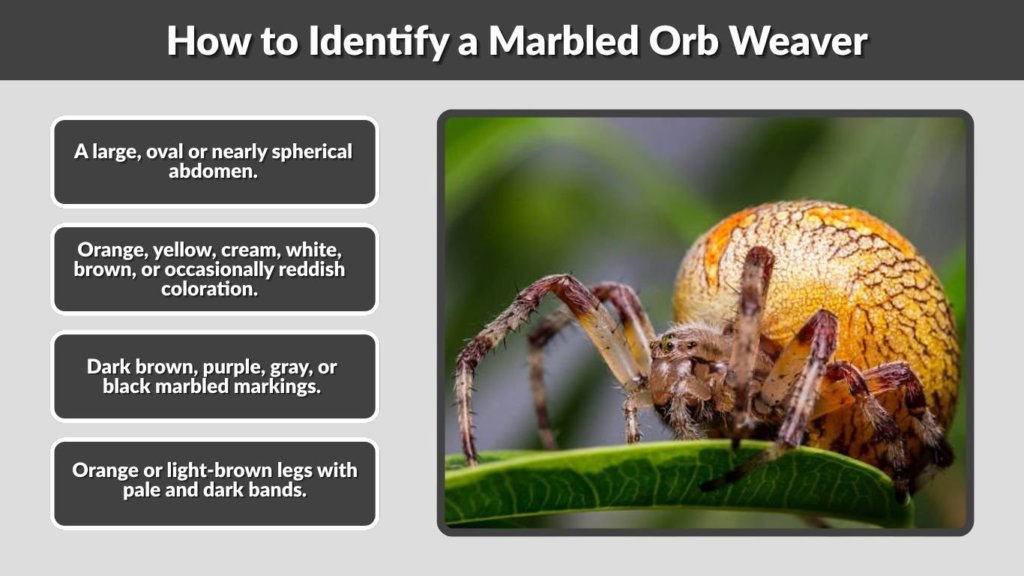
Color alone is not always enough for identification because this species has many natural color forms. Look at the spider’s rounded abdomen, marbled markings, banded legs, habitat, and web structure together.
Main Identification Features
- A large, oval or nearly spherical abdomen
- Orange, yellow, cream, white, brown, or occasionally reddish coloration
- Dark brown, purple, gray, or black marbled markings
- Orange or light-brown legs with pale and dark bands
- A dark area underneath the abdomen bordered by lighter markings
- A vertical, wheel-shaped web near shrubs, trees, or tall plants
- A silk-and-leaf retreat positioned near the web
Females may appear almost completely orange, while others are yellow with complicated dark patterns. Some individuals can be cream-colored, black and white, dark brown, or reddish.
Why Is It Called a Pumpkin Spider?
The nickname “pumpkin spider” usually refers to the bright orange color form. Its swollen abdomen, orange surface, and dark curved markings can make a mature female look like a miniature Halloween pumpkin. The nickname is descriptive rather than a separate species classification.
Orange, Yellow and Brown Color Forms
Orange marbled orb weavers attract the most attention, but yellow may be more common in some regions. White, cream, brown, red, and nearly black forms also occur. These differences generally represent normal variation within Araneus marmoreus, not separate species.
Male vs. Female Marbled Orb Weaver
Females are the large, round spiders most people encounter. Adult males have smaller, narrower abdomens and spend more time searching for females than sitting in large prey-catching webs.
| Characteristic | Female | Male |
| Body length | About 9–18 mm | About 6–9 mm |
| Abdomen | Large, oval, and swollen | Smaller and less rounded |
| Color | Often bright and strongly patterned | Usually less striking |
| Legs | Orange or brown with banding | Relatively long for body size |
| Main activity | Builds webs and produces egg sacs | Searches for receptive females |
Some state resources list females as reaching approximately three-fourths of an inch, while regional measurements vary slightly.
Is the Marbled Orb Weaver Poisonous?
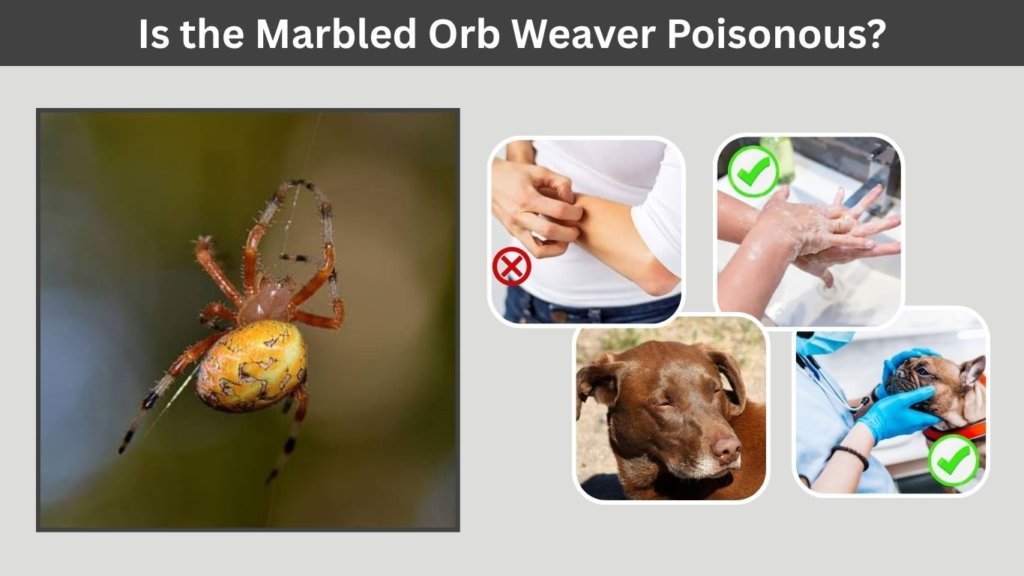
The marbled orb weaver is venomous rather than poisonous. It delivers venom through its fangs to immobilize insect prey. However, its venom is not considered medically significant to humans, and the spider is generally reluctant to bite.
Do Marbled Orb Weavers Bite?
Bites are uncommon because the spider normally retreats or remains still when approached. A bite is most likely when someone squeezes, traps, or deliberately handles the spider, particularly a female guarding an egg sac.
When a bite occurs, it is expected to cause no more than temporary localized discomfort in most people. Wash the area with soap and water and avoid scratching it. Obtain medical advice when symptoms are severe, spreading, or accompanied by breathing difficulty.
Are They Dangerous to Dogs or Cats?
Marbled orb weavers are not known as a serious danger to household pets. A curious dog or cat could potentially be bitten after pressing or biting the spider, but a medically significant reaction would be unusual. Contact a veterinarian if a pet develops facial swelling, repeated vomiting, breathing trouble, severe pain, or unusual weakness.
Marbled Orb Weaver Web
This spider constructs a vertical orb web made from supporting radial lines and a spiral of sticky capture silk. Webs are usually positioned across openings where flying insects are likely to pass, including spaces between shrubs, branches, weeds, and woodland plants.
Where Does the Spider Hide?
Unlike orb weavers that remain openly positioned at the web’s center all day, the marbled orb weaver often hides in a nearby retreat. It may fold leaves together with silk or shelter under foliage, moss, bark, or plant debris.
A signal thread connects the retreat to the web. When trapped prey shakes the web, vibrations travel along this line and alert the waiting spider. It then rushes onto the web to capture the insect.
When Does It Build Its Web?
Marbled orb weavers are primarily active at night. They may construct or repair their webs around evening and wait near the center after dark. During daylight, they often remain hidden in their retreat, although cold autumn mornings may leave large females exposed because low temperatures slow their movement.
What Does a Marbled Orb Weaver Eat?
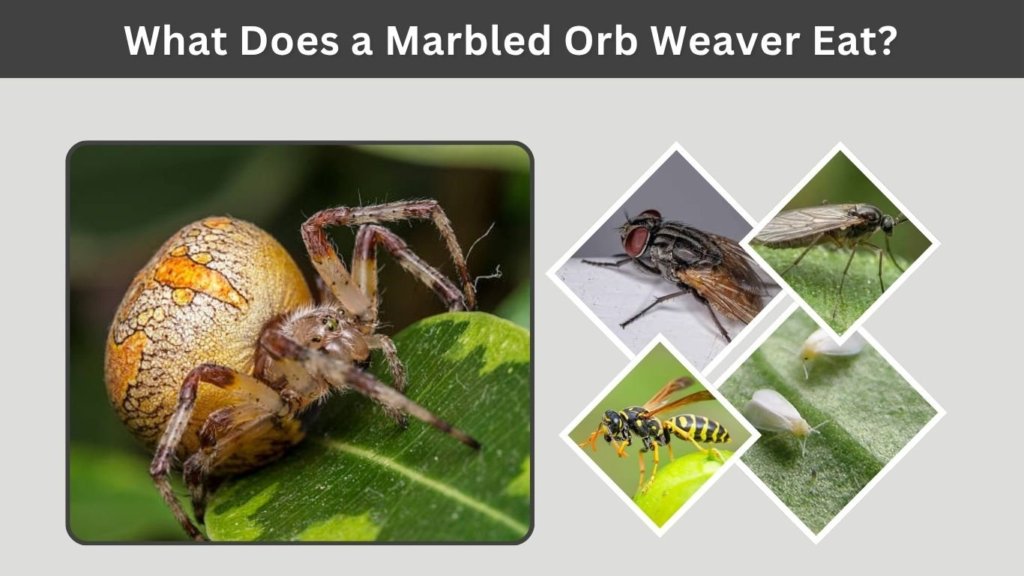
Marbled orb weavers feed on small insects caught in their sticky webs. Vibrations help the spider locate struggling prey before it approaches, bites, and wraps or consumes the insect.
Common prey can include:
- Flies
- Gnats
- Mosquito-sized insects
- Small moths
- Wasps
- Bees
- Leafhoppers
- Small grasshoppers and crickets
Research summarized by Animal Diversity Web indicates that much of their prey consists of relatively small insects, particularly flies, wasps, bees, grasshoppers, and related groups. By capturing insects, these spiders become useful natural predators in gardens and woodland habitats.
Marbled Orb Weaver Habitat and Distribution
Marbled orb weavers inhabit temperate areas across North America, Europe, and northern Asia. In North America, their range extends across Canada and much of the United States, including northern and eastern states and areas as far south as Texas and the Gulf Coast.
They can be found in:
- Deciduous and coniferous forests
- Woodland edges and trails
- Meadows and tall grass
- Orchards and agricultural fields
- Bogs and streamside vegetation
- Suburban gardens and yards
- Shrubs, trees, and occasionally human structures
Moist wooded settings are particularly suitable because they provide vegetation for web supports and abundant insect prey. Sightings are reported in states such as Michigan, Minnesota, Illinois, Ohio, Pennsylvania, and Georgia, although abundance varies locally.
Eggs, Life Cycle and Lifespan
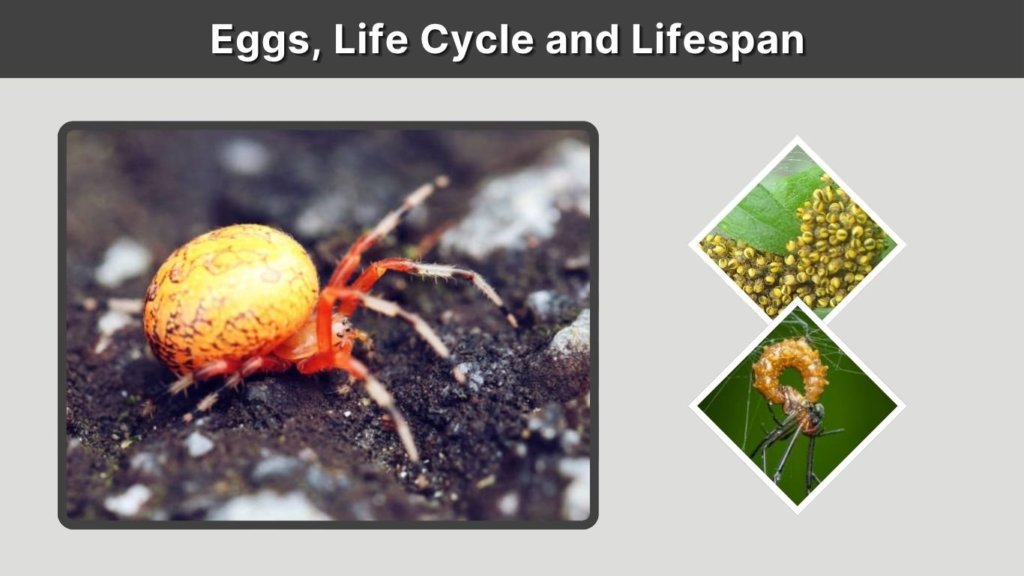
The marbled orb weaver follows a seasonal life cycle. Young spiders develop during spring and summer, adults reproduce around late summer, and eggs survive the winter inside protective silk sacs.
Marbled Orb Weaver Egg Sac
After mating, the female creates a loose, fluffy silk egg sac and hides it among leaves, twigs, or other protected material. Egg sacs are commonly produced in fall, particularly around October. A sac may contain hundreds of eggs, although the exact number differs among females.
Life Cycle Stages
- Eggs remain protected inside a silk sac through winter.
- Spiderlings hatch during spring.
- Juveniles grow and molt through several stages.
- Adults become noticeable from midsummer through fall.
- Mating and egg-laying occur before cold weather.
- Most adults die by winter, leaving the eggs to begin the next generation.
Because individuals generally hatch in spring and die after reproducing in fall, their active lifespan is approximately six months, although weather and location can affect seasonal timing.
FAQs
Are marbled orb weaver spiders poisonous?
They are venomous because they use venom to immobilize insects, but they are not poisonous or considered medically dangerous to people. Their venom is adapted for small prey, and bites are rare unless the spider is trapped, squeezed, or handled roughly.
What happens if a marbled orb weaver bites you?
A bite would most likely cause limited discomfort, redness, or swelling around the affected area. Wash it with soap and water and monitor the symptoms. Seek professional medical care if the reaction becomes severe, spreads rapidly, or causes difficulty breathing.
How big does a marbled orb weaver get?
Adult females generally measure about 9–18 millimeters long, while males measure approximately 6–9 millimeters. A female may look larger because her abdomen becomes extremely round, particularly before she deposits her eggs. The legs also increase the spider’s apparent overall size.
Where do marbled orb weavers live?
They occupy forests, woodland edges, meadows, orchards, gardens, bogs, and streamside vegetation across much of North America, Europe, and northern Asia. Their webs are typically attached to shrubs, trees, tall weeds, grasses, or other structures surrounded by vegetation.
Should I remove a marbled orb weaver?
Removal is rarely necessary because these spiders are shy, nonaggressive insect predators. Leave the spider undisturbed when its web is away from regular human activity. When a web blocks a doorway or path, gently relocate the spider and web supports without handling it directly.
