
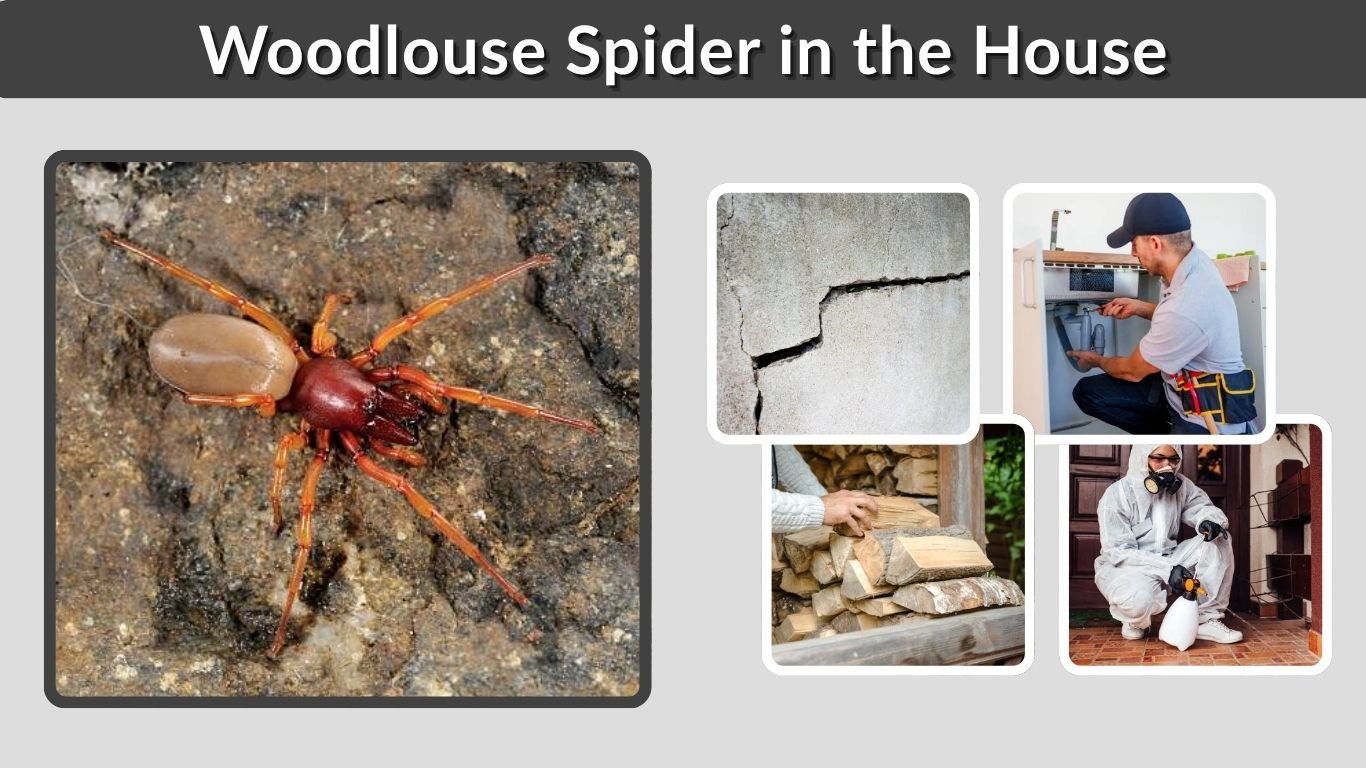
Finding a woodlouse spider in your house can be unsettling because of its reddish body and large, forward-pointing fangs. However, there is usually no reason to panic. Carefully trap the spider in a container, release it outside, and check your home for dampness, woodlice, and small entry gaps. Woodlouse spiders are reluctant to bite, and their venom is not known to cause serious medical problems in humans.
What Should You Do Immediately?
When you find a woodlouse spider indoors, avoid touching or crushing it with your bare hands.
Follow these steps:
- Place a glass or plastic container over the spider.
- Carefully slide a stiff piece of paper or cardboard underneath.
- Carry the covered container outside.
- Release the spider in a sheltered location away from doors and windows.
- Inspect the area for moisture, woodlice, and cracks through which it may have entered.
Wear gloves when moving boxes or objects near the spider. Although woodlouse spiders are not aggressive, their strong fangs may produce a painful defensive bite if they are squeezed or handled.
A vacuum can remove a spider when capture is impractical, but relocation is usually sufficient for a single individual. Colorado State University Extension recommends trapping occasional indoor spiders in a container, wearing gloves, or using a vacuum.
Why Is There a Woodlouse Spider in My House?
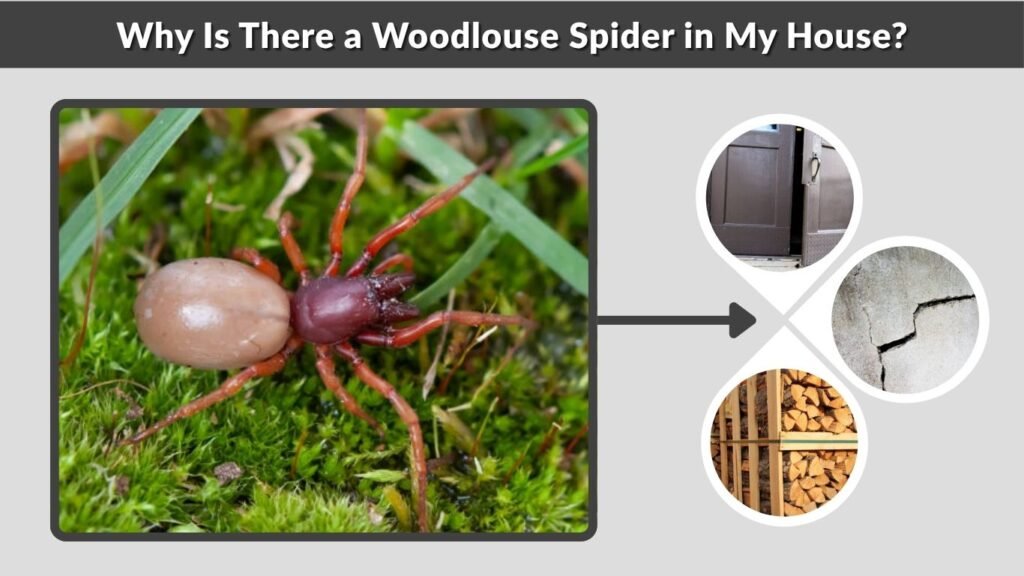
A woodlouse spider usually enters a house while searching for prey, shelter, or moisture. It is an outdoor hunting spider rather than a species specially adapted to living permanently in modern rooms.
Woodlouse spiders feed mainly on woodlice, also known as pill bugs, sowbugs, roly-polies, or slaters. Finding one indoors may therefore indicate that woodlice are living in a damp basement, garage, bathroom, crawl space, or around the foundation.
Common reasons for an indoor sighting include:
- Gaps beneath exterior doors
- Cracks around the foundation
- Open windows without secure screens
- Excess moisture or plumbing leaks
- Woodlice living near the building
- Boxes, firewood, or plant pots brought indoors
- Heavy rain, cold weather, or disturbed outdoor shelter
Many spiders simply wander through openings and cannot live comfortably for long inside a warm, dry house. The Natural History Museum notes that most spiders found indoors would be better suited to garages, sheds, gardens, or outdoor areas around buildings.
Does One Spider Mean You Have an Infestation?
Finding one woodlouse spider does not normally indicate an infestation. It may have entered accidentally or followed prey through a small opening.
Repeated sightings deserve more attention. Several woodlouse spiders over a short period could mean that your home provides suitable damp hiding places and a steady supply of woodlice. Addressing those underlying conditions is more effective than removing each spider individually.
How to Identify a Woodlouse Spider
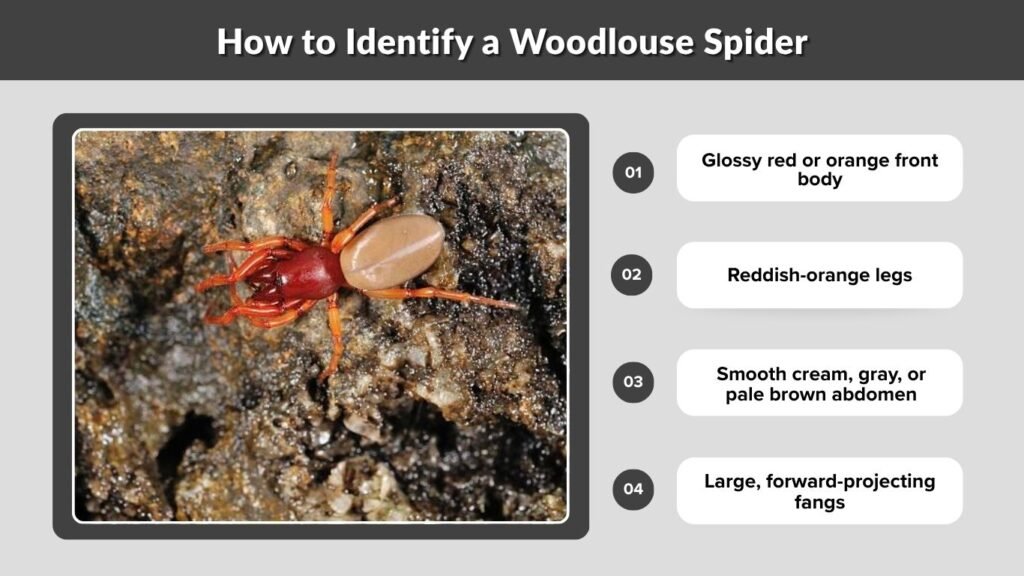
The woodlouse spider, Dysdera crocata, is distinctive when viewed closely. It is commonly found at ground level and hunts at night rather than catching prey in a large web.
Identification Features
- Glossy red or orange front body
- Reddish-orange legs
- Smooth cream, gray, or pale brown abdomen
- Large, forward-projecting fangs
- Six eyes rather than the more usual eight
- Body measuring roughly 0.5 inch in mature individuals
- No large prey-catching web
During the day, the spider rests inside a small silk retreat. At night, it leaves its shelter to hunt woodlice and other hard-bodied invertebrates.
Do not identify it solely by its red color. Other spiders can have reddish legs or bodies. A clear photograph showing the body, abdomen, and jaws can help with identification.
Is a Woodlouse Spider in the House Dangerous?
A woodlouse spider is not considered dangerous to most people. It possesses venom for subduing small prey, but its venom is not known to cause medically significant effects in humans.
Colorado State University describes the species as nonaggressive and states that its venom is not known to cause medical problems. Its large fangs can nevertheless make a defensive bite feel painful.
The spider does not chase people or bite without a reason. A bite is most likely when it is:
- Picked up directly
- Squeezed in clothing
- Trapped against the skin
- Disturbed beneath an object
- Handled while trying to escape
Spiders generally bite only when trapped against the skin, and spider bites are uncommon.
What Should You Do After a Bite?
Wash the area with soap and water or an appropriate antiseptic. Apply a cold compress wrapped in cloth to reduce discomfort and swelling. Avoid scratching, cutting, squeezing, or attempting to drain the bite.
Seek medical advice if pain or swelling increases, redness spreads, or you develop blistering, pus, fever, dizziness, or other unusual symptoms. Breathing difficulty, facial swelling, fainting, or trouble swallowing requires emergency care. General spider-bite guidance recommends cleaning the area, applying ice, and consulting a healthcare professional when serious or worsening symptoms appear.
How to Get Rid of Woodlouse Spiders in the House
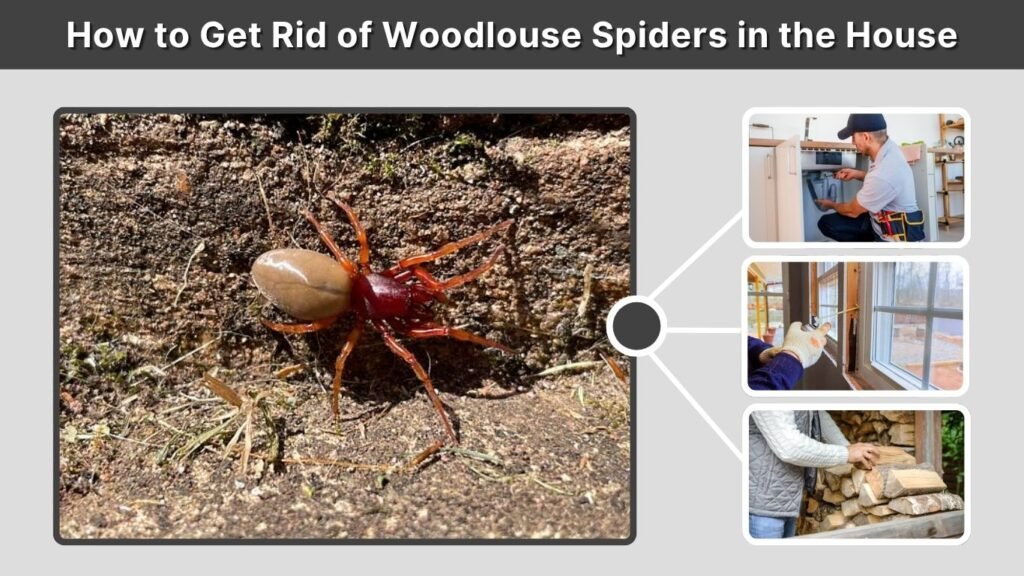
Removing the spider addresses the immediate problem, but preventing additional sightings requires making your house less attractive to both the spider and its prey.
1. Reduce Moisture
Repair leaking pipes, taps, roofs, or drainage systems. Use ventilation or a dehumidifier in damp basements, bathrooms, laundry rooms, and crawl spaces.
Spiders are often found in kitchens, bathrooms, and basements while seeking moisture. Woodlice also depend on humid conditions, so drying the area can reduce both animals.
2. Seal Entry Points
Inspect the lower parts of the building carefully. Seal cracks around foundations, pipes, windows, vents, and utility lines.
Replace damaged screens and install door sweeps where light is visible beneath exterior doors. Colorado State University recommends caulking foundation openings and ensuring that screens and doors fit tightly.
3. Remove Outdoor Hiding Places
Move the following materials away from exterior walls:
- Firewood piles
- Old boards
- Rocks and bricks
- Compost
- Leaf litter
- Unused plant pots
- Cardboard and garden debris
These objects create dark, damp shelters for woodlice and hunting spiders. Removing or relocating them reduces suitable habitat beside the building.
4. Reduce Indoor Clutter
Keep basement and garage floors clear where possible. Avoid leaving cardboard boxes directly against damp walls or concrete floors.
Use sealed plastic storage containers for items kept in dark storage areas. Vacuum along baseboards, beneath furniture, behind appliances, and around stored materials.
5. Control the Woodlice
Woodlouse spiders enter areas where their preferred prey is available. Reducing woodlice can therefore make your house less attractive to them.
Focus on moisture control, ventilation, exclusion, and removing decomposing organic material near the foundation. Chemical treatment is rarely the first or most important step.
Should You Use Spider Spray?
Spraying a single woodlouse spider is usually unnecessary. Pesticides alone may provide poor long-term control when moisture, prey, clutter, and entry points remain unchanged.
Colorado State University advises combining sanitation and habitat modification with any necessary treatment, noting that pesticides alone are unlikely to be effective. Total-release foggers also tend to have little effect on spiders.
Never apply pesticides more frequently or at higher concentrations than the product label allows. Avoid spraying areas accessible to children or pets unless the label specifically permits it.
When Should You Call Pest Control?
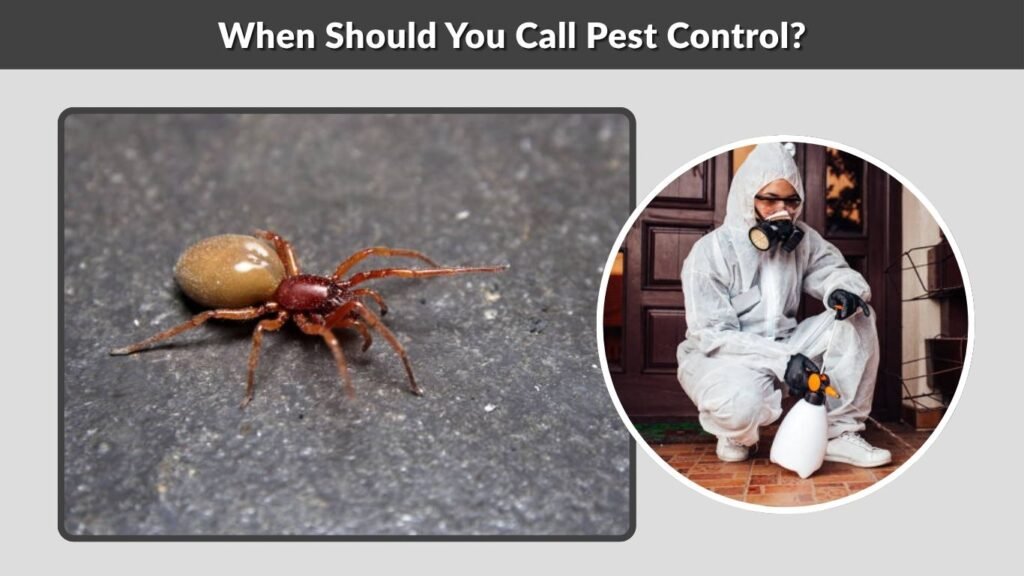
Professional pest control may be helpful when:
- Woodlouse spiders appear regularly in several rooms
- Numerous woodlice are present indoors
- The basement or crawl space has persistent dampness
- Entry points are difficult to locate or seal
- You cannot confidently identify the spider
- Someone in the home has a severe fear of spiders
- Other potentially significant spider species may be present
A professional should identify the animal and investigate the underlying habitat before recommending treatment. An isolated woodlouse spider rarely requires whole-house pesticide application.
Woodlouse Spiders in UK Houses
Woodlouse spiders are established in the UK and may wander into ground-floor rooms, garages, sheds, and damp outbuildings. Indoor sightings are most likely where woodlice and sheltered entry routes are available.
The presence of a woodlouse spider does not mean that a dangerous species has invaded your home. The Natural History Museum reports that spider bites in the UK are rare and that only a small number of British species are capable of producing a significant or unpleasant bite.
FAQs
Should I kill a woodlouse spider in my house?
Killing it is generally unnecessary. Cover it with a container, slide cardboard underneath, and release it outdoors. Avoid picking it up with your bare hands because it may bite defensively when restrained.
Will a woodlouse spider crawl into my bed?
It is possible for any wandering spider to cross a bedroom, but woodlouse spiders do not intentionally seek beds or people. They normally stay near the ground while searching for woodlice and sheltered hiding places.
Can woodlouse spiders damage a house?
No. They do not damage wood, furniture, clothing, stored food, or the structure of a building. Their presence is more likely to indicate moisture and available prey than structural damage.
Why do I keep finding woodlouse spiders?
Repeated sightings may result from damp conditions, abundant woodlice, outdoor debris beside the foundation, or unsealed entry points. Reduce moisture, control woodlice, remove hiding places, and seal gaps around the building.
Can a woodlouse spider live permanently indoors?
It may survive in a damp basement, crawl space, garage, or similar area where prey is available. However, dry living spaces are generally unsuitable, and many individuals found indoors have simply wandered in from outside.
