
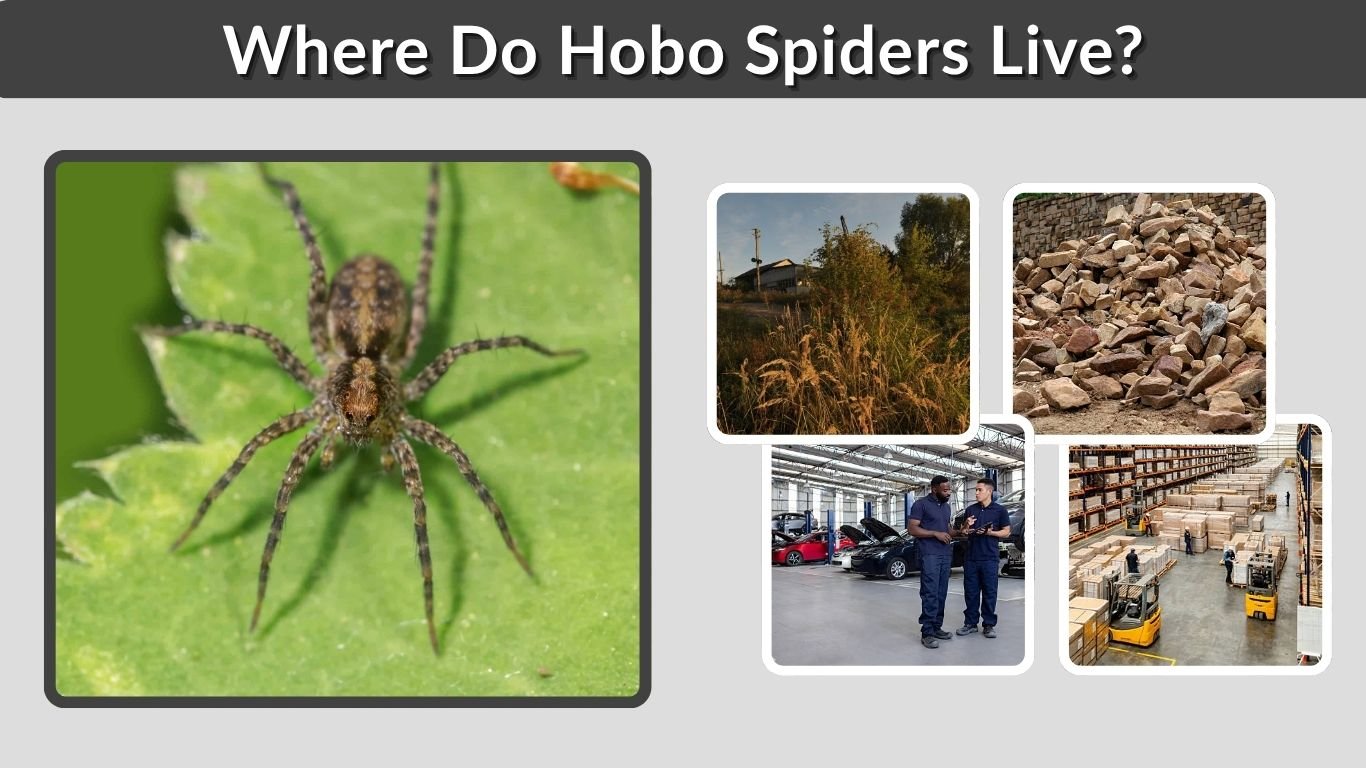
Hobo spiders live mainly in the Pacific Northwest and parts of the western United States, where they prefer cool, sheltered places close to the ground. These funnel-weaving spiders can live outdoors under rocks, wood, vegetation, and debris, but they may also enter basements, garages, and other quiet areas of homes. Their distribution is often misunderstood because several common spiders look very similar. Understanding where hobo spiders live, which states have established populations, and what habitats they prefer can make identification much easier.
Where Do Hobo Spiders Live in the Wild?
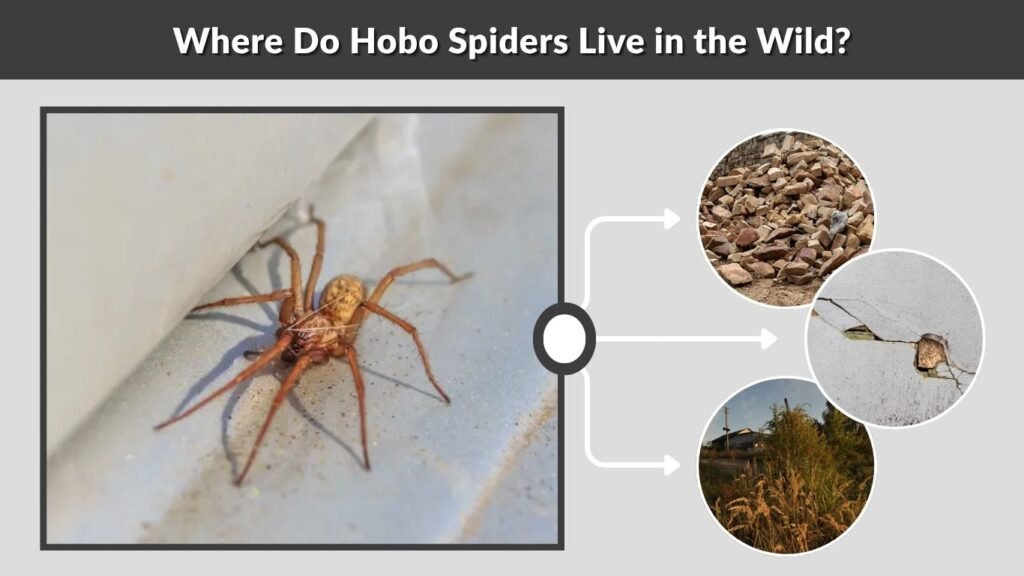
Hobo spiders, scientifically known as Eratigena agrestis, originally came from Europe but became established in northwestern North America during the twentieth century. Outdoors, they generally stay near ground level rather than climbing high into trees or structures. Protected places that support funnel-shaped retreats, abundant insect prey, and moderate moisture provide particularly suitable habitat for these spiders.
Natural Hobo Spider Habitat
Hobo spiders are members of the funnel-weaver family Agelenidae. They create a sheet-like web that leads into a narrow retreat where the spider waits. When an insect contacts the web, the spider quickly runs out to capture it.
Unlike many web-building spiders, hobo spiders generally select low, protected locations. Their natural habitat can include grassland edges, rocky areas, gardens, and areas around human structures. They are particularly associated with sheltered ground-level sites rather than exposed vegetation.
Places Hobo Spiders Like to Live
Common outdoor hiding and web-building locations include:
- Rock piles and spaces beneath stones
- Wood piles and fallen logs
- Retaining walls
- Foundation cracks
- Tall grass near structures
- Garden beds
- Spaces underneath debris
- Dark areas beneath outdoor objects
These sites provide both protection and pathways where insects can encounter their webs.
Where Do Hobo Spiders Live in the US?
In the United States, hobo spiders are primarily associated with the Northwest and parts of the interior West. Their North American range developed after the species became established around the Pacific Northwest. Reliable identification is important when discussing distribution because grass spiders, giant house spiders, and other funnel weavers are frequently mistaken for hobo spiders.
Pacific Northwest and Western Range
The established North American range extends from southern British Columbia through parts of Washington and Oregon and eastward into states such as Montana, Wyoming, Colorado, and northern Utah. Utah State University reports that hobo spiders are now distributed throughout northern Utah.
They may be especially noticeable during late summer and early fall because adult males leave their webs and wander in search of females. This increases the likelihood of encountering them around buildings.
Do Hobo Spiders Live in These States?
- Washington: Yes. Hobo spiders have long been documented in Washington, although giant house spiders have displaced them in some western areas.
- Oregon: Yes. The species occurs in Oregon, particularly within its established northwestern range.
- Utah: Yes. Populations occur especially in northern Utah.
- Montana: Yes. Established populations occur in Montana.
- Wyoming: Yes. The species has been documented there.
- Colorado: Hobo spiders have been recorded in Colorado.
- California: UC IPM states that there are no confirmed established populations in California, although similar spiders are frequently mistaken for them.
- Florida, Texas, Alabama and South Carolina: These states are outside the commonly recognized established North American range.
Where Do Hobo Spiders Live in a House?
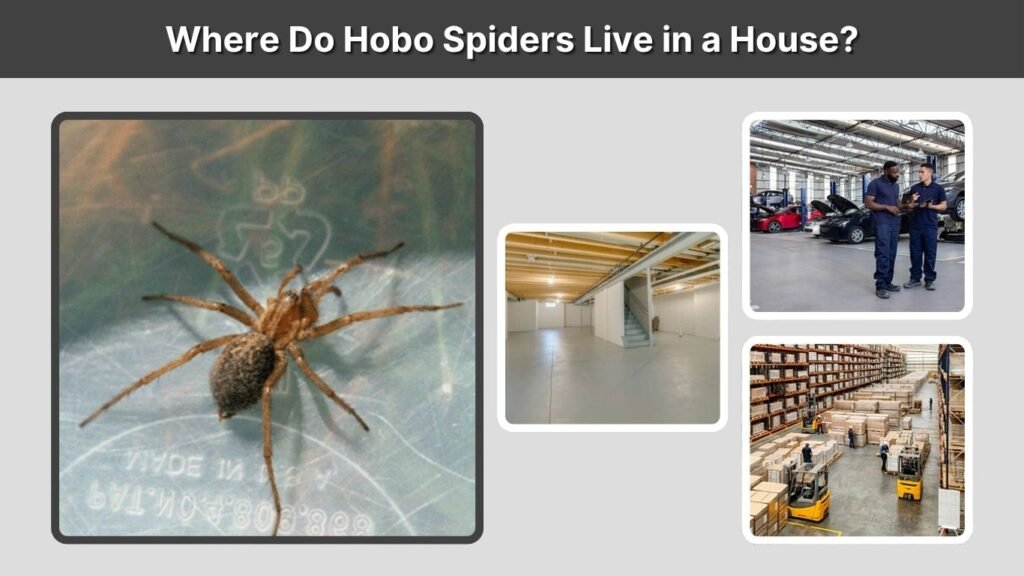
Although hobo spiders naturally live outdoors, they sometimes enter homes, particularly from late summer through fall. Males wander farther while searching for mates and may accidentally move through cracks, doors, windows, or foundation openings. Because hobo spiders are primarily ground-oriented and relatively poor climbers, most indoor encounters happen on lower floors rather than high walls or ceilings.
Common Indoor Hiding Places
Inside a house, hobo spiders may be found around:
- Basements
- Garages
- Window wells
- Foundation edges
- Floor-level wall cracks
- Storage areas
- Behind boxes or furniture
- Crawl spaces
- Dark corners near the floor
Basements are particularly suitable because they can provide darkness, shelter, moderate humidity, and access to insects. Utah State University records also note frequent indoor encounters during the late summer and early fall.
Why Hobo Spiders Enter Houses
Hobo spiders usually do not enter homes because they prefer living alongside people. Instead, many indoor appearances result from wandering behavior.
Adult males become especially mobile during mating season from roughly August through October. They may accidentally enter through gaps around foundations or doors. Once indoors, they often remain close to ground level because smooth vertical surfaces can be difficult for them to climb.
Do Hobo Spiders Live in Groups?
Hobo spiders are not social spiders. They generally live independently and maintain separate web retreats. Several spiders can sometimes occur around the same building, garden, retaining wall, or wood pile when the habitat provides enough prey and numerous protected web sites. Seeing several spiders in one area therefore does not necessarily mean that they are living together as an organized colony.
Are Hobo Spiders Solitary?
Yes. Individual hobo spiders normally occupy their own funnel-web system and capture insects that contact that web.
Adult males eventually leave their established areas to search for females. Females are more likely to remain associated with their web retreats, particularly when preparing egg sacs. Because suitable habitat can be concentrated around foundations, wood piles, or retaining walls, multiple independent webs may occur relatively close together.
How Long Do Hobo Spiders Live?
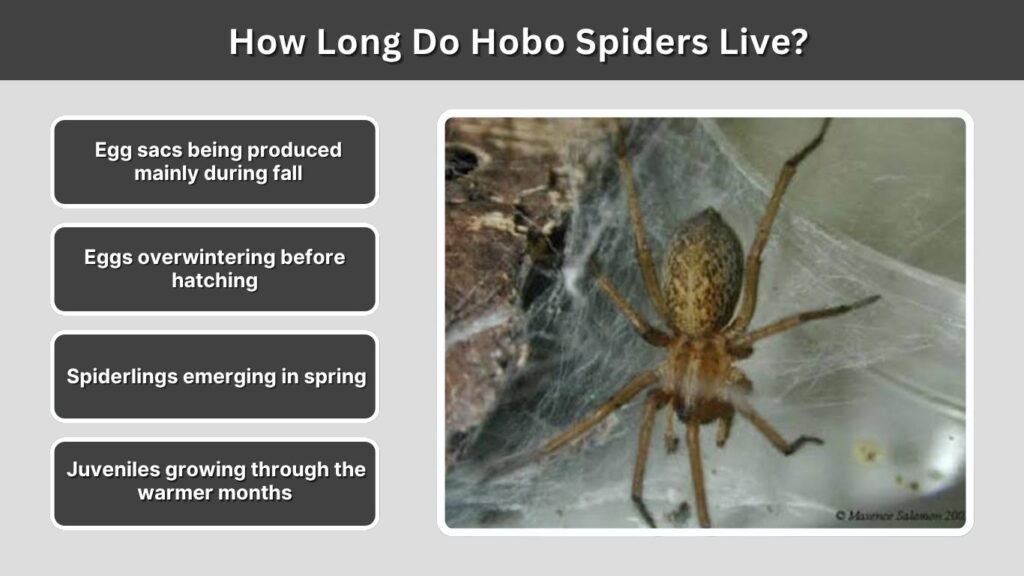
The exact hobo spider life cycle varies with climate and location. Research summarized by Utah State University suggests that populations in northern Utah may take about two years to develop into adults, while earlier research indicates that development can sometimes take longer in cooler inland regions. Temperature, food availability, overwintering conditions, and geographic location all influence development.
Hobo Spider Life Cycle
A typical life cycle includes:
- Egg sacs being produced mainly during fall
- Eggs overwintering before hatching
- Spiderlings emerging in spring
- Juveniles growing through the warmer months
- Young spiders overwintering before adulthood
- Adults maturing during summer or early fall
- Males wandering to locate females
- Adult males generally dying after mating
Females can produce multiple egg sacs, while immature spiders and some females survive winter conditions.
How Long Can Hobo Spiders Live Without Food?
There is no dependable single number for how long a hobo spider can survive without eating. Survival depends on temperature, age, moisture availability, body condition, and life stage.
Like many spiders, they can reduce their activity when prey is limited. However, hobo spiders normally establish webs where insects regularly pass, allowing them to conserve energy while waiting for prey rather than continuously hunting.
How to Recognize Hobo Spider Habitat
Finding a brown spider inside a house does not automatically mean hobo spiders live there. Many funnel weavers and other common spiders have similar coloration and body shapes. Experts may need to examine microscopic reproductive structures for reliable identification, meaning geographic range and habitat should be considered alongside physical characteristics.
Signs of Suitable Hobo Spider Habitat
Look for low, sheltered webs around foundations, rock piles, wood piles, retaining walls, or ground-level openings. Hobo spider webs contain a sheet-like capture area connected to a retreat where the spider hides.
Indoors, repeated sightings around basements or foundation-level spaces can indicate suitable spider habitat, but they do not prove that the spiders are hobo spiders. Professional or expert identification is preferable when species-level identification matters.
FAQs
1. Do hobo spiders live in California?
Hobo spiders are not considered established in California. UC IPM reports no verified California population, although similar funnel-weaving spiders are commonly mistaken for them.
2. Do hobo spiders live in Oregon?
Yes. Oregon falls within the recognized North American range of the hobo spider, although populations can vary considerably by location.
3. Do hobo spiders live in Washington State?
Yes. Hobo spiders have historically lived in Washington, particularly within the Pacific Northwest. However, they have become less dominant in some areas where giant house spiders are common.
4. Do hobo spiders live in Utah?
Yes. Hobo spiders occur in northern Utah and can be found inside homes from August through October when adult males are actively searching for mates.
5. Where do hobo spiders live in Canada?
In Canada, hobo spiders are primarily associated with southern British Columbia. Their broader North American distribution continues south and east through parts of the western United States.
