
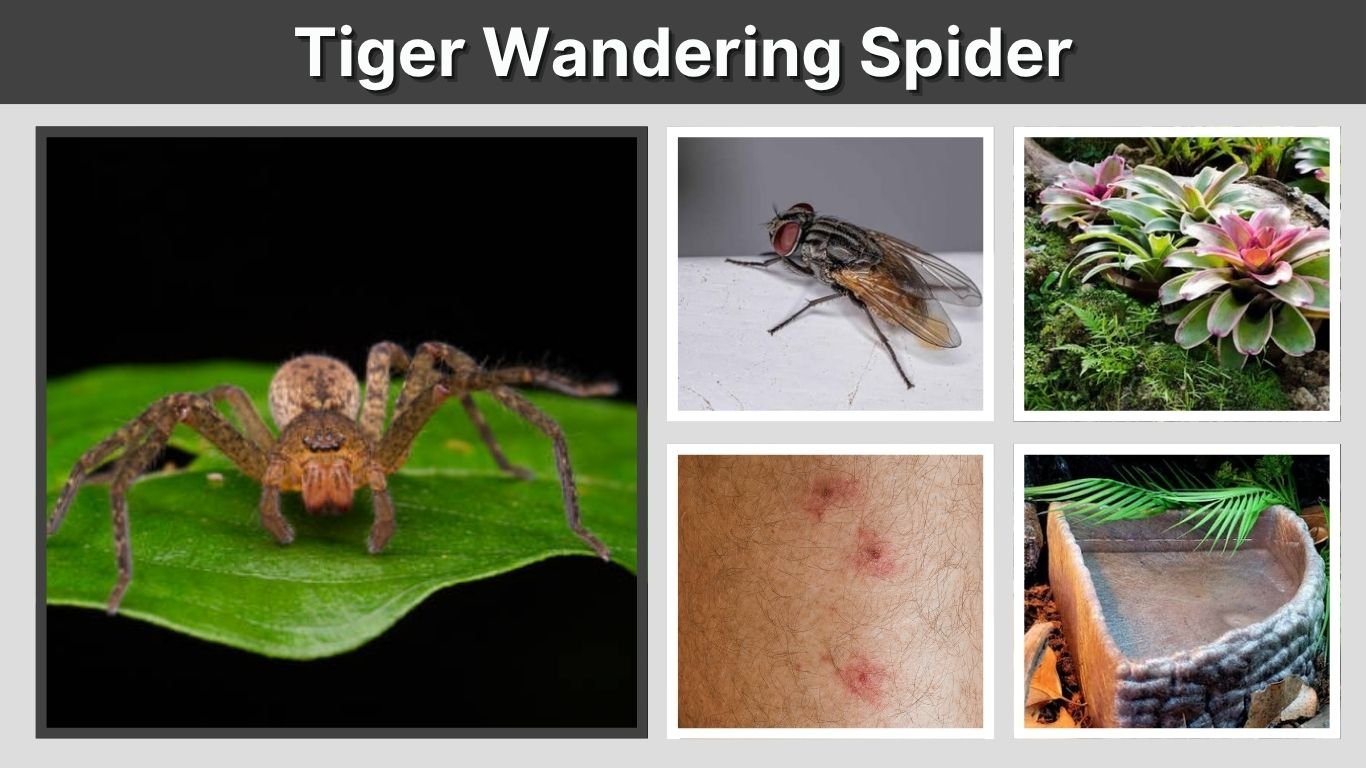
The Tiger Wandering Spider (Cupiennius salei) is a large, fast-moving tropical spider recognized by its striped legs, brown body, and nighttime hunting behavior. It is also called the Tiger Bromeliad Spider or Wandering Tiger Spider. Although its appearance resembles some medically important wandering spiders, it is a different species. It usually waits motionless on broad leaves before rapidly capturing insects detected through vibrations.
Tiger Wandering Spider Overview
The World Spider Catalog currently places Cupiennius in the family Trechaleidae, although older publications classify the genus under Ctenidae. The common name “wandering spider” continues to be widely used despite that taxonomic change.
| Feature | Details |
| Scientific name | Cupiennius salei |
| Common names | Tiger Wandering Spider, Tiger Bromeliad Spider |
| Family | Trechaleidae |
| Native region | Mexico and northern Central America |
| Adult leg span | Commonly around 4 inches |
| Female body length | Up to approximately 1.4 inches |
| Lifestyle | Arboreal and nocturnal |
| Diet | Insects and other small animals |
| Web use | Does not build a prey-catching web |
| Temperament | Fast and potentially defensive |
| Care level | Intermediate to advanced |
Tiger Wandering Spider Identification and Appearance
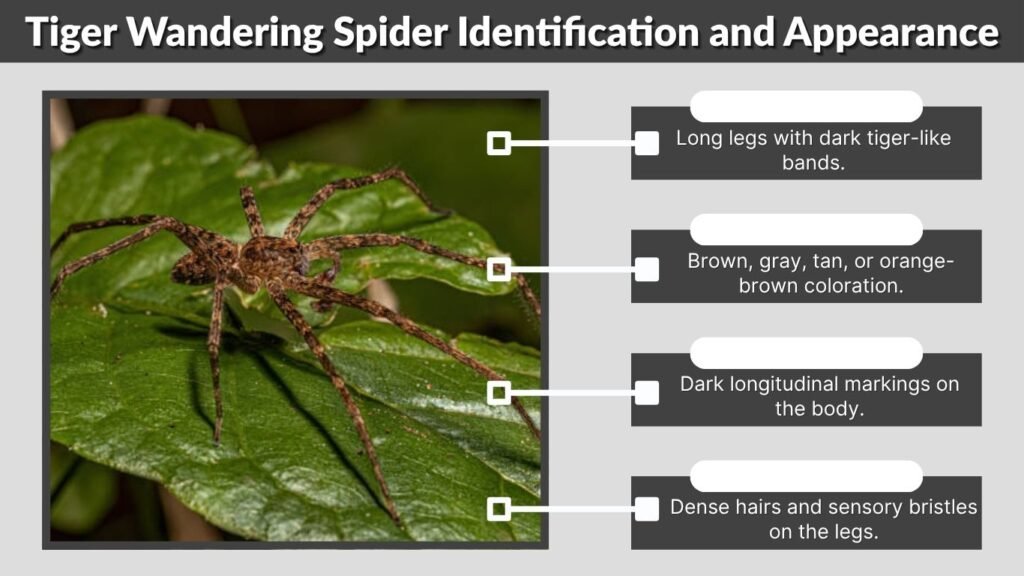
Tiger Wandering Spiders are large, long-legged spiders with patterns that provide camouflage against bark, dry leaves, and tropical vegetation.
Identification Features
- Long legs with dark tiger-like bands
- Brown, gray, tan, or orange-brown coloration
- Dark longitudinal markings on the body
- Dense hairs and sensory bristles on the legs
- Eight eyes arranged across the front of the head
- Flattened posture when resting on leaves or bark
- Large, forward-facing chelicerae containing the fangs
Color can vary significantly. Some individuals appear dark brown with strong black bands, while others are pale tan or reddish-orange. Lighting, age, sex, and recent molting can also affect appearance.
The spider should not be identified through color alone because other Cupiennius species and unrelated tropical hunting spiders may look similar.
How Big Is a Tiger Wandering Spider?
Adult females may reach approximately 3.5 centimeters in body length, while males may grow to around 2.5 centimeters. Scientific observations describe adults with leg spans of about 10 centimeters, or nearly 4 inches.
The spider can look larger because of its long, outward-spreading legs. Females generally develop heavier abdomens and more robust bodies. Mature males usually have slimmer bodies, proportionally longer legs, and enlarged pedipalps near the mouth.
Tiger Wandering Spider Natural Habitat and Range
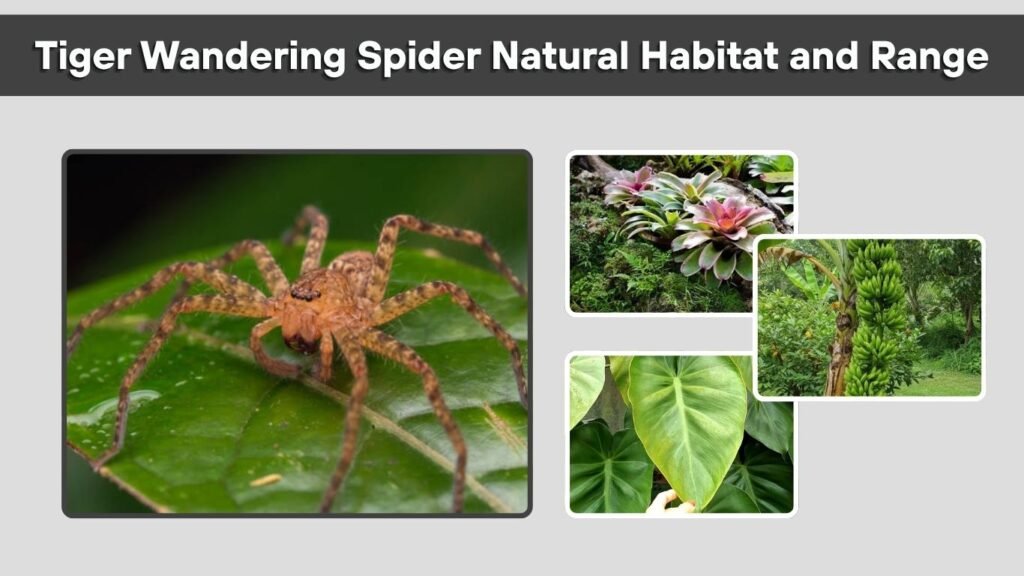
The Tiger Wandering Spider is native to Mexico and northern Central America. Published records place it from parts of Mexico through countries including Guatemala, Belize, Honduras, and Nicaragua. It is primarily associated with humid tropical and subtropical environments.
Where Does It Live?
The spider commonly uses:
- Bromeliads
- Banana plants
- Broad tropical leaves
- Shrubs and low trees
- Tree trunks and bark crevices
- Moist forest vegetation
- Gardens near tropical forests
Bromeliads provide humid, protected spaces between their leaves. Females may use these sheltered areas while carrying or guarding an egg sac.
The species has occasionally been transported outside its native range in shipments of bananas and other tropical plants. However, an individual arriving in imported produce should not automatically be assumed to be Cupiennius salei, since several large tropical spiders can travel in plant shipments.
Behavior and Hunting
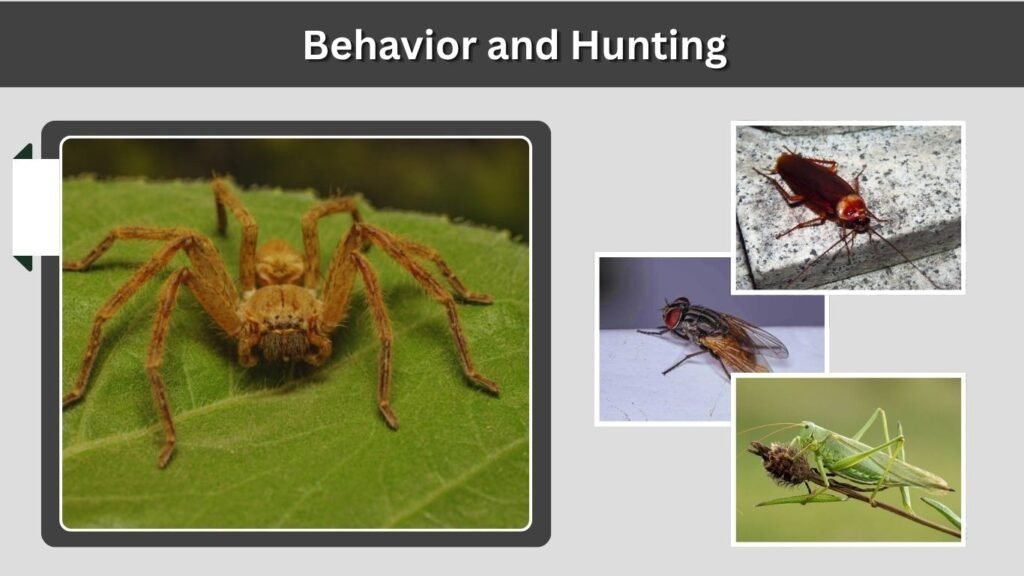
Tiger Wandering Spiders do not construct circular or sheet-shaped webs for catching prey. They are nocturnal ambush hunters that remain still on vegetation and respond to vibrations created by nearby animals.
The spider can determine the direction of prey movement through highly sensitive structures on its legs. It then rushes or jumps toward the animal, holds it with its legs, and delivers a venomous bite. Scientific research has shown that the amount of venom used can change with prey size and activity.
Typical prey includes:
- Crickets
- Cockroaches
- Moths
- Flies
- Grasshoppers
- Other spiders
- Small frogs or other vulnerable animals
During the day, the spider usually rests in a protected location. A disturbed individual may run extremely quickly rather than remain in place.
Tiger Wandering Spider Bite
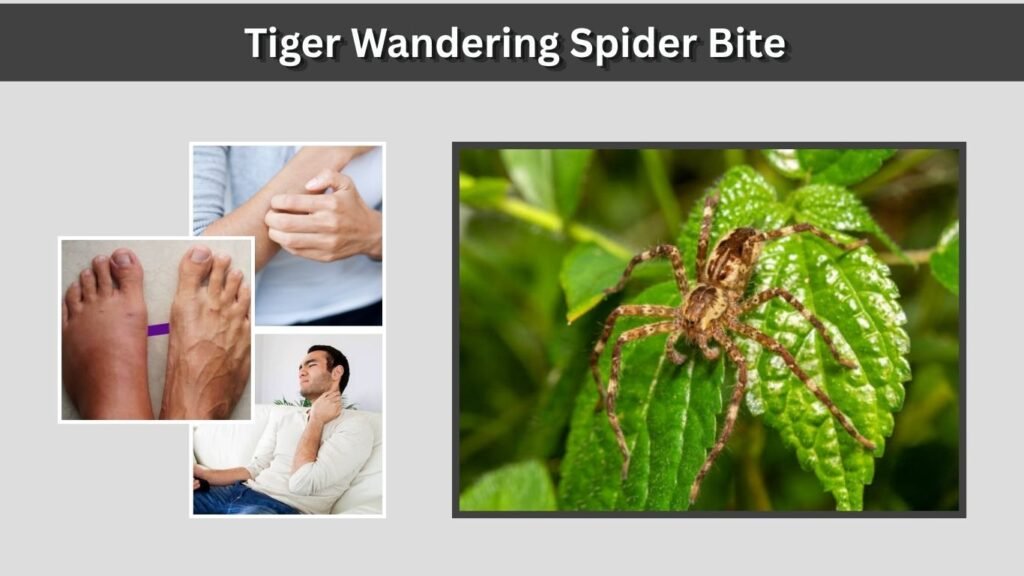
The Tiger Wandering Spider has large fangs and venom used to immobilize prey. Its venom contains several neuroactive and membrane-affecting components that work together against insects and other small animals.
Available scientific literature focuses mainly on venom composition and its effects on prey. Well-documented reports describing severe human envenomation are limited. This suggests that it is not comparable to highly dangerous Phoneutria species, but the lack of severe published cases should not be interpreted as proof that every bite will be harmless.
A bite could potentially cause:
- Immediate puncture pain
- Minor bleeding
- Redness
- Local swelling
- Burning or tingling
- Temporary soreness
Symptoms may differ according to bite depth, venom quantity, body location, individual sensitivity, and whether bacteria enter the wound.
What to Do After a Bite
Wash the area with soap and water and apply a wrapped cold pack to reduce discomfort and swelling. Do not cut the wound, attempt to suck out venom, or apply an excessively tight bandage.
Seek prompt medical care when there is severe or increasing pain, spreading swelling, muscle cramping, vomiting, trouble breathing or swallowing, faintness, or a worsening wound. General medical guidance also recommends assessment when the spider’s identity is uncertain.
Take a clear photograph from a safe distance when identification may help. Do not attempt to capture the spider with bare hands.
Tiger Wandering Spider vs. Brazilian Wandering Spider
Tiger Wandering Spiders are sometimes confused with Brazilian wandering spiders belonging to the genus Phoneutria. This confusion can cause unnecessary fear or unsafe handling.
| Feature | Tiger Wandering Spider | Brazilian Wandering Spider |
| Genus | Cupiennius | Phoneutria |
| Current family | Trechaleidae | Ctenidae |
| Typical pattern | Strong banding on legs | Pattern varies by species |
| Main range | Mexico and northern Central America | Central and South America |
| Human danger | Severe cases poorly documented | Some species are medically important |
| Identification | Requires careful examination | Requires expert confirmation |
Photographs alone may not always provide a dependable species identification. Treat any unknown large tropical spider cautiously and seek help from a qualified local expert.
Tiger Wandering Spider Care Sheet
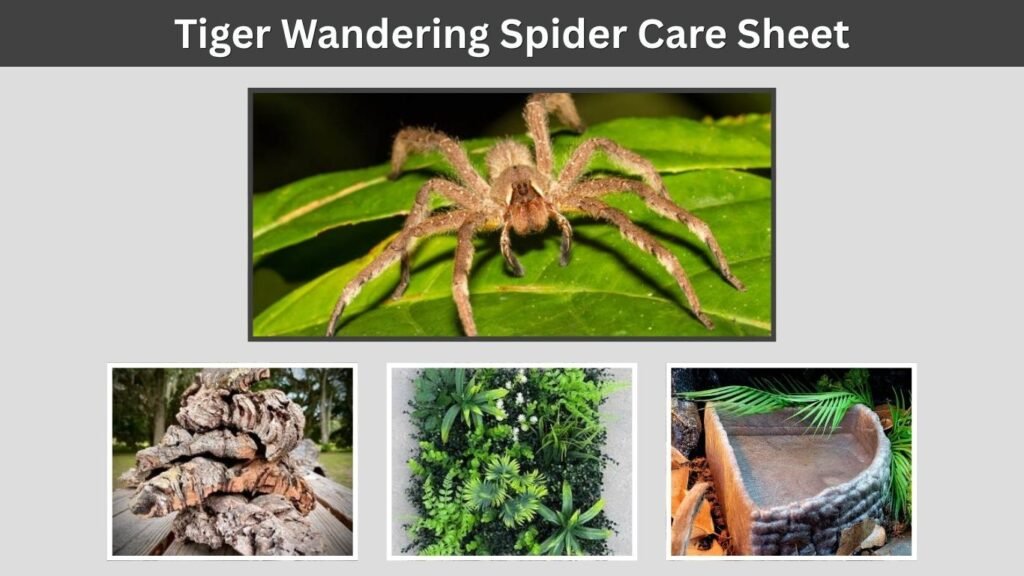
This species is sometimes maintained by experienced invertebrate keepers. It is not a tarantula and requires an arboreal enclosure designed for a fast, active hunting spider.
Enclosure Setup
An adult should have a tall, securely closing enclosure with good cross-ventilation. A setup around 8 × 8 × 12–16 inches can provide climbing room while remaining manageable during maintenance.
Include:
- Vertical cork bark
- Broad artificial or live leaves
- Several shaded hiding places
- Two to three inches of moisture-retaining substrate
- A shallow water dish
- Secure ventilation holes smaller than the spider’s body
- A locking or tightly fitted door
Keep the enclosure away from direct sunlight. Avoid large gaps around doors, cables, or ventilation because the spider can move rapidly and squeeze through surprisingly narrow spaces.
Temperature and Moisture
Warm room temperatures of approximately 72–79°F are generally suitable. The enclosure should remain humid without becoming stagnant or waterlogged.
Lightly moisten part of the substrate and allow some surface drying between waterings. Condensation covering the enclosure continuously may indicate excessive moisture or inadequate ventilation. Captive-care recommendations typically emphasize warm temperatures, high relative humidity, and strong ventilation.
Feeding
Offer appropriately sized live invertebrates such as crickets, roaches, moths, or flies. Juveniles may eat one or two small meals weekly, while adults can usually be offered suitable prey about once a week.
Remove prey that remains uneaten, especially when the spider is preparing to molt. Do not use wild-caught insects that may have contacted pesticides or parasites.
Handling
Handling is not recommended. The spider is fast, capable of jumping short distances, and may bite when trapped or restrained.
Use long feeding tools and a catch cup during maintenance. Place the enclosure inside a larger secure area before rehousing so an escaped spider cannot disappear into the room.
Molting and Reproduction
Before molting, the spider may stop feeding, reduce its activity, and retreat behind vegetation or bark. Remove live prey and avoid disturbing it until the new exoskeleton has hardened.
Females carry the egg sac beneath the abdomen. Research has documented females creating thick silk shelters in bromeliads and even entering water held between bromeliad leaves while protecting their offspring.
FAQs
Is the Tiger Wandering Spider dangerous?
It is venomous and physically capable of biting. However, available evidence does not place it in the same risk category as medically important Brazilian wandering spiders. Caution is still necessary because human bite data are limited.
Is it a tarantula?
No. The Tiger Wandering Spider is not a tarantula. It is a true wandering or hunting spider currently classified in the family Trechaleidae.
How large does it become?
Adult females can reach approximately 1.4 inches in body length and around 4 inches across the legs. Males generally have smaller bodies but may look equally large because of their long legs.
Does it build a web?
It uses silk for safety lines, molting retreats, egg protection, and shelter, but it does not build a web to trap flying insects. It actively detects and captures prey from vegetation.
Is it suitable for beginners?
It is better for experienced keepers. Its speed, escape ability, arboreal habits, large fangs, and uncertain bite effects make it less forgiving than slow-moving beginner spiders.
