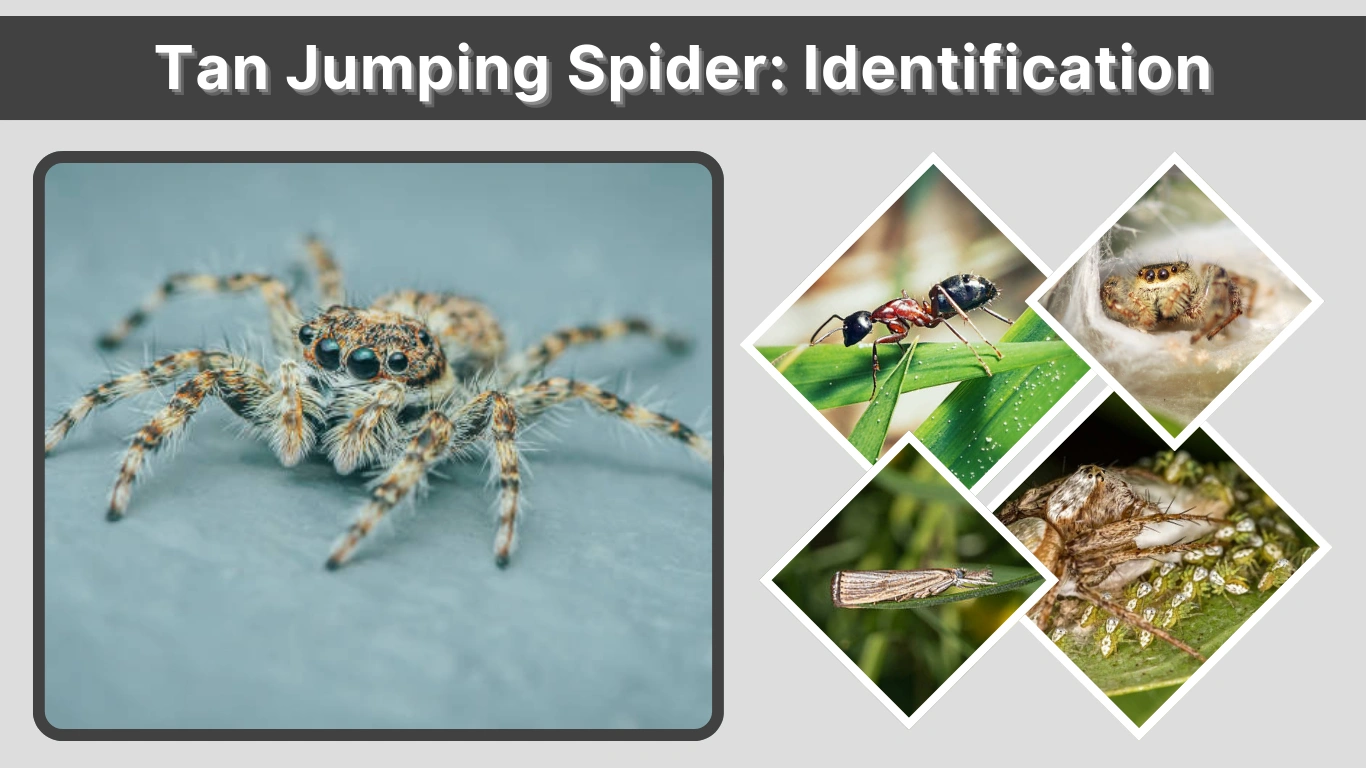
The tan jumping spider is a small, fast-moving spider often seen on walls, windows, fences, and even inside houses. Known for its alert eyes and sudden jumps, this spider attracts attention because of its light tan to black-and-tan coloring. Many people want to know its size, lifespan, whether it is poisonous, and how to tell males from females. This guide explores identification, appearance, habitat, and the basic facts you need to understand tan jumping spiders.
What Is a Tan Jumping Spider?
A tan jumping spider is not always one single exact species, but a common name people use for light-colored jumping spiders in the family Salticidae. These spiders are famous for excellent eyesight, curious behavior, and the ability to jump many times their body length. Unlike web-building spiders, tan jumping spiders actively hunt prey during the day, stalking insects and pouncing on them with precision.
They are often noticed because they turn to “look” at people, tilt their bodies, and move in short, controlled bursts. Their tan or beige color helps them blend into tree bark, wooden fences, and house siding. Some well-known species commonly called tan jumping spiders belong to the genus Platycryptus, which are widespread across North America.
Scientific Name and Classification
Tan jumping spiders are part of the family Salticidae, which includes over 6,000 jumping spider species worldwide. One of the most frequently identified “tan jumping spiders” in the United States is Platycryptus undatus, often called the tan jumping spider in field guides. However, several other pale or sandy-colored jumping spiders are also casually labeled “tan jumping spiders,” depending on region and pattern.
Jumping Spider Tan vs Other Jumping Spiders
Compared to bold jumping spiders or regal jumping spiders, tan jumping spiders usually have softer colors, flatter bodies, and more bark-like camouflage. Bold and regal jumping spiders often show strong black-and-white or metallic colors, while tan jumping spiders rely more on blending in. Behaviorally, they are similar—active hunters, excellent jumpers, and visually oriented predators.
Tan Jumping Spider Identification
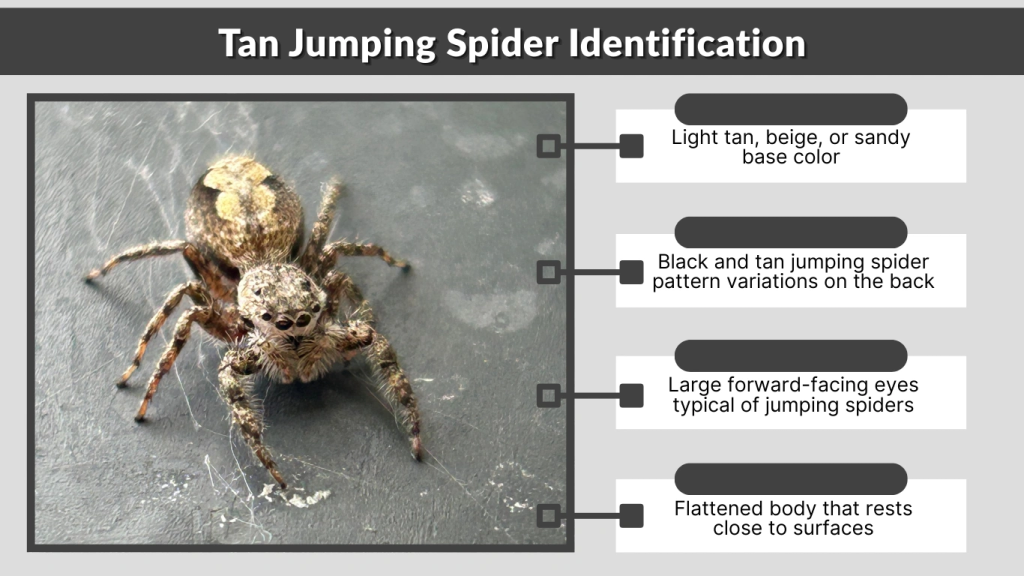
Tan jumping spiders can be identified by a combination of color, body shape, and behavior.
- Light tan, beige, or sandy base color
- Black and tan jumping spider pattern variations on the back
- Large forward-facing eyes typical of jumping spiders
- Flattened body that rests close to surfaces
- Quick, jerky movements and sudden jumps
Tan Jumping Spider Size and Appearance
Most tan jumping spiders are small to medium compared to other house spiders. Adults usually measure about 6 to 13 millimeters in body length, with females typically larger than males. Their bodies appear compact, with relatively short, sturdy legs and a slightly flattened shape that helps them hide in cracks and bark.
Their coloration ranges from pale tan to darker brown, often with subtle striping or mottled black markings. Fine hairs cover the body, giving them a fuzzy appearance when viewed up close. The front eyes are especially prominent and glossy, giving them the expressive “face” that jumping spiders are known for.
Small Tan Jumping Spider vs Adult
A small tan jumping spider is usually a juvenile that has not yet reached maturity. Spiderlings hatch extremely tiny and gradually grow through several molts. With each molt, they become slightly larger and develop clearer markings. Juveniles often appear lighter and more translucent, while adults develop stronger color contrast and more defined patterns.
Black and Tan Jumping Spider Variations
Some tan jumping spiders appear almost beige, while others show bold black patches on the abdomen or legs. These black-and-tan jumping spider forms are normal color variations influenced by species, age, and environment. Spiders living on dark bark or shaded structures often appear darker, helping them blend more effectively into their surroundings.
Male vs Female Tan Jumping Spider
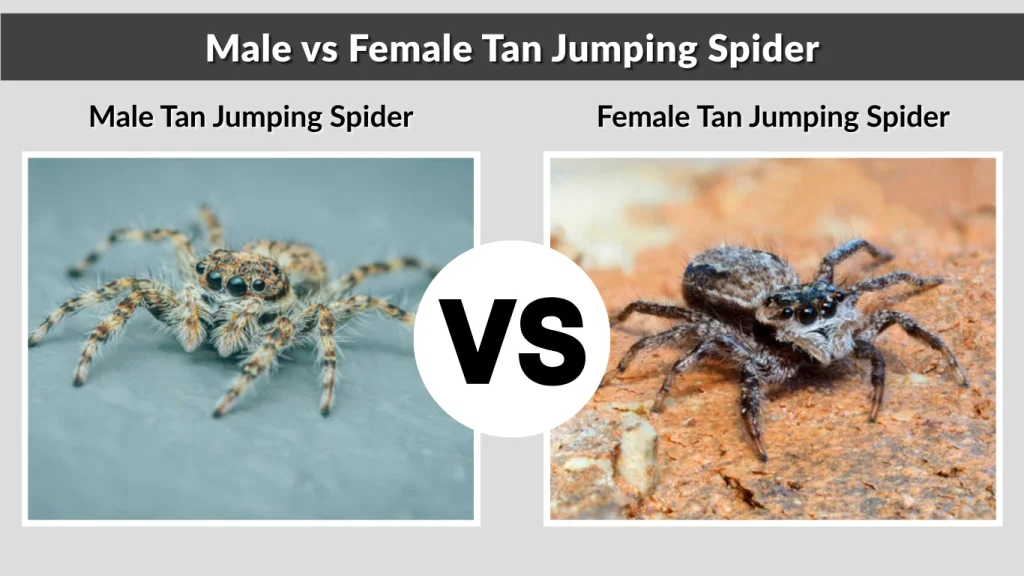
Male and female tan jumping spiders can usually be distinguished by size, body shape, and behavior. Females are often larger and heavier-bodied, while males are slimmer and more active, especially during the mating season.
Male Tan Jumping Spider
Male tan jumping spiders tend to have slimmer abdomens, longer legs, and more noticeable movement patterns. They are highly active hunters and are often seen roaming across walls and tree trunks in search of females. During courtship, males may raise their front legs, wave their pedipalps, and perform small dances to communicate.
Female Tan Jumping Spider
Female tan jumping spiders are typically larger, with a broader abdomen used for egg development. They are more likely to stay near sheltered areas where they can build small silk retreats. After mating, females produce egg sacs and may guard them until spiderlings hatch, showing less wandering behavior than males.
Tan Jumping Spider Habitat and Distribution
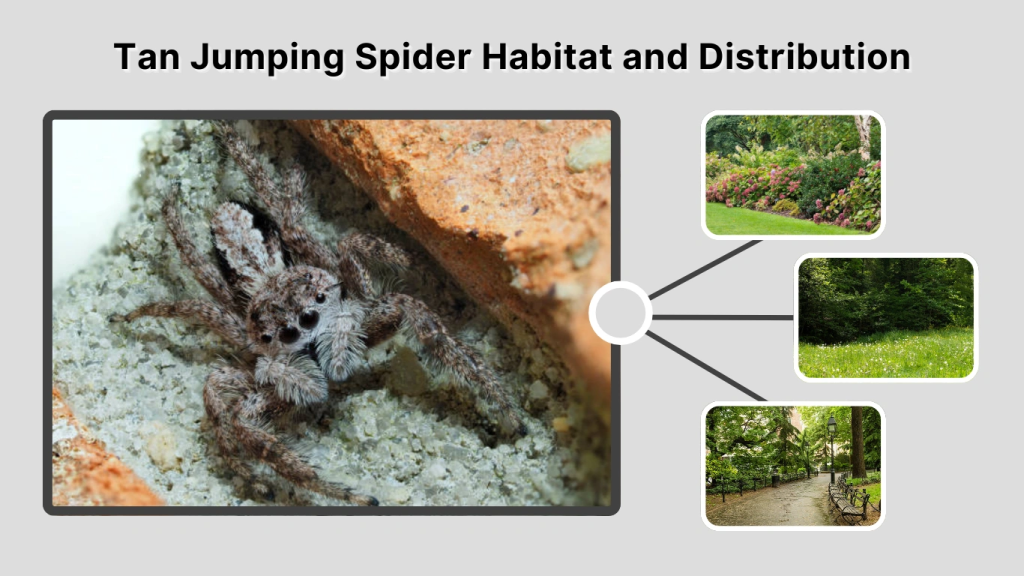
Tan jumping spiders are adaptable and thrive in both natural and human-made environments. They prefer sunny, vertical surfaces where insects are abundant and where their camouflage is most effective.
Tan Jumping Spider Habitat
Common habitats include tree trunks, wooden fences, garden walls, decks, window frames, sheds, and outdoor furniture. They are frequently found on the exterior of houses, where insects gather around lights and windows. Outdoors, they also inhabit forest edges, parks, and shrub-covered areas.
Tan Jumping Spider in House
When a tan jumping spider enters a house, it is usually accidental or driven by prey availability. Indoors, they may appear near windows, ceilings, or walls where flies and gnats collect. They do not build messy webs and usually wander alone. In most cases, they are harmless and can be gently released outside.
Regional Sightings in the United States
Tan jumping spiders are widely distributed across North America, which is why people frequently search for them by state. In Texas, they are commonly seen on fences, tree trunks, and house siding, especially during warm months. In Illinois, Michigan, and Ohio, tan jumping spiders are most noticeable from late spring through early fall, when insect activity is highest. They adapt well to suburban environments, parks, barns, and forest edges, often appearing near windows and outdoor lights where prey insects gather.
Tan Jumping Spider Diet
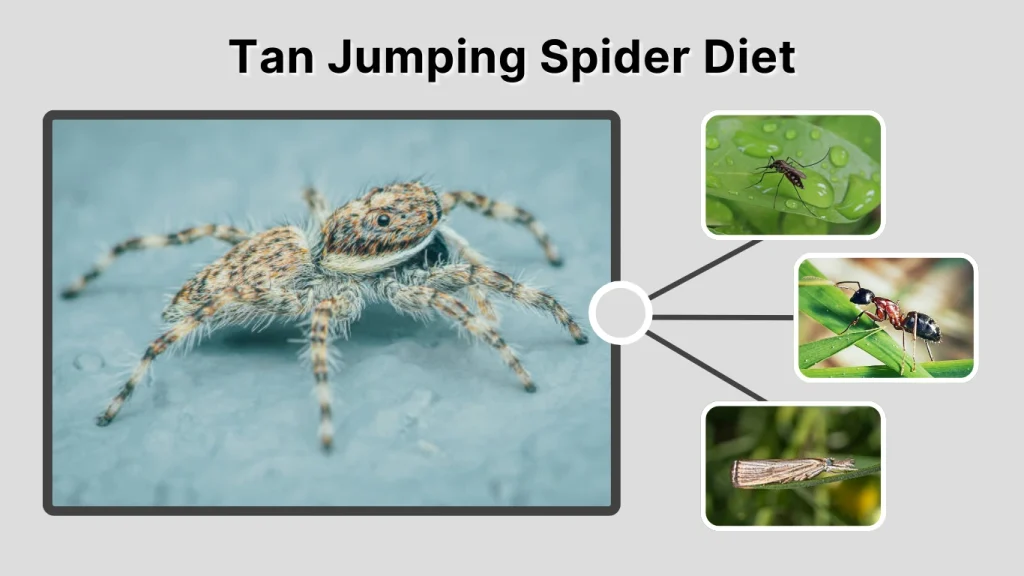
Tan jumping spiders are active daytime hunters that rely on sharp eyesight rather than webs. They stalk prey slowly, then leap forward with speed and accuracy.
- Flies and gnats
- Mosquitoes
- Ants and small beetles
- Tiny moths and soft-bodied insects
- Occasional small spiders
Their hunting style makes them helpful predators around homes and gardens, where they naturally reduce pest insect populations.
Tan Jumping Spider Life Cycle
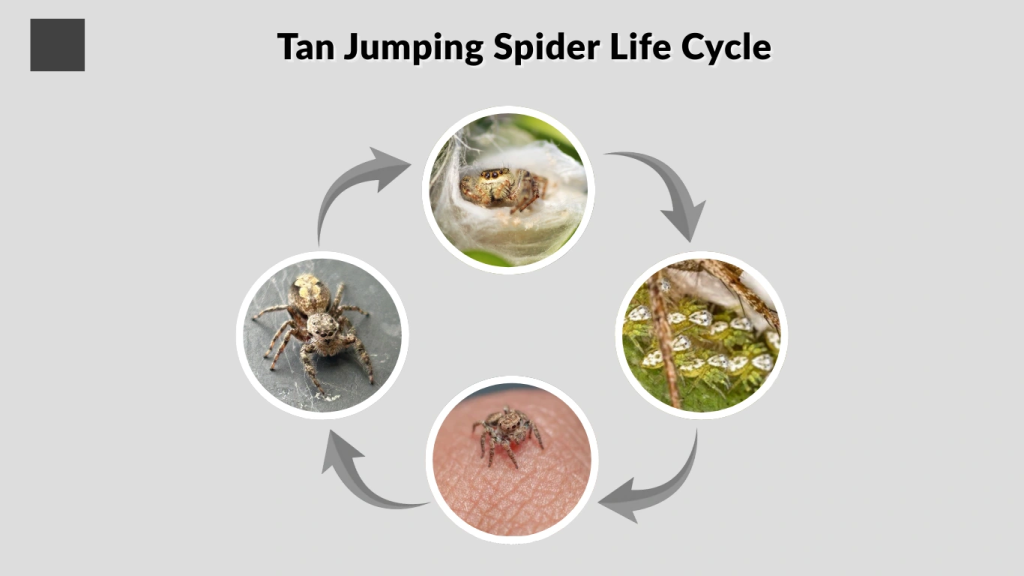
The life cycle of a tan jumping spider follows the typical development of most jumping spiders, progressing from egg to spiderling to adult.
Egg Stage and Spiderlings
After mating, the female produces a silk egg sac, often hidden in bark crevices, behind loose siding, or inside rolled leaves. Each sac can contain dozens of eggs. The female may guard the eggs until they hatch. Newly emerged spiderlings are extremely small and remain near the sac for a short time before dispersing.
Growth and Molting
Spiderlings grow by molting, shedding their exoskeleton several times. Each molt allows the spider to increase in size and develop clearer coloration. Juveniles hunt tiny insects and gradually expand their prey range as they grow. This growth stage may last several months depending on temperature and food supply.
Adult Stage and Reproduction
Once mature, tan jumping spiders focus on feeding and reproduction. Males actively search for females, performing visual courtship displays. After mating, females concentrate on egg production. Most tan jumping spiders complete only one full generation per year.
Tan Jumping Spider Lifespan
The average tan jumping spider lifespan is about one year in the wild, although some may live slightly longer under favorable conditions. Temperature, prey availability, and predators strongly influence survival. In captivity, where food and safety are controlled, tan jumping spiders may sometimes live longer, especially if kept in stable, warm environments with regular feeding.
Tan Jumping Spider Bite and Venom
Tan jumping spiders do possess venom, but they are not aggressive and rarely bite humans. Bites usually happen only if the spider is trapped against skin.
- Tan jumping spiders are not considered dangerous
- A bite may feel like a mild pinprick
- Slight redness or itching can occur
- Washing the area and applying a cold compress is usually enough
- Severe reactions are extremely rare
Is a Tan Jumping Spider Dangerous?
A tan jumping spider is not considered medically dangerous to humans or pets. Their venom is designed to subdue small insects, not people. They are shy, intelligent spiders that prefer to flee rather than bite. In most homes, they act as beneficial predators by reducing fly and mosquito numbers. For this reason, many people choose to leave them undisturbed or gently relocate them outdoors.
Tan Jumping Spider as a Pet
Tan jumping spiders are sometimes kept as pets because of their alert behavior and ability to recognize movement. They are often recommended for beginners who want to observe spider behavior without handling large or aggressive species.
Tan Jumping Spider Care
A small, well-ventilated enclosure with climbing surfaces works best. Provide twigs, cork bark, or textured walls. Maintain moderate warmth, light humidity, and indirect natural light. Clean the enclosure occasionally and remove uneaten prey.
Tan Jumping Spider Diet in Captivity
Captive tan jumping spiders can be fed fruit flies, small house flies, pinhead crickets, or other tiny insects. Feeding two to three times per week is usually sufficient, depending on spider size.
Tan Jumping Spider for Sale
Tan jumping spiders are sometimes sold by hobby breeders. Captive-bred spiders are preferable to wild-caught ones. Buyers should ensure proper housing and food sources before purchasing.
FAQs
Is a tan jumping spider dangerous to humans?
Tan jumping spiders are not dangerous to humans. Although they have venom, it is very mild and designed for insects. Bites are rare and usually cause only slight redness or itching, similar to a minor bug bite, with no serious medical effects.
How big does a tan jumping spider get?
Most tan jumping spiders grow to about 6–13 millimeters in body length. Females are typically larger than males. When legs are extended, they may appear bigger, but they are still considered small compared to many common house spiders.
What is the lifespan of a tan jumping spider?
The average tan jumping spider lifespan is around one year. Some individuals may live longer, especially in captivity, where they are protected from predators and provided with consistent food and stable environmental conditions.
Can you keep a tan jumping spider as a pet?
Yes, tan jumping spiders can be kept as pets. They are active, visually alert, and relatively easy to care for. A small enclosure, proper ventilation, and a steady supply of tiny insects are the main requirements.
Why is a tan jumping spider in my house?
A tan jumping spider usually enters a house while hunting insects. Indoor lights attract flies and gnats, which attract jumping spiders. They do not infest homes and are usually harmless temporary visitors.