
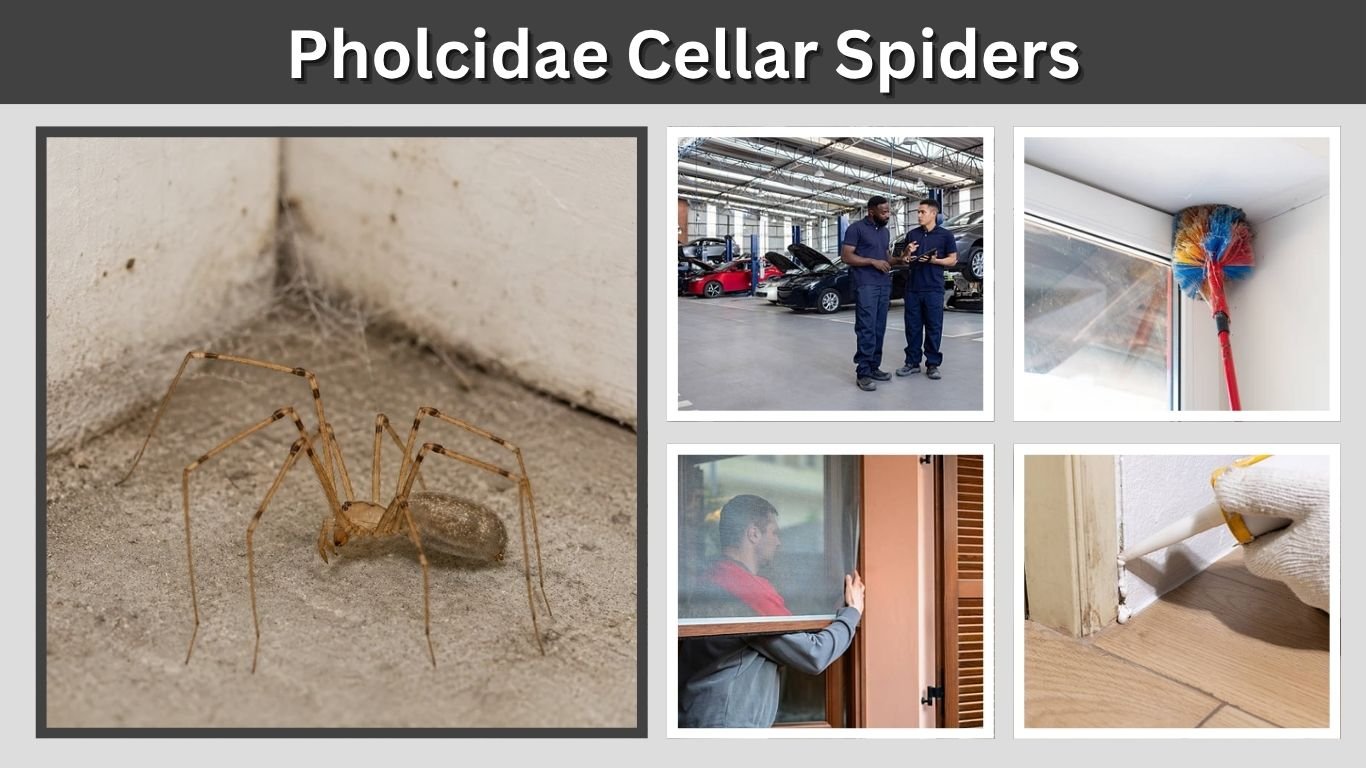
Pholcidae cellar spiders are common household arachnids recognized by their extremely long, thin legs and delicate bodies. Often called daddy longlegs spiders, they usually live in basements, garages, crawl spaces, and quiet indoor corners. Despite their unusual appearance, these spiders are generally harmless to humans and help control household insects. However, their messy webs can become a nuisance when populations increase. Understanding cellar spider identification, habitat, behavior, reproduction, and potential risks makes managing them easier. This guide also explains how to get rid of cellar spiders and prevent future infestations.
What Are Pholcidae Cellar Spiders?
Pholcidae is a family of true spiders commonly known as cellar spiders or daddy longlegs spiders. These arachnids occur in many regions worldwide, occupying buildings, caves, and natural habitats. Their distinctive long legs, small bodies, and irregular webs make them relatively easy to recognize. Unlike harvestmen, which are also called daddy longlegs, cellar spiders produce silk and possess venom glands.
Scientific Classification of Cellar Spiders
Cellar spiders belong to the order Araneae and family Pholcidae. This family includes numerous species with different body shapes, sizes, and natural habitats.
One familiar household species is the long-bodied cellar spider, Pholcus phalangioides. It occurs widely in buildings throughout North America and elsewhere.
Common Types of Cellar Spiders
Several species and groups occur in homes or natural environments.
- Long-Bodied Cellar Spider: Pholcus phalangioides, recognized by its elongated abdomen and extremely thin legs.
- Short-Bodied Cellar Spider: Species with relatively rounded bodies and delicate legs.
- Marbled Cellar Spider: Holocnemus pluchei, known for its patterned body and long legs.
- Northwestern Cellar Spider: Psilochorus hesperus, a small species native to western North America.
These spiders share similar feeding habits but may differ in coloration, size, and preferred habitats.
Pholcidae Cellar Spider Identification
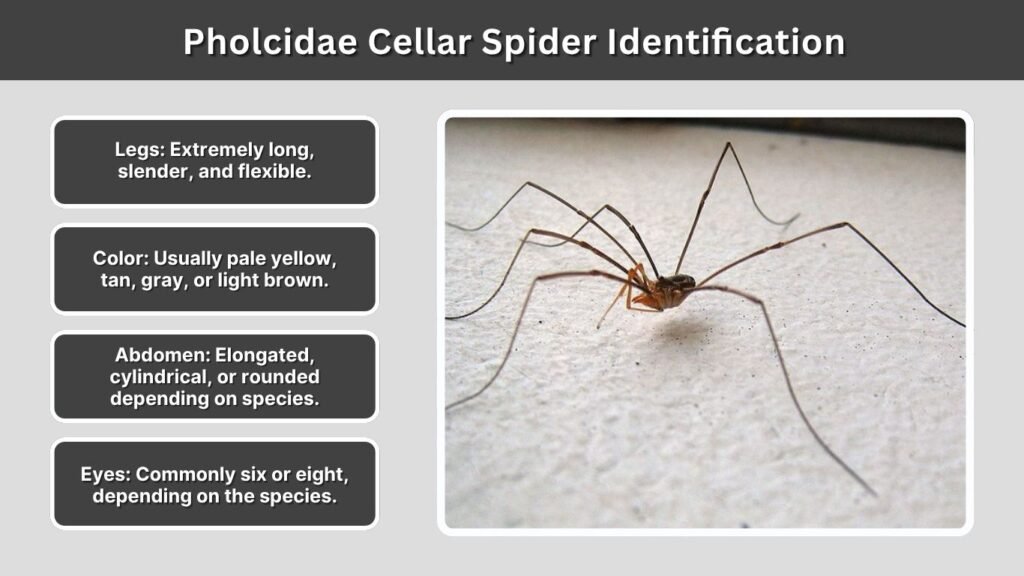
Identifying cellar spiders involves examining their body proportions, leg structure, coloration, and web arrangement. Many household species have pale brown or grayish bodies supported by disproportionately long legs. Unlike orb-weaving spiders, they build irregular silk webs without an organized circular pattern. Their characteristic vibrating behavior provides another useful identification clue when their webs are disturbed.
Physical Characteristics
Common cellar spider identification features include:
- Body size: Adult long-bodied cellar spiders generally measure approximately 6–8 millimeters, excluding their legs.
- Legs: Extremely long, slender, and flexible.
- Color: Usually pale yellow, tan, gray, or light brown.
- Abdomen: Elongated, cylindrical, or rounded depending on species.
- Eyes: Commonly six or eight, depending on the species.
- Webs: Loose, irregular silk structures in protected corners.
Cellar Spiders vs Daddy Longlegs
Cellar spiders are frequently confused with harvestmen because both possess long, thin legs.
However, harvestmen belong to the order Opiliones and have broadly joined body regions. They do not produce silk or build webs.
Cellar spiders have two distinct body sections, produce silk, and use venom to subdue their prey.
Where Do Cellar Spiders Live?
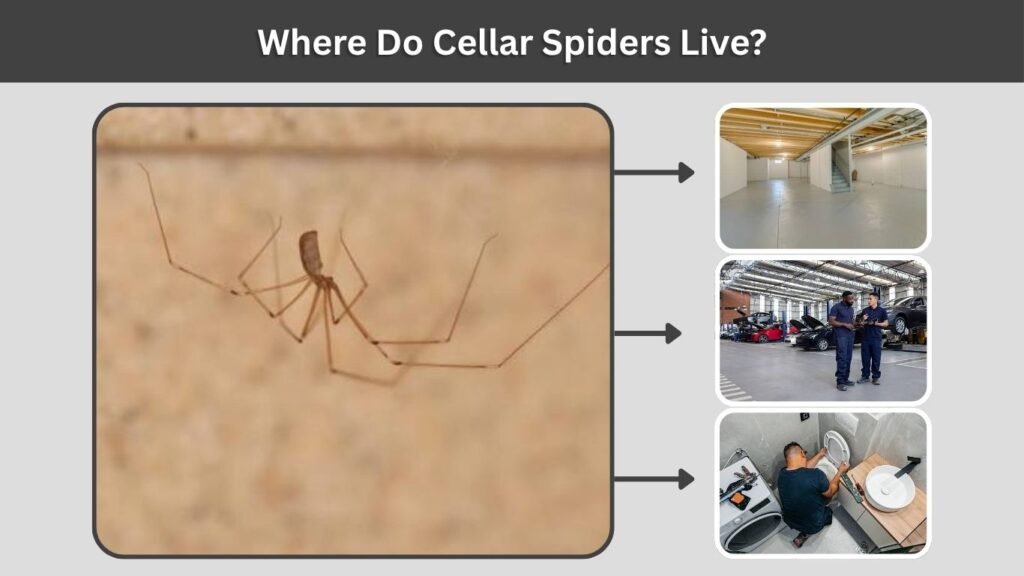
Cellar spiders occupy many sheltered environments, particularly areas with limited disturbance and available insect prey. They are commonly associated with basements, although their habitat extends well beyond underground spaces. Indoors, they prefer protected corners and locations where webs remain undisturbed. Outside, certain species inhabit caves, rock crevices, vegetation, and sheltered structures.
Common Cellar Spider Habitats
Cellar spiders frequently occur in the following locations:
- Basements: Quiet corners and areas behind stored materials.
- Crawl spaces: Protected spaces beneath buildings.
- Garages: Ceiling corners, shelves, and storage areas.
- Attics: Undisturbed roof spaces containing insects.
- Bathrooms: Protected corners where suitable prey is available.
- Warehouses: Storage areas and rarely disturbed walls.
- Caves: Natural sheltered habitats for various species.
Why Are Cellar Spiders in My House?
Cellar spiders enter or establish themselves in homes where shelter and food are available.
A regular supply of flies, mosquitoes, moths, and other small arthropods can support their populations.
Because their webs may remain undisturbed for extended periods, cluttered storage spaces can provide favorable living conditions.
What Do Pholcidae Cellar Spiders Eat?
Cellar spiders are predators that feed primarily on insects and other spiders. Their irregular webs capture small animals moving through indoor and outdoor environments. Despite their delicate appearance, some cellar spiders successfully capture prey larger than themselves. Their feeding activity can help reduce certain household pests, making them beneficial residents when their numbers remain manageable.
Cellar Spider Diet
Cellar spiders commonly consume flies, mosquitoes, moths, and other small insects.
They also prey on spiders, sometimes entering neighboring webs to capture their occupants.
After trapping prey with silk, they use venom and digestive fluids to consume it.
Why Do Cellar Spiders Vibrate Their Webs?
When threatened or disturbed, cellar spiders may rapidly shake their bodies, causing the entire web to vibrate.
This movement can make the spider difficult for predators to locate or attack.
The behavior is so distinctive that these arachnids are sometimes called vibrating spiders.
Are Pholcidae Cellar Spiders Dangerous?
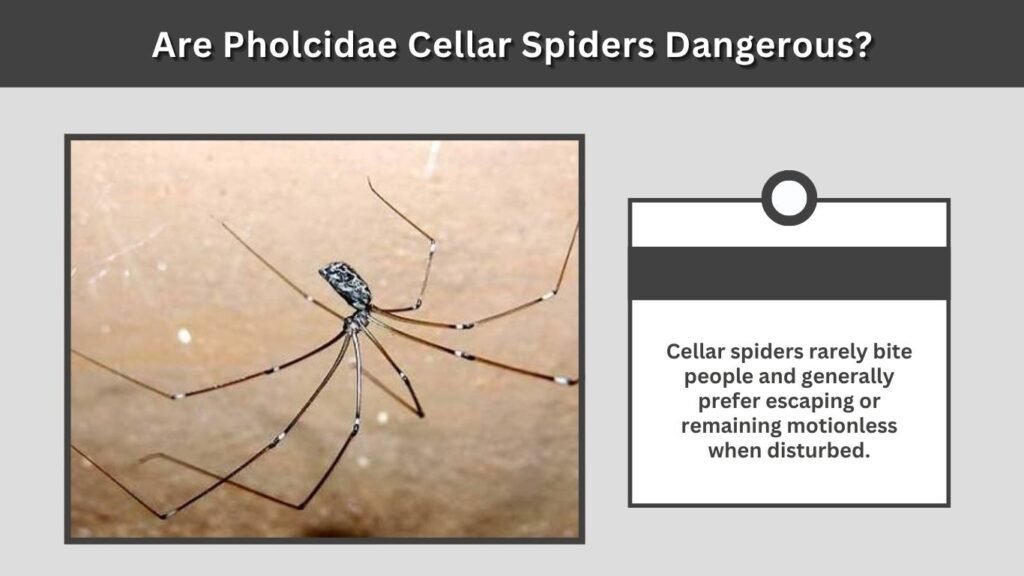
Cellar spiders have developed an intimidating reputation because of their extremely long legs and unusual appearance. However, scientific observations show that common household species pose little danger to humans. Like most spiders, they possess venom for capturing prey, but their venom is not considered medically significant to people. Understanding their defensive behavior helps separate genuine risks from popular misconceptions.
Do Cellar Spiders Bite Humans?
Cellar spiders rarely bite people and generally prefer escaping or remaining motionless when disturbed.
Although they possess fangs, they are not aggressive toward humans.
A suspected spider bite should not automatically be attributed to a cellar spider without reliable identification.
Are Cellar Spiders the Most Venomous Spiders?
No. The claim that cellar spiders possess the world’s most powerful venom but cannot bite humans is a widespread myth.
Their venom is adapted for subduing small arthropods and is not regarded as medically dangerous to humans.
Their fangs are small, but the popular explanation that biting humans is physically impossible is misleading.
Should You Kill Cellar Spiders?
Cellar spiders generally do not require extermination.
They help reduce populations of household insects and other spiders.
However, homeowners may choose to relocate them or remove their webs when they become inconvenient.
Cellar Spider Life Cycle and Reproduction
Cellar spiders reproduce through mating, egg production, and gradual development into adulthood. Females display unusual parental behavior by carrying their eggs in loosely wrapped silk bundles held near their mouthparts. Young spiderlings resemble miniature adults and grow through repeated molts. Their development depends on environmental temperature, available prey, and species-specific biological characteristics.
How Do Cellar Spiders Reproduce?
After mating, female cellar spiders produce eggs enclosed in a loose silk covering.
Female long-bodied cellar spiders may produce several egg batches during their lifetimes, commonly containing approximately 13–60 eggs per batch.
Unlike spiders that attach egg sacs to webs, cellar spider females carry their eggs until hatching.
How Long Do Cellar Spiders Live?
Development from egg to adulthood may take approximately one year under certain conditions.
Some adult cellar spiders survive for an additional year or two.
Actual lifespan varies with species, temperature, food availability, and environmental conditions.
How to Get Rid of Cellar Spiders (Pholcidae)
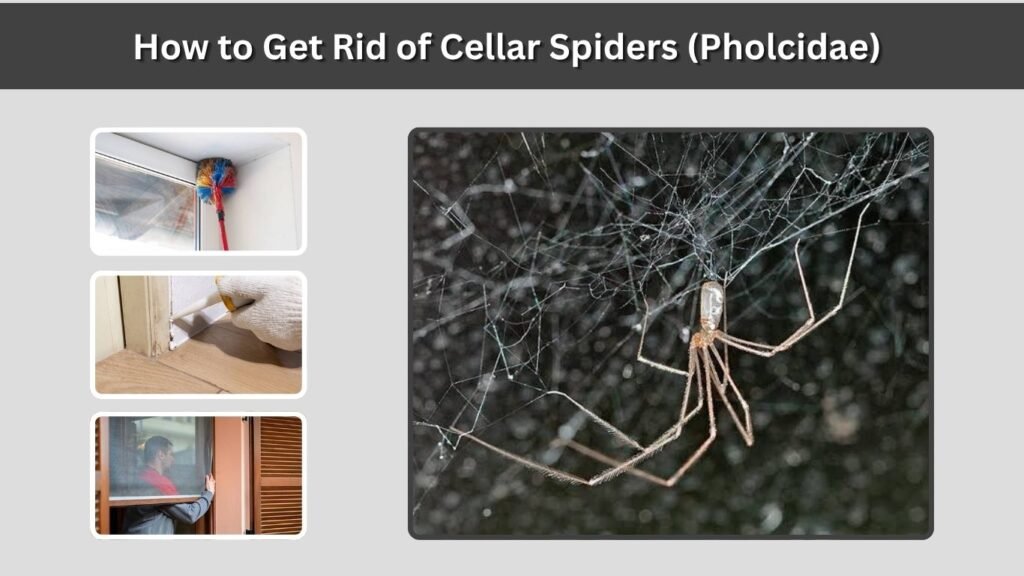
Although cellar spiders are beneficial predators, their accumulated webs can make indoor spaces appear neglected. Large populations may develop in basements, garages, and storage areas where insects are plentiful. Fortunately, chemical treatments are usually unnecessary. Regular cleaning, sealing entry points, and reducing insect activity can help control cellar spider populations and discourage their return.
Effective Cellar Spider Removal Methods
These practical steps can help reduce cellar spiders indoors.
- Remove existing webs: Use a vacuum or soft broom to clean corners and ceilings.
- Relocate individual spiders: Capture them carefully with a container and release them in suitable sheltered locations.
- Reduce household insects: Eliminate food sources that attract spiders.
- Seal entry points: Repair cracks around doors, windows, and foundations.
- Reduce clutter: Organize storage areas and remove unnecessary materials.
- Repair window screens: Prevent flying insects and spiders from entering.
- Improve maintenance: Regularly inspect basements, garages, and crawl spaces.
How to Prevent Cellar Spiders From Returning
Long-term prevention involves reducing suitable web-building locations and controlling household insect populations.
Inspect quiet corners frequently and remove newly formed webs before they accumulate.
Avoid using indoor pesticides unnecessarily. If chemical control becomes essential, choose a product specifically labeled for the intended location and follow its instructions.
FAQs
Cellar spiders are among the most frequently encountered household arachnids, yet many homeowners remain uncertain about their behavior and safety. Their resemblance to harvestmen and their tendency to occupy hidden corners contribute to confusion. The following questions explain whether these spiders are harmful, why they appear indoors, and how homeowners can manage them effectively without unnecessary chemical treatments.
1. Are Pholcidae Cellar Spiders Poisonous?
Cellar spiders are venomous, not poisonous in the usual biological sense. Their venom helps capture insect prey but is not considered medically significant to humans.
2. Do Cellar Spiders Eat Other Spiders?
Yes. Certain cellar spiders hunt and consume other spider species, sometimes invading their webs to capture them.
3. Why Do I Have So Many Cellar Spiders?
Numerous cellar spiders may indicate abundant insect prey, protected web-building locations, or areas that remain undisturbed for long periods.
4. Are Cellar Spiders Good to Have Around?
Yes. They can help control flies, mosquitoes, moths, and other household arthropods. However, excessive web accumulation may become inconvenient.
5. What Is the Fastest Way to Get Rid of Cellar Spiders?
Vacuuming webs and removing individual spiders provides immediate results. Sealing entry points, reducing clutter, and controlling indoor insects help prevent their return.
