
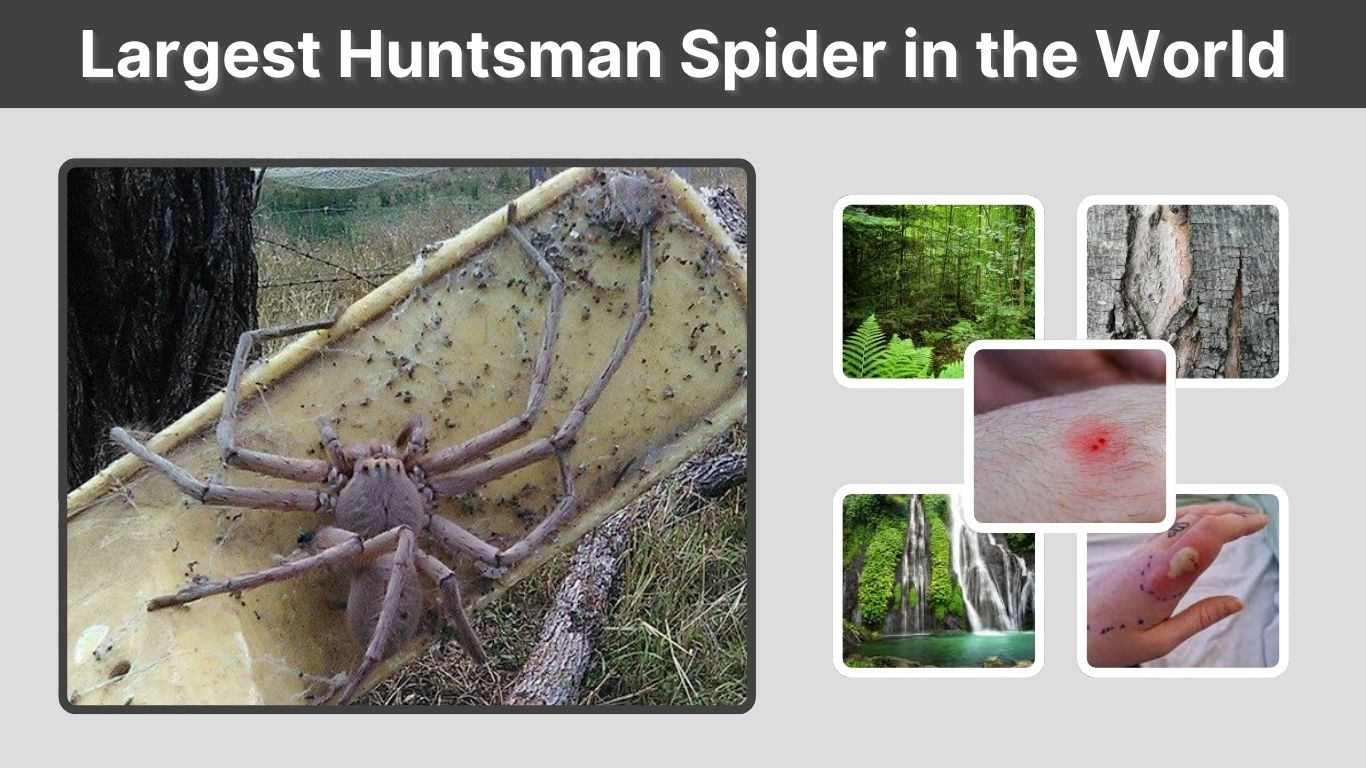
Huntsman spiders are famous for their enormous leg span, fast movement, and intimidating appearance. These spiders belong to the Sparassidae family and are found mainly in warm tropical regions around the world. Some species grow so large that they are considered among the biggest spiders on Earth by leg span. Australia is especially known for giant huntsman spiders, although the world’s largest huntsman species was actually discovered in Laos. Despite their frightening appearance, huntsman spiders are usually shy hunters that avoid humans and rarely cause serious harm.
What Is a Huntsman Spider?
Huntsman spiders are large fast-moving spiders known for their flattened bodies and wide sideways legs. Unlike web-building spiders, huntsman spiders actively chase insects and other prey at night. Their crab-like movement and huge leg span often surprise people when they appear on walls, ceilings, or trees.
Huntsman Spider Scientific Classification
Huntsman spiders belong to the Sparassidae family, which includes many tropical and subtropical species found across Asia, Australia, Africa, and the Americas.
Why Huntsman Spiders Look So Large
Several features make huntsman spiders appear enormous:
- Extremely long legs
- Wide sideways leg posture
- Flattened body shape
- Fast movement across surfaces
- Large spread compared to body size
Their thin bodies often make the leg span look even more dramatic.
Huntsman Spider vs Other Large Spiders
| Spider Type | Known For |
| Huntsman Spider | Huge leg span |
| Goliath Birdeater | Heavy body weight |
| Tarantula | Thick hairy appearance |
| Wolf Spider | Fast ground hunting |
Largest Huntsman Spider in the World
The largest huntsman spider species known today is the giant huntsman spider, scientifically called Heteropoda maxima. This species became famous because of its incredible leg span and unusual cave habitat.
Giant Huntsman Spider Species
The giant huntsman spider was discovered in Laos in 2001. It lives mainly inside caves and dark rocky environments where it hunts insects and other small prey.
Largest Huntsman Spider Size
The giant huntsman spider can reach an enormous leg span measuring around 12 inches across. This makes it one of the widest spiders in the world.
How Big Is the Largest Huntsman Spider?
People often compare the largest huntsman spider to:
- A dinner plate
- A human hand
- A small pizza
- A large wall clock
- A broom head width
Its extremely long legs create a much larger appearance than many heavier spiders.
Largest Recorded Huntsman Spider
Although viral internet photos often exaggerate spider size using camera angles, scientifically recorded giant huntsman spiders are still genuinely enormous by spider standards.
Largest Australian Huntsman Spider
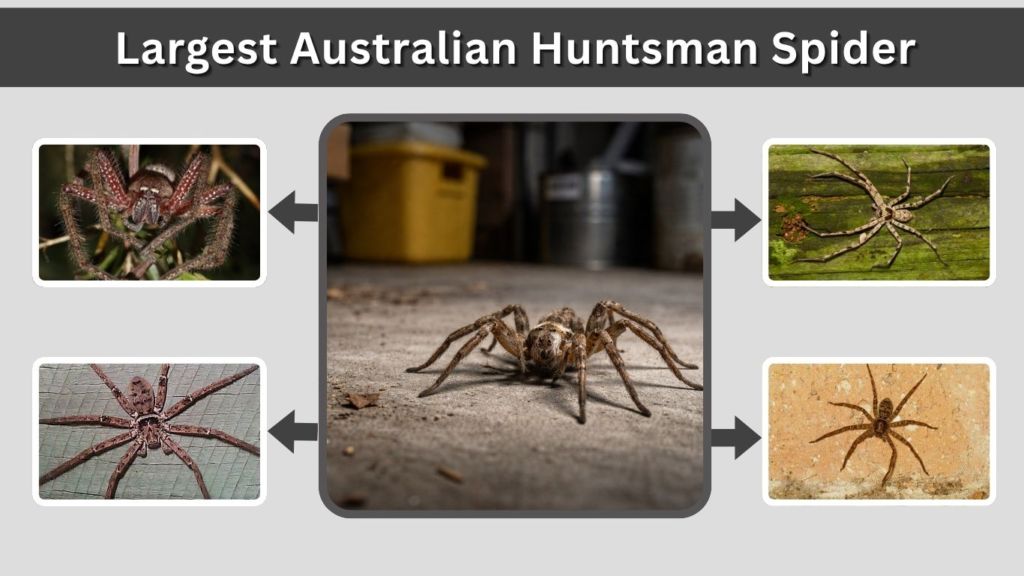
Australia is home to several very large huntsman spider species that regularly appear in homes, garages, sheds, and cars. These spiders have become famous online because of their size and sudden appearances.
Australia’s Largest Huntsman Spider Species
Common giant Australian huntsman spiders include:
- Badge huntsman spider
- Brown huntsman spider
- Tropical huntsman spider
- Jungle huntsman spider
- Flat huntsman spider
These species vary in color and size but all share the typical wide huntsman appearance.
Largest Huntsman Spider Found in Australia
Large huntsman spiders are commonly reported in Queensland, tropical northern Australia, and humid coastal regions where warm conditions support insect populations.
Why Australian Huntsman Spiders Get So Big
Australia’s warm climate, abundant prey, and tropical habitats create excellent conditions for large huntsman spiders to thrive and grow.
Is the Huntsman Spider the Largest Spider?
Huntsman spiders are among the largest spiders in the world by leg span, but they are not the heaviest spiders overall.
Largest Spider by Leg Span
The giant huntsman spider is considered one of the widest spiders on Earth because of its extremely long legs.
Largest Spider by Weight
The Goliath birdeater tarantula is heavier and bulkier than huntsman spiders, even though its legs are usually shorter.
Largest Spider by Body Size
Some tarantulas have thicker bodies and heavier mass, while huntsman spiders rely more on their wide leg spread for overall size.
Giant Huntsman vs Goliath Birdeater Table
| Feature | Giant Huntsman | Goliath Birdeater |
| Largest Feature | Leg span | Weight |
| Body Shape | Flat and thin | Thick and hairy |
| Habitat | Tropical caves | Rainforests |
| Venom Danger | Mild | Mild to moderate |
Huntsman Spider Size and Appearance
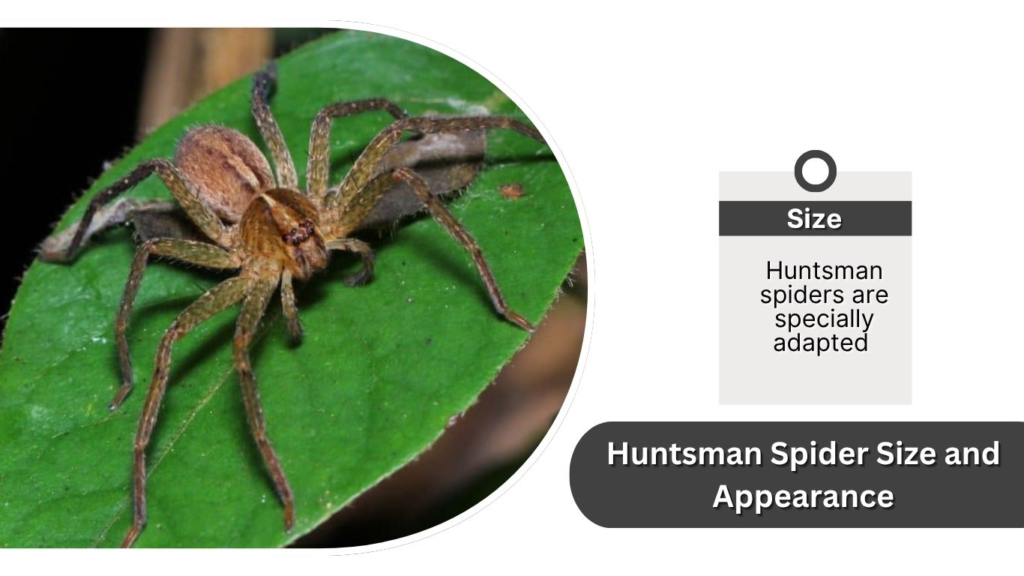
Huntsman spiders are specially adapted for climbing and rapid movement. Their body structure helps them spread their legs widely across flat surfaces.
Leg Span Measurements
The largest huntsman spiders may stretch nearly a foot across from leg tip to leg tip, creating a startling appearance indoors or on trees.
Body Structure
Their flattened abdomen and long flexible legs help them squeeze into narrow cracks, bark crevices, and hidden shelter areas.
Male vs Female Huntsman Spider Size
Female huntsman spiders are often slightly larger and heavier than males, especially when fully mature.
Baby Huntsman Spider Growth
Young huntsman spiders begin life very small but grow rapidly through repeated molting stages. Each time they shed their outer exoskeleton, their body and legs become larger.
Growth Through Molting
Baby huntsman spiders may molt several times before reaching adulthood. During this process, they temporarily become soft and vulnerable until the new exoskeleton hardens.
Juvenile Appearance
Young huntsman spiders already display their characteristic sideways legs and flattened body shape, although their colors may appear lighter than adults.
Time Needed to Reach Full Size
In warm tropical climates, huntsman spiders may reach adult size within one to two years depending on species and food availability.
Where the Largest Huntsman Spiders Live
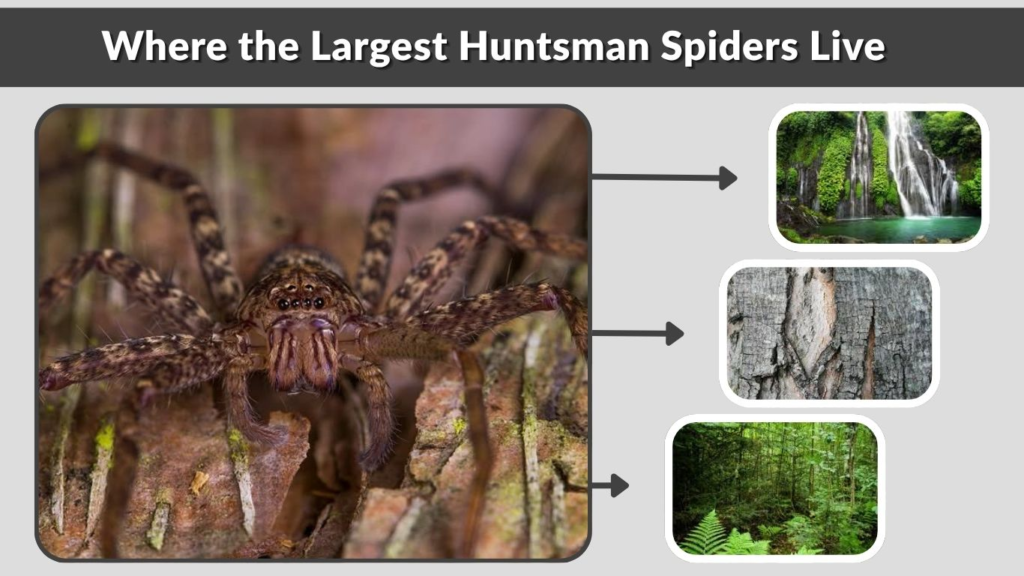
Large huntsman spiders prefer warm humid environments where insects are abundant. Most species are found in tropical and subtropical regions around the world.
Tropical Forest Habitats
Common natural habitats include:
- Rainforests
- Tree bark crevices
- Palm trees
- Rocky caves
- Dense vegetation
- Wooded tropical areas
These environments provide shelter and hunting opportunities.
Huntsman Spiders in Homes
In Australia and other warm regions, huntsman spiders often wander into homes, garages, and sheds while searching for insects or shelter.
Cave-Dwelling Giant Huntsman Species
The giant huntsman spider Heteropoda maxima is known for living mainly inside caves in Laos, where it hunts in dark humid conditions.
Huntsman Spider Distribution Around the World
Huntsman spiders are commonly found in Australia, Southeast Asia, Pacific islands, Africa, and tropical parts of the Americas.
Huntsman Spider Behavior
Huntsman spiders are active hunters that rely on speed rather than webs to capture prey. Their quick movements often startle people who encounter them unexpectedly.
Fast Running Speed
Huntsman spiders can move extremely quickly across walls, ceilings, and floors. Their sideways running style helps them escape predators and chase insects.
Hunting Without Webs
Unlike orb-weaving spiders, huntsman spiders do not build large prey-catching webs. Instead, they actively search for insects during nighttime hunting.
Are Giant Huntsman Spiders Aggressive?
Most huntsman spiders are shy and defensive rather than aggressive. They usually try to escape when disturbed instead of attacking humans.
Why Huntsman Spiders Enter Homes
Huntsman spiders may enter buildings while hunting cockroaches, moths, and other insects attracted to lights and food sources.
Are Giant Huntsman Spiders Dangerous?
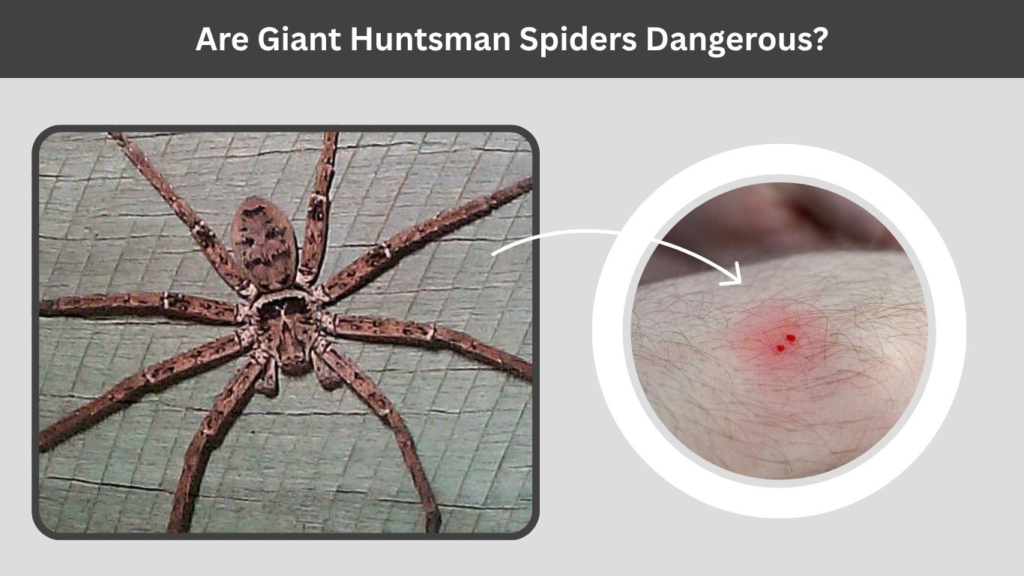
Although giant huntsman spiders look frightening, they are not considered highly dangerous to humans. Their venom mainly helps them subdue insect prey.
Huntsman Spider Venom
Huntsman spiders are venomous, but their venom is usually mild compared to medically dangerous spiders.
Huntsman Spider Bite Symptoms
Typical bite symptoms include:
- Mild pain
- Redness
- Swelling
- Itching
- Local irritation
Most bites heal without serious medical problems.
Can Huntsman Spiders Kill Humans?
There are no well-known confirmed cases of huntsman spider bites causing human death. Severe allergic reactions are possible but rare.
Why People Fear Huntsman Spiders
Their sudden movement, giant appearance, and viral internet photos often make huntsman spiders seem far more dangerous than they really are.
Famous Huntsman Spider Sightings
Large huntsman spider photos and stories regularly spread online because of the spiders’ shocking appearance.
Largest Huntsman Spider on a Broom
Viral images showing giant huntsman spiders on brooms or walls often use camera angles that exaggerate the spider’s actual size.
Woman Finds World’s Largest Huntsman Spider
Stories about homeowners discovering huge huntsman spiders in houses or garages frequently attract major internet attention.
Huntsman Spider Reddit Stories
Online forums and social media contain countless stories of surprise encounters with huntsman spiders inside cars, bathrooms, and bedrooms.
Common Myths About Giant Huntsman Spiders
Many myths exaggerate the danger and behavior of huntsman spiders. Most fears come from appearance rather than actual risk.
“Deadly Giant Spider” Myths
Huntsman spiders are not considered deadly to humans despite their intimidating size and fast movement.
Are Huntsman Spiders Really Bigger Than Plates?
Some species can approach the size of a dinner plate by leg span, but many online photos use perspective tricks that make them appear even larger.
Do Huntsman Spiders Chase Humans?
Huntsman spiders may run toward people accidentally while searching for escape routes, but they do not actively hunt humans.
FAQs
What is the largest huntsman spider in the world?
The giant huntsman spider, Heteropoda maxima, is considered the world’s largest huntsman spider by leg span.
How big can the largest huntsman spider get?
The largest giant huntsman spiders may reach a leg span of around 12 inches across from one leg tip to another.
Are giant huntsman spiders dangerous to humans?
Most huntsman spiders are not considered dangerous and usually cause only mild bite symptoms like redness and swelling.
Is the huntsman spider the largest spider on Earth?
Huntsman spiders are among the largest by leg span, but the Goliath birdeater is heavier and bulkier by body weight.
Where are the largest huntsman spiders found?
Large huntsman spiders are mainly found in Australia, Southeast Asia, and tropical cave habitats such as those in Laos.
