
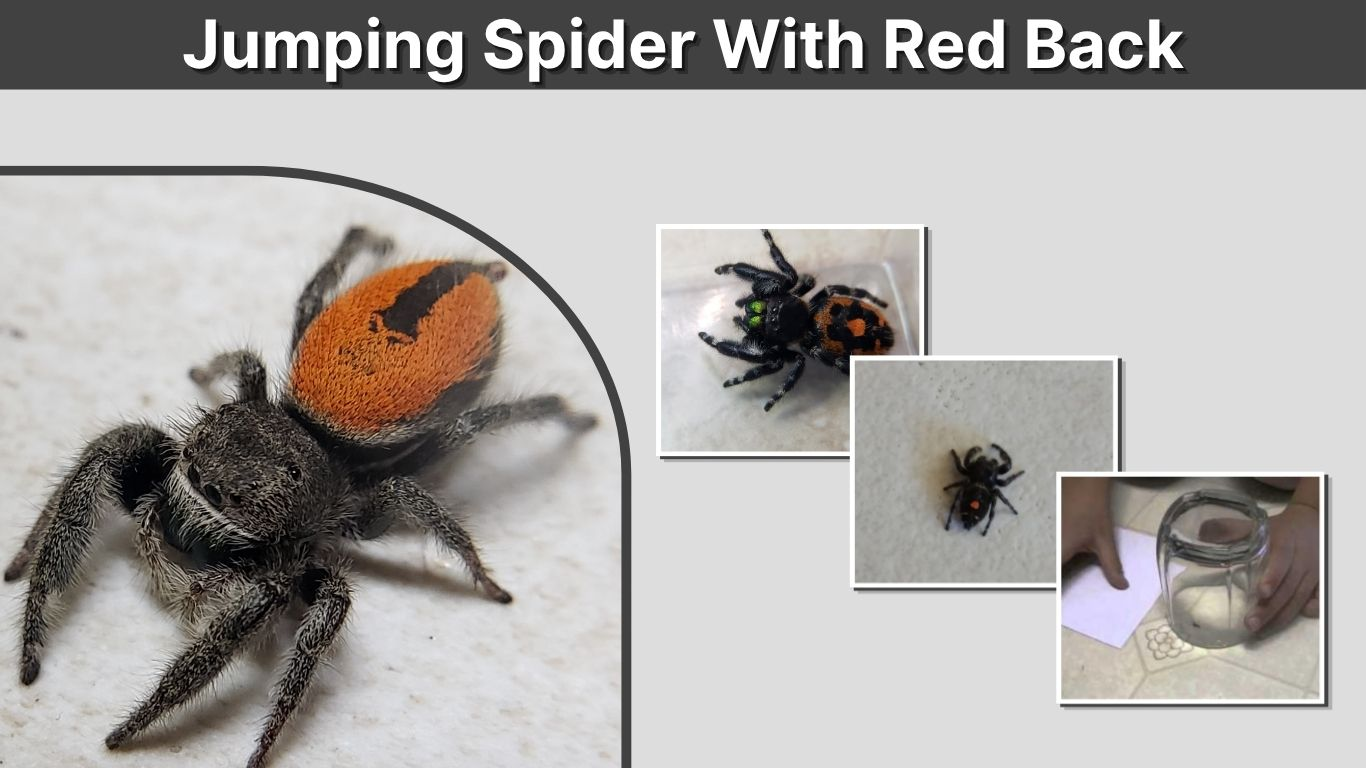
A jumping spider with a red back can look surprising, especially when it appears on a wall, window, garden plant, or inside the home. Most searches for this spider come from people trying to identify a small black, fuzzy spider with a red dot, red spot, or reddish-orange marking on its back. In many cases, the spider is a bold jumping spider, but some western species have a more obvious red-backed look.
What Is a Jumping Spider With a Red Back?
A jumping spider with a red back is usually a small, active spider from the family Salticidae. These spiders are known for their excellent eyesight, compact bodies, quick movements, and sudden jumps. They do not build large capture webs like orb-weavers. Instead, they hunt insects by stalking, watching, and pouncing.
The “red back” description can mean different things depending on the spider’s age, species, and location. Some jumping spiders have one red or orange spot on the abdomen. Others have a full reddish patch across the back. In many young bold jumping spiders, the back marking may look orange or red before it becomes white as the spider matures.
Many people notice these spiders because they behave differently from other household spiders. They may turn toward you, pause, raise their front legs, or move in short bursts. This behavior makes them seem curious, but they are usually just using their strong vision to understand movement around them.
Common Species That Match This Description
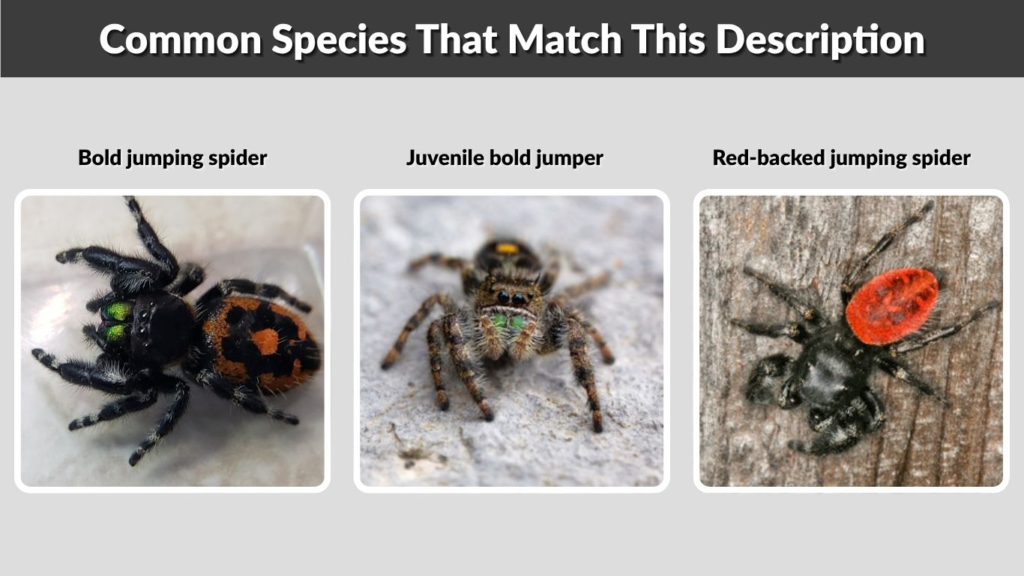
Several jumping spiders can match the phrase “red back,” “red dot,” or “red spot on back.” The exact identification depends on body color, marking shape, region, and size.
| Spider description | Likely match | Key identification clue |
| Black fuzzy spider with one red or orange dot | Bold jumping spider | Compact black body, bright front eyes, greenish mouthparts, one central spot |
| Black jumping spider with red spot and white markings | Juvenile bold jumper | Orange-red markings may fade to white with age |
| Spider with a full red abdomen and black body | Red-backed jumping spider | More common in western North America |
| Brown or golden jumping spider with red pattern | Other Phidippus species or local jumper | Needs photo-based identification |
| Red-backed spider with shiny round abdomen | Possibly not a jumping spider | Compare carefully with widow-type spiders |
Bold Jumping Spider With a Red Dot
The bold jumping spider, also called the bold jumper, is one of the most common spiders people find around homes, walls, windows, fences, and gardens. It is often black, fuzzy, and compact, with strong front legs and large forward-facing eyes.
Many bold jumpers have a pale spot on the back of the abdomen. In some individuals, especially younger ones, this spot can appear red, orange, or reddish-brown. This is why people often search for a “black jumping spider with red dot on back” or “bold jumper fuzzy black spider with red dot on back.”
How to recognize it
Look for these traits:
- Small, stout, fuzzy body
- Black or dark body color
- One central spot on the back, sometimes red, orange, or white
- Large front-facing eyes
- Green, blue-green, or metallic-looking mouthparts
- Quick, jerky walking pattern
- Ability to jump short distances when hunting or escaping
The red dot alone is not enough for a perfect identification, but when it appears on a fuzzy black spider with large front eyes, a bold jumper is a strong possibility.
Red-Backed Jumping Spider
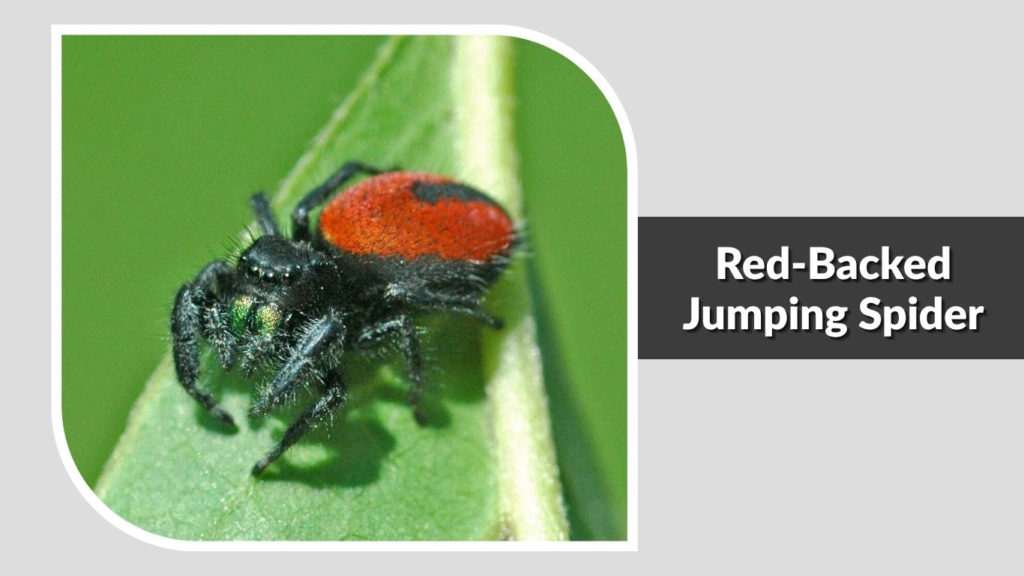
Another possible match is the red-backed jumping spider, known scientifically as Phidippus johnsoni. This species has a more obvious red abdomen rather than just a small red dot. It is especially associated with western North America.
This spider can have a black body with a red or reddish-orange abdomen. Females may show a darker stripe or pattern through the red area, while males often appear more sharply black and red. Because of the strong red coloration, people may describe it as a “jumping spider with red back” rather than a “jumping spider with red dot.”
Where it is often found
Red-backed jumping spiders may be seen in:
- Dry outdoor areas
- Woodlands and open habitats
- Around rocks, logs, and ground-level hiding places
- Gardens and natural edges
- Western regions of North America
If you live in the western United States or nearby regions and the spider has a broad red abdomen, the red-backed jumping spider may be more likely than a typical bold jumper.
Is a Jumping Spider With a Red Back Dangerous?
A jumping spider with a red back is usually not dangerous to people. Jumping spiders have venom because they use it to subdue small prey, but they are not considered medically significant for most people. They usually avoid humans and bite only when trapped, squeezed, or handled roughly.
A bite, if it happens, is often mild. Some people may notice slight redness, swelling, itching, or a pinprick-like feeling. Serious reactions are uncommon, but anyone with unusual symptoms, worsening swelling, breathing difficulty, or signs of allergy should seek medical help.
It is also important not to confuse a red-backed jumping spider with a widow spider. Jumping spiders are compact, hairy, active hunters with large front eyes. Widow spiders usually have smoother, shinier bodies, longer legs, and a different body shape. If you are unsure, avoid touching the spider and use a photo for identification.
Why Does the Spider Have a Red Dot or Red Back?
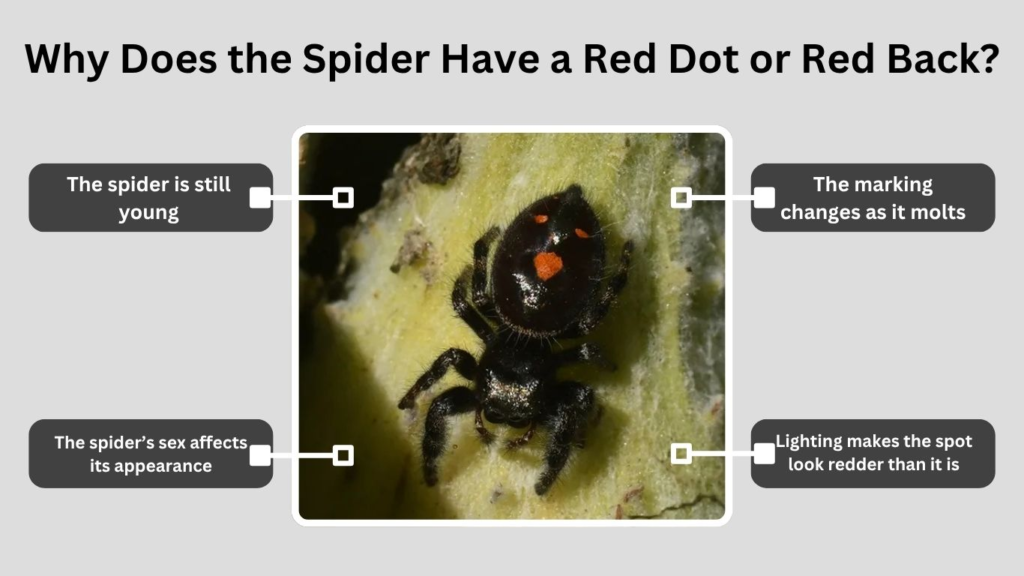
The red marking may serve different purposes depending on the species. In some spiders, bright markings can help with recognition, camouflage, warning signals, or mimicry. In bold jumping spiders, young individuals often show orange or red markings that may turn paler as they mature.
Color can also vary between individuals. Lighting, camera flash, age, sex, and local variation can make the same species look slightly different. A marking that looks red indoors may appear orange, white, cream, or yellow outdoors.
Possible reasons for color variation
- The spider is still young
- The marking changes as it molts
- The species naturally has a red-backed pattern
- The spider’s sex affects its appearance
- Lighting makes the spot look redder than it is
- Regional variation changes the color pattern
This is why photo-based spider identification often requires more than one angle. A clear view of the top of the abdomen, face, legs, and body shape helps narrow the answer.
How to Identify It at Home
You can identify the spider more confidently by observing it without touching it. A phone photo from above and the front is usually enough for a basic comparison.
Check the body shape
Jumping spiders are usually short, compact, and sturdy. They do not have the long, thin legs of cellar spiders or the round, glossy body of widow spiders. Their front eyes are large and noticeable.
Watch the movement
Jumping spiders move in short, alert bursts. They often stop, look around, and then jump or pivot. They do not rely on a sticky web to catch insects.
Look at the back marking
A single red or orange dot may suggest a juvenile bold jumper. A wide red abdomen may suggest a red-backed jumping spider, especially in western areas.
Notice where you found it
A spider on a sunny wall, window frame, fence, porch, or garden plant is often a jumping spider. They like areas where they can see and stalk prey.
What Should You Do If You Find One Indoors?
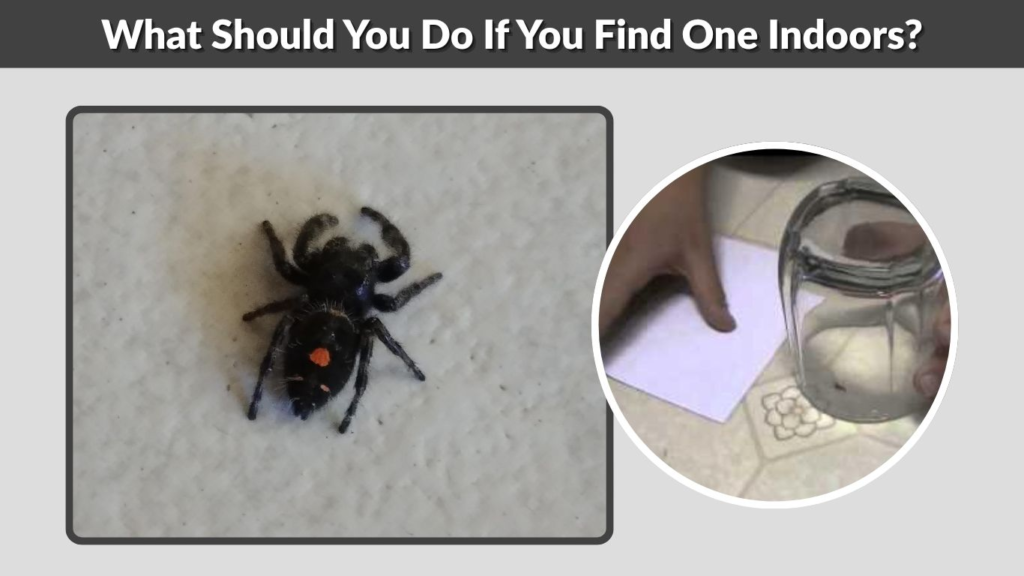
If you find a jumping spider indoors, you do not need to panic. These spiders are usually harmless and may even help reduce small insects. Many people choose to leave them alone if they are not bothering anyone.
For people who do not want spiders inside, the easiest option is gentle relocation.
Safe removal steps
- Place a clear cup over the spider
- Slide stiff paper underneath
- Carry it outside carefully
- Release it near plants, shrubs, or a sheltered wall
- Avoid squeezing or handling it with bare hands
Do not spray pesticides for a single jumping spider. Indoor spider sightings are often solved by sealing entry points, reducing clutter, and keeping windows or screens in good condition.
Are These Spiders Good for Gardens?
Yes, jumping spiders are beneficial predators. They eat small insects and other arthropods, which makes them useful in gardens, yards, and around homes. They hunt during the day and help control small flies, gnats, plant pests, and other tiny prey.
Unlike web-building spiders, they actively patrol surfaces. You may see them on leaves, stems, fences, outdoor furniture, or sunny siding. Their presence usually means there is prey nearby, not that your home is infested.
Can You Keep a Red-Backed Jumping Spider as a Pet?
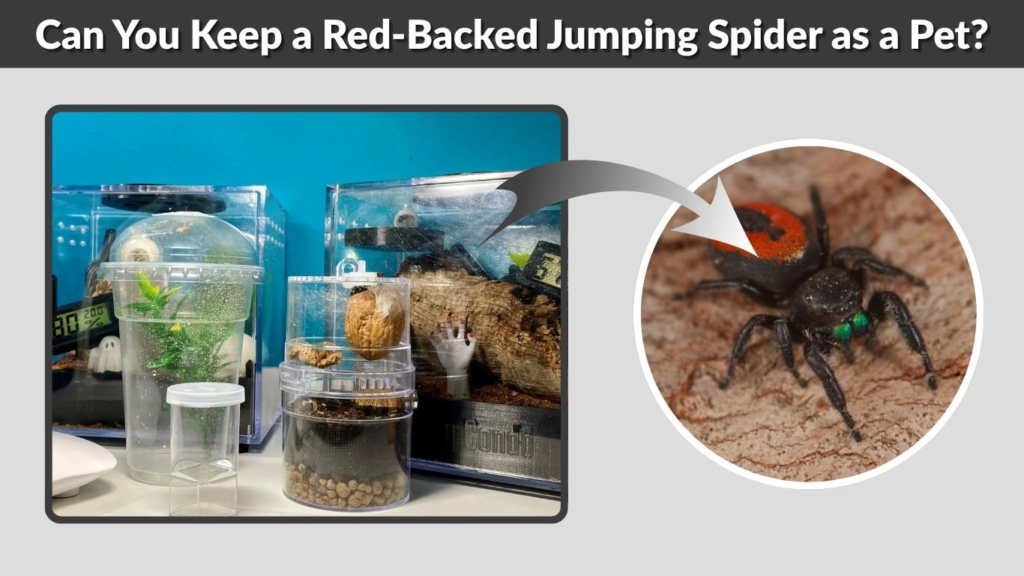
Some people keep jumping spiders as small observation pets, especially species with bold colors and active behavior. However, proper care matters. A jumping spider needs ventilation, safe enclosure size, climbing surfaces, clean conditions, and suitable small prey.
If you are interested in keeping one, it is better to learn the species first. Some wild spiders may already be mature, stressed, injured, or near the end of their life cycle. Captive-bred spiders from responsible keepers are often easier for beginners.
Basic care considerations
- Small ventilated enclosure
- Plenty of height and climbing surfaces
- No sharp decorations
- Fine misting for drinking water
- Correct prey size
- Avoid overfeeding
- Avoid direct overheating from sunlight
A jumping spider should not be handled frequently. Even though many are calm, they are fragile and can be injured by falls, pressure, or sudden handling.
Similar Spiders People Confuse With Red-Backed Jumpers
Not every spider with red on its body is a jumping spider. Some harmless spiders, dangerous spiders, and even insects can look similar at first glance.
Widow spiders
Black widows and related widow spiders have smoother bodies and a more rounded abdomen. Their red marking is often on the underside, although some species may show red or orange markings elsewhere. They do not have the same fuzzy, big-eyed jumping spider appearance.
Ant-mimic spiders
Some spiders mimic ants or wasps and may have red, orange, or black patterns. Their body shape is usually narrower than a jumper’s.
Other Phidippus species
The Phidippus group includes several colorful jumping spiders. Some may have red, orange, white, or metallic markings. Regional species can look very similar without close inspection.
Small beetles or true bugs
A quick-moving red-and-black creature may not be a spider at all. Count the legs if possible. Spiders have eight legs, while insects have six.
When to Be Careful
Most jumping spider encounters are safe, but caution is still sensible. Do not handle a spider you cannot identify. Do not allow children to pick it up. Do not press it against the skin. If you suspect it may be a widow spider or another medically important species, avoid contact and seek local identification help.
You should be especially cautious if:
- The spider has a shiny round body
- You cannot see large front-facing eyes
- The red marking is on the underside
- The spider is hiding in dark cluttered areas
- You live in a region with medically important spiders
- Someone has been bitten and symptoms are worsening
FAQs
What is a black jumping spider with a red dot on its back?
It is often a bold jumping spider, especially if the spider is small, fuzzy, black, and has large front-facing eyes. Young bold jumpers may have orange or red markings that become paler as they mature. A clear photo of the face and abdomen can help confirm the identification.
Is a jumping spider with a red back poisonous?
Jumping spiders are venomous to tiny prey, but they are not considered dangerous to most people. They rarely bite unless trapped or handled roughly. A bite is usually mild, but unusual symptoms or allergic reactions should be taken seriously and checked by a medical professional.
Why does my jumping spider have a red spot instead of a white spot?
The red spot may be related to age, species, or natural color variation. Juvenile bold jumping spiders can show orange or red markings before developing the more typical pale or white markings as adults. Lighting and camera angle can also make the spot look redder.
Can a red-backed jumping spider live inside my house?
Yes, a jumping spider may wander indoors, especially near windows, walls, plants, or bright areas where insects gather. It is not usually a sign of a serious infestation. You can leave it alone or gently move it outside with a cup and paper.
How can I tell a red-backed jumping spider from a black widow?
A jumping spider is usually fuzzy, compact, active during the day, and has large front-facing eyes. A black widow is smoother, shinier, longer-legged, and has a more rounded abdomen. If you are unsure, do not touch the spider and use a clear photo for expert identification.
