
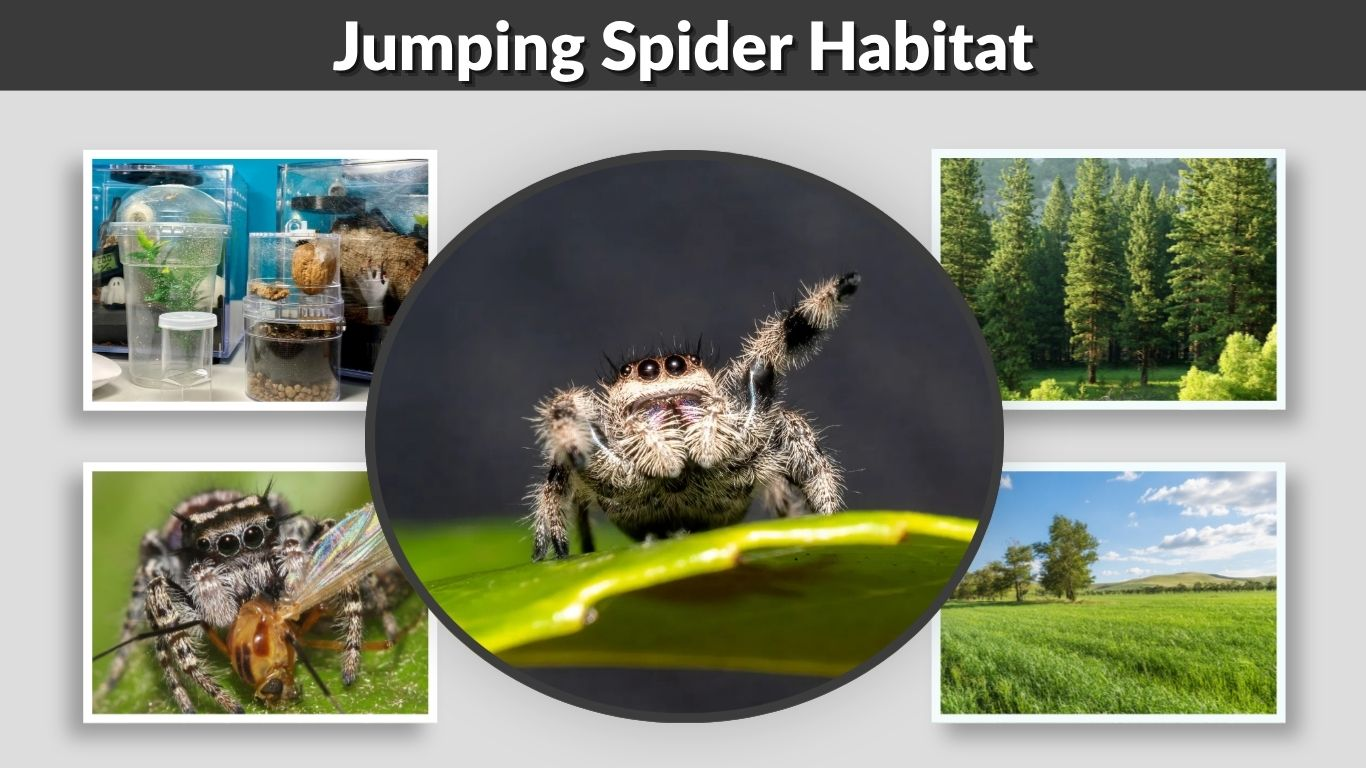
Jumping spiders are small, curious hunters that live in many different environments, from gardens and grasslands to trees, walls, shrubs, and indoor corners. Their habitat needs are simple but specific: they need places to climb, hide, hunt, and build silk retreats. Whether you are studying them in the wild or setting up a pet enclosure, understanding their habitat helps keep them safe and active.
Where Jumping Spiders Live in the Wild
Jumping spiders belong to one of the most diverse spider families, so there is no single habitat that fits every species. Some live in warm forests, some patrol sunny walls, and others stay close to grasses, flowers, bark, leaf litter, or human-made structures.
Unlike web-building spiders that wait in a large web, jumping spiders are active hunters. They use strong eyesight, quick movement, and short silk safety lines while exploring. Because of this, their habitat usually includes open hunting surfaces and small hiding spaces rather than large web frames.
Common Natural Habitat Types
Most jumping spiders prefer places where they can see prey, move easily, and retreat when disturbed. You may find them in:
- Garden plants, shrubs, flowers, and fences
- Tree bark, branches, palm fronds, and leaves
- Grasslands, meadows, prairies, and old fields
- House walls, window frames, sheds, barns, and patios
- Light woodland, forest edges, scrubland, and sunny rocks
- Leaf litter, low vegetation, and outdoor furniture
A good jumping spider habitat is usually full of texture. Smooth empty spaces are less useful than bark, leaves, stems, rocks, and cracks. These surfaces let the spider grip, stalk prey, rest, and make small silk shelters.
Why Height and Texture Matter
Many jumping spiders spend a lot of time above the ground. They climb stems, walls, branches, and leaves to search for flies, gnats, moths, and other small prey. They also use elevated places to build sleeping sacs.
Texture matters because jumping spiders need grip. Bark, cork, twigs, fake vines, mesh, and rough surfaces are easier for them to use than slick plastic or glass. In the wild, they rarely live in a flat, empty space. Their habitat is layered, with routes, ledges, gaps, and hiding points.
Bold and Regal Jumping Spider Habitat
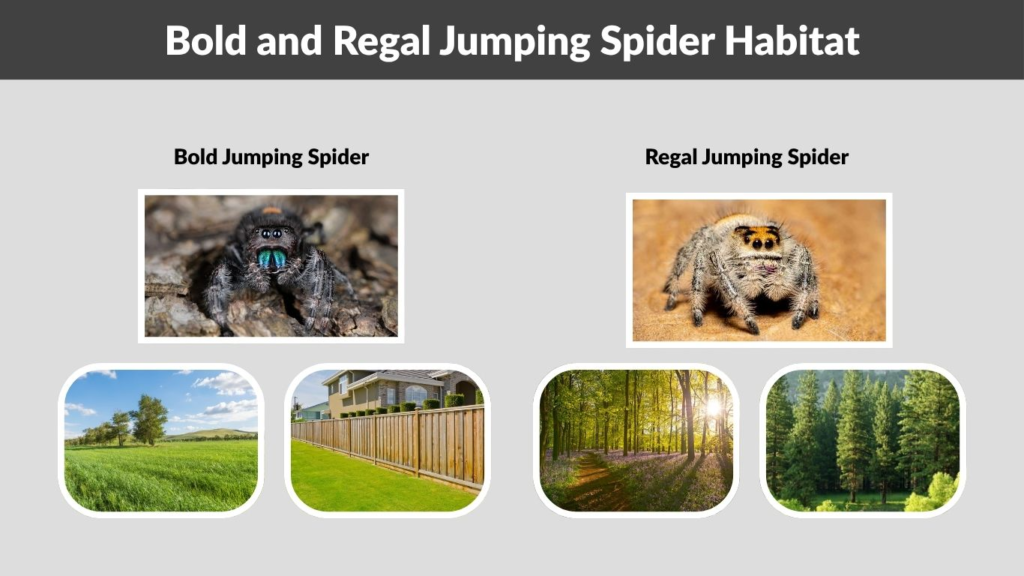
Two popular species often searched by keepers and nature lovers are the bold jumping spider and the regal jumping spider. Both are active, visual hunters, but their natural ranges and preferred microhabitats can differ.
Bold Jumping Spider Habitat
The bold jumping spider is commonly seen in open, sunny, and human-adapted places. It may appear in gardens, fields, grasslands, fences, window areas, sheds, and around outdoor walls. This species often benefits from habitats where insects are common and where there are many surfaces to climb.
In a garden, a bold jumping spider may use plant stems, leaves, fence posts, and siding as hunting routes. It does not need a large orb web. Instead, it moves through its environment and uses silk mainly for safety lines, resting retreats, and egg sacs.
Regal Jumping Spider Habitat
The regal jumping spider is strongly associated with warmer regions and is often found in open areas, light woodland, trees, buildings, and sheltered plant structures. In the wild, it may use bark, palm-like leaves, walls, wooden areas, and other elevated surfaces.
A pet enclosure for a regal jumping spider should reflect this lifestyle. It should offer vertical climbing room, upper hides, cork bark, branches, and good ventilation. A plain container with only substrate at the bottom will not match the way this spider naturally uses space.
Other Species and Habitat Differences
Not every jumping spider lives the same way. Zebra jumping spiders are often seen on walls, rocks, and sunny building surfaces. Peacock jumping spiders are known from Australia and are usually associated with ground-level or low vegetation habitats. Tan jumping spiders may be found around bark, trees, fences, and houses.
The key lesson is simple: identify the species when possible. A species from dry open habitat should not be kept like a tropical moisture-loving species. A spider that uses bark and walls needs climbing structure more than deep substrate.
Jumping Spider Habitat Requirements for Pets
A pet jumping spider habitat should be small, secure, vertical, and easy to monitor. These spiders are tiny, so oversized enclosures can make feeding difficult. At the same time, the enclosure should not be so cramped that the spider cannot climb, jump, explore, and build a retreat.
Basic Habitat Setup
A practical pet setup includes:
- A secure, escape-proof enclosure
- Ventilation on more than one side
- Vertical climbing space
- Cork bark, twigs, vines, or textured decor
- A small hide near the upper part of the enclosure
- Light substrate or paper towel at the bottom
- A safe water source through misting, not deep water
- Good visibility for feeding and health checks
Front-opening enclosures are often useful because many jumping spiders build their sleeping sacs near the top. A top-opening container can accidentally damage the web retreat every time you open it.
Recommended Habitat Features
| Habitat Feature | Why It Matters | Simple Option |
| Vertical space | Supports climbing, hunting, and retreat building | Tall acrylic or ventilated container |
| Cross ventilation | Reduces stale air and mold risk | Small air holes on opposite sides |
| Upper hide | Gives the spider a safe sleeping area | Cork curl, silk flower, or small hide |
| Climbing decor | Creates natural movement routes | Twigs, bark, fake vines, mesh |
| Light substrate | Helps with cleanliness and moisture balance | Paper towel, coco fiber, or dry soil mix |
| Gentle misting | Provides drinking droplets | Fine spray on one side of enclosure |
How Big Should a Jumping Spider Habitat Be?
For most pet jumping spiders, the enclosure should be compact but taller than it is wide. A small juvenile needs a small container so it can find food easily. An adult can live in a larger enclosure with more structure.
A common mistake is giving a tiny spider a large empty enclosure. Bigger is not always better. A well-designed small habitat with climbing routes, hides, and airflow is usually safer than a large bare tank.
As a general guide, the enclosure should allow the spider to move naturally while keeping prey visible and accessible. For many adult jumping spiders, a small vertical enclosure works well. For slings or young spiders, use a smaller grow-out cup with ventilation and simple decor.
How to Make a Jumping Spider Habitat
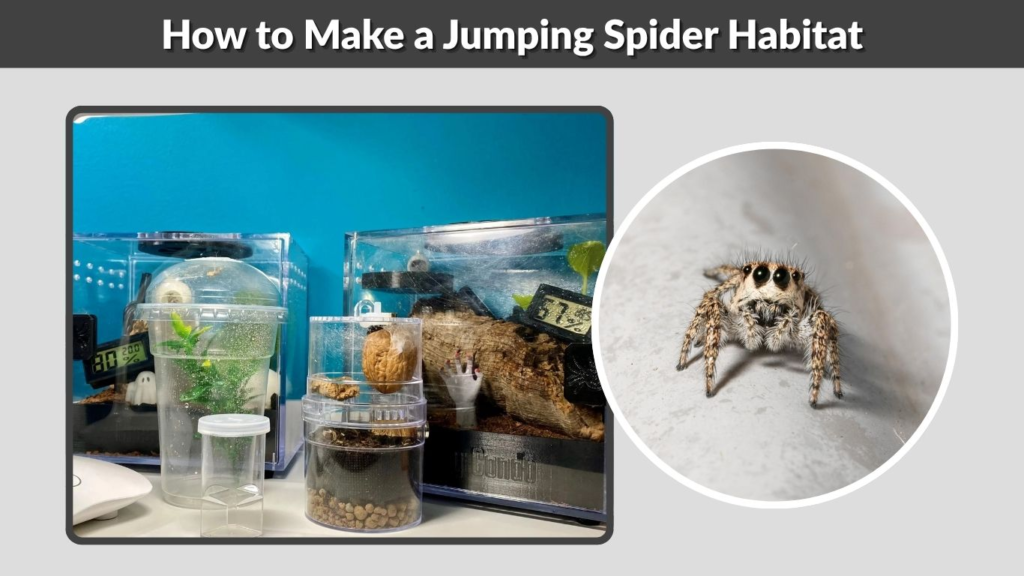
A DIY jumping spider habitat can be simple and affordable. The goal is not to create a decorative terrarium first. The goal is to create a safe, usable environment for a small climbing predator.
Step-by-Step DIY Setup
Follow these steps:
- Choose a clear container with a secure lid or door.
- Add tiny ventilation holes on two sides, making sure the spider cannot escape.
- Place a thin layer of substrate or paper towel at the bottom.
- Add cork bark, twigs, fake plants, or textured mesh for climbing.
- Create at least one upper hiding spot.
- Leave open space for jumping and hunting.
- Mist lightly on one side so droplets form for drinking.
- Add prey only after the spider has settled.
Avoid sharp decorations, sticky materials, strong glue fumes, pesticide-treated plants, and anything that can trap the spider. If using natural twigs or bark, clean and dry them properly before placing them inside.
What to Put in a Jumping Spider Habitat
The best items are lightweight, safe, textured, and easy to clean. Good options include cork bark, dry twigs, artificial leaves, small silk plants, magnetic ledges, and fine mesh. These items create a habitat that feels more natural and gives the spider choices.
Do not overcrowd the enclosure. A jumping spider needs room to spot prey and jump. Too much decoration can make feeding difficult and may hide uneaten insects. Balance is important: enough structure to feel secure, but enough open space for hunting.
What Not to Put Inside
Avoid these common mistakes:
- Deep water dishes
- Wet, soggy substrate
- Strong-smelling wood or resin
- Pesticide-treated plants
- Loose cotton that can tangle legs
- Sharp rocks or rough metal edges
- Large crickets left inside overnight
- Decor that blocks ventilation
Humidity should be controlled carefully. Most jumping spider habitats need moisture access, not a swampy environment. Stale, wet setups can lead to mold, mites, and stress.
Jumping Spider Habitat Ideas for Better Enrichment
A good habitat helps a jumping spider behave naturally. It should encourage climbing, watching, stalking, hiding, and resting. You do not need expensive decorations, but you do need thoughtful placement.
Arboreal Display Habitat
This setup works well for many popular pet jumping spiders. Use a vertical enclosure with cork bark running upward, a few fake leaves, and a small hide near the top. Keep the middle partly open so the spider can jump and hunt.
This type of setup is easy to view, easy to mist, and easy to clean. It also supports the spider’s habit of resting high in the enclosure.
Natural Garden-Style Habitat
A garden-style habitat can include dried stems, small artificial flowers, bark, and leaf-like cover. This setup is useful for keepers who want a natural look without making the enclosure too wet or crowded.
Live plants can be used, but they require more care. They may increase humidity and create mold if airflow is poor. For beginners, artificial plants are often safer and easier.
Simple Starter Habitat
A simple setup is best for new keepers or small juveniles. Use a clear cup or small enclosure, add ventilation, place a paper towel at the bottom, and include one twig plus one small upper hide. This makes it easy to monitor feeding, molting, and movement.
Simple does not mean poor. For a tiny spider, a clean and secure habitat is better than a complicated display enclosure that makes prey hard to catch.
Feeding, Water, and Habitat Maintenance
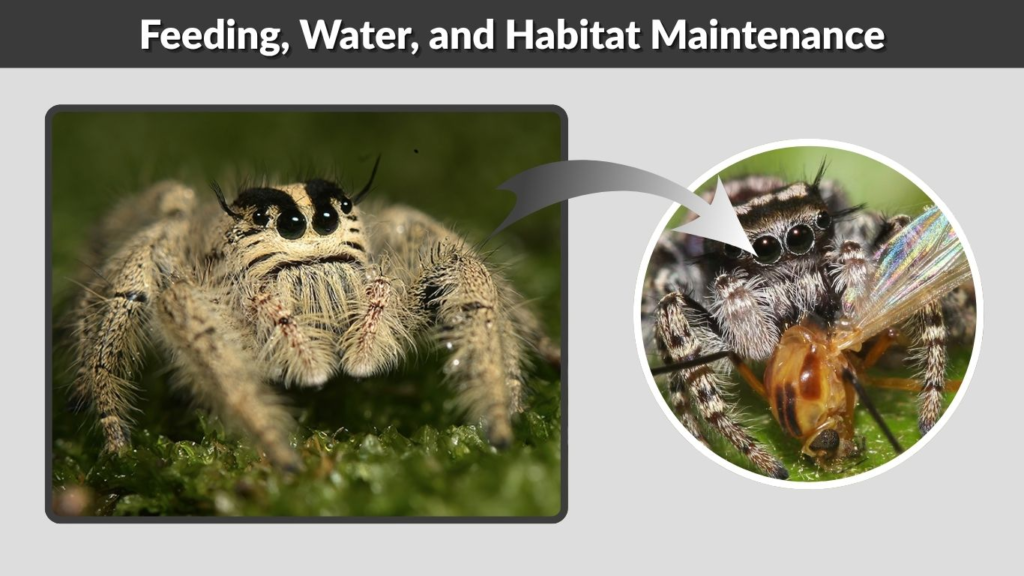
A jumping spider habitat is not complete without proper daily care. Even a beautiful enclosure can become unsafe if it is too wet, dirty, or filled with uneaten prey.
Feeding in the Habitat
Jumping spiders usually eat small live insects such as fruit flies, house flies, small crickets, bottle flies, or small roaches, depending on the spider’s size. Prey should be smaller than the spider or appropriately sized.
Remove uneaten prey, especially crickets, because they may bite or stress the spider. This is especially important during molting, when the spider is soft and vulnerable.
Water and Humidity
Jumping spiders drink from tiny droplets. Light misting on one side of the enclosure is usually safer than using a deep water dish. The habitat should dry between mistings, and airflow should prevent stagnant moisture.
A spider that stays active, builds retreats, and responds to prey is usually comfortable. A spider that constantly hides, falls often, or avoids parts of the enclosure may be stressed by poor layout, temperature, moisture, or airflow.
Cleaning the Habitat
Clean the enclosure gently and regularly. Remove dead prey, old molts if they are not inside a retreat, waste spots, and moldy materials. Avoid destroying the spider’s main sleeping sac unless it is necessary for safety.
A full habitat reset should not be done too often. Jumping spiders rely on familiar routes and retreats. Spot cleaning is usually better than frequent deep cleaning.
FAQs
What is the best habitat for a jumping spider?
The best habitat is a small, vertical, well-ventilated enclosure with climbing surfaces, upper hiding spots, and light moisture. It should be secure enough to prevent escape and simple enough for the spider to find prey. A good setup copies the spider’s natural use of height, texture, and sheltered resting areas.
What do jumping spiders need in their enclosure?
Jumping spiders need airflow, climbing decor, a safe hide, light substrate, and access to drinking droplets. Cork bark, twigs, fake plants, and textured surfaces are useful. They do not need deep substrate or a large water dish. The enclosure should stay clean, lightly moist when needed, and free from dangerous prey.
How do you make a jumping spider habitat at home?
Use a clear secure container, add tiny ventilation holes, place light substrate or paper towel at the bottom, and add twigs, cork bark, or fake plants. Create a small upper retreat and leave open space for hunting. Mist lightly on one side and check that no gaps are large enough for escape.
Where do jumping spiders live naturally?
Jumping spiders live in many habitats, including gardens, grasslands, forests, scrubland, bark, shrubs, walls, fences, and buildings. Different species prefer different microhabitats. Many like sunny, textured places where they can see prey, climb easily, and build small silk retreats for sleeping, molting, or laying eggs.
How often should you mist a jumping spider habitat?
Misting depends on species, enclosure airflow, and local climate. Many keepers lightly mist one side of the enclosure every day or every few days, making sure it dries between mistings. The goal is to provide small drinking droplets, not wet substrate. Too much moisture can cause mold and poor air quality.
