
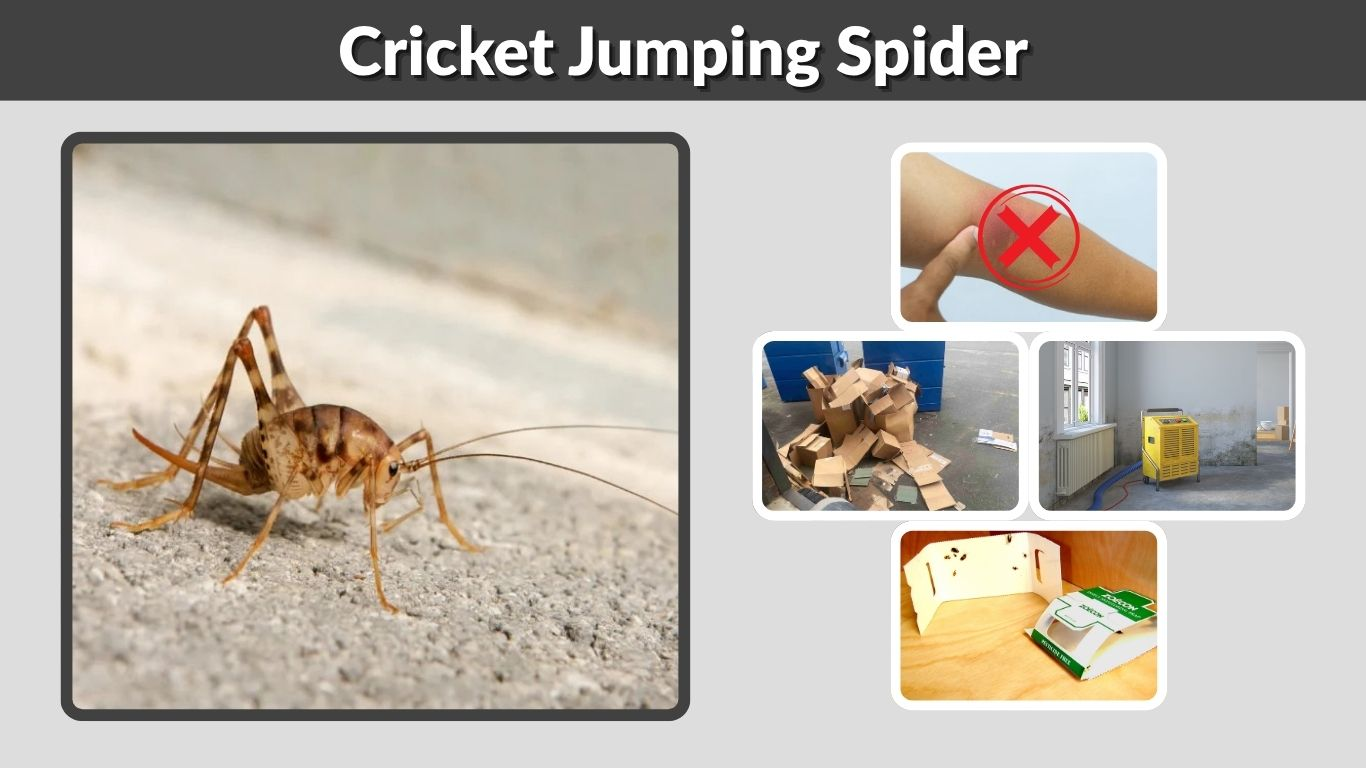
A cricket jumping spider can mean two different things depending on what someone has seen. Some people use the phrase for a strange insect that looks like a mix between a cricket and a spider. Others mean a jumping spider eating or being fed a cricket. This confusion is common because spider crickets, camel crickets, and jumping spiders all have strong legs, quick movements, and a habit of surprising people.
What Is a Cricket Jumping Spider?
The term “cricket jumping spider” is not usually the name of one exact animal. Most of the time, people are describing either a spider cricket or a jumping spider. These are very different creatures, even though the names sound similar.
A spider cricket, also called a camel cricket or cave cricket, is an insect. It has six legs, long antennae, a humped body, and powerful back legs for jumping. A jumping spider is an arachnid with eight legs, large eyes, and a hunting style based on sight and short leaps.
Why the Name Causes Confusion
The confusion happens because spider crickets look spider-like, while jumping spiders can sometimes eat crickets. When someone sees a long-legged brown creature leap across a basement, they may call it a jumping spider cricket. When a pet spider owner asks about feeding, they may use the phrase to mean crickets as food for jumping spiders.
Both meanings are common in search behavior, so it helps to separate them clearly.
Quick Identification Guide
If the creature has long antennae, a humped back, and jumps wildly, it is probably a spider cricket. If it has a compact body, large front-facing eyes, and moves in short careful bursts, it is probably a jumping spider.
| Feature | Spider Cricket / Camel Cricket | Jumping Spider |
| Animal type | Insect | Arachnid |
| Number of legs | Six | Eight |
| Antennae | Very long | None |
| Eyes | Small and less noticeable | Large front-facing eyes |
| Jumping style | Sudden, high, erratic jumps | Short, accurate hunting jumps |
| Common location | Basements, crawl spaces, garages | Walls, windows, plants, gardens |
Is a Spider Cricket Actually a Spider?
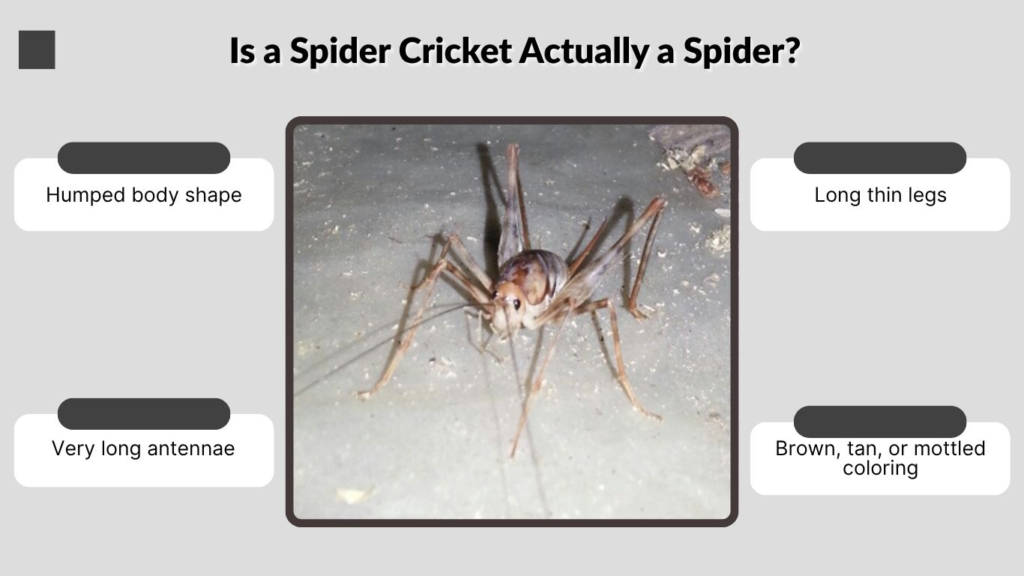
A spider cricket is not a spider. It is an insect that belongs to a group commonly called camel crickets or cave crickets. The “spider” part of the name comes from its long legs and creepy appearance, not from its biology.
Spider crickets can look intimidating because their legs are thin, angled, and very long compared with their body. Their brown or tan coloring also helps them blend into dark basement areas, which makes sudden encounters more startling.
What Spider Crickets Look Like
Spider crickets usually have a rounded or humped body, long back legs, and extremely long antennae. They are often tan, brown, or dark brown. Unlike regular house crickets, they usually do not chirp loudly inside the home.
Common features include:
- Humped body shape
- Long thin legs
- Very long antennae
- Brown, tan, or mottled coloring
- No wings in many common types
- Sudden jumping when disturbed
Their unusual shape is why many people describe them as a cricket spider jumping across the floor.
Where They Are Commonly Found
Spider crickets prefer cool, dark, and damp spaces. They are often found in basements, crawl spaces, garages, sheds, under logs, near drains, or in cluttered storage areas.
They are more likely to become noticeable when outdoor conditions change or when indoor spaces provide moisture and shelter. A damp basement with cardboard boxes, fabric, or organic debris can become especially attractive to them.
Do Spider Crickets Jump?
Yes, spider crickets jump. Their strong back legs allow them to launch themselves quickly when they feel threatened. This is one reason people often search for “do spider crickets jump” or “spider that jumps like a cricket.”
Their jumping is usually defensive, not aggressive. They are not chasing people in the way it might seem. A startled spider cricket may leap in a random direction, and sometimes that direction happens to be toward a person.
Why Do Spider Crickets Jump at You?
Spider crickets may seem like they jump at you because they react suddenly when disturbed. They do not have the same precise eyesight as jumping spiders, so their escape jumps can look chaotic.
They may jump toward movement, shadow, or a nearby dark area. If you are standing between the cricket and a hiding spot, it can feel like the insect is attacking. In reality, it is usually trying to escape danger.
How High Can Spider Crickets Jump?
Spider crickets can jump impressively for their body size. Exact jump height can vary by species, age, and environment, but their leaps are often enough to startle people in tight indoor spaces.
Their long rear legs are designed for quick escape. Unlike a jumping spider, which aims carefully when hunting, a spider cricket’s jump is more like a panic launch. It is fast, unpredictable, and often messy.
Do Spider Crickets Bite?
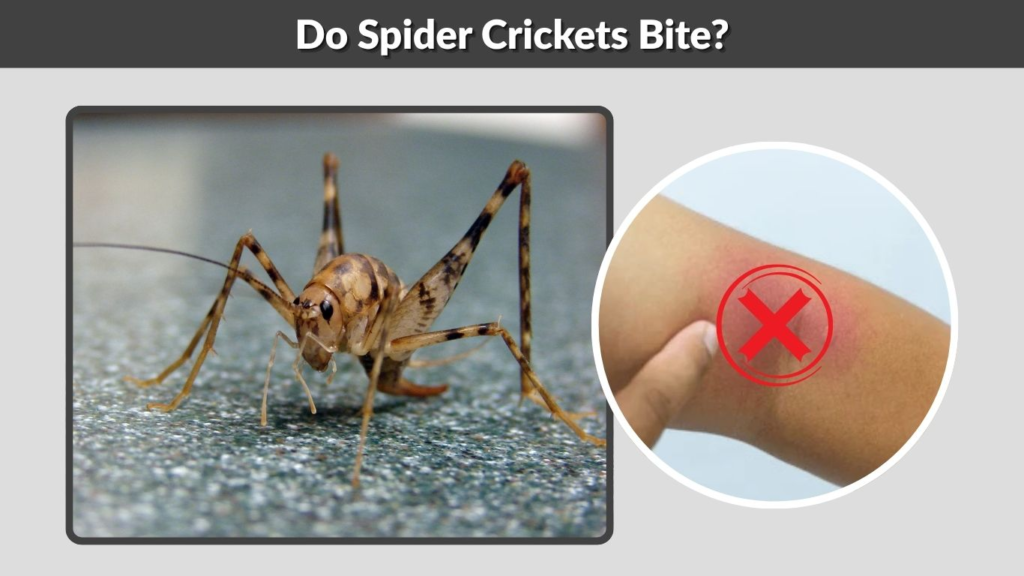
Spider crickets are not considered dangerous to humans. They do not have venom like spiders, and they are not known for biting people as a normal behavior. Their main defense is jumping away.
However, they can still be a nuisance indoors. They may chew on paper, fabrics, cardboard, or organic material in damp storage spaces. Their droppings can also leave stains if many are present.
Are They Harmful in the House?
A few spider crickets are usually more annoying than harmful. A larger infestation can become a problem because they may damage stored items and create an unpleasant environment.
Possible issues include:
- Chewed cardboard or paper
- Damage to stored fabric
- Droppings in basement areas
- Startling jumps near people
- Attraction to damp clutter
- Increase in nuisance pest activity
They are not a major structural pest like termites, but they should not be ignored if numbers increase.
Should You Kill Spider Crickets?
You do not always need to kill every spider cricket you see. If there are only one or two, removal may be enough. But if you keep seeing them, it usually means the space has moisture, entry points, or clutter that attracts them.
The best long-term solution is to make the environment less suitable. Killing individual insects without fixing dampness or hiding places may only give temporary relief.
How to Get Rid of Jumping Spider Crickets
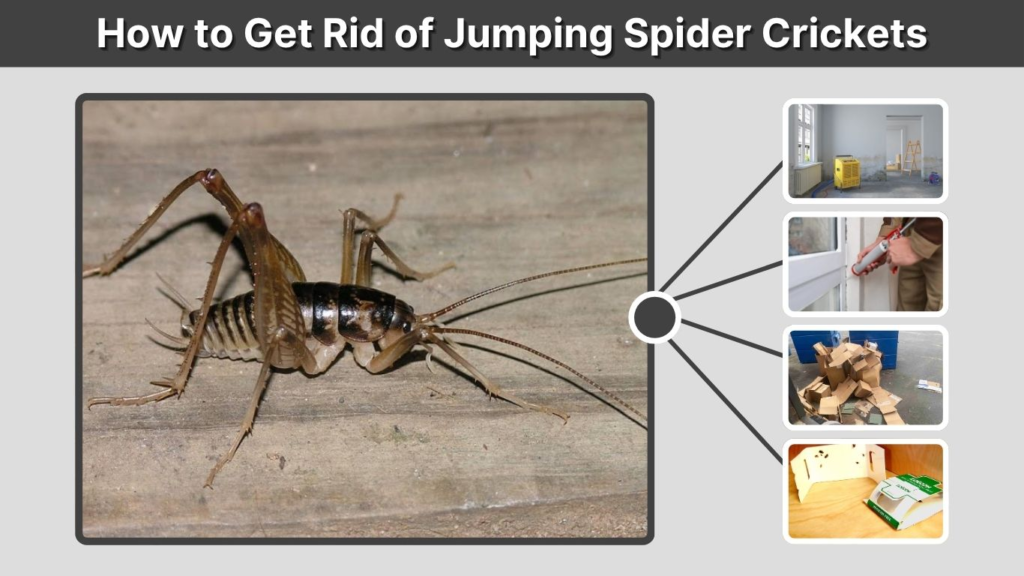
People often search for how to get rid of jumping cricket spiders when they find spider crickets indoors. The most effective approach is prevention plus direct removal. You want to reduce moisture, block entry, and remove hiding spots.
Start by checking the areas where they appear most often. Basements, crawl spaces, laundry rooms, garages, and storage corners are common trouble spots.
Practical Removal Methods
You can reduce spider crickets with a few simple steps:
- Use a dehumidifier in damp rooms
- Seal cracks around doors, windows, and foundations
- Remove cardboard boxes from basement floors
- Store items in sealed plastic containers
- Vacuum visible crickets
- Place sticky traps near walls and dark corners
- Fix leaks and drainage problems
- Reduce clutter where they hide
Moisture control is especially important. A dry, clean, well-sealed area is much less attractive to spider crickets.
When to Call Pest Control
If you see many spider crickets over several weeks, or if traps keep filling up, professional pest control may help. A professional can inspect entry points, moisture problems, and hidden nesting areas.
This is especially useful for homes with crawl spaces, old basements, heavy clutter, or recurring seasonal infestations.
Can a Jumping Spider Eat a Cricket?
Yes, a jumping spider can eat a cricket if the cricket is small enough. Jumping spiders are active hunters that eat insects and other tiny prey. However, not every cricket is safe or suitable as food.
For pet jumping spiders, prey size matters a lot. A cricket that is too large can injure or stress the spider. Crickets can bite, kick, or overwhelm a small spider if left unattended.
Best Cricket Size for Jumping Spiders
A safe feeder cricket should usually be smaller than the spider’s body length. Pinhead or very small crickets may be suitable for some medium or larger jumping spiders, but they are not always the best staple food.
Many keepers prefer flies, fruit flies, or other soft-bodied prey because they are easier for jumping spiders to catch. Crickets can be useful, but they need careful supervision.
How Many Crickets to Feed a Jumping Spider
Most jumping spiders do not need many crickets. One appropriately sized prey item at a time is usually enough. Feeding frequency depends on the spider’s age, size, abdomen condition, and species.
Spiderlings eat more often than adults. Adult jumping spiders may eat every few days or less often depending on their condition. Overfeeding can cause an overly swollen abdomen, while underfeeding can make the spider weak.
Jumping Spider vs Cricket: Who Wins?
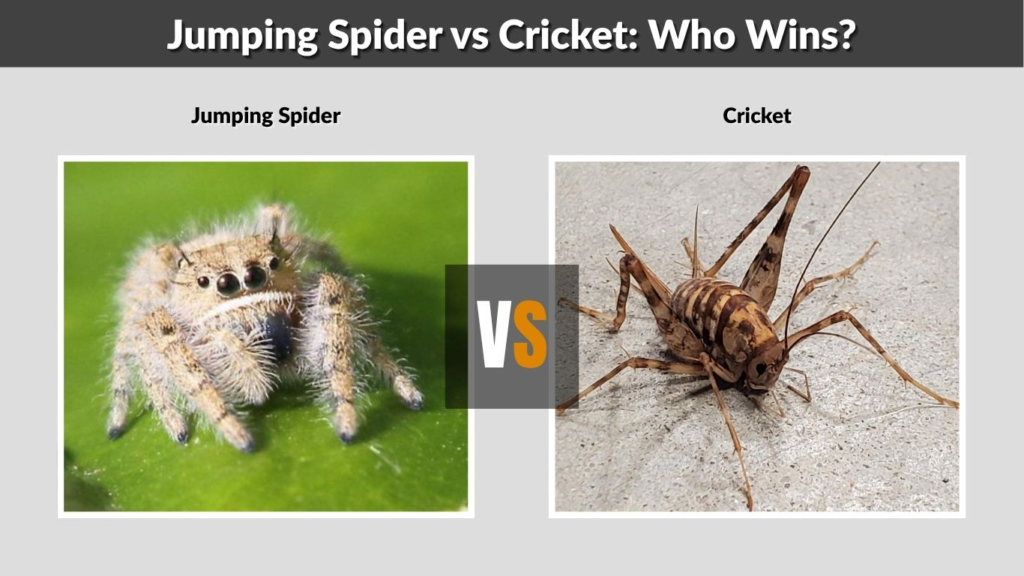
A jumping spider can catch and eat a small cricket, but the result depends heavily on size. Jumping spiders are smart hunters with excellent vision, but crickets have strong legs and can fight back.
A small cricket is reasonable prey for a larger jumping spider. A large cricket can be dangerous. This is why feeding pet jumping spiders requires judgment instead of simply dropping in any insect.
Why Size Matters So Much
A jumping spider relies on precision. It stalks the prey, judges distance, and leaps at the right moment. If the prey is too large, the spider may avoid it or get injured during the attack.
Crickets can kick, bite, or hide in the enclosure. Uneaten crickets may stress the spider, especially during molting. A molting spider is vulnerable and should not have live prey left nearby.
Safer Feeding Tips
If feeding a cricket to a jumping spider, follow these safety rules:
- Use only very small crickets
- Never leave large crickets unattended
- Remove uneaten prey after a short time
- Avoid wild-caught insects exposed to pesticides
- Do not feed during or right before molting
- Watch for signs of stress or refusal
A jumping spider eating a cricket can be fascinating to observe, but safety should come first.
Why People Say “Jumping Spider Cricket Thing”
Many people use phrases like “jumping spider cricket thing” because they are trying to identify an unfamiliar bug quickly. The animal may not fit neatly into what they know. It jumps like a cricket, looks like a spider, and appears suddenly in a dark room.
In most home cases, this “thing” is a spider cricket. In garden or window cases, it may be a jumping spider. The easiest way to tell is to count legs and look for antennae.
If It Has Antennae
Long antennae almost always point to a cricket-like insect, not a spider. Spiders do not have antennae. If the creature has two long feelers extending from the head and six legs, it is likely a spider cricket or another insect.
If It Has Big Eyes
Large forward-facing eyes usually point to a jumping spider. Jumping spiders often look like they are making eye contact. They move carefully, pause often, and jump with accuracy rather than panic.
Are Jumping Spiders Helpful?
Jumping spiders are generally helpful because they eat small insects. They may feed on flies, mosquitoes, small moths, tiny beetles, and other mobile insects. In gardens and around windows, they can act as natural pest control.
Unlike spider crickets, jumping spiders are not household nuisance chewers. They do not damage cardboard, fabric, or stored items. If you see one indoors, it is usually hunting small insects or looking for a way back outside.
Should You Remove a Jumping Spider?
You do not need to remove a jumping spider unless it bothers you. Most are harmless and shy. If you prefer not to keep it indoors, use a cup and paper to move it outside gently.
Release it near plants, tree bark, a fence, or another sheltered place. Avoid crushing it if possible, because jumping spiders are beneficial predators.
FAQs
Is a cricket jumping spider a real spider?
The phrase usually describes either a spider cricket or a jumping spider, not one official species. A spider cricket is an insect with six legs and long antennae. A jumping spider is an arachnid with eight legs and large eyes. Counting legs is the easiest way to identify which one you saw.
Do spider crickets jump at people on purpose?
Spider crickets do not usually jump at people to attack. Their jumps are defensive and often random. Because they have powerful hind legs and react quickly when startled, they may accidentally leap toward a person, wall, or shadow. It feels intentional, but it is usually an escape response.
Can I feed a jumping spider a cricket?
You can feed a jumping spider a cricket if the cricket is small enough and safe. Use tiny crickets only, and remove uneaten prey. Large crickets can injure a jumping spider, especially if the spider is young, stressed, or close to molting. Many keepers prefer flies or fruit flies.
Do spider crickets bite humans?
Spider crickets are not known for biting humans and are not venomous like spiders. They are mostly nuisance pests because they jump suddenly and may chew on stored materials. If you find many indoors, focus on moisture control, sealing entry points, and removing clutter from damp areas.
How do I get rid of jumping spider crickets?
Start by reducing moisture with a dehumidifier, fixing leaks, and improving ventilation. Seal cracks around doors, windows, and foundations. Remove cardboard clutter, vacuum visible insects, and place sticky traps near walls or dark corners. If the problem continues, a pest control professional can inspect hidden entry points.
