
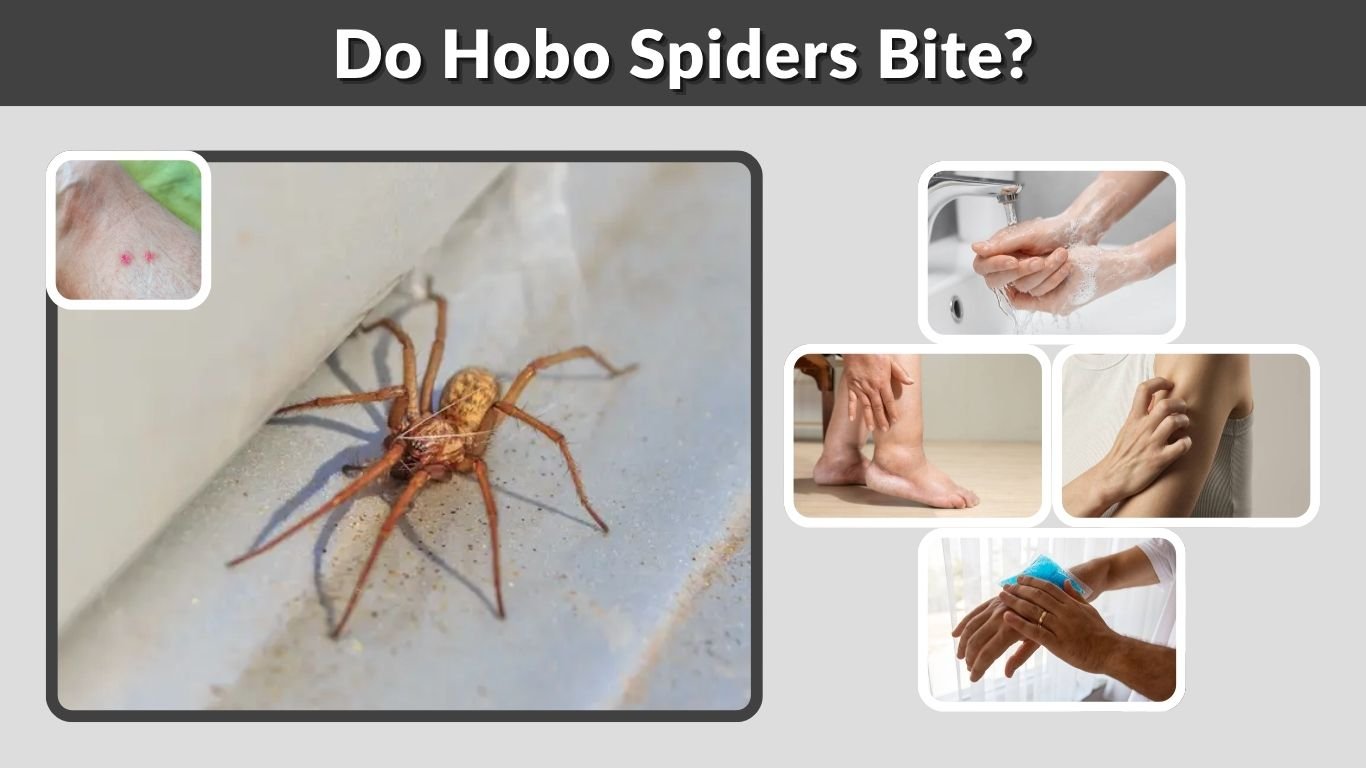
Yes, hobo spiders can bite, but they usually do so only when trapped, handled, or threatened. They are not considered aggressive toward people, and current evidence does not support the long-standing claim that hobo spider venom routinely causes severe, flesh-destroying wounds. Most verified bites appear to cause relatively mild local symptoms such as pain and redness. This guide explains what hobo spider bites look like, possible symptoms, when bites happen, whether they bite during sleep, and what to do after a suspected bite.
Do Hobo Spiders Bite Humans?
Hobo spiders (Eratigena agrestis) have fangs and venom used to capture prey, so they are physically capable of biting humans. However, bites are defensive rather than predatory. A hobo spider usually attempts to escape when disturbed. Bites are more likely when a spider becomes pressed against skin, trapped inside clothing, or accidentally handled.
Can Hobo Spiders Bite?
Yes. A hobo spider may bite when it feels threatened or cannot escape. Utah State University notes that defensive bites can cause mild pain and redness, but hobo spiders are generally not considered aggressive or a significant human health concern.
Humans are not prey for hobo spiders. They normally feed on insects and other small arthropods caught around their funnel-like retreats.
Are Hobo Spider Bites Dangerous?
Current research does not provide convincing evidence that hobo spider venom normally causes necrotic, or flesh-destroying, wounds. Earlier reports associated this species with severe skin damage, but later research questioned those conclusions. UC IPM now describes the hobo spider as being of minor medical importance, and Utah State University reports no significant scientific evidence that its bite causes necrosis.
Hobo Spider Bite Symptoms
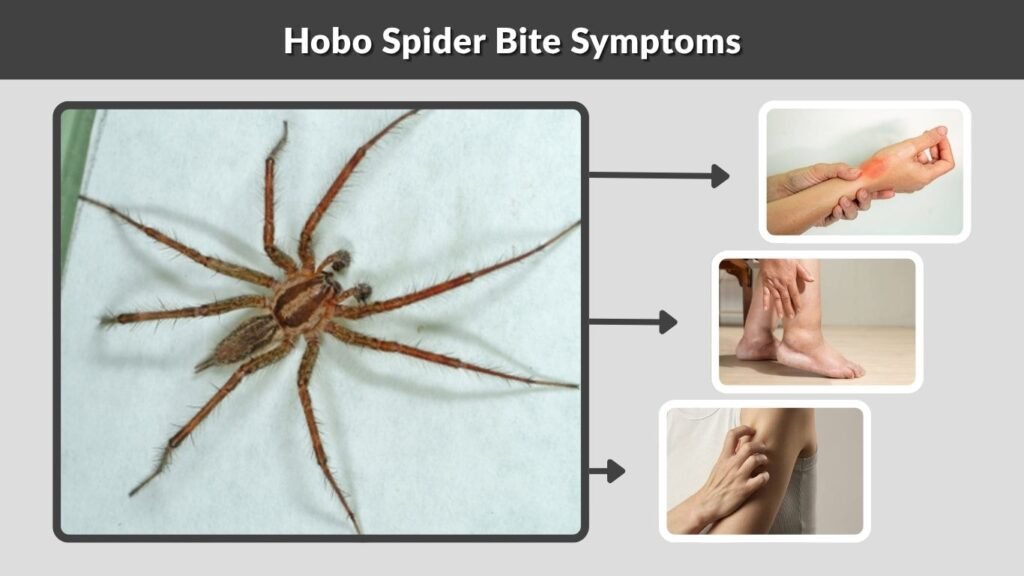
Because verified hobo spider bites are uncommon, symptoms described online are often based on bites where the spider was never positively identified. Skin infections, bites from other arthropods, and various medical conditions may also be mistaken for spider bites. When a hobo spider bite is confirmed, reported reactions have generally been mild and localized.
Common Symptoms of a Hobo Spider Bite
Possible symptoms may include:
- Mild pain or a burning sensation
- Redness around the bite site
- Localized swelling
- Tenderness or irritation
- Temporary itching
- Mild muscle twitching near the affected area in some documented cases
One verified Oregon bite described by UC IPM produced pain, redness, and leg twitching that resolved within about 12 hours.
Can Hobo Spider Bites Cause Necrosis?
The idea that hobo spider bites commonly cause expanding ulcers and tissue death originated largely from older reports. A 1996 CDC report discussed suspected cases of necrotic arachnidism, but subsequent reviews and experiments found the evidence linking hobo spiders to necrotic wounds to be weak. Modern extension guidance therefore does not consider necrosis a typical hobo spider bite effect.
A worsening wound should still be medically evaluated because bacterial infections and other conditions can cause redness, ulceration, or tissue damage.
What Do Hobo Spider Bites Look Like?
There is no single appearance that can reliably identify a hobo spider bite. Many insect bites, allergic reactions, skin infections, and irritated hair follicles can produce similar red bumps. Unless the spider is actually seen biting and later identified by an expert, determining the species responsible from the skin lesion alone is difficult.
Typical Appearance
A suspected uncomplicated spider bite may show:
- A small red or irritated area
- Mild swelling around the spot
- A slightly raised bump
- Local tenderness
- Occasional itching
- Sometimes two tiny puncture marks, although these may not be visible
The appearance alone should not be used to diagnose a hobo spider bite.
How to Confirm a Hobo Spider Bite
Positive identification usually requires the actual spider. Many brown house spiders resemble hobo spiders closely, and even experienced non-specialists can misidentify them. Utah State University recommends capturing the spider safely for professional identification when possible rather than assuming that a skin reaction came from a hobo spider.
When and Why Do Hobo Spiders Bite?
Hobo spiders usually avoid direct contact with people. They commonly live near ground level in protected locations and build funnel-like retreats. Wandering males may enter homes during their mating season, particularly from late summer into fall, increasing the chance of accidental encounters.
Situations That May Lead to a Bite
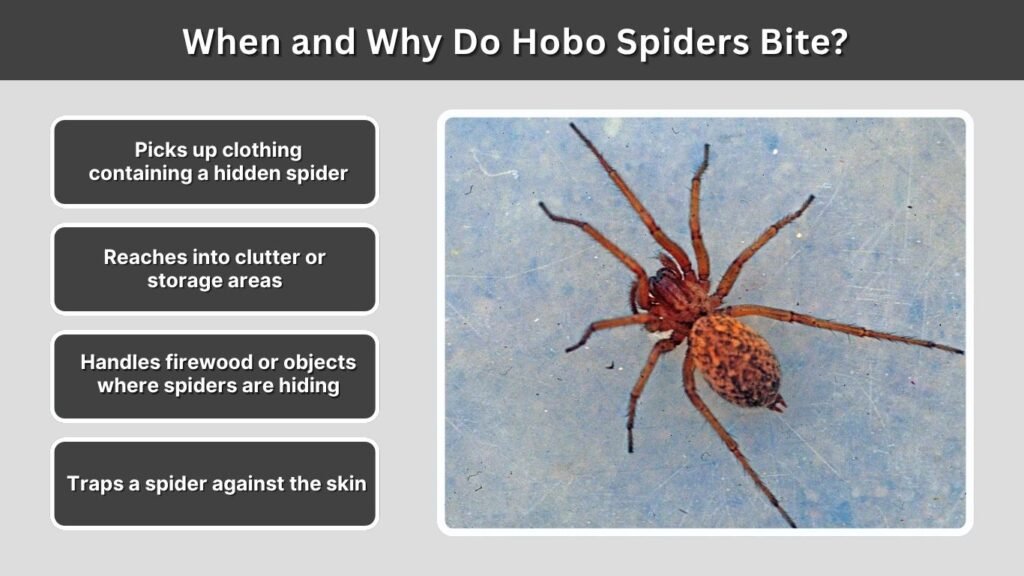
A bite is more likely when someone:
- Picks up clothing containing a hidden spider
- Reaches into clutter or storage areas
- Handles firewood or objects where spiders are hiding
- Traps a spider against the skin
- Attempts to pick up or crush the spider by hand
- Rolls onto or presses against a spider accidentally
These bites represent defensive reactions rather than deliberate attacks.
Do Male Hobo Spiders Bite?
Male and female hobo spiders are both capable of biting. Adult males are often noticed indoors because they wander while searching for females during late summer and fall. Their increased movement can result in more encounters with people, but they do not actively seek humans to bite.
Do Hobo Spiders Bite You in Your Sleep?
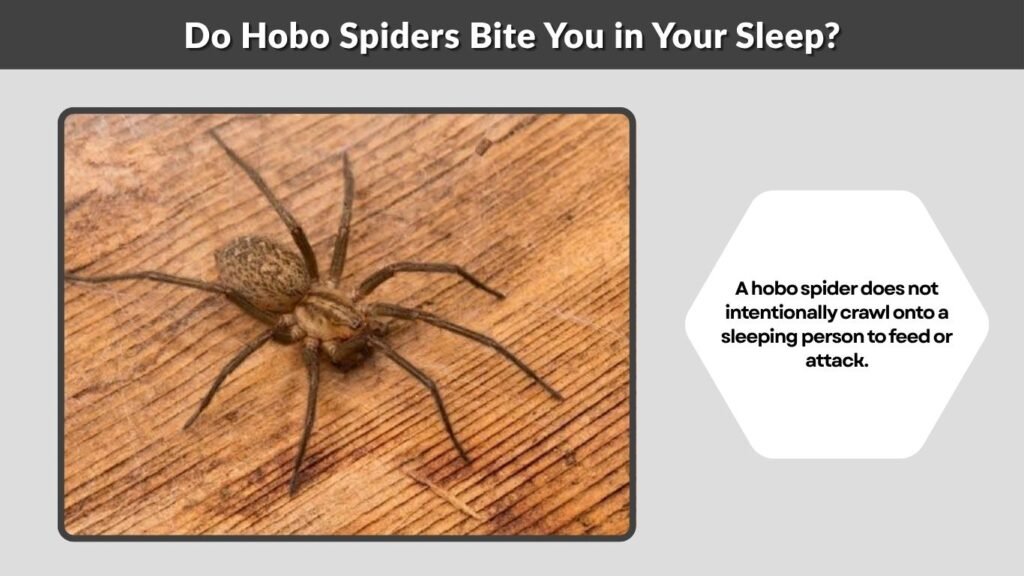
A hobo spider does not intentionally crawl onto a sleeping person to feed or attack. However, an accidental bite could theoretically occur if a wandering spider entered bedding and became trapped against the skin. Such incidents appear uncommon.
How to Reduce Spiders Around the Bed
During periods when spiders commonly wander indoors:
- Keep blankets from touching the floor
- Move beds slightly away from walls
- Remove clutter beside and underneath beds
- Shake out clothing left on the floor
- Seal gaps beneath doors and around windows
- Avoid storing boxes directly beside sleeping areas
Utah State University specifically recommends keeping bedding and nearby objects from creating pathways that wandering spiders could use to reach a bed.
Can Hobo Spiders Bite More Than Once?
Like other spiders, a hobo spider is physically capable of biting more than once. However, repeated biting is not considered typical behavior because the spider usually tries to escape after being disturbed.
How Often Do Hobo Spiders Bite?
There are no reliable statistics showing how frequently hobo spiders bite people. Confirmed cases are difficult to document because many people never see the animal responsible for a suspected bite. Finding a hobo spider somewhere in the house after developing a skin lesion does not prove that it caused the problem.
Do Hobo Spiders Bite Dogs?
A hobo spider could potentially bite a dog if the animal steps on, noses, or traps the spider. However, confirmed hobo spider bites in dogs are poorly documented, and many skin problems attributed to spiders may have another cause.
What to Do If Your Dog May Have Been Bitten
Watch for:
- Local redness or swelling
- Persistent licking of one area
- Tenderness when touched
- Limping
- Unusual restlessness
- Worsening skin irritation
Contact a veterinarian if swelling becomes severe, the wound worsens, or your dog develops significant weakness, vomiting, breathing difficulty, or other concerning symptoms.
What Should You Do After a Suspected Bite?
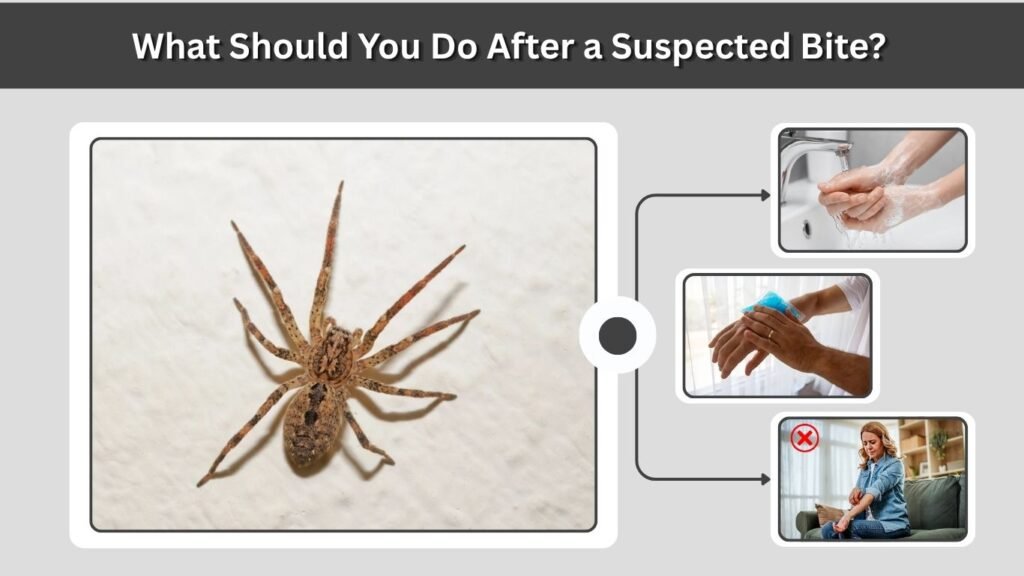
Most minor spider bites can initially be managed with basic wound care. However, it is important to monitor the affected area because an unidentified skin lesion may have causes unrelated to spiders.
Basic Bite Care
For a mild suspected bite:
- Wash the area with soap and water
- Keep the skin clean
- Apply a cool compress for discomfort or swelling
- Avoid scratching the area
- Cover an irritated wound with a clean bandage
- Monitor for increasing redness, pain, or swelling
Seek medical care for severe pain, rapidly spreading redness, fever, difficulty breathing, significant swelling, drainage, or a wound that continues to worsen.
FAQs
1. Will a hobo spider bite you?
A hobo spider can bite, but it normally does so only defensively when trapped, squeezed, or handled. It does not hunt or deliberately attack people.
2. Are hobo spider bites poisonous?
Hobo spiders have venom for subduing prey, but current scientific evidence does not indicate that their venom normally causes serious poisoning or necrotic wounds in humans.
3. Do hobo spider bites hurt?
A bite may cause mild pain, redness, swelling, or irritation. Symptoms can vary, and many suspected spider bites are never confirmed as being caused by a spider.
4. Can a hobo spider bite more than once?
Yes, it is physically capable of biting multiple times, but repeated bites are unlikely. A threatened spider generally prefers to escape rather than continue biting.
5. When are hobo spiders most active around homes?
Hobo spiders may be noticed more frequently indoors from late summer through fall, especially when adult males wander while searching for mates. In Utah, home encounters commonly increase from August through October.
