
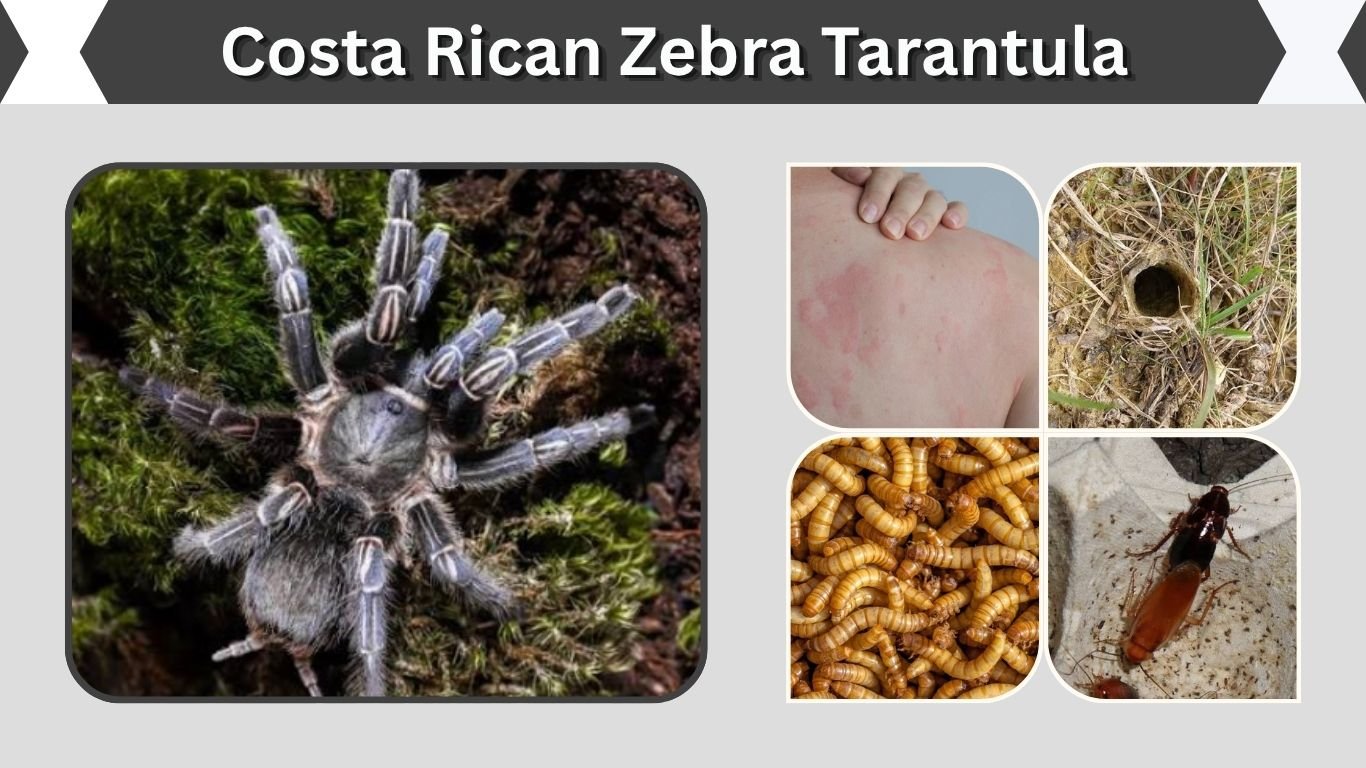
The Costa Rican zebra tarantula (Aphonopelma seemanni) is a burrowing terrestrial spider known for its dark body and pale stripes running along the legs. It is also called the striped-knee tarantula or zebra-knee tarantula. Although often recommended to newer keepers because of its straightforward care, this species can be fast, nervous, and defensive when disturbed. A suitable enclosure requires deep substrate, good ventilation, a secure hide, and constant access to clean water.
Costa Rican Zebra Tarantula Quick Facts
The accepted scientific name is Aphonopelma seemanni. Its confirmed natural distribution includes Costa Rica, Nicaragua, Honduras, and El Salvador. It belongs to Theraphosidae, the true tarantula family.
| Feature | Description |
| Scientific name | Aphonopelma seemanni |
| Other names | Zebra-knee, striped-knee tarantula |
| Type | New World terrestrial tarantula |
| Adult leg span | Commonly 5–6 inches |
| Natural range | Costa Rica, Nicaragua, Honduras, El Salvador |
| Activity | Mainly nocturnal |
| Lifestyle | Terrestrial and burrowing |
| Female lifespan | Commonly 15–20 years |
| Male lifespan | Approximately 4–6 years |
| Diet | Live insects |
| Temperament | Skittish and sometimes defensive |
Reported size and lifespan vary with sex, genetics, diet, temperature, and husbandry. Females generally become heavier and live much longer than mature males.
What Does a Costa Rican Zebra Tarantula Look Like?
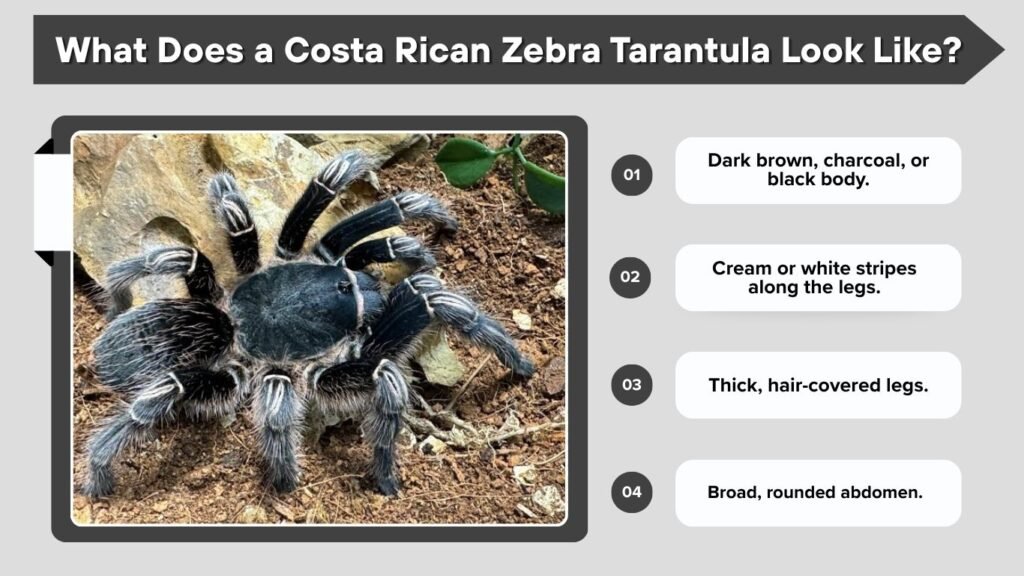
This tarantula has a dark brown, gray, or nearly black body covered with fine hairs. Light cream, tan, or white stripes run vertically along its legs, creating the zebra-like pattern responsible for its common name.
Identification Features
- Dark brown, charcoal, or black body
- Cream or white stripes along the legs
- Thick, hair-covered legs
- Broad, rounded abdomen
- Dark carapace with lighter edging
- Downward-pointing fangs
- Urticating hairs on the abdomen
- Adult leg span of approximately 5–6 inches
Freshly molted individuals may look darker, shinier, and more strongly patterned. Their colors usually become duller as the exoskeleton ages.
What Is the Blue Costa Rican Zebra Tarantula?
Some individuals show slate-gray, blue-gray, or slightly blue tones, especially after molting or under bright lighting. Sellers may describe these spiders as a “blue form,” “Nicaraguan blue,” or “Guatemalan blue.”
These names are primarily hobby labels rather than separately accepted species names. The World Spider Catalog recognizes Aphonopelma seemanni as one species across its Central American range, so buyers should verify the scientific identification rather than relying only on a color-based sales name.
Natural Habitat and Behavior
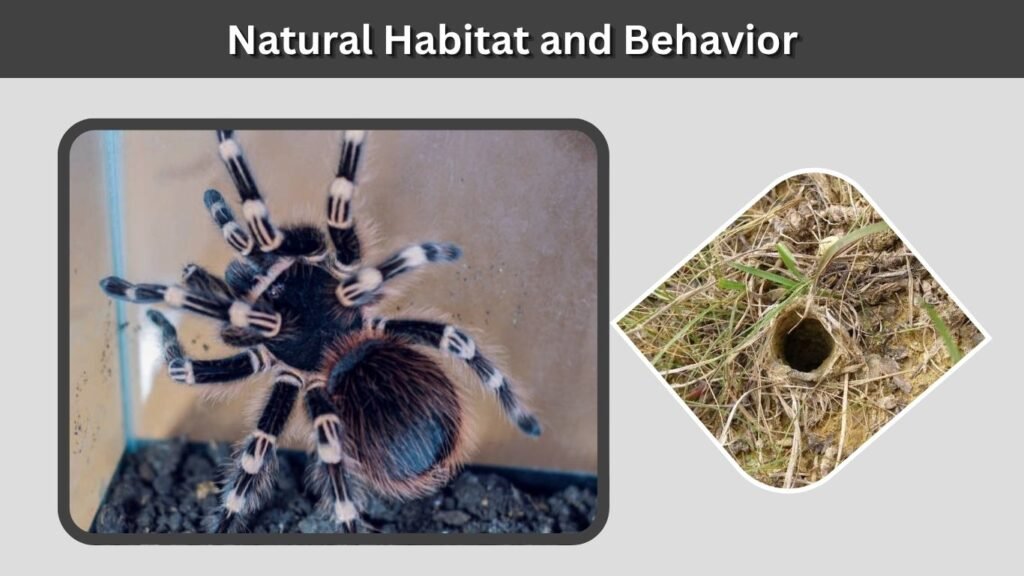
Costa Rican zebra tarantulas live in tropical and subtropical areas where they occupy deep, silk-lined burrows. They are mainly nocturnal and usually wait near the burrow entrance for insects to pass within striking distance.
Burrowing Behavior
This species may excavate an extensive tunnel when given compactable substrate. A tarantula that disappears underground for days or weeks is not necessarily sick. It may be resting, preparing to molt, avoiding unsuitable surface conditions, or simply following its natural behavior.
Some captive individuals do not dig. A spider may instead adopt a prepared hide, especially if it is comfortable with the enclosure conditions. Lack of burrowing alone is not a health problem.
Does It Make a Lot of Webbing?
The Costa Rican zebra is not normally considered a heavy webbing species. It may line its hide and burrow with silk, cover nearby substrate, or create a feeding and molting mat. It does not usually fill the entire enclosure with dense webbing like some other tarantulas.
Costa Rican Zebra Tarantula Enclosure
An enclosure for this species should provide more floor space than height. Tarantulas have delicate abdomens, and a fall onto a hard object can cause a fatal rupture.
Enclosure Size
An adult can be housed in a secure terrestrial enclosure approximately three times its leg span in length and about twice its leg span in width. Exact dimensions matter less than providing enough room to move, dig, and reach the water dish safely.
Keep the distance between the substrate and lid relatively low. Fill much of a tall enclosure with substrate rather than leaving dangerous climbing height. General tarantula husbandry guidance recommends several times the spider’s leg span in horizontal space.
Substrate and Hide
Provide approximately 4–6 inches of compactable substrate for an adult. Suitable materials include pesticide-free topsoil, coconut fiber, peat-based mixes, or blends designed for burrowing invertebrates.
The substrate should hold a tunnel without collapsing. Aspen shavings are unsuitable because they do not support stable burrows or maintain an appropriate moisture gradient.
Add a cork-bark hide, artificial cave, or partially buried container. A starter tunnel beneath the hide may encourage the spider to excavate.
Moisture and Ventilation
Provide a shallow water dish at all times. Keep the lower layers of substrate slightly moist while allowing much of the surface to remain relatively dry. This creates a moisture gradient so the tarantula can choose its preferred conditions.
Avoid keeping the entire enclosure wet or swampy. Constant saturation combined with poor airflow encourages mold, mites, and unhealthy conditions. Cross ventilation is more useful than repeatedly misting a poorly ventilated enclosure. Current care guidance emphasizes deep substrate, a moisture gradient, and good ventilation rather than chasing one exact humidity reading.
Temperature
Ordinary indoor temperatures of approximately 70–78°F are generally suitable. A healthy tarantula usually does not require a heat lamp.
Never place a heat mat directly beneath the enclosure because a burrowing spider moves downward to escape excessive warmth. Additional room heating is safer than heating one side of a small plastic enclosure.
Feeding a Costa Rican Zebra Tarantula
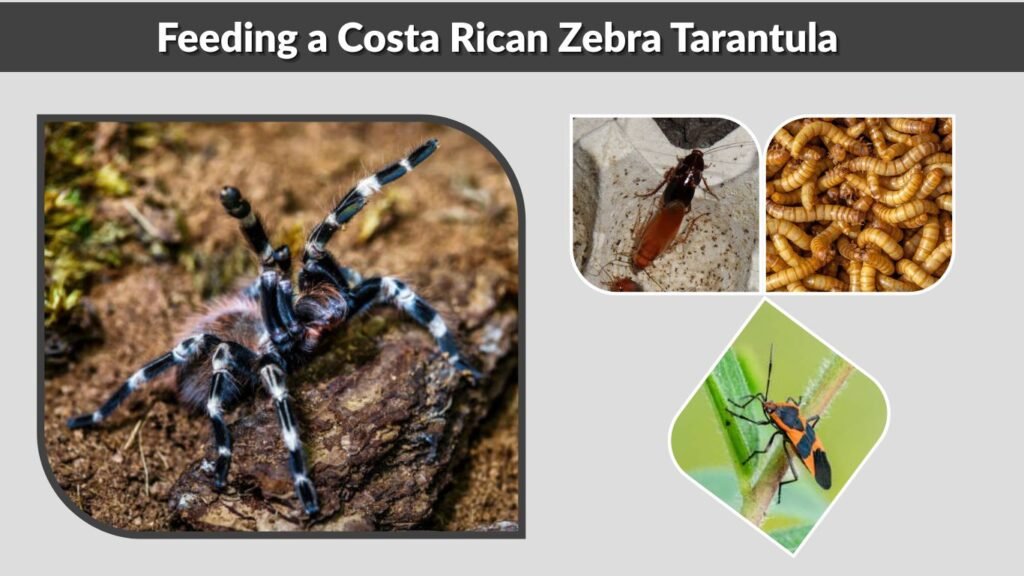
Costa Rican zebra tarantulas are ambush predators that eat live invertebrates. In captivity, appropriate feeder insects provide everything they need without vertebrate prey.
Suitable Foods
Feed appropriately sized:
- Crickets
- Dubia roaches
- Red runner roaches
- Mealworms
- Superworms
- Locusts where legally available
The prey should generally be no larger than the tarantula’s abdomen. Juveniles may eat one or two suitable prey items every week, while adults often eat every 7–14 days. Adjust feeding according to the spider’s abdomen size, activity, and body condition.
Remove uneaten prey within about 24 hours. Crickets and other insects can injure a vulnerable tarantula, particularly while it is molting.
Molting and Refusing Food
Tarantulas must shed their exoskeletons to grow. Before molting, a Costa Rican zebra may stop eating, become less active, darken in color, close its burrow, or create a silk mat.
Safe Molting Care
Do not disturb a tarantula lying on its back; this is a normal molting position. Remove live prey and maintain clean water. Avoid touching, moving, or feeding the spider until its new fangs have hardened.
Small juveniles recover more quickly, while a large adult may need one or two weeks—or occasionally longer—before accepting food again. Refusing food for an extended period is common among slow-growing Aphonopelma tarantulas and is not automatically an emergency.
Temperament and Handling
This species is frequently described as calm, but individual temperament varies. Some remain motionless, while others sprint into their burrows, kick defensive hairs, or assume a threat posture.
Should You Handle It?
Routine handling is not recommended. Even a calm tarantula may bolt unexpectedly, and a fall from a hand or table can rupture its abdomen.
Handling also exposes the keeper to irritating hairs and a possible defensive bite. Use a catch cup and long tools when transferring or maintaining the spider. Tarantulas are better observed than physically handled.
Is the Costa Rican Zebra Tarantula Poisonous?
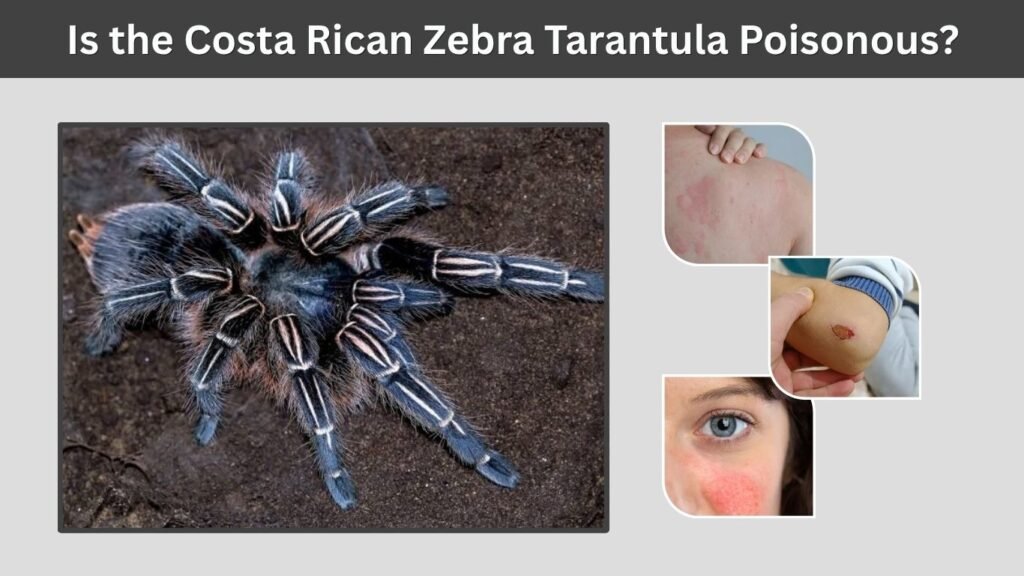
It is venomous, not poisonous. It injects venom through its fangs to immobilize prey. It can also release barbed urticating hairs from its abdomen when threatened.
Most New World tarantula bites cause localized pain, redness, and swelling rather than severe systemic poisoning, but any bite can create puncture wounds or trigger an unusual reaction. Urticating hairs may cause itching and inflammation and can seriously irritate the eyes.
Wash a bite with soap and water and seek medical advice for severe pain, spreading swelling, breathing difficulty, eye exposure, or other concerning symptoms. Do not rub skin or eyes after working inside the enclosure.
Male vs. Female Costa Rican Zebra Tarantula
Females are usually heavier-bodied and can live for 15–20 years or more. Males are generally slimmer after maturity, have longer-looking legs, and live only a few years.
A mature male develops reproductive structures on the pedipalps and may spend more time walking around the enclosure while searching for a female. Accurate sexing usually requires examination of a properly preserved molt.
Buying a Costa Rican Zebra Tarantula
Prices vary according to the spider’s size, sex, locality label, availability, and whether it is captive-bred. Confirm the scientific name and ask the seller about feeding history, approximate size, sexing method, and origin.
Choose a reputable seller offering captive-bred animals whenever possible. Check local laws before purchasing or importing any live tarantula. A low price should not outweigh proper identification, safe shipping, and responsible sourcing.
FAQs
Is a Costa Rican zebra tarantula good for beginners?
It can be suitable for a prepared beginner because its enclosure and feeding needs are straightforward. However, it may be fast, defensive, and inclined to remain hidden, so it is not ideal for anyone expecting a handleable or constantly visible pet.
How big does a Costa Rican zebra tarantula get?
Adults commonly reach a leg span of approximately 5–6 inches. Females tend to have heavier bodies, while mature males may appear leggier and slimmer.
How long do Costa Rican zebra tarantulas live?
Females commonly live for 15–20 years under suitable care. Males usually live approximately four to six years and often survive only a relatively short period after reaching maturity.
Why is my Costa Rican zebra tarantula not eating?
It may be preparing to molt, adjusting to a new enclosure, responding to seasonal conditions, or simply not hungry. Remove uneaten prey, provide water, and avoid disturbing a spider that has sealed its burrow.
Can a Costa Rican zebra tarantula bite?
Yes. It may bite if trapped, restrained, or repeatedly disturbed. It is more likely to flee or release urticating hairs, but handling should still be avoided because behavior can change without warning.
