
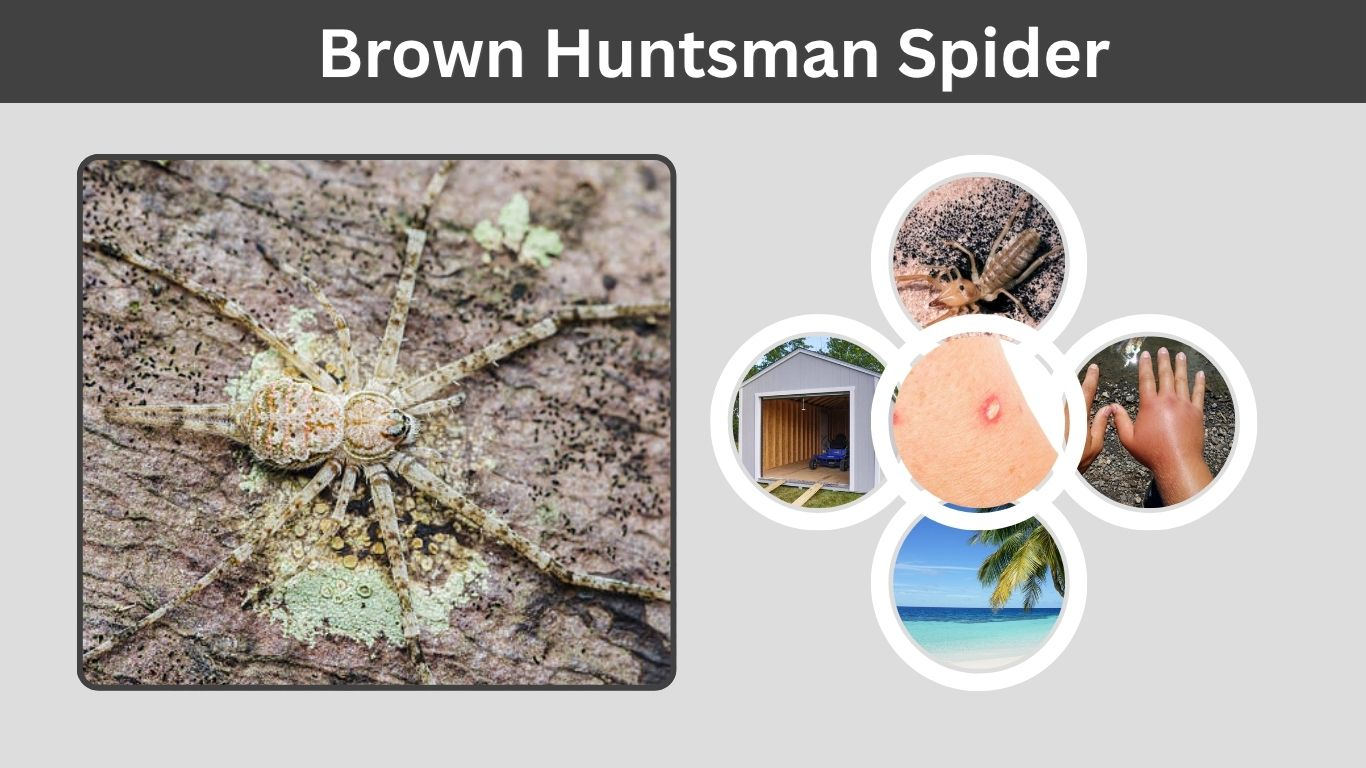
Brown huntsman spiders are large, fast-moving spiders commonly found in warm and tropical regions around the world. Their long legs and flat bodies often make them look much more dangerous than they really are. Many people search for information about brown huntsman spider bites, size, and whether they are poisonous after spotting one inside a home or garden. Although these spiders can appear intimidating, most species are harmless to humans and play an important role in controlling insects and household pests in natural environments.
What Is a Brown Huntsman Spider?
Brown huntsman spiders belong to the Sparassidae family, a group known for their large leg spans and crab-like movement. These spiders are active hunters rather than web builders. They are often seen climbing walls, hiding under bark, or resting on ceilings. Their speed and unusual appearance make them one of the most recognizable spiders in tropical climates.
Brown Huntsman Spider Identification
Brown huntsman spiders have several features that make them easier to identify.
- Flat brown or tan body
- Long legs that spread sideways
- Hairy appearance on legs and body
- Fast movement across walls and floors
- Crab-like walking style
- Large forward-facing eyes
Their flattened body allows them to hide inside narrow spaces such as cracks, tree bark, and gaps behind furniture.
Brown Huntsman Spider Scientific Classification
Brown huntsman spiders belong to a large spider family with many different species spread around the world. Scientists classify them under the family Sparassidae, which includes giant huntsman spiders and several tropical hunting spiders.
Unlike orb-weaving spiders, huntsman spiders do not rely on webs to catch prey. Instead, they actively chase insects and other small animals using their speed and strong legs.
How to Recognize a Brown Huntsman Spider Indoors
These spiders are commonly found inside homes in warm climates. They usually remain hidden during the daytime and become more active at night.
You may spot them:
- Behind curtains
- Near windows
- On ceilings and walls
- Inside garages and sheds
- Under furniture
Most huntsman spiders prefer escaping instead of confronting humans.
Brown Huntsman Spider Size
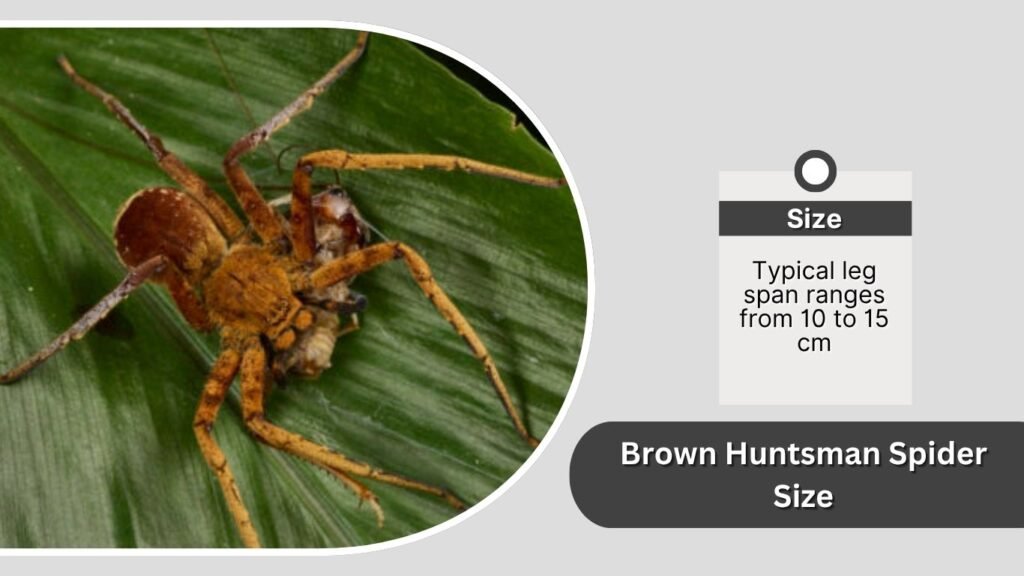
Brown huntsman spiders are famous for their impressive leg span. Their wide stance often makes them appear enormous, especially when viewed on walls or ceilings. While the body itself is not extremely large, the long legs create the illusion of a giant spider. Size varies depending on the species and environmental conditions.
Average Brown Huntsman Spider Size
Most brown huntsman spiders grow to medium or large sizes compared to common household spiders.
- Average body length is 2 to 5 cm
- Typical leg span ranges from 10 to 15 cm
- Giant species may exceed 25 cm in leg span
- Females are usually larger than males
- Tropical species tend to grow bigger
Their thin, extended legs account for most of their visible size.
Brown Huntsman Spider Size in CM and Inches
Spider size measurements usually include both body length and total leg span. The leg span is often much wider than the body itself.
| Measurement Type | Average Size |
| Body Length | 2–5 cm |
| Leg Span | 10–15 cm |
| Giant Species Leg Span | Up to 30 cm |
Large huntsman spiders may stretch close to 12 inches across, though most household species are much smaller.
Why Brown Huntsman Spiders Look Huge
Brown huntsman spiders appear larger because of their body structure and movement patterns. Their legs spread outward in a crab-like posture rather than standing upright like many other spiders.
Close-up camera angles also exaggerate their appearance in viral internet photos. A spider positioned near the camera lens may seem far bigger than nearby objects. Their fast movement can further increase fear and make them appear even larger than their true size.
Brown Huntsman Spider Habitat and Distribution
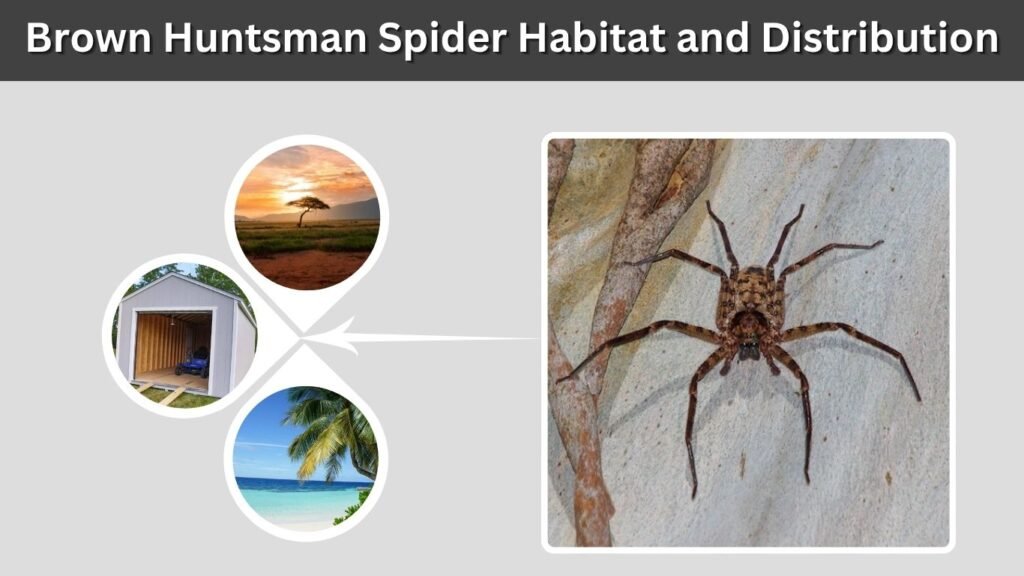
Brown huntsman spiders are found in many tropical and subtropical regions. Warm temperatures, humidity, and abundant insect prey help these spiders survive in forests, gardens, and even urban homes. Different species exist across Asia, Australia, Africa, and parts of the Americas.
Brown Huntsman Spider in Australia
Australia is one of the most famous locations for huntsman spiders. Large species are commonly seen in homes, vehicles, and outdoor structures.
- Prefer warm climates
- Often hide under bark and rocks
- Common in sheds and garages
- Frequently spotted on walls at night
- Feed on cockroaches and insects
Many Australians consider them helpful because they reduce pest populations indoors.
Brown Huntsman Spider in Sri Lanka
Sri Lanka’s tropical forests and humid weather provide ideal conditions for brown huntsman spiders. They are commonly found around homes, trees, and rural areas where insect populations remain high.
Some species in Sri Lanka are larger than typical household huntsman spiders found in cooler regions. Their ability to climb smooth surfaces allows them to move easily across walls and ceilings inside buildings.
Brown Huntsman Spider in the Philippines
The Philippines has several huntsman spider species that thrive in humid tropical environments. These spiders are often seen in forests, gardens, and homes where insects are plentiful.
Brown huntsman spiders in the Philippines usually hide during the daytime and hunt at night. Their flattened bodies help them squeeze into narrow spaces, including tree bark, roof gaps, and wooden structures. Because they move quickly, they can easily surprise homeowners when spotted indoors.
Brown Huntsman Spider in Florida
Some huntsman spider species have also been reported in Florida due to the region’s warm climate. These spiders survive well in humid southern environments where insects remain active year-round.
Although they are not as common as in Australia or Asia, Florida’s conditions allow certain introduced huntsman species to establish small populations. Most sightings occur around outdoor lights, garages, and tropical landscaping.
Brown Huntsman Spider Bite
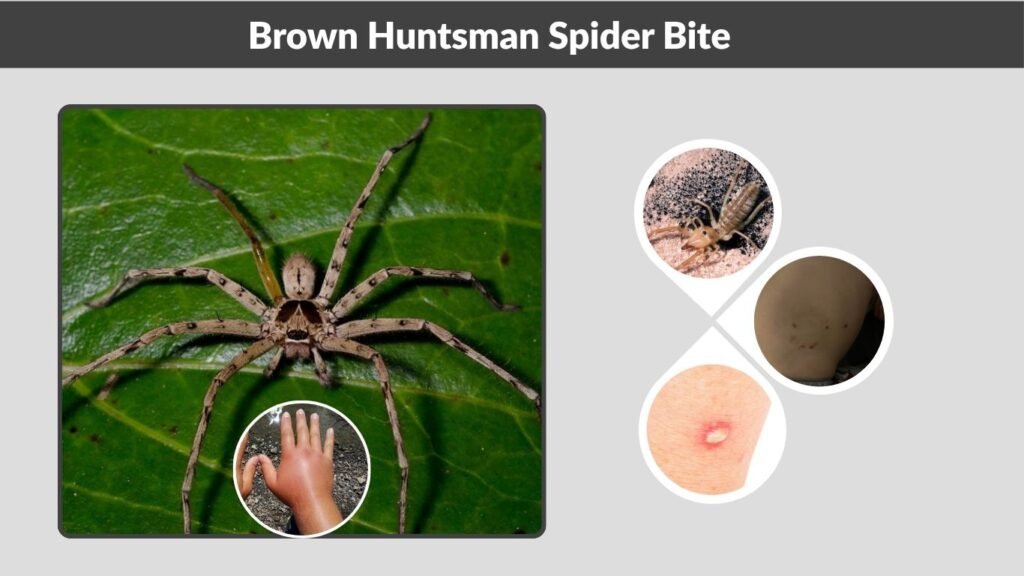
Brown huntsman spider bites are uncommon because these spiders usually avoid humans. They are not aggressive and prefer running away when disturbed. Most bites happen only when the spider feels trapped or threatened. Although their large size may look frightening, their bites are generally mild compared to medically dangerous spider species.
Does the Brown Huntsman Spider Bite Humans?
Brown huntsman spiders can bite humans, but they rarely do so intentionally.
- Defensive bites are uncommon
- Most spiders flee instead of attacking
- Bites usually occur when handled
- Accidental contact may trigger a bite
- They are not naturally aggressive toward people
Their first response is almost always escape rather than confrontation.
Brown Huntsman Spider Bite Symptoms
Most bites produce only mild local symptoms that disappear after a short time.
Common symptoms include:
- Mild pain
- Redness
- Swelling
- Temporary itching
- Minor discomfort around the bite area
Serious medical complications are very rare. However, sensitive individuals may experience stronger allergic reactions and should seek medical attention if symptoms worsen.
What to Do After a Huntsman Spider Bite
Basic first aid is usually enough for a huntsman spider bite. Cleaning the area and reducing swelling can help relieve discomfort quickly.
- Wash the bite with soap and water
- Apply an ice pack for swelling
- Avoid scratching the area
- Monitor for allergic reactions
- Seek medical help if severe symptoms develop
Most people recover without any serious problems within a few days.
Is the Brown Huntsman Spider Poisonous or Venomous?
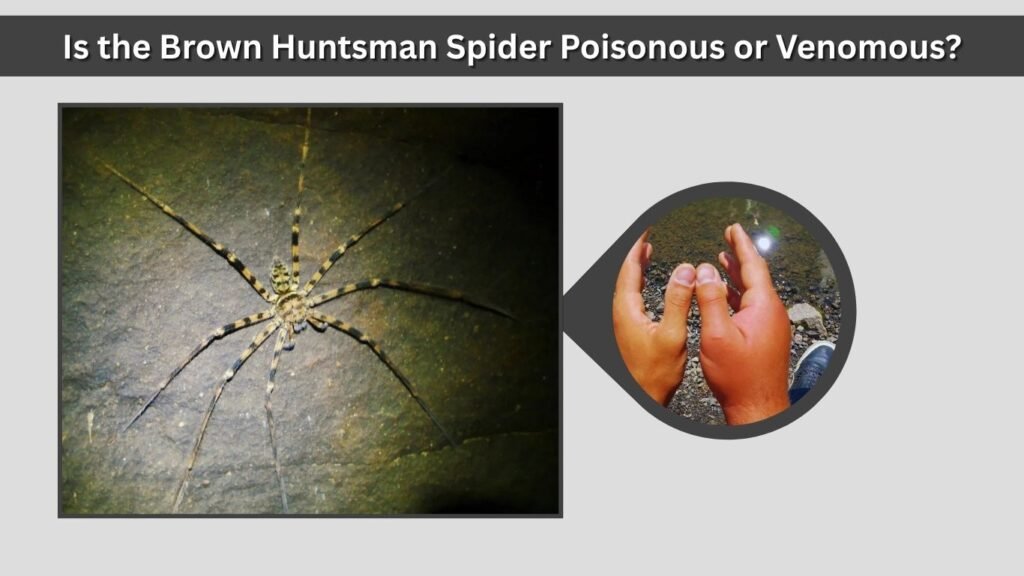
Many people confuse the words poisonous and venomous when talking about spiders. Brown huntsman spiders are venomous because they inject venom into prey through their fangs. However, they are not considered highly dangerous to humans. Their venom is mainly designed for hunting insects and small animals rather than harming people.
Are Brown Huntsman Spiders Venomous?
Like most spiders, brown huntsman spiders use venom to subdue prey before feeding.
- Venom helps immobilize insects
- Human effects are usually mild
- Venom is not considered medically significant
- Severe reactions are extremely rare
- Most bites heal naturally
Their venom is far less dangerous than that of widow spiders or funnel-web spiders.
Are Brown Huntsman Spiders Dangerous?
Brown huntsman spiders may look terrifying because of their speed and size, but they are usually harmless to humans. They are shy hunters that avoid conflict whenever possible.
In many homes, they actually provide benefits by reducing insect populations. Their diet includes cockroaches, moths, flies, and other common pests that invade houses and gardens.
Myths About Huntsman Spider Danger
Internet stories and viral images often exaggerate the danger of huntsman spiders. Photos taken from close angles can make the spiders appear gigantic and aggressive.
In reality, most huntsman spiders:
- Avoid human contact
- Rarely bite
- Do not chase people
- Prefer hiding during the day
- Help control pest insects
Their frightening appearance has created many myths that do not reflect their true behavior.
FAQs
Are brown huntsman spiders dangerous to humans?
Brown huntsman spiders are generally not dangerous to humans. Although they are venomous, their bites usually cause only mild pain, redness, or swelling. These spiders prefer escaping rather than attacking and are considered low-risk compared to medically significant spider species.
How big do brown huntsman spiders get?
Most brown huntsman spiders have a leg span between 10 and 15 centimeters. Larger tropical species can grow much bigger, with some reaching close to 30 centimeters across their legs. Their flat body and wide stance make them appear even larger.
Do brown huntsman spiders bite often?
Brown huntsman spiders rarely bite people. Most bites happen only when the spider feels trapped or threatened. They are shy hunters that usually run away from humans instead of becoming aggressive during encounters.
Are brown huntsman spiders poisonous?
Brown huntsman spiders are venomous, not poisonous. They use venom to capture insects and small prey. Their venom is mild for humans and typically causes only temporary discomfort rather than serious medical problems.
Where are brown huntsman spiders commonly found?
Brown huntsman spiders are commonly found in Australia, Sri Lanka, the Philippines, and other warm tropical regions. They often live in forests, gardens, garages, and homes where insects are abundant and temperatures remain warm.
