
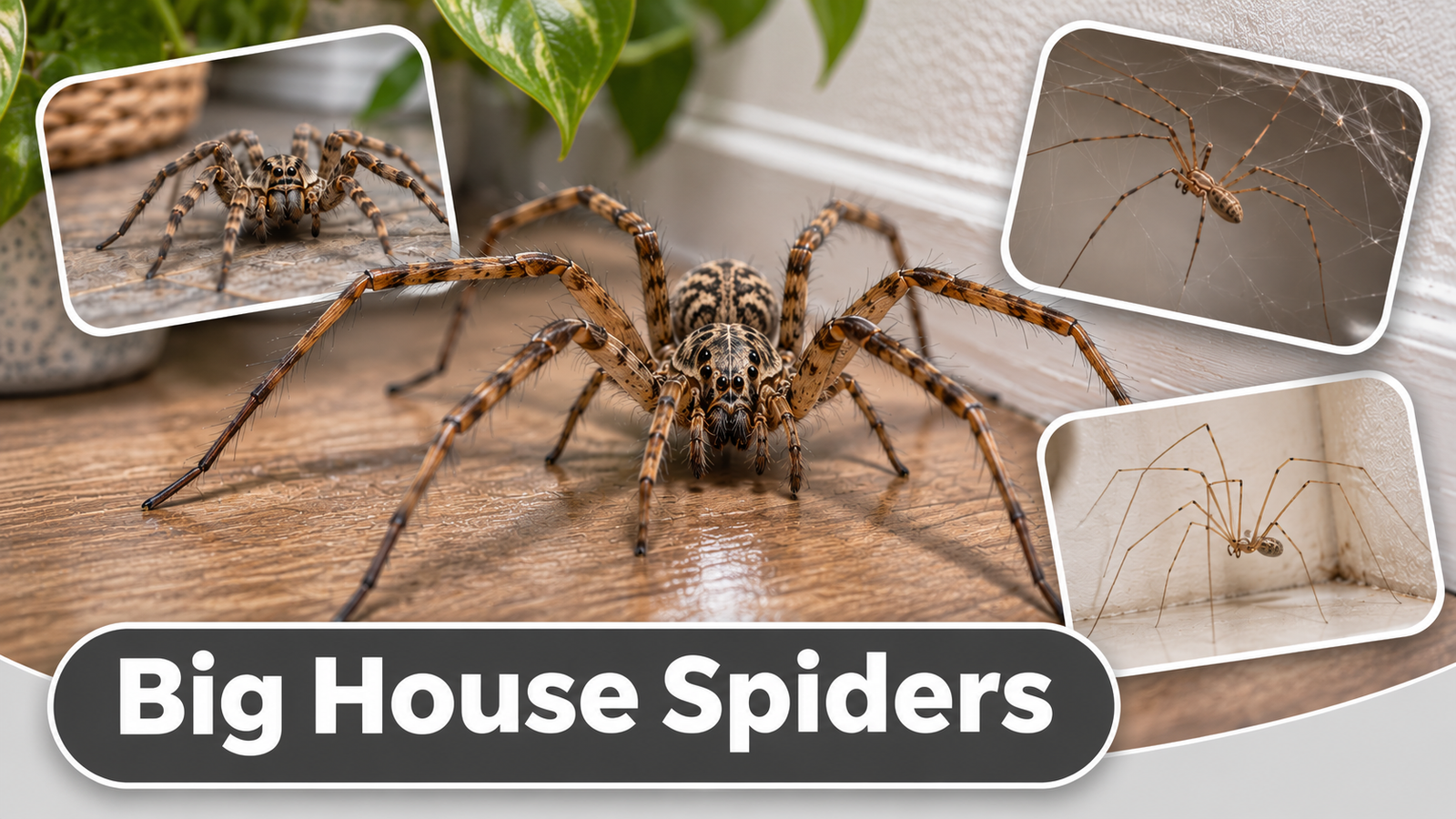
A large spider in your home can be startling, especially when it suddenly appears on a wall, floor, or bathtub. But “big house spider” is a general description, not the name of one species. The spider’s size, color, shape, web, and location can help you narrow down what you’re seeing. Many large spiders found indoors are harmless visitors that wandered in while hunting or looking for shelter. This guide explains the common types of big house spiders, why they enter homes, and how to handle an encounter safely.
What Does “Big House Spider” Mean?
People use “big house spider” to describe several different spiders that may turn up indoors. Some have long legs and relatively small bodies; others are stockier, with a larger-looking body and shorter legs. A spider may also appear especially large when its legs are spread out or when it moves quickly across an open floor.
The species you’re likely to see depends on where you live. A large spider in a U.S. home may be a wolf spider, a fishing spider, or a house-dwelling funnel weaver. In the United Kingdom, the phrase often refers to large, long-legged house spiders in the Eratigena or Tegenaria groups. These spiders are not interchangeable, and their size and behavior vary.
That’s why appearance alone can’t confirm a spider’s identity. Consider its location, body shape, markings, and whether it is sitting in a web or actively wandering.
Common Types of Big House Spiders
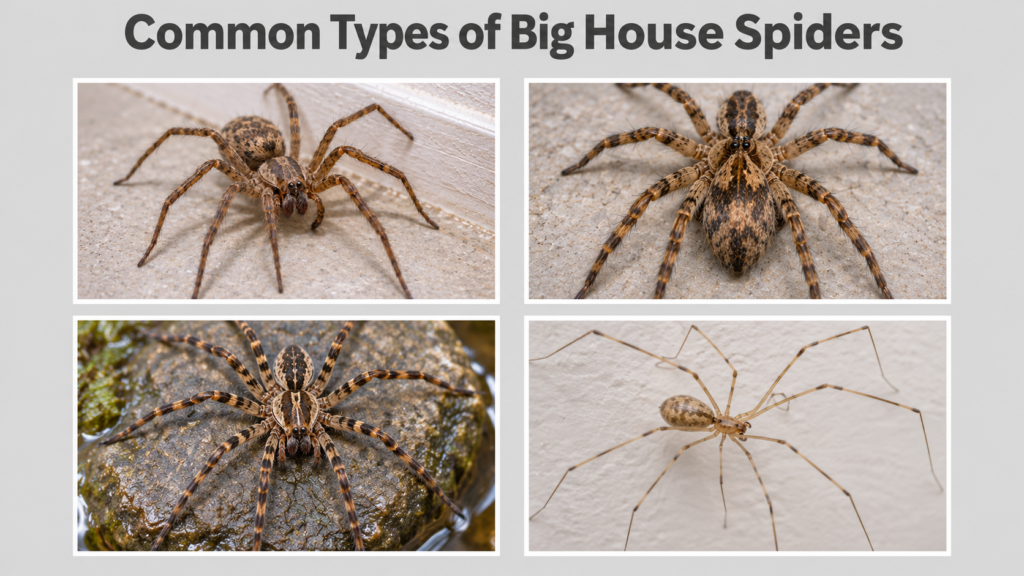
Giant House Spiders
Giant house spiders are especially well known in parts of the United Kingdom and northwestern North America. They have long, hairy legs and brown bodies, often with darker markings. They may build a flat, sheet-like web connected to a funnel-shaped retreat in a quiet corner, garage, shed, or basement.
Some giant house spiders look imposing because their legs can spread across a wide area. However, they generally avoid people and are more likely to run away than approach. A wandering spider may enter a room by accident or while searching for a mate or a sheltered place to hide.
Wolf Spiders
Wolf spiders are sturdy, fast-moving hunters that do not rely on a web to catch prey. They may enter a home through a gap under a door or another opening, then roam across the floor looking for insects or shelter. Their brown, gray, or mottled coloring helps them blend into soil, leaves, and other outdoor surfaces.
Wolf spiders often look larger and heavier than web-building house spiders because their legs are thick and their bodies are robust. Some females carry their young on their backs, which can make the spider look unusually textured or crowded. They are generally shy, but may bite if trapped or handled.
Fishing and Nursery Web Spiders
Fishing spiders are commonly associated with water, damp areas, or outdoor spaces, but they can sometimes wander into houses, garages, and basements. They are often large, brown, and long-legged, with patterns that help them blend into tree bark or nearby surfaces. Their size can make people mistake them for wolf spiders.
Nursery web spiders are similar in appearance and may also wander indoors. Both groups are more likely to be found near vegetation, sheds, or other areas connected to the outdoors than deep inside a home. An isolated sighting does not usually mean the house is infested.
Huntsman Spiders
In regions where huntsman spiders live, they may occasionally enter buildings. They have flattened bodies and long legs that extend outward, giving them a wide, crab-like shape. Some are large enough to look alarming, but many huntsman spiders prefer to hide during the day and hunt insects at night.
They are more likely in warm climates and are not common house spiders everywhere. A large, flattened spider on a wall or ceiling could fit this description in areas where huntsman spiders occur, but a photo or local identification guide can help distinguish it from similar species.
Cellar Spiders
Cellar spiders are recognized by their very slender bodies and extremely long, thin legs. Their body is small, so their overall appearance is different from that of a large, heavy-bodied spider. They often hang upside down in loose webs in basements, garages, crawl spaces, and quiet room corners.
When disturbed, some cellar spiders vibrate rapidly in their webs. They are not usually aggressive and tend to stay close to their webs. Although their leg span can look dramatic, their bodies are usually much smaller than those of wolf or giant house spiders.
How to Identify a Big Spider in Your House
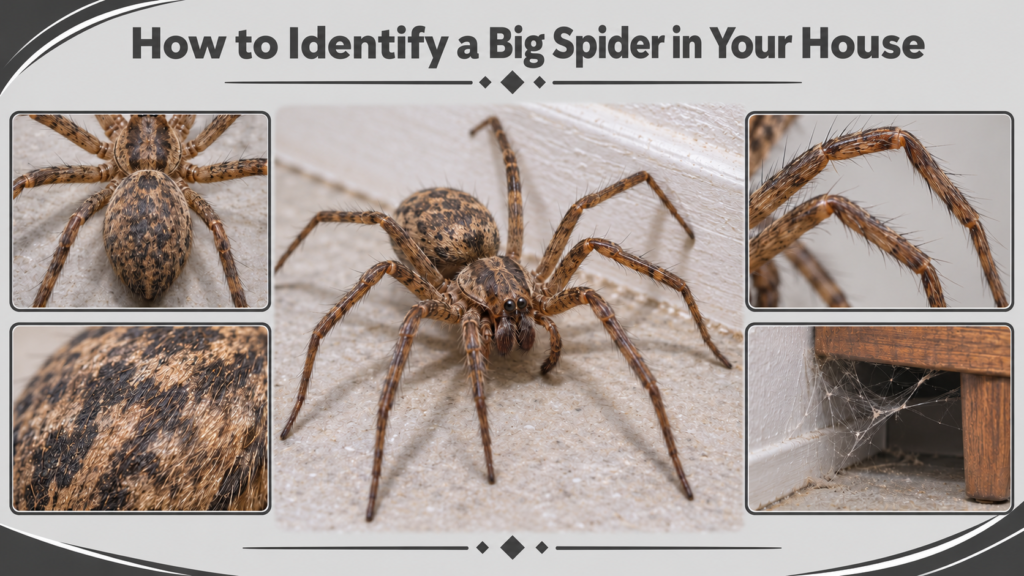
Start by looking at the spider from a safe distance. Note its approximate body size separately from its leg span. A spider can appear enormous because of long legs, even when its body is modest in size.
Check its shape and behavior. A broad, sturdy spider running across the floor may be a hunting spider such as a wolf spider. A spider sitting in a web may be a web builder, such as a house spider or cellar spider. A flat-bodied spider with legs held out to the sides may suggest a huntsman spider in regions where that species occurs.
Look for visible markings, but don’t rely on color alone. Brown and gray are common colors among many unrelated spiders, and lighting can change how they appear. A clear photograph can be useful for identification, especially if it shows the spider’s body and legs without getting close.
Location can provide another clue. Spiders found in a bathtub or sink may have fallen in or wandered there while searching for moisture; smooth surfaces can make it difficult for them to climb back out. A spider in a basement, garage, or storage area may simply be using a quiet space as shelter.
Why Are Big Spiders Appearing Indoors?
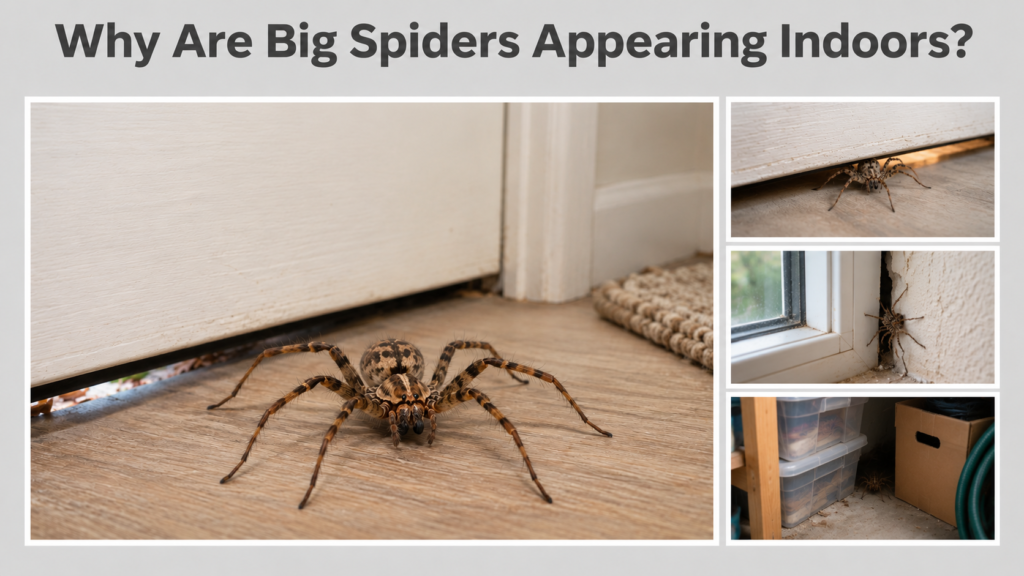
Spiders enter homes through small gaps around doors, windows, vents, pipes, and foundations. They may also arrive in boxes, firewood, garden items, or other objects brought indoors. Some species wander inside while searching for prey or shelter, while others may be more noticeable during their mating season.
The presence of a large spider does not automatically mean there are many more hiding nearby. A single spider may be a stray visitor. However, frequent sightings can mean that the home offers easy entry, sheltered hiding places, or a steady supply of insects.
Reducing indoor insects can make a home less appealing to spiders that hunt or settle where prey is available. Keeping storage areas tidy and removing undisturbed webs can also make it easier to notice activity.
Are Big House Spiders Dangerous?
Most large spiders found in homes are not considered a serious danger to people. They generally try to escape and are more likely to bite if they are squeezed, trapped against skin, or handled. A spider’s size alone does not tell you how medically significant its bite may be.
Because many spiders look alike, avoid trying to identify an unknown spider by provoking or picking it up. If someone is bitten and develops severe or worsening symptoms, seek medical advice. If you suspect a medically important species may be present, contact a qualified local pest professional or spider identification service.
For a typical encounter, give the spider space. If you can safely guide it into a container without touching it, you can move it outdoors. Avoid handling any spider you can’t identify confidently.
How to Remove a Big Spider Safely
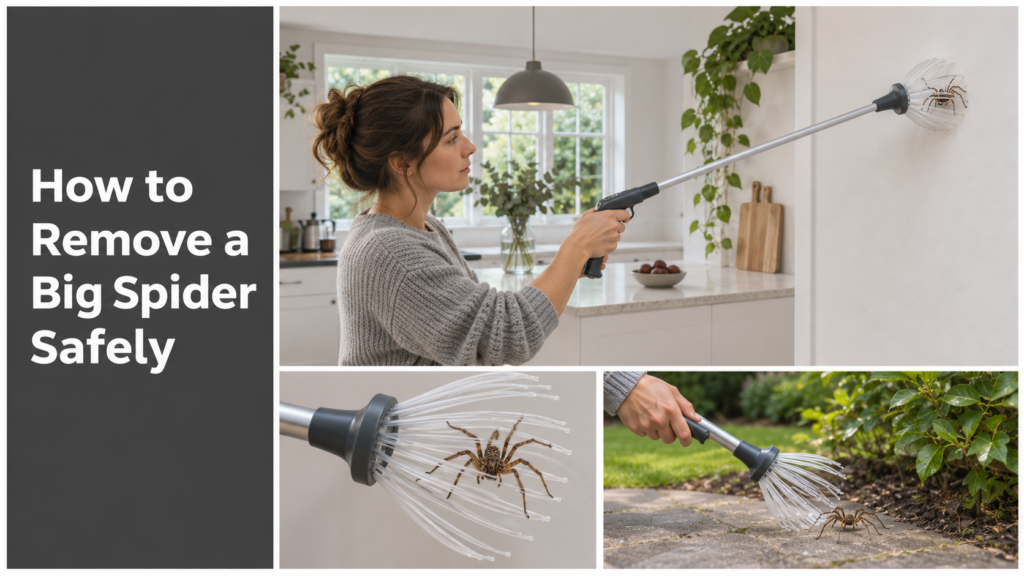
If the spider is in an accessible place, place a cup, jar, or container over it, then slide a stiff piece of paper or thin card underneath. Keep your hands away from the opening as you carry it outside, and release the spider away from the home. If you’re uncomfortable doing this, ask someone experienced to help.
Don’t grab a spider with your bare hands or try to crush it close to your skin. If it is in a hard-to-reach spot, or if you are unsure what it is, leave it alone and seek local advice. For recurring spider problems, focus on reducing entry points and clutter, and consider professional help if necessary.
How to Keep Big Spiders Out of the House
Fit or repair door sweeps and window screens, and seal small gaps around pipes, vents, and exterior openings. Keep storage items off the floor when practical, particularly in garages, basements, and sheds. Regularly vacuum corners and remove old webs to reduce sheltered places where spiders can settle.
You can also reduce the insects that attract spiders by keeping food waste contained, cleaning up crumbs, and addressing other pest issues. Outdoor lighting can attract flying insects near entrances, so placing lights away from doors or choosing less attractive lighting may help in some situations.
No method will prevent every spider from entering. The goal is to make indoor spaces less accessible and less attractive, not to eliminate all spiders from the surrounding environment.
Frequently Asked Questions
What is the biggest spider commonly found in a house?
It depends on your location. Giant house spiders are known for their long legs in parts of the UK and northwestern North America, while wolf spiders, fishing spiders, or huntsman spiders may be among the largest indoor visitors in other regions.
Why is a big brown spider in my house?
It may have wandered inside while looking for shelter or prey, or entered through a gap around a door, window, or foundation. Brown coloring is common among many spiders, so it isn’t enough to identify the species.
Do big house spiders come inside in winter?
Some spiders may be noticed indoors when outdoor conditions change, but sightings can also happen year-round. A spider found inside may have entered earlier and remained hidden in a quiet area.
Should I kill a big spider in my house?
Usually, you can avoid killing it by leaving it alone or moving it outside with a container and card. Don’t handle it directly, especially if you can’t identify it.
Does one big spider mean there are more?
Not necessarily. A single spider may be a stray visitor. Repeated sightings can point to easy entry, sheltered hiding places, or insects that provide food.
Identifying a big house spider takes more than judging its size. Body shape, behavior, web type, location, and geography all matter. Most large spiders seen indoors are passing visitors that prefer to avoid people. If you see one, keep your distance, move it safely if you’re comfortable, and seal common entry points to reduce future encounters.
