
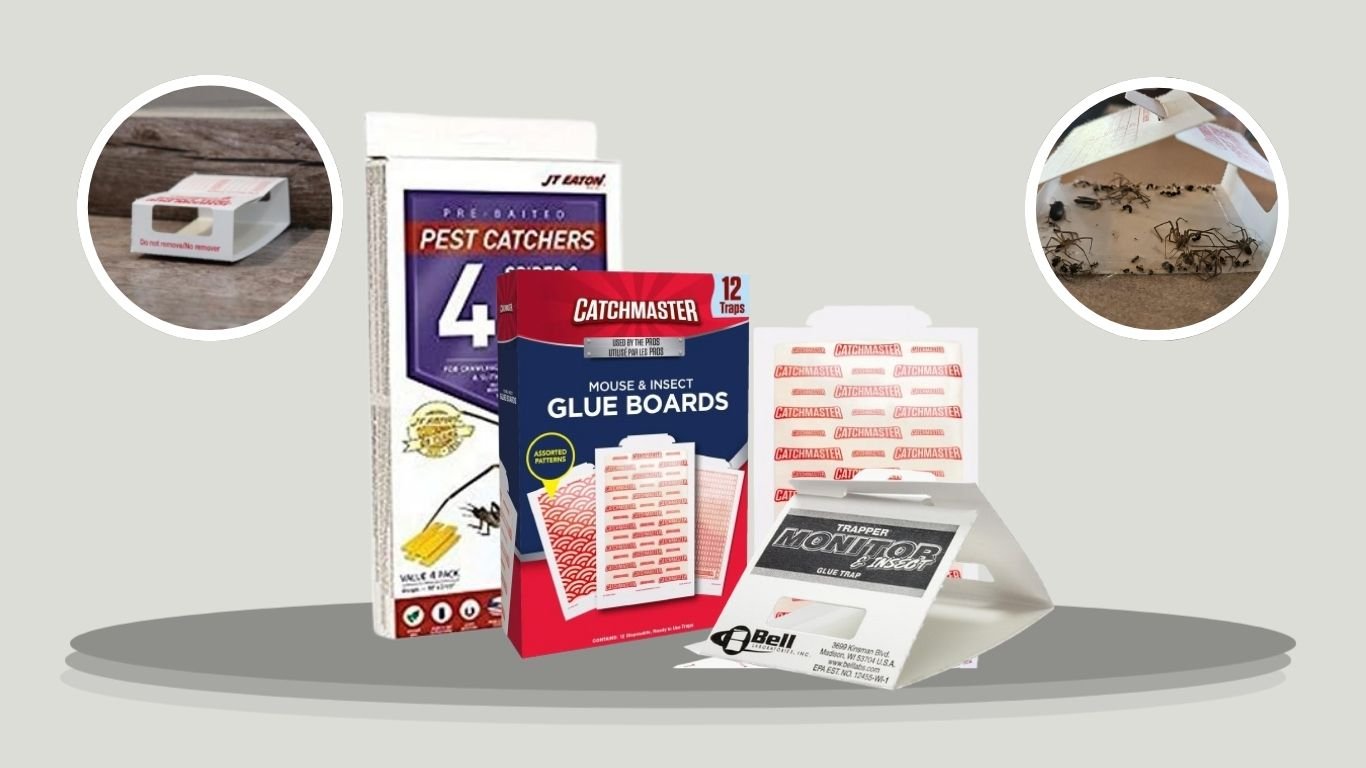
Spiders can quickly become an unwanted problem in bedrooms, basements, kitchens, garages, and other indoor spaces. A good spider trap offers a simple way to catch crawling spiders without spraying chemicals throughout your home. In this guide, we review the 15 best spider traps for indoor use, including sticky glue boards, pre-baited traps, and non-toxic options. Whether you are dealing with common house spiders, brown recluse spiders, or other crawling pests, these traps can help you monitor activity and reduce indoor spider problems effectively.
1. 10-Pack Spider & Crawling Insect Glue Traps
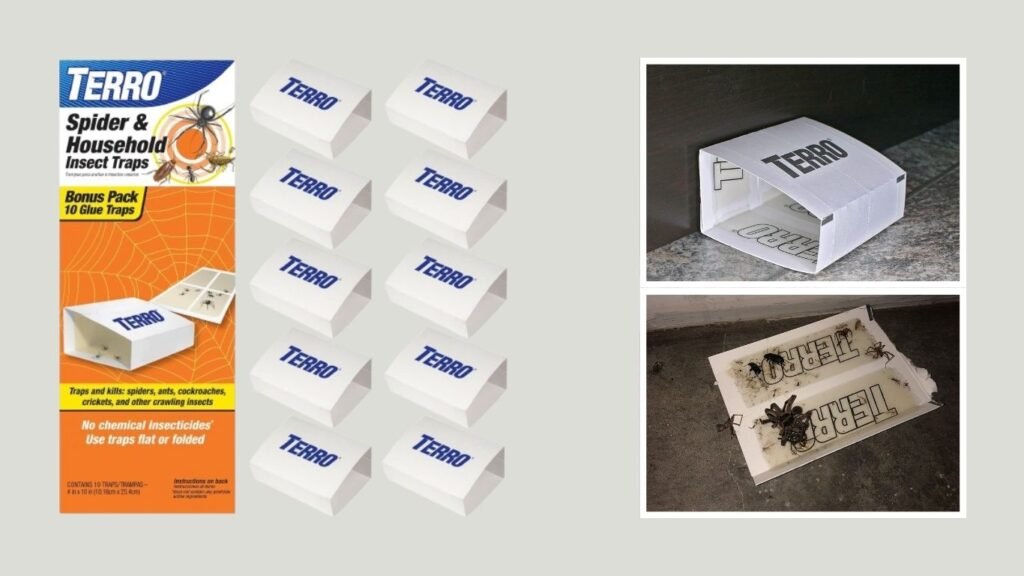
The 10-Pack Spider & Crawling Insect Glue Traps offers a simple, chemical-free way to monitor and capture spiders and other unwanted crawling pests indoors. These adhesive traps can be placed along walls, behind furniture, beneath sinks, inside closets, or in other areas where spiders commonly travel. The multi-pack format also makes it easier to cover several rooms at once instead of relying on a single trapping point.
Key Features
- Includes 10 adhesive traps for wider indoor coverage
- Designed for spiders, roaches, crickets, and other crawling insects
- Strong sticky surface helps hold pests once they make contact
- No spraying, fumes, or complicated application required
- Suitable for bedrooms, kitchens, basements, garages, and storage spaces
- Compact design fits easily along walls and in hidden pest pathways
- Useful for both pest monitoring and ongoing indoor control
Why It Works Well for Indoor Spider Control
Spiders often move along baseboards, corners, furniture edges, and other protected routes rather than crossing open areas. These traps can be positioned directly along those travel paths, giving them a practical advantage over treatments that depend on spiders contacting sprayed surfaces.
The 10-pack is particularly useful when spider activity is appearing in several areas of the home. Placing multiple traps at strategic points can help identify where activity is highest while also capturing spiders that pass through those locations.
Easy Placement and Everyday Performance
One of the strongest advantages of this type of spider trap is its simplicity. There is no mixing, spraying, or special equipment involved. Once positioned correctly, the adhesive surface remains ready to capture crawling pests that move across it.
For better results, traps should generally be placed near dark corners, entry points, underneath cabinets, behind appliances, and near areas where webs or spiders have already been noticed. Checking them regularly also makes it easier to determine whether spider activity is increasing or declining.
Best Choice for Multi-Room Coverage
This 10-pack stands out for households that need an affordable way to cover several indoor problem areas simultaneously. It is especially practical for basements, garages, closets, kitchens, and rooms where chemical sprays may be undesirable. For homeowners looking for straightforward spider monitoring with broad coverage and minimal maintenance, this trap set offers a convenient and practical approach to keeping indoor spider activity under control.
2. Catchmaster Brown Recluse Spider & Insect Glue Traps
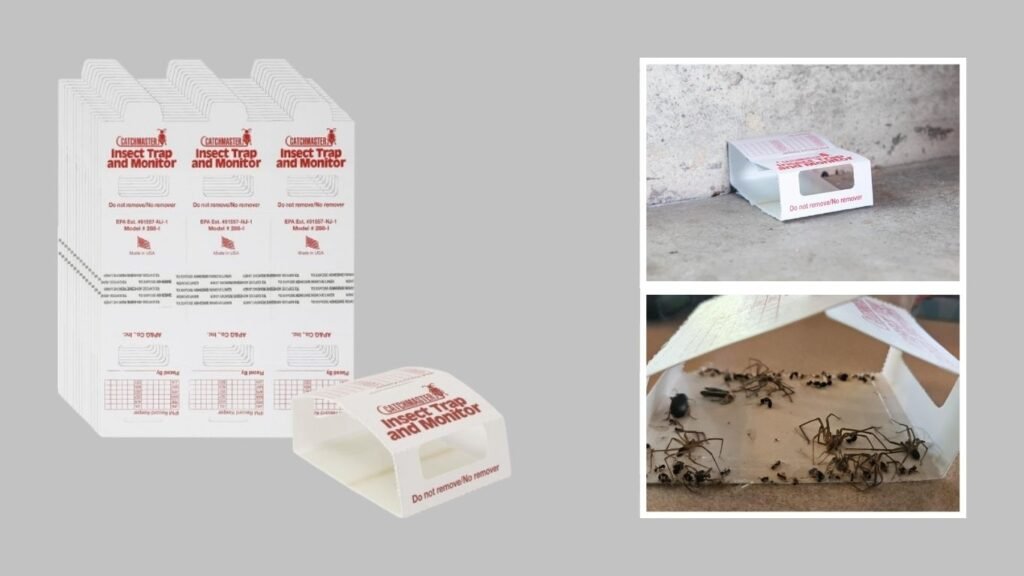
The Catchmaster Brown Recluse Spider & Insect Glue Traps are designed for homeowners who want a simple way to monitor and capture spiders in problem areas around the home. These adhesive traps are especially useful in dark, quiet spaces where spiders tend to hide, including basements, closets, storage rooms, garages, and underneath furniture. Their low-profile design makes them easy to place along common spider travel routes without taking up much space.
Key Features
- Designed to capture spiders and other crawling insects
- Useful for brown recluse spider monitoring
- Strong adhesive trapping surface
- Compact profile for discreet indoor placement
- No spraying or complicated setup required
- Suitable for basements, closets, garages, and storage areas
- Can help identify areas with higher spider activity
Why It Stands Out for Spider Monitoring
One of the biggest advantages of these Catchmaster traps is their usefulness as both a control and monitoring tool. Spiders often remain hidden during the day, which can make it difficult to know where activity is concentrated. Placing glue traps in several likely locations can reveal where spiders are traveling most frequently.
This is especially valuable in areas where brown recluse spiders or similar indoor species may be a concern.
Practical Performance in Hidden Areas
The adhesive surface works best when the trap is positioned directly along walls, underneath shelving, behind stored boxes, or near cracks and gaps. These locations naturally guide crawling insects and spiders toward the trap.
Because no spraying is involved, the traps can also be used in spaces where frequent chemical treatments would be inconvenient. Regular inspection makes it easy to replace heavily filled or dusty traps.
Best for Basements and Storage Spaces
These traps are particularly well suited for quiet indoor locations that receive little daily disturbance. Basements, garages, closets, and storage areas often provide ideal spider habitat, making targeted trap placement especially useful.
For anyone who wants a recognizable pest-control option focused on indoor spider monitoring, Catchmaster provides a practical balance between simple installation, discreet placement, and continuous trapping.
3. MaxGuard Non-Toxic Spider & Crawling Insect Traps
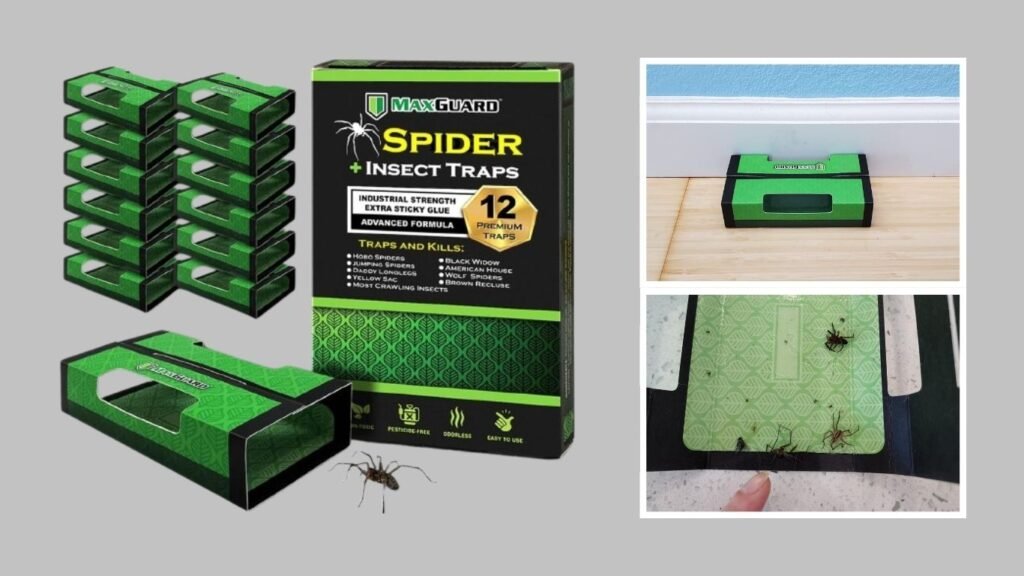
The MaxGuard Non-Toxic Spider & Crawling Insect Traps are a convenient option for households looking to control spiders without relying on sprays or strong-smelling pest treatments. Their adhesive design targets spiders and other crawling pests that move across floors, along walls, or through hidden areas. They are particularly useful for ongoing monitoring because multiple traps can be placed around the home and checked periodically for activity.
Key Features
- Non-toxic adhesive trapping design
- Targets spiders and other crawling pests
- Suitable for indoor residential use
- Easy to position in corners and along baseboards
- No aerosol sprays or liquid pesticides required
- Useful in garages, bedrooms, kitchens, and basements
- Helps monitor spider activity over time
Why It Is a Strong Chemical-Free Option
For households that prefer to minimize chemical use indoors, adhesive traps provide a straightforward alternative. The MaxGuard design works mechanically, capturing spiders when they contact the sticky surface.
This makes the traps particularly attractive for areas where homeowners would rather avoid repeated spraying, such as bedrooms, storage closets, or around enclosed indoor spaces.
Reliable Coverage with Strategic Placement
Performance depends heavily on placement. These traps work best when positioned where spiders naturally move, including along walls, beside furniture, behind appliances, underneath cabinets, and near doors or windows.
Using several traps throughout a room can also improve monitoring because spider travel patterns are not always predictable. Once a high-activity area is identified, additional traps can be concentrated there.
Best for Routine Indoor Pest Management
MaxGuard traps fit well into a regular pest-control routine because they require little maintenance after setup. Homeowners can place them in problem areas and inspect them every few days or weeks depending on activity levels.
They are particularly suitable for people who want to monitor spiders quietly without introducing strong odors or wet treatments into living areas. Their simple design makes them a practical choice for everyday indoor spider management.
4. Indoor Sticky Glue Traps for Spiders, Mice & Insects
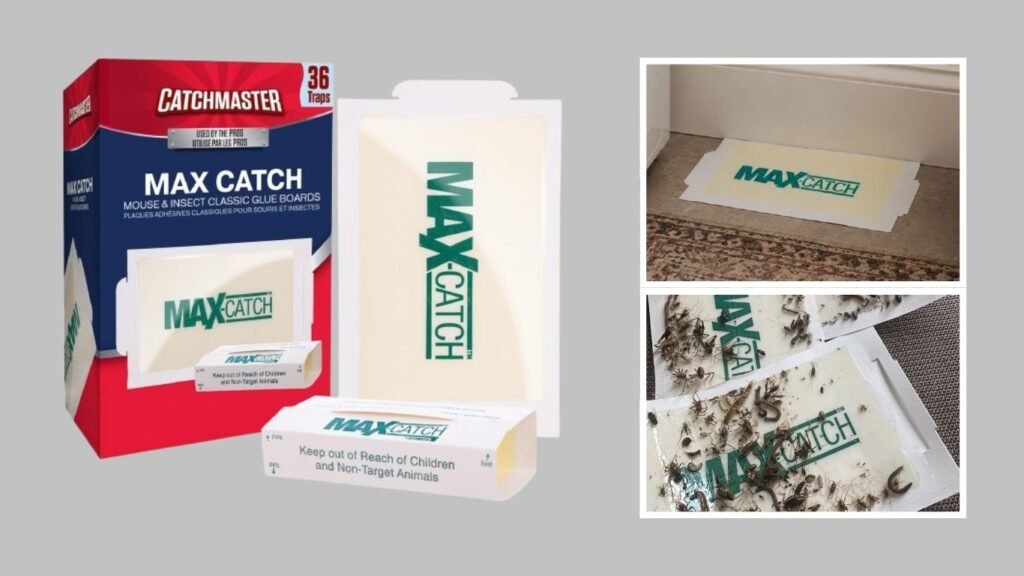
These Indoor Sticky Glue Traps for Spiders, Mice & Insects provide broad pest coverage in a single adhesive trapping system. Their larger sticky surface can be helpful in areas where spiders are not the only problem, especially when crawling insects or small household pests are also present. Because the traps can be positioned flat along floors and walls, they work well in garages, storage rooms, basements, utility spaces, and other areas where pest traffic is common.
Key Features
- Large adhesive trapping surface
- Suitable for spiders and multiple crawling pests
- Can be placed flat in pest travel areas
- No spraying or electrical power required
- Useful in garages, basements, and utility rooms
- Designed for longer-term indoor monitoring
- Helps identify general pest activity
Why It Works Well for Multiple Pest Problems
Not every home has a spider-only issue. Spiders are often present because other insects are already available as prey. A broader glue trap can therefore be useful because it captures both spiders and some of the insects they may be feeding on.
This makes the trap especially practical for garages, basements, and storage areas with mixed pest activity.
Strong Surface Coverage for High-Traffic Areas
The wider sticky area provides more room for intercepting crawling pests. Positioning these traps along wall edges, behind shelving, underneath appliances, or near entry points can increase the likelihood of contact.
They can also help determine which areas of a room have the most activity, making future trap placement more targeted and efficient.
Best for Garages and Utility Spaces
These traps are most useful where appearance is less important than coverage. Their larger size works particularly well in garages, workshops, utility rooms, and basements where spiders and other crawling pests may share the same pathways.
For households dealing with multiple pest types, the broader adhesive format provides a versatile solution that goes beyond spider-only monitoring.
5. Spider Traps for Inside Your Home
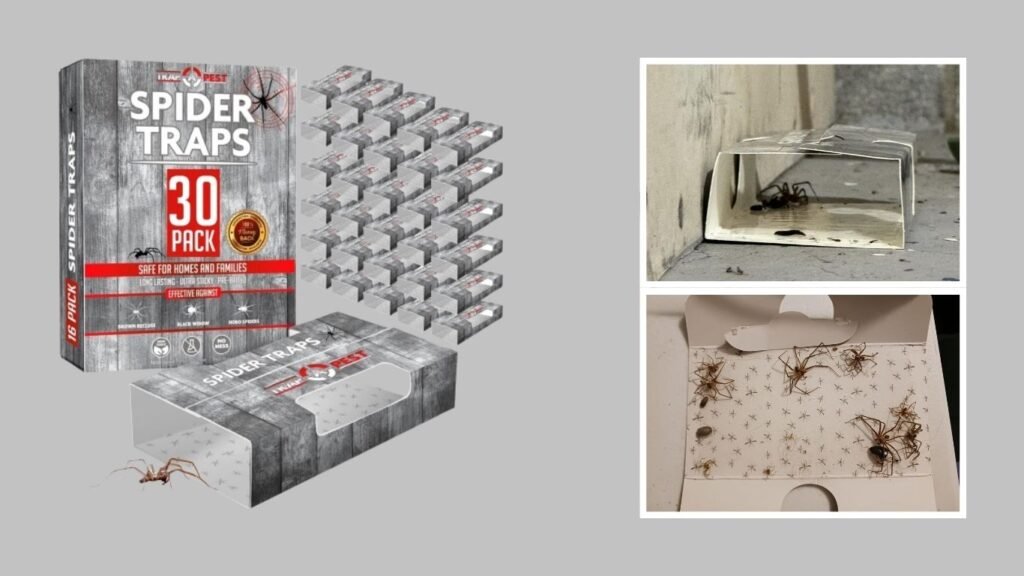
The Spider Traps for Inside Your Home are designed specifically for indoor use and offer a simple approach to reducing spider activity in common living spaces. Their compact glue-board format makes them easy to position in corners, underneath furniture, behind doors, or close to walls where spiders frequently travel. They can be especially useful in homes where occasional spiders appear in bedrooms, bathrooms, kitchens, or hallways.
Key Features
- Designed specifically for indoor spider trapping
- Compact size for discreet placement
- Adhesive surface captures crawling spiders
- Suitable for multiple rooms
- No spraying or complicated application
- Can be used near furniture and wall edges
- Helpful for locating spider activity
Why It Is Convenient for Everyday Homes
These traps are focused on simplicity. Homeowners can place them in problem areas without needing special equipment, mixing solutions, or treating an entire room.
Their discreet size is another advantage because they can remain underneath furniture or along hidden edges without drawing much attention.
Effective When Used in Spider Travel Zones
Spiders frequently follow sheltered routes rather than walking through the center of a room. Placing traps behind cabinets, near floor-level corners, beside baseboards, and close to known web locations can improve results.
Using several traps at once also makes it easier to compare activity between different rooms and identify where additional pest-control measures may be needed.
Best for Bedrooms and Living Areas
These traps are a practical choice for homeowners who notice occasional spiders in commonly used indoor spaces. Their compact, no-spray design fits bedrooms, offices, living rooms, and other areas where a less intrusive control method may be preferred.
For routine spider monitoring and light-to-moderate indoor activity, they provide a straightforward solution with minimal setup.
6. Indoor Glue Boards for Spiders, Mice & Insects
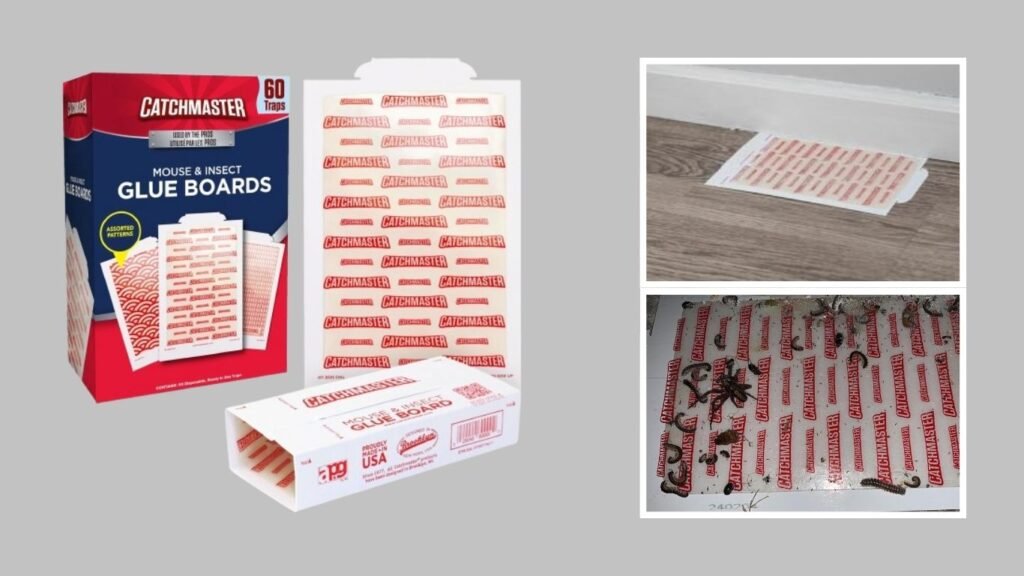
The Indoor Glue Boards for Spiders, Mice & Insects offer a versatile trapping option for households dealing with more than one type of pest. Their adhesive surface can intercept spiders along with other crawling pests, making them useful in areas where pest activity is unpredictable. These boards can be placed along walls, underneath appliances, inside storage spaces, or close to entry points where pests are likely to move.
Key Features
- Multi-purpose indoor glue board
- Can capture spiders and other crawling pests
- Large adhesive area for wider coverage
- Easy floor-level placement
- No electricity or spraying required
- Suitable for basements, garages, and kitchens
- Helpful for long-term pest monitoring
Why It Is Useful for Broader Pest Control
Spider activity is often connected to other insects being present indoors. A trap capable of catching several pest types can therefore provide a clearer picture of what is happening in a particular area.
By reducing insect activity as well as trapping spiders, these boards can become part of a broader indoor pest-management strategy.
Good Performance in Protected Locations
Glue boards generally perform best where dust, moisture, and foot traffic are limited. Positioning them underneath appliances, behind furniture, alongside walls, or in storage spaces helps protect the adhesive while placing it directly in common pest pathways.
Checking the boards regularly also helps homeowners determine when replacement is needed.
Best for Homes with Mixed Pest Activity
These glue boards are especially useful for households dealing with spiders alongside roaches, crickets, or other crawling pests. Their versatility means fewer specialized traps may be needed throughout the home.
For garages, basements, kitchens, and utility areas with varying pest problems, the larger adhesive format offers practical and adaptable coverage.
7. JT Eaton Spider & Cricket Glue Traps
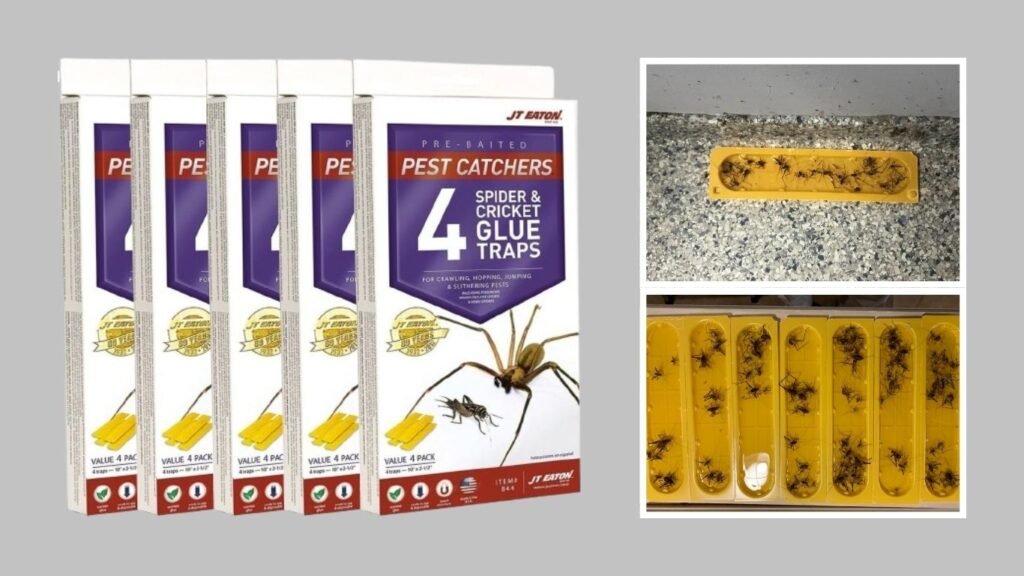
The JT Eaton Spider & Cricket Glue Traps are designed to capture common crawling pests in indoor problem areas. Their targeted format makes them particularly useful for spiders and crickets, which frequently hide in basements, garages, crawl spaces, and other dark environments. These traps provide a low-maintenance approach to pest monitoring and can be placed where chemical sprays may be inconvenient.
Key Features
- Designed for spiders, crickets, and crawling insects
- Adhesive trapping surface
- Suitable for indoor monitoring
- Compact design for hidden placement
- No electrical power required
- Works well along walls and dark corners
- Useful for basements, garages, and storage areas
Why It Works Well in Dark Indoor Spaces
Spiders and crickets commonly seek sheltered environments with limited disturbance. Glue traps placed directly in these areas can intercept pests as they move between hiding spots.
JT Eaton’s compact design makes it easy to position traps behind storage items, beside foundations, underneath shelving, or near basement walls.
Consistent Monitoring with Minimal Effort
Once positioned, these traps require very little attention beyond regular inspection. They can remain in place to reveal pest activity that might otherwise go unnoticed.
For better performance, homeowners can use several traps at different points and then move additional traps toward the areas showing the most catches.
Best for Basements and Crawl Spaces
The combination of spider and cricket targeting makes these traps particularly appropriate for lower levels of a home. Basements, crawl spaces, utility rooms, and garages often provide ideal conditions for both pest types.
For homeowners who frequently notice spiders or hear crickets indoors, these traps offer a focused and easy-to-manage control option.
8. Bulk Spider Glue Traps for Indoor Use
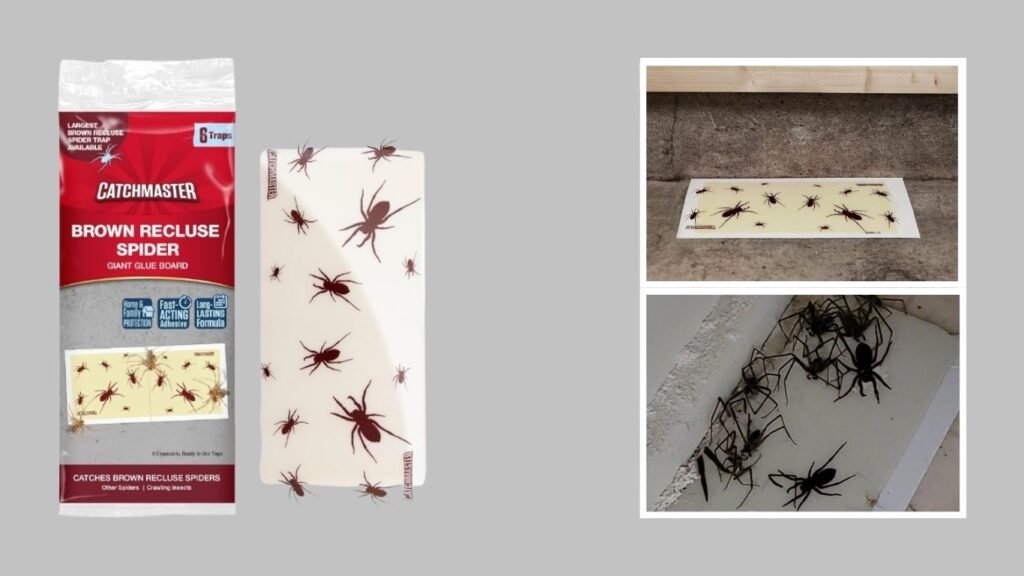
The Bulk Spider Glue Traps for Indoor Use are ideal for larger homes or situations where traps need to be placed across several rooms at the same time. Instead of relying on one or two trapping points, a bulk pack allows homeowners to create wider coverage throughout basements, garages, closets, bedrooms, and storage areas. The adhesive design requires no spraying and works continuously once properly positioned.
Key Features
- Bulk quantity for extensive indoor coverage
- Adhesive trapping surface for spiders
- Suitable for multiple rooms and problem areas
- Easy to place along walls and in corners
- Chemical-spray-free trapping method
- Helpful for monitoring recurring spider activity
- Can also intercept other small crawling insects
Why It Is Best for Wider Home Coverage
Spider activity is not always limited to a single room. In larger homes, spiders may enter through different doors, windows, garages, or foundation gaps. Having multiple traps available makes it easier to cover these separate pathways simultaneously.
This also provides better information about where the strongest activity is occurring.
Flexible Placement for Better Results
Bulk traps offer the freedom to experiment with placement. Several can be positioned near entrances, underneath furniture, behind appliances, along basement walls, and inside closets.
After a few days, traps with little or no activity can be moved while productive locations can receive additional coverage. This makes pest control more targeted over time.
Best for Large Homes and Recurring Spider Problems
A bulk pack provides better value when spider activity occurs regularly or across multiple parts of the home. It is also useful for homeowners who prefer to keep replacement traps readily available rather than ordering new ones frequently.
For ongoing indoor spider monitoring, the combination of quantity, easy placement, and broad coverage makes this type of glue trap especially practical.
9. Non-Toxic Pre-Baited Spider & Crawling Insect Traps
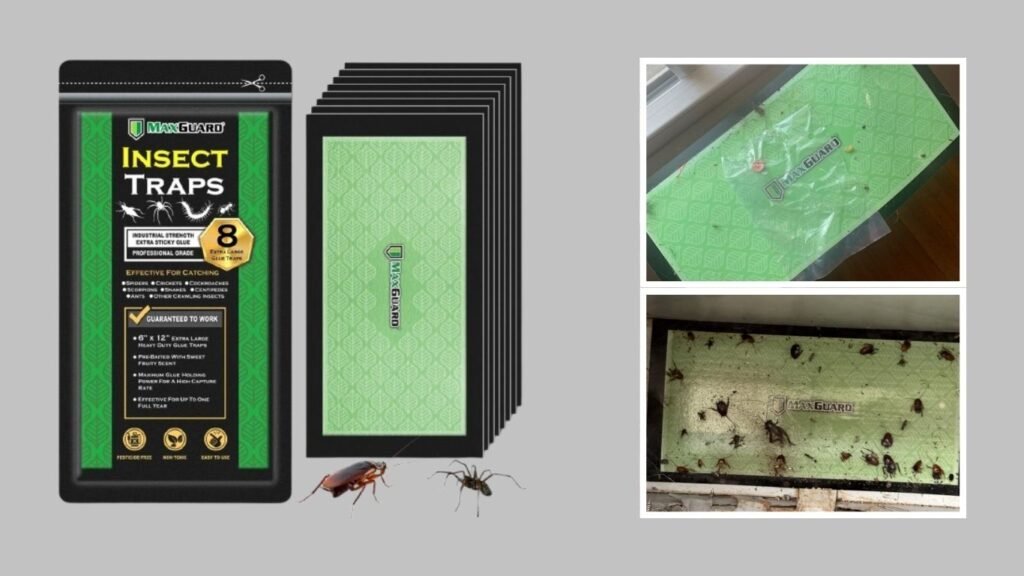
The Non-Toxic Pre-Baited Spider & Crawling Insect Traps are designed for households that want simple indoor pest monitoring without using sprays or strong chemical treatments. Because the traps are pre-baited, they are ready to place in common pest areas with minimal preparation. They can be used against spiders as well as scorpions, cockroaches, centipedes, and other crawling pests, making them a useful option for homes with more than one indoor pest concern.
Key Features
- Pre-baited design for quick setup
- Non-toxic trapping approach
- Targets spiders and multiple crawling pests
- Strong adhesive surface
- Suitable for indoor use
- Works well along walls, corners, and hidden areas
- Useful for basements, garages, closets, and kitchens
- Requires no spraying or electrical power
Why the Pre-Baited Design Is Useful
A pre-baited trap takes much of the guesswork out of setup. Rather than adding food or other attractants, the trap can simply be positioned where crawling pests are likely to move.
This feature can be particularly useful in garages, basements, utility rooms, and storage areas where multiple insect species may be present. It also makes the traps convenient for homeowners who want a low-maintenance option that can remain in place between inspections.
Effective for Multi-Pest Indoor Monitoring
These traps become most useful when several are placed throughout likely pest routes. Common locations include behind appliances, underneath cabinets, beside baseboards, around storage boxes, and near cracks or doorways.
The adhesive surface can capture spiders while also revealing whether cockroaches, centipedes, or other crawling pests are active nearby. That information can help homeowners focus future control efforts more precisely.
A Practical Choice for Chemical-Conscious Homes
For people who prefer to avoid frequent indoor pesticide spraying, this type of trap offers a straightforward alternative. It operates continuously after placement and does not require complicated maintenance.
Its ability to handle several crawling pests makes it especially valuable in homes where spider activity may be linked to a larger insect problem. For convenient monitoring with minimal setup, the pre-baited format provides strong everyday usability.
10. Spider Traps for Brown Recluse & Other Spiders
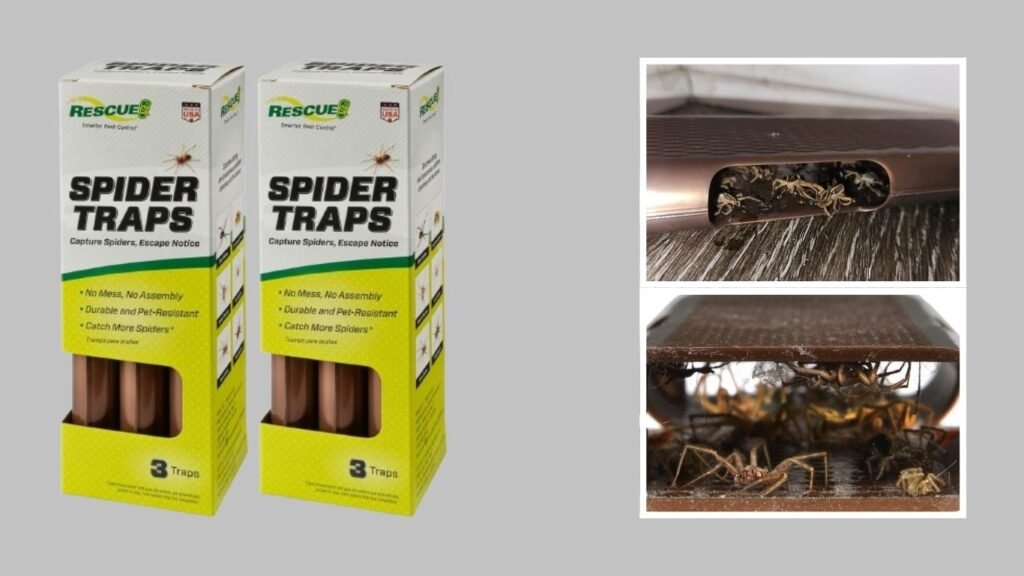
The Spider Traps for Brown Recluse & Other Spiders are designed for targeted indoor monitoring, especially in quiet, undisturbed spaces where potentially concerning spider species may hide. These glue traps can be placed along walls, underneath furniture, behind stored items, and in closets or basements. Their simple adhesive design makes them easy to use while allowing homeowners to monitor spider activity over time.
Key Features
- Designed specifically for spider trapping
- Suitable for brown recluse monitoring
- Strong adhesive trapping surface
- Low-profile indoor design
- Easy to place in narrow or hidden spaces
- No pesticide spraying required
- Useful for basements, closets, garages, and storage areas
- Helps identify high-activity spider locations
Why It Is Well Suited to Brown Recluse Monitoring
Brown recluse spiders tend to favor dark and relatively undisturbed areas. That makes traditional visual monitoring difficult because they may remain hidden behind boxes, underneath furniture, or inside storage areas.
Glue traps placed along likely travel routes offer a practical way to detect activity without constantly searching these spaces. Several traps can also be used together to determine which parts of a room have the highest spider movement.
Placement Makes a Major Difference
For the best results, traps should be placed flush against walls or near locations where spiders naturally travel. Closets, storage boxes, utility rooms, basement edges, and areas behind furniture are often useful positions.
If one trap consistently catches spiders, adding more traps nearby can increase coverage. Traps should also be checked periodically so dusty or heavily used boards can be replaced.
Best for Targeted Spider Monitoring
This product is especially useful for homeowners who are more interested in spider-specific control than general insect trapping. Its discreet size allows it to remain hidden while continuously monitoring activity.
For homes in regions where recluse spiders are a concern, using glue traps as part of a broader prevention strategy can provide helpful information while reducing the number of roaming spiders indoors.
11. Trapper Insect Traps for Spiders & Cockroaches
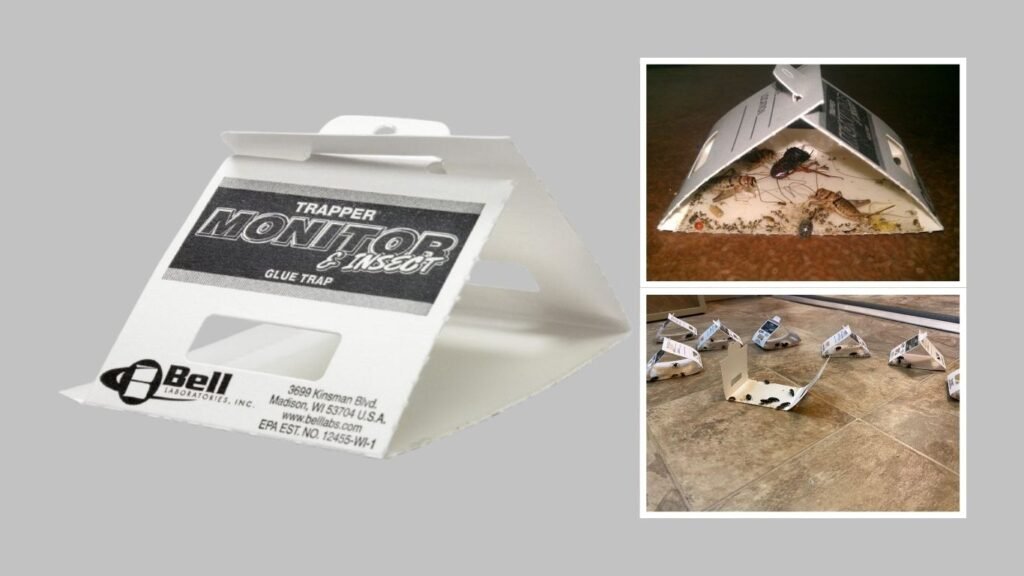
The Trapper Insect Traps for Spiders & Cockroaches offer a versatile glue-based solution for monitoring crawling pests indoors. They are suitable for homes where spiders appear alongside cockroaches, crickets, or similar pests. Their compact design allows them to fit beneath appliances, behind furniture, inside cabinets, and along baseboards. Because they rely on an adhesive surface, they are also convenient for areas where homeowners prefer not to use aerosol pest treatments.
Key Features
- Captures spiders, cockroaches, and crawling insects
- Strong adhesive trapping surface
- Compact and discreet design
- Suitable for residential indoor use
- No spraying or electrical power required
- Easy to position near pest travel routes
- Useful for kitchens, basements, and storage areas
- Helps monitor changing pest activity
Why It Works Well for Mixed Pest Problems
Spider activity often increases when other insects are available as food. A trap that captures both spiders and potential prey insects can therefore be particularly useful.
Instead of addressing only one pest, these boards provide a broader picture of activity in the surrounding area. This can help homeowners understand whether a spider problem is connected to cockroaches or other crawling pests.
Reliable Performance in Protected Areas
Adhesive traps perform best when placed away from heavy dust, moisture, and foot traffic. Behind refrigerators, underneath cabinets, beside pantry walls, and near basement edges are examples of productive locations.
Because the trap remains active without additional treatment, it can be left in place and checked periodically. This makes it a useful tool for identifying pest patterns over several days or weeks.
Best for Kitchens and Utility Areas
These traps are particularly valuable in places where several pest types may share the same pathways. Kitchens, utility rooms, basements, garages, and storage spaces are all good candidates.
For homeowners who want one trap that can monitor spiders while also addressing other crawling pests, the Trapper design provides practical versatility and low-maintenance performance.
12. Non-Toxic Pre-Baited Spider & Insect Glue Traps
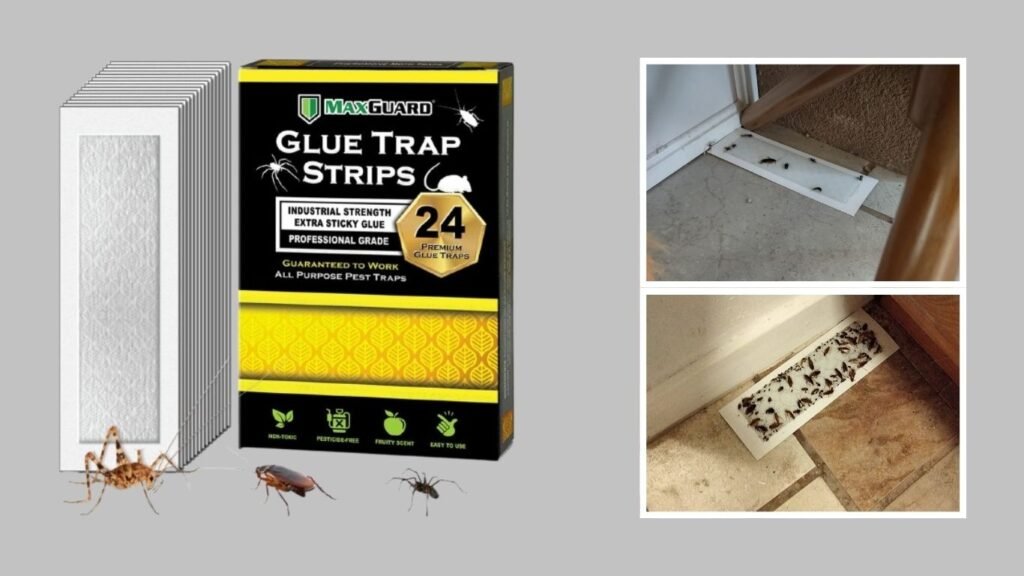
The Non-Toxic Pre-Baited Spider & Insect Glue Traps combine convenient setup with broad indoor pest coverage. They are designed to capture spiders, cockroaches, centipedes, and other crawling pests without requiring sprays. The pre-baited format means each trap can be positioned quickly around the home, making it especially useful for homeowners who want an easy pest-monitoring solution that requires very little ongoing preparation.
Key Features
- Pre-baited for immediate placement
- Non-toxic adhesive trapping method
- Suitable for spiders and crawling insects
- Compact design for hidden locations
- No spray, fumes, or electricity required
- Useful in bedrooms, garages, kitchens, and basements
- Helps locate areas with frequent pest movement
- Simple to inspect and replace when needed
Why It Is Convenient for Regular Home Use
Convenience is one of the biggest strengths of these traps. Because the attractant is already built into the product, homeowners can simply position the traps in areas where pests have been noticed.
This makes them particularly useful for routine monitoring rather than one-time treatment. Several traps can remain in different areas of the home, allowing activity to be compared over time.
Good Coverage for Crawling Pest Pathways
These traps work best along sheltered routes such as wall edges, underneath sinks, behind refrigerators, inside closets, and near basement foundations. Spiders and insects naturally move through these protected areas, increasing their chances of contacting the adhesive.
Using multiple traps also makes it easier to identify hidden pest hotspots that might otherwise go unnoticed.
Best for Low-Maintenance Pest Control
Homeowners who want a set-and-check approach may find these traps especially useful. There is no mixing, spraying, or powered equipment involved, and the pre-baited design reduces setup effort.
Their ability to monitor several pest types also makes them a flexible option for homes where spider activity changes with seasonal insect populations. For simple, ongoing indoor control, this format offers strong practical value.
13. JT Eaton Spider Catchers with Attractant
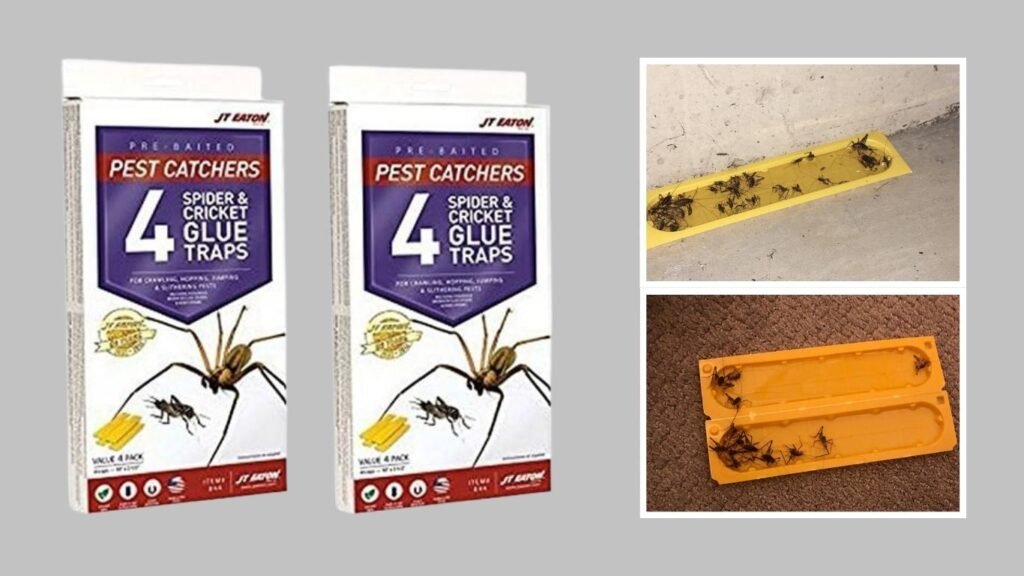
The JT Eaton Spider Catchers with Attractant are designed to increase the likelihood of spiders encountering the trap by combining an adhesive surface with an attractant. This can make them useful in areas where spiders are present but their exact travel routes are difficult to identify. They are suitable for indoor locations such as basements, closets, garages, utility rooms, and storage spaces where spiders tend to remain hidden.
Key Features
- Designed specifically for spider control
- Includes an attractant to improve trapping potential
- Strong adhesive catching surface
- Suitable for hidden indoor locations
- Easy to place along walls and corners
- No spraying required
- Useful for garages, basements, and storage areas
- Provides ongoing spider monitoring
Why the Added Attractant Stands Out
Standard glue traps rely primarily on spiders accidentally crossing the adhesive. An attractant adds another element that may help increase interaction with the trapping area.
This can be useful when homeowners know spiders are present but are unsure exactly where they are moving. Strategically placing several traps around a problem room can make monitoring more effective.
Designed for Consistent Indoor Monitoring
Once placed, these traps can remain active with little maintenance. They are particularly useful around basement foundations, dark closets, underneath shelving, and near boxes or stored belongings.
Regular inspection helps homeowners identify the most active locations. If one area produces more catches, additional traps can then be positioned nearby to improve coverage.
Best for Hard-to-Locate Spider Activity
The JT Eaton Spider Catchers are a strong option when ordinary placement alone has not provided enough information about spider movement. The added attractant makes them especially interesting for dark or cluttered spaces where spiders have many possible hiding places.
For targeted spider control that remains simple to manage, these traps offer a useful combination of adhesive capture, attractant-based design, and discreet indoor placement.
14. Catchmaster 288i Insect & Spider Glue Traps
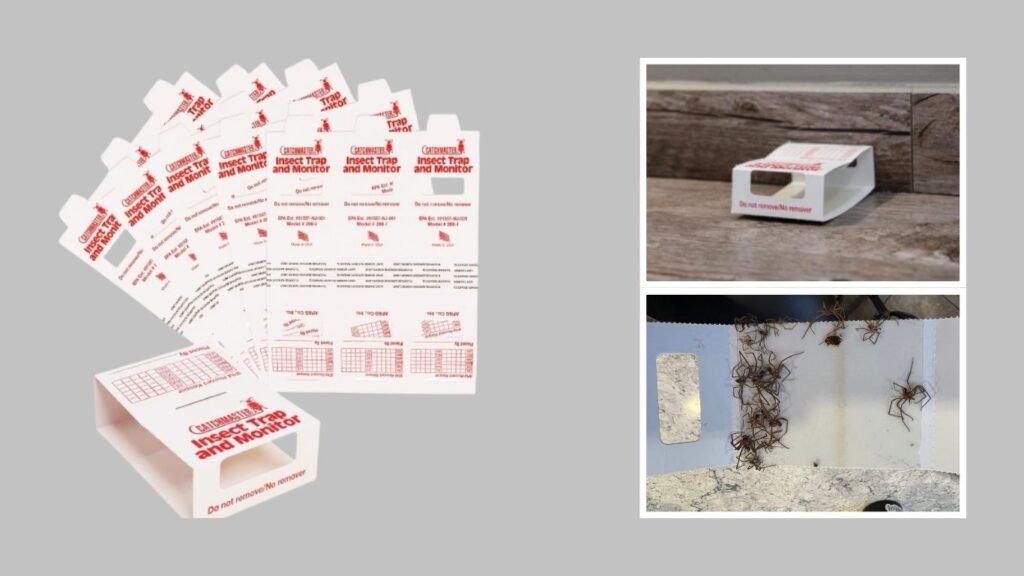
The Catchmaster 288i Insect & Spider Glue Traps are a straightforward indoor monitoring option designed for spiders and other crawling insects. Catchmaster is widely associated with adhesive pest-control products, and this trap format is designed to fit easily into small spaces around the home. It can be used underneath appliances, inside cabinets, near walls, or in basements where spiders and insects commonly travel.
Key Features
- Designed for spiders and crawling insects
- Strong adhesive trapping surface
- Compact profile for discreet placement
- Easy to use without special equipment
- Suitable for residential indoor areas
- No aerosol spraying required
- Useful underneath furniture and appliances
- Helps monitor pest activity over time
Why It Is a Reliable Everyday Option
The simple design makes these traps particularly suitable for routine home pest monitoring. There are no complicated mechanisms to activate, and traps can be distributed around the home according to where activity is noticed.
This makes them useful for homeowners who want to maintain several monitoring points throughout kitchens, basements, garages, or utility areas.
Strong Performance with Proper Placement
Like most adhesive traps, positioning is important. Placing the trap directly beside walls, underneath cabinets, behind appliances, or near pest entry points typically gives it a better chance of intercepting crawling spiders and insects.
Monitoring several locations simultaneously also helps reveal which parts of the home need greater attention.
Best for General Indoor Pest Monitoring
Catchmaster 288i traps are especially suitable for homeowners who want a familiar, uncomplicated glue-board format rather than a specialized electronic or chemical solution.
Their combination of compact size and broad crawling-insect compatibility makes them practical for many indoor environments. For regular monitoring of spiders and other household pests, they provide a convenient option that can be integrated easily into an ongoing pest-control routine.
15. Indoor Glue Traps for Spiders, Mice & Crawling Pests
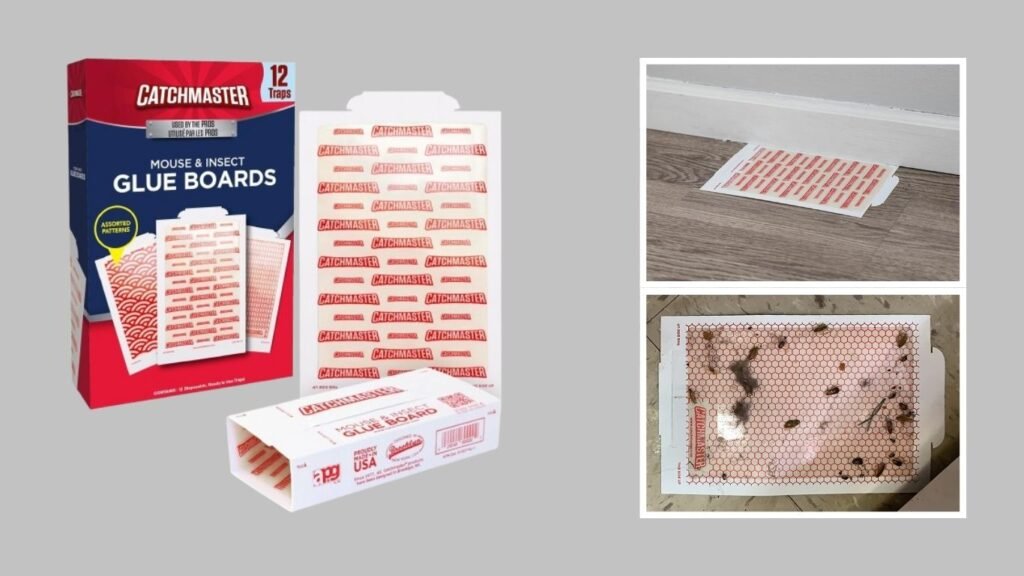
The Indoor Glue Traps for Spiders, Mice & Crawling Pests provide a larger, multi-purpose trapping solution for households dealing with different pest types. Their adhesive surface is designed to capture pests that travel across floors and along protected edges. Because the traps can be positioned in basements, garages, kitchens, storage rooms, and utility areas, they offer flexibility for homeowners who need broader pest coverage rather than a spider-only product.
Key Features
- Multi-purpose adhesive trapping design
- Suitable for spiders and various crawling pests
- Large sticky surface for broader coverage
- No spraying or electricity required
- Easy to place along walls or underneath furniture
- Useful in garages, basements, and utility rooms
- Helps identify areas with high pest traffic
- Suitable for ongoing indoor monitoring
Why It Is Useful for Broader Pest Control
A larger multi-purpose glue trap can be valuable when the exact pest problem is unclear. It may capture spiders while also revealing the presence of other crawling pests moving through the same area.
This information is useful because indoor spider populations often follow the availability of insect prey. Reducing or monitoring both can support a more complete pest-management approach.
Wide Adhesive Coverage for Busy Pest Routes
The generous trapping surface makes these boards especially suitable for locations with frequent pest movement. Placing them along basement walls, underneath shelving, behind appliances, or around garage entry areas can help intercept multiple types of pests.
For best performance, the adhesive should remain protected from moisture, dust, pets, and regular foot traffic.
Best for Large or Multi-Pest Problem Areas
These glue traps are most practical in areas where flexibility and coverage matter more than discreet appearance. Garages, basements, workshops, and storage rooms are strong examples.
For homeowners who want a single style of trap capable of handling spiders along with other crawling pests, this larger adhesive format provides a versatile, easy-to-use solution that supports both trapping and long-term monitoring.
FAQs
1. Do spider traps really work indoors?
Yes. Sticky spider traps can be effective indoors when placed along baseboards, behind furniture, under appliances, inside closets, and near other spider travel routes. They are especially useful for monitoring spider activity and catching wandering spiders.
2. Where should I place spider traps in my home?
Place traps in dark, quiet areas where spiders are commonly seen. Good locations include basements, garages, closets, bathrooms, kitchens, underneath sinks, behind appliances, and near doors or windows.
3. How long do indoor spider glue traps last?
Many glue traps can remain effective for several weeks or longer if they stay clean and dry. Replace them when the adhesive becomes dusty, covered with insects, wet, or no longer sticky.
4. Are spider glue traps safe to use around the home?
Most glue traps do not require sprays or airborne pesticides, making them convenient for indoor use. However, they should still be positioned where children and pets cannot touch the adhesive surface.
5. Can spider traps catch brown recluse spiders?
Yes. Glue traps can catch brown recluse spiders when they are placed along their normal travel paths. For better monitoring, position several traps in dark, undisturbed areas such as closets, basements, storage rooms, and underneath furniture.
