
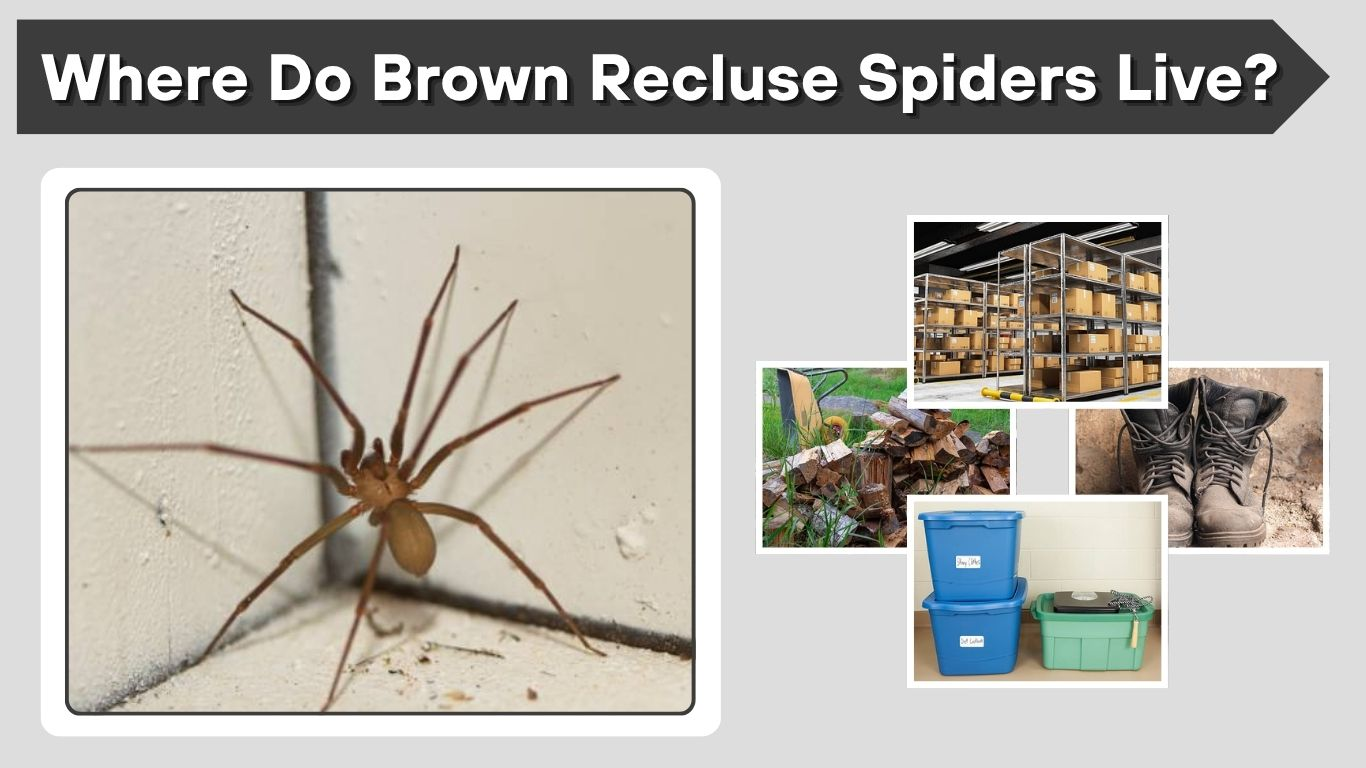
Brown recluse spiders live mainly in the south-central and Midwestern United States, but they are often reported far outside their true range. They prefer dark, quiet, dry, and undisturbed places, both indoors and outdoors. In homes, they may hide in closets, attics, basements, boxes, shoes, and storage areas. Understanding where brown recluse spiders live can help you avoid bites, identify real risks, and avoid confusing harmless brown spiders with recluses.
Where Do Brown Recluse Spiders Live in the U.S.?
Brown recluse spiders are not found everywhere in the United States. Their main range is concentrated in the central and southern part of the country. Many suspected sightings outside this range are actually other brown spiders.
Main Brown Recluse Range
The brown recluse spider, also called Loxosceles reclusa, is found through much of the south-central and Midwestern United States. University of Kentucky Entomology notes that the species is found throughout the south-central and Midwestern U.S., while recluse spiders are rare outside their native range and often over-reported.
Their strongest populations are usually associated with states such as Missouri, Arkansas, Kansas, Oklahoma, Texas, Louisiana, Mississippi, Alabama, Tennessee, Kentucky, southern Illinois, and nearby areas. UC IPM describes the brown recluse as living in the south-central Midwest from Nebraska to Ohio and south from Texas to Georgia.
Brown Recluse Range by Region
| Region | Brown Recluse Status |
| South-central U.S. | Common or established in many areas |
| Midwest | Present in parts of several states, especially southern areas |
| Southeast | Present in several states, but not evenly everywhere |
| Northeast | Generally not established |
| Far West | Brown recluse is usually not established |
| Canada | Not part of the normal brown recluse range |
Are Brown Recluses Found in Every State?
No, brown recluses are not found in every state. They may occasionally be transported in boxes, furniture, moving trucks, or stored items, but that does not mean they have established a breeding population. University of Kentucky Entomology explains that one or a few spiders may be moved to non-native areas in boxes or furnishings, but infestations seldom become established.
Where Do Brown Recluse Spiders Live in a House?
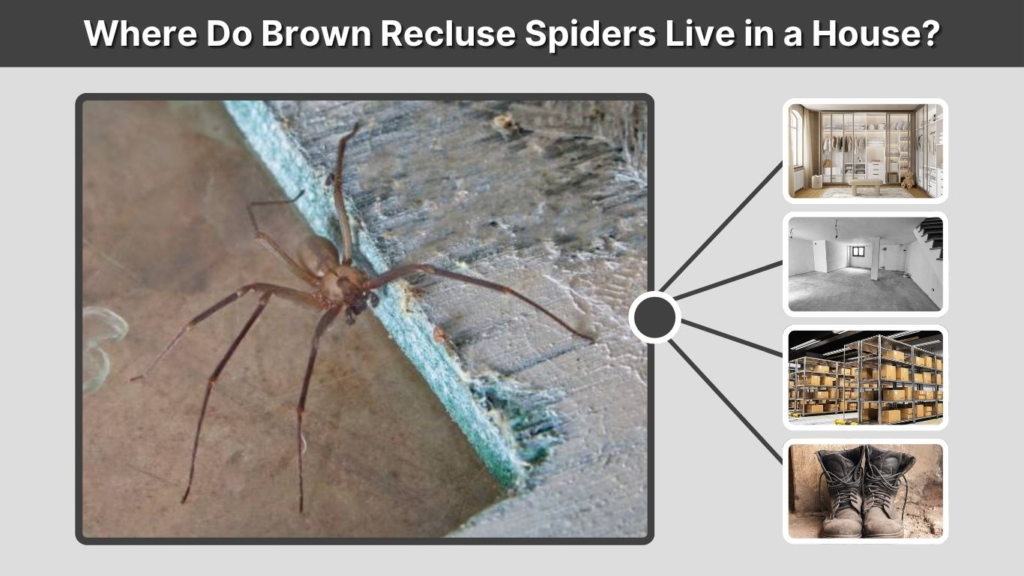
Inside homes, brown recluse spiders prefer areas that are quiet, dark, dry, and rarely disturbed. They are called “recluse” spiders because they avoid open, busy spaces and usually stay hidden during the day.
Common Indoor Hiding Places
- Closets
- Attics
- Basements
- Crawl spaces
- Garages
- Storage rooms
- Cardboard boxes
- Shoes and boots
- Folded clothing
- Under beds and furniture
- Behind baseboards
- Behind wall voids
- Around ducts and registers
Oklahoma State University says recluse spiders avoid human activity and prefer closets, guest rooms, basements, and attics. They may also inhabit shoe boxes, clothing, and furniture, and most bites happen when people handle infested items.
Why They Like Storage Areas
Storage areas give brown recluse spiders what they need: darkness, shelter, low disturbance, and insect prey. Cardboard boxes, old clothes, stacked papers, holiday decorations, and unused furniture can create perfect hiding spaces. Texas A&M AgriLife Extension notes that indoors, brown recluses are often found in cluttered closets, garages, crawl spaces, and attics.
They are hunting spiders, not web-building spiders that make large, obvious webs across corners. Their webs are usually small, irregular, and hidden in protected places. Texas A&M explains that when brown recluse webs are built, they are inconspicuous and usually placed in dark, out-of-the-way corners, boxes, or under debris.
Bedrooms, Shoes, and Clothing
Brown recluses may wander at night and accidentally enter shoes, clothing, bedding, or piles of laundry. This is one reason people are sometimes bitten on hands, feet, arms, or legs. University of Kentucky Entomology notes that adult males and older juveniles are more mobile and may wander into shoes, clothing, or bedding at night, causing bites when trapped against skin.
To reduce risk, keep clothes off the floor, shake out shoes before wearing them, and avoid leaving bedding touching the floor. These habits are especially useful if you live in an area where brown recluse spiders are common.
Where Do Brown Recluse Spiders Live Outdoors?
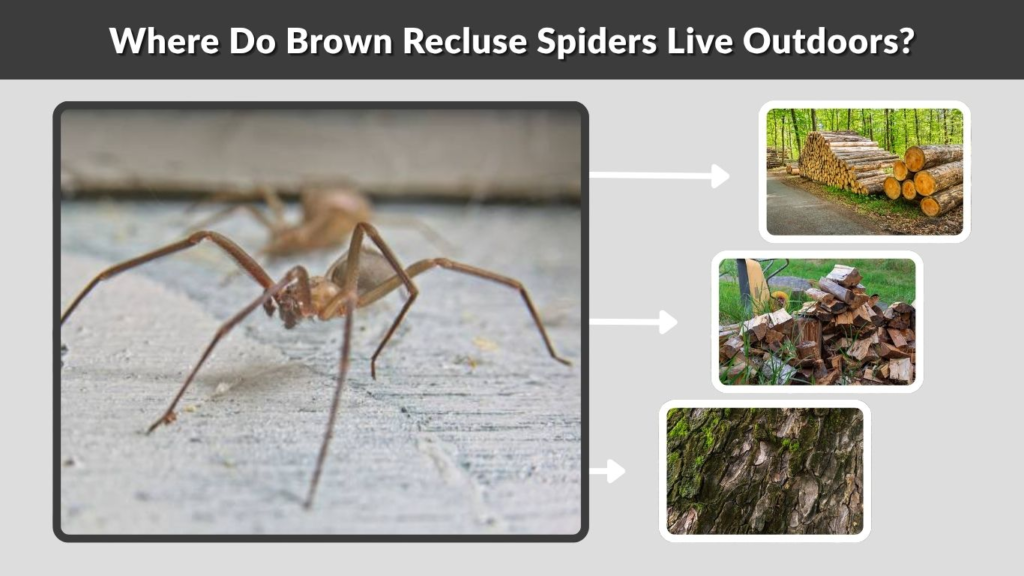
Brown recluse spiders can live outdoors, but they still prefer sheltered, hidden locations. They are not usually seen running across open lawns in daylight.
Natural Outdoor Habitat
In nature, brown recluse spiders may live under rocks, logs, woodpiles, bark, and debris. They use these protected spaces as daytime shelters and come out at night to hunt insects. University of Kentucky Entomology states that in nature, brown recluses live outdoors under rocks, logs, woodpiles, and debris.
They do not need a large web to catch prey. Instead, they hunt insects, including live or dead prey. This makes them different from many common house spiders that build visible webs in corners or ceilings.
Around Homes and Buildings
Brown recluse spiders may also live around sheds, barns, garages, shutters, woodpiles, stored lumber, and outdoor clutter. They are more likely to move indoors when hiding places are close to the foundation. University of Kentucky Entomology notes that outdoors they may be found in barns, sheds, woodpiles, and under objects lying on the ground.
Moving firewood, boards, boxes, and debris away from the house can reduce the chance of spiders moving indoors. Sealing cracks and gaps around doors, vents, siding, and utility openings can also help limit entry points.
What Kind of Places Do Brown Recluse Spiders Like?
Brown recluse spiders are adapted to hidden, low-disturbance environments. They can survive indoors for long periods and may tolerate difficult conditions.
| Preferred Condition | Why It Helps Brown Recluses |
| Dark spaces | Gives them safe daytime shelter |
| Dry areas | Matches many indoor storage spaces |
| Low traffic | Reduces disturbance from people and pets |
| Clutter | Creates hiding places and hunting zones |
| Insect prey | Gives them a steady food source |
| Cracks and gaps | Provides shelter and travel routes |
University of Kentucky Entomology reports that brown recluse spiders are well adapted to living indoors with humans and can withstand winters in unheated basements and hot summer temperatures in attics.
Do Brown Recluse Spiders Live in California?
True brown recluse spiders are not established in California. Some related recluse species occur in limited desert areas, but they are not the same as the brown recluse. UC Agriculture and Natural Resources states that the brown recluse spider has never established breeding populations in California, and rare findings usually involve spiders moved in from other areas.
This is important because many California “brown recluse” reports are misidentified spiders or skin conditions blamed on a spider without proof. If someone in California finds a brown spider, it is far more likely to be another species unless an expert confirms otherwise.
Do Brown Recluse Spiders Live in Michigan, Ohio, or Canada?
Brown recluse spiders are often discussed in states near or outside the edge of their normal range. In these places, the answer depends on whether the spider is truly established or only found occasionally.
Michigan State University Extension says there are rare, isolated populations of brown recluse spiders in Michigan, but most people in the state will never encounter one. MSU also notes that recluse spiders found in Michigan are usually carried there in boxes, suitcases, or other transported goods.
Ohio is closer to the eastern edge of the commonly discussed range, but brown recluses are not evenly common across the state. Canada is not part of the normal brown recluse range, and reports there are often based on fear, misidentification, or transported individuals rather than established populations. UC ANR notes that brown recluse mythology persists even in places such as Alaska and Canada, far from where the spider is actually found.
How to Know If Brown Recluses Live in Your Home
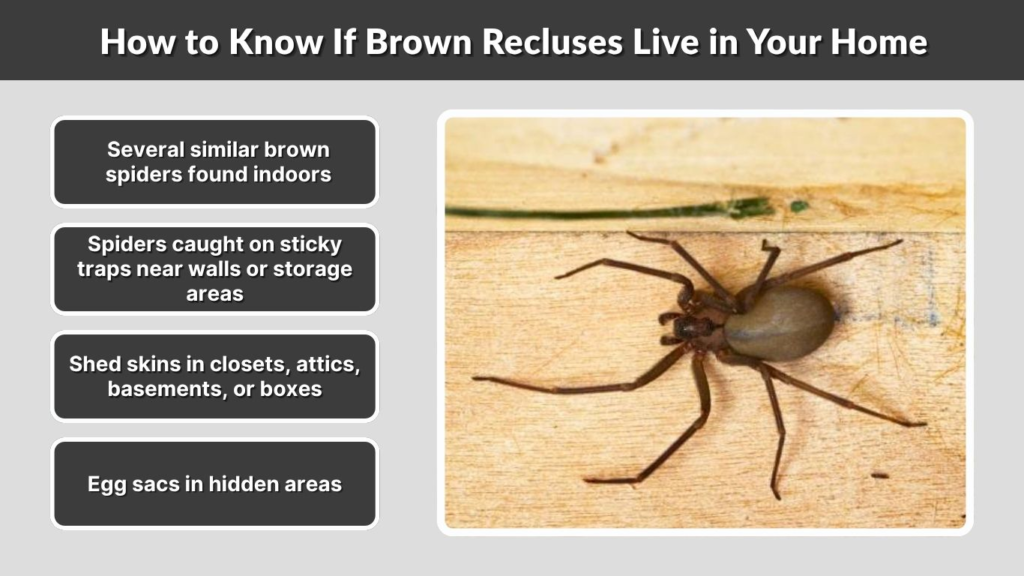
Finding one brown spider does not always mean you have brown recluses. Many harmless spiders are brown and can look similar from a distance. Identification should be based on body features, eye pattern, location, and expert confirmation.
Signs of a Possible Infestation
- Several similar brown spiders found indoors
- Spiders caught on sticky traps near walls or storage areas
- Shed skins in closets, attics, basements, or boxes
- Egg sacs in hidden areas
- Repeated sightings in dark, quiet rooms
- Confirmed identification by an extension office or pest professional
University of Kentucky Entomology recommends using glue traps in corners, along baseboards, wall-floor junctions, behind furniture, and near clutter to survey for brown recluse activity.
Identification Clues
A true brown recluse is usually tan to dark brown, with long thin legs and a body that lacks stripes, bands, or heavy mottling. The violin-shaped mark can help, but the more reliable feature is the eye pattern. Brown recluses have six eyes arranged in three pairs, while most spiders have eight eyes.
Because many harmless spiders are mistaken for brown recluses, specimens should be confirmed by an entomologist, extension office, or knowledgeable pest control professional when possible.
How to Make Your Home Less Attractive to Brown Recluses
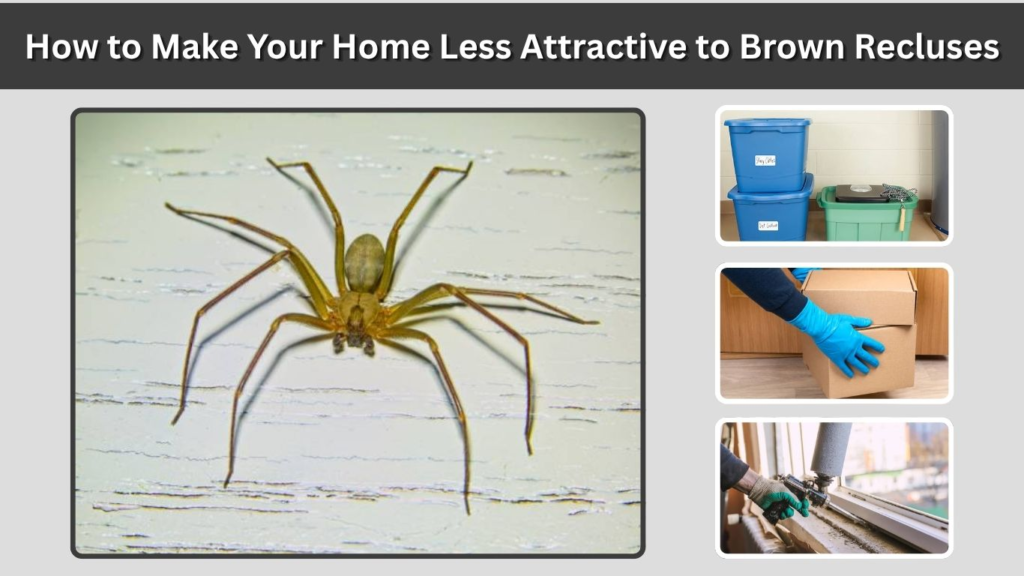
If you live inside the brown recluse range, prevention is mostly about removing hiding places and reducing accidental contact. You do not need to panic, but you should be careful around stored items.
- Reduce clutter in closets, basements, attics, and garages.
- Store items in sealed plastic bins instead of cardboard boxes.
- Shake out shoes, boots, gloves, and clothing before use.
- Keep beds away from walls if spiders are a concern.
- Do not leave clothes or towels on the floor.
- Move firewood, lumber, and debris away from the foundation.
- Seal gaps under doors, around vents, and near utility openings.
- Use sticky traps along walls and behind furniture to monitor activity.
- Wear gloves and long sleeves when moving old boxes or stored items.
Texas A&M AgriLife Extension recommends reducing clutter, vacuuming around and behind furniture, sealing stored boxes, and using sticky cards in out-of-the-way locations such as closets, under furniture, and next to walls.
FAQs
Where do brown recluse spiders live the most?
Brown recluse spiders live mostly in the south-central and Midwestern United States. They are especially associated with areas from Texas and Oklahoma through Missouri, Arkansas, Kentucky, Tennessee, and nearby states. They are much less common outside their natural range.
Where do brown recluse spiders live in the house?
In a house, brown recluse spiders often live in closets, attics, basements, crawl spaces, garages, cardboard boxes, shoes, clothing, stored items, and under furniture. They prefer dark, quiet, dry, and undisturbed places.
Do brown recluse spiders live in beds?
Brown recluse spiders do not prefer beds as a main habitat, but they can wander into bedding at night. Bites may happen if a spider becomes trapped against skin. Keeping beds away from walls and keeping bedding off the floor can help reduce risk.
Do brown recluse spiders live outside?
Yes, brown recluse spiders can live outside under rocks, logs, woodpiles, bark, debris, sheds, barns, and objects lying on the ground. They often hide during the day and hunt insects at night.
Are brown recluse spiders common in California or Canada?
No, brown recluse spiders are not normally established in California or Canada. Reports from these areas are often misidentifications or rare transported spiders. In California, related recluse species may exist in limited areas, but they are not the true brown recluse.
