
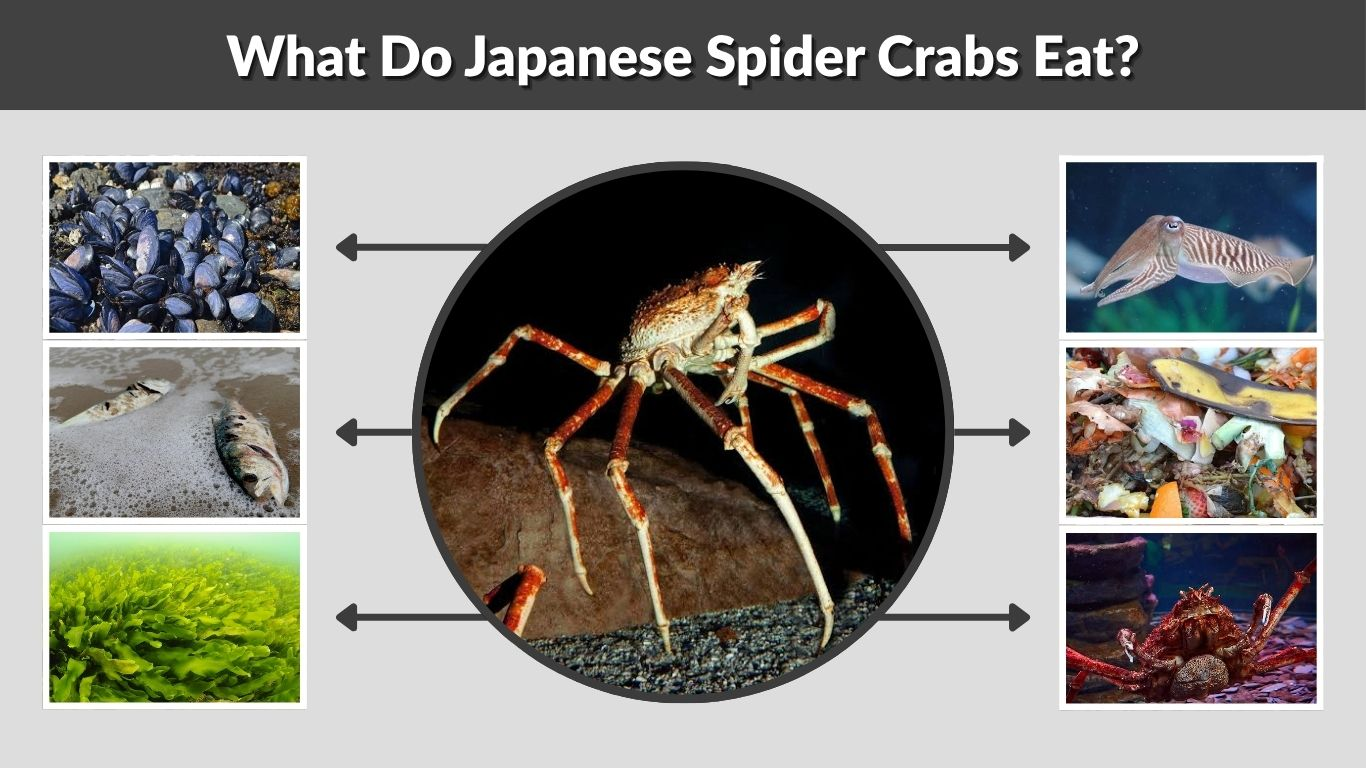
Japanese spider crabs eat dead fish, decaying animals, algae, mollusks, and small invertebrates found on the ocean floor. They are not fast hunters. Instead, they are slow-moving scavengers that clean the seafloor by feeding on leftover organic matter. Their long legs help them walk over mud and rocks, while their claws pick up food from the bottom.
What Do Japanese Spider Crabs Eat?
Japanese spider crabs are omnivores, which means they eat both animal and plant material. They are also scavengers. This means they often feed on dead animals, scraps, and decaying matter that sink to the ocean floor. Monterey Bay Aquarium describes them as seafloor scavengers that eat leftover scraps and dead animals.
Main Foods in Their Diet
The Japanese spider crab does not depend on one single food source. It survives by eating many types of food available in deep coastal waters.
Common foods include:
- Dead fish
- Decaying sea animals
- Invertebrates
- Mollusks
- Shellfish
- Algae
- Seaweed
- Organic scraps
- Small animals on the seafloor
This flexible diet helps the crab survive in places where fresh food may not always be easy to find. In deeper water, meals can be scattered, so scavenging is a useful feeding style.
Do They Eat Dead Animals?
Yes, Japanese spider crabs often eat dead animals. Dead fish, animal remains, and leftover scraps may fall from higher parts of the ocean and settle on the bottom. These crabs move slowly across the mud and pick up this food.
This feeding habit makes them useful in the ecosystem. By eating dead material, they help clean the seafloor and return nutrients to the marine food chain. They act like natural recyclers in deep coastal habitats.
Do They Eat Algae?
Japanese spider crabs can eat algae and other plant-like material. The Monterey Bay Aquarium’s spider crab exhibit notes that their claw-bearing legs help them feed on decaying fish, invertebrates, and algae.
Algae may not be the only part of their diet, but it adds variety. Since they are omnivores, they can use both plant matter and animal matter as food. This gives them a better chance of finding meals in their habitat.
How Japanese Spider Crabs Find Food
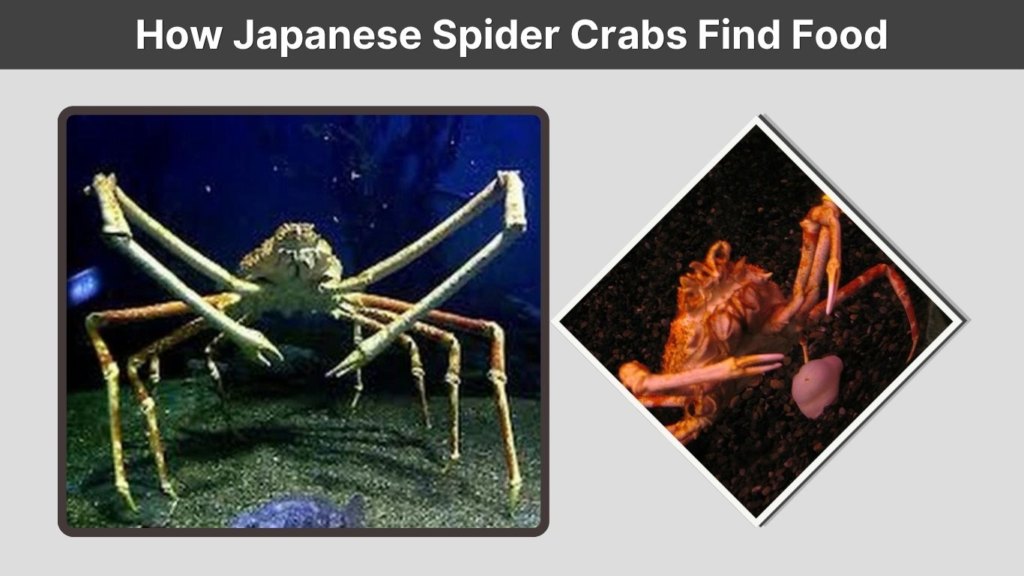
Japanese spider crabs spend most of their time on the seafloor. They do not swim around quickly like fish. Instead, they walk slowly with their long legs and search for food along muddy, sandy, and rocky bottoms.
Walking Along the Seafloor
Their long legs are useful for moving across soft mud. A Japanese spider crab can step over uneven surfaces while keeping its body raised above the bottom. This helps it search a wider area without needing to move fast.
The crab’s body may look awkward, but it is well adapted to its habitat. Its slow walking style fits its scavenging diet. It does not need to chase prey every moment. It only needs to locate food that is already on the seafloor.
Using Claws to Pick Up Food
Japanese spider crabs have ten legs. Eight are mainly used for walking, while two front legs have claws used for feeding. These claws help the crab pick up food, tear small pieces, and move food toward the mouth.
Their claws are important tools, but they are not usually used to attack large animals. The crab mostly uses them for handling food and defending itself if disturbed.
Feeding on Whale Falls and Carcasses
A whale fall happens when a dead whale sinks to the ocean floor. This creates a rich feeding area for many deep-sea animals. Japanese spider crabs may gather around dead animals and feed on the remains.
Large carcasses can support many scavengers for a long time. For a crab that feeds on decaying matter, this kind of food source can be very valuable.
Japanese Spider Crab Diet by Food Type
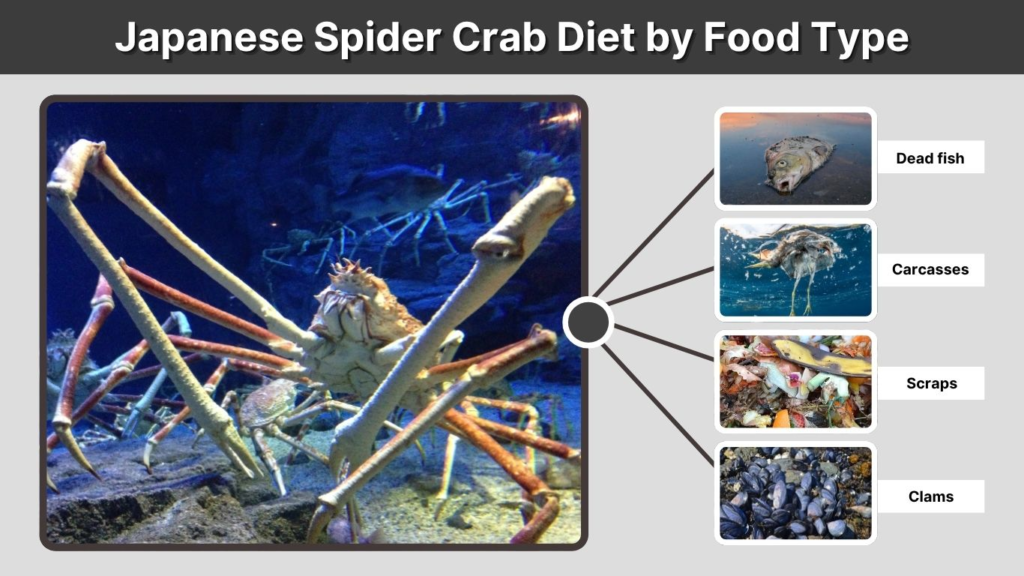
Japanese spider crabs eat a mixed diet. Their food can come from dead animals, living small animals, and plant material. This variety helps them survive in deep marine habitats.
Diet Table
| Food Type | Examples | Why They Eat It |
| Dead animals | Dead fish, carcasses, scraps | Easy food source on the seafloor |
| Invertebrates | Small bottom animals | Provides protein |
| Mollusks | Clams, shellfish, soft-bodied animals | Common in marine habitats |
| Algae | Seaweed and plant-like matter | Adds plant material to the diet |
| Organic debris | Decaying matter and leftovers | Helps them survive when food is limited |
Animal Matter
Animal matter is an important part of the Japanese spider crab diet. It may include dead fish, decaying flesh, shellfish, and small invertebrates. This provides protein and energy.
Because the crab is slow, scavenged meat is often easier to eat than fast-moving prey. It can use its claws to pull apart soft pieces and feed gradually.
Plant Matter
Plant matter can include algae and seaweed. Since Japanese spider crabs live on the seafloor, they may come across pieces of algae drifting down or growing near the bottom.
Plant material helps make the diet more flexible. If animal food is not available, algae and other organic matter can still provide nutrition.
What Do Giant Spider Crabs Eat?
The term “giant spider crab” usually refers to the Japanese spider crab. So, giant spider crabs eat the same types of food: dead animals, invertebrates, mollusks, algae, and decaying matter.
Giant Spider Crab Feeding Habits
Giant spider crabs are not active predators. They are mostly scavengers. They use their long legs to move over the seafloor and their claws to collect food.
Their feeding habits match their body shape. Long legs help with walking, while claws help with handling food. They are built for searching and scavenging, not chasing fast prey.
Do Giant Spider Crabs Eat Fish?
Giant spider crabs can eat fish, but usually as dead fish or remains. They are more likely to feed on fish carcasses than chase live fish. A dead fish that sinks to the bottom becomes an easy meal.
This is common among seafloor scavengers. Many deep-water animals rely on food that falls from above because the deep seafloor has fewer fresh food sources.
Do Giant Spider Crabs Eat Other Crabs?
Giant spider crabs may eat small crustaceans if they find them, especially if the animals are dead, injured, or easy to catch. However, they are not known mainly as crab hunters.
Their diet is better described as opportunistic. They eat what is available, especially food that does not require fast pursuit.
What Do Common Spider Crabs Eat?
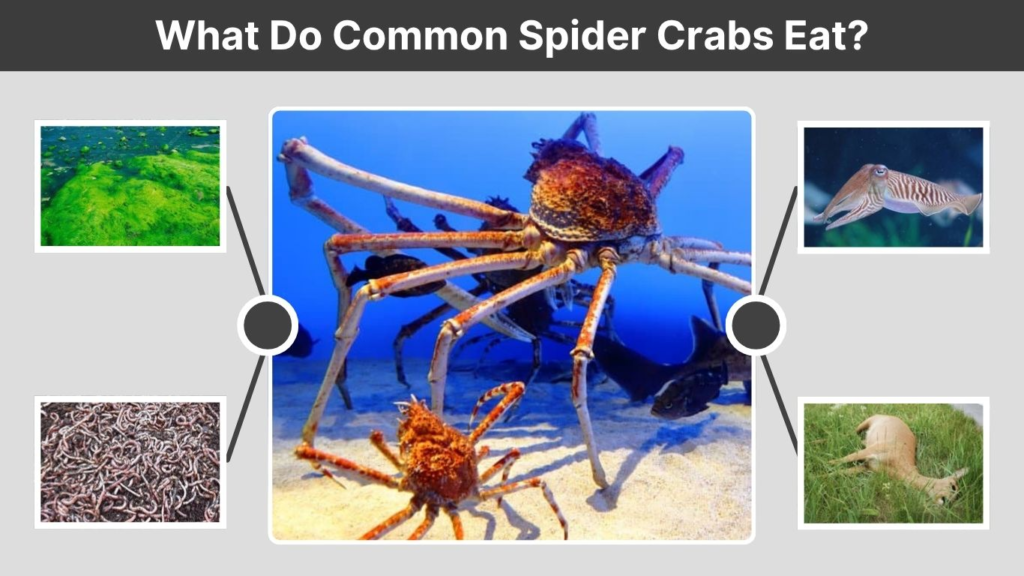
Common spider crabs are smaller relatives found in different coastal areas. They are not the same as Japanese spider crabs, but their feeding habits can be similar. Many spider crabs are omnivores and scavengers.
Common Spider Crab Diet
Common spider crabs may eat:
- Algae
- Small worms
- Mollusks
- Detritus
- Dead animals
- Small crustaceans
- Organic debris
They often feed on whatever is available in their local habitat. Some live in estuaries, bays, rocky shores, or shallow coastal areas.
Feeding in Shallow Water
Unlike the Japanese spider crab, some common spider crabs live in shallower water. Their diet may include more algae, small animals, and organic matter found near rocks, mud, or seagrass.
These crabs may also hide under debris or decorate their shells with materials from their environment. This can help with camouflage while they feed and move.
Role in the Food Chain
Common spider crabs help recycle nutrients by eating dead matter and detritus. They also become food for larger fish, birds, octopuses, and other predators.
Their feeding role is small but important. They help keep coastal habitats cleaner and move nutrients through the ecosystem.
What Do Baby Spider Crabs Eat?
Baby spider crabs eat much smaller foods than adults. Their diet changes as they grow. The early stages are tiny and vulnerable, so they feed differently from large adult crabs.
Larval Stage Diet
When spider crabs hatch, they begin life as tiny larvae. At this stage, they drift in the water column. They may feed on microscopic plankton and small organic particles.
Larvae are part of the plankton community. They are also food for many fish and other sea animals. Only some survive long enough to become juvenile crabs.
Juvenile Crab Diet
Once young spider crabs settle onto the seafloor, they begin feeding more like adults. They may eat tiny invertebrates, algae, detritus, and small bits of decaying material.
Juveniles are smaller and weaker than adults, so they cannot handle large food pieces. They rely on smaller, easier foods until they grow stronger.
Why Diet Changes With Age
A baby spider crab cannot eat the same way as a giant adult. Its claws are smaller, its body is softer after molts, and it is more exposed to predators.
As it grows, it can handle larger food items. Adult Japanese spider crabs can feed on bigger scraps, larger dead animals, and tougher material on the seafloor.
Do Japanese Spider Crabs Hunt or Scavenge?
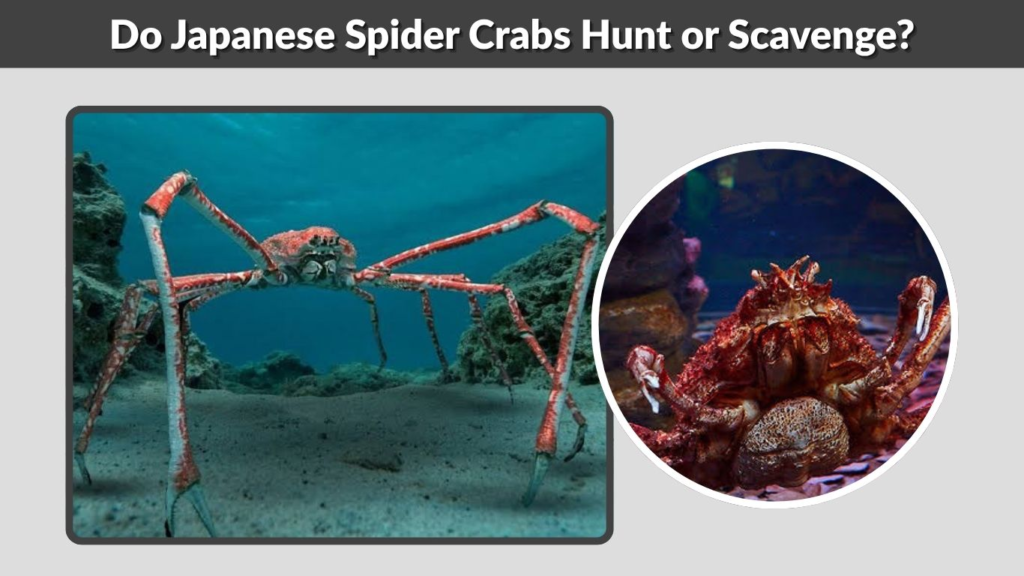
Japanese spider crabs mostly scavenge. They may eat small living animals when available, but they are not built like active hunters. Their slow movement and long legs are better suited for walking and searching.
Scavenging Behavior
Scavenging means feeding on dead or decaying material. Japanese spider crabs use this strategy well. They can feed on dead fish, animal remains, algae, and scraps.
This behavior is helpful in deep habitats. Food is not always easy to find, so eating a wide range of material improves survival.
Opportunistic Feeding
Japanese spider crabs are opportunistic feeders. This means they eat what they can find. If they find dead fish, they may eat it. If they find algae, they may eat that too. If they find small invertebrates, they may feed on them.
This flexible feeding style is one reason they can live in deep coastal waters.
Are They Predators?
They can act as minor predators when eating small live animals, but they are not powerful hunters. They do not chase large fish or attack humans for food.
It is more accurate to call them scavenging omnivores. Their diet includes both plant and animal matter, with a strong focus on food found on the seafloor.
What Eats Japanese Spider Crabs?
Japanese spider crabs are large, but they are not completely safe. Young crabs, larvae, and soft-molted individuals can be eaten by predators.
Predators of Young Crabs
Young spider crabs may be eaten by:
- Fish
- Octopuses
- Larger crabs
- Marine predators
- Plankton-feeding animals during the larval stage
Larvae are especially vulnerable because they are tiny and drift in open water. Many never reach adulthood.
Adult Crab Defense
Adult Japanese spider crabs are harder to eat because they are large and have a hard shell. Their long legs and claws also make them more difficult to attack.
However, after molting, even adults can be vulnerable. A freshly molted crab has a soft shell until the new shell hardens.
Human Harvesting
Humans also catch Japanese spider crabs for food in parts of Japan. Because they are large and edible, they can be valuable seafood. Responsible fishing is important so wild populations are not harmed by overharvesting.
Crab Spider Confusion: What Do Crab Spiders Eat?
Some keyword phrases, such as “what do crab spider eat” or “what do flower crab spider eat,” refer to spiders, not sea crabs. Crab spiders are land arachnids. They are completely different from Japanese spider crabs.
What Do Crab Spiders Eat?
Crab spiders eat insects and other small arthropods. They often wait on flowers, leaves, or bark and ambush prey. Flower crab spiders commonly catch bees, flies, butterflies, and other pollinating insects.
Unlike Japanese spider crabs, crab spiders do not eat algae, dead fish, or marine debris. They are hunters, not seafloor scavengers.
Flower Crab Spider Diet
Flower crab spiders hide on flowers and wait for insects to come close. Their diet may include:
- Bees
- Flies
- Butterflies
- Moths
- Small beetles
- Other tiny insects
They use venom to subdue prey. This is very different from the feeding style of Japanese spider crabs.
Why the Names Are Confusing
The names sound similar because both animals have long legs or crab-like movement. But they belong to different groups. Japanese spider crabs are crustaceans. Crab spiders are arachnids.
When writing about diet, it is important to separate them. Sea spider crabs eat marine food, while crab spiders eat insects.
FAQs
What do Japanese spider crabs eat?
Japanese spider crabs eat dead fish, decaying animals, small invertebrates, mollusks, algae, and organic scraps from the seafloor. They are omnivores and scavengers, so they can feed on both animal and plant matter. Their diet helps clean the ocean floor and recycle nutrients.
What do giant spider crabs eat?
Giant spider crabs usually eat the same foods as Japanese spider crabs. Their diet includes dead animals, fish remains, mollusks, small invertebrates, algae, and decaying organic matter. They are slow-moving scavengers, so they mostly eat food they find rather than chasing fast prey.
Do Japanese spider crabs eat fish?
Yes, Japanese spider crabs can eat fish, but usually as dead fish or leftover remains. They are not fast fish hunters. Dead fish that sink to the ocean floor provide an easy food source for these large crabs and other deep-sea scavengers.
What do baby spider crabs eat?
Baby spider crabs eat very small foods. In the larval stage, they may feed on plankton and tiny organic particles. After settling on the seafloor, young spider crabs eat small invertebrates, algae, detritus, and small pieces of decaying matter until they grow larger.
Do crab spiders eat the same food as spider crabs?
No, crab spiders and spider crabs eat very different foods. Crab spiders are land spiders that eat insects such as bees, flies, moths, and butterflies. Spider crabs are marine crustaceans that eat dead animals, algae, mollusks, and organic matter from the seafloor.
