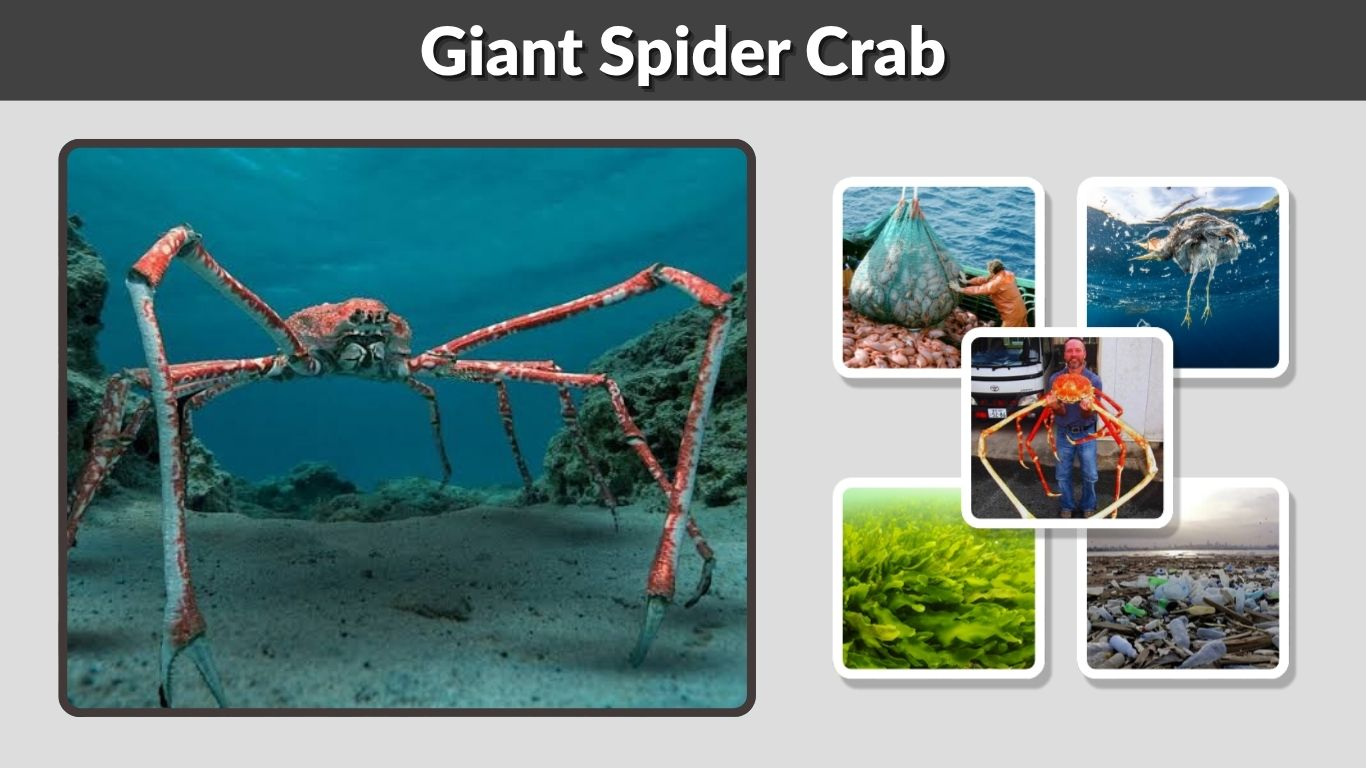
The giant spider crab is one of the most impressive crabs in the ocean. Its long legs, wide reach, and unusual body shape make it look almost like a creature from another world. Most people use this name for the giant Japanese spider crab, the largest living crab by leg span. Despite its scary appearance, it is usually a slow-moving scavenger that lives on the seafloor.
What Is a Giant Spider Crab?
The giant spider crab is a large marine crab known for its extremely long legs and small central body. It is not a spider, even though its thin legs make it look spider-like. The most famous species is the Japanese spider crab, scientifically known as Macrocheira kaempferi.
Basic Overview
Giant spider crabs belong to the crustacean family. They are related to crabs, lobsters, shrimp, and other hard-shelled sea animals. Their bodies are protected by a tough outer shell, and they use their legs to walk slowly across the ocean floor.
These crabs are best known for their leg span. A full-grown giant spider crab can stretch much wider than most people expect. Its body may not be extremely large compared with the legs, but the full size can look massive when the crab spreads out.
Giant Spider Crab vs Giant Crab Spider
The terms “giant spider crab” and “giant crab spider” are easy to confuse. A giant spider crab is a sea crab. A giant crab spider is a type of spider, often linked with huntsman spiders or large desert spiders.
The difference is simple:
| Name | Animal Type | Where It Lives | Main Feature |
| Giant spider crab | Marine crab | Ocean floor | Very long legs and hard shell |
| Giant crab spider | Spider | Land habitats | Flat body and sideways movement |
So, if the topic is size, ocean life, seafood, or deep sea habitat, it usually means the giant spider crab. If the topic is Arizona, bites, or poisonous spiders, it likely refers to a giant crab spider.
Why It Is So Famous
The giant spider crab is famous because of its size and appearance. Its long legs can make it look bigger than many other crabs. In aquariums, it often becomes a main attraction because visitors are surprised by how wide it can spread.
Its unusual shape also makes it popular in videos, documentaries, and children’s shows. Many people first learn about it from aquariums, ocean programs, or animated sea-life episodes.
Giant Spider Crab Size
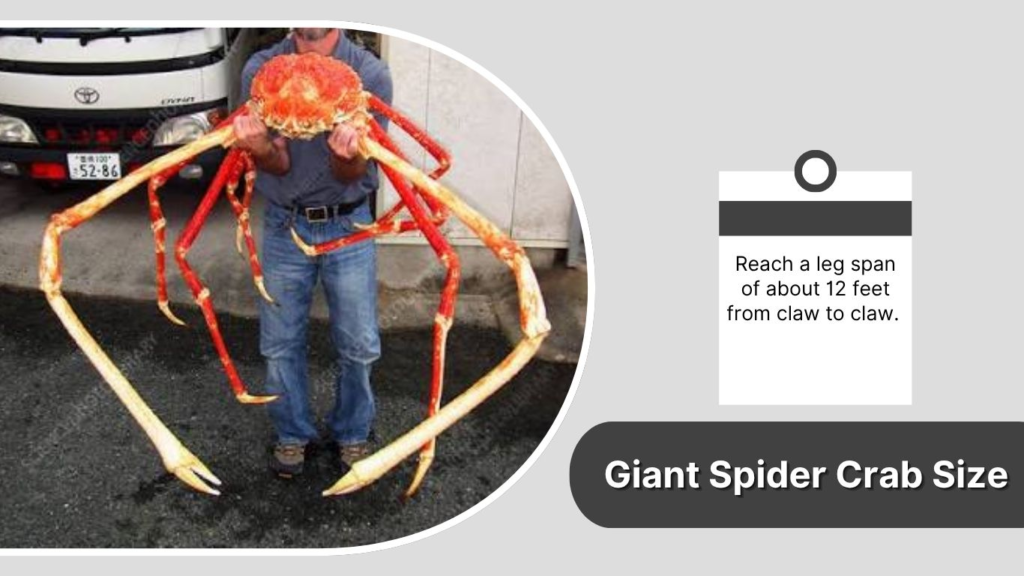
Size is the main reason people are interested in giant spider crabs. They are not the heaviest crabs in every case, but they are among the largest by leg span. Their legs are long, thin, and powerful enough to support the animal as it moves across the seafloor.
How Big Is a Giant Spider Crab?
A giant spider crab can reach a leg span of about 12 feet from claw to claw. That makes it wider than many adult humans are tall. The body is much smaller than the full spread, but the long legs make the animal look enormous.
Its shell, or carapace, is usually rounded and rough. The legs stretch outward from the body and give the crab its spider-like shape. This is why the animal looks so dramatic in photos, aquariums, and underwater videos.
Giant Spider Crab Compared to a Human
When a giant spider crab is placed next to a human, its full width can look shocking. A large crab may have a leg span wider than a person’s height. The body sits in the center, while the long legs extend far to both sides.
This comparison helps people understand how unusual the crab is. Most common crabs are compact and low to the ground. The giant spider crab looks more like a wide walking frame than a typical crab.
Biggest Giant Spider Crab
The biggest giant spider crabs are usually older adults with fully developed legs. The Japanese spider crab is often described as the largest living crab by leg span. Its extreme reach makes it one of the most memorable animals in the ocean.
Some exaggerated claims suggest giant spider crabs can become much larger than 12 feet. These claims are not reliable. The real size is already impressive without adding false numbers.
Giant Spider Crab Habitat
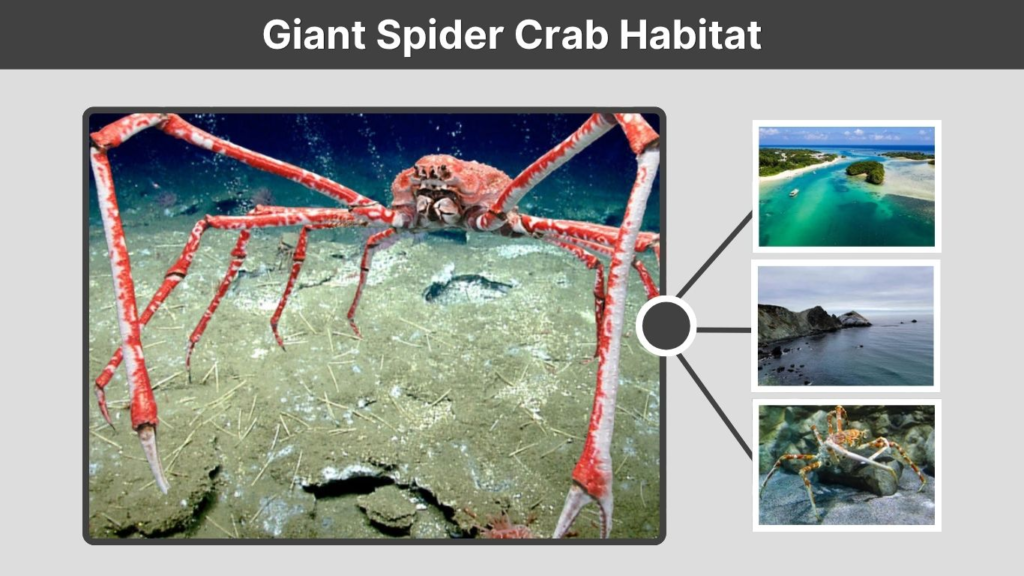
Giant spider crabs live in marine environments, especially in deep coastal waters. They are bottom-dwelling animals, which means they spend most of their lives walking along the ocean floor instead of swimming in open water.
Where Do Giant Spider Crabs Live?
The most famous giant spider crab, the Japanese spider crab, lives in waters around Japan. It is usually found in the Pacific Ocean near the Japanese coastline. These crabs prefer cooler, deeper waters where they can move across muddy, sandy, or rocky bottoms.
They are not beach animals. You will not normally see them walking on land or crawling around shallow tide pools. Their body is designed for underwater life.
Deep Sea Giant Spider Crab
Giant spider crabs are often linked with deep-sea habitats, but they are more accurately described as deep coastal seafloor animals. They live at depths where sunlight is limited and the water is cooler.
The seafloor gives them access to food such as dead fish, shellfish, algae, and small animals. Their long legs help them move over uneven ground, soft mud, and scattered rocks. This lifestyle suits a slow-moving scavenger.
Giant Spider Crab Underwater Behavior
Underwater, giant spider crabs usually move slowly. They walk rather than swim. Their long legs help them step across the bottom while their claws are used to pick up food.
They may stay still for long periods or move carefully through their habitat. Their rough shell can help them blend in with rocks, seaweed, and debris. This camouflage is useful for young crabs and for avoiding attention from predators.
What Do Giant Spider Crabs Eat?
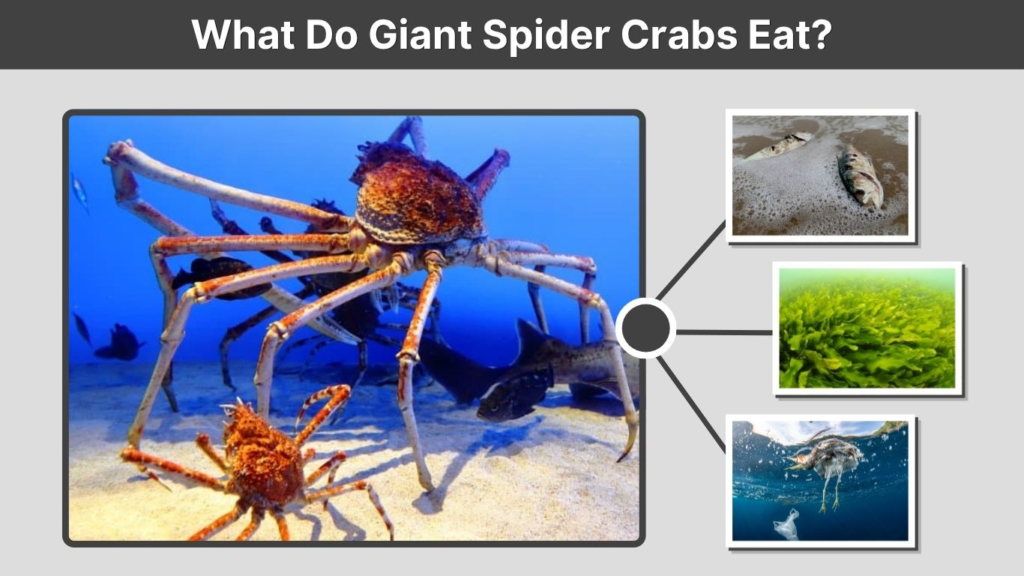
Giant spider crabs are omnivores and scavengers. They eat both plant and animal matter. Their feeding style helps clean the ocean floor because they consume dead animals and decaying material.
Main Diet
Giant spider crabs do not depend on one type of food. They can eat many things found on the seafloor.
Common food items include:
- Dead fish
- Small shellfish
- Mollusks
- Seaweed and algae
- Small invertebrates
- Decaying animal matter
- Organic scraps on the seafloor
This flexible diet helps them survive in deep habitats where fresh food may not always be easy to find.
How They Find Food
Giant spider crabs use their legs to move slowly across the bottom. Their claws help them pick up food, tear pieces apart, and handle small items. They may find dead animals that sink from above or feed on small creatures living near the seafloor.
They are not fast hunters. Instead, they rely on patience, smell, and opportunity. This makes scavenging an important part of their survival.
Do Giant Spider Crabs Hunt?
Giant spider crabs may eat small live animals, but they are not active hunters like sharks or large predatory fish. Their body is better suited for walking, searching, and scavenging.
They may take slow-moving animals when available. However, much of their diet comes from dead or decaying material. This role makes them helpful in recycling nutrients in the ocean ecosystem.
Are Giant Spider Crabs Dangerous?
Giant spider crabs may look frightening because of their size, but they are not aggressive sea monsters. They do not hunt humans and do not have venom. Their main defense is their hard shell, long legs, and claws.
Can Giant Spider Crabs Kill You?
A giant spider crab is very unlikely to kill a person. It is not venomous and does not attack humans as prey. However, its claws can still be strong enough to cause injury if someone handles it carelessly.
The safest approach is to observe the animal without touching it. In aquariums, trained staff handle large crabs with care because the animal is heavy, delicate, and powerful.
Are Giant Spider Crabs Aggressive?
Giant spider crabs are usually calm and slow-moving. They may defend themselves if threatened, but they are not known for chasing or attacking people. Most of their time is spent walking, resting, feeding, and staying hidden.
Like many crabs, they can pinch if stressed. This does not make them naturally aggressive. It simply means they can protect themselves when they feel danger.
Safety Around Giant Spider Crabs
If you see a giant spider crab in an aquarium, do not try to touch it. If you are diving and see one underwater, keep a respectful distance. Large marine animals should not be disturbed.
Safe behavior includes:
- Watching from a distance
- Avoiding sudden contact
- Never pulling the legs
- Not trying to feed it by hand
- Following aquarium or diving rules
Respecting the crab protects both the animal and the person.
Can You Eat Giant Spider Crabs?
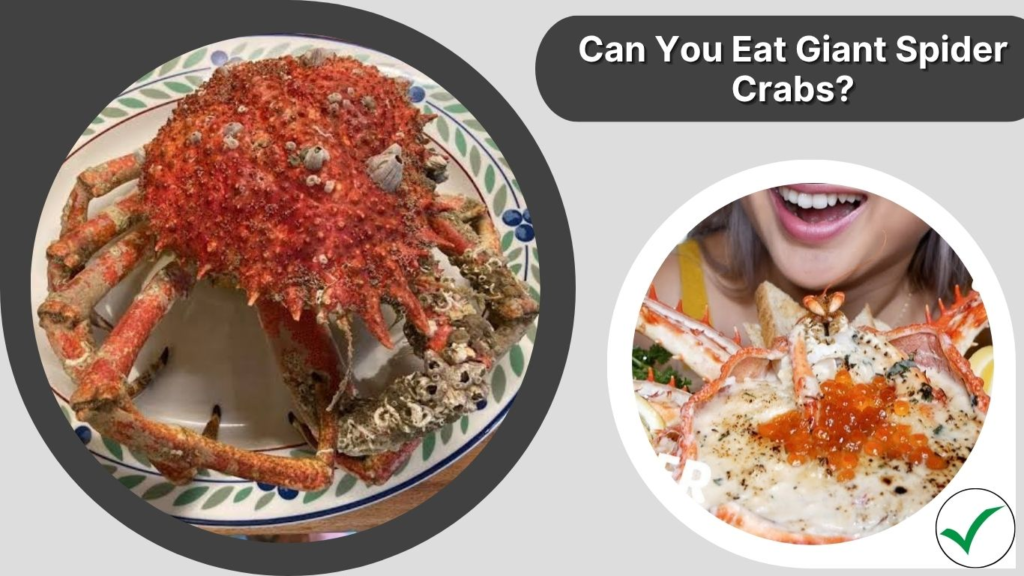
Giant spider crabs are edible, especially the Japanese spider crab. In some parts of Japan, they are caught and eaten as seafood. Their meat is often valued, but they are not as common as everyday crabs sold in many markets.
Are Giant Spider Crabs Edible?
Yes, giant spider crabs can be eaten. Their meat is found mainly in the legs and body. Like other crabs, they can be cooked in different ways, including steaming or boiling.
However, their availability depends on location and fishing rules. Because these crabs are unusual and can be long-lived, responsible harvesting is important.
What Does Giant Spider Crab Taste Like?
Giant spider crab meat is often described as mild, sweet, and delicate. The flavor may be similar to other high-quality crab meat, although taste can vary based on freshness and cooking method.
The legs are usually the most valuable part because they contain long sections of meat. In places where the crab is eaten, simple cooking methods are often used to preserve the natural flavor.
Giant Spider Crab Price
The price of giant spider crab can vary. Size, season, market demand, location, and freshness all affect the cost. Large crabs can be expensive because they are harder to catch, store, and transport.
For most people, giant spider crab is a specialty seafood rather than a common meal. It is more often seen in seafood markets near its natural range or in restaurants that serve rare marine dishes.
Giant Spider Crab Adaptations
The giant spider crab has several adaptations that help it survive in its underwater habitat. Its body may look strange, but its shape is useful for life on the seafloor.
Long Legs for Movement
The most obvious adaptation is its long legs. These legs help the crab walk across soft mud, sand, and rocky surfaces. They also lift the body above the bottom, making it easier to move over uneven ground.
The legs give the crab a wide reach. This helps it explore the seafloor while searching for food. Although the crab moves slowly, its long legs allow it to cover space efficiently.
Hard Shell for Protection
Like other crabs, the giant spider crab has a hard outer shell. This shell protects the soft body inside. It also helps defend the crab from predators and rough seafloor conditions.
The shell is rough and uneven. This texture can help the crab blend into the environment. Young crabs may also collect material on their shells, making them harder to notice.
Scavenging Lifestyle
Being a scavenger is another important adaptation. In deeper water, food may not always be fresh or easy to catch. A crab that can eat dead animals, algae, and small invertebrates has more chances to survive.
This feeding style also helps the ecosystem. By eating dead matter, giant spider crabs help clean the seafloor and return nutrients to the food chain.
Giant Spider Crab Life Cycle
The life cycle of a giant spider crab begins with tiny eggs. Like many marine animals, young crabs go through several stages before they become adults.
Eggs and Larvae
Female crabs carry fertilized eggs until they hatch. When the eggs hatch, the larvae are very small and float in the water. At this stage, they look nothing like adult crabs.
Many larvae do not survive because they may be eaten by fish and other marine animals. Producing many eggs increases the chance that some will grow into adults.
Molting and Growth
Giant spider crabs grow by molting. This means they shed their old shell and form a new, larger one. Right after molting, the crab is soft and vulnerable. Once the new shell hardens, it becomes protected again.
Molting is important because the hard shell cannot stretch. Without shedding the old shell, the crab would not be able to grow.
Adult Stage
As the crab becomes an adult, its legs become longer and more developed. Adults spend most of their time on the seafloor. They search for food, avoid danger, and reproduce.
Large adults are important for the population. If too many mature crabs are removed from the wild, reproduction may be affected. This is why careful fishing practices matter.
Giant Spider Crab Predators and Threats
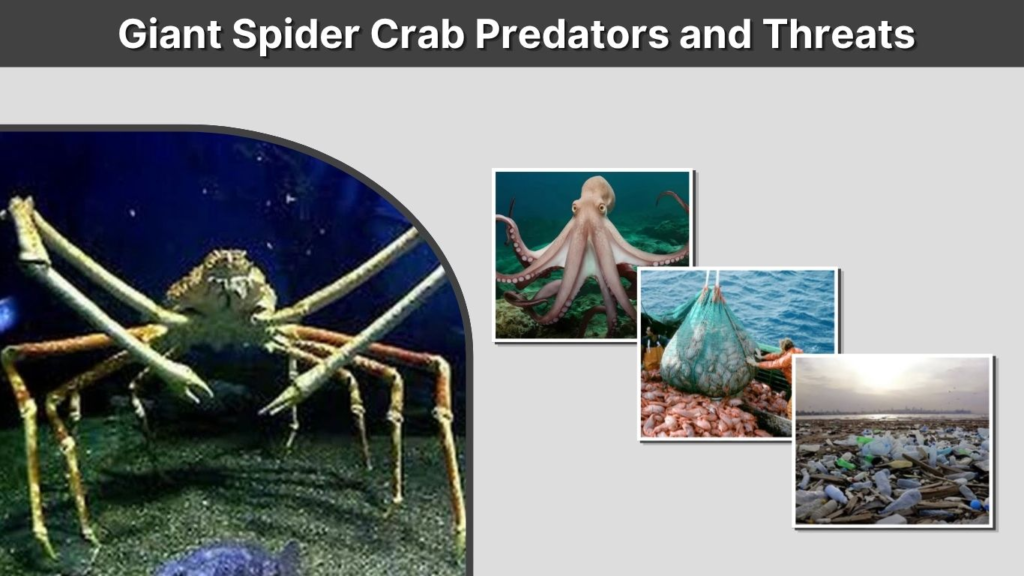
Even though giant spider crabs are large, they still face dangers. Young crabs are especially vulnerable, while adults are more protected by their size and shell.
Natural Predators
Young giant spider crabs may be eaten by fish, octopuses, and other marine predators. Larvae are even more vulnerable because they are tiny and drift in the water.
Adult crabs have fewer natural enemies, but they are not completely safe. A crab that has recently molted is softer and easier to attack.
Human Fishing
Humans are one of the main threats to giant spider crabs. In some areas, they are caught for food. If fishing is not controlled, it can reduce local populations.
Large adults are especially important because they are part of the breeding population. Protecting breeding seasons and limiting harvest can help keep populations stable.
Habitat Pressure
Deep coastal habitats can be affected by pollution, fishing gear, and changes in ocean conditions. Because giant spider crabs live on the seafloor, damage to bottom habitats can affect their food and shelter.
More research is needed to understand how these pressures affect them over time.
Giant Crab Spider: Important Name Confusion
Some keywords about “giant crab spider” refer to a completely different animal. A giant crab spider is not a crab at all. It is a spider, often connected with huntsman-like spiders that have long legs and a flattened body.
Giant Crab Spider in Arizona
The giant crab spider is found in parts of the southwestern United States, including Arizona. It is a land spider, not a sea animal. It may be found in desert areas, homes, walls, rocks, and outdoor spaces.
People often notice it because it is large and fast. Its sideways movement can make it look crab-like, which explains the name.
Is the Giant Crab Spider Poisonous?
Like most spiders, giant crab spiders have venom used to subdue prey. However, they are not considered highly dangerous to humans. A bite may cause pain, redness, or swelling, but serious reactions are uncommon.
Anyone with severe symptoms after a spider bite should seek medical help. It is also important not to confuse a giant crab spider with a giant spider crab, which is a marine crab and not a spider.
Giant Crab Spider vs Huntsman Spider
Giant crab spiders and huntsman spiders are often compared because both can have long legs and flat bodies. Some people may even use the names loosely. Both are land spiders, while giant spider crabs are ocean crabs.
The key difference is habitat. Giant spider crabs live underwater. Giant crab spiders live on land.
Giant Spider Crab Facts
Giant spider crabs are interesting because they combine huge size with a calm lifestyle. They may look scary, but their role in the ocean is more about scavenging than attacking.
Quick Facts
Here are some useful facts about giant spider crabs:
- They are marine crabs, not spiders.
- The Japanese spider crab is the best-known giant spider crab.
- They can reach about 12 feet across the legs.
- They live on the ocean floor.
- They are omnivores and scavengers.
- They eat dead animals, algae, and small invertebrates.
- They are not venomous.
- They are not naturally aggressive toward humans.
- They grow by molting.
- They are edible in some regions.
Why They Look So Strange
Giant spider crabs look strange because their legs are much longer than their bodies. The long legs help them move across the seafloor, while the smaller body keeps their main organs protected in a hard shell.
Their rough shell also makes them look ancient or armored. This unusual appearance helps them stand out among other crabs.
Why They Matter in the Ocean
Giant spider crabs help clean the ocean floor by eating dead and decaying matter. This makes them part of the natural recycling system in marine ecosystems.
Without scavengers, dead material would build up more slowly and nutrients would not return to the food chain as efficiently. Giant spider crabs may look unusual, but they play a useful role.
FAQs
How big are giant spider crabs?
Giant spider crabs can reach about 12 feet from claw to claw when fully grown. Their bodies are much smaller than their leg span, but the long legs make them look enormous. This extreme width is why the Japanese spider crab is known as the largest living crab by leg span.
What do giant spider crabs eat?
Giant spider crabs eat dead fish, small invertebrates, mollusks, algae, and decaying organic matter. They are omnivores and scavengers. Instead of chasing fast prey, they slowly move across the seafloor and feed on food they find in their habitat.
Are giant spider crabs dangerous?
Giant spider crabs are not naturally dangerous to humans. They do not have venom and do not hunt people. However, their claws can cause injury if handled carelessly. It is best to observe them from a safe distance and avoid touching or disturbing them.
Can you eat giant spider crabs?
Yes, giant spider crabs are edible. The Japanese spider crab is eaten in some parts of Japan and is considered a specialty seafood. Its meat is often described as mild and sweet. However, responsible harvesting is important because large adult crabs are valuable for reproduction.
Is a giant crab spider the same as a giant spider crab?
No, they are different animals. A giant spider crab is a marine crab that lives underwater. A giant crab spider is a land spider, often found in warm or desert regions. The names sound similar, but one is a crustacean and the other is an arachnid.
