
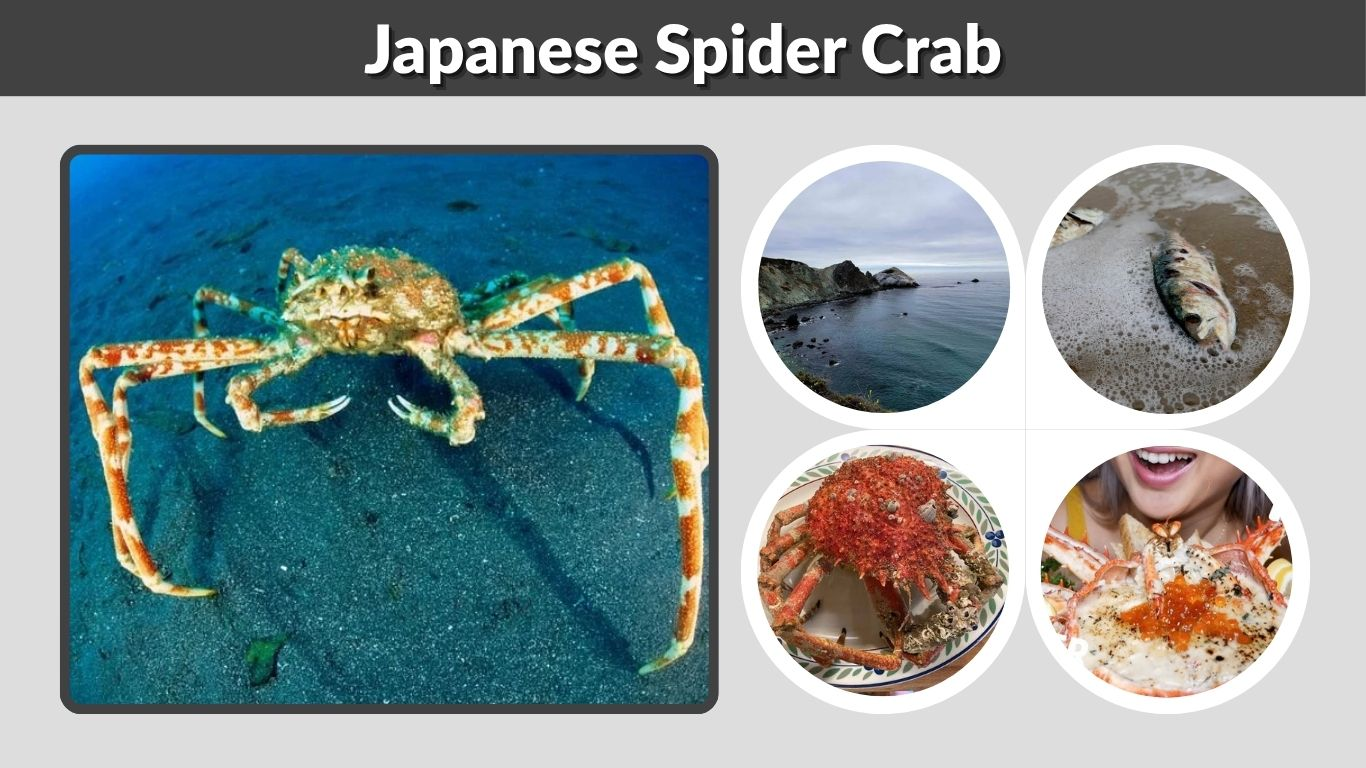
The Japanese spider crab is one of the most unusual animals in the ocean. With extremely long legs, a rough orange shell, and a slow seafloor lifestyle, it looks almost unreal at first sight. This giant crab lives in the waters around Japan and is famous for having the longest leg span of any living crab. Although it looks intimidating, it is mostly a calm scavenger.
What Is a Japanese Spider Crab?
The Japanese spider crab is a large marine crab known for its long, thin legs and small rounded body. Its scientific name is Macrocheira kaempferi. In Japan, it is called “taka-ashi-gani,” which means “tall-legged crab.” This name fits the animal well because its legs are much longer than its body.
Scientific Classification
The Japanese spider crab belongs to the group of true crabs. It is not a spider, even though its long legs make it look spider-like. It is a crustacean, which means it is related to other crabs, lobsters, shrimp, and crayfish.
Here is a quick classification table:
| Feature | Japanese Spider Crab |
| Common name | Japanese spider crab |
| Scientific name | Macrocheira kaempferi |
| Animal group | Crustacean |
| Type | Marine crab |
| Habitat | Deep coastal waters around Japan |
| Diet | Omnivore and scavenger |
| Famous for | Extremely long leg span |
Why It Looks Like a Spider
This crab gets its common name from its body shape. Its legs are long, narrow, and jointed, giving it a spider-like outline when it walks across the ocean floor. The main body, or carapace, is much smaller compared with the full leg span.
The crab also has a rough shell with bumps, spines, and small hairs. These textures help break up its outline in rocky and muddy habitats. Young crabs may also attach small pieces of algae, sponge, or other material to their shells for extra camouflage.
Is It the Biggest Crab?
The Japanese spider crab is usually described as the largest living crab by leg span. Its body is not as heavy as some other large crabs, but its legs can stretch much farther. A full-grown individual can look enormous when its claws and walking legs are extended.
Its great size makes it one of the most recognizable deep-sea animals. Even people who know little about marine life often remember this crab because of its huge reach and strange appearance.
Japanese Spider Crab Size
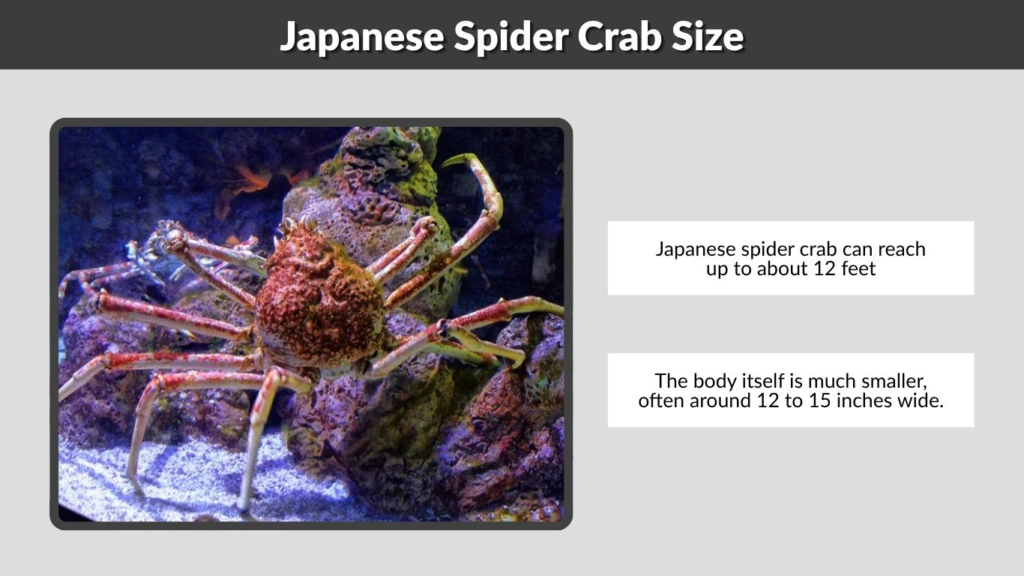
Size is the most famous feature of the Japanese spider crab. Its body is not the main reason it looks so large. The real reason is its extremely long legs, which keep growing even after the crab becomes an adult.
How Big Can a Japanese Spider Crab Get?
A large Japanese spider crab can reach up to about 12 feet from claw to claw when its legs are fully stretched. The body itself is much smaller, often around 12 to 15 inches wide. This means most of the animal’s visible size comes from its legs.
Its long legs help it move across soft mud, sand, and rocky seafloor areas. They also allow the crab to cover more space while searching for food. However, the legs are not built for fast running. This crab usually moves slowly and carefully.
Japanese Spider Crab Compared to a Human
When placed next to a person, a large Japanese spider crab can look shocking. Its leg span may be wider than the height of most adults. The body may seem small in the center, but the long limbs make the whole animal appear huge.
This comparison is one reason the crab is so popular in aquariums. Visitors often expect a crab to be compact and close to the ground. The Japanese spider crab changes that idea because it looks more like a giant walking frame than a typical crab.
Are 50-Foot Japanese Spider Crabs Real?
No, 50-foot Japanese spider crabs are not real. Claims about 50-foot spider crabs are exaggerated. The real maximum leg span is around 12 feet, which is already enormous for a crab.
The confusion often comes from online myths, edited images, or misunderstood measurements. A 12-foot crab is impressive enough without adding false numbers. For accurate writing, it is better to use realistic size ranges and avoid extreme claims.
Where Do Japanese Spider Crabs Live?
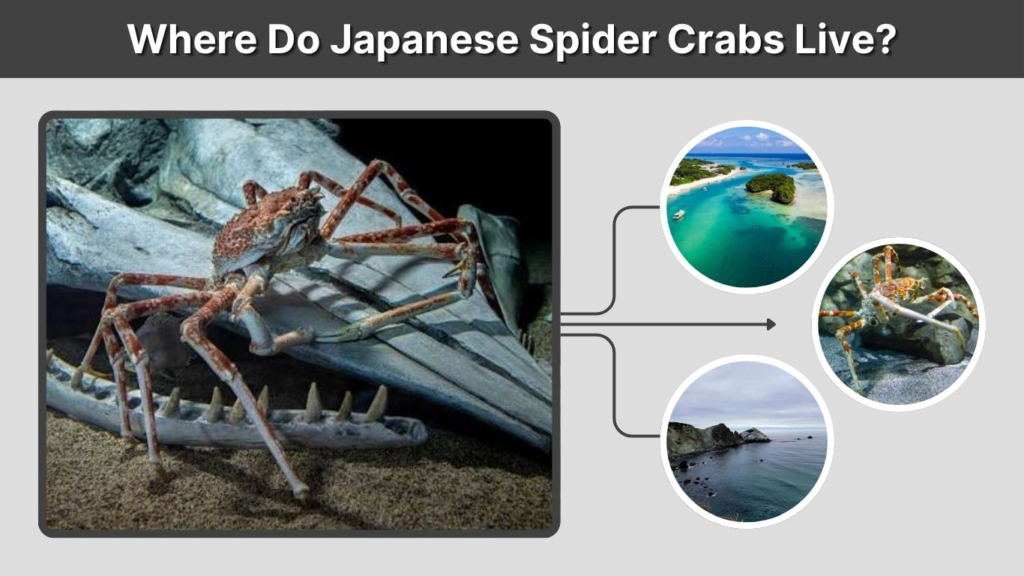
Japanese spider crabs live in the Pacific waters around Japan. They are usually found on the ocean floor, where the water is cool and the light is low. Their habitat includes muddy, sandy, and rocky areas where they can search for food.
Natural Range
The Japanese spider crab is mainly found near the Japanese islands, especially along the Pacific side. It is often associated with waters around Honshu and nearby coastal regions. These crabs are not animals of warm tropical reefs. They prefer cooler marine environments.
They usually live at deeper depths than many common shoreline crabs. Because of this, people rarely see them in the wild unless they are caught by fisheries or displayed in public aquariums.
Deep-Sea and Coastal Habitat
Japanese spider crabs are benthic animals, meaning they live on or near the seafloor. They may occur in deep coastal waters rather than the open surface of the ocean. Their long legs help them walk over uneven ground, soft mud, and scattered debris.
This habitat also provides food. Dead fish, shellfish, algae, and small seafloor animals can collect in these areas. The crab does not need to chase fast prey all the time. Instead, it often searches slowly for whatever food is available.
Do Japanese Spider Crabs Walk on Land?
Japanese spider crabs do not normally walk on land. They are marine animals built for life underwater. Their bodies depend on seawater, and their movement is suited to the seafloor, not dry ground.
A crab removed from water may move briefly, but that does not mean it is a land animal. In nature, it lives underwater and spends its life in the ocean. It should not be compared with small shore crabs that can move around beaches or tidal rocks for longer periods.
What Do Japanese Spider Crabs Eat?
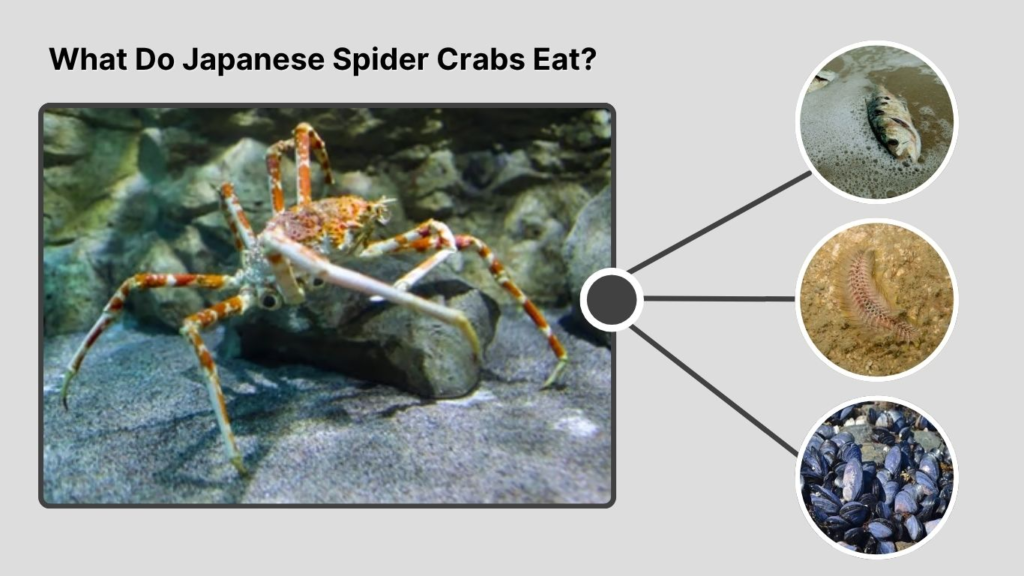
The Japanese spider crab is an omnivore and a scavenger. It eats both animal matter and plant material. Its diet helps clean the seafloor because it consumes dead animals and leftover organic material.
Main Foods
Japanese spider crabs are not picky eaters. Their food can include many items found on the ocean floor.
Common foods include:
- Dead fish and other dead sea animals
- Small invertebrates
- Mollusks and shellfish
- Algae and plant matter
- Decaying organic material
- Leftover scraps on the seafloor
This flexible diet helps the crab survive in deep habitats where food may not always be easy to find.
How It Finds Food
The crab uses its long legs to walk slowly across the bottom. Its claws help pick up food, tear small pieces, and handle items from the seafloor. It may scavenge dead animals that sink from above or feed on small animals living near the bottom.
Because it is not a fast hunter, scavenging is very useful. Dead animals, algae, and slow-moving invertebrates are easier to collect than quick fish. This feeding style fits its body shape and slow movement.
Does It Eat Meat?
Yes, the Japanese spider crab eats meat, but it is not a dangerous sea monster. Much of the meat it eats may come from dead or decaying animals. It may also eat small invertebrates when available.
Its role is similar to a cleaner on the ocean floor. By feeding on dead material, it helps recycle nutrients back into the marine ecosystem. This makes it important even though it may look strange or frightening.
Are Japanese Spider Crabs Dangerous?
Japanese spider crabs may look scary because of their size, but they are not aggressive toward humans. They are slow-moving seafloor animals. Their claws can be strong, so handling them carelessly could cause injury, but they do not hunt people.
Can Japanese Spider Crabs Kill You?
A Japanese spider crab is very unlikely to kill a person. It does not have venom, and it is not a predator of humans. The main risk would come from its claws or legs if someone tried to handle it roughly.
In aquariums and fisheries, trained people handle large crabs carefully. The animal’s size deserves respect, but fear-based claims are usually exaggerated. It is better to describe it as powerful but not naturally dangerous.
Are They Aggressive?
Japanese spider crabs are generally calm and slow. They may defend themselves if threatened, but they are not known for chasing or attacking humans. Their survival style depends more on camouflage, size, and scavenging than aggression.
Like many crabs, they may use their claws when stressed. This is normal defensive behavior. In the wild, they are more focused on moving, hiding, feeding, and reproducing than fighting.
Safety Around This Crab
If someone sees a Japanese spider crab in an aquarium, the safest thing is simply to observe it. It should not be touched unless handled by trained staff. Large marine animals can be harmed by improper handling, and people can also get hurt.
In the wild, divers should keep distance and avoid disturbing it. Respecting its space protects both the animal and the person.
Can You Eat Japanese Spider Crab?
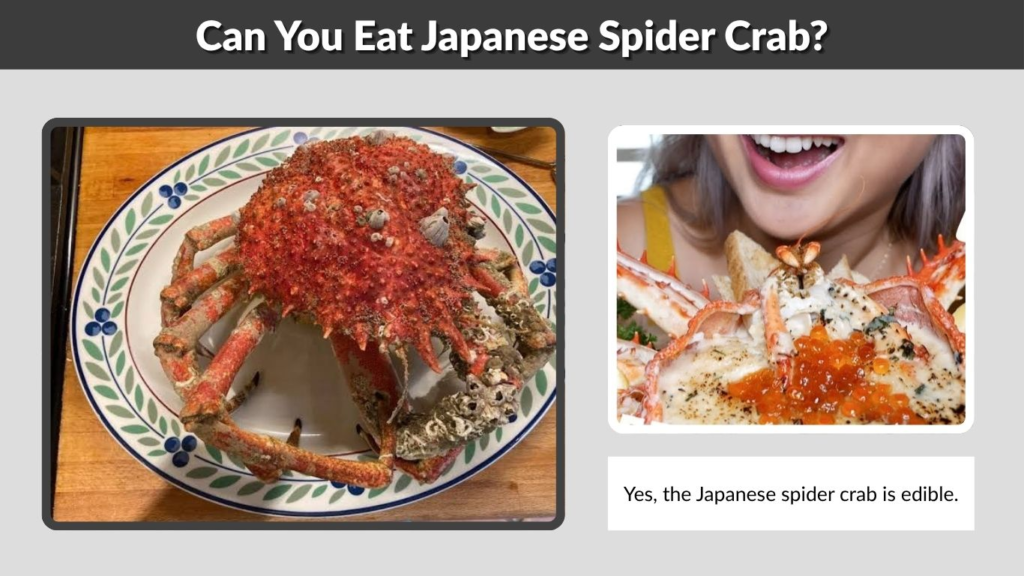
Japanese spider crabs are edible, and they have been caught for food in Japan. Their meat is considered a delicacy in some areas. However, they are not an everyday seafood item for most people because they are large, unusual, and tied to local fisheries.
Is Japanese Spider Crab Edible?
Yes, the Japanese spider crab is edible. The meat is found mainly in the legs and body. Like other crabs, it can be cooked and eaten, but its size and habitat make it different from common market crabs.
Because it is a unique species, responsible harvesting is important. Overfishing can reduce local populations, especially when large adults are removed too often. Some areas may have rules or seasonal controls to protect breeding crabs.
What Does It Taste Like?
Japanese spider crab meat is often described as sweet and delicate, similar to other high-quality crab meat. The exact taste can depend on freshness, cooking method, and the part of the crab being eaten.
Simple cooking methods are often used for large crabs because the natural flavor is already valued. However, taste descriptions can vary from person to person.
Japanese Spider Crab Price
The price of Japanese spider crab can vary widely. It depends on size, season, location, freshness, and availability. Large crabs may be expensive because they are harder to catch and transport.
For most readers, it is better to treat this crab as a specialty seafood rather than a common grocery item. Prices may change by market and region.
Japanese Spider Crab Life Cycle
Like other crabs, the Japanese spider crab begins life as tiny larvae. It does not hatch looking like a small adult crab. Instead, it passes through early floating stages before settling toward the bottom and growing into a juvenile crab.
Eggs and Larvae
Female Japanese spider crabs carry fertilized eggs until they hatch. The larvae are very small and live in the water column. During this stage, they are vulnerable to predators and environmental changes.
Many marine animals produce large numbers of eggs because only a small percentage of young survive to adulthood. This is common in ocean life, where tiny larvae face many risks.
Growth and Molting
Crabs grow by molting. This means they shed their old hard shell and form a new, larger one. After molting, the crab’s body is soft for a short time, making it more vulnerable.
As the Japanese spider crab grows, its long legs become more noticeable. Adults may continue gaining leg length even after reaching maturity. This is one reason older individuals can look so massive.
Lifespan
The Japanese spider crab is often described as a long-lived crab, with some sources suggesting it may live for several decades and possibly up to around 100 years. Exact lifespan in the wild can be difficult to confirm because deep-sea animals are not easy to study.
A long lifespan would make adult survival important for the population. Large, older individuals may play a role in reproduction, so careful management matters where the species is harvested.
Japanese Spider Crab Adaptations
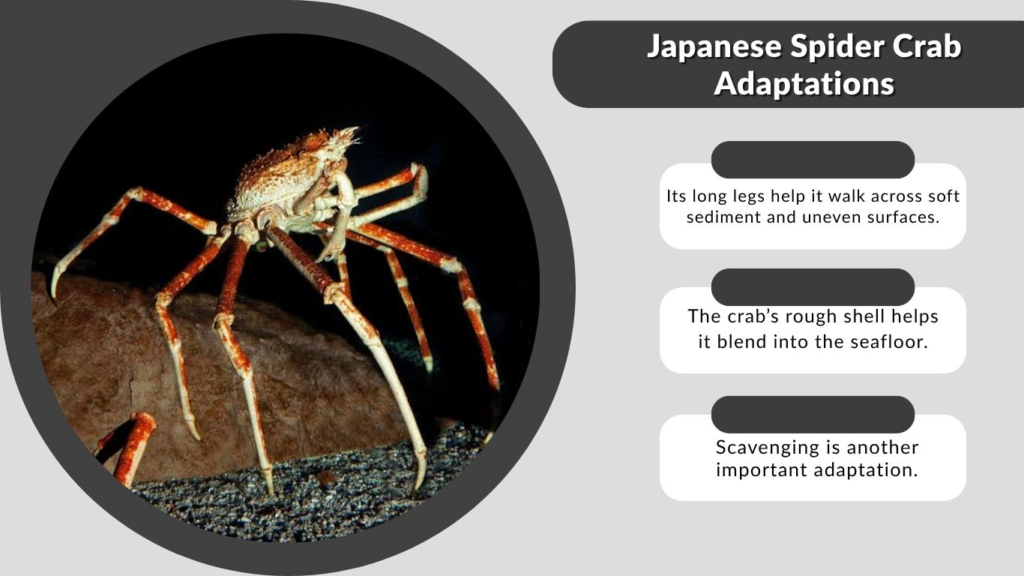
The Japanese spider crab has several adaptations that help it survive on the seafloor. Its body may look strange, but each feature has a purpose.
Long Legs
Its long legs help it walk across soft sediment and uneven surfaces. They also keep the body raised above the ocean floor. This can make movement easier in muddy habitats.
The legs may look fragile, but they are useful tools. They give the crab a wide reach when moving and searching for food. The long claw-bearing legs also help it handle food.
Camouflage
The crab’s rough shell helps it blend into the seafloor. Spines, bumps, and hairs can collect bits of material from its environment. This makes the animal harder to notice among rocks, algae, and debris.
Camouflage is especially useful for younger crabs. Smaller individuals are more vulnerable to predators, so blending in can improve their chance of survival.
Scavenging Lifestyle
Scavenging is another important adaptation. In deep coastal waters, food can be scattered and unpredictable. A crab that can eat dead animals, algae, and small invertebrates has more options.
This diet reduces the need to chase fast prey. It also allows the Japanese spider crab to play an important role in cleaning and recycling material on the ocean floor.
Japanese Spider Crab Predators and Threats
Despite its large size, the Japanese spider crab still faces threats. Young crabs are especially vulnerable because they are smaller and easier to eat. Adults have fewer predators but can still be affected by fishing and habitat changes.
Natural Predators
Possible predators may include large fish, octopuses, and other marine animals capable of attacking young or vulnerable crabs. Larvae face even more predators because they are tiny and drift in the water.
A crab that has recently molted is also at higher risk. Its new shell is soft, and it cannot defend itself as well until the shell hardens.
Human Harvesting
Japanese spider crabs are caught for food in some areas. Harvesting large crabs can affect local populations if not managed properly. Protecting breeding seasons and young crabs can help support long-term survival.
Because the species is unusual and slow-growing, careful fishing practices are important. A balanced approach allows people to value the crab while reducing pressure on wild populations.
Conservation Status
The Japanese spider crab is not always listed with a clear global conservation rating. This does not mean it has no risks. It means more information may be needed about population size, trends, and fishing pressure.
Deep-water animals can be harder to monitor than shallow-water species. Continued research and responsible management are important for understanding and protecting this giant crab.
Interesting Japanese Spider Crab Facts
The Japanese spider crab is full of surprising details. Its size gets most of the attention, but its behavior, body structure, and habitat are just as interesting.
Quick Facts
Here are some useful facts about the Japanese spider crab:
- It is the largest living crab by leg span.
- Its scientific name is Macrocheira kaempferi.
- It lives in waters around Japan.
- It has 10 legs, including 2 claw-bearing legs.
- It is an omnivore and scavenger.
- It can eat dead animals, algae, and small invertebrates.
- It lives mostly on the seafloor.
- It is not a spider, despite its name.
- It is not naturally aggressive toward humans.
- Its long legs make it look much bigger than its body.
Why It Is Popular in Aquariums
Japanese spider crabs are popular display animals because they look so unusual. Their size, long legs, and slow movements make them fascinating to watch. Visitors often compare them to aliens, spiders, or ancient sea creatures.
Aquariums also help people learn that scary-looking animals are not always dangerous. The Japanese spider crab is a good example of an animal that appears intimidating but lives a mostly quiet life on the seafloor.
Common Myths
One common myth is that Japanese spider crabs grow to 50 feet. This is false. Another myth is that they are deadly to humans. This is also misleading. They can pinch if mishandled, but they do not hunt people.
A more accurate view is that they are giant, slow-moving scavengers. Their real biology is already impressive without adding myths.
FAQs
How big is a Japanese spider crab?
A Japanese spider crab can reach about 12 feet from claw to claw when fully grown. Its body is much smaller, usually around 12 to 15 inches wide. The long legs create most of its impressive size, making it the largest living crab by leg span.
Where does the Japanese spider crab live?
The Japanese spider crab lives in the Pacific waters around Japan. It is usually found on the seafloor in deeper coastal areas with cool water. It walks over muddy, sandy, and rocky bottoms while searching for food such as dead animals, algae, and small invertebrates.
What do Japanese spider crabs eat?
Japanese spider crabs eat a mix of animal and plant material. Their diet can include dead fish, small invertebrates, mollusks, algae, and decaying organic matter. They are known as scavengers because they help clean the seafloor by feeding on leftover and dead material.
Can a Japanese spider crab kill you?
A Japanese spider crab is very unlikely to kill a person. It has no venom and does not hunt humans. Its claws can still cause injury if handled carelessly, so it should be respected. In normal situations, it is a slow and non-aggressive marine animal.
Can you eat Japanese spider crab?
Yes, Japanese spider crab is edible and is eaten in parts of Japan. Its meat is considered valuable, especially from the legs. However, it is not a common everyday seafood everywhere. Responsible harvesting is important because large crabs can be affected by heavy fishing pressure.
