
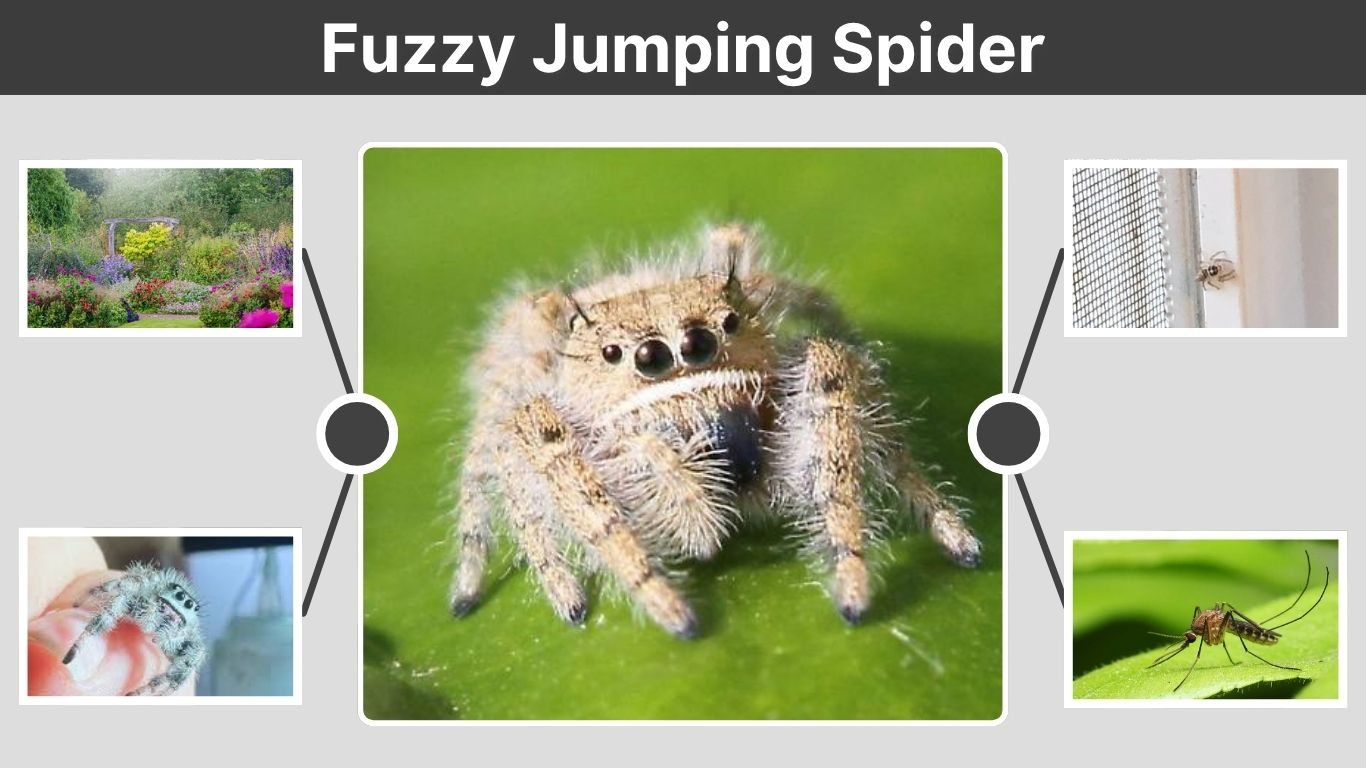
A fuzzy cute jumping spider may look like a tiny animated character, but it is a real and fascinating predator. These small spiders are known for their big forward-facing eyes, compact bodies, soft-looking hairs, and curious movements. While they may seem delicate or even toy-like in close-up photos, jumping spiders are skilled hunters with sharp vision, quick reflexes, and surprisingly complex behavior.
What Is a Fuzzy Cute Jumping Spider?
A fuzzy cute jumping spider is usually a member of the jumping spider family, known scientifically as Salticidae. This family includes thousands of species found around the world. Many of them have hairy bodies, expressive-looking faces, and bold movements that make them popular with nature photographers and spider enthusiasts.
Jumping spiders do not build large webs to trap prey. Instead, they actively stalk insects and leap with impressive accuracy. Their “cute” look comes mostly from their large front eyes, rounded head shape, and fuzzy body texture.
Why They Look So Cute Up Close
Close-up photos make jumping spiders look especially charming because their faces are very different from many other spiders. They have two large central eyes that face forward, giving them a look that people often compare to mammals or cartoon characters.
Their appeal often comes from:
- Large, glossy front eyes
- Small rounded bodies
- Fuzzy hairs on the head, legs, and abdomen
- Curious head movements
- Bright or patterned markings
These features make them look alert, expressive, and almost emotional, even though their behavior is driven by instinct and survival.
Are All Jumping Spiders Fuzzy?
Not every jumping spider looks extremely fuzzy, but many have visible hairs or bristles on their bodies. Some species look sleek and shiny, while others appear soft, fluffy, or even plush-like under macro photography.
The fuzzy appearance can depend on the species, age, sex, lighting, and camera angle. Male jumping spiders may also have more striking colors or decorative leg hairs used during courtship displays.
Why Jumping Spiders Have Big Eyes
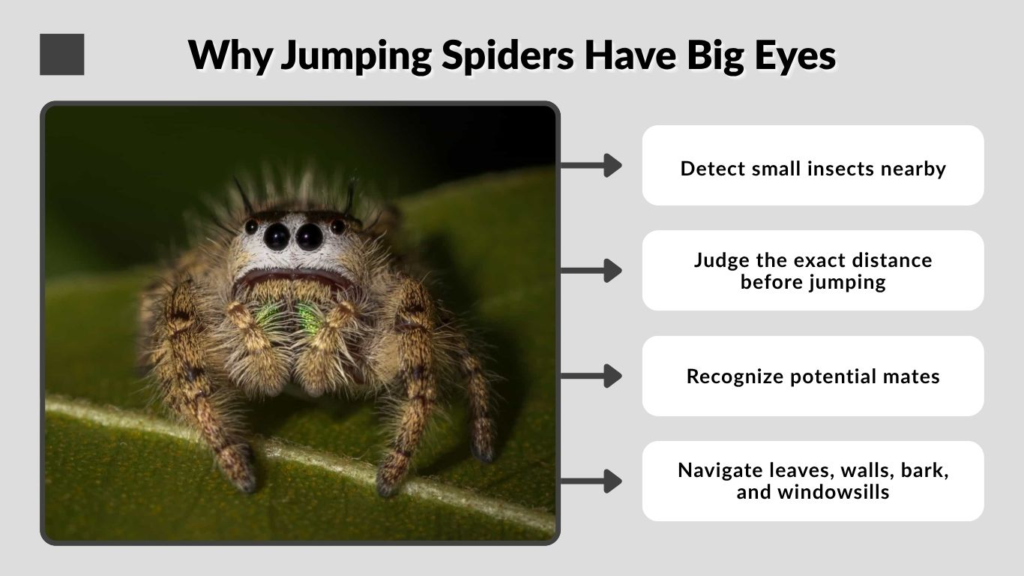
One of the most recognizable features of a cute fuzzy jumping spider is its face. Unlike many spiders that rely heavily on vibration, jumping spiders depend strongly on vision. Their eyes are highly developed for spotting movement, judging distance, and tracking prey.
Jumping spiders usually have eight eyes, but the large front pair gets the most attention. These eyes help them focus on objects directly in front of them, almost like tiny binoculars.
How Their Vision Helps Them Hunt
Jumping spiders are active hunters. They do not wait passively in a web for insects to arrive. Instead, they scan their surroundings, move carefully toward prey, and leap when the distance is right.
Their vision helps them:
- Detect small insects nearby
- Judge the exact distance before jumping
- Recognize potential mates
- Notice predators or threats
- Navigate leaves, walls, bark, and windowsills
This excellent eyesight is one reason they often seem to “look back” at people. When a jumping spider turns toward you, it may simply be studying movement, light, or vibration.
Why Their Face Looks So Expressive
People often describe a close up jumping spider face as cute and fuzzy because the spider appears to make eye contact. Its large middle eyes, smaller side eyes, and movable body posture create the illusion of personality.
Of course, jumping spiders do not show facial expressions like humans. Still, their movements can look surprisingly curious. They may pause, tilt, turn, raise their front legs, or track a moving object with precision. This behavior makes them feel more approachable than many other spiders.
Fuzzy Jumping Spider vs Tarantula: What Is the Difference?
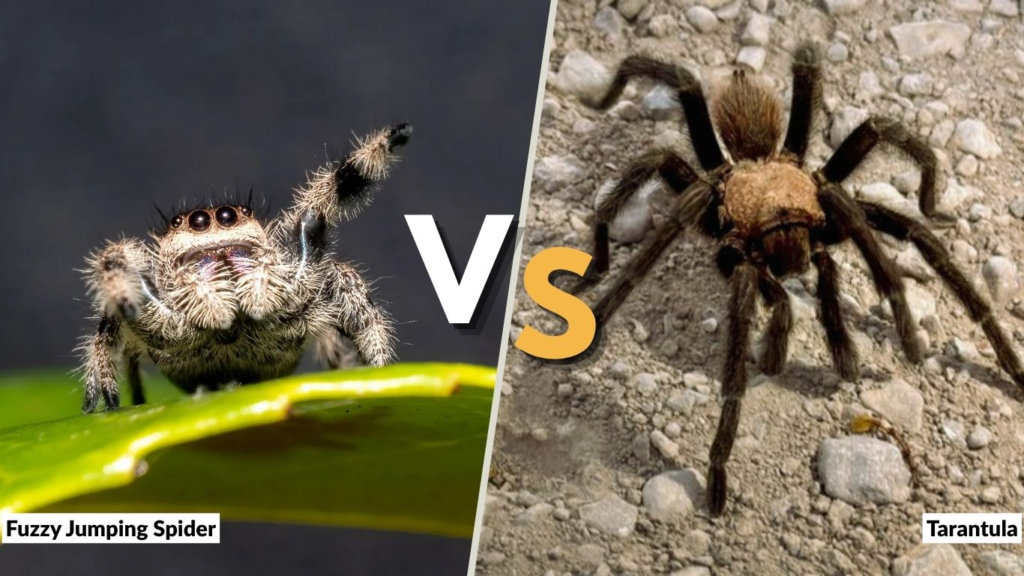
Some people search for a tarantula fuzzy cute jumping spider because both animals can appear hairy. However, jumping spiders and tarantulas are very different. A fuzzy jumping spider may look like a tiny tarantula in macro photos, but they belong to different spider groups and have different body sizes, habits, and lifestyles.
| Feature | Fuzzy Jumping Spider | Tarantula |
| Typical size | Very small, often a few millimeters to around 2 cm | Much larger, often several inches across |
| Hunting style | Stalks and jumps on prey | Ambushes or overpowers prey |
| Eyes | Large front eyes, excellent vision | Smaller eyes, weaker vision |
| Web use | Uses silk for safety lines and shelters | May use silk around burrows or hiding spots |
| Common appearance | Cute, compact, fuzzy, alert | Large, heavy-bodied, very hairy |
Why People Confuse Them
The confusion usually happens because macro photography makes tiny spiders look much larger than they are. A close-up image of a jumping spider can show every hair, eye reflection, and leg detail. Without scale, it may look like a baby tarantula.
However, jumping spiders are much smaller, faster, and more visually oriented. Tarantulas are heavier-bodied and do not have the same big-eyed face that makes jumping spiders look so cute.
Are Fuzzy Jumping Spiders Dangerous?
For most people, fuzzy jumping spiders are not dangerous. They are generally shy, non-aggressive, and more likely to jump away than bite. Like most spiders, they have venom for subduing prey, but they are not considered a serious threat to humans.
A bite is uncommon and usually happens only if the spider is trapped, squeezed, or handled roughly. For the average person, a jumping spider bite may feel similar to a mild bee sting or small skin irritation, though reactions can vary.
When to Avoid Handling Them
Even though jumping spiders are often harmless, it is still best to respect them as wild animals. Handling can stress or injure them, especially because they are small and delicate.
Avoid handling them if:
- You are unsure of the species
- You have a known sensitivity to bites
- The spider is moving quickly or defensively
- You might accidentally squeeze it
- You found it in an unsafe location
The safest option is to observe them gently and let them move on their own.
What to Do If One Is in Your Home
A fuzzy cute jumping spider inside your home is usually not a problem. In fact, it may help control tiny flies, gnats, mosquitoes, or other small insects. If you do not want it indoors, you can relocate it carefully.
Use a cup and a piece of paper to move it outside. Place it near plants, a fence, tree bark, or another sheltered area where it can hide and hunt.
Where Do Cute Fuzzy Jumping Spiders Live?
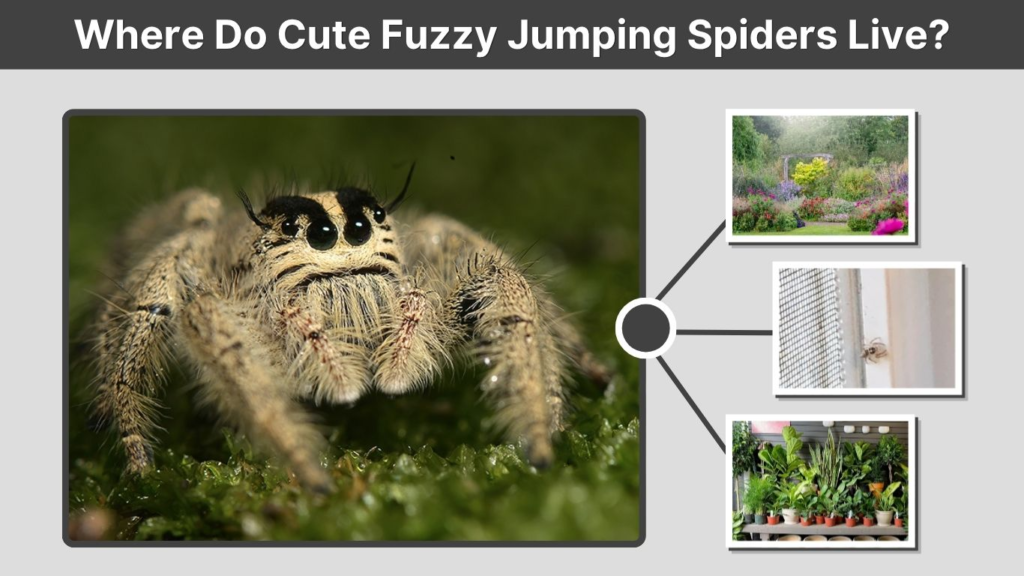
Jumping spiders live in many environments, from gardens and forests to homes and fences. Because they are active hunters, they are often seen walking on walls, leaves, windows, tree trunks, or sunny outdoor surfaces.
They prefer places where prey is available and where they can move easily. Many species like bright areas because their hunting depends on sight.
Common Places to Find Them
You may spot fuzzy jumping spiders in:
- Gardens and flower beds
- Window frames and screens
- Houseplants
- Wooden fences
- Tree bark
- Outdoor walls
- Sunny rocks
- Porch railings
They are often most visible during the day. Unlike many spiders that hide until night, jumping spiders are daylight hunters.
Why They Like Sunny Spots
Jumping spiders often appear in sunny locations because light helps them see clearly. Warm surfaces may also help them stay active. If you see one sitting on a wall or window, it may be watching for small insects.
Their hunting style depends on patience and precision. They may pause for long moments, then suddenly move or leap when they identify a target.
What Do Fuzzy Jumping Spiders Eat?
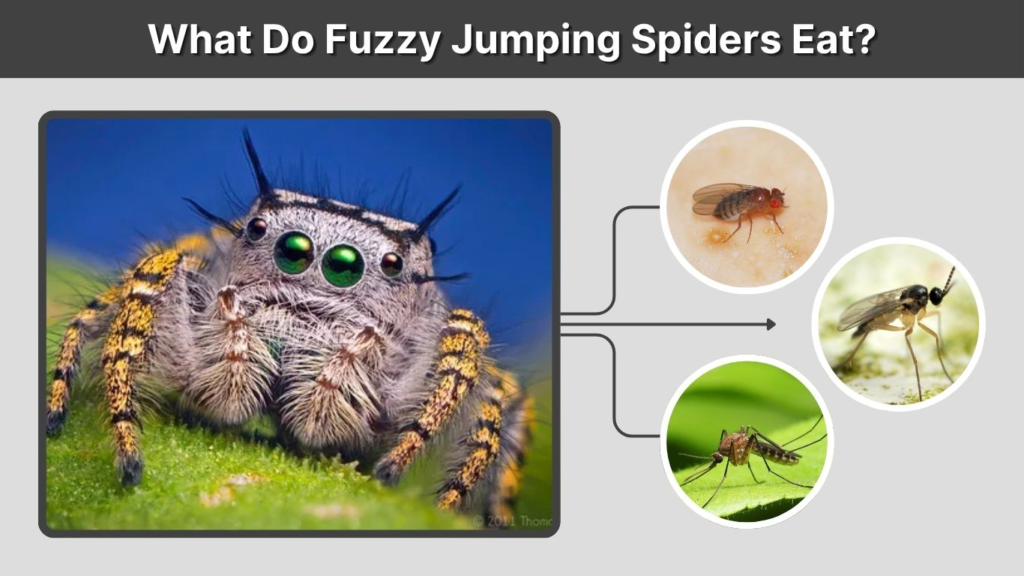
Fuzzy jumping spiders mostly eat small insects and other tiny arthropods. Their diet depends on their size, species, and habitat. They are natural pest controllers and can help reduce small bugs around homes and gardens.
Their prey may include:
- Flies
- Gnats
- Mosquitoes
- Small moths
- Aphids
- Tiny beetles
- Other small spiders
They do not chase prey over long distances. Instead, they stalk carefully, attach a silk safety line, and jump when they are close enough.
How They Catch Prey
Before jumping, the spider often anchors itself with silk. This safety line helps prevent a dangerous fall. Once it leaps, it grabs the prey with its front legs and uses venom to immobilize it.
This method is efficient and does not require a large web. It also explains why jumping spiders need strong vision and careful distance judgment.
Why Are Jumping Spiders Popular Online?
The fuzzy cute jumping spider has become popular online because it photographs beautifully. Macro images reveal details that are almost impossible to see with the naked eye. Their eyes reflect light, their hairs look soft, and their body language can seem curious or playful.
Short videos also show their sudden hops, little pauses, and head-turning movements. These behaviors make them more appealing to people who might normally fear spiders.
The Role of Macro Photography
Macro photography makes tiny subjects look large and detailed. A spider that is only a few millimeters long can appear like a small furry creature with a dramatic face.
This is why search results often include image packs, videos, and short videos. People are not only asking what these spiders are; they want to see their faces clearly.
Why They Help Reduce Spider Fear
Many people with mild arachnophobia find jumping spiders less frightening than other spiders. Their small size, bright eyes, and curious behavior can make them feel less threatening.
They are also less associated with messy webs, dark corners, or sudden nighttime appearances. Seeing them as active, intelligent-looking hunters may help people appreciate spiders instead of fearing them.
Can You Keep a Fuzzy Jumping Spider as a Pet?
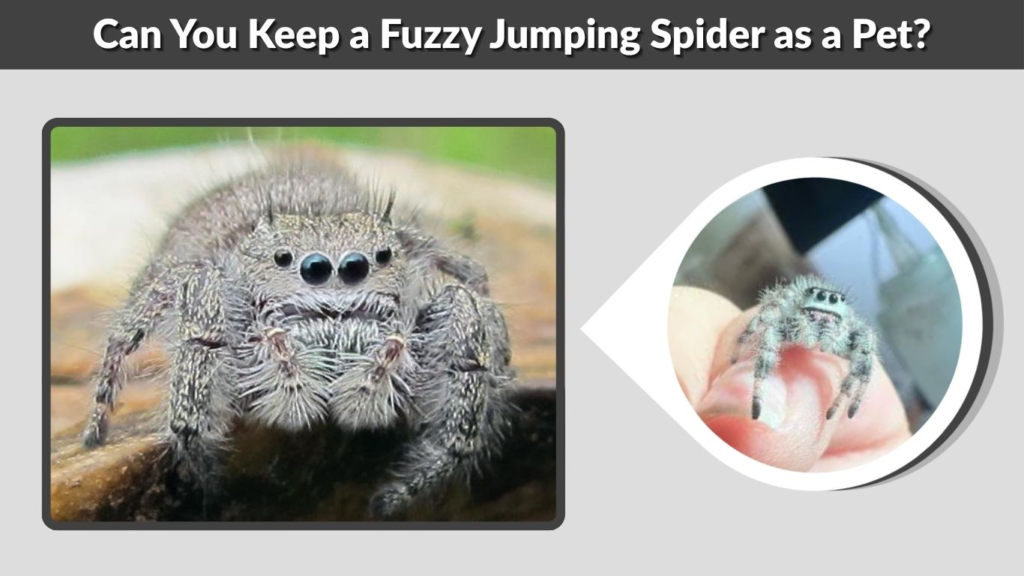
Some people do keep jumping spiders as small pets, especially species known for bold behavior and attractive markings. However, caring for one requires attention to space, humidity, food size, and safety. They are tiny animals, so even small mistakes can harm them.
A pet jumping spider needs a secure enclosure with ventilation, climbing surfaces, hiding spots, and appropriately sized prey. It should never be overhandled or kept in direct harsh sunlight.
Basic Care Considerations
Before keeping one, learn the exact needs of the species. Not all jumping spiders have the same care requirements.
Important care points include:
- A small but secure enclosure
- Good ventilation
- Safe climbing surfaces
- Tiny live prey
- Light misting when appropriate
- No harmful chemicals nearby
- Protection from overheating
Wild spiders should not be collected from sensitive habitats. If you want a pet jumping spider, it is better to research ethical captive-bred options where available.
How to Photograph a Cute Fuzzy Jumping Spider
Photographing a jumping spider takes patience. These spiders move quickly, and their small size makes focus difficult. However, their curious nature can make them rewarding subjects.
Natural light, a steady hand, and a calm approach are important. Avoid poking or chasing the spider, as stress can make it flee or hide.
Tips for Better Close-Up Photos
To capture a close up jumping spider face cute fuzzy look, focus on the eyes and keep the spider comfortable.
Try these tips:
- Photograph in bright but soft light
- Move slowly and avoid sudden shadows
- Focus on the large front eyes
- Use a macro lens or clip-on macro attachment
- Keep the background simple
- Do not trap or disturb the spider
- Take several shots from a low angle
The best images often come when the spider pauses and faces the camera naturally.
FAQs
Are fuzzy jumping spiders friendly?
Fuzzy jumping spiders are not friendly in the human sense, but they are usually calm and non-aggressive. They may appear curious because they turn toward movement and watch nearby objects. Most prefer to avoid danger rather than bite, making them safe to observe from a respectful distance.
Why do jumping spiders look so cute?
Jumping spiders look cute because of their large forward-facing eyes, small rounded bodies, and fuzzy hairs. Their movements also make them seem curious and alert. Close-up photography exaggerates these features, creating a face that many people compare to a cartoon or tiny plush animal.
Is a fuzzy jumping spider a baby tarantula?
No, a fuzzy jumping spider is not a baby tarantula. Jumping spiders are usually much smaller and have large front eyes with excellent vision. Tarantulas are larger, heavier-bodied spiders with different hunting habits. Macro photos can make jumping spiders look bigger than they really are.
Can jumping spiders bite humans?
Jumping spiders can bite, but bites are rare and usually happen only when the spider feels trapped or threatened. They are not considered dangerous to most people. It is still best not to handle them roughly, especially if you are unsure of the species or sensitive to insect bites.
Should I remove a jumping spider from my house?
You do not have to remove a jumping spider unless it bothers you. These spiders can help control small insects indoors. If you prefer it outside, gently catch it with a cup and paper, then release it near plants, bark, or another sheltered outdoor area.
