
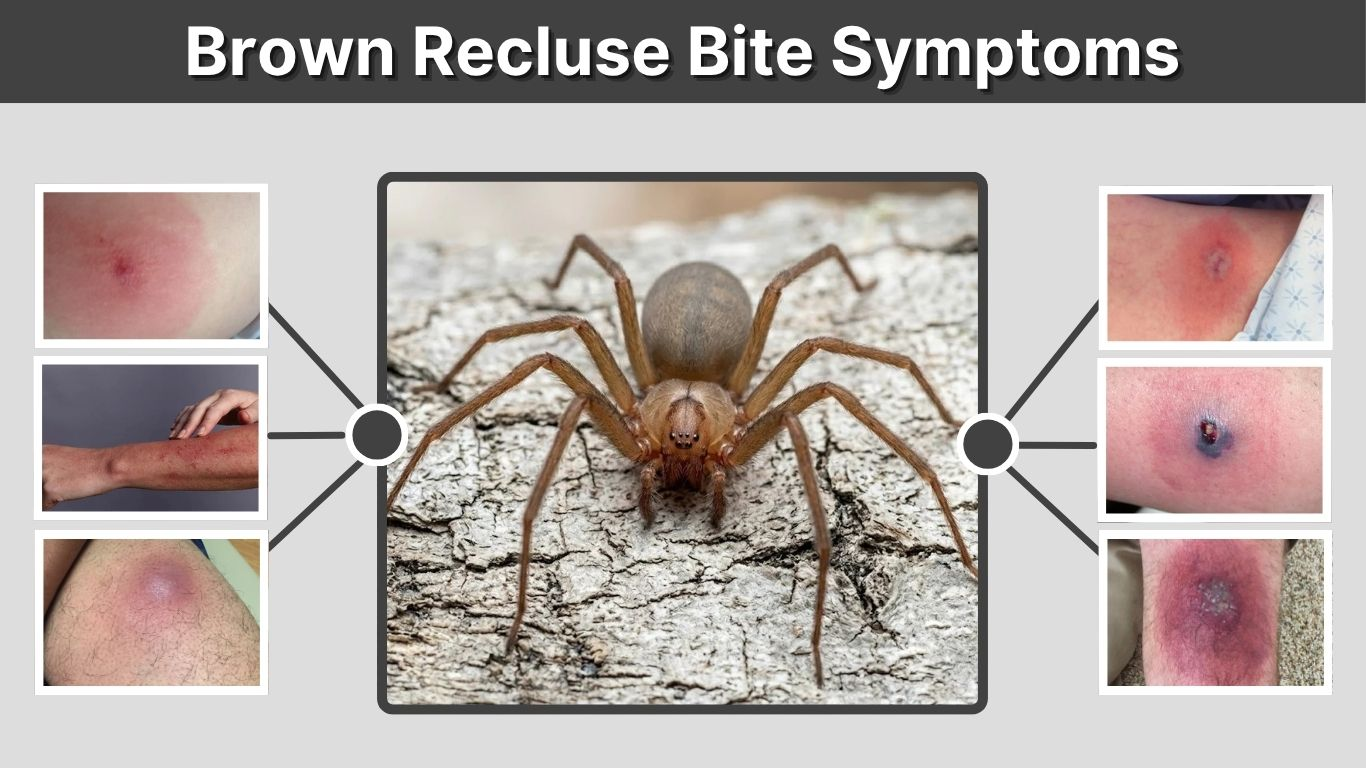
A brown recluse bite can be confusing because symptoms do not always appear right away. Some people feel only mild irritation at first, while others notice pain, redness, blistering, or skin changes over the next several hours or days. Most suspected spider bites are not serious, but a brown recluse bite can sometimes damage skin tissue and cause whole-body symptoms. Knowing the common symptoms can help you monitor the bite and decide when to seek medical care.
What Makes Brown Recluse Bite Symptoms Different?
A brown recluse spider bite may look like a normal bug bite in the beginning. The bite area may be red, itchy, swollen, or tender. In some cases, the bite is painless at first and becomes painful later. This delay is one reason people often search for early symptoms or a day-by-day symptom timeline.
Brown recluse venom can affect the skin around the bite. In more serious cases, the center of the bite may become pale, bluish, purple, blistered, or dark. The wound may slowly break down and form an open sore. However, not every brown recluse bite causes severe damage. Many bites stay mild and heal without major complications.
It is also important to know that many skin problems are mistaken for spider bites. Boils, staph infections, allergic reactions, tick bites, and other insect bites can look similar. If a wound spreads, becomes very painful, drains pus, or causes fever, it should be checked by a healthcare provider.
13 Common Brown Recluse Bite Symptoms
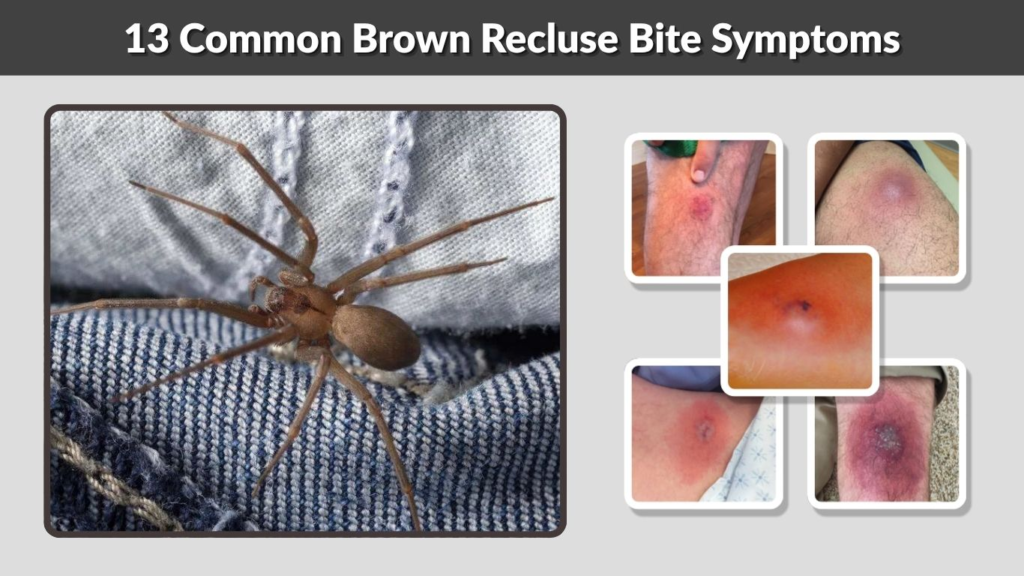
The symptoms below can appear alone or together. Some are mild and local to the skin, while others may suggest a more serious reaction.
| Symptom | What It May Look or Feel Like |
|---|---|
| 1. Mild redness | A small red patch or bump around the bite |
| 2. Itching | Irritation or urge to scratch the area |
| 3. Pain or burning | Discomfort that may increase after a few hours |
| 4. Swelling | Puffy or raised skin near the bite |
| 5. Tenderness | Pain when touching or pressing the area |
| 6. Blister | A small fluid-filled bump on or near the bite |
| 7. Pale center | A whitish area surrounded by redness |
| 8. Blue or purple color | Bruise-like discoloration near the center |
| 9. Dark scab | Black, gray, or crusted tissue in severe cases |
| 10. Open sore | Skin breakdown or ulcer formation |
| 11. Fever or chills | Whole-body reaction that may signal concern |
| 12. Nausea or vomiting | Feeling sick after the bite |
| 13. Muscle aches or weakness | Body aches, tiredness, or general illness |
1. Mild Redness Around the Bite
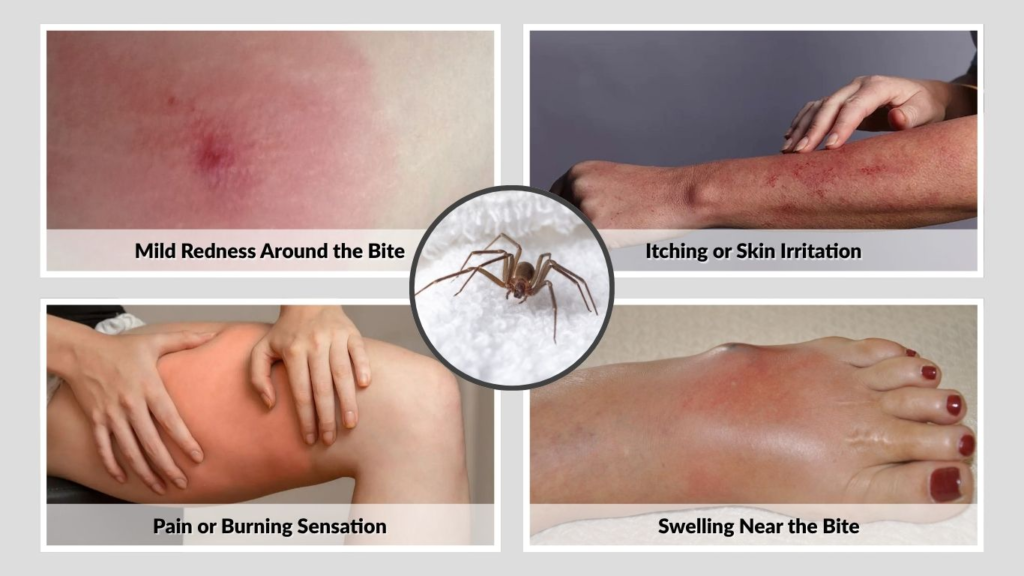
Redness is one of the earliest and most common symptoms of a suspected brown recluse bite. The bite may begin as a small red bump or patch that looks similar to a mosquito bite, ant bite, or minor skin irritation.
At first, the redness may be limited to a small area. If the bite is mild, it may not spread much and may start improving after a day or two. If the redness expands quickly, becomes very warm, or forms red streaks, that can be a warning sign of infection or a more serious skin reaction.
A helpful step is to gently mark the outer edge of the redness with a pen. If the red area moves beyond the mark over the next few hours, it may be worsening.
2. Itching or Skin Irritation
Itching can appear early after a brown recluse bite. Some people describe the feeling as mild irritation, while others feel a stronger urge to scratch. Scratching should be avoided because it can break the skin and increase the risk of infection.
Itching alone does not prove the bite came from a brown recluse. Many insect bites, allergic reactions, and rashes cause itching. However, if itching happens with worsening pain, swelling, blistering, or color changes, the bite should be watched more closely.
A cool compress may help reduce itching and irritation. Keep the area clean and avoid applying harsh home remedies.
3. Pain or Burning Sensation
A brown recluse bite may not hurt immediately. Pain can begin later, often within a few hours. Some people feel burning, stinging, or deep tenderness around the bite. The pain may gradually increase during the first day.
Mild pain may improve with basic first aid. Strong or worsening pain is more concerning, especially if the center of the bite starts turning pale, purple, or dark. Pain that spreads away from the bite or becomes severe should be evaluated by a medical professional.
Pain level is one of the most important symptoms to track because a bite that keeps becoming more painful may need care.
4. Swelling Near the Bite
Swelling is another common symptom. The bite area may look raised, puffy, or inflamed. Mild swelling can happen with many ordinary bites and may settle down with cold compresses and elevation.
More serious swelling may feel tight, hot, or painful. Swelling around the face, eyes, lips, throat, hands, or feet should be taken seriously. Facial or throat swelling may suggest an allergic reaction and needs urgent medical attention.
If swelling continues to grow after the first day, do not ignore it. A healthcare provider can help determine whether the cause is venom reaction, infection, or another skin problem.
5. Tenderness to Touch
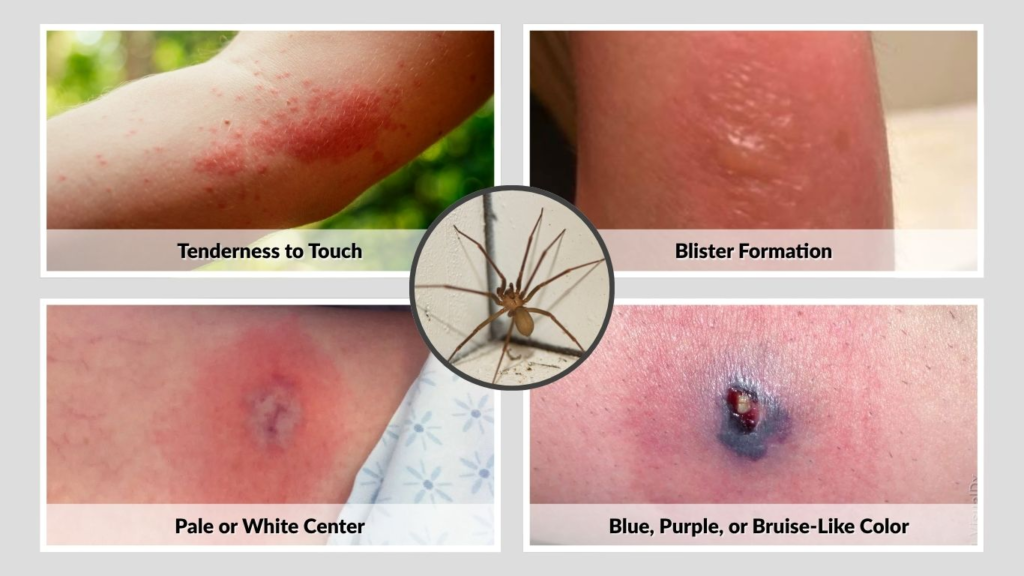
Tenderness means the bite hurts when touched or pressed. In the early stage, the area may feel slightly sore. As symptoms develop, tenderness may become stronger and deeper.
Tenderness is common in many skin reactions, but it becomes more concerning when paired with spreading redness, darkening skin, blistering, or drainage. If the bite becomes so tender that normal movement is difficult, it may need medical evaluation.
Try not to press or squeeze the bite repeatedly. This can irritate the skin and make symptoms worse.
6. Blister Formation
A blister may form near the bite as the skin reacts to the venom. It may be small, clear, or fluid-filled. In some cases, the blister appears over a pale or discolored center.
Do not pop the blister. Opening it can allow bacteria to enter and may increase the chance of infection. If the blister breaks on its own, gently wash the area with soap and water and cover it with a clean, non-stick bandage.
A blister that grows, becomes very painful, leaks pus, or turns dark should be checked by a healthcare provider.
7. Pale or White Center
Some brown recluse bites develop a pale center. This may look like a whitish spot surrounded by redness. People sometimes describe it as a target-like or bullseye-like pattern, although many other conditions can also cause ring-shaped skin changes.
A pale center can happen when blood flow in the affected skin changes. If the center stays small and symptoms improve, the bite may heal without serious problems. If the pale area turns blue, purple, gray, or black, the bite may be worsening.
Take a photo once a day to compare changes. This can help a doctor understand how the wound is progressing.
8. Blue, Purple, or Bruise-Like Color
A more concerning symptom is bluish or purple discoloration. The bite may begin to look like a bruise. This can happen as the skin and small blood vessels react to the venom.
Not every color change means severe tissue damage, but a darkening center should be watched carefully. If the area grows larger, becomes more painful, or looks sunken, medical care is recommended.
Color changes often become more noticeable after the first 24 to 48 hours. This is why many people do not realize the bite may be serious until day 2 or day 3.
9. Dark Scab or Blackened Skin
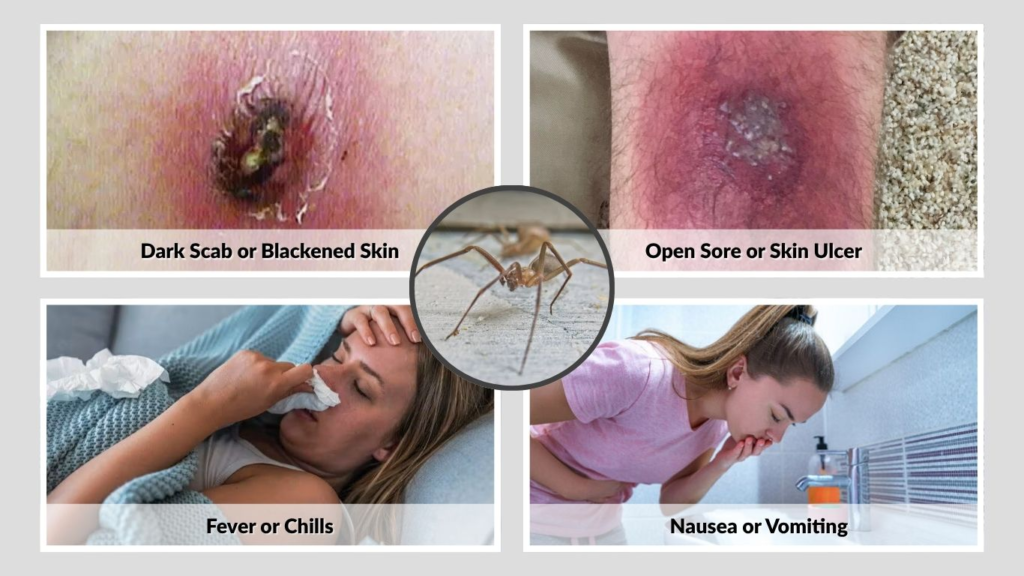
In more severe cases, the center of the bite may become gray, brown, black, or crusted. This can be a sign of tissue damage. The area may look dry, hard, or scab-like.
Do not try to cut away dark tissue at home. Do not scrape it, squeeze it, or apply strong chemicals. These actions can worsen the wound and increase infection risk.
A dark scab after a suspected brown recluse bite should be examined, especially if the wound is painful, spreading, or surrounded by redness.
10. Open Sore or Skin Ulcer
Some brown recluse bites can break down into an open sore, also called an ulcer. This usually does not happen immediately. It may develop over several days and can take weeks or longer to heal.
An open sore needs careful wound care. Keep it clean, covered, and protected from dirt. If there is pus, foul odor, increasing warmth, spreading redness, or fever, the wound may be infected.
A healthcare provider may recommend specific dressings, pain control, or treatment if infection is present. Severe ulcers may need ongoing follow-up.
11. Fever or Chills
Fever and chills are whole-body symptoms. They are not present in every brown recluse bite, but when they occur, they can suggest a stronger reaction or infection.
A mild skin bite without fever is usually less concerning than a bite with fever, chills, weakness, or worsening pain. Fever after a bite should not be ignored, especially in children, older adults, or people with health conditions.
Seek medical advice if fever appears along with a growing wound, dark skin changes, or drainage.
12. Nausea or Vomiting
Some people may feel sick after a more serious bite. Nausea or vomiting can happen with systemic reactions, which means the body is responding beyond the local skin area.
Nausea alone may have many causes, but nausea with fever, weakness, muscle aches, or a worsening bite is more concerning. If vomiting continues or the person feels very unwell, medical care is important.
Children should be watched carefully because they may have stronger reactions than adults.
13. Muscle Aches, Weakness, or General Illness
Muscle aches, tiredness, weakness, or a flu-like feeling can occur in more serious cases. These symptoms may show that the body is reacting to the venom or that another medical problem is developing.
If the person feels weak, dizzy, confused, or unusually ill, do not wait for the bite to look worse. Whole-body symptoms deserve medical attention, especially when they appear with skin discoloration or severe pain.
When Do Brown Recluse Bite Symptoms Start?
Symptoms may start within a few hours, but some people do not notice much at first. Pain often develops later rather than immediately. Redness, itching, swelling, and tenderness may appear during the first day. Blistering or color changes may become clearer over the next one to three days.
A general timeline may look like this:
- First few hours: mild redness, itching, or little to no pain
- Day 1: pain, swelling, tenderness, or a small bump
- Day 2: more redness, burning, blistering, or pale center
- Day 3 and after: bruising, darkening, scab, or open sore in worse cases
If the bite is improving after a few days, that is a good sign. If it is getting larger, darker, or more painful, seek medical care.
What to Do If You Notice Symptoms
Start with simple first aid. Wash the bite with soap and water. Apply a cool compress wrapped in cloth for short periods. Keep the area raised if possible. Cover broken skin with a clean bandage.
Avoid scratching, popping blisters, applying heat, or trying to remove venom. Do not cut the bite open. These steps can worsen irritation and increase infection risk.
You should get medical help if symptoms are severe, spreading, or not improving. Urgent care is especially important for trouble breathing, swelling of the face or throat, fever, vomiting, severe pain, red streaks, blackened skin, or a growing open wound.
Brown Recluse Bite Symptoms vs. Infection
A brown recluse bite and a skin infection can look very similar. Both may cause redness, pain, swelling, warmth, and tenderness. Infections may also produce pus, increasing warmth, or red streaks.
Because the symptoms overlap, it is risky to diagnose the wound by appearance alone. If the bite is draining, spreading, or not improving, a healthcare provider should evaluate it. Treatment may differ depending on whether the problem is venom reaction, infection, or another condition.
FAQs
What are the first symptoms of a brown recluse bite?
The first symptoms may include mild redness, itching, swelling, tenderness, or a small bump. Some bites are painless at first and become painful after several hours. Because early symptoms can look like many other insect bites, it is important to watch for changes over time.
How long after a brown recluse bite do symptoms appear?
Symptoms can appear within a few hours, but they may become more noticeable over the first 24 to 48 hours. Pain, redness, and swelling may develop first. Blistering, bruising, or dark discoloration may appear later if the bite becomes more serious.
What are severe brown recluse bite symptoms?
Severe symptoms may include intense pain, spreading redness, a dark or black center, an open sore, fever, chills, nausea, vomiting, weakness, or muscle aches. Breathing trouble, facial swelling, confusion, or rapidly worsening symptoms need urgent medical attention.
Can brown recluse bite symptoms be mild?
Yes, many suspected brown recluse bites remain mild. A mild bite may cause only redness, itching, swelling, and tenderness, then improve over several days. However, any bite that becomes darker, larger, more painful, or infected-looking should be checked by a healthcare provider.
Do brown recluse bites always cause a hole in the skin?
No, a brown recluse bite does not always cause an open sore or hole. Some bites heal without major skin damage. More serious bites may blister, scab, or form an ulcer over time. If skin breakdown appears or the wound keeps growing, medical care is recommended.
